Viking Art: Antler, Bone & Ivory

Bone and antler objects occur throughout the Viking world. Bones of pigs, cattle, horses, goats were used, and antler came from deer or elk. 

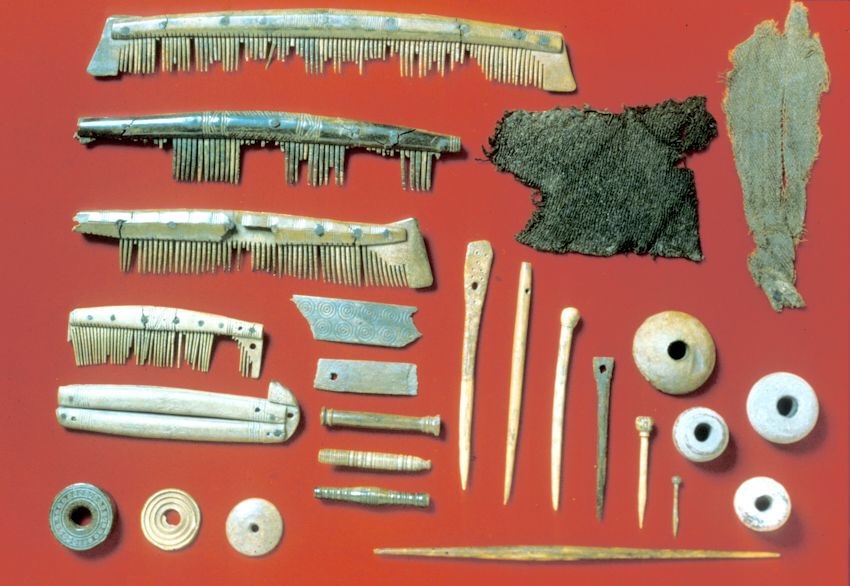
Needles and pins could be produced in a different shapes and sizes to serve a variety of purposes such as sewing clothes, nalbinding (a Scandinavian technique for making a strong, elastic fabric), net-making, securing a cloak, etc. 

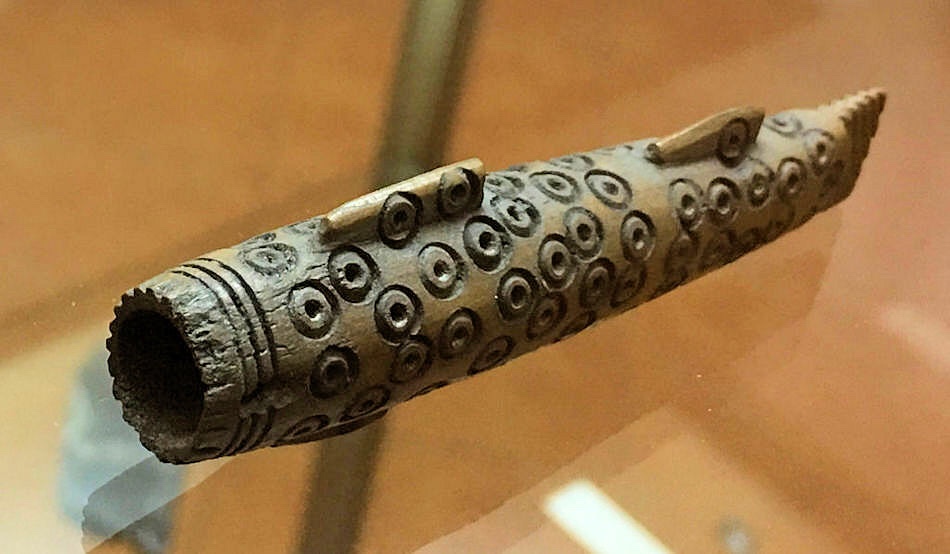
Other products included spindle whorls, weaving tablets, needle cases made from small long hollow bones, knife handles, strap ends, gaming pieces, bone flutes, and ice skates. 

Combs were also made and could be quite basic, or very ornate and decorated. Even the basic combs required considerable work, as the teeth can to be cut separately into bone plates which were fitted into the handle pieces. 

Whale bone could be used for special objects such as the decorated linen smoother from the Scar boat burial. While whale teeth and walrus ivory could be used for objects such as the Lewis Chessmen.

Source: the Viking Archaeology News Blog

Viking Era Jewelry

Most of our knowledge of Viking Age jewelry comes graves and hoards. Because accompanied burials ceased after the conversion to Christianity, we know more about earlier Viking Period jewelry than we do of the later Viking era.

Viking age jewelry tends to be dated according to the art style that is used for decoration.

Jewelry was worn by both men and women. It was a means of fastening cloaks, belts and dresses, And it was an adornment and a means of displaying visible wealth, even as a means of carrying wealth. It could be used as a means of exchange, and as a means of cementing an alliance.

Gold was used for the most prestigious jewelry, but gold was relatively scare in Scandinavia, so most jewelry was made of silver or gilded bronze. Gold and silver items would have been individually made, but bronze jewelry would have been mass produced, using clay moulds from a single master prototype.

In addition to brooches and buckles, silver neck and arm rings were common items of jewelry. Many were made from melted down silver Arabic coins, and were made to standard weights so that their value was easily assessed.

”Silver arm-rings were by far the commonest products of the Hiberno-Viking tradition…Over one hundred are known from silver hoards in Ireland, where they were sometimes cut into fragments which could later melted down and recycled. Several different types have been identified, the most important in terms of sheer numbers being the broad-band type. Like the neck-rings, they seem to have been manufactured for the storage and circulation of silver, and their target weight of 26.15 grams (0.92 ounces) is very close to the most important weight unit of the lead scale-weights from tenth-century Dublin. Their purity was obviously a matter of concern, because they sometimes display small nicks and pecks.”

Source: Netherton, R. and Owen Crocker, G. R. (eds) (2006), “Medieval Clothing and Textiles vol 2″