1. During the Ottoman occupation, the Parthenon was a mosque and the Erechtheion next to it a harem. When the Ottoman occupation ended, the new king Otto wanted to build his palace on the Acropolis hill. Luckily, his father, who was very fond of the ancient Greek civilization, talked him out of it.
2. It is believed that Socrates was one of the stonemasons working on the monument’s construction.
3. Every column required 19,000 man-hours, which is the number of man-hours needed to construct a medium sized apartment block today.
4. The Parthenon’s sculptural decoration was finished by the 150 stonemasons and 50 sculptors who created it at the first place. Of those workmen, 20% were slaves, 30% Athenians and 50% metics (free, non-citizen residents).
5. The most important sculpture of the Parthenon was not outside but inside. There is evidence that the temple was built to measure in order to accommodate the chryselephantine statue of Athena by Pheidias.
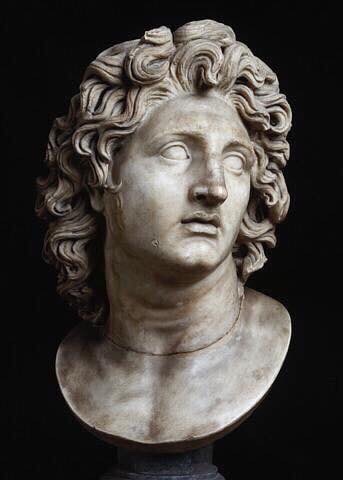
Lysippos was a Greek sculptor of the 4th century BC. Together with Scopas and Praxiteles, he is considered one of the three greatest sculptors of the Classical Greek era, bringing transition into the Hellenistic period. Here is an example of his work above.
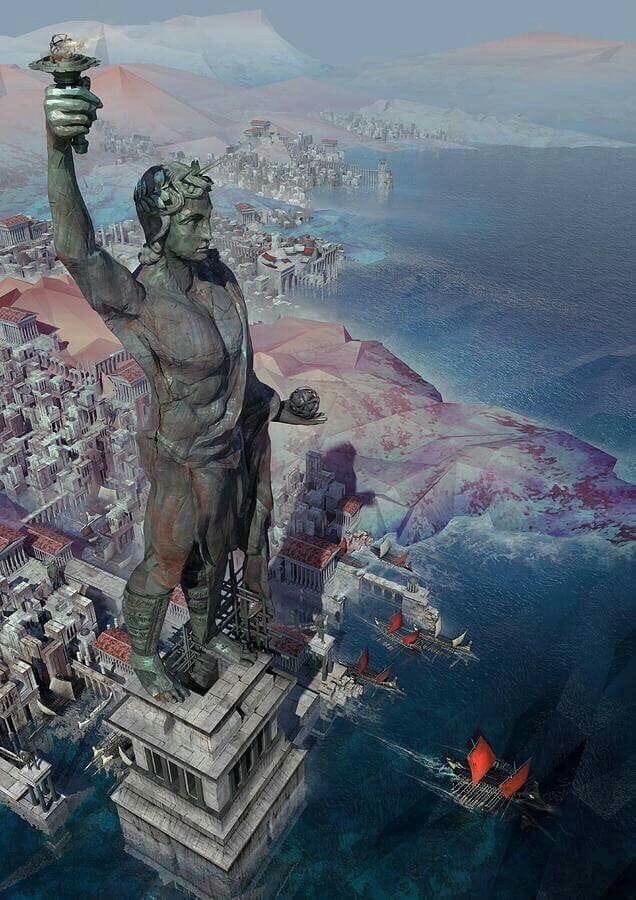
The Colossus of Rhodes was a statue of the Greek sun-god Helios, on the island of Rhodes in 280 BC. One of the Seven Wonders of the Ancient World, it was constructed to celebrate Rhodes’ victory over the ruler of Cyprus in 305 BC.
According to most contemporary descriptions, the Colossus stood approximately 33 metres (108 feet) high—the approximate height of the modern Statue of Liberty from feet to crown—making it the tallest statue of the ancient world.
Unfortunately It collapsed during an earthquake in 226 BC; although parts of it were preserved, it was never rebuilt. Fast forward to today and there are tentative plans to rebuild the Colossus at Rhodes Harbour although the exact position of the original is unknown.
According to the Ministry of International Trade and Industry’s (now the Ministry of Economy, Trade and Industry) “Traditional Craft Industry Promotion Act” of 1974, traditional Japanese crafts must meet the following criteria:
1. The craft must be intended for use in daily life
2. The main components of the craft must be hand crafted
3. The craft must be crafted using traditional methods and techniques
4. The main materials used must be the same materials that were traditionally used to make the craft
5. A significant number of businesses in a specific region must produce or be engaged in the process of production of the craft
Origami (折り紙) from ori meaning “folding”, and kami meaning “paper” (kami changes to gami) is the art of paper folding. In modern usage, the word “origami” is used as an inclusive term for all folding practices, regardless of their culture of origin. The goal is to transform a flat square sheet of paper into a finished sculpture through folding and sculpting techniques. Modern origami practitioners generally discourage the use of cuts, glue, or markings on the paper. Origami folders often use the Japanese word kirigami to refer to designs which use cuts.
Five common Japanese designs and their meaning:
Butterfly (Chocho) Butterflies are a common symbol in Japanese culture to represent young girls. Just as caterpillars undergo metamorphosis to become butterflies, young girls begin to come into their own and become more confident and beautiful as they mature. Two butterflies flying together are also seen as a symbol for a happy marriage, as one butterfly represents the husband and the other represents the wife. Their carefree and happy nature reflects what the ideal marriage should be.
Crane (Tsuru) In Japanese folklore, cranes are said to live a thousand years. Because of this, an origami crane represents a long, healthy life. Cranes are also viewed as symbols of happiness, and good luck. According to legend, if one thousand paper cranes are folded, it is said that one’s wish will be granted. After the atomic bombing of Hiroshima, the origami crane also became a symbol of peace and nonviolence.
Fish (Sakana) Fish are generally seen as symbols of happiness, good health, and well-being. Due to the fact that fish are able to roam the oceans as they please, they are also symbols of freedom. One Japanese legend tells of a carp that swam up a huge, powerful waterfall and into the sky to become a dragon. Because of this, fish have come to represent the strength, perseverance, and determination it takes to swim against the current.
Frog (Kaeru) The frog has long been seen as a symbol of good fortune in Japanese culture. It is a common tradition to carry a small frog figurine in the bottom of ones coin purse or wallet to insure that even when money is spent, it will come back to you. Frogs are also often carried by people during their travels to insure that that person will return home safely.
Rabbit (Usagi) As in many other cultures, the rabbit is viewed as a symbol of fertility and reproduction. It is also associated with the coming of spring and the metaphorical rebirth of the world. In Japanese lore, the rabbit is often portrayed as mischievous and tricky, often playing pranks or fooling others to obtain his goal.
The Japanese are talented for elevating the mundane into a thing of beauty, an exquisite example of this is the humble manhole cover. Originally designed to make taxpayers more amenable to paying for costly drainage projects, Japan’s decorated manhole covers have become a source of local pride, highlighting regional attractions, wildlife, festivals, historic events, and even folklore.
19,000 different cover designs are in use in Japan, according to an estimate by the Japanese Society of Manhole Covers.
Handmade —> The manhole covers are cast in local foundries. Colored resin is poured by hand into the mold.
Drainspotting —> Dedicated “manholers” travel across the country, posting their favorites on social media.
Birds and Flowers of the Four Seasons: Autumn and Winter
late 15th-early 16th century
Sesshu Toyo , (Japanese, 1420-1506)
Muromachi period
Ink, and color on paper
H: 178.3 W: 375.7 cm
Japan
After a period of travel and study in China in from 1467 to 1469, the Zen Buddhist monk and painter Sesshu returned to Japan. Recognized during his stay in China as a gifted artist, Sesshu directed his experience and skills toward creating a distinctive new Japanese interpretation of Chinese artistic traditions. In the pair of screens, he follows the Japanese convention of creating a landscape with a seasonal progression from spring at the far right to winter at the far left. The focus on birds and flowers, however, derives from a traditional subject of Chinese painting.
Sesshu’s painting style also reflects Chinese sources in its emphasis on three-dimensional form and observation of the natural world. His interest in dramatic compositions emphasizing spatial depth can be seen in the large, gnarled branch in the foreground of the screen at left, which disappears into water and reemerges to frame a view of the distant, snow-covered mountains. Precise control of ink tones and brush technique, which Sesshu learned from his study of Chinese painting, enhance the expressive quality of this image.
Source: Smithsonian Institution – Freer Museum of Asian Art Collection




 Mark Bere Peterson’s Counterculture, Urban Legends, Paganism & Witchcraft