Remember Pearl Harbor Day

1C66AF85-6ADC-444D-B614-36DBB1EC80A8

The attack on Pearl Harbor was a surprise military strike by the Imperial Japanese Navy Air Service against the United States naval base at Pearl Harbor, Hawaii Territory, on the morning of December 7, 1941. The attack, also known as the Battle of Pearl Harbor, led to the United States’ entry into World War II. The Japanese military leadership referred to the attack as the Hawaii Operation and Operation AI, and as Operation Z during its planning.

Japan intended the attack as a preventive action to keep the U.S. Pacific Fleet from interfering with its planned military actions in Southeast Asia against overseas territories of the United Kingdom, the Netherlands, and the United States. Over the course of seven hours there were coordinated Japanese attacks on the U.S.-held Philippines, Guam and Wake Island and on the British Empire in Malaya, Singapore, and Hong Kong.

The attack commenced at 7:48 a.m. Hawaiian Time (18:18 GMT).  The base was attacked by 353 Imperial Japanese aircraft (including fighters, level and dive bombers, and torpedo bombers) in two waves, launched from six aircraft carriers.  All eight U.S. Navy battleships were damaged, with four sunk. All but the USS Arizona were later raised, and six were returned to service and went on to fight in the war. The Japanese also sank or damaged three cruisers, three destroyers, an anti-aircraft training ship, and one minelayer. One hundred eighty-eight U.S. aircraft were destroyed; 2,403 Americans were killed and 1,178 others were wounded.  Important base installations such as the power station, dry dock, shipyard, maintenance, and fuel and torpedo storage facilities, as well as the submarine piers and headquarters building (also home of the intelligence section), were not attacked. Japanese losses were light: 29 aircraft and five midget submarines lost, and 64 servicemen killed. One Japanese sailor, Kazuo Sakamaki, was captured.

8F355911-2BA4-421D-AAEA-501641090F57
Pearl Harbor Memorial
The surprise attack came as a profound shock to the American people and led directly to the American entry into World War II in both the Pacific and European theaters. The following day, December 8, the United States declared war on Japan, and several days later, on December 11, Germany and Italy each declared war on the U.S. The U.S. responded with a declaration of war against Germany and Italy. Domestic support for non-interventionism, which had been fading since the Fall of France in 1940, disappeared.

There were numerous historical precedents for unannounced military action by Japan, but the lack of any formal warning, particularly while negotiations were still apparently ongoing, led President Franklin D. Roosevelt to proclaim December 7, 1941, “a date which will live in infamy”. Because the attack happened without a declaration of war and without explicit warning, the attack on Pearl Harbor was later judged in the Tokyo Trials to be a war crime.

Pledge of Allegiance

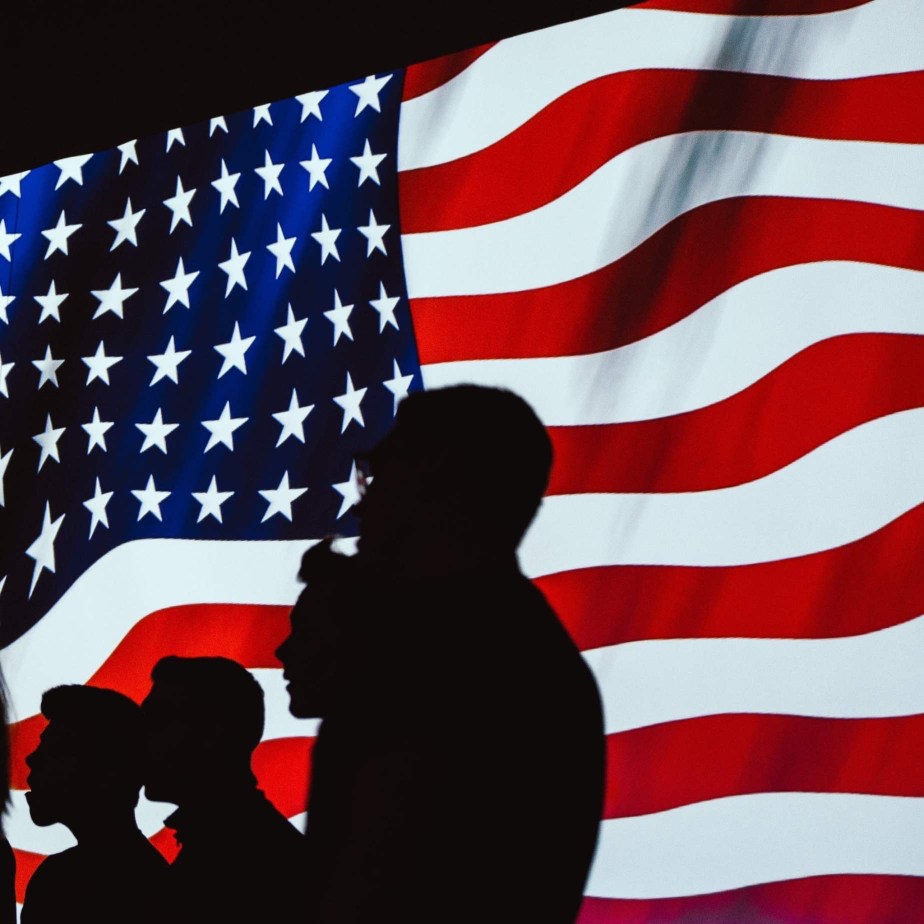
The Pledge of Allegiance was written in August 1892 by the socialist minister Francis Bellamy (1855-1931). It was originally published in The Youth’s Companion on September 8, 1892. Bellamy had hoped that the pledge would be used by citizens in any country.

In its original form it read:

“I pledge allegiance to my Flag and the Republic for which it stands, one nation, indivisible, with liberty and justice for all.”

On June 22nd in 1942 the Pledge of Allegiance is formally adopted by US Congress.

Every American—should know that, although the Pledge was adopted in 1942, the words “under God” were added only in 1954 in a bill signed by President Eisenhower. The words were added after a campaign by the Knights of Columbus (a Catholic organization) and a Presbyterian minister to help distinguish the U.S. from our “atheistic” Cold War enemies.

#PledgeOfAllegiance #UnderGod #FrancisBellamy

Myth Busting: Christopher Columbus

MYTH: Christopher Columbus was the one who discovered America.

TRUTH: Even if you ignore the indigenous populations on the continent (you shouldn’t), the first European to land in America was technically Leif Erikson some 400 years earlier.

MYTH: Columbus discovered that the Earth was round when he sailed for India and ended up in America.

TRUTH: Believe it or not, it was generally accepted that the Earth was a sphere by the time Columbus embarked on his famous voyage. In fact, it had even been known to the ancient Greeks almost 2,000 years prior!

#Colombus #America #RoundEarth

Lincoln’s House Divided Speech

On June 16th, 1858, Abraham Lincoln, then a Republican nominee for a U.S. Senate seat, delivered his famous House Divided speech in Springfield, Illinois. Calling attention to the problems that slavery would cause in the future, the speech included these famous words:

“A house divided against itself, cannot stand. I believe this government cannot endure, permanently, half slave and half free. I do not expect the Union to be dissolved — I do not expect the house to fall — but I do expect it will cease to be divided. It will become all one thing or all the other. Either the opponents of slavery will arrest the further spread of it, and place it where the public mind shall rest in the belief that it is in the course of ultimate extinction; or its advocates will push it forward, till it shall become lawful in all the States, old as well as new — North as well as South.”
~ Abraham Lincoln, 1858

Juneteenth

June 19th is Juneteenth, which has been celebrated, especially by the African-American community, for over 100 years, as it commemorates the announcment in Texas of the abolition of slavery throughout the U.S.—on June 19, 1865 (Over two years after the Emancipation Proclamation).

On June 18, Union Army General Gordon Granger arrived at Galveston Island with 2,000 federal troops to occupy Texas on behalf of the federal government. The following day, standing on the balcony of Galveston’s Ashton Villa, Granger read aloud the contents of “General Order No. 3”, announcing the total emancipation of those held as slaves:

“The people of Texas are informed that, in accordance with a proclamation from the Executive of the United States, all slaves are free. This involves an absolute equality of personal rights and rights of property between former masters and slaves, and the connection heretofore existing between them becomes that between employer and hired labor. The freedmen are advised to remain quietly at their present homes and work for wages. They are informed that they will not be allowed to collect at military posts and that they will not be supported in idleness either there or elsewhere.”

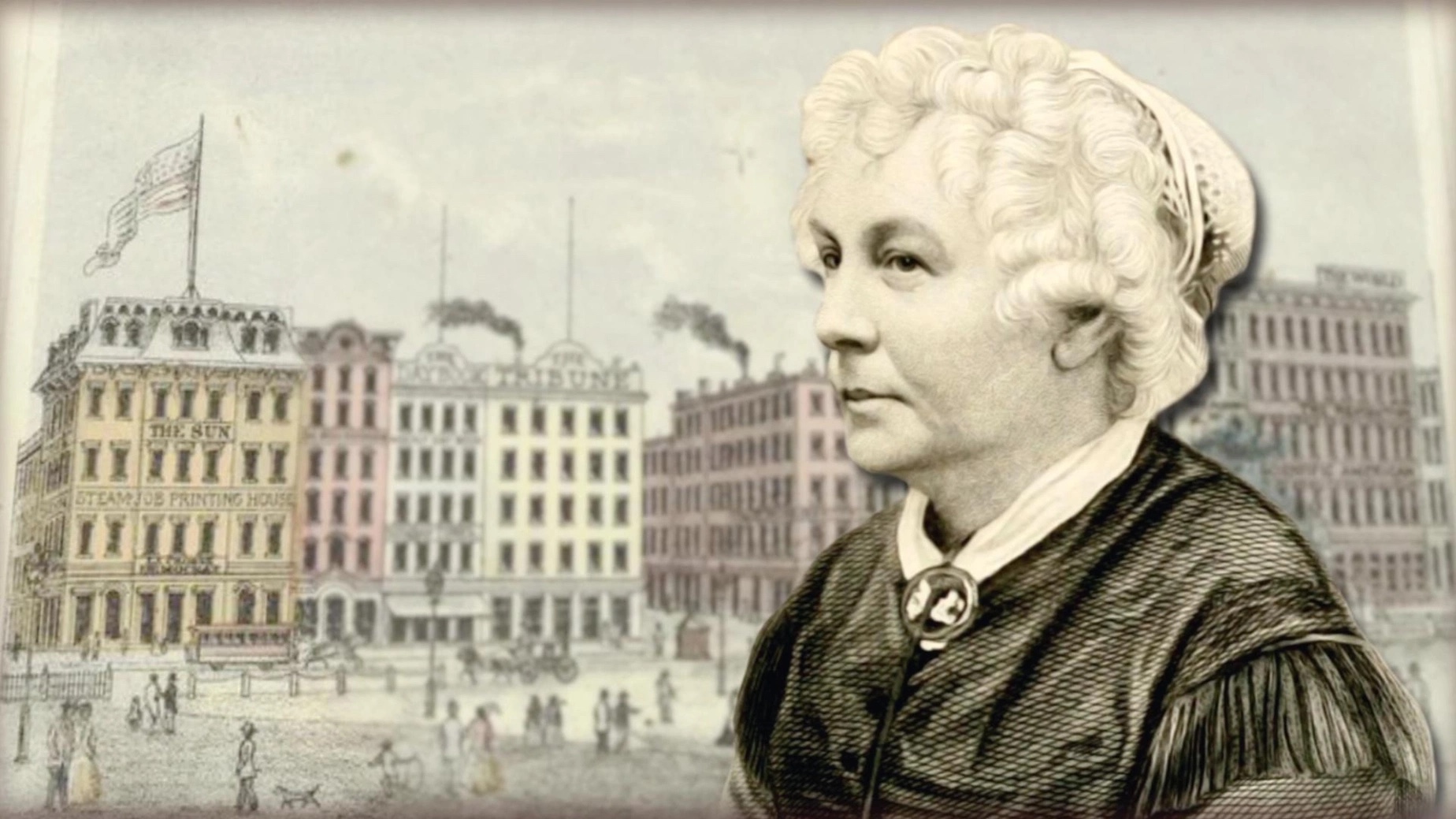
Elizabeth Cady Stanton

On November 12, 1815, Elizabeth Cady Stanton, spokesperson for the rights of women, was born in Johnstown, New York. Stanton formulated the philosophical basis of the woman suffrage movement, blazing a trail many feared to follow.

Stanton’s verbal brilliance combined with the organizational ability and mental focus of her lifelong collaborator Susan B. Anthony made the two women a formidable resource to the early cause.

Although Stanton served as president of the “radical” National Woman Suffrage Association and its successor the National American Woman Suffrage Association (NAWSA), she found it Increasingly difficult to maintain her leadership role. Interestingly, her agenda was far more radical than that of many younger, more conservative feminists.

Stanton’s belief that organized religion subjugated women alienated some supporters. In The Woman’s Bible, she brought considerable notoriety upon herself by criticizing the treatment of women in the Old Testament.

“The history of mankind is a history of repeated injuries and usurpations on the part of man toward woman, having in direct object the establishment of an absolute tyranny over her. To prove this, let facts be submitted to a candid world…wherever we turn, the history of woman is sad and dark, without any alleviating circumstances, nothing from which we can draw consolation.”
~ Elizabeth Cady Stanton, “Declaration of Sentiments.”

Sources: Library of Congress

Declaration of Independence

Today’s American History Lesson:

** The Declaration of Independence wasn’t signed on July 4, 1776. **

On July 1, 1776, the Second Continental Congress met in Philadelphia, and on the following day 12 of the 13 colonies voted in favor of Richard Henry Lee’s motion for independence. The delegates then spent the next two days debating and revising the language of a statement drafted by Thomas Jefferson. On July 4, Congress officially adopted the Declaration of Independence, and as a result the date is celebrated as Independence Day. Nearly a month would go by, however, before the actual signing of the document took place. First, New York’s delegates didn’t officially give their support until July 9 because their home assembly hadn’t yet authorized them to vote in favor of independence. Next, it took two weeks for the Declaration to be “engrossed”—written on parchment in a clear hand. Most of the delegates signed on August 2, but several—Elbridge Gerry, Oliver Wolcott, Lewis Morris, Thomas McKean and Matthew Thornton—signed on a later date. (Two others, John Dickinson and Robert R. Livingston, never signed at all.) The signed parchment copy now resides at the National Archives in the Rotunda for the Charters of Freedom, alongside the Constitution and the Bill of Rights.

#DeclarationOfIndependence #HistoryLesson