Emile Zola

On this date in 1840, Emile Zola was born in Paris. The novelist pioneered naturalistic writing, believing ugly problems could not be solved as long as they stayed hidden. As a struggling young writer, Zola supported himself as a clerk. Legend has it he sometimes resorted to trapping birds on his windowsill in order to eat. Zola also moonlighted as a political reporter and critic. He was fired from a publishing house after an early autobiographical novel created notoriety. His breakthrough novel was Therese Raquin (1867). By the time his book L’Assammoir (“The Drunkard,” 1878) appeared, Zola was France’s most famous writer, yet he was barred his entire life from the Academy. His book Germinal (1885), about conditions in a coal mine leading to a strike, was denounced by the rightwing. Nana (1880) examined sexual exploitation.

Zola’s most enduring work is his open letter “J’Accuse,” about the Dreyfus case. He campaigned with Clemenceau to free the the French Jewish army officer falsely accused of spying. Zola was sentenced to imprisonment for writing “J’Accuse” in 1898, escaping to England until he could safely return after Dreyfus’ name had been cleared. Zola, who was baptized Catholic, was a notable critic of the Roman Catholic Church (and vice versa). The Church particularly condemned his books Lourdes, Rome, and Paris (1894-98). The agnostic was an honorary associate of the British Press Association in England. D. 1902.

“When truth is buried underground it grows, it chokes, it gathers such an explosive force that on the day it bursts out, it blows up everything with it.”

“The truth is on the march, and nothing shall stop it.”

~ Emile Zola, “J’Accuse!” L’Aurore, Jan. 13, 1898

Amos Oz on Fanaticism

“Fanaticism dates back much earlier than Islam. Earlier than Christianity and Judaism. Earlier than all the ideologies in the world. It is an elemental fixture of human nature, a “bad gene.” People who bomb abortion clinics, murder immigrants in Europe, murder Jewish women and children in Israel, burn down a house in the Israeli-occupied territories with an entire Palestinian family inside, desecrate synagogues and churches and mosques and cemeteries—they are all distinct from al-Qaeda and ISIS in the scope and severity of their acts, but not in their nature. Today we speak of “hate crimes,” but perhaps a more accurate term would be “zealotry crimes,” and such crimes are carried out almost daily, including against Muslims.

Genocide and jihad and the Crusades, the Inquisition and the gulags, extermination camps and gas chambers, torture dungeons and indiscriminate terrorist attacks: none of these are new, and almost all of them preceded the rise of radical Islam by centuries.

As the questions grow harder and more complicated, people yearn for simpler answers, one-sentence answers, answers that point unhesitatingly to a culprit who can be blamed for all our suffering, answers that promise that if we only eradicate the villains, all our troubles will vanish.

“It’s all because of globalization!” “It’s all because of the Muslims!” “It’s all because of permissiveness!” or “because of the West!” or “because of Zionism!” or “because of immigrants!” or “because of secularism!” or “because of the left wing!” All one needs to do is cross out the incorrect entries, circle the right Satan, then kill that Satan (along with his neighbors and anyone who happens to be in the area), thereby opening the gates of heaven once and for all.

More and more commonly, the strongest public sentiment is one of profound loathing—subversive loathing of “the hegemonic discourse,” Western loathing of the East, Eastern loathing of the West, secular loathing of believers, religious loathing of the secular. Sweeping, unmitigated loathing surges like vomit from the depths of this or that misery. Such extreme loathing is a component of fanaticism in all its guises.

For example, concepts that only half a century ago seemed innovative and exciting—multiculturalism and identity politics—quickly morphed, in many places, into the politics of identity hatred. What began with an expansion of cultural and emotional horizons is increasingly deteriorating into narrower horizons, isolationism, and hatred of the other. In short, a new wave of loathing and extremism assails us from all sides.”

~ Amos Oz, from “Dear Zealots.” 2002.

Virginia Woolf Suicide Note

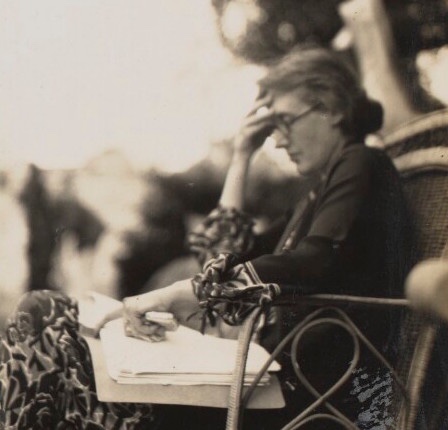
Virginia Woolf died 80 years ago on this day in 1941:

“Dearest, I feel certain that I am going mad again. I feel we can’t go through another of those terrible times. And I shan’t recover this time. I begin to hear voices, and I can’t concentrate. So I am doing what seems the best thing to do. You have given me the greatest possible happiness. You have been in every way all that anyone could be. I don’t think two people could have been happier till this terrible disease came. I can’t fight any longer. I know that I am spoiling your life, that without me you could work. And you will I know. You see I can’t even write this properly. I can’t read. What I want to say is I owe all the happiness of my life to you. You have been entirely patient with me and incredibly good. I want to say that—everybody knows it. If anybody could have saved me it would have been you. Everything has gone from me but the certainty of your goodness. I can’t go on spoiling your life any longer. I don’t think two people could have been happier than we have been. V.”

~ Virginia Woolf’s suicide letter to her husband

#VirginiaWoolf #FavoriteAuthors #MentalHealth

Mary Wollstonecraft Quotes for Women’s History Month

A few quotes by Mary Wollstonecraft, author of “A Vindication of the Rights of Woman,” for women’s history month:

“I do not wish them [women] to have power over men; but over themselves.”

“My own sex, I hope, will excuse me, if I treat them like rational creatures, instead of flattering their fascinating graces, and viewing them as if they were in a state of perpetual childhood, unable to stand alone.”

“[I]f we revert to history, we shall find that the women who have distinguished themselves have neither been the most beautiful nor the most gentle of their sex.”

“Taught from their infancy that beauty is woman’s sceptre, the mind shapes itself to the body, and roaming round its gilt cage, only seeks to adorn its prison.”

“I love man as my fellow; but his scepter, real, or usurped, extends not to me, unless the reason of an individual demands my homage; and even then the submission is to reason, and not to man.”

“The beginning is always today.”
~ Mary Wollstonecraft (1759-1797)

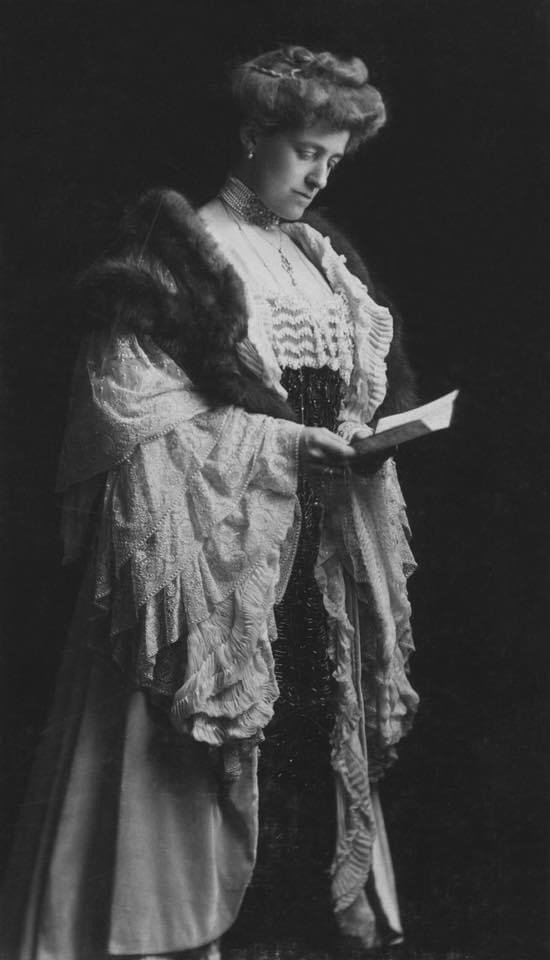
Edith Wharton Quotes for Women’s History Month

A few quotes by Edith Wharton (first woman to win the pulitzer prize) for women’s history month:

“Life is always either a tightrope or a feather bed. Give me the tightrope.”

“There is one friend in the life of each of us who seems not a separate person, however dear and beloved, but an expansion, an interpretation, of one’s self, the very meaning of one’s soul.”

“In spite of illness, in spite even of the archenemy sorrow, one can remain alive long past the usual date of disintegration if one is unafraid of change, insatiable in intellectual curiosity, interested in big things, and happy in small ways.”
~ Edith Wharton (1862-1937)

Virginia Woolf. from “To the Lighthouse”

“She looked up over her knitting and met the third stroke and it seemed to her like her own eyes meeting her own eyes, searching as she could alone search into her mind and her heart, purifying out of existence that lie, any lie. She praised herself in praising the light, without vanity, for she was stern, she was searching, she was beautiful like that light.”

~ Virginia Woolf. “To the Lighthouse”

#FavoriteQuotes #FavoriteAuthors #VirginiaWoolf #ToTheLighthouse

Mad Girl’s Love Song – Sylvia Plath

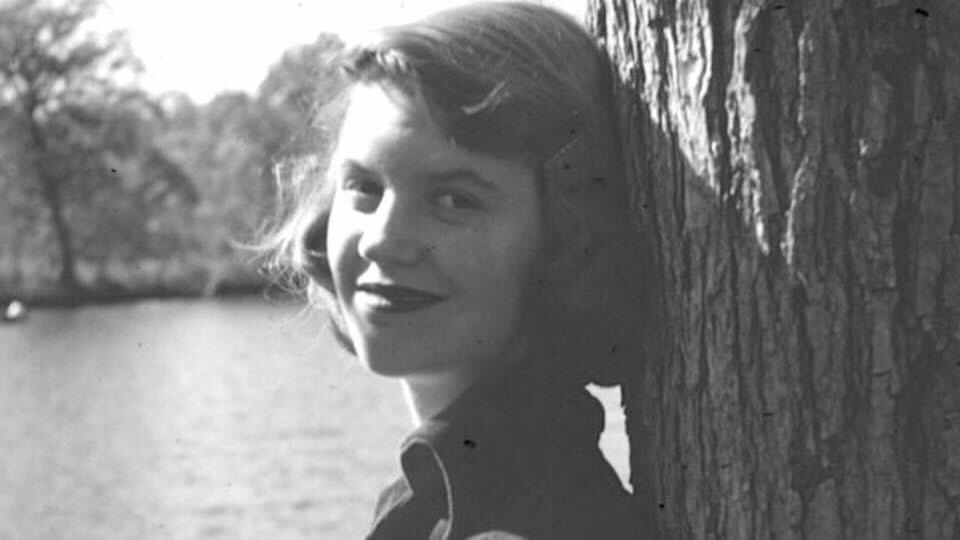
A short poem for women’s History month by Sylvia Plath:

Mad Girl’s Love Song

I shut my eyes and all the world drops dead;
I lift my lids and all is born again.
(I think I made you up inside my head.)

The stars go waltzing out in blue and red,
And arbitrary blackness gallops in:
I shut my eyes and all the world drops dead.

I dreamed that you bewitched me into bed
And sung me moon-struck, kissed me quite insane.
(I think I made you up inside my head.)

God topples from the sky, hell’s fires fade:
Exit seraphim and Satan’s men:
I shut my eyes and all the world drops dead.

I fancied you’d return the way you said,
But I grow old and I forget your name.
(I think I made you up inside my head.)

I should have loved a thunderbird instead;
At least when spring comes they roar back again.
I shut my eyes and all the world drops dead.
(I think I made you up inside my head.)
~ Sylvia Plath.

Wanting to Die – by Anne Sexton

Since you ask, most days I cannot remember.

I walk in my clothing, unmarked by that voyage.

Then the almost unnameable lust returns.


Even then I have nothing against life.

I know well the grass blades you mention,

the furniture you have placed under the sun.


But suicides have a special language.

Like carpenters they want to know which tools.

They never ask why build.


Twice I have so simply declared myself,

have possessed the enemy, eaten the enemy,

have taken on his craft, his magic.


In this way, heavy and thoughtful,

warmer than oil or water,

I have rested, drooling at the mouth-hole.


I did not think of my body at needle point.

Even the cornea and the leftover urine were gone.

Suicides have already betrayed the body.


Still-born, they don’t always die,

but dazzled, they can’t forget a drug so sweet

that even children would look on and smile.


To thrust all that life under your tongue!–

that, all by itself, becomes a passion.

Death’s a sad Bone; bruised, you’d say,


and yet she waits for me, year after year,

to so delicately undo an old wound,

to empty my breath from its bad prison.


Balanced there, suicides sometimes meet,

raging at the fruit, a pumped-up moon,

leaving the bread they mistook for a kiss,


leaving the page of the book carelessly open,

something unsaid, the phone off the hook

and the love, whatever it was, an infection.