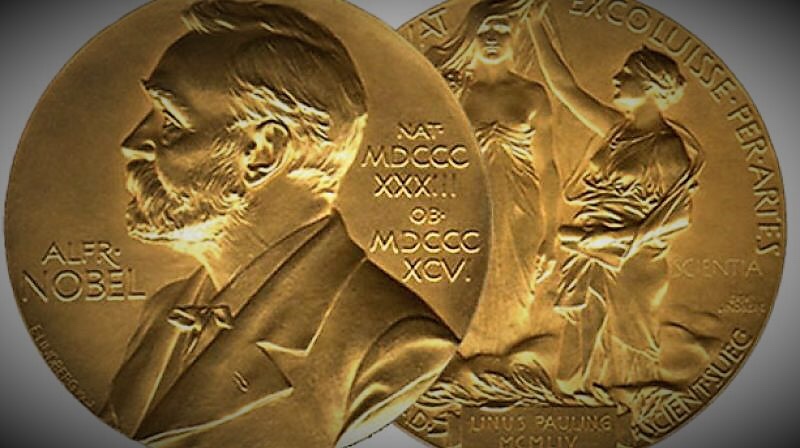
Most Nobel Prize for Literature Winners

Q: What country has produced the most Nobel Prize for Literature winners?

A: France (15 received, 1 declined)

1. Patrick Modiano, Literature, 2014

2. J. M. G. Le Clézio, Literature, 2008

3. Gao Xingjian, born in China, Literature, 2000

4. Claude Simon, Literature, 1985

5. Jean-Paul Sartre, (declined the prize), Literature, 1964

6. Saint-John Perse, Literature, 1960

7. Albert Camus, born in French Algeria, Literature, 1957

8. François Mauriac, Literature, 1952

9. André Gide, Literature, 1947

10. Roger Martin du Gard, Literature, 1937

11. Ivan Bunin, born in Russia, Literature, 1933

12. Henri Bergson, Literature, 1927

13. Anatole France, Literature, 1921

14. Romain Rolland, Literature, 1915

15. Frédéric Mistral, Literature, 1904

16. Sully Prudhomme, Literature, 1901

The Bell Jar – Sylvia Plath

Today in Literary History —> “The Bell Jar,” by Sylvia Plath was first published 1/14/1963. It would not be published in the U.S. until 1971.

“What I’ve done is to throw together events from my own life, fictionalising to add colour- it’s a pot boiler really, but I think it will show how isolated a person feels when he is suffering a breakdown…. I’ve tried to picture my world and the people in it as seen through the distorting lens of a bell jar”
~ Sylvia Plath

Joseph Campbell on “Society”

“You can tell what’s informing a society by what the tallest building is. When you approach a medieval town, the cathedral is the tallest thing in the place. When you approach an eighteenth-century town, it is the political palace that’s the tallest thing in the place. And when you approach a modern city, the tallest places are the office buildings, the center of economic life.”

~ Joseph Campbell

#FavoriteQuotes #JosephCampbell

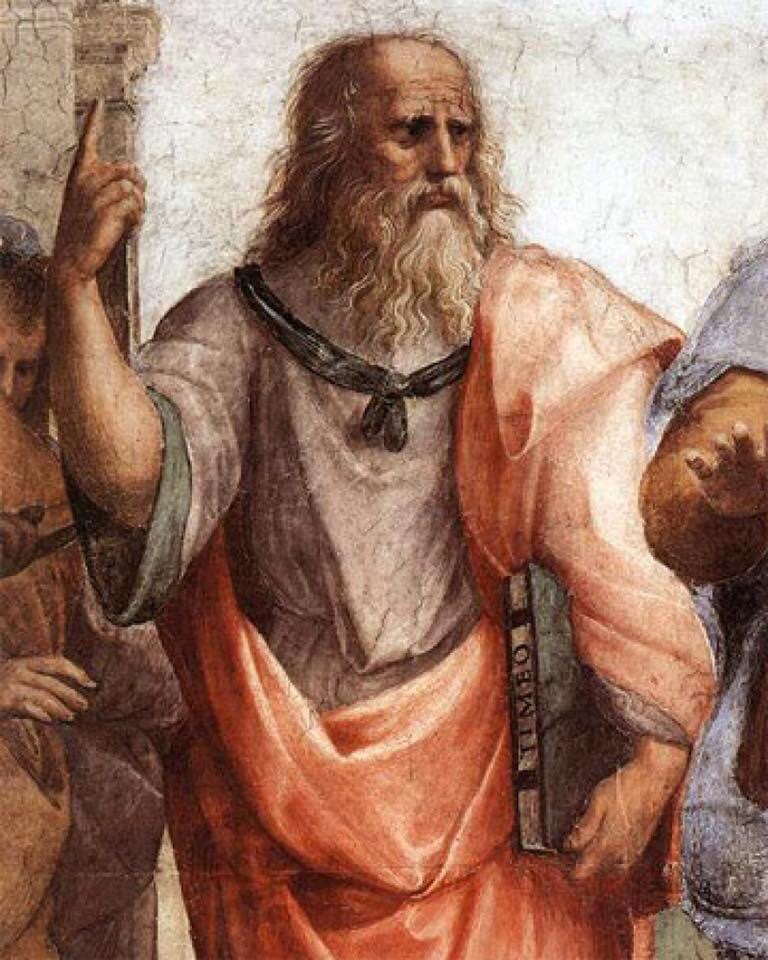
Plato’s Euthyphro Dilemma

Plato’s Euthyphro Dilemma

“Are morally good acts willed by God because they are morally good, or are they morally good because they are willed by God?”

~ Socrates

(1) If divine command theory is true then either (i) morally good acts are willed by God because they are morally good, or (ii) morally good acts are morally good because they are willed by God.

(2) If (i) morally good acts are willed by God because they are morally good, then they are morally good independent of God’s will.

(3) It is not the case that morally good acts are morally good independent of God’s will.

Therefore:

(4) It is not the case that (i) morally good acts are willed by God because they are morally good.

(5) If (ii) morally good acts are morally good because they are willed by God, then there is no reason either to care about God’s moral goodness or to worship him.

(6) There are reasons both to care about God’s moral goodness and to worship him.

Therefore:

(7) It is not the case that (ii) morally good acts are morally good because they are willed by God.

Therefore:

(8) Divine command theory is false.

If we are to get on the right side of the world revolution…

“I am convinced that if we are to get on the right side of the world revolution, we as a nation must undergo a radical revolution of values. We must rapidly begin the shift from a “thing-oriented” society to a “person-oriented” society. When machines and computers, profit motives and property rights are considered more important than people, the giant triplets of racism, materialism, and militarism are incapable of being conquered.”

~ Dr. Martin Luther King, Jr.

#FavoriteQuotes #MartinLutherKingJr

Percy Bysshe Shelley and Mary Wollstonecraft Godwin Marry

On this day in 1816, Percy Bysshe Shelley and Mary Wollstonecraft Godwin wed. The pair had run away together in July 1814, but because Shelley was already married they were unable to marry for two years, until the death of Shelley’s wife. While living in Geneva, the Shelleys and their dear friend Lord Byron challenged each other to write a compelling ghost story. Only Mary Shelley finished hers and later published the story as Frankenstein.

#LiteraryHistory #Shelley

A Portrait of the Artist as a Young Man

Today in 1916 – “A Portrait of the Artist as a Young Man,” the first novel by James Joyce, was first published as a book by an American publishing house B. W. Huebschis after it had been serialized in The Egoist (1914–15).

A so-so copy of the first edition of that book will run you around $3800, but that’s not nearly as much as a first edition of Ulysses, which will cost you about $40,000 unsigned and $150,000 signed (only 1000 copies were printed).

Plato from the “Apology”

“I am wiser than this man, for neither of us appears to know anything great and good; but he fancies he knows something, although he knows nothing; whereas I, as I do not know anything, so I do not fancy I do. In this trifling particular, then, I appear to be wiser than he, because I do not fancy I know what I do not know.”

~ Plato, from the “Apology”

#FavoriteQuotes #Plato #Wisdom