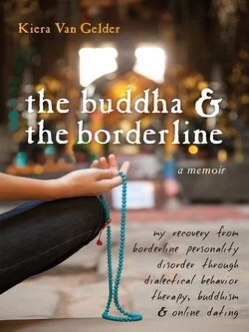
Book Review: Buddha & The Borderline

This book is atypical of the type I will normally review or discuss, but it is a phenomenal book that tangentially discusses Buddhism.  The book is really about a woman who suffers from borderline personality disorder and her journey through the depths of the disease and into recovery.  Buddhism plays a fundamental role in her recovery, but if you are looking for a deep discussion of Buddhist thought look elsewhere.  What you will find here is an inspiring story that will make you laugh out loud for real, cringe and possibly cry in spots.  There are parts of the true story that are just plain ugly and scary.  This is one of my favorite quick reads which gives you a sense of the importance of Buddhism in the life of a pained individual as she struggle to redefine herself.

The Buddha and the Borderline is a cross between Girl, Interrupted and Bridget Jones’s Diary.While reading it, I found myself admiring Kiera’s talent for vividly describing borderline hopelessness and pain while keeping me laughing with her tales of life as a ‘lonely and increasingly horny receptionist.’ While this book has something for everyone, Kiera’s detailed account of how she recovered from this deadly disorder will be enormously inspiring to people with borderline personality disorder and their family members.” (Randi Kreger)

“Kiera’s book is destind to become a classic in the growing literature on borderline personality disorder. I expected to get a somber account of a transformation from suffering to enlightenment,but the book I read was not only entirely entertaining and revealing, but also had me up way past my bedtime in stitches. The Buddha and the Borderline is seriously funny, authentic, and sublime in its wisdom. The book embodies the Four Noble Truths of Buddhism and integrates the world of core unrelenting suffering with the world of freedom from suffering. Transcendent stuff.” (Blaise Aguirre,MD, medical director of the Adolescent Dialectical Behavior Therapy Residential Program at McLean Hospital in Belmont, MA)

Borderline Personality Disorder: Symptoms

Borderline personality disorder is a mental health disorder that impacts the way you think and feel about yourself and others, causing problems functioning in everyday life. It includes self-image issues, difficulty managing emotions and behavior, and a pattern of unstable relationships.

With borderline personality disorder, you have an intense fear of abandonment or instability, and you may have difficulty tolerating being alone. Yet inappropriate anger, impulsiveness and frequent mood swings may push others away, even though you want to have loving and lasting relationships.

Symptoms:

Borderline personality disorder affects how you feel about yourself, how you relate to others and how you behave.

Signs and symptoms may include:

• An intense fear of abandonment, even going to extreme measures to avoid real or imagined separation or rejection

• A pattern of unstable intense relationships, such as idealizing someone one moment and then suddenly believing the person doesn’t care enough or is cruel

• Rapid changes in self-identity and self-image that include shifting goals and values, and seeing yourself as bad or as if you don’t exist at all

• Periods of stress-related paranoia and loss of contact with reality, lasting from a few minutes to a few hours

• Impulsive and risky behavior, such as gambling, reckless driving, unsafe sex, spending sprees, binge eating or drug abuse, or sabotaging success by suddenly quitting a good job or ending a positive relationship

• Suicidal threats or behavior or self-injury, often in response to fear of separation or rejection

• Wide mood swings lasting from a few hours to a few days, which can include intense happiness, irritability, shame or anxiety

• Ongoing feelings of emptiness

• Inappropriate, intense anger, such as frequently losing your temper, being sarcastic or bitter, or having physical fights

Complications:

Borderline personality disorder can damage many areas of your life. It can negatively affect intimate relationships, jobs, school, social activities and self-image, resulting in:

• Repeated job changes or losses

• Not completing an education

• Multiple legal issues, such as jail time

• Conflict-filled relationships, marital stress or divorce

• Self-injury, such as cutting or burning, and frequent hospitalizations

• Involvement in abusive relationships

• Unplanned pregnancies, sexually transmitted infections, motor vehicle accidents and physical fights due to impulsive and risky behavior

• Attempted or completed suicide

In addition, you may have other mental health disorders, such as:

• Depression

• Alcohol or other substance misuse

• Anxiety disorders

• Eating disorders

• Bipolar disorder

• Post-traumatic stress disorder (PTSD)

• Attention-deficit/hyperactivity disorder (ADHD)

• Other personality disorders