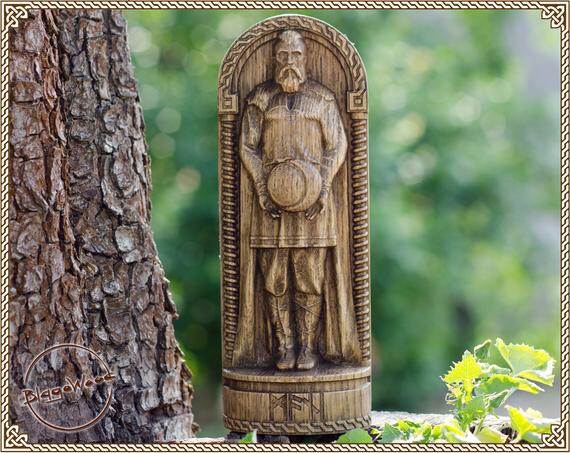
The Romans named the third day of the week for Mars, their fearless, brutal, relentless god of war. For the Vikings, though, this was Tyr. Tyr was a “god of battles, the foster-father of the wolf, and the one-handed god” (according to the Prose Edda). Tyr lost his hand to Fenrir the wolf long ago, but only because he was brave enough and resolute enough to bind the creature.
Vikings looked at Tyr as the god of justice. They called his day, Tyr’sDay (in Old Norse: Tysdagr). However, our pronunciation comes from Tyr’s Anglo-Saxon name Tiw, (hence, Tiwesdaeg). Devoted as it always has been to the god of war, Tuesday is still the day of the week that always seems to be all-business.
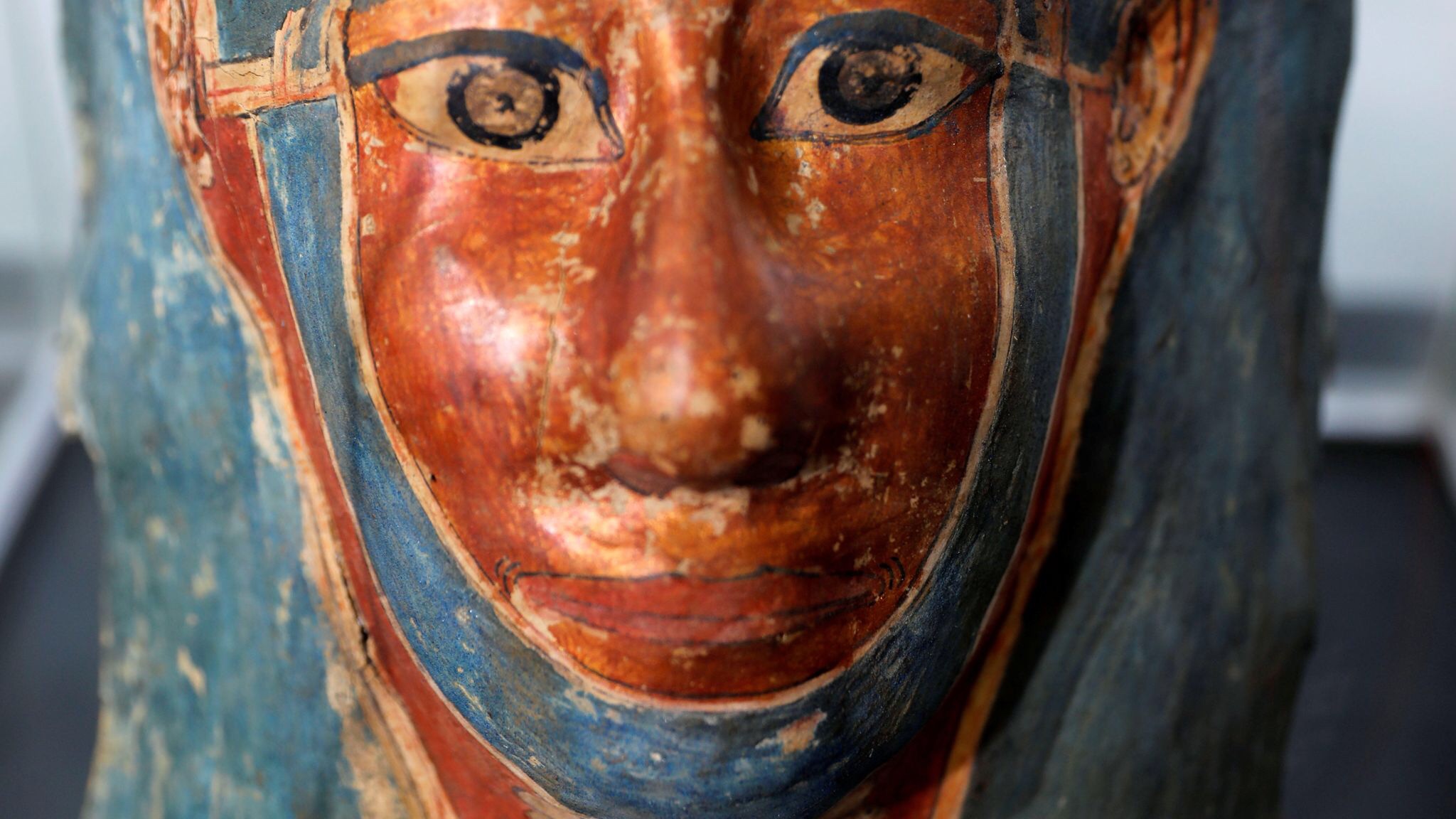
Egyptian antiquities officials have announced the discovery of almost 100 ancient sealed sarcophagi, which were buried more than 2,500 years ago in the Pharaonic necropolis and around 40 golden statues in south Cairo.
Archaeologists discovered a well-preserved mummy wrapped in cloth – which they later X-rayed to find out how the body had been conserved.
Tourism and antiquities minister Khaled el-Anany said the items date back to the Ptolemaic dynasty that ruled Egypt for 300 years – from around 320BC to around 30BC and the Late Period (664-332BC).
Since September, antiquities experts have found around 140 sealed sarcophagi, featuring mummies inside almost all of them.
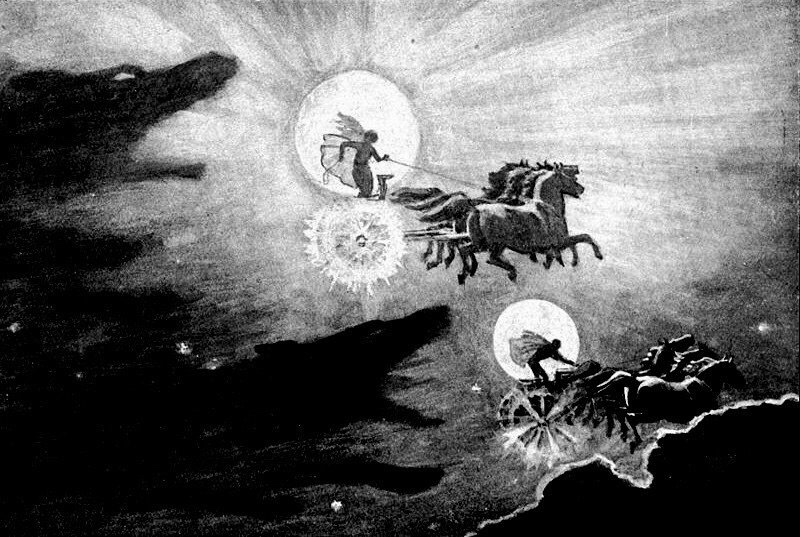
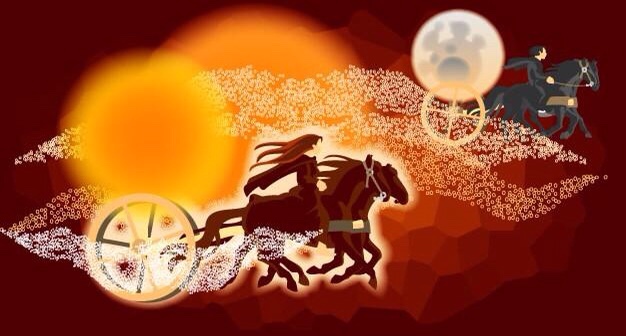
Monday was the day the Romans devoted to the moon. In modern romance languages, it is rendered lunes/lundi/ lunedì. For the Romans, the moon was associated with goddesses like Diana/Artemis, Selene, and Hecate. Once again, the Vikings saw this the other way. The moon was Máni, Sól’s brother (i.e. Moon Day). Like his sister, the Sun, Máni rode a chariot across the sky and was pursued by wolves. At Ragnarok, Fenrir’s brood is fated to devour the moon. This ominous portent is often mentioned in the Eddic poems.
As with Sól, Máni seems like a personification to explain a natural phenomenon and does not seem to hold much importance in the Viking pantheon – unlike the weighty significance Mediterranean peoples placed on their moon goddesses. These tales of wolves devouring the sun and moon may have been inspired by the terror the ancients felt when viewing an eclipse.
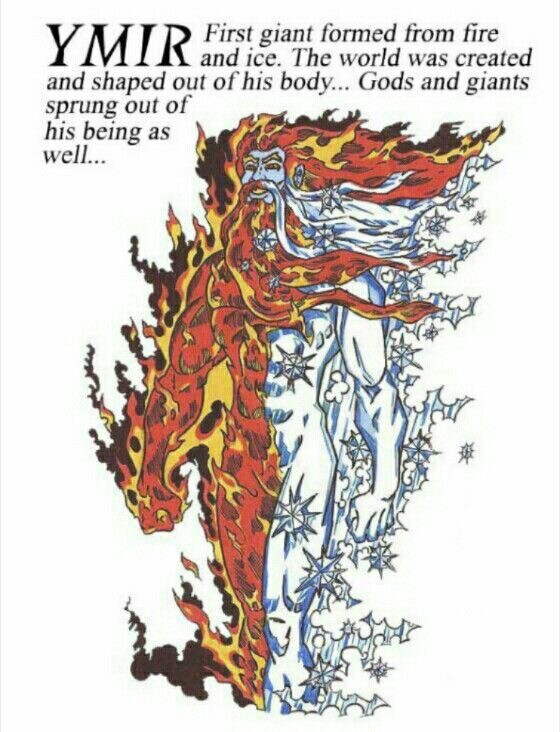
Ymir is the primordial giant and the progenitor of the race of frost giants. He was created from the melting ice of Niflheim, when it came in contact with the hot air from Muspell. From Ymir’s sleeping body the first giants sprang forth: one of his legs fathered a son on his other leg while from under his armpit a man and women grew out. The frost kept melting and from the drops the divine cow Audumla was created. From her udder flowed four rivers of milk, on which Ymir fed. The cow itself got nourishment by licking frost and salt from the ice.
On the evening on the first day the hair of a man appeared, on the second day the whole head and on the third day it became a man, Buri, the first god. His grandchildren are Odin, Ve and Vili. Odin and his brothers had no liking for Ymir, nor for the growing number of giants, and killed him. In the huge amount of blood that flowed from Ymir’s wounds all the giants, except two, drowned. From the slain body the brothers created heaven and earth. They used the flesh to fill the Ginnungagap; his blood to create the lakes and the seas; from his unbroken bones they made the mountains; the giant’s teeth and the fragments of his shattered bones became rocks and boulders and stones; trees were made from his hair, and the clouds from his brains. Odin and his brothers raised Ymir’s skull and made the sky from it and beneath its four corners they placed a dwarf. Finally, from Ymir’s eyebrow they shaped Midgard, the realm of man. The maggots which swarmed in Ymir’s flesh they gave wits and the shape of men, but they live under the hills and mountains. They are called dwarfs.
Arguably, the sun is the most essential thing for life on this planet. So, it comes as no surprise that ancient cultures either worshiped the sun directly or made sun gods key members of their pantheons. The Egyptians had Ra. Apollo was worshiped across the Mediterranean. Later, Roman rulers tried to make Sol Invictus (the Invincible Sun) the official god of the Empire. So, it is no surprise that the Romans named the first day of the week Dies Solis (Sun Day). However, in later Romance languages (like Spanish, French, or Italian), the name changed to reflect Catholic culture (i.e., domingo/domenica/dimanche).
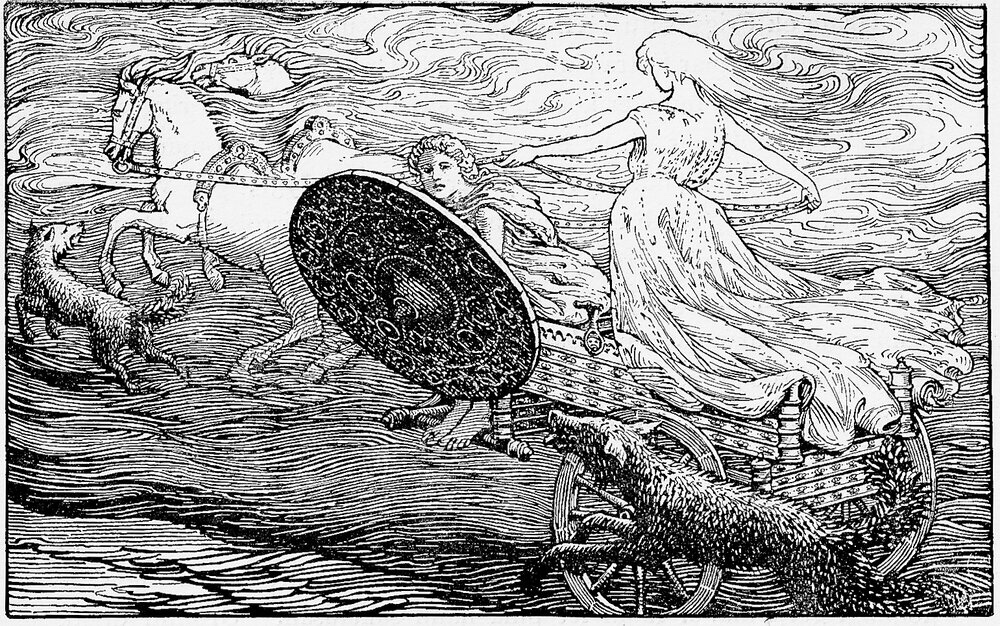
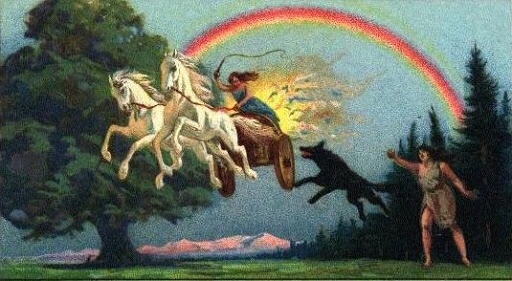
The Vikings seem to have had a different view, though. In Norse belief, the sun was not some powerful masculine god. Instead, the sun was a woman (a goddess presumably, but never expressly called that). This woman, Sunna or Sól, drives her chariot lit from the sparks of Muspellsheim (the land of fire) across the sky (i.e. Sunna’s Day or Sun Day). Sól’s horses are called Arvak and Alsvinn, and they are cooled by bellows under their shoulders. Sól is continuously pursued by a giant wolf named Skoll, who is a relative of Fenrir.
There is significant archeological evidence that there was once a prominent cult of the sun in Scandinavia. However, almost all of these monuments and solar symbols faded away in the 6th century. This coincides with a great time of famine, frost, and darkness in the north that decimated the population and shattered people’s way of life. This little ice age was caused by two volcanic eruptions around the 540s. Some archaeologists theorize these catastrophes discredited the sun cult, driving the survivors of those grim decades to alter their faith. So, by the time of the Vikings some three centuries later, the Norse had no significant sun deity – just a woman fleeing from wolves. Many of the fertility and prosperity features one would expect from a sun deity were (apparently) transferred to gods and goddesses like Freyr or Sif.
According to Norse Pagan myths, Odin was the leader of the Wild Hunt every Yule and he would ride his eight-legged horse, Sleipnir around the whole time. Sleipnir could cover long distances in a very short period of time, just like Santa’s sleigh and reindeer. According to the same traditions, children would fill their boots with carrots, straw and sugar, and place them near the chimney for Odin’s flying horse to eat while resting. Odin would then return the favor and reward those children for their kindness by leaving gifts, toys, and candies in the boots. Sound familiar?
The device was believed to show the way back home and protect seamen and their ships from storms. The Vegvisir was like a guide helping its bearer to find his way home. Norse people believed that the Vegvisir had special powers and it was treated like talisman for luck, protection and blessings. This powerful symbol could help a person to find the right way in storms or bad weather whatever unfamiliar surroundings he or she may encounter. It has also long played an important role among people who believe in magic powers, such as Norse Shamans. As a spiritual compass, this magical device guides your heart and steps to make the right choices in life. If you have lost yourself and your faith, this sacred symbol helps you find confidence again.
Gungnir was a magical weapon created by the dwarves and given to Odin by Loki. The Gungnir never missed its mark and like Mjölnir, the hammer of Thor, it always returned to Odin.
The Triple Horn of Odin is yet another symbol of the great Norse God Odin. The symbol consists of three interlocked drinking horns, and is commonly worn or displayed as a sign of commitment to the modern Asatru faith. The horns figure in the mythological stories of Odin and are recalled in traditional Norse toasting rituals. In Norse mythology there are some tales describing God’s quest for the Odhroerir, a magical mead brewed from the blood of the wise god Kvasir.
The troll cross is an amulet made of a circle of iron crossed at the bottom in a shape of an oval rune. It was worn by Scandinavian people as a protection against trolls and elves.






 Mark Bere Peterson’s Counterculture, Urban Legends, Paganism & Witchcraft