This version of the lullaby from “Ronja Rövardotter / Ronia the robbers daugther” written by beloved Swedish writer, Astrid Lindgren, whose books have been read for children all over the world:
Lyrics in Swedish and English:
Vargen ylar i nattens skog
(The wolf is howling in the forest of the night)
Han vill men kan inte sova
(He wants to, but cannot sleep)
Hungern river i hans varga buk
(The hunger tears his wolven stomach)
Och det är kallt i hans stova
(And it’s cold in his burrow)
Du varg du varg, kom inte hit
(Wolf, wolf, don’t you come here)
Ungen min får du aldrig
( I will never let you take my child)
Vargen ylar i nattens skog
(The wolf is howling in the forest of the night)
Ylar av hunger o klagar
(Howling out of hunger and moaning)
Men jag ska ge’n en grisa svans
(But I will give him a pig tail)
Sånt passar i varga magar
(Which suits a wolven stomach)
Du varg du varg, kom inte hit
(Wolf, wolf, don’t you come here)
Ungen min får du aldrig
( I will never let you take my child)
It was abandoned in favor of Christianity in the year 1000
While Ásatrú was the religion of the vast majority of the settlers of Iceland, some had been converted to Christianity while travelling in Europe. During the first centuries of Icelandic history Christianity made further inroads, and by the end of the 10th century it was clear Ásatrú was on the retreat.
It was re-recognized in 1973
Ásatrú was only re-recognized as a religion by the state in 1973. A group of people who were either practitioners of the ancient religion or its students had been meeting for some time. This group, led by Sveinbjörn Beinteinsson who later became the first high-priest of the association, decided to establish a formal congregation and request recognition from the state. This meeting was held on the First Day of Summer, a unique Icelandic holiday which marks the end of winter and beginning of summer. At the time the number of members was just 12.
It is Iceland’s fastest growing religion
According to figures from Statistics Iceland 3,583 people belonged to Ásatrúarfélagið on January 1 2017, up from 1,040 members 10 years ago. The membership has grown by 244% since 2007, making paganism the fastest growing religion in Iceland over the past decade.
No proselytizing or missionary work
This growth has come in spite of the fact that unlike other religious organizations Ásatrúarfélagið has never engaged in any form of missionary work or proselytizing.
One high priest, 10 Goðar in Iceland (Goðar = Congregation)
The organization of Ásatrúarfélagið is based on the historic organization of Ásatrú during the Viking age. Priests in Ásatrú are called Goði, with each Goði responsible for a congregation “goðorð”. While the goðorð were associated with certain geographic areas during the Viking age, people were free to choose their Goði.
All the ceremonies of Ásatrúarfélagið are open to the general public
The weekly meetings of Ásatrúarfélagið are open to the public, as are all its official ceremonies, the blót. Ásatrúarfélagið has four main blót each year: Jólablót (Yule-blót) at winter solstice in honor of the goddess Freyja, Sigurblót (Victory-blót) held on Sumardagurinn Fyrsti in the spring in honor of the god Freyr, Þingblót (Þing/assembly-blót) on Summer solstice held in honor of the laws, the Þing and human society, and Veturnáttablót (Winter-nights-blót) held on the first day of winter. Veturnáttablót is in honor of Óðinn, the god of the gods.
First pagan temple since 1000 was opened in 2018
Ásatrúarfélagið moveed into a new temple just outside downtown Reykjavík. The temple was the first heathen central temple built in the Nordic countries for more than a thousand years.
There is no prescribed dogma or scripture
Ásatrú has no prescribed dogma or scripture. However, You are however encouraged to read the Poetic and Prose Eddas written by the 13th-century chieftain and scholar, Snorri Sturluson. No one actually prays to the gods and how you might ask their intercession is entirely up to you. The gods are imperfect and not divine.
It is a religion of peace and tolerance
Ásatrú, as it has been practiced in Iceland, is a religion of nature and life, stressing the harmony of the natural world and the search for harmony in the life of individuals. It’s openness and philosophical character has led some to compare it to Unitarian Universalism.
It rejects militarism and the glorification of heroism, battles and blood
Many neo-pagan groups in Europe and the US who consider themselves observers of the religion of the Vikings, practice a religion which glorifies battles, militarism, masculine heroism and in some cases chauvinism, violence, intolerance and racism. Unfortunatelysome white-power groups and members of Aryan Nation gangs practice these forms of paganism. Ásatrúarfélagið rejects this as a misreading of Ásatrú.
Ásatrúarfélagið has received hate mail from reactionary heathens abroad
Ásatrúarfélagið has cut all ties with foreign associations of pagans after receiving harassment and hate mail from people who are angry with emphasis the association has placed upon equality and respect for human rights, especially LGBTQ rights.
Anyone can practice the religion, But only Icelandic residents can join Ásatrúarfélagið
Only Icelandic citizens or people who have a domicile in Iceland can become members of the Ásatrúarfélag, but anyone can practice Ásatrú, regardless of their nationality or residence. It costs nothing to join and is open to all, irrespective of race, cultural background, gender or sexual orientation.
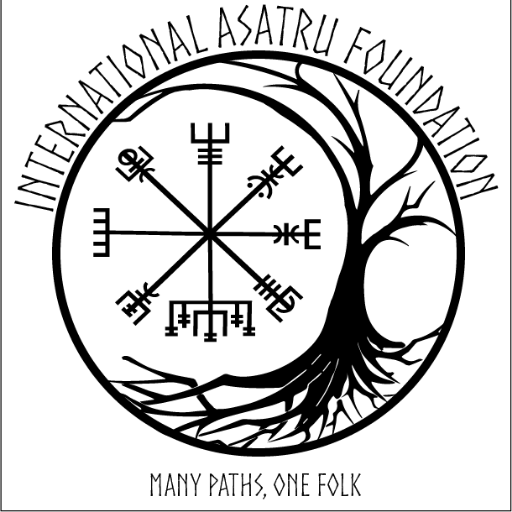
The device was believed to show the way back home and protect seamen and their ships from storms. The Vegvisir was like a guide helping its bearer to find his way home. Norse people believed that the Vegvisir had special powers and it was treated like talisman for luck, protection and blessings. This powerful symbol could help a person to find the right way in storms or bad weather whatever unfamiliar surroundings he or she may encounter. It has also long played an important role among people who believe in magic powers, such as Norse Shamans. As a spiritual compass, this magical device guides your heart and steps to make the right choices in life. If you have lost yourself and your faith, this sacred symbol helps you find confidence again.
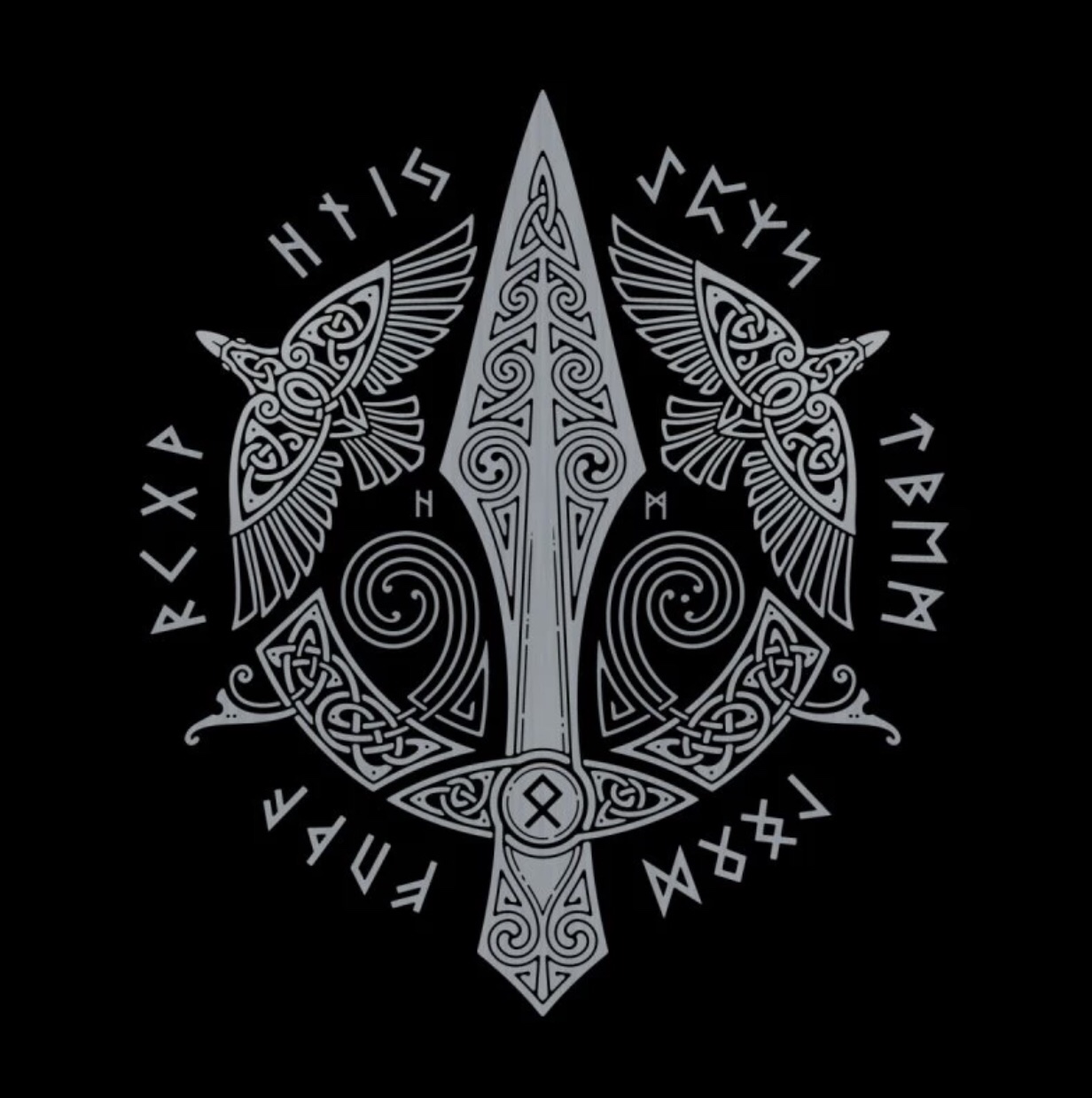
Gungnir was a magical weapon created by the dwarves and given to Odin by Loki. The Gungnir never missed its mark and like Mjölnir, the hammer of Thor, it always returned to Odin.
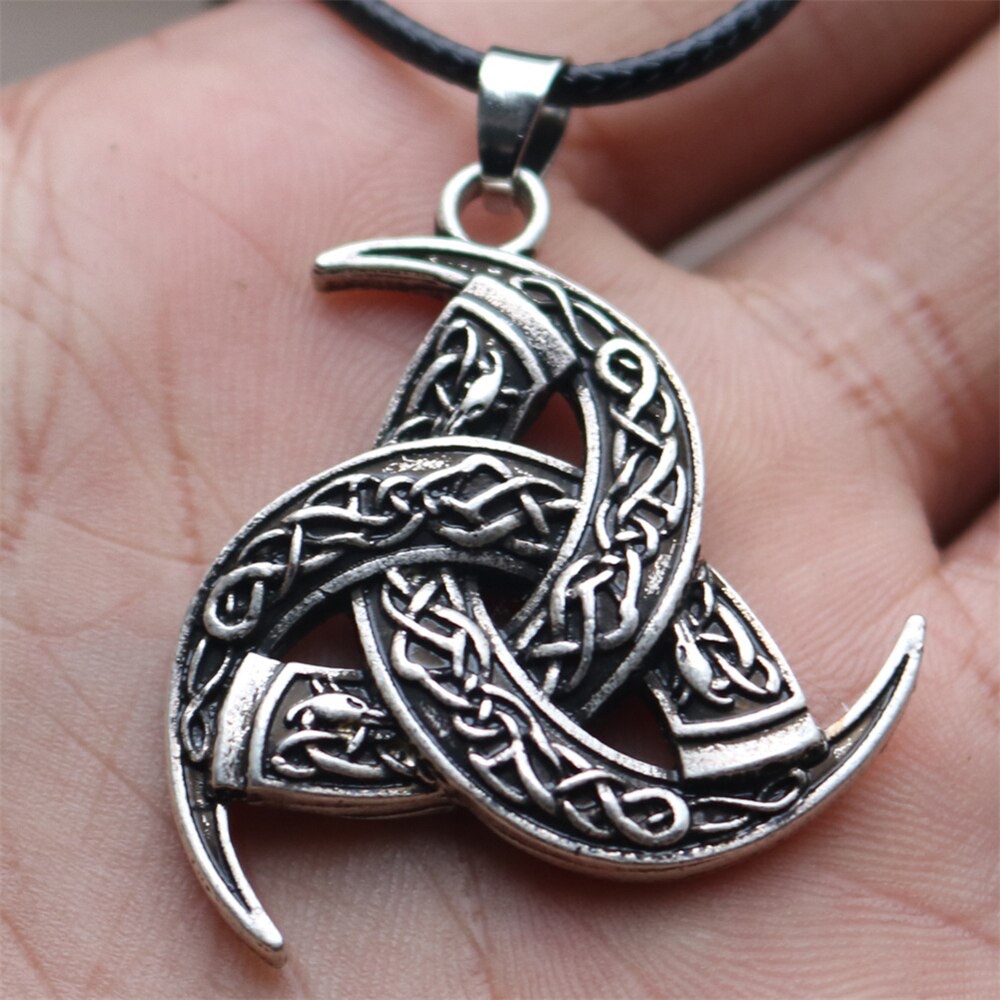
The Triple Horn of Odin is yet another symbol of the great Norse God Odin. The symbol consists of three interlocked drinking horns, and is commonly worn or displayed as a sign of commitment to the modern Asatru faith. The horns figure in the mythological stories of Odin and are recalled in traditional Norse toasting rituals. In Norse mythology there are some tales describing God’s quest for the Odhroerir, a magical mead brewed from the blood of the wise god Kvasir.
In Norse mythology, the Yggdrasil is a giant mythological tree that holds together the Nine Worlds or realms of existence.
At the very top of Yggdrasil, an eagle lived and at the bottom of the tree lived a dragon named Nidhug. Both hated each other and were bitter enemies. The Nine Worlds are guarded by the serpent Jormungandr. Yggdrasil is one of many variations of the Cosmic Axis or Universal World Tree known to all human cultures and home to many fascinating creatures.
The image of Yggdrasil appears on the famous Överhogdal Tapestry, which dates to the year 1066 and depicts the events of Ragnarok, the doom of the Gods and apocalyptic record of the coming comet.
Ásatrú is a modern religion that revives, reconstructs, and reimagines the ancient polytheism of Northern Europe. The new religious movement began in 1972, when Sveinbjörn Beinteinsson and eleven other Icelanders decided to bring back public worship of the Norse gods, goddesses, and land spirits. New iterations of the Old Way quickly spread around the world, and by 2013 there were nearly 40,000 followers of related practices in ninety-eight countries.
The word Ásatrú is modern Icelandic for “Æsir Faith” and refers to belief in the major tribe of Norse deities. Practitioners often self-identify as Heathens, and the term Heathenry is generally used to refer to the wider range of contemporary religions related to various Northern European polytheistic traditions dating back to approximately 2000 BCE. Although there are clergy known as goðar (singular goði), there is no central Ásatrú authority and no set dogma. Throughout the Heathen world, there is a great variety of beliefs and practices.
The history of Northern European polytheism stretches from the Bronze Age through the Viking Age, a long period in which local variants developed among the Germanic peoples of continental Europe, the Nordic countries, and the British Isles. Although large-scale practice ended with the coming of Christianity, private worship is documented for several subsequent centuries. Some beliefs and rituals survived into the twentieth century as elements of folk religion throughout the Northern European diaspora.
Since the founding of Iceland’s Ásatrúarfélagið (“Æsir Faith Fellowship”) in 1972, modern practice has spread worldwide through a mixture of national organizations, regional gatherings, local worship groups, and lone practitioners. The Ásatrúarfélagið has been recognized by the Icelandic government since 1973, and Ásatrú is now Iceland’s largest non-Christian religion. In the United States, the Department of Defense officially recognized Ásatrú and Heathenry in 2017, thereby granting full religious rights to practitioners in all service branches.
Today’s beliefs and practices span a range from humanism to reconstructionism, from viewing the gods as metaphorical constructs to approaching them as distinct beings. Deities venerated in Ásatrú include Odin, Thor, and Freya, but respect is paid to a large number of figures. Ásatrú is a world-accepting religion; emphasis is placed on right action in this life rather than on expectation of an otherworldly afterlife. Practitioners assert that “we are our deeds,” meaning that the sum of one’s actions is of primary importance.
Blót is the central ritual of Ásatrú. The Old Norse word for “sacrifice” is used for a rite in which offerings are made to gods, goddesses, land spirits, and departed people of importance. Blót is often performed outside, and the most common offering is some form of alcohol (usually ale, beer, or mead). The ritual can be performed as often as desired by the community, and it forms the core of major holiday celebrations such as Midsummer and Yule.
For grounding and inspiration, followers of Ásatrú turn to a diverse set of texts that includes Greek, Roman, and Arabic descriptions of Germanic peoples; myths preserved by the medieval Icelander Snorri Sturluson and his Danish contemporary Saxo Grammaticus; Old Norse, Anglo-Saxon, and Middle High German mythic and heroic poetry; legendary and historical sagas of Iceland; and later folklore collections. Many practitioners also study and write modern scholarly work in disciplines such as archaeology, history, medieval studies, and religious studies.




 Mark Bere Peterson’s Counterculture, Urban Legends, Paganism & Witchcraft