One of the most beautiful and also oldest and most deadliest of poisons. The principal alkaloids are aconite and aconitine; of these aconitine is thought to be the key toxin and one of the most toxic plant compounds known. Ingestion of even a small amount results in severe gastrointestinal upset, but it is the effect on the heart, where it causes slowing of the heart rate, which is often the cause of death. The poison may be administered by absorption through broken skin or open wounds and there are reports of florists being unwell after working with the flowers.
Its distinctive taste makes it unpleasant to eat so accidental poisoning is extremely rare but not unknown. The taste is described as initially very bitter followed by a burning sensation and, then, a numbing of the mouth. All parts of the plant are extremely poisonous if eaten and may cause systematic poisoning if handled.
Magical propensities for invisibility and protection from evil. Excellent for redirecting predators.
A stemless perennial with a fleshy taproot and broadly ovate leaves; small white to blue-white, bell-shaped flowers are borne at ground level in spring, followed by aromatic yellow fruits. One of the most written about plants in history with whole books devoted to its properties and its ability to scream when pulled from the ground. It is a relative of deadly nightshade so contains the tropane alkaloids, notably hyoscine and atropine; the effects are hallucinogenic, narcotic, emetic and purgative similar to deadly nightshade and henbane. Mandrake root is supposed to look like the male form (having two legs, a body and often a hairy top) and, under the Doctrine of Signatures, its use ‘would give a man that power which men are always willing to spend a lot of money to get!’ Its high price was maintained, in part, by the difficulty of harvesting it.
Magical propensities for magical uses include protection; prosperity; fertility; exorcising evil. Carry to attract love. Wear to preserve health.
For many, this is the star of the poison plants; named for Atropos, one of the Three Fates, who held the shears with which she could cut the thread of life. It grows in scrub, woods, woodland margins and thickets with the dark purple flowers appearing in June to August and the black, shiny berries from August to November. Most people have heard of deadly nightshade even if they have never seen it growing in the wild; its combination of providing deadly poison and its use to beautify give it a romantic attraction that is hard to beat. Add to that the hallucinations it may also cause and its fascination is complete. The plant’s very name, ‘belladonna’, comes from its use by Venetian women to make themselves ‘beautiful ladies’ by causing their pupils to dilate. Before the advent of modern anaesthetics, belladonna was applied to the skin as ‘sorcerer’s pomade’ to make the patient unconscious before surgery.
Belladonna contains tropane alkaloids, notably hyoscine (also called scopolamine), hyoscyamine and atropine, with at least five other toxic components having been isolated.
The enticing berries are slightly sweet and symptoms may be slow to appear, but last for several days. They include dryness in the mouth, thirst, difficulty in swallowing and speaking, blurred vision from the dilated pupils, vomiting, excessive stimulation of the heart, drowsiness, slurred speech, hallucinations, confusion, disorientation, delirium, and agitation. Coma and convulsions often precede death. There is disagreement over what constitutes a fatal amount with cases cited of a small child eating half a berry and dying alongside a nine-year-old Danish boy who ate between 20 and 25 berries yet survived. [Poisonous Plants, John Robertson] Though the root is believed to have the highest concentration of the toxins, the berries are usually the cause of accidental poisoning because they look so tempting.
Magical propensities for inducing visions and aiding astral projection.
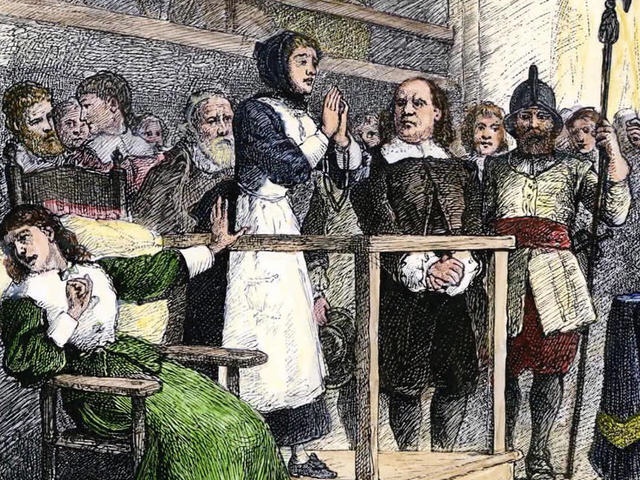
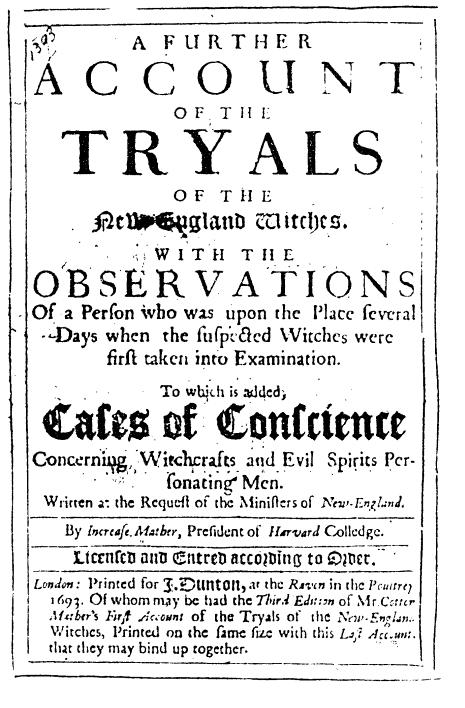
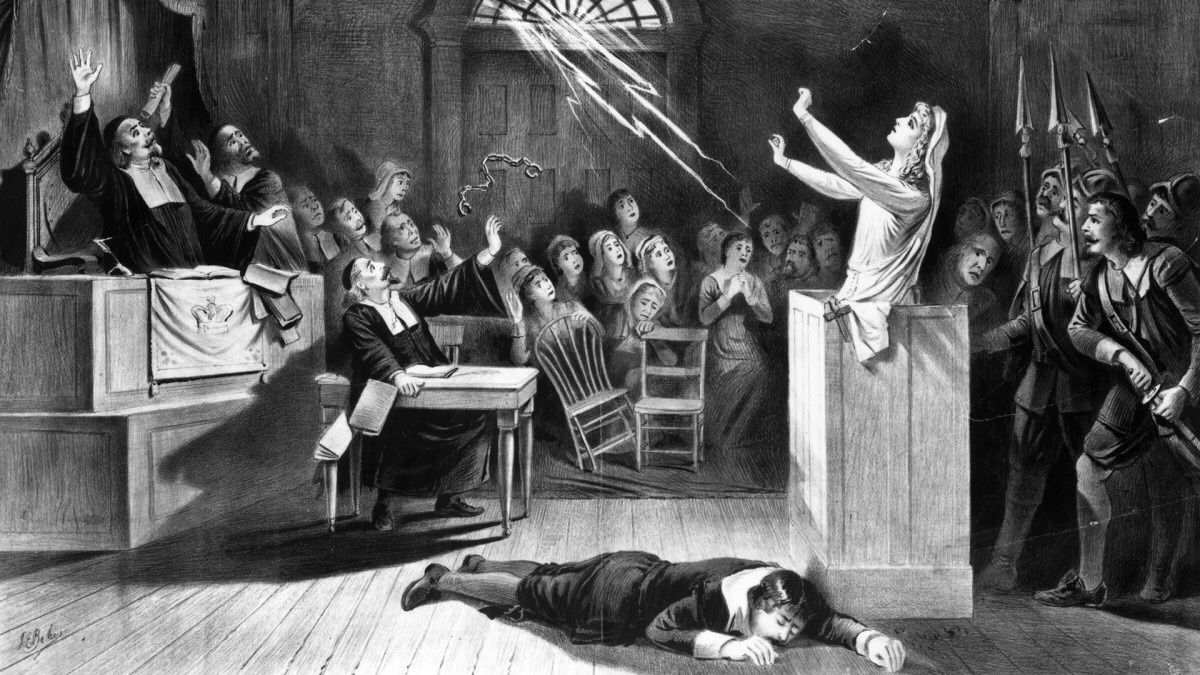
1692 – Sarah Good, Sarah Osborne and Tituba are brought before local magistrates in Salem Village, Massachusetts, beginning what would become known as the Salem witch trials.
Good was hanged, Osborne died in jail, and Tituba, thought to be a slave from South America, and then was “freed” before being sold to someone else.
Belief in witches stretches across almost all cultures in history, and the Vikings definitely did not invent them. Vikings believed in magic and never took it lightly. There are about 40 different words for magic and magic users in their language of Old Norse, showing the range of understanding and the importance they placed on it. Freyja, the most venerated of the Norse goddesses, was a goddess of magic and taught her arcane arts to Odin. Freyja is sometimes called a witch in the Eddic poems and was much maligned for this by later Christians. Freyja traveled in a chariot drawn by black or gray cats. These quiet, intelligent, ruthless creatures are her familiars or messenger spirits. A Viking who looked up to see a raven might see it as an omen from Odin, just as he might see a black cat as a sign that Freyja was watching.
Witches, sorcerers, and wizards were taken seriously and respected in the Viking world. This is further attested by the many Viking Age graves archaeologists have discovered that have grave goods (valuables deliberately interred with the body) associated with magic users. One tell-tale sign of a witch’s grave is an iron staff. It is thought that these iron staffs were used by Völva sorceresses in certain magic rituals, held between the thighs as the witch entered a shamanistic trance. At such times, it was thought that the witch’s layers of inner self left their outer body (what occultists now refer to as astral projection).
One passage referring to this is in the Havamal:
I know a tenth spell If I see witches at play in the air I can cast this spell So that they get lost So they can’t find their skins So they can’t find their minds
If the Viking Age, witches used their iron rod as a means of traveling across levels of consciousness, it is easy to see how later Medieval Christians would say that witches “flew through the air riding on brooms.”
So, the pagan Vikings respected (and feared) witches and often turned to them for help, but when the Vikings gradually became more Christian, witches were targeted as public enemies by the Church. Witchcraft never wholly died out, though. In Iceland, in particular, witchcraft survived in a well-documented line from early Viking times until the present – though it certainly changed and took on elements and influences from other cultures.
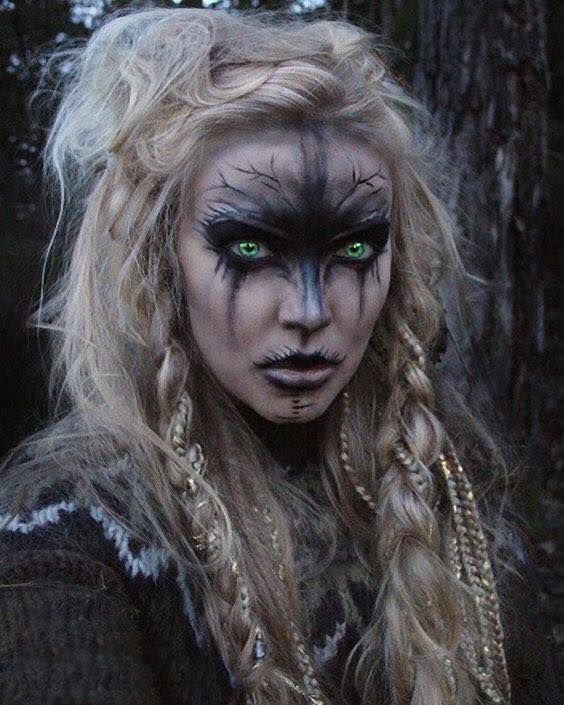
It is not just the Medieval Christian that shifted the perspective of the witch from medicine woman and soothsayer to evil, hexing hag, though. Viking lore is replete with frightening or “wicked” witches. There are at least three Eddic poems in which the speaker is a dead witch awoken by Odin or Freyja’s necromancy, and forced to lend her wisdom to the gods though she is full of spite for them. The worst of the evil witches were sometimes referred to as “Troll Wives” and were Jötnar rather than human. Like many fearsome beings in Norse lore, Troll Wives are seldom described in detail. However, the impression given fits the Halloween image of a lank-haired, green-skinned disfigured distortion of the elderly.
But it is clear that there is a broad range of witches. Only some of them could really be classified as good or evil – which is typical of the moral complexity and honesty that has made Norse lore so poignant and enduring.




 Mark Bere Peterson’s Counterculture, Urban Legends, Paganism & Witchcraft