“Dixie” by Daniel Decatur Emmett (1859)

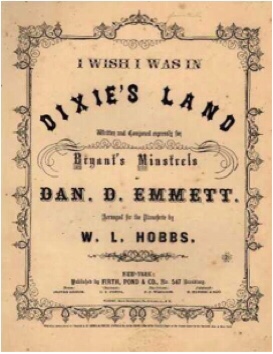
Dixie“, also known as “Dixie’s Land“, “I Wish I Was in Dixie“, and other titles, is a song about the Southern United States first made in 1859. It is one of the most distinctively Southern musical products of the 19th century. It was not a folk song at its creation, but it has since entered the American folk vernacular. The song likely cemented the word “Dixie” in the American vocabulary as a nickname for the Southern U.S.

Most sources credit Ohio-born Daniel Decatur Emmett with the song’s composition, although other people have claimed credit, even during Emmett’s lifetime. Compounding the problem are Emmett’s own confused accounts of its writing and his tardiness in registering its copyright.

“Dixie” originated in the minstrel shows of the 1850s and quickly became popular throughout the United States. During the American Civil War, it was adopted as a de facto national anthem of the Confederacy, along with “God Save the South”. New versions appeared at this time that more explicitly tied the song to the events of the Civil War.

The song was a favorite of President Abraham Lincoln (himself born in Kentucky); he had it played at some of his political rallies and at the announcement of General Robert E. Lee’s surrender. Early recordings of the song include band versions by Issler’s Orchestra (c. 1895), Gilmore’s Band (1896) and the Edison Grand Concert Band (1896) and a vocal version by George J. Gaskin (1896).

First verses:

I wish I was in the land of cotton,
Old times they are not forgotten;
Look away! Look away! Look away! Dixie Land.
In Dixie Land where I was born,
Early on one frosty mornin,
Look away! Look away! Look away! Dixie Land.

Then I wish I was in Dixie, hooray! hooray!
In Dixie Land I’ll take my stand to live and die in Dixie,
Away, away, away down South in Dixie,
Away, away, away down South in Dixie.
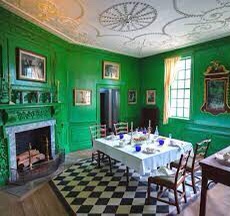
Mount Vernon: Dining Room

The Dining Room is part of the original house, built in 1734. Over the years, the room underwent a series of renovations. While George Washington was away commanding the Continental Army in 1775, the room was updated under the supervision of his cousin Lund Washington. In 1785, the striking verdigris-green paint was added. Washington believed the color to be “grateful to the eye” and less likely than other colors to fade; an overcoat of glaze further intensified the color.

In 1775 Washington decided to install an elaborately decorated plaster ceiling and add plaster ornaments above the fireplace. He hired an expert plasterer, identified simply as the “Stucco Man,” who spent five months completing the hand-tooled ceiling. A renovation in 2001 uncovered some of his original pencil drawings on the ceiling laying out the design.

Mount Vernon: Mansion Circle

George Washington created a formal courtyard on the west side of the Mansion. At its center is a large ellipse, its precise layout reflective of his surveying skill. By circling the ellipse, carriages could bring visitors directly to the door, and then easily continue around towards the stable. At one point this broad circle was paved in cobblestones.

Sitting to the north of the circle is the Servants’ Hall and to the south the Kitchen. The buildings form an open forecourt that frames the house. In the middle of the Mansion Circle sits a sundial. This was the most accurate timepiece available to 18th-century Americans. Mounted atop a white painted wood post, the sundial was a visual reminder of the hour to all who passed it.

Uncle Tom’s Cabin Published – 1852

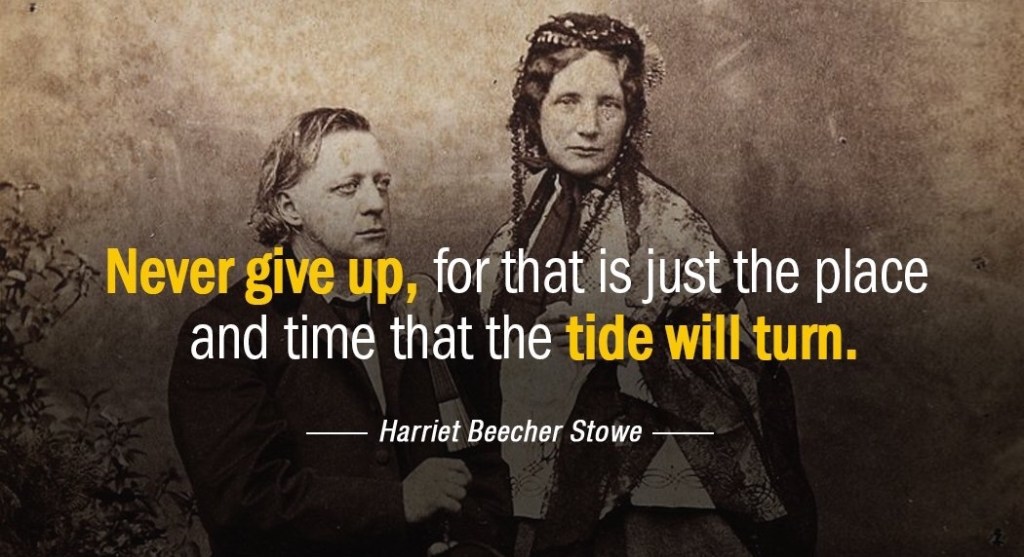
In 1852, the novel “Uncle Tom’s Cabin” was published. It is most likely the novel that had the greatest historic impact on American society. The novel depicted the plight of a slave family. It was written by Harriet Beecher Stowe, who was a mother of six. In the first year hundreds of thousands of copies were printed and ultimately millions of copies were sold. This helped solidify the opposition to slavery in the North. Its success in France and England served as a break in the inclination of the aristocracy in those countries to support the South during the war.

When Mrs. Stowe was introduced to President Lincoln, in 1862, he was heard to have said: “So you’re the little woman who wrote the book that made this great war.”

Mount Vernon: Gristmill

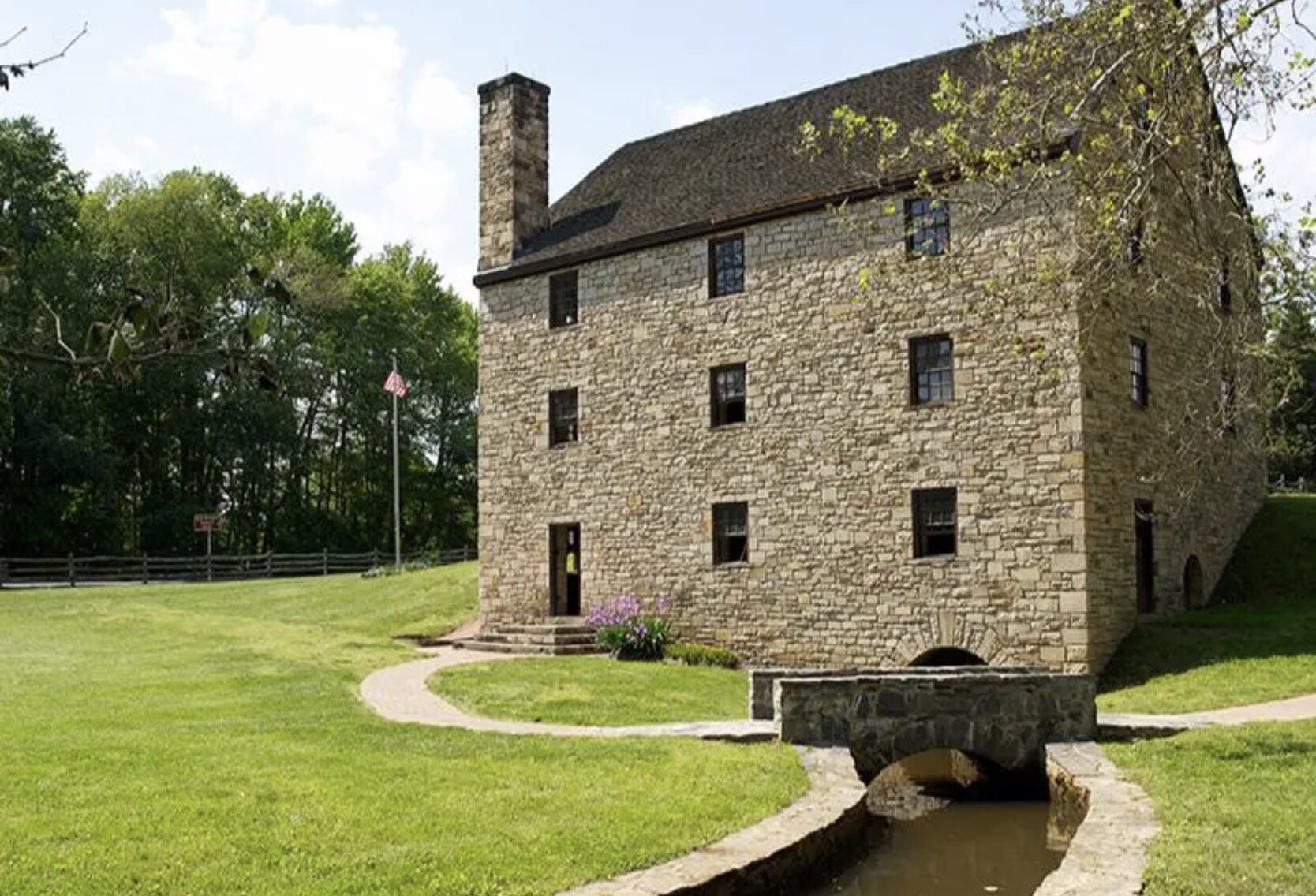
Augustine Washington, George Washington’s father, likely had an operating mill on his plantation (the future Mount Vernon) as early as the 1730s, but by the 1760s this dilapidated mill was in great need of a replacement. By 1769, George Washington had decided to create a new mill that would be located along Dogue Run, about a half-mile away from the old mill.

Washington’s resolve to improve and expand his Gristmill enterprise marked a significant turning point in the management of his plantation. During the 1760s Washington moved away from tobacco cultivation and began to plant more grains, primarily wheat and corn. This transition gave Washington a dependable cash crop that was not dependent upon markets in England. With an expanded and more efficient Gristmill, Washington could turn his crops into flour and cornmeal. The Gristmill could also bring in revenue by charging neighboring farmers a fee to grind their grain.

In 1783, Washington described the mill in one of his letters, “two pair of Stones, one pair of which are French-burr, employed in the merchant business. The Mill house is of Stone, large and commodious, the dwelling house, which is convenient, is within 30 yards of it; and has a garden enclosed adjoining. A Cooper’s Shop is also near, and the whole convenient to tide water.”

Underground Railroad

The Underground Railroad was started in order to provide a means for escaped slaves to be safely spirited through the north until they reached sanctuary in Canada. The railroads borrowed heavily from the vocabulary of standard railroads, thus those who helped guide the slaves were conductors, and the places that they hid along the way stations. Between 1850-1860 1,000 slaves a year made use of the Underground Railroad to escape to Canada and freedom.

Most of the enslaved people helped by the Underground Railroad escaped border states such as Kentucky, Virginia and Maryland.

In the deep South, the Fugitive Slave Act of 1793 made capturing escaped enslaved people a lucrative business, and there were fewer hiding places for them. Fugitive enslaved people were typically on their own until they got to certain points farther north.

People known as “conductors” guided the fugitive enslaved people. Hiding places included private homes, churches and schoolhouses. These were called “stations,” “safe houses,” and “depots.” The people operating them were called “stationmasters.”

There were many well-used routes stretching west through Ohio to Indiana and Iowa. Others headed north through Pennsylvania and into New England or through Detroit on their way to Canada.

Sojourner Truth’s Northern Speaking Tour

Historians believe that Sojourner Truth was born in 1797 in Ulster County, New York. Although born into slavery, she was freed from slavery by the New York State Emancipation Act of 1827.

She retained her former master’s surname, Van Wagener. However, after settling in New York City for some time, she found that she was disillusioned with her life there. In 1843, she adopted a new name, Sojourner Truth, a name she felt God had given her. Her mission in life, decided, was to travel across the country and spread “the truth.” She felt compelled to go on lecture tours, explaining: “The Lord has made me a sign unto this nation, and I go round a-testifying and showinng them the sins against my people.”

Large crowds gathered to hear her; and her usual opening, “Children, I talk to God and God talks to me!” had an electric effect on her audiences in Connecticut, Massachusetts, Ohio, Indiana, Illinois, and Kansas. Many felt she possessed “mystical gifts” as well as great powers of oratory.

With much passion, she fought against slavery and for woman suffrage, becoming friendly with some of the leading white abolitionists of her time, including James and Lucretia Mott and Harriet Beecher Stowe.

Helping blacks who had managed to escape North find work and a place to live also gave her deep satisfaction during these years; later, in 1864, she was appointed counselor with the National Freedmens Relief Association.

Compromise of 1850

Due to this compromise, civil war was avoided or at least delayed. Under the terms of the compromise, California was admitted to the Union as a free state. Residents of the Other territories acquired from Mexico were to decide for themselves whether to be free or slave states. The Fugitive Slave Act was passed requiring the return of slaves. Slave trade was outlawed in the District of Columbia, and Texas’ national debt was paid off.

The Compromise of 1850 held the Union together for another difficult ten years. The dispute was over the admittance of additional states into the Union, while maintaining the balance between free and slave states.

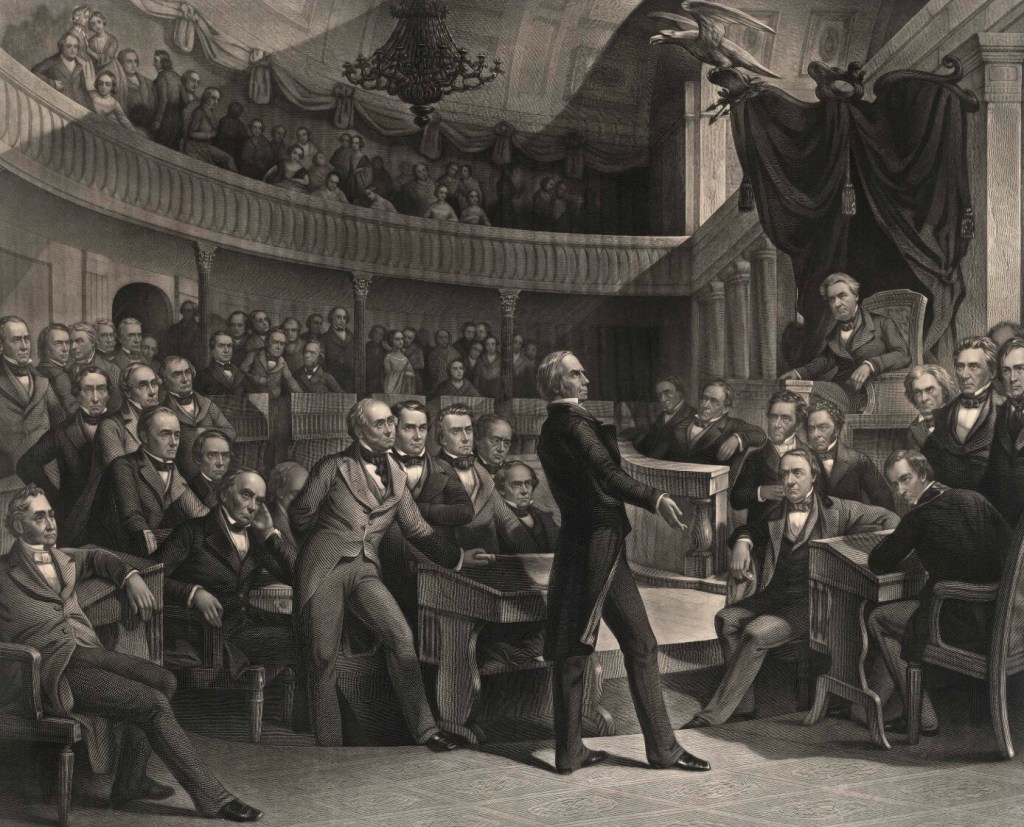
The immediate question was the clamoring of California to be admitted to the Union as a free state. The debate was begun by a frail Senator Henry Clay, who called for a compromise between the North and South. Senator John C. Calhoun, who was dying of tuberculosis, gave his last speech in the Senate; in which he once again championed the cause of the South, yet called for compromise.

Finally, Daniel Webster, who had been a leading spokesmen for Northern interests, made a plea for compromise in order to preserve the Union. It was Webster who tilted the balance, as his call for compromise convinced many Northerners to agree to the concessions, primarily the Fugitive Slave Law, that allowed the Senate to pass the compromise.

President Taylor opposed the compromise, but after his untimely death, his successor supported these bills, and thus the compromise was sealed.

Thomas Jefferson on “Wall of separation between church and state”

On New Year’s Day, 1802, President Thomas Jefferson penned a letter to the Danbury Baptist Association of Connecticut. In his written address, he used the celebrated “wall of separation” metaphor to describe the First Amendment relationship between reli- gion and civil government. Jefferson wrote, in sweeping, memorable phrases:

Believing with you that religion is a matter which lies solely between Man & his God, that he owes account to none other for his faith or his worship, that the legitimate powers of government reach actions only, & not opinions, I contemplate with sovereign reverence that act of the whole American people which declared that their legislature should “make no law respecting an establishment of religion, or prohibiting the free exercise thereof,” thus building a wall of separation between Church & State.

~ Thomas Jefferson, letter to the Danbury Baptist Association of Connecticut

Ponce de Leon Explores Florida

Ponce de Leon was the governor of Puerto Rico and due to political intrigue within the Spanish Empire he was encouraged to explore a new “island” that was said to be to the Northwest. On March 4th 1513, he set forth on an expedition that he financed from Puerto Rico. On April 2nd they sited land, and which they called Florida. To this day the exact location of the landing has been disputed, some believe it was where St Augustine is today others believe it is Melbourne Beach. After exploring the area the fleet explored further south. Leon sailed through the Florida Keys and then up the West coast of Florida. After eight months he returned to Puerto Rico. Ponce de Leon was greeted as a hero in Spain and given a further charter to explore Florida. He sailed with a new fleet in 1515, but when Ferdinand died in Spain the exploration was cut short.

In 1521 Ponce de Leon led another expedition to Florida. This one goal was to settle Florida. They arrived at the mouth of the Caloosahatchee River. There they were attacked by the Calusa indians. Leon was injured in the attack by a poison arrow. He soon died from his wounds and that ended the expedition. Over the years the story has taken hold that Leon was seeking the mythical fountain of youth. That story seems not based on historic evidence