Poppet (Voodoo Doll)

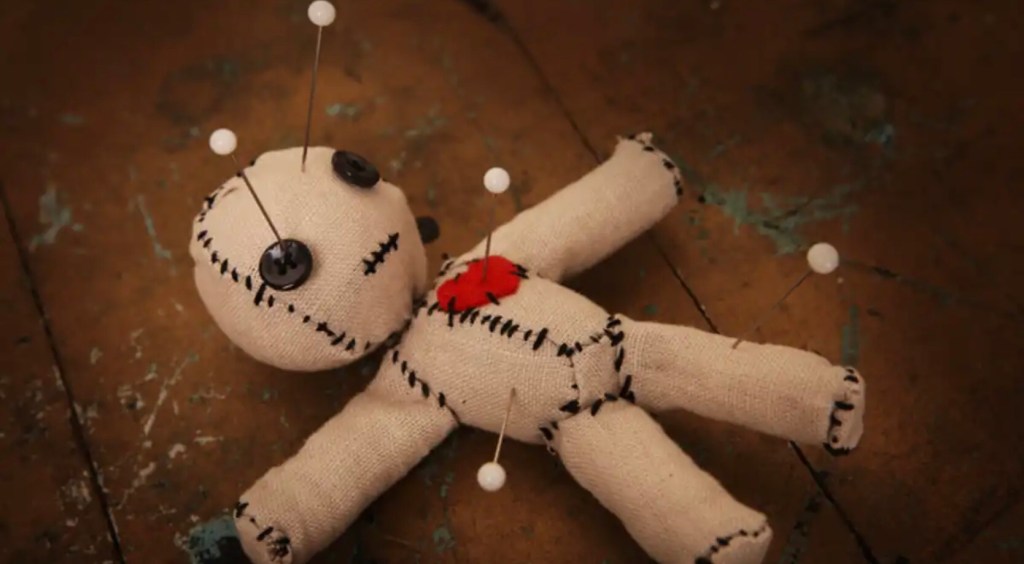
As portrayed in modern media, the idea of a Voodoo doll is simply a doll or a figurine representing a person in one’s life. It is then created by using personal objects with attachments to said person (for example, hair) and then using the doll to enact all kinds of spiritual acts. The most popular acts that people associate with Voodoo dolls are that of vengeance and mayhem.

In western media, it’s often shown that people with hate towards another person create the doll to hurt and curse people instead of what the dolls are initially intended for. Once a staple of West African traditionalism and Haitian beliefs, it is now reduced to nothing more than a tourist novelty. Voodoo Dolls have a terrible reputation. It is always depicted in popular media as a small, stitched-up doll that you imbue with your enemy’s essence. It then uses a needle prick, causing pain and inconvenience. And while it’s not unheard of that the dolls are used for curses, it’s doubtful that they are commonly used for this purpose.

The process of making the dolls has nothing to do with stitches and stuffing. Instead, the dolls are customarily made from sticks, straws, or any personal and organic material of the people that you’d like represented in the image of the figurine. As with West African spirituality, they are physical representations of the spiritual realm around people. Taking place on altars and surrounded by objects of interest. These physical conduits to family, friends, and loved ones are there to bring connection with that of the Lwa and to leave prayers and petitions of goodwill unto those that people are close to.

Source: Marie Laveau: Life of a Voodoo Queen. Monique Joiner Siedlak
Gris-Gris

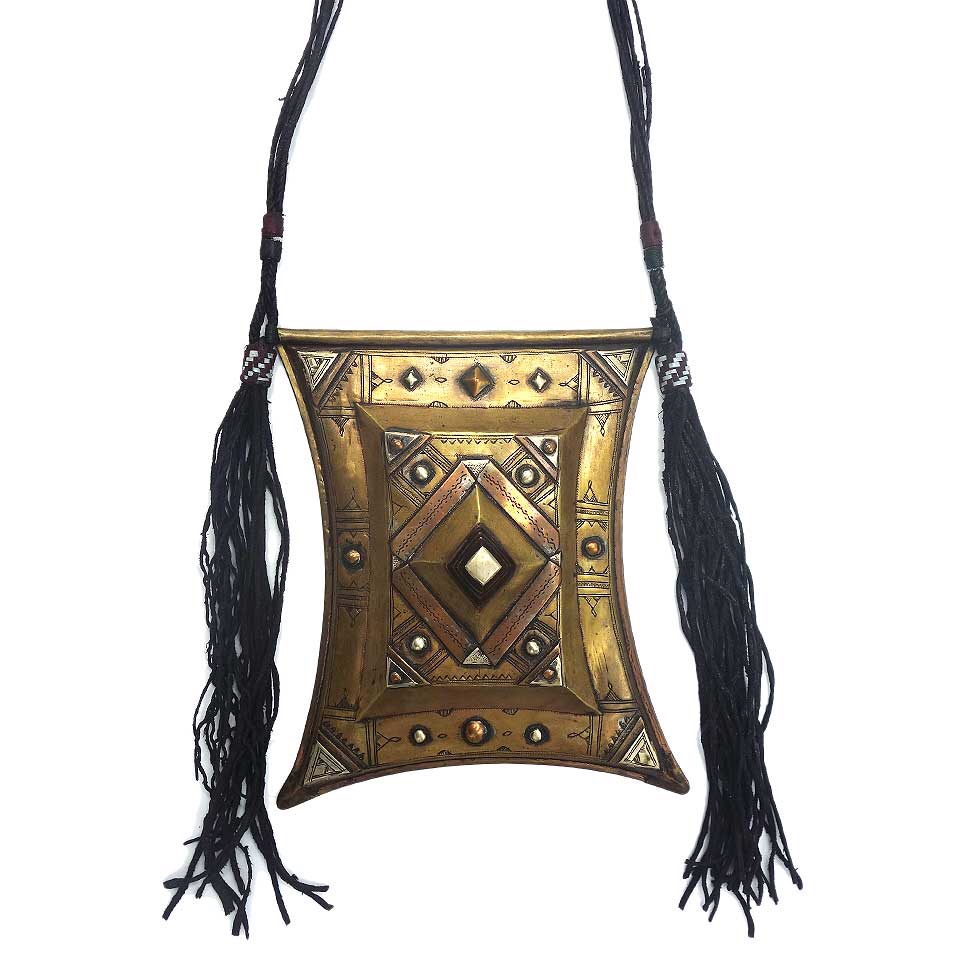
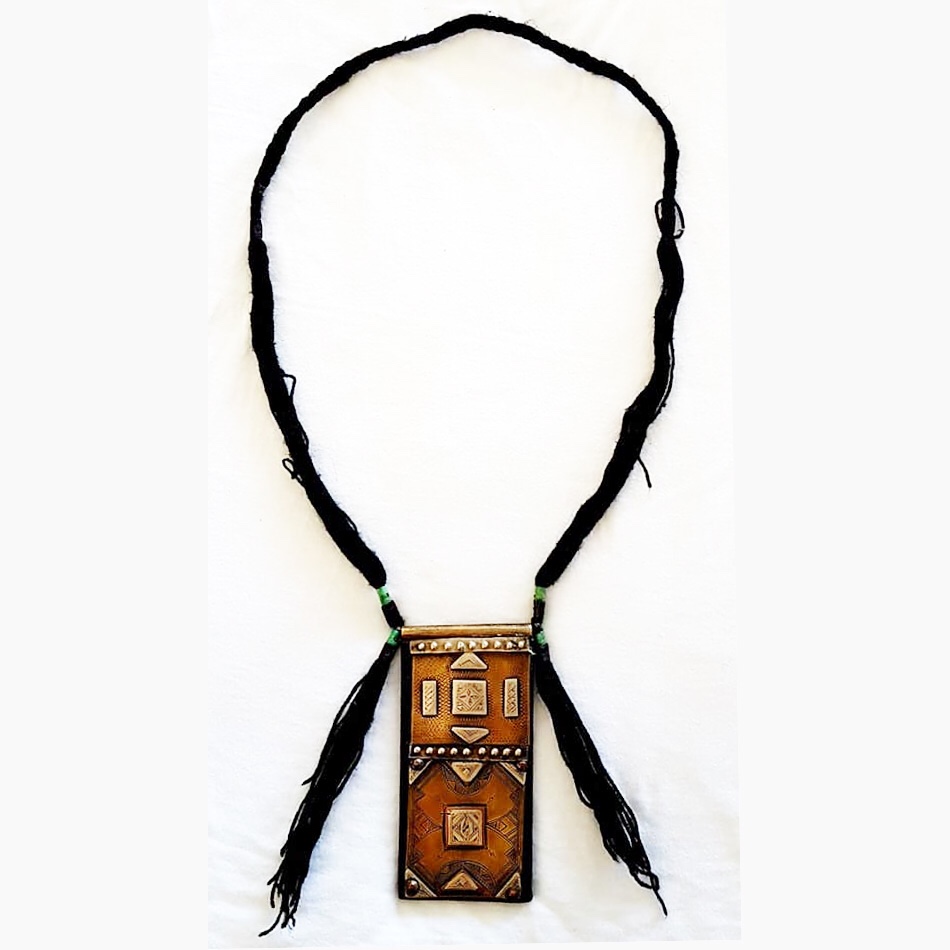
A gris-gris, sometimes known as a grigri, is an object that most Voodoo practitioners craft for their patrons. This talisman or amulet has its origins out of Africa and is designed and crafted for various uses. It is commonly created to ward off evil or as just essential protection against anything classified as a spiritual attack on a person. However, this isn’t its only use since, in the more western area of Africa, they can be used for birth control. The practice of wearing a gris-gris was surprisingly used by believers and non-believers alike. Its appearance, while varied, was usually a small cloth bag inscribed with African verses that contained small ritualistic objects. Allegedly, it was also used in the Islamic faith as protection against evil spirits called Djinn.

In Haiti, they are seen as objects of good fortune used to improve the external lives of the wearers and imbued with some sort of incantation. New Orleans has its version of a gris-gris. While they may be inaccurately represented as a form of black magic, they are, in fact, a much more positive item in the arsenal of Voodoo objects. Unlike the belief that it was designed to bring ill-will on patrons’ enemies, records indicate people tampering with other’s amulets as a form of vengeance. It is believed that, in actuality, the gris-gris was just sources of healing and protection. Why would its original meaning change so much in the course of Voodoo history? Many believed Marie Laveau used these talismans to curse people, but odds are, she simply used them to improve the way of life of those around her.

Source: Marie Laveau: Life of a Voodoo Queen. Monique Joiner Siedlak

Louisiana Code Noir

In 1741, four African slaves lived in the colony for every 1.2 free white. This imbalanced population combined with high mortality, the threat of conflict with Native Americans, shortages of food and goods, and isolation produced a colony in which African, French, and Spanish cultures blended to create a unique culture known as Creole. Because most of the Africans who first arrived in Louisiana were of one nation, the Bambara, they succeeded in preserving their language and culture and, through their solidarity, ultimately acted as an Africanizing influence on Louisiana. European colonists, aware of their precarious position in the colony, were inclined to work together with slaves and afford them some rights under the Code Noir.

While the system was certainly brutal for African slaves, the harsh conditions of life in Louisiana resulted in difficulties for all settlers. Since many of the colonists were themselves rejected by French society and forced into exile in Louisiana as criminals or debtors, historian Gwendolyn Midlo Hall states, “Africans arrived in an extremely fluid society where a socio-racial hierarchy was ill defined and hard to enforce.” Hall expertly sums up the situation in colonial Louisiana, “Desperation transcended race and even, to some extent, status, leading to cooperation among diverse peoples.” Though the arrival of Anglo-Americans with the Louisiana Purchase resulted in stricter laws governing slavery and narrower views in terms of race, Louisiana society would remain more diverse, fluid, and racially ambiguous than the other Southern slave states.

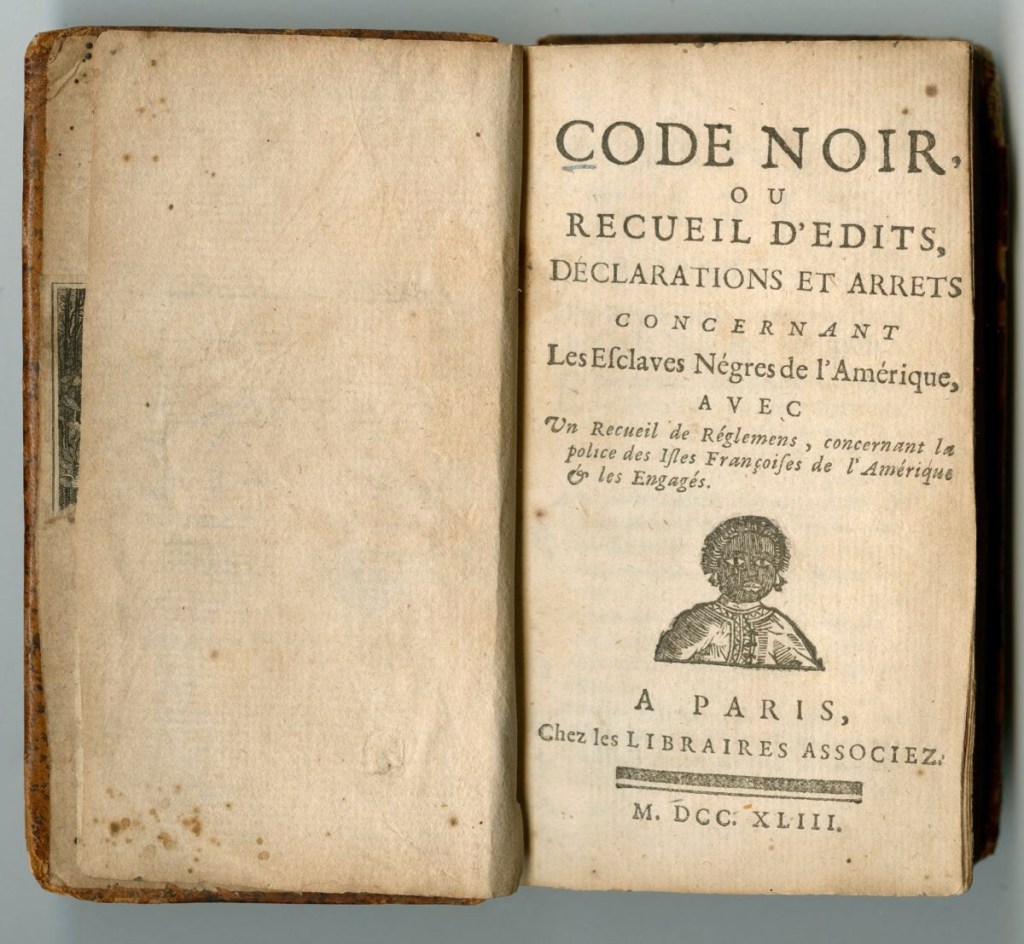
The Code Noir was established in 1724 to regulate slavery in colonial Louisiana. The Code Noir stated that slaves were to be instructed in the Catholic faith, given food and clothing allowances, and allowed to rest on Sundays and the right to petition a public prosecutor if they were mistreated. Also, young children had to be sold with their mothers. The Code Noir prohibited slaves from owning property or testify against whites.

Baron Samedi

Baron Samedi, “The Master of the dead” in Voodoo, occupies a popular place as the guardian of cemetries, and the spirit responsible for an individual’s transportation to the underworld. One of the more prevalent loas in Haitian voodoo is Baron Samedi. He fills a vital role in Haitian voodoo as the master of the dead, ushering the newly deceased into the afterlife. Who is Baron Samedi? In Haitian voodoo, Baron Samedi is the head of the Guede family of loa.

His name is often translated as Baron Saturday, Baron Samdi, Bawon Samedi, or Bawon Sanmdi. The last name of Saturday comes from the French translation of Samedi. Baron leads the Guede family, a group of loas with strong links to magic, ancestor worship, and death. The loas in the family consist primarily of lesser spirits, dress the same as Baron, have rude (even crude) attitudes, but lack the charm of their master. Baron is portrayed in Haitian voodoo wearing a top hat, black tuxedo, dark glasses, and cotton plugs in his nostrils. His image is often said to resemble that of a corpse that has been dressed and prepared for burial in traditional, Haitian manner. His face is said to resemble a skull, and he uses a nasal voice.

Baron spends the majority of his time in the invisible realm of Haitian voodoo spirits. His behaviour is described as outrageous. He is known to spend his time drinking rum and smoking cigars, swearing profusely, and making filthy jokes to the other loas. The other spirits in the Guede family are said to behave in the same manner, without the suave ability of Baron Samedi.

The Baron needs that suave nature because he is believed to chase mortal women, despite being married to the loa, Maman Brigitte. Baron’s time is spent lingering at the crossroads of life and death in the human world. When someone dies, Baron is said to dig their grave and meet their soul as it rises from the grave. He guides them into the underworld. Only Baron Samedi has the power to accept an individual into the world of the dead.

It is also said that Baron ensures that all those who have died rot in the ground as they should, ensuring that no soul can come back as a brainless zombie. He will demand payment for this act, which varies depending upon his mood at the time. On many occasions, he is content to accept gifts of cigars, rum, black coffee, or grilled peanuts.

The Originals (2013-2018)

The Originals is the first spin-off from the supernatural drama The Vampire Diaries, and it further expands the universe by providing a rich background story to many of the characters first met in the parent series.

In particular, we learn more about Klaus Mikaelson and his family, the first vampires to ever exist.

Their story unfolds in the French Quarter of New Orleans, a neighborhood they built and once ruled over but has since been taken over by Klaus’ own protege, Marcel.

Klaus is determined to regain control, but must also fight to keep his daughter safe from external threats against his family and the entire supernatural world.

American Horror Story: Coven (2013-2014)

In a city with a culture rich with ties to the occult, it’s no surprise that there’s a TV series about witches.

From Ryan Murphy’s renowned American Horror Story franchise is its third season subtitled Coven, which follows a secret institution of young witches who are descendants of those persecuted during the Salem witch trials in the late 1600s.

The girls are learning to harness and strengthen their powers at a boarding school run by witch Cordelia Foxx.

However, that also means they’re all contending to become the next Supreme, the most powerful witch, while battling external threats from voodoo practitioners as well as interior threats.

Treme (2010-2013)

Hurricane Katrina was identified as a Category 3 hurricane by the time it made landfall in Louisiana on August 29, 2005. The resulting damage on the state was devastating, particularly in New Orleans where floods swept the entire city.

HBO’s drama series Treme takes place in the aftermath of the disaster, in a neighborhood called Treme (based on the real-life neighborhood of the same name).

Having suffered their own tragedies brought on by Katrina, the residents of Treme strive to rebuild not just their homes but their entire lives.

As survivors, it seems more important now than ever to uphold the music and culture that gives their community its unique identity.

Hoodoo in Savannah

The Geechee culture is a remnant from what was once a society of black slaves. The area they call home stretches from Savannah southward to an area just below the Ogeechee River, from which they draw their name. Often times this culture is mistakenly called ‘Gullah’, but in actuality the Gullah people exist in an area to the north of Savannah, between Daufuskie Island and Charleston, South Carolina. The two peoples are similar, but not interchangeable: both are rooted in slavery, but the Geechee people have a history and tradition all their own.

Freed after the Civil War, these Island people would often group near the coast where both fishing and farming was plentiful. The community developed their own dialect. In addition to what amounted to their own language (also called ‘Geechee’), this culture also had an elaborate belief system through their African descent. These beliefs are centered on a deep spirituality, believing in both ghosts and in a type of magic cast by charms, potions and amulets.

This magical ability to cast spells is called ‘conjuring’, or ‘casting roots’. A magic spell itself is called a ‘conjure’. The spell is often cast by burying a bag or bundle on the property of the unsuspecting victim. There are also ways of conjuring involving secret potions to drink, powders, nail clippings, and that most powerful of talismans—graveyard dirt. Someone skilled in the art of casting spells is called a root doctor, or a witch doctor. They can be employed if you feel that magic is being used against you.

A witch doctor is very different from a witch, which is often called a ‘boo-hag’. Not to be confused with the Hollywood version, witches in this tradition look no different from regular people. Witches are more akin to vampires, because the belief is that they steal the breath and life-force or essence of the victim. To have your essence stolen by a witch is known as ‘being rid’ or ‘ridden’. If someone looks poor or sickly, the assumption is that a boo-hag stole that person’s energy in the middle of the night; they are being “rid by a witch.”

Mummy Brown

Until relatively recently, Egyptian mummies, believe it or not, were used to produce a type of paint, which was called Mummy Brown, Mommia, or Momie. The main ingredient of this paint was, as you may have already guessed, ground up Egyptian mummies. This powder was mixed with white pitch and myrrh to produce a rich brown pigment. It was first made in the 16th century, and became a popular color amongst the Pre-Raphaelite painters of the mid-19th century.

For instance, it has been recorded that the British portraitist, Sir William Beechey, kept stocks of Mummy Brown. The French artist Martin Drölling also reputedly used Mummy Brown made with the remains of French kings disinterred from the royal abbey of St. Denis in Paris. It has been suggested that his L’interieur d’une cuisine is an example of extensive use of the pigment, while the mesmerizing painting by Edward Burne-Jones, entitled The Last Sleep of Arthur in Avalon, is also believed to have been painted using Mummy Brown.

Apothecary: Using Ground Mummies to Cure Disease

Art supplies were not the only things that ground bones of mummies were used for. More surprisingly, perhaps, is their use for medicinal purposes. This was due to the belief that mummies contained bitumen, which was used by the ancient Greeks to cure a variety of diseases. Apparently, in the absence of real bitumen, the so-called bitumen from a mummy would do just as well. Keep in mind that the word mummy itself is derived from the Persian word for bitumen, mum or mumiya.

As a result of this belief in the medicinal properties of Mummy powder, Egyptian mummies were exported to Europe, ground down, and sold in apothecaries throughout the continent. Part of the craze for Mummy powder was due to the claim that mummies had a mysterious life force that was transferrable to whoever ingested it. Hence, ground mummies were consumed by Europeans well into the 18th century.

Sources: Ancient Origins, “The Gruesome History of Eating Corpses as Medicine” in Smithsonian Magazine, “Ground Up Mummies Were Once an Ingredient in Paint” in Smithsonian Magazine.

Voodoo Hoodoo in New Orleans

The term Voodoo hoodoo is commonly used by Louisiana locals to describe our unique brand of New Orleans Creole Voodoo. It refers to a blending of religious and magickal elements. Voodoo is widely believed by those outside of the New Orleans Voodoo tradition to be separate from hoodoo magick. However, the separation of religion from magick did not occur in New Orleans as it did in other areas of the country. The magick is part of the religion; the charms are medicine and spiritual tools that hold the inherent healing mechanisms of the traditional religion and culture. Voodoo in New Orleans is a way of life for those who believe.

Still, there are those who separate Voodoo and hoodoo. Some hoodoo practitioners integrate elements of Voodoo, and some do not. Some incorporate elements of Catholicism or other Christian religious thought into their practice, while others do not. How much of the original religion a person decides to believe in and practice is left up to the individual. Some people don’t consider what they do religion at all, preferring to call it a spiritual tradition or African American folk magic. The term Voodoo hoodoo is in reference to the blend of the two aspects of the original religion as found in New Orleans Voodoo and as a way of life. A fellow New Orleans native and contemporary gris gris man Dr. John explains it this way:

In New Orleans, in religion, as in food or race or music, you can’t separate nothing from nothing. Everything mingles each into the other—Catholic saint worship with gris gris spirits, evangelical tent meetings with spiritual church ceremonies—until nothing is purely itself but becomes part of one fonky gumbo. That is why it is important to understand that in New Orleans the idea of Voodoo—or as we call it gris gris—is less a distinct religion than a way of life.

~ Dr. John

Source: The Voodoo Hoodoo Spellbook