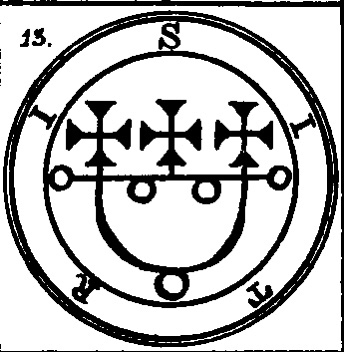
Sitri (also spelled Bitru, Sytry) is a Great Prince of Hell, and reigns over sixty legions of demons. He causes men to love women and vice versa, and can make people bare themselves naked if desired. He is depicted with the face of a leopard and the wings of a griffin, but under the conjurer’s request he changes into a very beautiful man.
The term Voodoo hoodoo is commonly used by Louisiana locals to describe our unique brand of New Orleans Creole Voodoo. It refers to a blending of religious and magickal elements. Voodoo is widely believed by those outside of the New Orleans Voodoo tradition to be separate from hoodoo magick. However, the separation of religion from magick did not occur in New Orleans as it did in other areas of the country. The magick is part of the religion; the charms are medicine and spiritual tools that hold the inherent healing mechanisms of the traditional religion and culture. Voodoo in New Orleans is a way of life for those who believe.
Still, there are those who separate Voodoo and hoodoo. Some hoodoo practitioners integrate elements of Voodoo, and some do not. Some incorporate elements of Catholicism or other Christian religious thought into their practice, while others do not. How much of the original religion a person decides to believe in and practice is left up to the individual. Some people don’t consider what they do religion at all, preferring to call it a spiritual tradition or African American folk magic. The term Voodoo hoodoo is in reference to the blend of the two aspects of the original religion as found in New Orleans Voodoo and as a way of life. A fellow New Orleans native and contemporary gris gris man Dr. John explains it this way:
In New Orleans, in religion, as in food or race or music, you can’t separate nothing from nothing. Everything mingles each into the other—Catholic saint worship with gris gris spirits, evangelical tent meetings with spiritual church ceremonies—until nothing is purely itself but becomes part of one fonky gumbo. That is why it is important to understand that in New Orleans the idea of Voodoo—or as we call it gris gris—is less a distinct religion than a way of life.
The Empusa is a shapeshifting creature of the night, though she also appears at midday. She is an eidolon, an illusory phantom, with an appetite for the flesh of her victims. All of which aligns well with the Titaness Hekate, who is sometimes the mother of Skylla, and often associated with ghosts and haunts.
The Empousa appears in The Frogs by Aristophanes and may have had a role in the Eleusinian Mysteries, which may stem from her association with Hekate. She can appear as a cow, mule, woman, or a dog. With the exception of the mule, Hekate can appear as any of those animals according to lore. In each of these roles, the Empousa is a fearsome creature who resides in the underworld, another connection to Hekate, who is sometimes known as the Queen of that realm. The Frogs puts Empousa in Hekate’s train, a creature bound to Hekate’s will.
Some scholars believe that Hekate and Empousa began as one, with the monstrous creature being an epithet for the Goddess. Yet, Empousa is also described as a vampire-like daimon who will devour her victim. Most surviving stories suggest that the Lamiai, including Empousa, were used as boogy-men, to scare children into following rules.
Hekate and Empousa share an underworldly nature, an association with the Dead, with the same figures of cow, woman, and dog, as well as both wearing bronze sandals, and being an, at times, fearful figure. It is no surprise that scholars believe that they, at the very least, have some common origin.
Hekate-Empousa, Who haunts the day and night, Come forth from the Underworld, You who attends the sacrifices for the Dead, Stay your hand from those I love, And be kind, And many will be the offerings poured in your honor, Oh Hekate-Empousa, Bless us, Phantasmal Goddess.
In Sweden it was believed that witches would celebrate the Devil’s Sabbath (‘Blåkulla’) on Maundy Thursday. The Devil would entertain the witches by playing the harp, and engage in carnal acts with the ones he liked best in a special chamber.
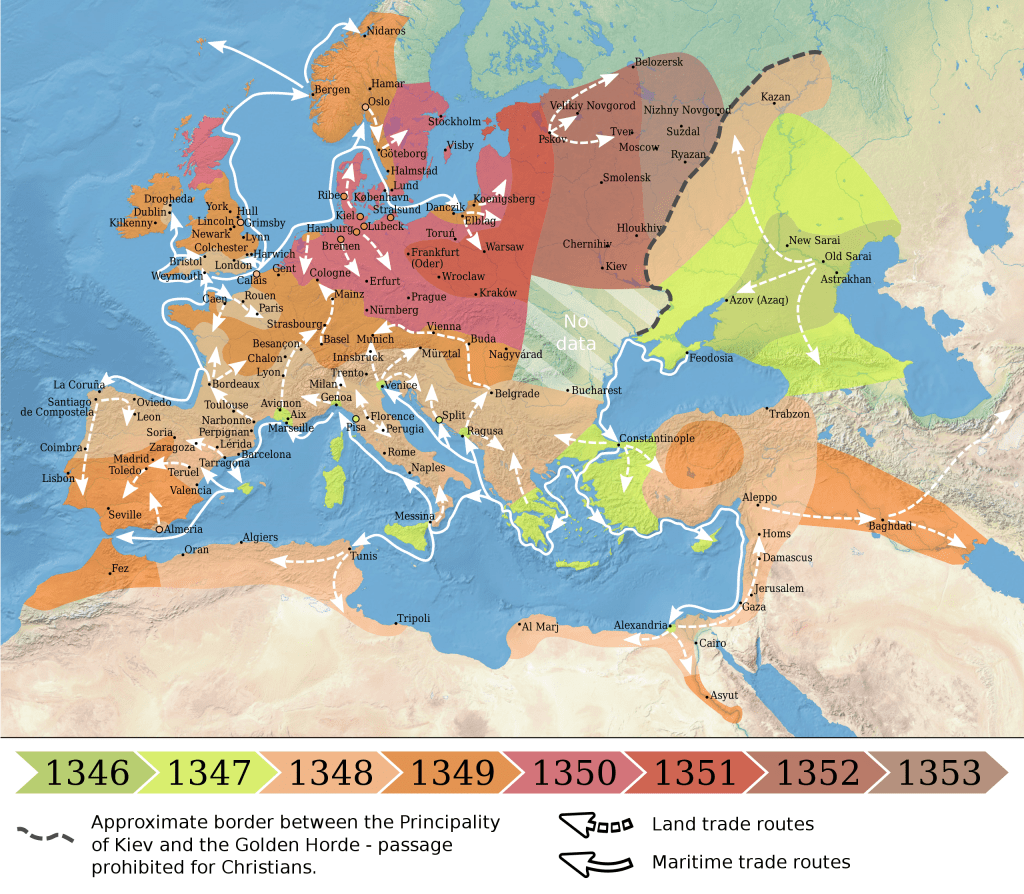
The Black Death (also known as the Pestilence, the Great Mortality or the Plague) was a bubonic plague pandemic occurring in Afro-Eurasia from 1346 to 1353. It is the most fatal pandemic recorded in human history, causing the death of 75–200 million people in Eurasia and North Africa, peaking in Europe from 1347 to 1351.Bubonic plague is caused by the bacterium Yersinia pestis spread by fleas, but it can also take a secondary form where it is spread person-to-person contact via aerosols causing septicaemic or pneumonic plagues.
The Black Death was the beginning of the second plague pandemic. The plague created religious, social and economic upheavals, with profound effects on the course of European history.
Pieter Bruegel’s The Triumph of Death reflects the social upheaval and terror that followed the plague, which devastated medieval Europe.
The origin of the Black Death is disputed. The pandemic originated either in Central Asia or East Asia but its first definitive appearance was in Crimea in 1347. From Crimea, it was most likely carried by fleas living on the black rats that travelled on Genoese ships, spreading through the Mediterranean Basin and reaching Africa, Western Asia and the rest of Europe via Constantinople, Sicily and the Italian Peninsula. There is evidence that once it came ashore, the Black Death mainly spread person-to-person as pneumonic plague, thus explaining the quick inland spread of the epidemic, which was faster than would be expected if the primary vector was rat fleas causing bubonic plague.
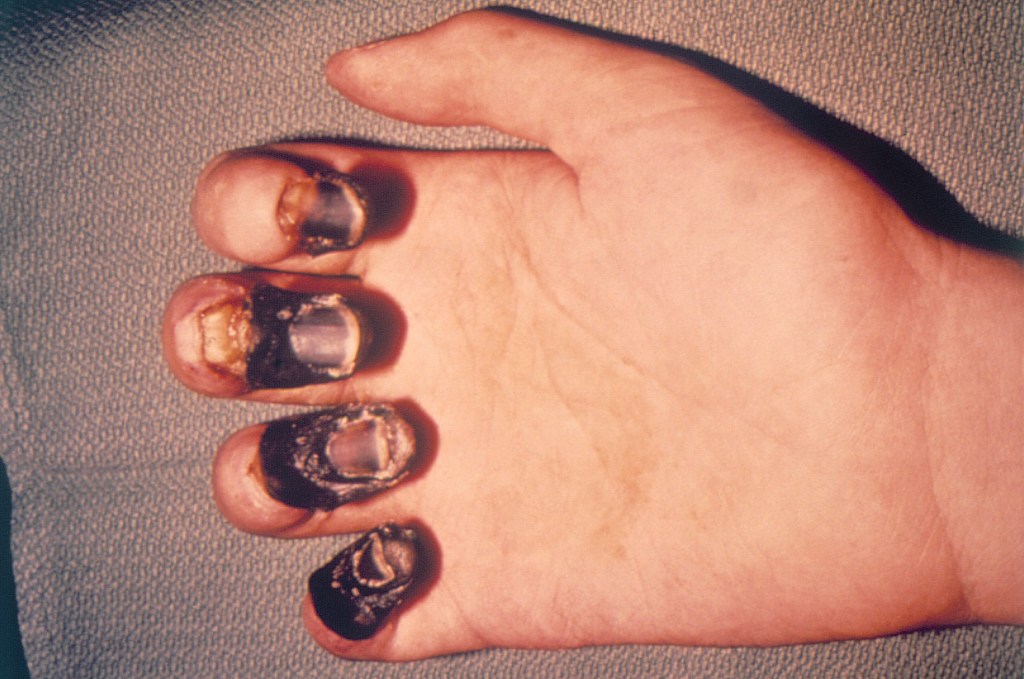
A hand showing how acral gangrene of the fingers due to bubonic plague causes the skin and flesh to die and turn black.
The Black Death was the second great natural disaster to strike Europe during the Late Middle Ages (the first one being the Great Famine of 1315–1317) and is estimated to have killed 30 percent to 60 percent of the European population, as well as about one-third of the population of the Middle East. The plague might have reduced the world population from c. 475 million to 350–375 million in the 14th century. There were further outbreaks throughout the Late Middle Ages and, with other contributing factors the European population did not regain its level in 1300 until 1500. Outbreaks of the plague recurred around the world until the early 19th century.
Gusion (also Gusoin, Gusoyn) is a strong Great Duke of Hell, and rules over forty legions of demons. He tells all past, present and future things, shows the meaning of all questions that are asked to him, reconciles friends, and gives honour and dignity. He is depicted as a baboon or according to some, in the form of a “xenophilus.”
In 872CE, King Harald Fairhair gathered all of Norway on the shore of Hafrsfjord and created one Kingdom. The ensuing Battle of Hafrsfjord between Hararld and the other Viking kings finally unified the clans under King Harald around 880CE. The monument to this eight year war are three giant bronze swords called Sverd I Fjell (Swords in Rock). The hilts are replicas of Viking swords of the time. They represent peace, unity and freedom.
The horn of a unicorn is a great treasure, in part because of its rarity but also, more importantly, for its many wonderful properties. Powdered unicorn horn can be used as an aphrodisiac and to treat a variety of ailments. The horn can also detect poison, which often bubbles in its presence. If the horn is dipped in poisoned food or drink, it will neutralize the toxin.
Ctesias (5th Century BCE, Greek) proclaimed the horn’s ability to do this in his book Indica. As was true of many encyclopedists at a time when travel was very difficult, he learned this information secondhand while living at the Persian court for seventeen years. “There are in India certain wild asses which are as large as horses, and larger,” Ctesias wrote.
“Their bodies are white, their heads dark red, and their eyes dark blue. They have a horn on the forehead which is about a foot and a half in length. The dust filed from this horn is administered in a potion as a protection against deadly drugs. The base of this horn, for some two hands’-breadth above the brow, is pure white; the upper part is sharp and of a vivid crimson; and the remainder, or middle portion, is black. Those who drink out of these horns, made into drinking vessels, are not subject, they say, to convulsions or to the holy disease [epilepsy]. Indeed, they are immune even to poisons if, either before or after swallowing such, they drink wine, water, or anything else from these beakers.”
~ Ctesias
Two thousand years later, no one questioned Ctesias’s description. Vessels made from unicorn horn were most valuable in the royal courts of the Middle Ages and Renaissance, when the world was rife with political plotting and power changed hands at the drop of a poison potion. Throughout history there are numerous descriptions of people owing their lives to the unicorn horn’s remarkable ability to detect and neutralize poison.
Oftentimes called the female equivalent of the Jigar Khoy, the jigarkhwar of the Sindh region of India is, although similar in many ways, distinctively different type of vampiric witch. The jigarkhwar uses her power of hypnosis to place a person into a trancelike state in order to steal his liver. After the organ has been stolen, the vampiric witch returns to her home and cooks it. While this is occurring, the victim falls suddenly ill. As soon as the last bite of the liver is eaten, the person’s life-energy has been consumed, and he dies. The spell can be reversed as long as a single bite of the liver remains uneaten. As soon as it is eaten, the person’s fate is sealed.
Source: Crooke, Introduction to the Popular Religion,
One of George Washington’s masterful farming innovations was a 16-sided barn designed for treading wheat—his most important cash crop. Traditionally, wheat was threshed by hand, a slow and arduous process of beating the wheat to break the grain out of the straw. Sometimes horses treaded wheat by trampling it on the ground, but that practice was unsanitary and exposed the grain to weather. Washington decided to move the threshing process indoors and in 1793 built a barn for this purpose. It was completed two years later. Horses trotted in a circle on the second floor, treading on grain that then fell to the first floor through narrow gaps in the flooring. Although Washington was in Philadelphia serving as president while the barn was under construction, he supervised the work from afar. He even calculated (correctly) that the number of bricks needed to complete the first floor would be 30,820.
The barn at the Farm site is an exact replica of the original, based on careful examination of Washington’s drawings and plans from the 1790s as well as on a mid-19th-century photograph showing the barn in a semi-ruined state.










 Mark Bere Peterson’s Counterculture, Urban Legends, Paganism & Witchcraft