Skillet Cornbread

There is a lot of really bad cornbread out there served in restaurants and it gets a bad reputation.  There is also heated debate especially in the South whether it should have sugar or flour, in my opinion the resounding answer is no.  This version will convert you if you’re a skeptic.  You should use the highest quality ingredients as you can afford with recently ground cornmeal if possible.  Don’t skimp on your cornbread and you might find yourself making it a few times a week.  Of course it’s best served fresh from the oven still in the cast iron skillet.

4 ounces quality smoky bacon *
2 cups yellow cornmeal *
1 teaspoon kosher salt
½ teaspoon baking soda
½ teaspoon baking powder
1½ cups buttermilk
1 large egg, lightly beaten

* If you want the very best ingredients use Benton’s bacon and Anson Mills Antebellum Coarse Yellow Cornmeal.  These items will have to be special ordered online. *

Preheat the oven to 450°F. Put a 9-inch cast-iron skillet in the oven to preheat for at least 10 minutes.

Finely mince the bacon.  Add the bacon to a skillet large enough to hold it in a single layer and cook over medium-low heat stirring until the fat is rendered and the bits of bacon are crispy, usually 4 to 5 minutes. Remove the bits of bacon to a paper towel to drain, and reserve the fat. You need 5 tablespoons bacon fat.

Combine the cornmeal, salt, baking soda, baking powder, and bits of bacon in a bowl. Reserve 1 tablespoon of bacon fat and combine the remaining 4 tablespoons fat, the buttermilk, and egg in a small bowl. Stir the wet ingredients into the dry ingredients just to combine; do not over mix.

Move the cast iron skillet from the oven to the stove, placing it over high heat. Add the remaining tablespoon of bacon fat and coat the skillet. Pour in the batter, distributing it evenly. It will sizzle.

Bake the cornbread for about 20 minutes, until a toothpick comes out clean. Serve warm.

Archaeological Finds 2020: Over 100 Ancient Sarcophagi

Egyptian antiquities officials have announced the discovery of almost 100 ancient sealed sarcophagi, which were buried more than 2,500 years ago in the Pharaonic necropolis and around 40 golden statues in south Cairo.

Archaeologists discovered a well-preserved mummy wrapped in cloth – which they later X-rayed to find out how the body had been conserved.

Tourism and antiquities minister Khaled el-Anany said the items date back to the Ptolemaic dynasty that ruled Egypt for 300 years – from around 320BC to around 30BC and the Late Period (664-332BC).

Since September, antiquities experts have found around 140 sealed sarcophagi, featuring mummies inside almost all of them.

Days of the Week: Monday

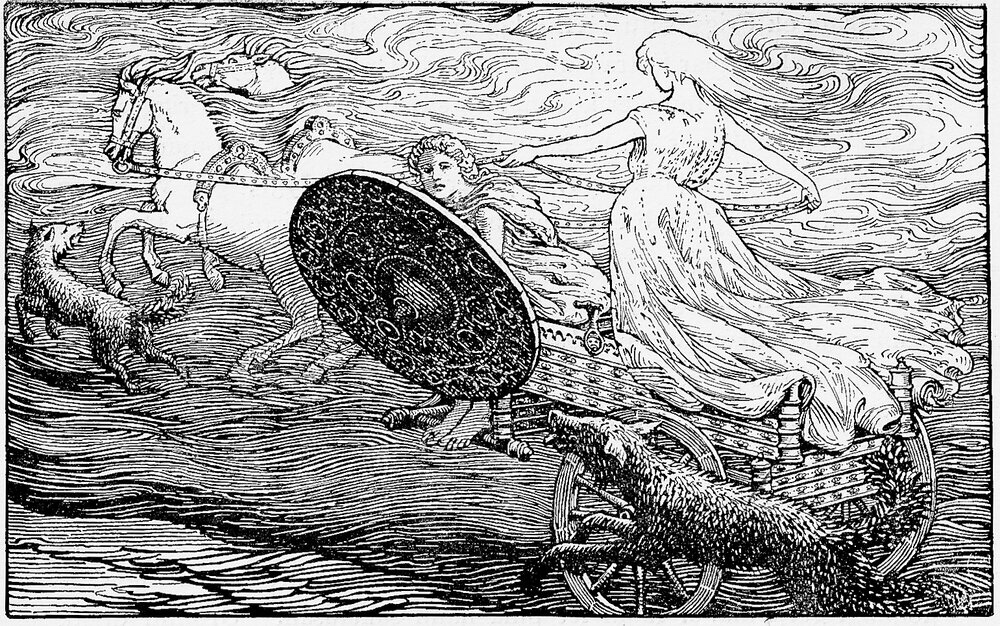
Monday was the day the Romans devoted to the moon. In modern romance languages, it is rendered lunes/lundi/ lunedì. For the Romans, the moon was associated with goddesses like Diana/Artemis, Selene, and Hecate. Once again, the Vikings saw this the other way. The moon was Máni, Sól’s brother (i.e. Moon Day). Like his sister, the Sun, Máni rode a chariot across the sky and was pursued by wolves. At Ragnarok, Fenrir’s brood is fated to devour the moon. This ominous portent is often mentioned in the Eddic poems.

As with Sól, Máni seems like a personification to explain a natural phenomenon and does not seem to hold much importance in the Viking pantheon – unlike the weighty significance Mediterranean peoples placed on their moon goddesses. These tales of wolves devouring the sun and moon may have been inspired by the terror the ancients felt when viewing an eclipse.

Managing Your Anxiety

Imagine a situation that makes you nervous. Maybe it’s getting on a plane or giving a presentation to colleagues.

Your pulse quickens. Your face flushes. Your breath speeds up and becomes uneven as adrenaline pumps through your veins.

For some, the fear and anxiety becomes strong enough that they avoid the situation. Avoidance, however, affects how you live by limiting how you engage life.

By practicing a few techniques, you can learn how fear affects your body and how you can control your stress response.

Listen to your body to change your emotions

Fear has a physical response — rapid heart rate, quicker breaths and other physiological responses. Stressful situations produce these physical responses, which your mind interprets as, “You are afraid.”

When you physically feel fear, take a moment to listen to your body and gain back control. Are you breathing quickly or hard? Take a few deep breaths and slow your breathing.

Controlling your physical response to fear can influence your emotional response.

Get past your own thoughts

Fear is largely caused by your thoughts. Your body gives you a fear stimulus and your mind takes off, giving you all kinds of irrational reasons you should be scared.

Of course the reasons aren’t always logical — you aren’t going to make a complete fool of yourself if you have to make a speech — but these irrational thoughts fill your mind and intensify your fear.

Don’t believe them!

Instead, identify those thoughts that are causing you fear. Challenge them. What evidence is there you’ll make a complete fool of yourself? None. You might not receive a standing ovation, but that is OK, your goal is to give a professional presentation where your audience can learn from you. Reappraise the situation and distance yourself from overly critical thoughts.

How you think about a circumstance impacts how you feel about it. Approaching your fear rationally, realistically and changing how you think will help you overcome its strong irrational stimuli.

Use your imagination to lessen your fears

As vividly as you can, imagine a situation that causes you fear. Feel your anxiety grow, but then add new information. Ask yourself, what are you worried about? What are the likeliest outcomes? Then imagine what you want to happen.

Adding new information and associations to your fears will help lessen their effects when you feel them in real life. This can be challenging to accomplish without professional guidance, so if needed, see a licensed mental health professional with expertise in anxiety management.

Sources: Mayo Clinic, NAMI, NIMH

Throwback Fresh Peach Muffins

  • 1 egg
  • 1 cup milk
  • 1/4 cup melted shortening
  • 2/3 cup sugar
  • 1/2 teaspoon salt
  • 1/4 teaspoon cinnamon
  • 1 teaspoon lemon juice
  • 1/4 teaspoon vanilla extract
  • 2 cups flour
  • 3 teaspoons baking powder
  • 1 cup unpeeled, chopped fresh peaches

Beat egg.  Stir in milk, shortening, sugar, salt, cinnamon, lemon juice and vanilla. Mix together flour and baking powder. Stir into milk mixture until just blended. Do not overmix. Fold in peaches. Fill greased muffin cops 2/3 full. Bake at 450 degrees about 20 minutes or until brown.

Banana muffins: Use only 1/2 cup sugar and 1/2 cup milk in recipe above.  Use 2 tablespoons drained crushed pineapple and 1 cup mashed bananas in place of peaches.

Apple muffins: Use apples in place of peaches.

“Red Truck Bakery” Inspired Country Ham Scones with Cheddar and Scallions

3½ cups unbleached all-purpose flour
2½ teaspoons baking powder
¼ teaspoon baking soda
1 teaspoon kosher salt
1 teaspoon sugar
1 cup unsalted butter, chilled and cubed, plus 2 tablespoons, melted
1 cup buttermilk
1½ cups coarsely chopped (1-inch pieces) country ham
8 scallions, sliced into ¼-inch-wide pieces
2 cups grated Cheddar cheese

Preheat the oven to 400 degrees. Line a baking sheet with parchment paper.

In a large bowl, whisk together the flour, baking powder, baking soda, salt, and sugar. Cut the chilled cubed butter into the flour mixture with your fingers until broken down into pea-sized pieces.

Pour the buttermilk into the dry mixture all at once and, using a spoon, fold in the buttermilk quickly and as gently as possible. Add the ham, scallions, and cheese and gently mix until completely incorporated.

Flour your hands and reach into the bowl and under the dough and combine, flipping it around. Mix it up as gently as possible without being too tough on the dough. The dough will be sticky, but manageable. Add more flour if needed.

Turn the dough out onto a lightly floured surface and, working lightly, use your hands to pat the dough into a roughly 8 x 10-inch rectangle about ¾ inch thick.

Dip a 3-inch biscuit cutter into flour and cut as many scones as you can from the dough.  Place the scones on the prepared baking sheet and bake for 15 to 20 minutes, turning the pan after halfway through the cooking time, until the tops are light golden brown.

Meanwhile mix the 2 tablespoons melted butter with a pinch of salt.

Transfer the scones to a wire rack and brush their tops with the melted butter. The scones will keep in a tightly sealed plastic bag at room temperature for up to a day or so for best results.

Easy Hushpuppies

When I’m not in the South I miss these golden nuggets of deliciousness.  I’ve had elegant crab stuffed hushpuppies, but these are a delicious basic version made easy by using self-rising cornmeal.

  • 2 cups white lily self-rising cornmeal
  • 2 tablespoons self-rising flour
  • ½ medium onion, chopped
  • 1 cup buttermilk
  • 1 large egg, beaten
  • Vegetable oil for pan or deep-frying

In a large bowl combine the cornmeal, flour, and onion. Add the buttermilk and egg and mix well. Let the mixture stand for 5-6 minutes.

In a deep skillet heat about 3 inches of oil over medium heat. Drop the batter by tablespoons into the hot oil. Fry until golden brown, turning several times. Remove from the oil, drain before serving.

Cheese Straws

1 cup butter, room temperature
8 ounces Parmesan cheese, finely grated
8 ounces sharp Cheddar, finely grated
3/4 teaspoon Dijon mustard
2-1/3 cups all-purpose flour
1/4 teaspoon salt
1 teaspoon baking powder
1/2 teaspoon ground hot red pepper

Preheat oven to 375 degrees.

Cut the butter into thin pieces and beat with an electric hand mixer in a very large mixing bowl until butter is soft. Add all the cheese and beat with the butter until the mixture is smooth. Stir in the mustard.

Whisk together the flour, salt, baking powder, and hot red pepper. Add to the butter mixture and beat until combined. Form into a ball.

Press dough out with a cookie press into straws or divide dough into fourths. On waxed paper, roll each piece into a rectangle 1/3 inch thick. Use a pastry wheel to cut dough into 4- x 1/2-inch strips. Move straws onto a rimmed baking sheet lined with a silicone mat or parchment paper.

Bake at 375 degrees for 8 to 15 minutes, until light brown. Do not overly brown straws. Cool on a rack.

Amélie

One person can change your life forever…

Plot:

A painfully shy waitress working at a tiny Paris cafe, Amelie makes a surprising discovery and sees her life drastically changed for the better. From then on, Amelie dedicates herself to helping others find happiness in the most delightfully unexpected ways. But will she have the courage to do for herself what she has done for others?

Rating: R (for sexual content)

Genre: Comedy, Romance, Foreign

Directed By: Jean-Pierre Jeunet

Written By: Jean-Pierre Jeunet, Guillaume Laurant

Country: France

Language: French (Subtitled in English)

Release Date: 4 November 2001 in USA

Worldwide Gross: $173,924,742 (Worldwide)

Runtime: 122 minutes

Main Character:

Amélie Poulain —> Audrey Tautou

French actress Audrey Tautou hit the international spotlight in 2001 as the star of the whimsical Parisian romance “Amélie” (2001), which went on to become the top-grossing French-language film ever released in the United States. With her wide eyes and shy, winsome smile, the brunette gamine instantly earned comparisons to Audrey Hepburn, and like Hepburn, she successfully built a film career alternating between light romantic comedies and teary dramas. Many of Tautou’s popular French films did not make it to U.S. theaters, however following the art house success of “Amélie” and the World War I-set romantic drama “A Very Long Engagement” (2004), Tautou answered the call of Hollywood, co-starring opposite Tom Hanks in the blockbuster thriller “The Da Vinci Code” (2006). Tautou’s experience in an overblown, critically reviled hit failed to draw her to American filmmaking, so she promptly returned to the French fold where a starring role as design icon Coco Chanel in “Coco Before Chanel” (2009) proved that the actress had a whole career of increasingly mature roles ahead of her once her quirky, youthful charm had run its course.

Ymir, the First Giant

Ymir is the primordial giant and the progenitor of the race of frost giants. He was created from the melting ice of Niflheim, when it came in contact with the hot air from Muspell. From Ymir’s sleeping body the first giants sprang forth: one of his legs fathered a son on his other leg while from under his armpit a man and women grew out. The frost kept melting and from the drops the divine cow Audumla was created. From her udder flowed four rivers of milk, on which Ymir fed. The cow itself got nourishment by licking frost and salt from the ice.

On the evening on the first day the hair of a man appeared, on the second day the whole head and on the third day it became a man, Buri, the first god. His grandchildren are Odin, Ve and Vili. Odin and his brothers had no liking for Ymir, nor for the growing number of giants, and killed him. In the huge amount of blood that flowed from Ymir’s wounds all the giants, except two, drowned. From the slain body the brothers created heaven and earth. They used the flesh to fill the Ginnungagap; his blood to create the lakes and the seas; from his unbroken bones they made the mountains; the giant’s teeth and the fragments of his shattered bones became rocks and boulders and stones; trees were made from his hair, and the clouds from his brains. Odin and his brothers raised Ymir’s skull and made the sky from it and beneath its four corners they placed a dwarf. Finally, from Ymir’s eyebrow they shaped Midgard, the realm of man. The maggots which swarmed in Ymir’s flesh they gave wits and the shape of men, but they live under the hills and mountains. They are called dwarfs.