1910 – Jean Genet, French novelist, playwright, and poet (d. 1986) Genet was a petty criminal early in life, and after ten convictions was threatened with a life sentence, but through the intercession of luminaries like Sartre and Picasso was left alone, and never committed a crime again.
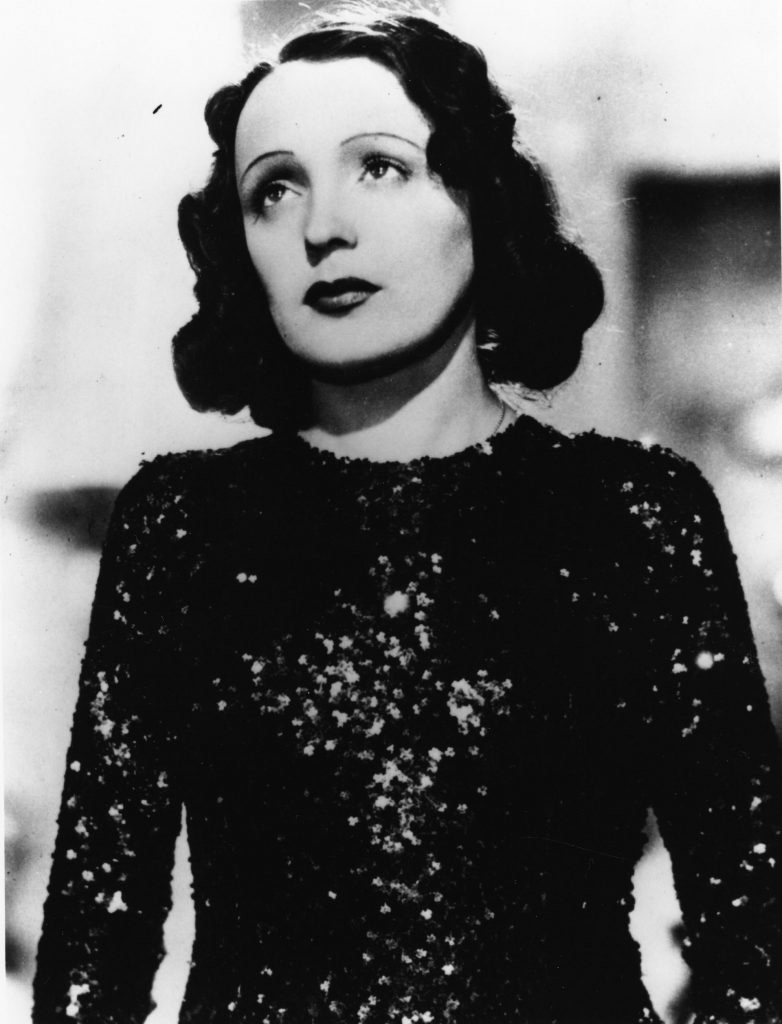
1915 – Édith Piaf, French singer-songwriter and actress (d. 1963) Here’s La Môme (her nickname, meaning “the little sparrow”). She was born Édith Giovanna Gassion, and took “Piaf”—slang for “sparrow”—as her last name.
Like many lakes in the South, Lake Lanier is the source of numerous legends. One of the most frightening stems from the fact that a town with cemeteries and homes was flooded by the U.S. Army Corps of Engineers to create the lake.
According to reports the Georgia Department of Natural Resources reported more than 200 deaths in the lake in the past 30 years. Supposedly, the lake is cursed because some of the bodies were not removed from the cemeteries before the land was flooded in the 1950s.
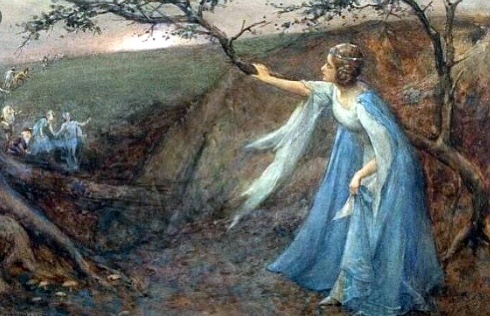
“Legend has it the ghost of a long-dead woman roams this lake in a flowing blue dress. Mysterious arms reach out for swimmers from the watery depths. Angry spirits call people home to submerged graves,” CNN says.
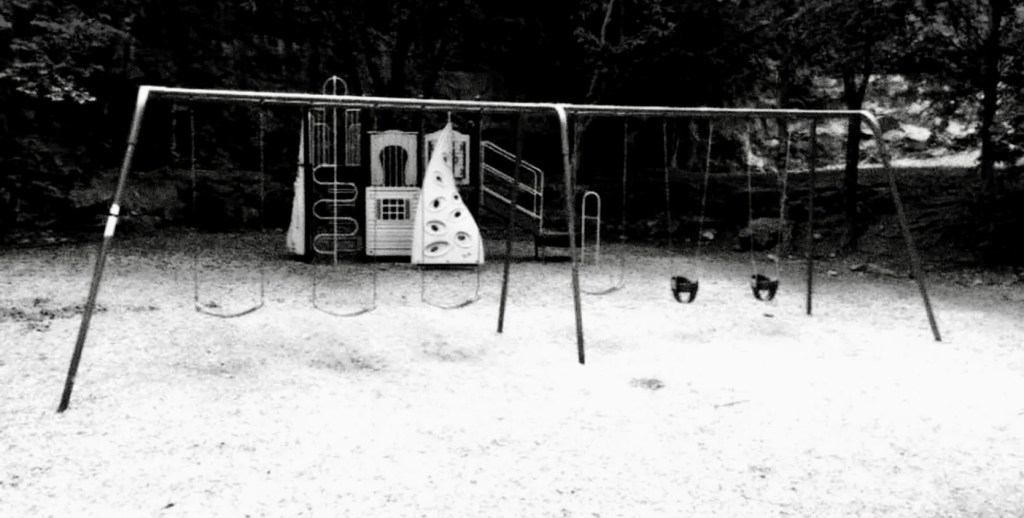
Adjoining Huntsville’s historic Maple Hill Cemetery is a playground that looks much like any other, featuring a modern swing set and climbing apparatus. But this playground isn’t like others. Passersby often say they can see the swings moving on their own volition, as well as orbs or spectral figures.
So how did the innocent place get its gruesome name? According to legend, many children who died in Huntsville during the 1918 Spanish Flu Pandemic are buried in Maple Hill plots adjoining the playground. The spirits of those children, some say, come out after dark to run and play, as they might have in life. An online search turns up photos of unexplained shadows and orbs.
According to legend, a young bride dressed in her white dress took her life at a natural geologic formation near the Arkansas River in Pulaski County.
The woman, Martha Sanders “lost her husband, Gustavus Sanders, days after their wedding,” according to a Arkansas Facts for kids website. Gustavus and Martha were married at the top of the Natural Steps, their favorite rendezvous.
“Unfortunately, the honeymoon was short for the young couple because just days later he was dead and was laid to rest behind the old wooden church,” the website says. Martha, overcome with grief, disappeared not long after his funeral and was never seen again. Legend says she took her life by jumping from the Natural Steps into the Arkansas River and her ghost haunts the site until this day.
The Predynastic Period begins in the middle areas of Egypt with the so-called Badarian culture, a name given to group a series of archaeological sites – six hundred tombs with rich funerary equipment and forty little-investigated settlements – distributed over more than thirty kilometers of the eastern bank of the Nile.
At first it was thought that it was a culture restricted to the area that gives it its name, El Badari, but more recently objects very characteristic of it have been found in much more southern and eastern areas. Beyond its relevance as the first demonstration of the use of agriculture in Upper Egypt, the Badarian culture is known above all for its necropolis in the desert.
All the graves are simple oval holes in the ground that, in many cases, contain a mat on which the corpse is placed. In general, these bodies are in a not too hunched fetal position, lying on the left side, with the head directed south and facing west. Its rich funerary furnishings are striking, suggesting an unequal distribution of wealth and, therefore, the existence of a certain social stratification. This thesis is further reinforced by the fact that the richest tombs tend to separate from the others in specific areas of the necropolis.
Cassadaga, Fla., is known as a home for many spiritualists and retired circus performers but it is also home to a spooky legend. The story of The Devil’s Chair has been passed down for decades. The “chair” is actually a brick graveside bench in Lake Helen-Cassadaga Cemetery. Many local legends surround the bench. One is that “an unopened can of beer left on the chair will be empty by morning,” according to MadGhosts.com. “In some accounts, the can is opened, and in others, the beer is simply gone, through the unopened top.” Another part of the legend says that visitors who dare to sit on the bench will be visited by the devil.
A large fissure already existed at the time the inscription was created, divides the rock into two parts. Some areas are damaged, making some parts of the text unreadable.
It is written in hieroglyphs arranged in 42 columns. In the upper part three deities are represented; Khnum (the creator, represented with the head of a ram), Satis (a goddess, personification of the floods of the Nile) and Anuket (goddess of water and waterfalls). In front of them Pharaoh Djoser brings them offerings.
The text recounts the seven-year period of drought and famine that took place during the reign of Pharaoh Djoser of the Third Dynasty, the builder of the Step pyramid who reigned around 2665-2645 BC.
The drought began in the 18th year of his reign, caused because the Nile did not flood the farmlands and therefore there were no crops. The pharaoh then entrusted his vizier Imhotep to investigate where the god of the Nile was born, who was in charge of causing the flood annually. After consulting the archives in the temple of Thoth in Hermopolis, informs him that the rise of the Nile is the work of the god Khnum, who resides in a sacred spring on the island of Elephantine.
Imhotep travels to the temple of Khnum in Elephantine and while praying to the god he has a dream. In it, Khnum is introduced to him and describes his divine powers. He then promises the vizier to make the Nile flow again. Imhotep wakes up and writes down everything that Khnum has told him to tell pharaoh Djoser.
“I was grieving on my great throne, and those in the palace were grieving. My heart was in great pain, for the Nile had not arrived in time for seven years. The grain was scarce, the seeds were dry, everything that could be eaten was in short supply… Then I took pleasure in looking back and questioned the chief priest, Imhotep. Where does the Nile originate? I asked him, what god rests there, to support me? Imhotep replied, “There is a city in the middle of the water; the Nile surrounds it. Her name is Elephantine; Khnum is there”
Before the vizier’s account, the pharaoh orders priests, scribes and workers to restore Khnum´s temple and to once more make regular offerings to the god. Furthermore, by decree it grants him the territory between Aswan and Tachompso, and a part of all imports from Nubia.
However, the Famine Stela does not date from the reign of Djoser, or even that of any of his immediate successors. Researchers believe it was made during the time of the reign of the Ptolemies, the Greek rulers of Egypt after Alexander the Great, between 332 and 31 BC. That is, more than 2,300 years after the events that it narrates.
Specifically, it would belong to the reign of Ptolemy V (205-180 BC), and its creators would be the own priests of the temple of Khnum, who thus tried to justify their dominion over Elephantine Island and the surrounding regions. For this reason, for a time the inscription was considered a forgery of the priests. Today some Egyptologists believe that the facts it relates are true, others believe that they are fiction.
Doggerland, the area of land that once connected Britain to Europe. This map shows the gradual sea level rise with estimated dates.
It was often thought that there could be a lost land submerged beneath the North Sea. In the 20th century fishermen discovered evidence to support this belief when they dragged up an antler from the seabed. Other finds include the remains of lions and mammoths and prehistoric tools.
Doggerland was a land of small sloping hills with wooded valleys, rivers, lagoons and salt marshes. It is believed to have been abundant in wildlife including woolly rhinoceros and mammoth. The land was home to hunter-gatherers who probably migrated with the seasons.
Over thousands of years Doggerland was gradually submerged by rising sea levels until the last remnants were flooded possibly by a huge tsunami just over 8,000 years ago. But some disagree with the tsunami hypothesis and believe that Doggerland survived the tsunami and was gradually submerged afterwards…
In Greek mythology, the Sirens were actually winged, half-human, half-bird creatures.
According to literature, the Sirens lived on an island near Scylla and Charybdis (traditionally located in the Strait of Messina between Italy and Sicily).
In most folklore, sirens have been shown singing songs.
In most Greek poet and tradition, the Sirens were depicted as beautiful maidens that would sit half-naked on rocky shores. They would then lure sailors to them using their beautiful singing voices; with the sailors following them not knowing that they are sailing into problems.
According to classical Greek poets and traditions, there are around seven named sirens, they include: Anglaope, Molpe, Peisinoe, Thelxiope, Leucosia, Pathenope and Ligeia.
The sirens are often cited as being fathered by the river God Achelous, with the mother usually being cited as being one of the nine muses, they include: Calliope, Terpischore, Melpomene or Sterope.
A famous Greek folktale claimed that the Sirens were fated to die if any mortal should hear them sing and live to tell the story.
Mermaids
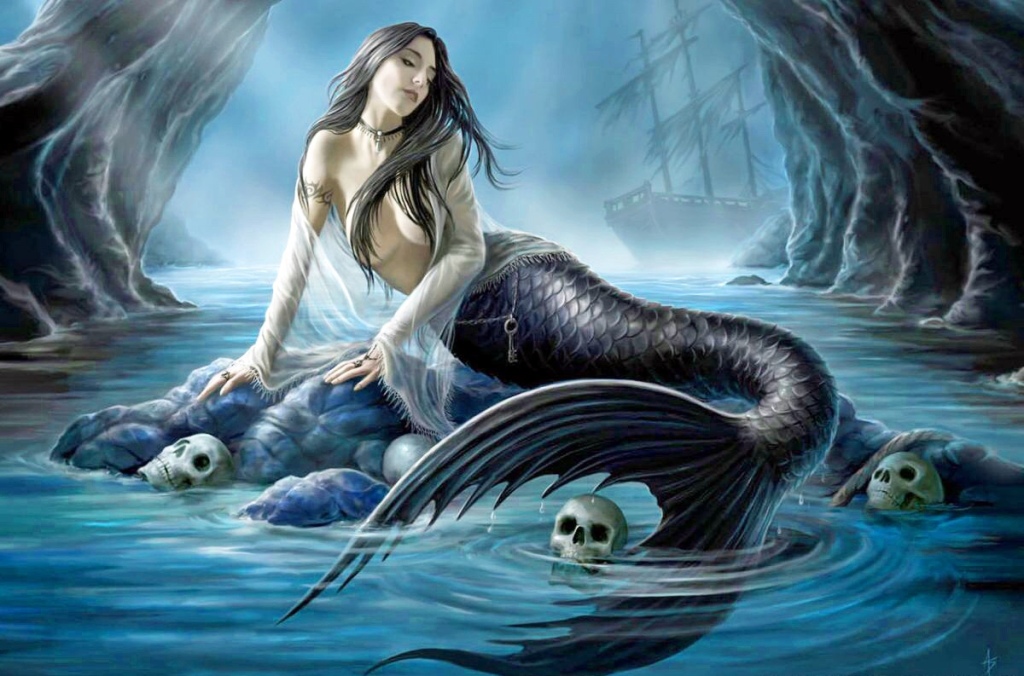
In folklore, a mermaid is an aquatic creature with the head and the upper body of a female human and the tail of a fish.
Mermaids are present in almost every culture’s mythology, from Europe and the Americas, to the Near East, Africa and Asia.
In all folklores, mermaids are depicted as magical creatures that live and dwell under the sea with their own culture and customs.
In many poets and traditions, mermaids are usually depicted as peaceful, non-violent creatures that try to live their lives away from human interference.
In some folklore, mermaids are sometimes associated with perilous events such as floods, storms, and shipwrecks and drowning.
A famous Greek folktale claimed that Alexander the Great’s sister, Thessalonike was transformed into a mermaid upon her death in 295 BC and lived in the Aegean Sea.






 Mark Bere Peterson’s Counterculture, Urban Legends, Paganism & Witchcraft