Who Were The Puritans?

The roots of Puritanism are to be found in the beginnings of the English Reformation. The name “Puritans” (they were sometimes called “precisionists”) was a term of contempt assigned to the movement by its enemies. Although the epithet first emerged in the 1560s, the movement began in the 1530s, when King Henry VIII repudiated papal authority and transformed the Church of Rome into a state Church of England. To Puritans, the Church of England retained too much of the liturgy and ritual of Roman Catholicism.

Well into the 16th century, many priests were barely literate and often very poor. Employment by more than one parish was common, so they moved often, preventing them from forming deep roots in their communities. Priests were immune to certain penalties of the civil law, further feeding anticlerical hostility and contributing to their isolation from the spiritual needs of the people.

In the early decades of the 17th century, some groups of worshipers began to separate themselves from the main body of their local parish church where preaching was inadequate and to engage an energetic “lecturer,” typically a young man with a fresh Cambridge degree, who was a lively speaker and steeped in reform theology. Some congregations went further, declared themselves separated from the national church, and remade themselves into communities of “visible saints,” withdrawn from the English City of Man into a self-proclaimed City of God.

One such faction was a group of separatist believers in the Yorkshire village of Scrooby, who, fearing for their safety, moved to Holland in 1608 and then, in 1620, to the place they called Plymouth in New England. We know them now as the Pilgrims of Plymouth Rock. A decade later, a larger, better-financed group, mostly from East Anglia, migrated to Massachusetts Bay. There, they set up gathered churches on much the same model as the transplanted church at Plymouth (with deacons, preaching elders, and, though not right away, a communion restricted to full church members, or “saints”).

The main difference between the Pilgrims and the Puritans is that the Puritans did not consider themselves separatists. They called themselves “nonseparating congregationalists,” by which they meant that they had not repudiated the Church of England as a false church. But in practice they acted–from the point of view of Episcopalians and even Presbyterians at home–exactly as the separatists were acting. 

By the 1640s, their enterprise at Massachusetts Bay had grown to about 10,000 people. They soon outgrew the bounds of the original settlement and spread into what would become Connecticut, New Hampshire, Rhode Island, and Maine, and eventually beyond the limits of New England.

The Puritan migration was overwhelmingly a migration of families (unlike other migrations to early America, which were composed largely of young unattached men). The literacy rate was high, and the intensity of devotional life, as recorded in the many surviving diaries, sermon notes, poems, and letters, was seldom to be matched in American life.

The Puritans’ ecclesiastical order was as intolerant as the one they had fled. Yet, as a loosely confederated collection of gathered churches, Puritanism contained within itself the seed of its own fragmentation. Following hard upon the arrival in New England, dissident groups within the Puritan sect began to proliferate–Quakers, Antinomians, Baptists–fierce believers who carried the essential Puritan idea of the aloneness of each believer with an inscrutable God so far that even the ministry became an obstruction to faith.

Puritanism gave Americans a sense of history as a progressive drama under the direction of God, in which they played a role akin to, if not prophetically aligned with, that of the Old Testament Jews as a new chosen people.

Perhaps most important, as Max Weber profoundly understood, was the strength of Puritanism as a way of coping with the contradictory requirements of Christian ethics in a world on the verge of modernity. It supplied an ethics that somehow balanced charity and self-discipline. It counseled moderation within a psychology that saw worldly prosperity as a sign of divine favor. Such ethics were particularly urgent in a New World where opportunity was rich, but the source of moral authority obscure.

Source: history.com
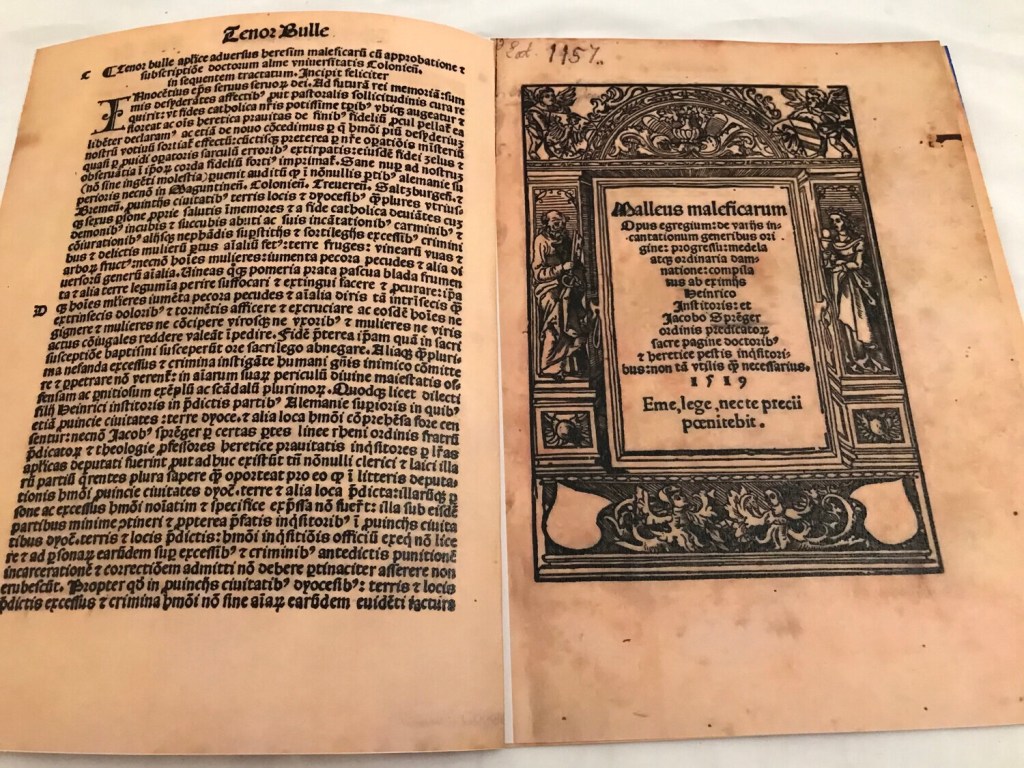
“Malleus Maleficarum” Published

Witch hysteria really took hold in Europe during the mid-1400s, when many accused witches confessed, often under torture, to a variety of wicked behaviors. Within a century, witch hunts were common and most of the accused were executed by burning at the stake or hanging. Single women, widows and other women on the margins of society were especially targeted.

Between the years 1500 and 1660, up to 80,000 suspected witches were put to death in Europe. Around 80 percent of them were women thought to be in cahoots with the Devil and filled with lust. Germany had the highest witchcraft execution rate, while Ireland had the lowest. 

The publication of “Malleus Maleficarum”—written by two well-respected German Dominicans in 1486—likely spurred witch mania to go viral. The book, usually translated as “The Hammer of Witches,” was essentially a guide on how to identify, hunt and interrogate witches. 

“Malleus Maleficarum” labeled witchcraft as heresy, and quickly became the authority for Protestants and Catholics trying to flush out witches living among them. For more than 100 years, the book sold more copies of any other book in Europe except the Bible.

Jade Facial Roller

This is a hand-held facial massage tool that is used to increase circulation in the face and neck, increase absorption of skin care products and reduce fine lines, wrinkles, under-eye swelling, and dark circles. It works by supporting lymphatic drainage away from the face. The roller is typically made with two smooth jade stones, one at each end. Depending on the size of the area you are working on, you can use either the small or large end. To use, simply massage your favorite skin cream or oil onto your face and neck and, using the roller, make small sweeping motions from the center of your face, out toward your hairline or down toward your neck. Do this for about five minutes each morning. If you tend to have puffiness under your eyes or red, irritated skin, you can put the roller into the freezer overnight and use it cold the next morning.

Origin of Witches

Early witches were people who practiced witchcraft, using magic spells and calling upon spirits for help or to bring about change. Most witches were thought to be pagans doing the Devil’s work. Many, however, were simply natural healers or so-called “wise women” whose choice of profession was misunderstood.

It’s unclear exactly when witches came on the historical scene, but one of the earliest records of a witch is in the Bible in the book of 1 Samuel, thought be written between 931 B.C. and 721 B.C. It tells the story of when King Saul sought the Witch of Endor to summon the dead prophet Samuel’s spirit to help him defeat the Philistine army. 

The witch roused Samuel, who then prophesied the death of Saul and his sons. The next day, according to the Bible, Saul’s sons died in battle, and Saul committed suicide.

Other Old Testament verses condemn witches, such as the oft-cited Exodus 22:18, which says, “thou shalt not suffer a witch to live.” Additional Biblical passages caution against divination, chanting or using witches to contact the dead.

Sources: history.com

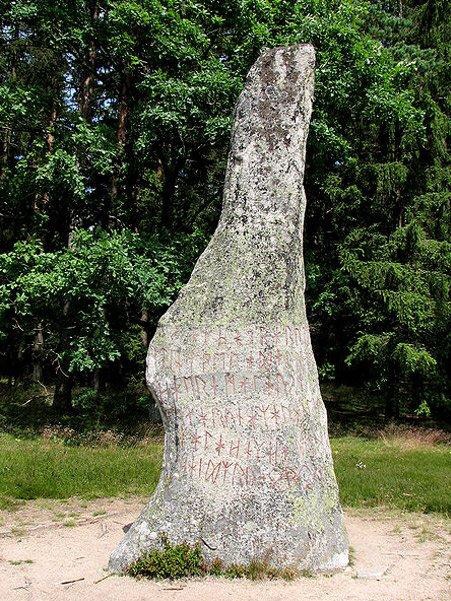
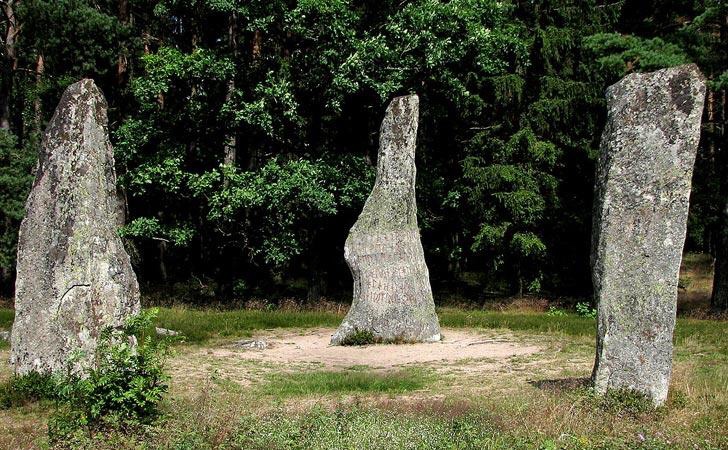
Björketorp Runestone

Runes were the alphabetic system of the Vikings in the past. However, the Vikings didn’t commonly use runes for the communicative purpose between people and people. Rather, they used runes as a tool to communicate with their gods. One of the main sources that we have the information about runes is from the runestone. Thanks for the Vikings carving their runes onto materials like stone, we have something to look back at the age of the Vikings. One of the runestones surrounded by mysteries is the Björketorp Runestone.

The Björketorp Runestone currently rests in Blekinge, Sweden. It is a part of the grave field including some standing stones that form a circle.

It is among the tallest runestones in the world, measuring 4.2 meters (~13.7ft) in height. The Björketorp Runestone is the only stone that has rune inscription on it. 

The runes were carved in Proto Norse language around 6th or 7th century. This language might have been in use from the 2nd to 8th century. Also, it might have been the foundation for the Old Norse language. There are two sides with the rune inscriptions on this stone. One side consists of a shorter line reading “I predict perdition”.

The other side with inscription evokes many controversies though. The message from the other side of the runestone reads: 

Haidz runo runu, falh’k hedra ginnarunaz. Argiu hermalausz, … weladauþe, saz þat brytz. Uþarba spa.

This can be translated into: 

I, master of the runes conceal here runes of power. Incessantly (plagued by) maleficence, (doomed to) insidious death (is) he who breaks this (monument).
I prophesy the destruction/prophecy of destruction.

While some runestones contain the names of the tribe, the Björketorp Runestone lacks the name of the creators. The scholars have been in dispute about the purpose of the runestone. But the major theory is that the runestone is erected as a grave and a kind of curse is carved onto to protect it.

Sources: bavipower.com

Pennyroyal (menthe pulegium)

Pennyroyal (menthe pulegium)

A small member of the mint family, but less pleasant in aroma and containing the toxic compound pulegone that is notorious for causing abortion; for years the plant has been used for ridding the home of fleas. Two thousand years ago, pennyroyal was the herb used to terminate unwanted pregnancies. Dr Art Tucker, author of The Big Book of Herbs explains that pennyroyal induces abortions by first damaging the mother’s liver: death sometimes follows. In modern times, most of the pennyroyal incidents involve the use of the plant’s essential oil (generally used for therapeutic or homeopathic purposes or as an insect repellent), which is so potent that it should be considered a poison. In the interest of safety, the advice should be never use pennyroyal essential oil for anything, not ever.

Magical propensities for physical strength and endurance. Worn to bring success to business or to rid the home of negative thoughts against you. Carry when dealing with negative vibrations of any kind.

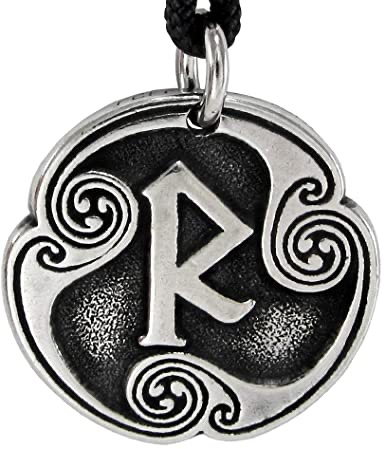
Raidho (Raido)

Raidho (Raido)

Pronounced: rah-eed-ho

Astrological: Sagittarius/Virgo

Tarot: The Hierophant

Element: Air

Key Words: Journey, Pilgrimage, Change, Action, Cartwheel

This Rune is concerned with communication, with the attunement of something that has two sides, two elements, and with the ultimate union that comes at the end of the journey, when what is above and what is below are united and of one mind.

Inner worth mounts here, and at such a time you are not intended to rely entirely upon your own power. Instead, ask what constitutes right action. Ask through prayer or meditation, through addressing the Witness Self, the Teacher Within. Once you are clear, you can neutralize your refusal to let right action flow through you. Not intent on movement, be content to wait; while you wait, keep on removing resistances. As the obstructions give way, all remorse arising from trying to make things happen disappears.

The journey is toward self-healing, self-change and union. You are concerned here with nothing less than unobstructed, perfect union. But the union of Heaven and Earth cannot be forced. Regulate any excesses in your life. Material advantages must not weigh heavily on this journey of the self toward the Self. Stand apart even from like-minded others; the notion of strength in numbers does not apply at such a time, for this part of the journey—the soul’s journey—cannot be shared.

Reversed: Receiving Raido Reversed puts you on notice to be particularly attentive to personal relationships. At this time, ruptures are more likely than reconciliations and effort may be required to keep your good humor. Whatever happens, how you respond is up to you.

The requirements for your growth may totally disrupt what you had intended. Desired outcomes may elude you. And yet what you regard as detours, inconveniences, disruptions, blockages and even failures and deaths, will actually be rerouting opportunities, with union and reunion as the only abiding destinations.

Sources: The Book of Runes, Runes: Pagan Portals

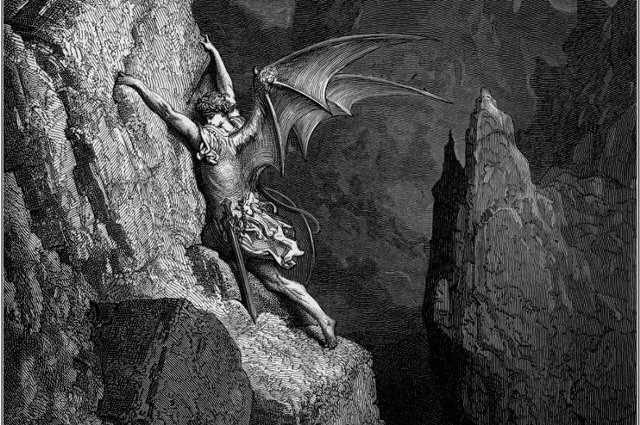
Paradise Lost, Book II Excerpt

“Into this wild abyss,
The womb of nature and perhaps her grave,
Of neither sea, nor shore, nor air, nor fire,
But all these in their pregnant causes mixed
Confusedly, and which thus must ever fight,
Unless the almighty maker them ordain
His dark materials to create more worlds,
Into this wild abyss the wary fiend
Stood on the brink of hell and looked a while,
Pondering his voyage . . .”

~ John Milton, Paradise Lost, Book II

#FavoriteQuotes #JohnMilton #ParadiseLost

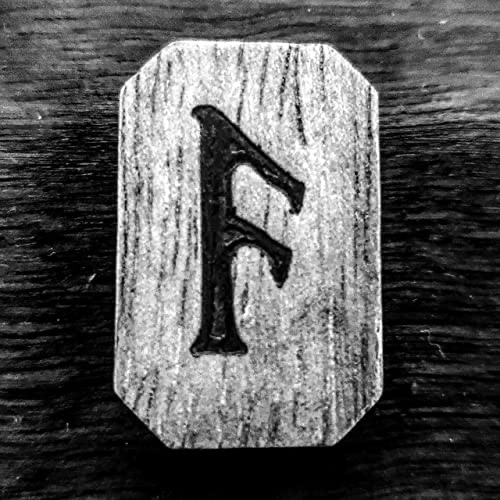
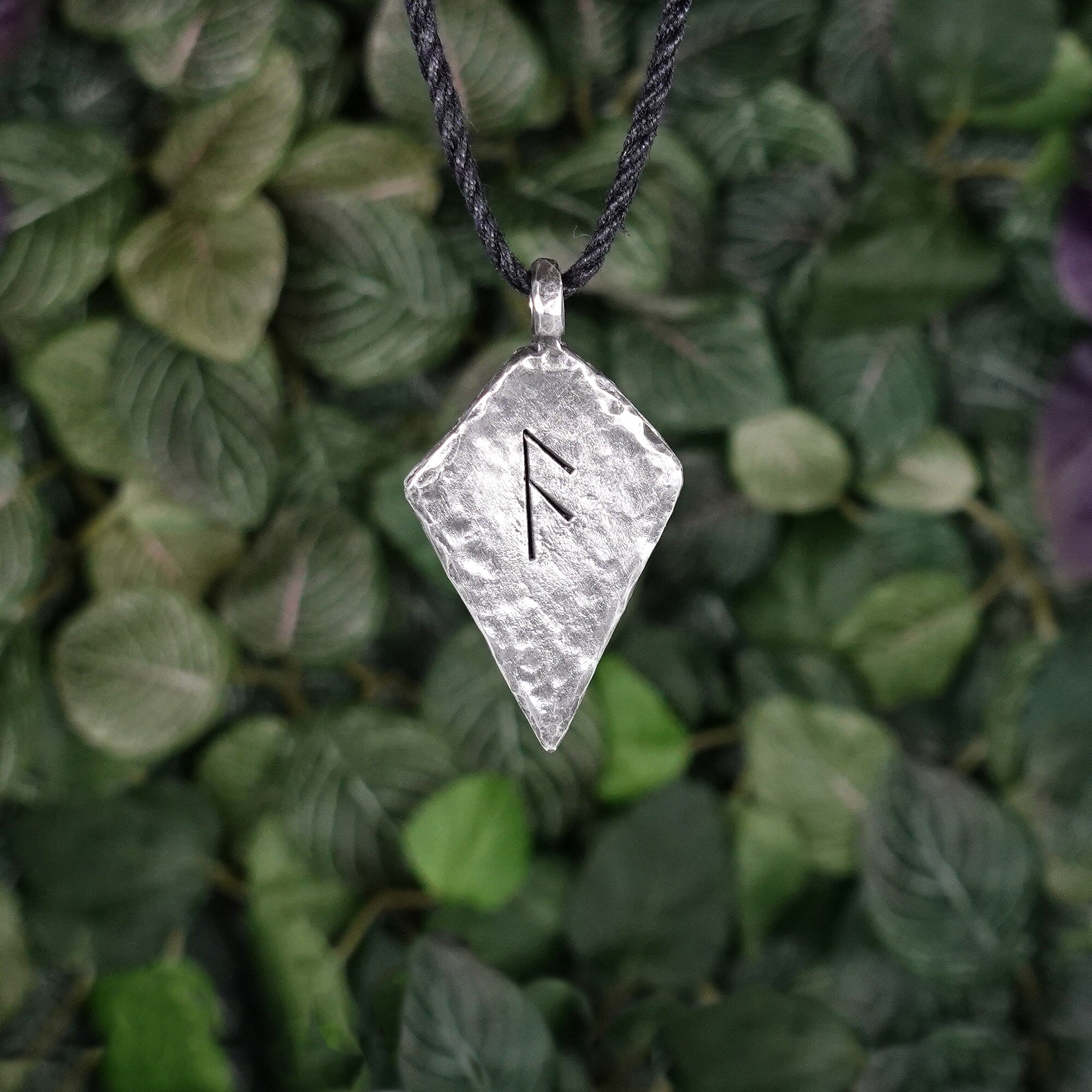
Ansuz

Ansuz

Pronounced: ahn-sooz

Astrological: Leo/Virgo

Tarot: Death

Element: Air

Key Words: Communication, Divine Inspiration, Spiritual Power, Wisdom, Ideas, knowledge

The keynote here is receiving: messages, signals, gifts. Even a timely warning may be seen as a gift. The message may be that of a new life unfolding. New lives begin with new connections, surprising linkages that direct you onto new pathways. Take care now to be especially aware during meetings, visits, chance encounters, particularly with persons wiser than yourself. When the Messenger Rune brings sacred knowledge, you are truly blessed.

Loki is the ancient trickster from the pantheon of the Norse gods. He is the heyeohkah of the Native Americans, a mocking shadow of the creator god, as well as the bringer of benefits to humankind. He is a reminder that even scoundrels and arch-thieves can be the bearers of wisdom. When you draw this Rune, expect the unexpected: The message is always a call, a call to new life.

Ansuz is the first of the thirteen Runes that make up the Cycle of Initiation—Runes that focus directly upon the mechanism of self-change—and as such, addresses our need to integrate unconscious motive with conscious intent.

Drawing Ansuz tells you that connection with the Divine is at hand. It is a signal to explore the depths, the foundations of life, and to experience the inexhaustible wellspring of the Divine in your nature.

At the same time, you are reminded that you must first draw from the well to nourish and give to yourself. Then there will be more than enough to nourish others. A new sense of family solidarity invests this Rune.

Reversed: You may be concerned over what appears to be failed communication, lack of clarity or awareness either in your past history or in a present situation. You may feel inhibited from accepting what is offered. A sense of futility; of wasted motion, may overwhelm you. Remember, however, that what is happening is timely to your process. If the well is clogged, this is the moment for cleaning out the old. Reversed, Ansuz is saying: Consider the uses of adversity.

Sources: The Book of Runes, Runes: Pagan Portals

Mistletoe (viscum album)

Mistletoe (viscum album)

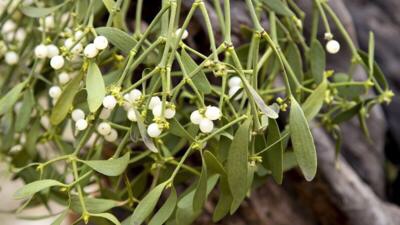
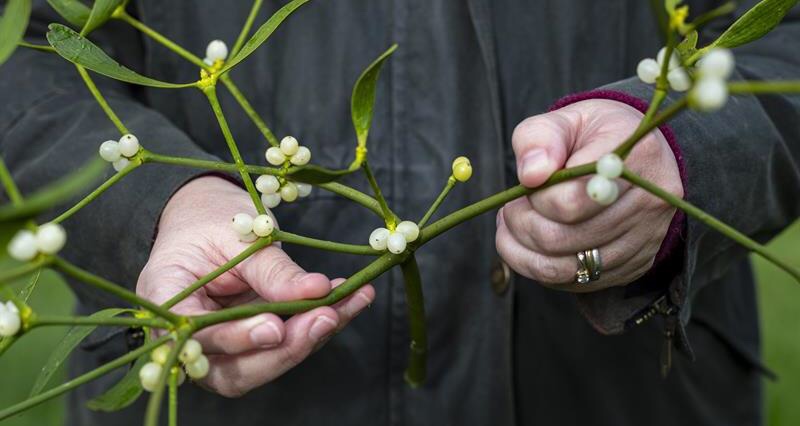
An evergreen, parasitic shrub growing on apple, lime, poplar, maple, hawthorn and rowan trees; in spring inconspicuous yellow flowers are followed by poisonous, sticky white berries.

The Pharoadendron species contains a toxin called phoratoxin, which can cause blurred vision, nausea, abdominal pain, diarrhoea, blood pressure changes, and even death. The Viscum species of mistletoe contains a slightly different cocktail of chemicals, including the poisonous alkaloid tyramine, which produces essentially the same symptoms. Although mistletoe has therapeutic uses, eating any part of the plant (particularly the leaves or berries) or drinking a tea from the plant can result in sickness and possibly death.

Magical propensities for fertility; creativity; prevention of illness/misfortune; wear in an amulet to repel negativity and ill will; protect against unwanted advances. Use to draw in customers, money and business.