
Akhenaten, known before the fifth year of his reign as Amenhotep IV, was an ancient Egyptian pharaoh of the 18th Dynasty who ruled for 17 years and died perhaps in 1336 BCE or 1334 BCE.
#Akhenaten #Monotheism

Akhenaten, known before the fifth year of his reign as Amenhotep IV, was an ancient Egyptian pharaoh of the 18th Dynasty who ruled for 17 years and died perhaps in 1336 BCE or 1334 BCE.
#Akhenaten #Monotheism

The statues and pyramids, the Nile river and the desert, the hieroglyphics and the Rosetta Stone get all the press, but the ancient Egyptians enjoyment of play and especially games from athletic demonstrations of strength to board games which we’ll focus upon the most popular one here. They had toys made of clay and wood and fashioned balls out of leather. They loved to dance and also loved to swim in the Nile River. Board games and pictures depicting people dancing in circles have been found in tombs dating back thousands of years.

Senet was the most popular game of the ancient Egyptians. The oldest hieroglyph resembling a senet game dates to around 3100 BC. The full name of the game meant the “game of passing” in ancient Egyptian. One of the oldest known Senet board representations ever found was a painting from 2,686 B.C. in the tomb of Hesy-Ra. The board game had three rows of ten squares. Some of the squares had symbols which represented bad and good fortune. Two sets of pawns were used to play the game. The object of the game was to be the first player to pass into the afterlife unscathed by bad fortunes along the way. People are depicted playing senet in a painting in the tomb of Rashepes, as well as from other tombs of the Fifth and Sixth Dynasties (c. 2500 BC). The oldest intact senet boards date to the Middle Kingdom, but graffiti on Fifth and Sixth Dynasty monuments could date as early as the Old Kingdom.

At least by the time of the New Kingdom in Egypt (1550–1077 BC), senet was conceived as a representation of the journey of the ka (the vital spark) to the afterlife. This connection is made in the Great Game Text, which appears in a number of papyri, as well as the appearance of markings of religious significance on senet boards themselves. The game is also referred to in chapter XVII of the Book of the Dead. Senet also was played by people in neighboring cultures, and it probably came to those places through trade relationships between Egyptians and local peoples.

The senet gameboard is a grid of 30 squares, arranged in three rows of ten. A senet board has two sets of pawns (at least five of each).The movement of the counters was decided by throwing four two-sided sticks or, in some cases, knucklebones. Although details of the original game rules are a subject of some conjecture, senet historians Timothy Kendall and R. C. Bell have made their own reconstructions of the game. These rules are based on snippets of texts that span over a thousand years, over which time gameplay is likely to have changed. Therefore, it is unlikely these rules reflect the actual course of ancient Egyptian gameplay. Their rules have been adopted by sellers of modern senet sets.

Hounds and Jackals is an ancient Egyptian game, which came into existence during the Middle Kingdom (circa 2135 – 1986 BCE). It is a racing game, in the same category as Senet, Aseb, and the Royal Game of Ur.

The game was originally discovered by William Mathew Flinders Petrie and published by him in 1890. Since then over 40 examples of the game have been found in Egypt, Israel, Syria, Iran and around the Levant and Mediterranean.
The original name of the game is unknown. Petrie called The Game of 58 Holes, since the game board that he found contained two sets of 29 holes. Later, when Howard Carter discovered the fanciest known copy of the game, the modern name was invented,The Game of Hounds and Jackals, since the playing pieces had heads of dogs and jackals on them. Carter found one complete gaming set in a Theban tomb that dates to the 13th Dynasty. A third, least common, common name for the game was Shen for the Egyptian hieroglyph which was written on some of the examples, around the big hole at the top of the game.

The original rules for Hounds and Jackals are unknown. There have been many reconstruction attempts by historians and archaeologists. Gaming pieces are ten small sticks with either jackal or dog heads. The aim of the game was perhaps to start at one point on the board and to reach with all figures another point on the board. Players navigate their ivory pegs through the holes on the surface by rolling sticks, dice or knuckle-bones. To win, a player must be the first one to move all of their five pieces off the board. In the 1956 movie The 10 Commandments, Pharaoh Seti and Nefretiri are depicted playing the game.

Ta’amia was very popular with the Ancient Egyptians and continues to be popular in the middle east today. It was made with fava beans, but these can be substituted with chickpeas to make the well known version of Ta’amia known as falafel.
Ingredients
Preparation

This recipe was found on an ostraca (pottery shard) that dates back to 1600 BC. Here’s is a modernized version:
1 cup of fresh pitted dates
1 teaspoon cinnamon
1/2 teaspoon cardamom seeds
1/2 cup ground walnuts
small amount of liquid honey
1/2 cup finely ground almonds
Put the dates, cardamom, cinnamon, and walnuts in a food processor and run at high speed to make a paste. Take chunks of this paste and form it into walnut sized balls. Brush these with some liquid honey and roll them in the ground almonds to coat them.

Ancient Egyptian bread was made of barley, millet, and once available, wheat. Though not always combined, sometimes two or all three of these were used in a single recipe. Bread was a very simplistic form. Yeast did not exist in Egypt until well into the Middle Kingdom and was not particularly popular until the New Kingdom era, so loaves were what we would consider today “flat” breads.
Bread consisted of only three simple ingredients:
To this basic recipe, flavorings were often added prior to baking: sesame seeds, honey, herbs, oil, egg washes, fruits and even sometimes bits of leftover chopped meat were added to help spice up these supplementary loaves.
Ancient Egyptian Bread Recipe:

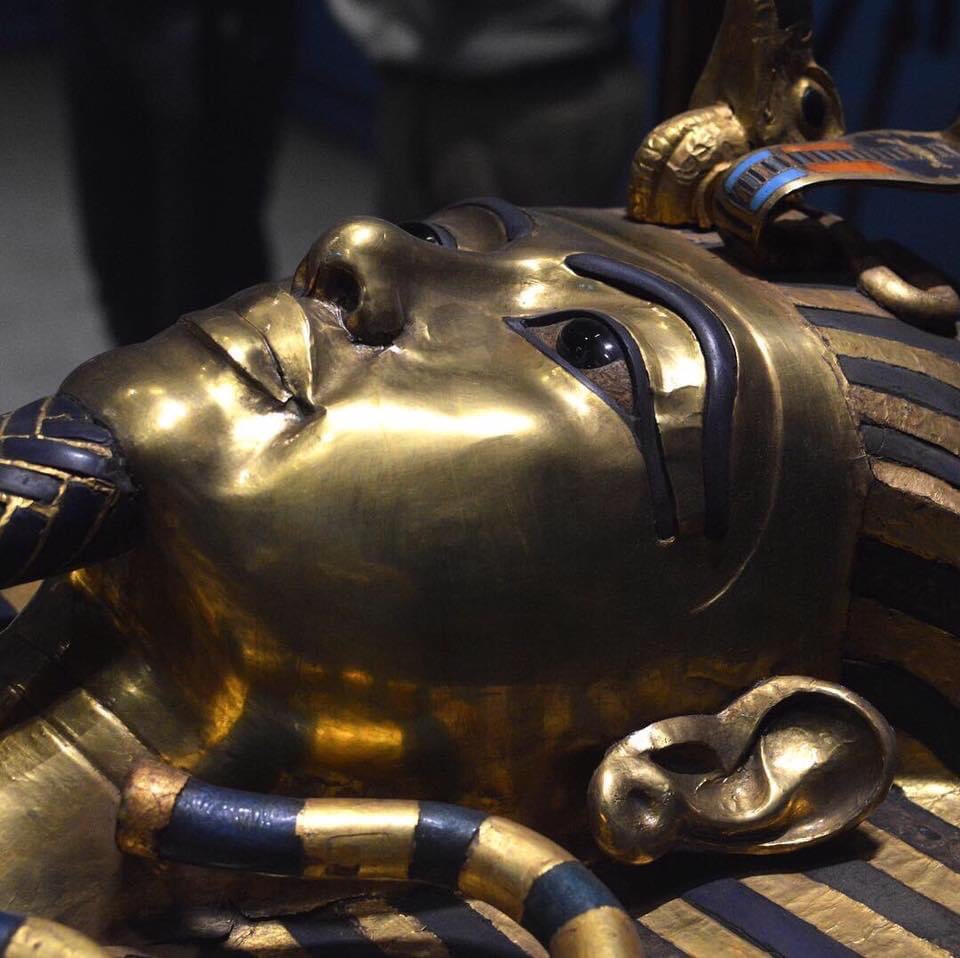
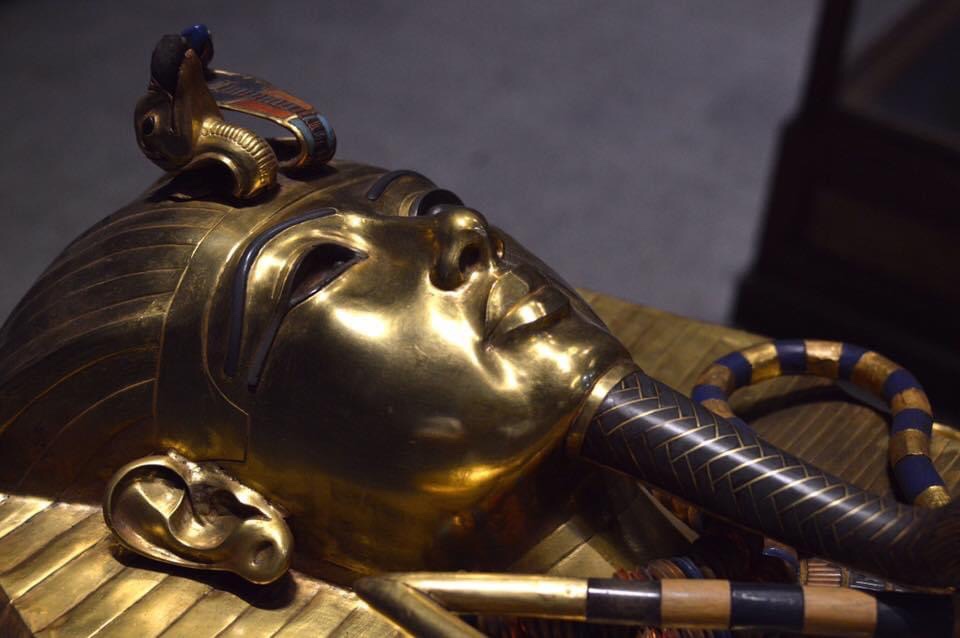
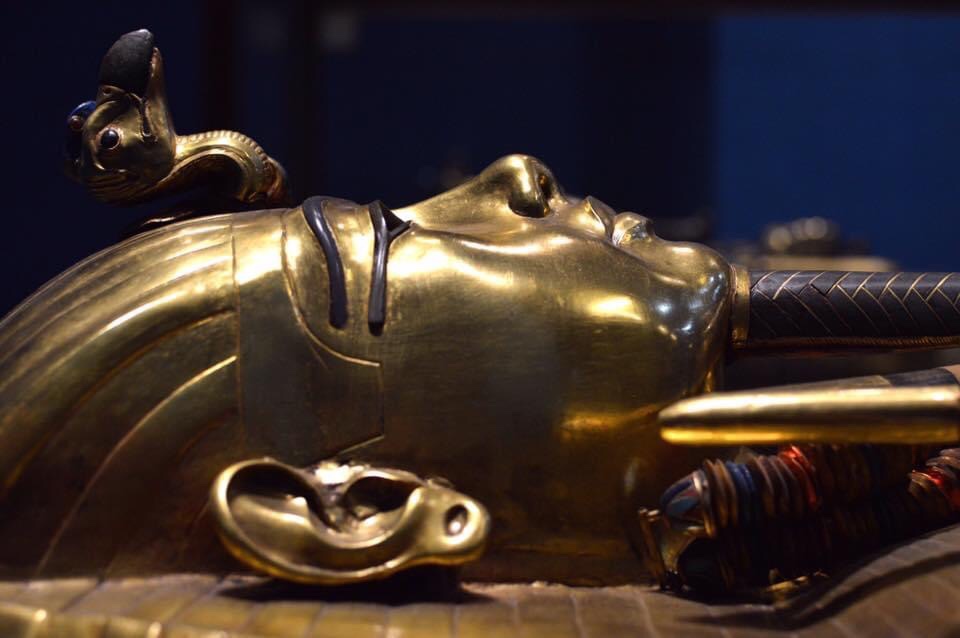
In 1915, George Herbert, 5th Earl of Carnarvon, the financial backer of the search for and the excavation of Tutankhamun’s tomb in the Valley of the Kings, employed English archaeologist Howard Carter to explore it. After a systematic search, Carter discovered the actual tomb of Tutankhamun (KV62) on November 4th 1922.
On November 26, 1922, Carter and fellow archaeologist Lord Carnarvon entered the interior chambers of the tomb, finding them miraculously intact.
Thus began a monumental excavation process in which Carter carefully explored the four-room tomb over several years, uncovering an incredible collection of several thousand objects. The most splendid architectural find was a stone sarcophagus containing three coffins nested within each other. Inside the final coffin, which was made out of solid gold, was the mummy of the boy-king Tutankhamen, preserved for more than 3,000 years. Most of these treasures are now housed in the Cairo Museum.
 Mark Bere Peterson’s Counterculture, Urban Legends, Paganism & Witchcraft