Among the Aesir gods in Norse mythology, the supreme god Odin, is frequently depicted sitting on his high seat, Hlidskjalf, in Asgard, the home of the gods.
Hugin is believed to represent ‘memory’, while Munin personifies ‘thought’. Every day, Odin sends them out and they fly across the worlds to seek for important news and events. Odin surveys the worlds from Hlidskjalf and must know reports of what is going on in all Nine Worlds. In the evening, Hugin and Munin return to Odin’s shoulders and during dinner in Valhalla, they whisper all they have heard in his ears.
The Helm of Awe is one of the most powerful protective Viking symbols used not only for the purpose of protection from disease, but even to encourage all people who might suffer from depression or anxiety.
In Norse myths it is said that the Helm of Awe symbol was worn between the eyes to cause fear in your enemies, and to protect against the abuse of power. The Norse word for this very important symbol (Ægishjálmr or Aegishjalmur) is translated in English “helm of awe” or “helm of terror.” The meaning of the name awe is to strike with fear and reverence; to influence by fear, terror or respect; as, his majesty awed them into silence.
The Valknut, also known as Hrungnir’s heart, heart of the slain, Heart of Vala, and borromean triangles is a mysterious Norse symbol. its true meaning is still debated, but it is often associated with a warrior’s death in a battle.
The symbol has been found on old Norse stone carvings and funerary steles. It is sometimes called “Hrungnir’s heart,” after the legendary giant of the Eddas. It’s also possible to find a depiction of the Valknut on stone carvings as a funerary motif, where it probably signified the afterlife. In art, the Valknut is a representation of God Odin, and it demonstrates gods’ power over death. A Valknut is also believed to offer protection against spirits which is the reason why it is often carried as a talisman.
A Valknut is made of three parts, and the number three is a very common magic symbol in many cultures. In this case, the symbolism in Norse mythology showing three multiplied by three might designate the nine worlds, which are united by the Yggdrasil tree. In modern times Valknut, like Triquetra and Horn Triskelion, is often interpreted as a symbol pointing to heathen convictions.
In Norse mythology, the Yggdrasil is a giant mythological tree that holds together the Nine Worlds or realms of existence.
At the very top of Yggdrasil, an eagle lived and at the bottom of the tree lived a dragon named Nidhug. Both hated each other and were bitter enemies. The Nine Worlds are guarded by the serpent Jormungandr. Yggdrasil is one of many variations of the Cosmic Axis or Universal World Tree known to all human cultures and home to many fascinating creatures.
The image of Yggdrasil appears on the famous Överhogdal Tapestry, which dates to the year 1066 and depicts the events of Ragnarok, the doom of the Gods and apocalyptic record of the coming comet.
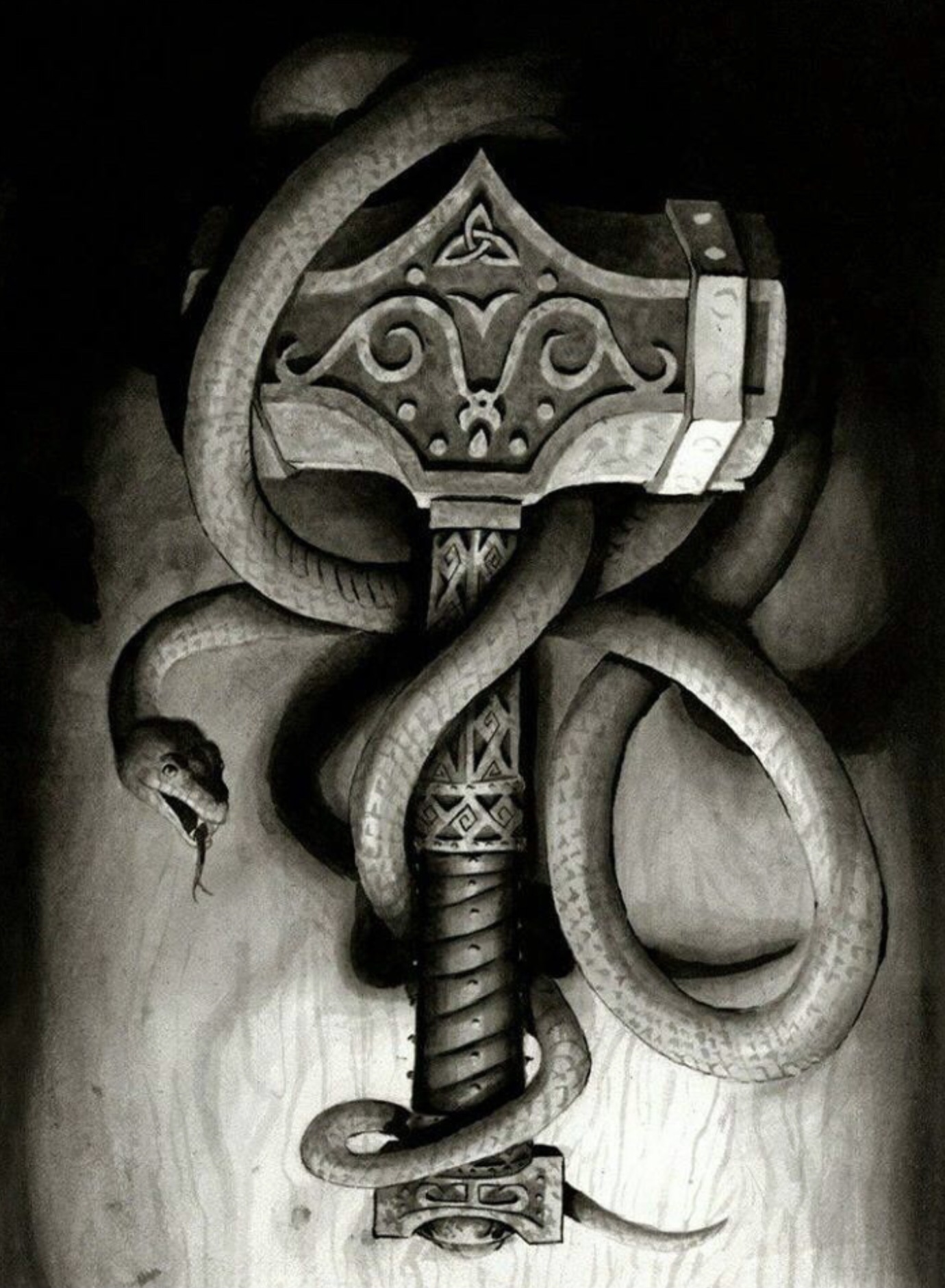
Mjölnir means lightning, and Thor’s hammer indicates the god’s power over thunder and lightning. Thor, ancient god of war is one of the most prominent figures in Norse mythology. Thor who was the storm-weather god of sky and thunder and also a fertility god, was the son of Odin and Fyorgyn, the earth goddess.
Thor’s hammer, Mjölnir is depicted in Norse mythology as one of the most fearsome weapons, capable of leveling mountains. Mjölnir, was a magical weapon that always came back to Thor when he threw it. Wearing Thor’s hammer as an amulet of protection was quite common as this was probably the most popular of all the pagan Viking symbols. Even during Christian times, from A.D. 1000 on, Vikings wore Thor’s Mjölnir as well as a cross on a chain or thong around their necks.
In Norse mythology, the Valkyries were a group of warrior maidens who had served the God Odin and were sent to the battlefields to choose pass judgments upon the slain.
They were not only associated with bloodshed and battle but also with fairness. They were a force to be reckoned with. The Old Norse Poems provide a list of Valkyrie names who were known as the fiercest warriors in battles:
1. Brynhildr(pronounced as “Brin-hil-duur”), meaning”battle armor” or “bright battle,” was known as the leader of the Valkyries.
2. Eir(pronounced as “Ee-rh”), meaning”peace” or “mercy.” In Old Norse mythology, she is a Valkyrie associated with medical proficiency.
3. Geirahöð (pronounced as “Gee-ey-ra-hut”), meaning”battle spear,” is mentioned in some of the manuscripts of Grímnismál.
4. Geiravör (pronounced as “Gee-ey-ra-vurr”), meaning “spear-vör,” is a Valkyrie mentioned in the long list amongst the two Nafnaþulur lists found in the Prose Edda.
5. Geirdrifu(pronounced as “Gee-ey-dra-fu”), meaning”spear-flinger.”
6. Geirönu(pronounced as “Gee-ey-ro-nu”), meaning”the one charging forth with the spear.”
7. Geirskögu(pronounced as “Gee-aer-sko-gu”), meaning”spear-bearer,” a fierce Valkyrie name.
8. Göl(pronounced as “Gawl”), meaning”tumult” or “noise, battle,” is a Valkyrie who served Odin in battle.
9. Göndu(pronounced as “Gawn-du”), meaning”wand-wielder” is one of the most fierce Old Norse Valkyries and the chooser of the slain.
10. Gunnr(pronounced as “Gunner”), meaning”war” or “battle” is a great Valkyrie name with a dual meaning.
11. Herfjötur(pronounced as “Her-fyo-tur”), meaning “fetter of the army” or “host fetter” is well-known in Norse mythology as a powerful Valkyrie with her ability to place fetters.
12. Herja(pronounced as “Herja”), meaning”one who devastates” who was both a Valkyrie and a Germanic goddess and chooser of the slain.
13. Hlaðguðr svanhvít(pronounced as “Hluh-goor-svan-vit”), meaning”swan-white” is King Hlödvér’s daughter, and the sister of Hervör alvit.
14. Hildr (pronounced as “Hill-dur”), meaning”battle” is the daughter of Högni and Hedin’s wife.
15. Hjalmþrimul(pronounced as “Jam-pree-mul”), meaning”helmet clatterer” is amongst the Valkyries in Norse Legend who chooses who will die in battle.
16. Hervör alvitr (pronounced as “Her-vor-aal-vee-tur”), meaning”all-wise strange creature” is a Valkyrie who is the sister of the sister of Hlaðguðr in Nordic mythology.
17. Hjörþrimul(pronounced as “Jor-pree-mul”), meaning”the female sword warrior,” is a legendary Valkyrie.
18. Hlökk(pronounced as “Lowk”), meaning”noise, battle”. She is mentioned in the Poetic Edda poemGrímnismál.
19. Hrist(pronounced as “Rist”), meaning”the quaking one” is a legendary Norse Valkyrie who also appears intheValkyrie Profile series.
20. Hrund(pronounced as “Rund”), meaning“pricker”.
21. Kára(pronounced as “Kaara”), meaning”the curly one” is a Valkyrie mentioned in the Poetic Edda poem Helgakviða Hundingsbana II.
22. Mist(pronounced as “Mist”), meaning”cloud” or “mist”. She appears in the list in the Poetic Edda poem Grímnismál.
23. Ölrún(pronounced as “Awl-run”), meaning”ale-rune” is a powerful Valkyrie.
24. Randgrid(pronounced as “Rand-grid”), meaning”shield-destroyer” is a powerful Valkyrie.
25. Ráðgríðr(pronounced as “Rad-gri-dur”), meaning”council-truce” is a well-known Valkyrie in Norse legend who judges who will die in battle.
26. Reginleif(pronounced as “Rain-leaf”), meaning”daughter of the gods” is a Valkyrie who became Volund for Adam when Ragnarök took place.
27. Róta(pronounced as “Row-tah”), meaning”sleet and storm” is a Valkyrie who is attested in the 36th chapter of the Prose Edda book Gylfaginning, mentioned alongside the other valkyries.
28. Sanngriðr(pronounced as “San-grid-ur”), meaning”very violent and very cruel” is a Valkyrie who is mentioned in the skaldic poem Darraðarljóðand a powerful female figure.
29. Sigrdrífa(pronounced as “Sig-ur-dri-fa”), meaning”inciter to victory” is a well-known Valkyrie in Norse literature who is known as the chooser of the slain.
30. Sigrún(pronounced as “Sig-run”), meaning”victory rune” is a famous Nordic Valkyrie in Norse mythology.
31. Skalmöld(pronounced as “Skal-mold”), meaning”sword-time” is amongst the Valkyries is one of the female figures who decide who will die in battle.
32. Skeggöld(pronounced as “Ske-gold”), meaning”axe-age” who appears in at two poems as a Valkyrie and was one of the powerful female figures.
33. Skögul(pronounced as “Sko-guul”), meaning”shaker” or “high-towering” is one of the Valkyries who appear in Heimskringla.
34. Skuld(pronounced as “Skuld”), meaning“debt” or “future” is a Valkyrie who held the Norn position as the goddess of fate.
35. Sveið(pronounced as “Sveyud”), meaning”vibration” or “noise” is a powerful Valkyrie.
36. Svipu(pronounced as “Svi-poo”), meaning”changeable” is one of the Valkyries about whom much information isn’t provided.
37. Þögn(pronounced as “Pawn”), meaning”silence” is a Valkyrie, found in the Nafnaþulur section attached to the Prose Edda.
38. Þrima(pronounced as “Prima”), meaning “fight” is a Valkyrie, found in the Nafnaþulursection of Skáldskaparmál.
39. Þrúðr (pronounced as “Pruder”), meaning”strength” or “power” is an old Norse Valkyrie who serves ale to the Einherjar in Valhalla.
Ásatrú is a modern religion that revives, reconstructs, and reimagines the ancient polytheism of Northern Europe. The new religious movement began in 1972, when Sveinbjörn Beinteinsson and eleven other Icelanders decided to bring back public worship of the Norse gods, goddesses, and land spirits. New iterations of the Old Way quickly spread around the world, and by 2013 there were nearly 40,000 followers of related practices in ninety-eight countries.
The word Ásatrú is modern Icelandic for “Æsir Faith” and refers to belief in the major tribe of Norse deities. Practitioners often self-identify as Heathens, and the term Heathenry is generally used to refer to the wider range of contemporary religions related to various Northern European polytheistic traditions dating back to approximately 2000 BCE. Although there are clergy known as goðar (singular goði), there is no central Ásatrú authority and no set dogma. Throughout the Heathen world, there is a great variety of beliefs and practices.
The history of Northern European polytheism stretches from the Bronze Age through the Viking Age, a long period in which local variants developed among the Germanic peoples of continental Europe, the Nordic countries, and the British Isles. Although large-scale practice ended with the coming of Christianity, private worship is documented for several subsequent centuries. Some beliefs and rituals survived into the twentieth century as elements of folk religion throughout the Northern European diaspora.
Since the founding of Iceland’s Ásatrúarfélagið (“Æsir Faith Fellowship”) in 1972, modern practice has spread worldwide through a mixture of national organizations, regional gatherings, local worship groups, and lone practitioners. The Ásatrúarfélagið has been recognized by the Icelandic government since 1973, and Ásatrú is now Iceland’s largest non-Christian religion. In the United States, the Department of Defense officially recognized Ásatrú and Heathenry in 2017, thereby granting full religious rights to practitioners in all service branches.
Today’s beliefs and practices span a range from humanism to reconstructionism, from viewing the gods as metaphorical constructs to approaching them as distinct beings. Deities venerated in Ásatrú include Odin, Thor, and Freya, but respect is paid to a large number of figures. Ásatrú is a world-accepting religion; emphasis is placed on right action in this life rather than on expectation of an otherworldly afterlife. Practitioners assert that “we are our deeds,” meaning that the sum of one’s actions is of primary importance.
Blót is the central ritual of Ásatrú. The Old Norse word for “sacrifice” is used for a rite in which offerings are made to gods, goddesses, land spirits, and departed people of importance. Blót is often performed outside, and the most common offering is some form of alcohol (usually ale, beer, or mead). The ritual can be performed as often as desired by the community, and it forms the core of major holiday celebrations such as Midsummer and Yule.
For grounding and inspiration, followers of Ásatrú turn to a diverse set of texts that includes Greek, Roman, and Arabic descriptions of Germanic peoples; myths preserved by the medieval Icelander Snorri Sturluson and his Danish contemporary Saxo Grammaticus; Old Norse, Anglo-Saxon, and Middle High German mythic and heroic poetry; legendary and historical sagas of Iceland; and later folklore collections. Many practitioners also study and write modern scholarly work in disciplines such as archaeology, history, medieval studies, and religious studies.
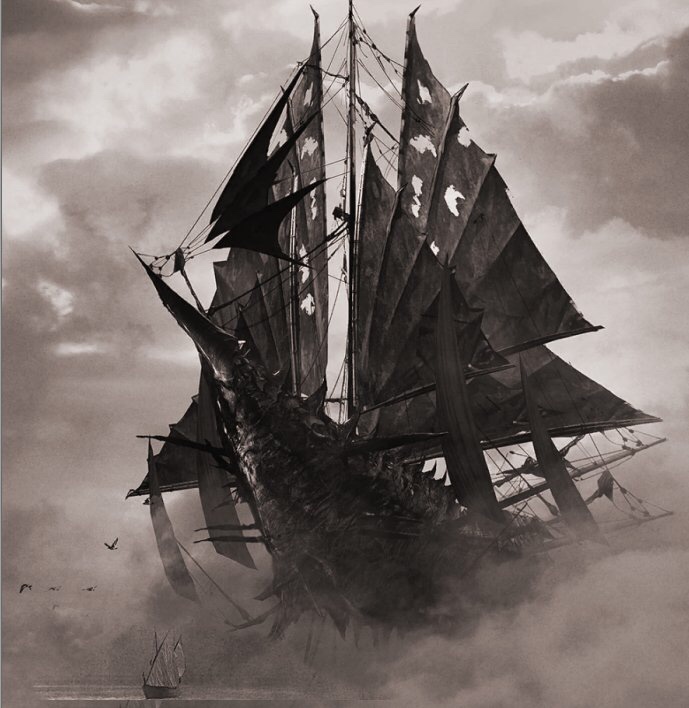
Naglfar (“Nail-ship”): This is the ship of the dead. It is made from the fingernails and toenails of the dead. This is why it is always necessary to trim the nails of the deceased before burying them, for if this is not done the nails will provide building material for the construction of Naglfar. The completion of the ship-building will be the sign that the end of the world has begun. The sons of Muspell will then travel on Naglfar to join the assault on Ásgarðr.
The ship sails from the east and is packed with forces of evil and chaos, according to the Poetic Edda.
Naglfar is on its way into the battle against the Aesir gods and will arrive on the shores of Midgard, just in time when the Midgard serpent emerges from the sea.
The captain of the ship is the giant Hrym, who brings with him all the legions of the giants, while Loki takes the helm of the fatal ship full of giants. He steers Naglfar over the stormy and cold northern waters, to Vigrid (Norse: Vígríðr), the plain where the decisive battle will take place.
Superstitions have often accompanied ancient people in their daily life. According to ancient Norse beliefs, it was important that no one in the Viking world should die with untrimmed nails. There is one way to delay the ship’s arrival. The ship’s size would depend on how many deceased had been buried with unpaired fingernails.
If someone dies with long fingernails, the surviving relatives of the dead must immediately cut them short before the deceased is laid to rest. Otherwise, their nails will be used to build the Naglfar larger and stronger.
The ancient Vikings believed that this action could significantly delay the construction of the ghost ship and the day of the end of the world.
Hel (“Hidden” or “Concealer”) is a goddess who rules over the identically-named Hel, the underworld where many of the dead dwell. Her name’s meaning of “Hidden” surely has to do with the underworld and the dead being “hidden” or buried beneath the ground.
Hel is the daughter of Loki and the giantess Angrboda (“Anguish-boding”), and therefore the sister of the wolf Fenrir and the world serpent, Jormungand. This makes her part of a highly dangerous and disreputable family.
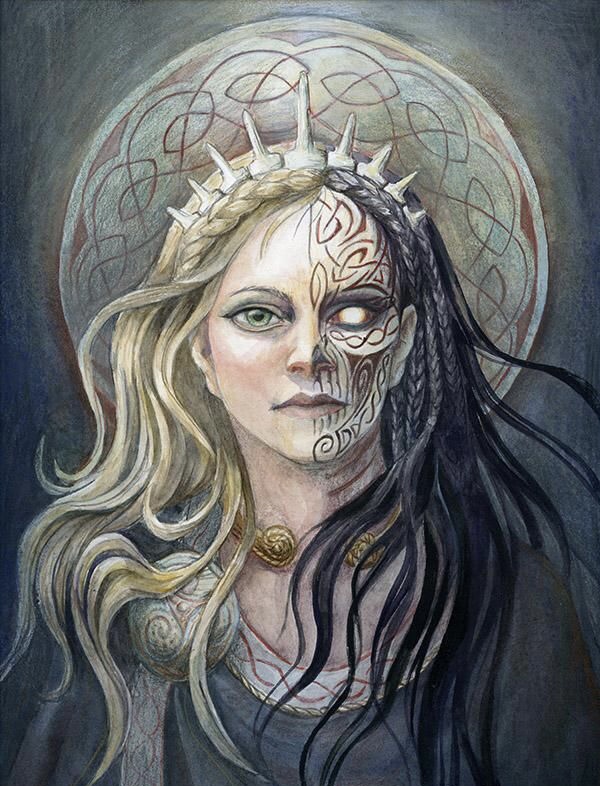
Hel is generally presented as being rather greedy, harsh, and cruel, or at least indifferent to the concerns of both the living and the dead. However, her personality is little-developed in what survives of Old Norse literature. She’s mostly mentioned only in passing. She’s described as having the appearance as being half-black (or sometimes blue), half-white, and with a perpetually grim and fierce expression on her face.
The only surviving myth in which she features prominently is that of The Death of Baldur. The beloved god Baldur was slain by none other than Hel’s father, Loki, and the gods sent an emissary named Hermod to Hel in hopes of retrieving Baldur. Hermod pleaded with Hel, telling her how every living thing was in sorrow over the loss of Baldur. But Hel wouldn’t give up her prize so easily. She told Hermod that she would only consent to release Baldur if every last thing in the universe wept for him. Hermod and the other gods went around and got almost everything in the cosmos to weep for Baldur. Only one giantess, who was probably Loki in disguise, refused. But because of that one refusal, the terms of Hel’s offer weren’t met, and Hel kept Baldur in her cold clutches.
The realm of the dead has several names: Niðavellir (“Obscure Plains” or “Fields of Darkness”), Náströnd (“Corpse-shore”), or Násheimr (“Corpse-world”). It seems to consist of nine dwellings, the most terrible of which is Náströnd, in the southern reaches of Hel, where those who broke the moral laws, especially oath breakers, are cast. The dragon Níðhöggr gnaws on their corpses.
Because of how sparsely-defined her character is, many scholars view Hel as more of a late literary personification of the grave than a goddess who was actually worshiped or appeased in her own right. Due to the lack of conclusive evidence either way, this must remain an open question.
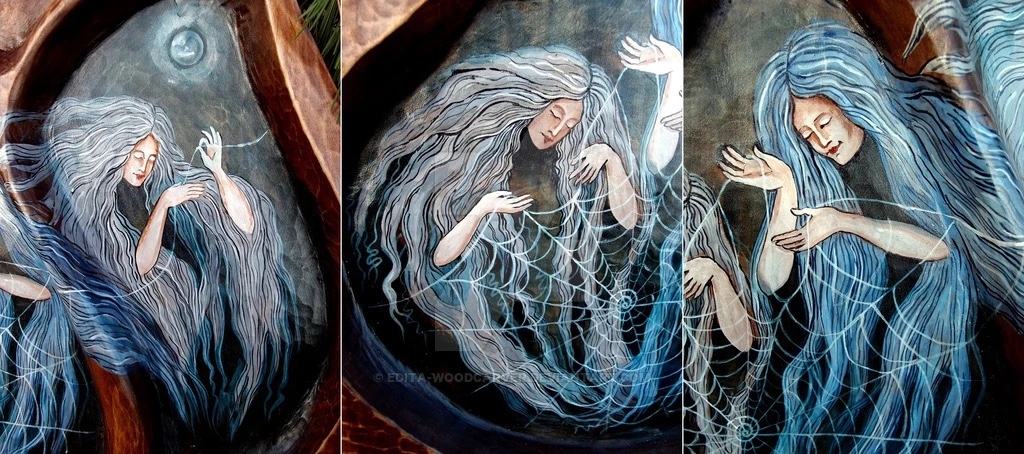
The goddesses of fate who almost always appear as a group of three figures. Snorri Sturluson writes: “A beautiful hall stands under the ash by the well [i.e., beneath Yggdrasill], and out of this hall come three maidens whose names are Urðr [“Past”], Verðandi [“Present”], and Skuld [“Future”]. They shape the lives of men. We call them Norns.”
These maidens are giantesses who sprinkle clear water and white clay on the tree every day. They are depicted as wicked and ugly; their verdict is irrevocable. It is said they come from the sea. Sturluson goes on to remark: “There are also other Norns who visit everyone when they are born to shape their lives, and these are of divine origin, though others are of the race of elves, and a third group are of the race of dwarves.”
The Norns correspond to the Fates—the Greek Moirai and the Roman Parcae—as well as to the fairies of Celtic and Roman legends. In fact, several texts in Old French depict three fairies around a cradle who endow a child with beneficial or harmful aspects, a theme also found in the fairy tale Sleeping Beauty. Only the Norn Urðr appears to be ancient and authentic; Skuld and Verðandi appear to be later additions to form a triad modeled on the Parcae. Furthermore, the spring at the foot of Yggdrasill is named the “Well of Urðr.”








 Mark Bere Peterson’s Counterculture, Urban Legends, Paganism & Witchcraft