Let’s Misbehave – Cole Porter (1927)

You could have a great career,
And you should;
Yes you should;
Only one thing stops you dear:
You’re too good;
Way too good!

If you want a future, darlin’,
Why don’t you get a past?
‘Cause that fatal moment’s comin’ at last…

We’re all alone, no chaperone
Can get our number
The world’s in slumber
Let’s misbehave!!!

There’s something wild about you child
That’s so contagious
Let’s be outrageous
Let’s misbehave!!!

When Adam won Eve’s hand
He wouldn’t stand for teasin’.
He didn’t care about those apples out of season.

They say that Spring
means just one thing to little lovebirds
We’re not above birds
Let’s misbehave!!!

It’s getting late and while I wait
My poor heart aches on
Why keep the brakes on?
Let’s misbehave!!!

I feel quite sure un peu d’amour
Would be attractive
While we’re still active,
Let’s misbehave!

You know my heart is true
And you say you for me care…
Somebody’s sure to tell,
But what the hell do we care?

They say that bears have love affairs
And even camels
We’re merely mammals
Let’s misbehave!!!

If you would be just sweet
And only meet your fate, dear,
‘Twould be the great event
Of nineteen twenty-eight, Dear.
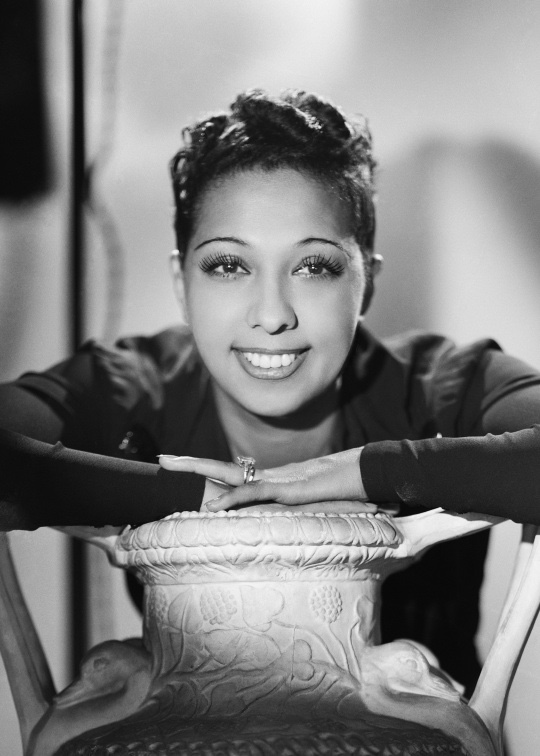
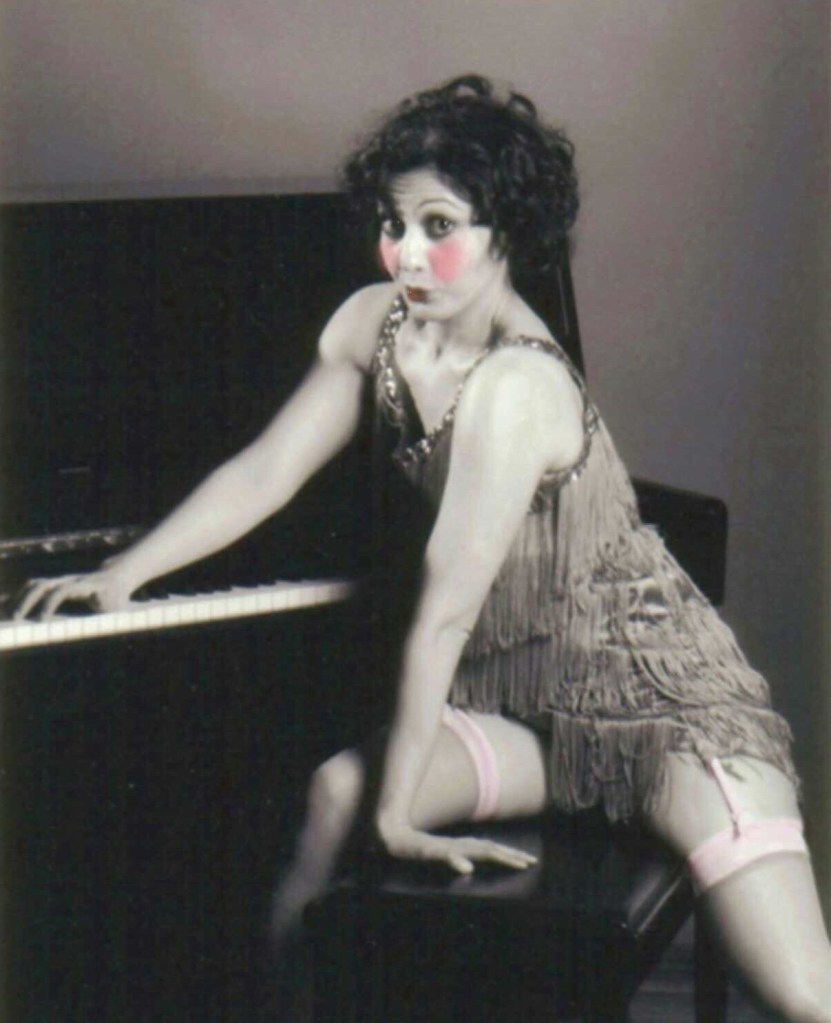
Blue Skies – Josephine Baker (1927)

I was blue, just as blue as I could be
Ev’ry day was a cloudy day for me
Then good luck came a-knocking at my door
Skies were gray but they’re not gray anymore

Blue skies
Smiling at me
Nothing but blue skies
Do I see

Bluebirds
Singing a song
Nothing but bluebirds
All day long

Never saw the sun shining so bright
Never saw things going so right
Noticing the days hurrying by
When you’re in love, my how they fly

Blue days
All of them gone
Nothing but blue skies
From now on

I should care if the wind blows east or west
I should fret if the worst looks like the best
I should mind if they say it can’t be true
I should smile, that’s exactly what I do

Aba Daba Honeymoon – Helen Kane

“Aba, daba, daba, daba, daba, daba, dab”
Said the chimpie to the monk
“Baba, daba, daba, daba, daba, daba, dab”
Said the monkey to the chimp

All night long they’d chatter away
All day long there were happy and gay
Swinging and singing in their hunky tonky way

“Aba, daba, daba, daba, daba, daba, dab”
Means ‘Monk, I love but you’
‘Baba, daba, dab’ in monkey talk
Means ‘Chimp, I love you, too’

Then the big baboon one night in June
He married them and very soon
Since they came from their aba daba honeymoon

Way down in the Congoland
Lived a happy chimpanzee
She loved a monkey with long tail
(Lordy, how she loved him)

Each night he would find her there
Swinging in the coconut tree
And the monkey gay at the break of day
Loved to hear his chimpie say

“Aba, daba, daba, daba, daba, daba, dab”
Said the chimpie to the monk
“Baba, daba, daba, daba, daba, daba, dab”
Said the monkey to the chimp

All night long they’d chatter away
All day long there were happy and gay
Swinging and singing in their hunky tonky way

“Aba, daba, daba, daba, daba, daba, dab”
Means ‘Monk, I love but you’
‘Baba, daba, dab’ in monkey talk
Means ‘Chimp, I love you, too’

One night they were made man and wife
And now they cry, “This is the life”
Since they came from their aba daba honey-

Aba, daba, daba

Aba, daba honeymoon

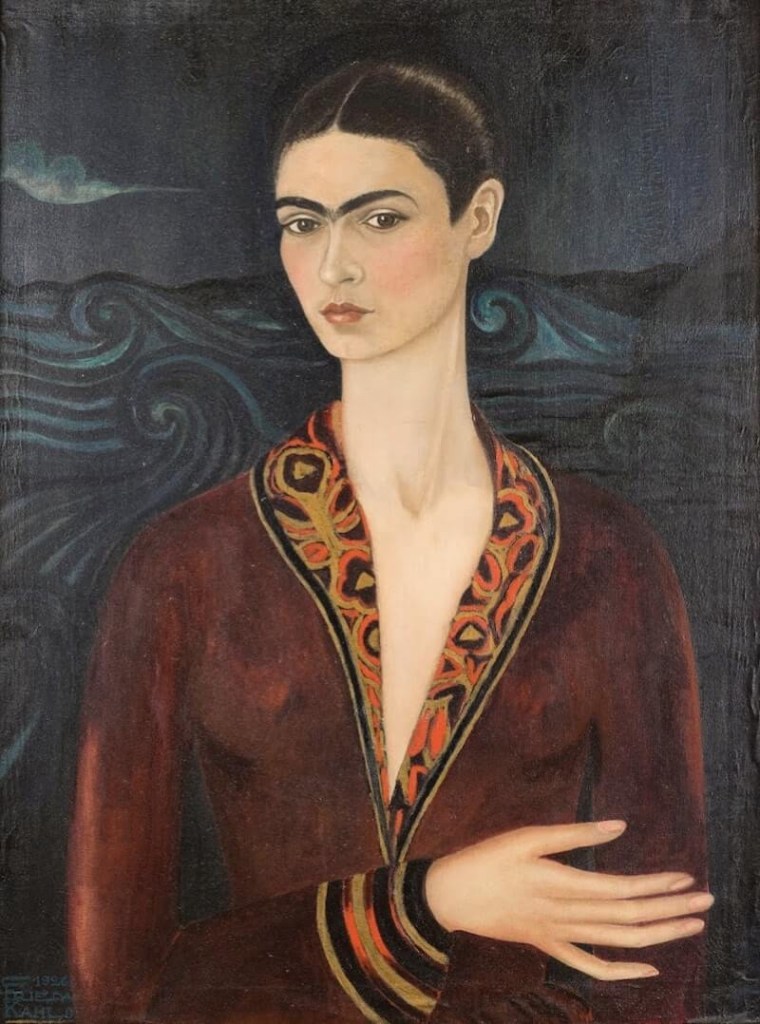
Frida Kahlo: Self Portrait in a Velvet Dress (1926)

Self Portrait in a Velvet Dress, is one of Frida Kahlo’s early portraits. This portrait implied the emotional tension as well as showing with her other paintings. This painting she used as a token of love to regain the affection from her lover. She started working on this painting during the late summer of 1926 when her relationship with Alejandro is turning sour because Alejandro thinks she is too liberal. She wrote letters to him and promised that she will be a better person to deserve him. And when she finished this portrait in September of 1926 she wrote a letter to: “Within a few days the portrait will be in your house. Forgive me for sending it without a frame. I implore you to put it in a low place where you can see it as if you were looking at me.”

In this self-portrait, Frida was wearing a wine-red velvet dress and looks like a princess in it. She sent it to Alejandro and hope he will keep her in his mind. This painting worked: after Alejandro received this paining, they went back to be together again. But he left for Europe in March 1927 because his parents didn’t want him to be together with Frida. She wrote a lot of letters after they are apart and in those letters she calls herself with her Self Portrait in a Velvet Dress, calling it “your ‘Boticeli’. She wrote this: “Alex, your ‘Boticeli’ has also become very sad, but I told her that until you come back, she should be the ‘sound asleep one’; in spite of this she remembers you always.” And in a few months on awaiting him coming back to Mexico, she wrote the letter with reference to this portrait: “You cannot imagine how marvelous it is to wait for you, serenely as in the portrait.” It was obvious Frida was hoping her self-portrait has the magical power that can win back her love.

Source: http://www.fridakahlo.org

Surrealism and the Roaring Twenties

Surrealism

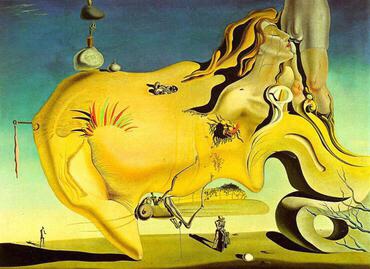
Surrealism arose from Dadaist activities during the war. Centered in Paris, it quickly became a cultural movement, rather than only artistic. Perhaps the most influential of its forefathers, Andre Breton stressed the importance of Surrealism as a revolutionary movement. Believing that their works expressed the philosophy behind the period in which psychoanalysis was born, elements of surprise, juxtapositions, and importance of the dream-like worlds and the notion of the subconscious dominated. In 1924, Breton published his Surrealist Manifesto and defined the thoughts of the time as pure psychic automatism. Next to Breton, the Spanish self-proclaimed Genius Salvador Dali, known for some of the most thought-provoking and often erotic images, is now revered as one of the crucial surrealist artists of the group.

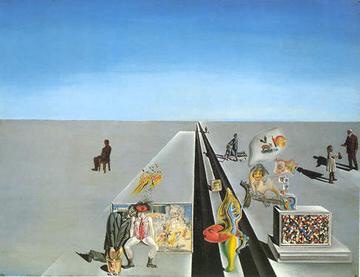
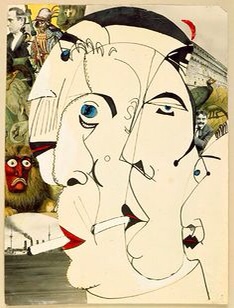
The maturation of Salvador Dali through the twenties:

Today, Surrealism photography is considered one of the important trends of the medium while questions concerning the lowbrow art and pop surrealism would lead to a better understanding of the original Surrealism as well.

For many, the period of the 1920s art is seen as the first modern decade responsible for the creation of concepts that the world follows even today. As an endlessly fascinating time, artists pushed for the new and the revolutionary which helped create the art as we know it.

Bessie Smith & the Classic African American Female Blues of the Twenties

The classic female blues spanned from 1920 to 1929 with its peak from 1923 to 1925. The most popular of these singers were Ma Rainey, Bessie Smith, Mamie Smith, Ethel Waters, Ida Cox, Victoria Spivey, Sippie Wallace, Alberta Hunter, Clara Smith, Edith Wilson, Trixie Smith, Lucille Hegamin and Bertha “Chippie” Hill. Hundreds of others recorded including Lizzie Miles, Sara Martin, Rosa Henderson, Martha Copeland, Bessie Jackson (Lucille Bogan), Edith Johnson, Katherine Baker, Margaret Johnson, Hattie Burleson, Madlyn Davis, Ivy Smith, Alberta Brown, Gladys Bentley, Billie and Ida Goodson, Fannie May Goosby, Bernice Edwards and Florence Mills.

They sang often backed behind their bands consisting of piano, several horns and drums. These women were pioneers in the record industry by being the first black voices recorded and also by spreading the 12-bar blues form through out the country. In terms of performing, they often wore elaborate outfits and sang of the injustices of their lives, bonding with their audience’s sorrows. Their schedules were grueling, staying on the road most of the time with tent shows in the summer and theatres during the winter. With the crash of Wall Street in 1929, the popularity of the blues singers declined. Some went back home, took up jobs or moved to Hollywood. In the ‘60s with the blues revival, Sippie Wallace, Alberta Hunter, Edith Wilson and Victoria Spivey returned to the stage.

Gertrude “Ma” Rainey, form Georgia, was the “ Mother of the Blues,” and lived from 1886-1939. She was the first woman to incorporate blues into her act of show songs and comedy. In 1902, she heard a woman singing about the man she’d lost, and quickly learned the song. From then on at each performance, she used it as her closing number calling it “the blues.” She recorded over 100 songs and wrote 24 of them herself. “Bessie (Smith and all the others who followed in time), wrote jazz historian Dan Morgenstern “learned their art and craft from Ma, directly or indirectly.” Young women followed Ma Rainey’s path in the tent show circuit, since black performers were not allowed to be in venues. Eventually most singers were booked on the T.O.B.A. (Theatre Owners Booking Association) circuit.

The most popular of these women was Tennessee-born Bessie Smith, who would become the highest-paid black artist of the 1920s. She was known as the “Empress of the Blues.” She possessed a large voice with a “T’ain’t Nobody’s Bizness If I Do” attitude. Bessie was a dancer before she was a singer, but was let go because her skin colour was too dark. She also struggled initially with being recorded—three companies turned her down before she was signed with Columbia. She eventually became the highest-paid black artist of the ‘20s, but by the ‘30s she was making half as much as her usual salary. She died in a car crash in 1937, at the age of 41. Lionel Hampton is quoted as saying, “Had she lived, Bessie would’ve been right up there on top with the rest of us in the Swing Era.” Mahalia Jackson and Janis Joplin both claimed to have drawn great inspiration from her singing. Her work is well documented in print as well as recording with over 160 songs currently available.

Sources: Bessie (book), The Jazz Age (book), Wikipedia

Dadaism and the Roaring Twenties

Dada

For 100 years Dadaism has been praised because of its influence and importance as one of the most important avant-garde movements.
Beginning in Zurich during World War I, it quickly became an international phenomenon spreading to various cities in Europe and America. Opposing the cultural and intellectual conformity in art, usually displaying political affinities with the radical left, dada artists gathered and engaged in activities such as public gatherings, demonstrations, and publication of art and literary journals.

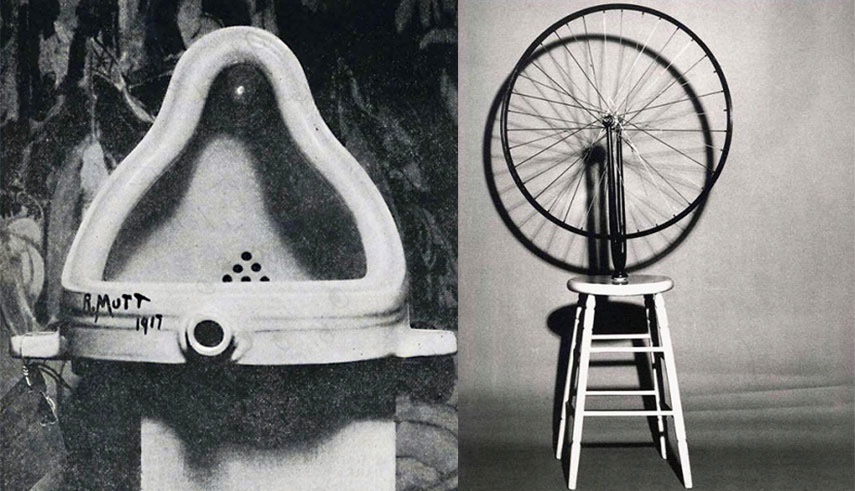
In regards to the visual art, the new concept praising the idea above the subject was born. Marcel Duchamp is the father figure of the movement and his experimental nature brought forward new ideas such as readymades. Influential for the original understanding towards sculpture production, idea of the readymades also influenced assemblage, found object pieces, and to an extent junk art and recycled art as well. Praising machines, technology and Cubist elements were features evident in the dada collage pieces and other innovative artworks this 1920s art period left behind.

Expressionism & The Roaring Twenties

Edvard Munch – The Scream

As a modernist movement, Expressionism originated in Germany during the 1920s art period. Initially as a style in both poetry and painting, it emphasized the presentation of the world, both external and internal, solely through a subjective perspective. This emotionally charged period meant a boost for the artistic cinema, marked by the 1920. film masterpiece by Robert Wiene, “The Cabinet of Dr. Caligari”. Radically distorting its images for the emotional effect, passions and moods were more important than the physical reality. Partly as a response to the growing social anxiety and the idea of the loss of spirituality, and partly as a reaction to Impressionist art, Expressionism was mostly inspired by the Symbolism movement of the late 19th-century, but also by modern currents and progress of the era. Some of its most famous painters include Edvard Munch, Wassily Kandinsky, Erich Heckel and Franz Marc. These artists introduced the new standards for art which later gave birth to Abstract Expressionism and the Neo-Expressionism art movement.

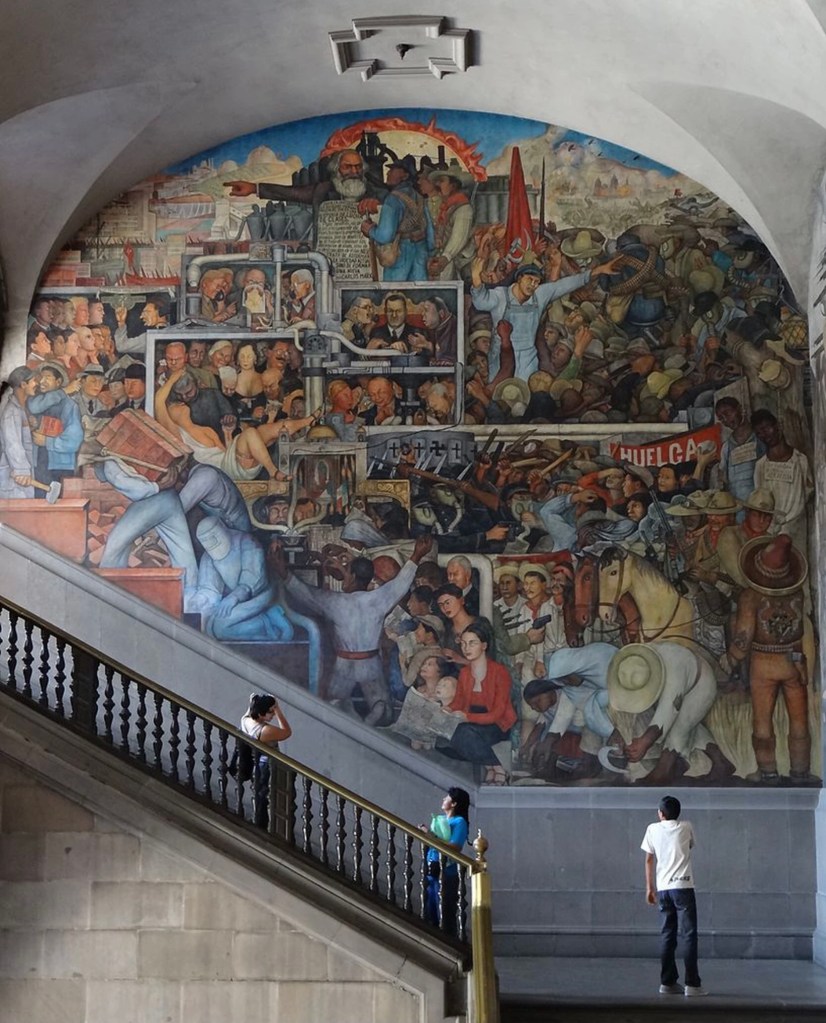
History Of Mexico (1929-35) – Diego Rivera

I’m including Diego Rivera’s famous mural since it was begun in the twenties, although most of it wasn’t completed until the mid-thirties.

Funded by the Mexican government, Diego Rivera’s mural took six years to complete, and can be found in the stairwell of The National Palace (Palacio Nacional) in Mexico City. Diego presented a narrative to the public which sympathetically portrayed Indians as the oppressed minority, brutalised by the Spaniards. Comprised of four sections, the largest mural pieces stand at 70 metres (229.7 feet) by 9 metres (29.5 feet).

The North Wall is dedicated to a representation of Aztec culture, incorporating a symbolic sun (the centre of Aztec religion) with a pyramid and an Aztec leader underneath it. The West Wall depicts the history of warfare, with Cortes and the Spanish armies defeating the opposing forces of the Indians and Aztecs. The South Wall represents all that Rivera loved and was inspired by, from the Red communist flag to socialist Karl Marx and artist and wife Frida Kahlo alongside her sister Cristina (Diego’s one-time lover). School children are represented in the section, symbolising peace, unity and future progress in society.

Art Deco of the Roaring Twenties

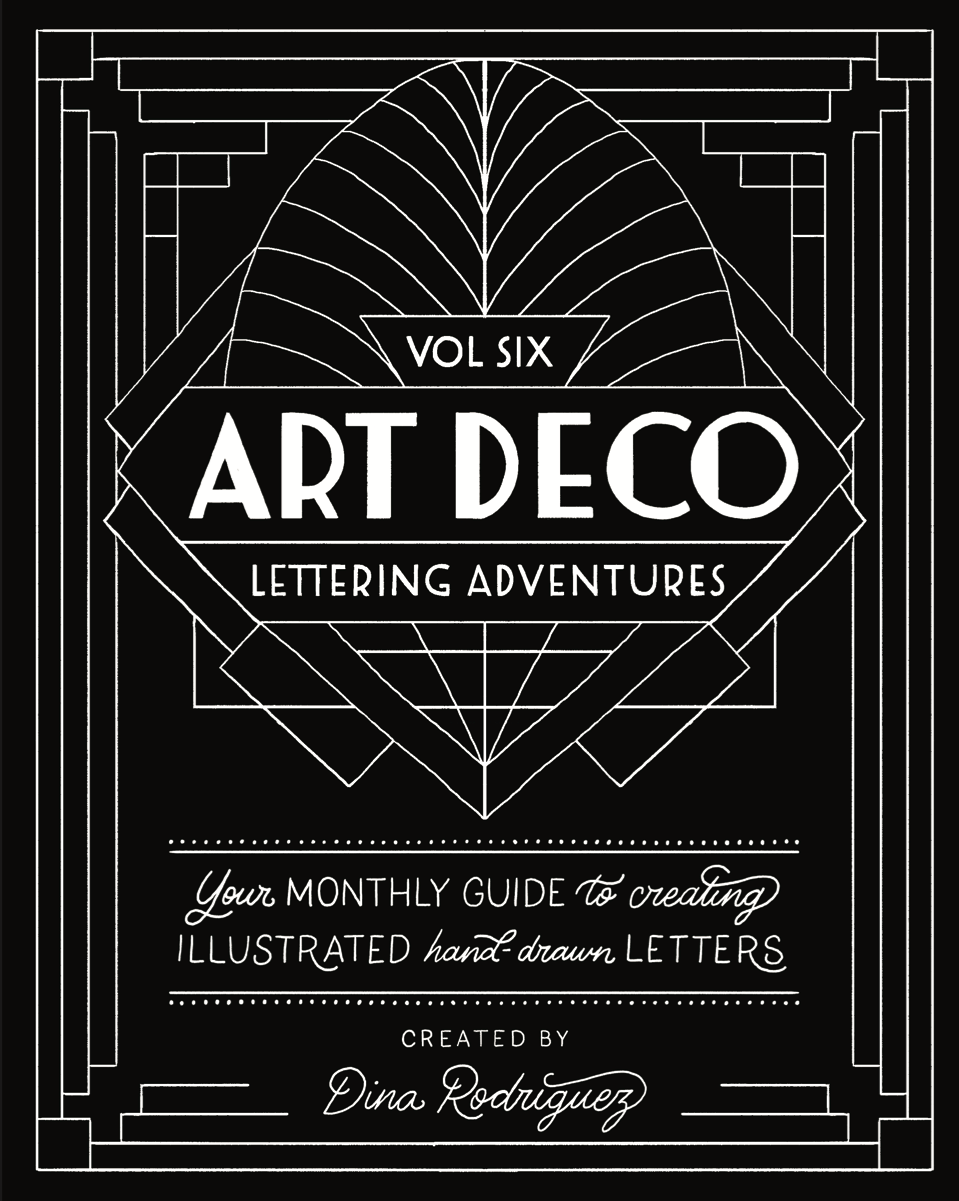
Originating in Europe, Art Deco was a dominant style in design and architecture of the 1920s. As such it quickly spread to Western Europe and North America. But, what is truly defined as the art deco period and how influential was the art deco decorative style? In the United States, New York City’s Chrysler Building typified the Art Deco style while other examples could be found in Chicago, Los Angeles, and San Francisco. Regarding the two-dimensional production, the art deco artists displayed an interest towards the mixture of traditional crafts with machine age imagery and materials. One of the most famous artists of the 1920s art deco period was definitely Tamara de Lempicka, with her portraits of the bourgeoisie and the progress of the era.

Characterized by rich colors, lavish ornamentation, and geometric shapes, the movement was celebrated for its pattern designs and poster art. In such examples evident is the dominant rectilinear designs even though art deco artists often drew inspiration from nature and used curved lines as well.