Robert Benchley on Bohemians

“Like the measles, which are so delightful in retrospect because we remember only the period of convalescence and its accompanying chicken and jellies, Bohemia seems to be a state which grows dearer the farther away you get from it.

The only trouble with this pitiless exposé of Bohemia is that I know practically nothing about the subject at all. I have only taken the most superficial glances into New York’s Bohemia and for all I know it may be one of the most delightful and beneficial existences imaginable. It merely seemed to me like a good thing to write about, because the editor might, while reading it, think of a dashing illustration that could be made for it.

And, if I have been entirely in error in my estimate of Bohemia, maybe some real, genuine Bohemian will conduct me, some night, where the lights and good-fellowship are mellow and rich and where we may sit about a table and sing songs of Youth and Freedom, and Love, and Girls, like so many Francois Villons.”

~ Robert Benchley, 1919 from “Vanity Fair Magazine: The Art of Being a Bohemian.”

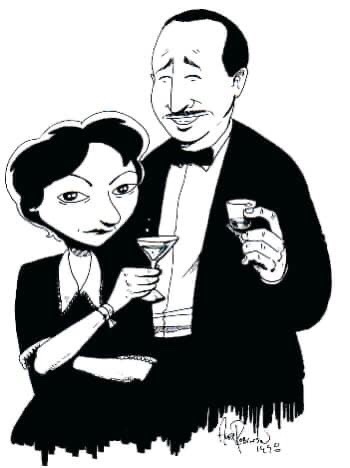
Pictured Above: Cartoon of Robert Benchley and Dorothy Parker.
Charlotte Perkins Gilman “Suicide Note”

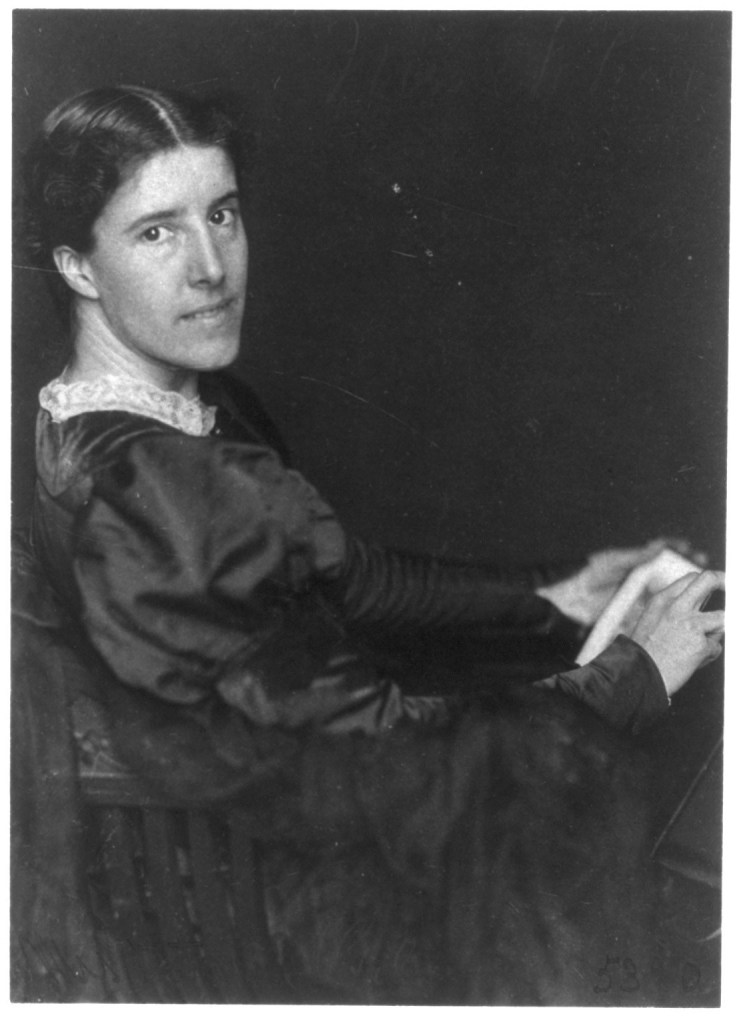
Charlotte Perkins Gilman—writer, philosopher, feminist, and social critic—contributed significantly to 20th-century political and feminist theory. Born in 1860 in Hartford, Connecticut, she lived much of her childhood in poverty after her father left the family when she was seven years old. She taught herself to read, studied music, and was largely self-educated in the fields of history, sociology, biology, and evolution. She attended public school sporadically until age 15 and later studied at the Rhode Island School of Design.

Charlotte Perkins Gilman was diagnosed with breast cancer in 1932. Before this diagnosis, Gilman had written about euthanasia and right-to-die issues. In one passage from her posthumously published autobiography The Living of Charlotte Perkins Gilman (1935), she remarks after visiting her ill father in a sanitarium that a future civilized society would not “maintain such a horror.” In 1935, after living three years with a cancer she had been told would kill her within a year and a half, Gilman ended her life by inhaling chloroform. She left a letter, conventionally called a suicide note, which stressed her view of the primacy of human relationships and social responsibility

SUICIDE NOTE, AUGUST 17, 1935

Human life consists in mutual service. No grief, pain, misfortunate, or “broken heart” is excuse for cutting off one’s life while any power of service remains. But when all usefulness is over, when one is assured of unavoidable and imminent death, it is the simplest of human rights to choose a quick and easy death in place of a slow and horrible one. Public opinion is changing on this subject. The time is approaching when we shall consider it abhorrent to our civilization to allow a human being to die in prolonged agony which we should mercifully end in any other creature. Believing this open choice to be of social service in promoting wiser views on this question, I have preferred chloroform to cancer.

~ Charlotte Perkins Gilman – August 17th, 1936

i carry your heart with me(i carry it in – e.e. cummings

Edward Estlin (E.E.) Cummings was born in Cambridge, Massachusetts. He attended the Cambridge Latin High School, where he studied Latin and Greek. Cummings earned both his BA and MA from Harvard, and his earliest poems were published in Eight Harvard Poets (1917). As one of the most innovative poets of his time, Cummings experimented with poetic form and language to create a distinct personal style. A typical Cummings poem is spare and precise, employing a few key words eccentrically placed on the page. Some of these words were invented by Cummings, often by combining two common words into a new synthesis. He also revised grammatical and linguistic rules to suit his own purposes, using such words as “if,” “am,” and “because” as nouns, for example, or assigning his own private meanings to words. Despite their nontraditional form, Cummings’ poems came to be popular with many readers.

This is a later poem published in 1952 from Complete Poems: 1904-1962, it has always been one of my personal favorites.

Expressionism & The Roaring Twenties

Edvard Munch – The Scream

As a modernist movement, Expressionism originated in Germany during the 1920s art period. Initially as a style in both poetry and painting, it emphasized the presentation of the world, both external and internal, solely through a subjective perspective. This emotionally charged period meant a boost for the artistic cinema, marked by the 1920. film masterpiece by Robert Wiene, “The Cabinet of Dr. Caligari”. Radically distorting its images for the emotional effect, passions and moods were more important than the physical reality. Partly as a response to the growing social anxiety and the idea of the loss of spirituality, and partly as a reaction to Impressionist art, Expressionism was mostly inspired by the Symbolism movement of the late 19th-century, but also by modern currents and progress of the era. Some of its most famous painters include Edvard Munch, Wassily Kandinsky, Erich Heckel and Franz Marc. These artists introduced the new standards for art which later gave birth to Abstract Expressionism and the Neo-Expressionism art movement.

Notable Books of the Twenties: Ulysses – James Joyce (1922)

If there was a single work that could give TS Eliot cause to question his own talents, it was Ulysses. Published a mere week after he put out The Waste Land, Eliot – like everyone else who read it – was sledgehammered by its genius. ‘Ulysses,’ Eliot would tell Virginia Woolf, ‘destroyed the whole of the 19th century. It left Joyce himself with nothing to write another book on. It showed up the futility of all the English styles.’

Banned, burned and bowdlerised, the sprawling novel shattered convention in its style, substance and sexual explicitness. Considered by some a full-frontal assault on literary tradition, it follows ad salesman Leopold Bloom as he wanders about Dublin across a single day. Warm and witty, wacky and wise, it is a uniquely intimate exploration of what it means to be a human – and is as influential today as in 1922, when Eliot said it had ‘the importance of a scientific discovery.’

FBI Files: Charles Bukowski – Suspected Dirty Old Man

September 2013, Bukowski.net published all 113 pages of Charles Bukowski’s F.B.I. file. Bewildered by the U.S. postal worker’s “Notes of a Dirty Old Man” column in Open City, the bureau had begun following Bukowski, gathering as much information as they could to prove the writer’s self-proclaimed title as a “Dirty Old Man.” But besides arrests for public intoxication and a wedding in Vegas, most of what the feds dug up wasn’t so scandalous. The word from Bukowski’s neighbors was that he was “an excellent tenant” who kept to himself and didn’t have many visitors.

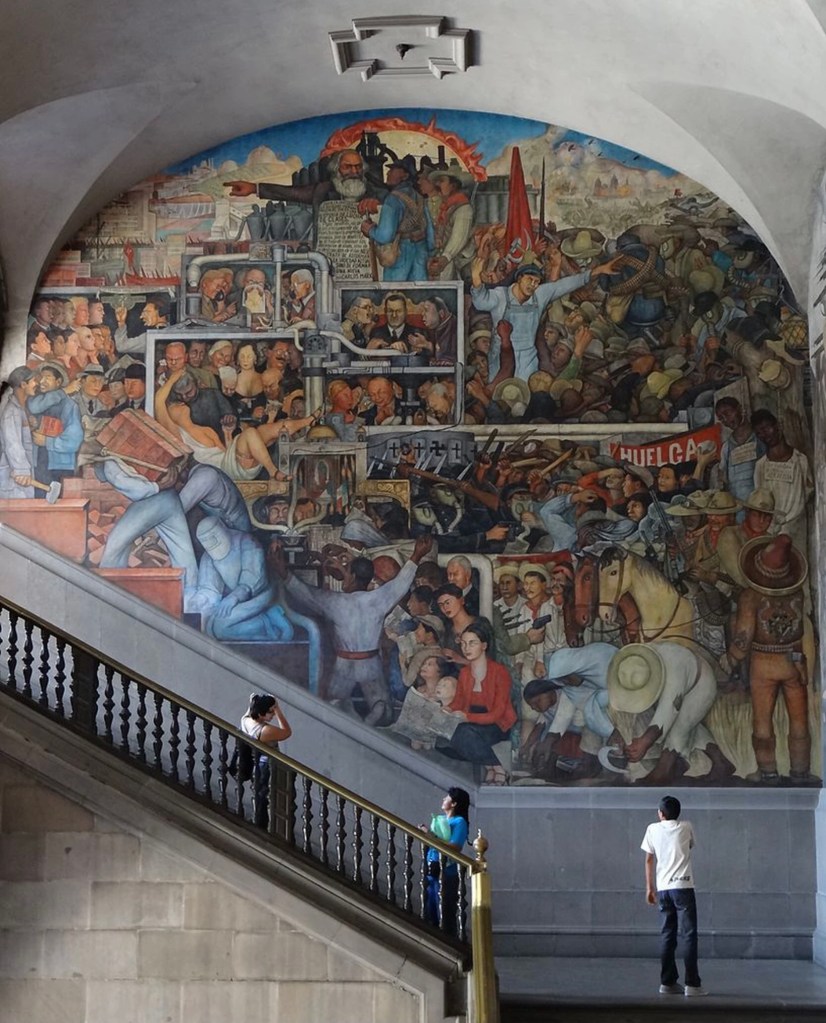
History Of Mexico (1929-35) – Diego Rivera

I’m including Diego Rivera’s famous mural since it was begun in the twenties, although most of it wasn’t completed until the mid-thirties.

Funded by the Mexican government, Diego Rivera’s mural took six years to complete, and can be found in the stairwell of The National Palace (Palacio Nacional) in Mexico City. Diego presented a narrative to the public which sympathetically portrayed Indians as the oppressed minority, brutalised by the Spaniards. Comprised of four sections, the largest mural pieces stand at 70 metres (229.7 feet) by 9 metres (29.5 feet).

The North Wall is dedicated to a representation of Aztec culture, incorporating a symbolic sun (the centre of Aztec religion) with a pyramid and an Aztec leader underneath it. The West Wall depicts the history of warfare, with Cortes and the Spanish armies defeating the opposing forces of the Indians and Aztecs. The South Wall represents all that Rivera loved and was inspired by, from the Red communist flag to socialist Karl Marx and artist and wife Frida Kahlo alongside her sister Cristina (Diego’s one-time lover). School children are represented in the section, symbolising peace, unity and future progress in society.

Art Deco of the Roaring Twenties

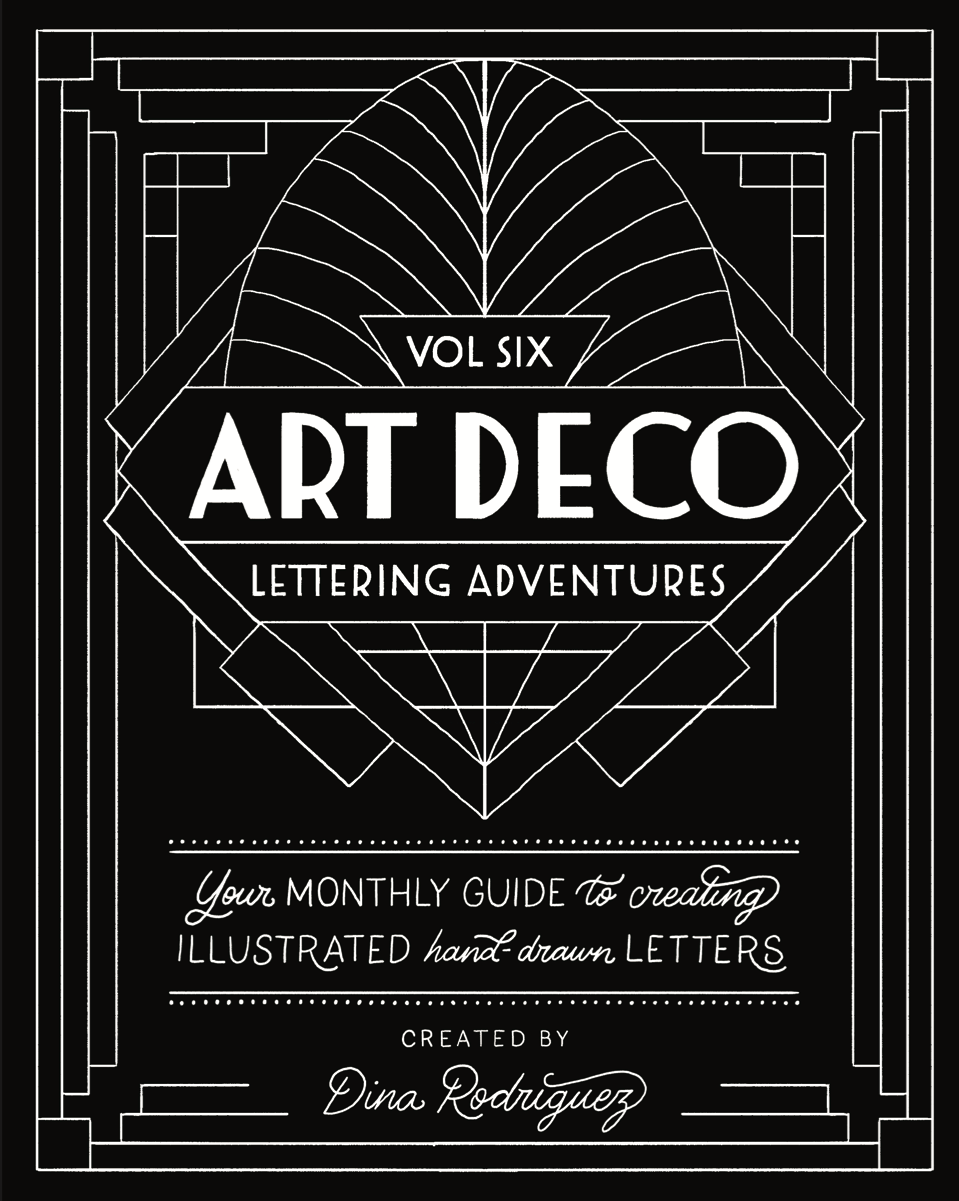
Originating in Europe, Art Deco was a dominant style in design and architecture of the 1920s. As such it quickly spread to Western Europe and North America. But, what is truly defined as the art deco period and how influential was the art deco decorative style? In the United States, New York City’s Chrysler Building typified the Art Deco style while other examples could be found in Chicago, Los Angeles, and San Francisco. Regarding the two-dimensional production, the art deco artists displayed an interest towards the mixture of traditional crafts with machine age imagery and materials. One of the most famous artists of the 1920s art deco period was definitely Tamara de Lempicka, with her portraits of the bourgeoisie and the progress of the era.

Characterized by rich colors, lavish ornamentation, and geometric shapes, the movement was celebrated for its pattern designs and poster art. In such examples evident is the dominant rectilinear designs even though art deco artists often drew inspiration from nature and used curved lines as well.

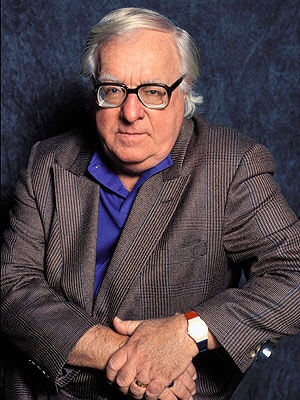
FBI Files: “Roy” Bradbury – Suspected Communist, Communist Cuba supporter

Not only does the F.B.I. accidentally refer to Ray Bradbury as “Roy” for the first five pages of his file, but they spend 40 pages investigating his potential trip to Cuba. The F.B.I. suspected Bradbury had attended the Cultural Congress of Havana five years after President Kennedy’s ban on travel to the embargoed nation. The file notes that Bradbury told the F.B.I. he did “not possess informant potential, in view of his occupation as a freelance science fiction writer.” However, the F.B.I. continued to view him as a threat, noting his significant influence as a writer and as a guest of a Women’s Legislative Action event in 1968. In true F.B.I. fashion, there’s also a thorough biography of Bradbury that goes as far as to trace his ancestors back to their arrival in Salisbury, Massachusetts in 1630.

The investigation was eventually closed after the bureau examined Bradbury’s passport file and found that he had never applied to travel to Cuba — let alone actually travelling to Cuba. The F.B.I. also recognized that Bradbury had been “extremely successful in the writing field.”

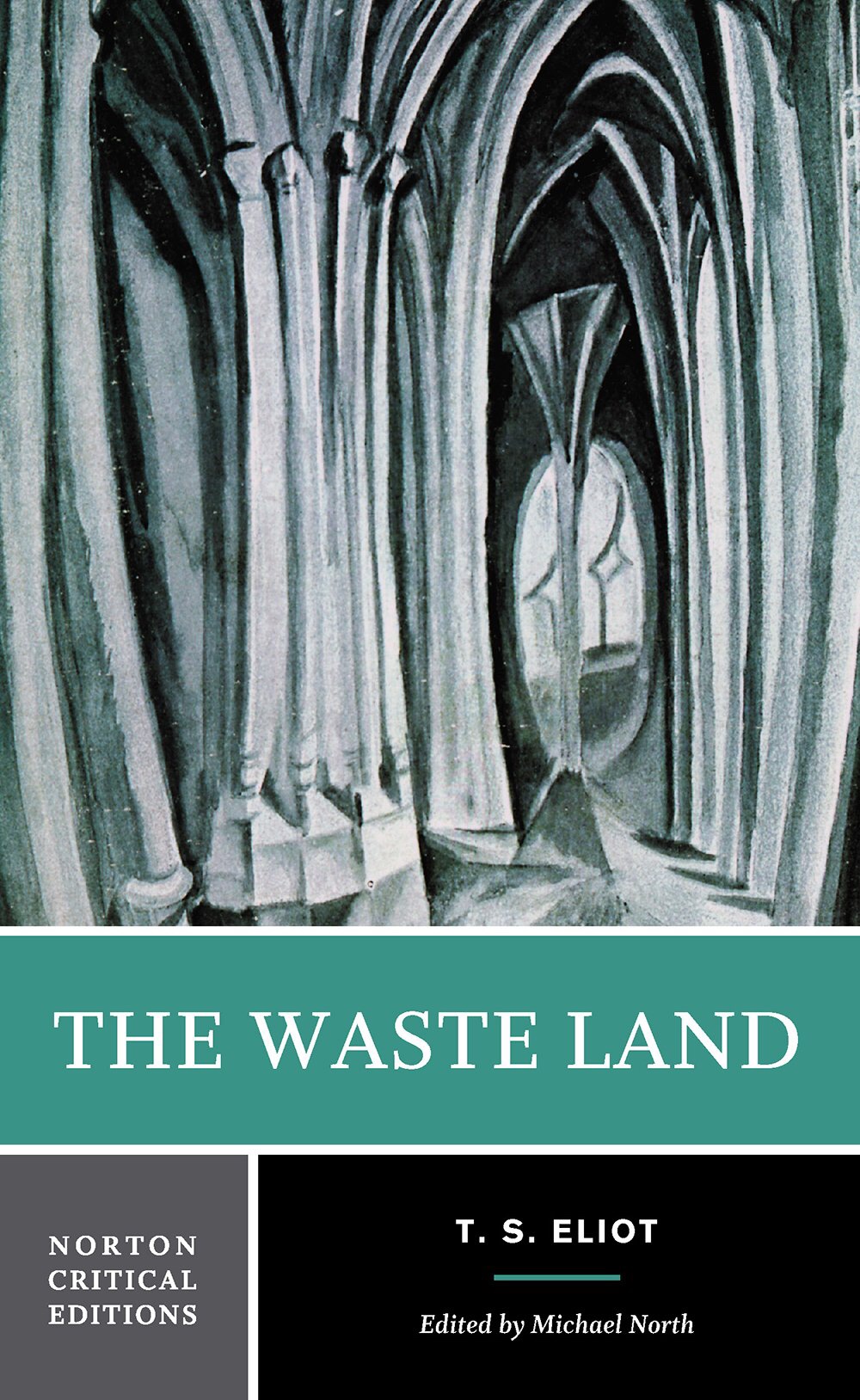
Notable Books of the Twenties: The Waste Land – T. S. Eliot (1922)

‘Complimenti, you bitch,’ wrote Ezra Pound to Eliot in 1922 upon reading a near-final draft of his friend’s latest work, which Pound had edited. ‘I am wracked by the seven jealousies.’ Pound – no slouch in the poetry department himself – knew not only that Eliot had just given the emerging Modernist literature movement its standard bearer, but that he had just read what would surely become known as one of the greatest poems of the 20th century. Sure enough, it did.

The masterpiece – about the devastating aftermath of the First World War – defied convention as it weaved different voices, to explore themes of trauma, disillusion, and death, wrapped in the barbed wire of Eliot’s electrifying intellect. With The Waste Land, he lay waste to old notions of poetry’s role as an art form, and changed the way it was written forever.