Bessie Smith & the Classic African American Female Blues of the Twenties

The classic female blues spanned from 1920 to 1929 with its peak from 1923 to 1925. The most popular of these singers were Ma Rainey, Bessie Smith, Mamie Smith, Ethel Waters, Ida Cox, Victoria Spivey, Sippie Wallace, Alberta Hunter, Clara Smith, Edith Wilson, Trixie Smith, Lucille Hegamin and Bertha “Chippie” Hill. Hundreds of others recorded including Lizzie Miles, Sara Martin, Rosa Henderson, Martha Copeland, Bessie Jackson (Lucille Bogan), Edith Johnson, Katherine Baker, Margaret Johnson, Hattie Burleson, Madlyn Davis, Ivy Smith, Alberta Brown, Gladys Bentley, Billie and Ida Goodson, Fannie May Goosby, Bernice Edwards and Florence Mills.

They sang often backed behind their bands consisting of piano, several horns and drums. These women were pioneers in the record industry by being the first black voices recorded and also by spreading the 12-bar blues form through out the country. In terms of performing, they often wore elaborate outfits and sang of the injustices of their lives, bonding with their audience’s sorrows. Their schedules were grueling, staying on the road most of the time with tent shows in the summer and theatres during the winter. With the crash of Wall Street in 1929, the popularity of the blues singers declined. Some went back home, took up jobs or moved to Hollywood. In the ‘60s with the blues revival, Sippie Wallace, Alberta Hunter, Edith Wilson and Victoria Spivey returned to the stage.

Gertrude “Ma” Rainey, form Georgia, was the “ Mother of the Blues,” and lived from 1886-1939. She was the first woman to incorporate blues into her act of show songs and comedy. In 1902, she heard a woman singing about the man she’d lost, and quickly learned the song. From then on at each performance, she used it as her closing number calling it “the blues.” She recorded over 100 songs and wrote 24 of them herself. “Bessie (Smith and all the others who followed in time), wrote jazz historian Dan Morgenstern “learned their art and craft from Ma, directly or indirectly.” Young women followed Ma Rainey’s path in the tent show circuit, since black performers were not allowed to be in venues. Eventually most singers were booked on the T.O.B.A. (Theatre Owners Booking Association) circuit.

The most popular of these women was Tennessee-born Bessie Smith, who would become the highest-paid black artist of the 1920s. She was known as the “Empress of the Blues.” She possessed a large voice with a “T’ain’t Nobody’s Bizness If I Do” attitude. Bessie was a dancer before she was a singer, but was let go because her skin colour was too dark. She also struggled initially with being recorded—three companies turned her down before she was signed with Columbia. She eventually became the highest-paid black artist of the ‘20s, but by the ‘30s she was making half as much as her usual salary. She died in a car crash in 1937, at the age of 41. Lionel Hampton is quoted as saying, “Had she lived, Bessie would’ve been right up there on top with the rest of us in the Swing Era.” Mahalia Jackson and Janis Joplin both claimed to have drawn great inspiration from her singing. Her work is well documented in print as well as recording with over 160 songs currently available.

Sources: Bessie (book), The Jazz Age (book), Wikipedia

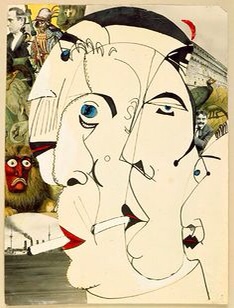
Dadaism and the Roaring Twenties

Dada

For 100 years Dadaism has been praised because of its influence and importance as one of the most important avant-garde movements.
Beginning in Zurich during World War I, it quickly became an international phenomenon spreading to various cities in Europe and America. Opposing the cultural and intellectual conformity in art, usually displaying political affinities with the radical left, dada artists gathered and engaged in activities such as public gatherings, demonstrations, and publication of art and literary journals.

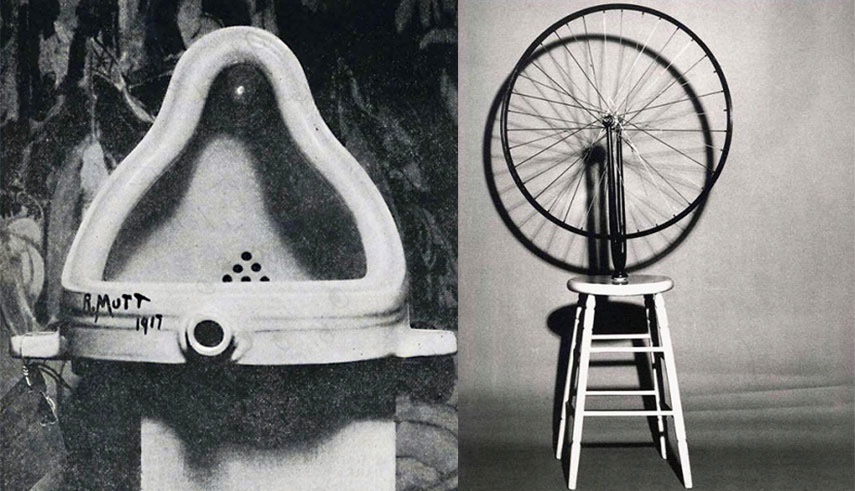
In regards to the visual art, the new concept praising the idea above the subject was born. Marcel Duchamp is the father figure of the movement and his experimental nature brought forward new ideas such as readymades. Influential for the original understanding towards sculpture production, idea of the readymades also influenced assemblage, found object pieces, and to an extent junk art and recycled art as well. Praising machines, technology and Cubist elements were features evident in the dada collage pieces and other innovative artworks this 1920s art period left behind.

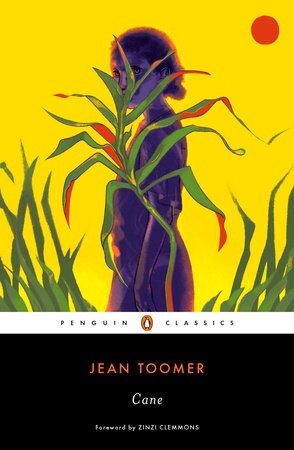
Notable Books of the Twenties: Cane – Jean Toomer (1923)

A cornerstone of the Harlem Renaissance, Toomer’s Cane is a novel stitched together by a series of interwoven vignettes that poignantly capture the experiences of black Americans of his time. Probably its best-known section is the poem ‘Harvest Song,’ which opens with the haunting line: ‘I am a reaper whose muscles set at sundown.’

Sales of the book were modest at the time, but his influence over the Harlem Renaissance was such that the sociologist Charles S. Johnson, called it ‘the most astonishingly brilliant beginning of any Negro writer of his generation.’ In echoes of Langston’s call to arms, he always pushed back when labelled a ‘Negro writer’ because he identified first as an ‘American’, forbidding his publisher from mentioning his race in the book (‘My racial composition and my position in the world are realities which I alone may determine’). It was crucial in bringing the African American experience into focus for American culture.

Robert Benchley on Bohemians

“Like the measles, which are so delightful in retrospect because we remember only the period of convalescence and its accompanying chicken and jellies, Bohemia seems to be a state which grows dearer the farther away you get from it.

The only trouble with this pitiless exposé of Bohemia is that I know practically nothing about the subject at all. I have only taken the most superficial glances into New York’s Bohemia and for all I know it may be one of the most delightful and beneficial existences imaginable. It merely seemed to me like a good thing to write about, because the editor might, while reading it, think of a dashing illustration that could be made for it.

And, if I have been entirely in error in my estimate of Bohemia, maybe some real, genuine Bohemian will conduct me, some night, where the lights and good-fellowship are mellow and rich and where we may sit about a table and sing songs of Youth and Freedom, and Love, and Girls, like so many Francois Villons.”

~ Robert Benchley, 1919 from “Vanity Fair Magazine: The Art of Being a Bohemian.”

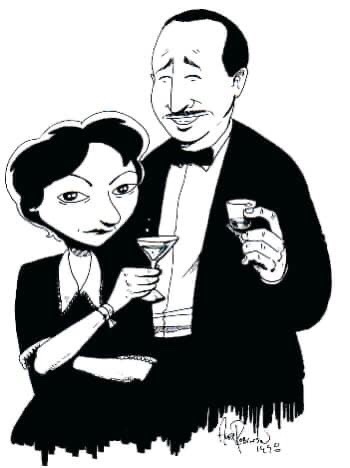
Pictured Above: Cartoon of Robert Benchley and Dorothy Parker.

Charlotte Perkins Gilman “Suicide Note”

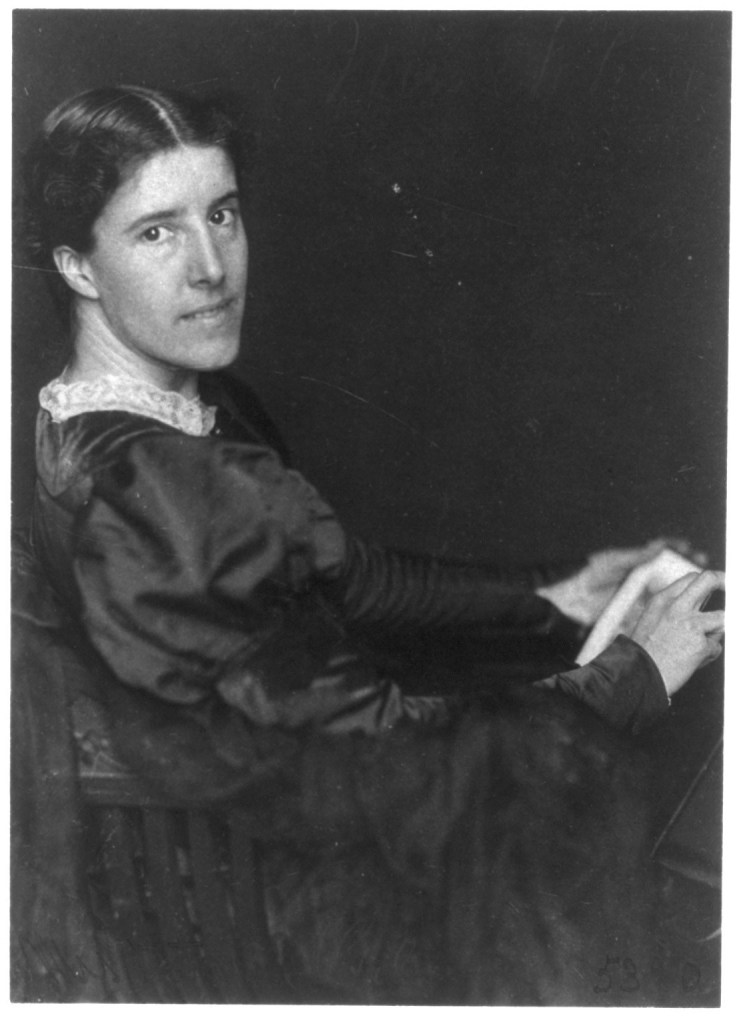
Charlotte Perkins Gilman—writer, philosopher, feminist, and social critic—contributed significantly to 20th-century political and feminist theory. Born in 1860 in Hartford, Connecticut, she lived much of her childhood in poverty after her father left the family when she was seven years old. She taught herself to read, studied music, and was largely self-educated in the fields of history, sociology, biology, and evolution. She attended public school sporadically until age 15 and later studied at the Rhode Island School of Design.

Charlotte Perkins Gilman was diagnosed with breast cancer in 1932. Before this diagnosis, Gilman had written about euthanasia and right-to-die issues. In one passage from her posthumously published autobiography The Living of Charlotte Perkins Gilman (1935), she remarks after visiting her ill father in a sanitarium that a future civilized society would not “maintain such a horror.” In 1935, after living three years with a cancer she had been told would kill her within a year and a half, Gilman ended her life by inhaling chloroform. She left a letter, conventionally called a suicide note, which stressed her view of the primacy of human relationships and social responsibility

SUICIDE NOTE, AUGUST 17, 1935

Human life consists in mutual service. No grief, pain, misfortunate, or “broken heart” is excuse for cutting off one’s life while any power of service remains. But when all usefulness is over, when one is assured of unavoidable and imminent death, it is the simplest of human rights to choose a quick and easy death in place of a slow and horrible one. Public opinion is changing on this subject. The time is approaching when we shall consider it abhorrent to our civilization to allow a human being to die in prolonged agony which we should mercifully end in any other creature. Believing this open choice to be of social service in promoting wiser views on this question, I have preferred chloroform to cancer.

~ Charlotte Perkins Gilman – August 17th, 1936

Expressionism & The Roaring Twenties

Edvard Munch – The Scream

As a modernist movement, Expressionism originated in Germany during the 1920s art period. Initially as a style in both poetry and painting, it emphasized the presentation of the world, both external and internal, solely through a subjective perspective. This emotionally charged period meant a boost for the artistic cinema, marked by the 1920. film masterpiece by Robert Wiene, “The Cabinet of Dr. Caligari”. Radically distorting its images for the emotional effect, passions and moods were more important than the physical reality. Partly as a response to the growing social anxiety and the idea of the loss of spirituality, and partly as a reaction to Impressionist art, Expressionism was mostly inspired by the Symbolism movement of the late 19th-century, but also by modern currents and progress of the era. Some of its most famous painters include Edvard Munch, Wassily Kandinsky, Erich Heckel and Franz Marc. These artists introduced the new standards for art which later gave birth to Abstract Expressionism and the Neo-Expressionism art movement.

Notable Books of the Twenties: Ulysses – James Joyce (1922)

If there was a single work that could give TS Eliot cause to question his own talents, it was Ulysses. Published a mere week after he put out The Waste Land, Eliot – like everyone else who read it – was sledgehammered by its genius. ‘Ulysses,’ Eliot would tell Virginia Woolf, ‘destroyed the whole of the 19th century. It left Joyce himself with nothing to write another book on. It showed up the futility of all the English styles.’

Banned, burned and bowdlerised, the sprawling novel shattered convention in its style, substance and sexual explicitness. Considered by some a full-frontal assault on literary tradition, it follows ad salesman Leopold Bloom as he wanders about Dublin across a single day. Warm and witty, wacky and wise, it is a uniquely intimate exploration of what it means to be a human – and is as influential today as in 1922, when Eliot said it had ‘the importance of a scientific discovery.’

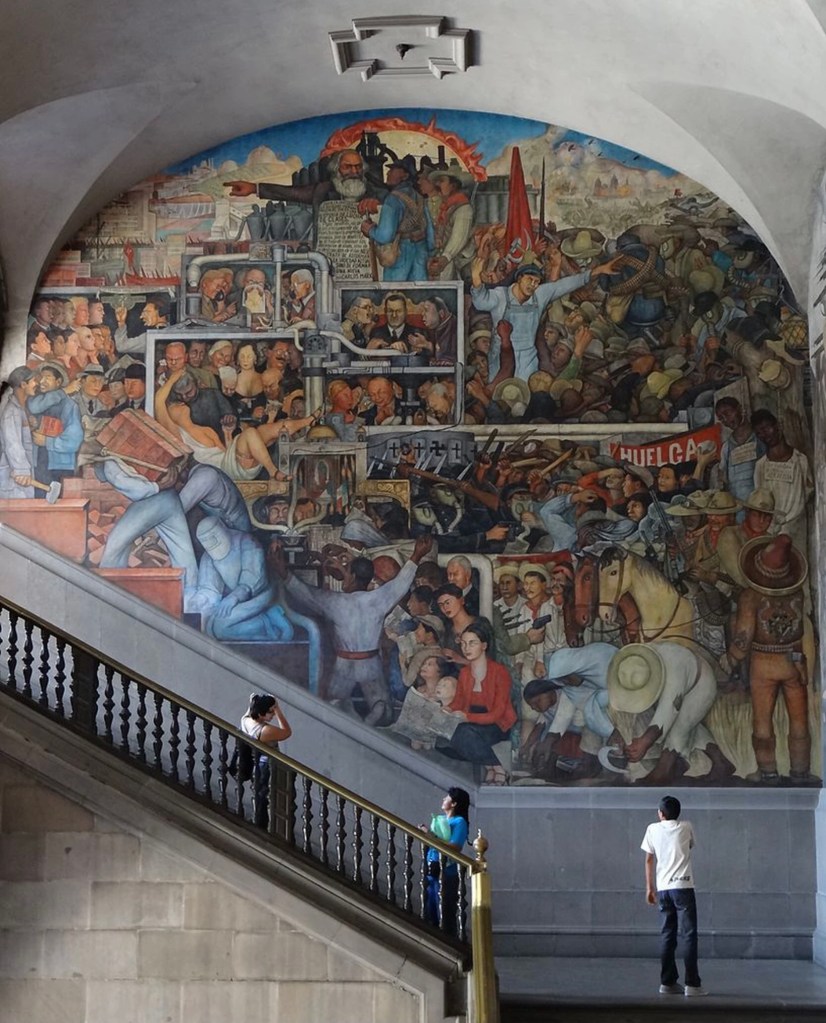
History Of Mexico (1929-35) – Diego Rivera

I’m including Diego Rivera’s famous mural since it was begun in the twenties, although most of it wasn’t completed until the mid-thirties.

Funded by the Mexican government, Diego Rivera’s mural took six years to complete, and can be found in the stairwell of The National Palace (Palacio Nacional) in Mexico City. Diego presented a narrative to the public which sympathetically portrayed Indians as the oppressed minority, brutalised by the Spaniards. Comprised of four sections, the largest mural pieces stand at 70 metres (229.7 feet) by 9 metres (29.5 feet).

The North Wall is dedicated to a representation of Aztec culture, incorporating a symbolic sun (the centre of Aztec religion) with a pyramid and an Aztec leader underneath it. The West Wall depicts the history of warfare, with Cortes and the Spanish armies defeating the opposing forces of the Indians and Aztecs. The South Wall represents all that Rivera loved and was inspired by, from the Red communist flag to socialist Karl Marx and artist and wife Frida Kahlo alongside her sister Cristina (Diego’s one-time lover). School children are represented in the section, symbolising peace, unity and future progress in society.

Art Deco of the Roaring Twenties

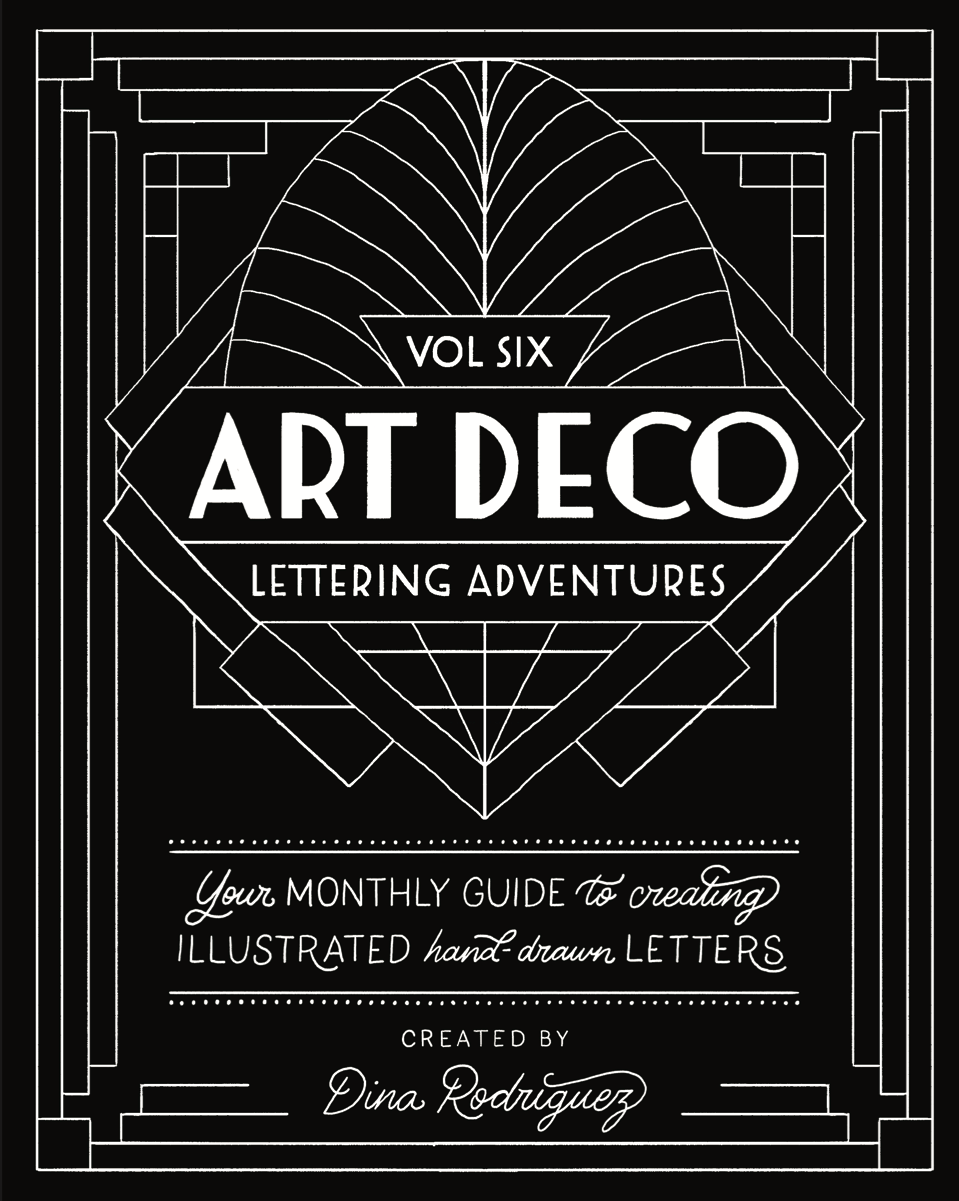
Originating in Europe, Art Deco was a dominant style in design and architecture of the 1920s. As such it quickly spread to Western Europe and North America. But, what is truly defined as the art deco period and how influential was the art deco decorative style? In the United States, New York City’s Chrysler Building typified the Art Deco style while other examples could be found in Chicago, Los Angeles, and San Francisco. Regarding the two-dimensional production, the art deco artists displayed an interest towards the mixture of traditional crafts with machine age imagery and materials. One of the most famous artists of the 1920s art deco period was definitely Tamara de Lempicka, with her portraits of the bourgeoisie and the progress of the era.

Characterized by rich colors, lavish ornamentation, and geometric shapes, the movement was celebrated for its pattern designs and poster art. In such examples evident is the dominant rectilinear designs even though art deco artists often drew inspiration from nature and used curved lines as well.

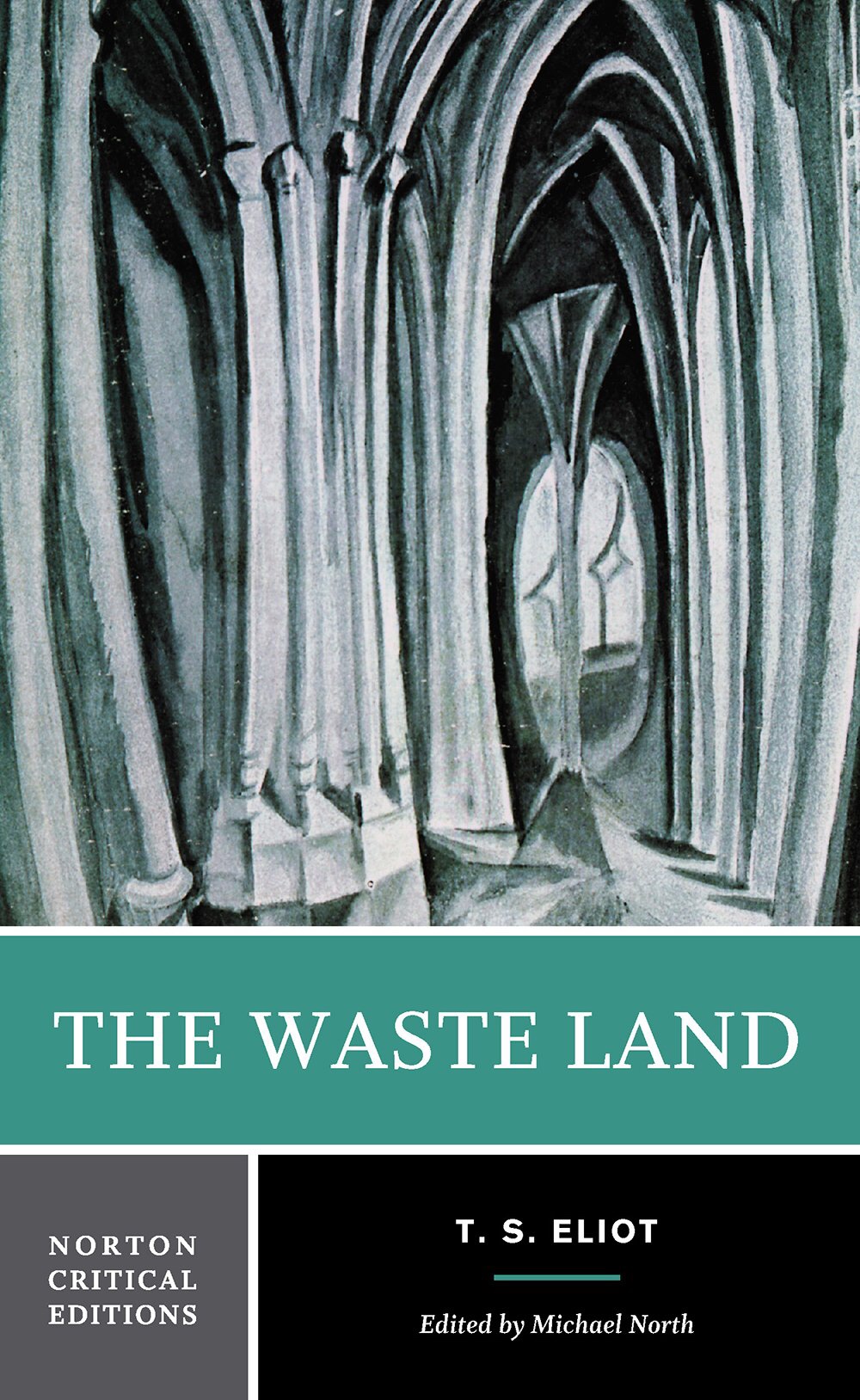
Notable Books of the Twenties: The Waste Land – T. S. Eliot (1922)

‘Complimenti, you bitch,’ wrote Ezra Pound to Eliot in 1922 upon reading a near-final draft of his friend’s latest work, which Pound had edited. ‘I am wracked by the seven jealousies.’ Pound – no slouch in the poetry department himself – knew not only that Eliot had just given the emerging Modernist literature movement its standard bearer, but that he had just read what would surely become known as one of the greatest poems of the 20th century. Sure enough, it did.

The masterpiece – about the devastating aftermath of the First World War – defied convention as it weaved different voices, to explore themes of trauma, disillusion, and death, wrapped in the barbed wire of Eliot’s electrifying intellect. With The Waste Land, he lay waste to old notions of poetry’s role as an art form, and changed the way it was written forever.