101 Ways To Cut Yourself: Vegetable Knife Skills

ED28BFDC-45E7-4B38-B172-7CB1DB96A512

101 Ways To Cut Yourself: Vegetable Knife Skills

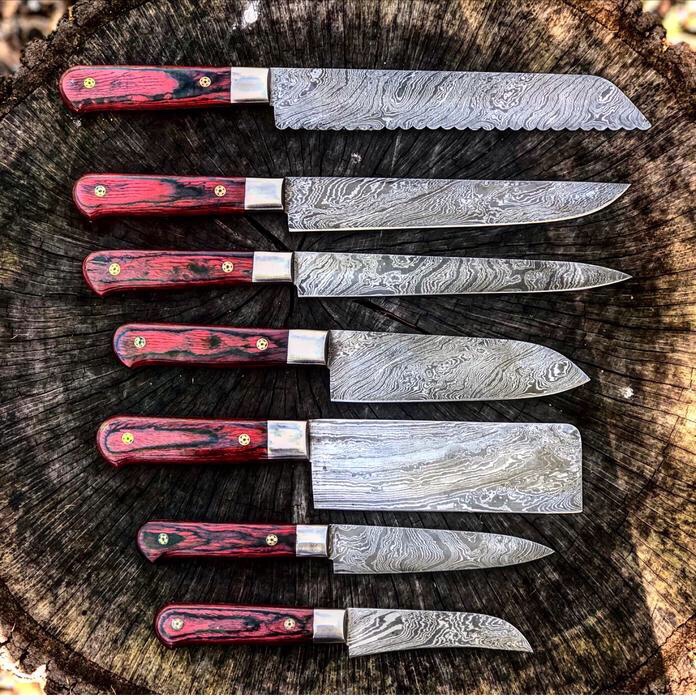
The chinois, a conical strainer with a handle, is a useful, even necessary, chef’s tool, but not a glory tool. The glory tools are your personal set of knives. They are the tools you think of first and last when you think of a chef. Knives are usually the personal property of each chef in a professional kitchen and are guarded as such. The kitchen may have some general knives, but they are not usually of the highest quality. A prudent investment in fine knives early on in your career can be a lifelong one. It is no different for the home cook. A set of fine knives will make everything easier and more enjoyable in the kitchen. After all cooking and being in the kitchen should be enjoyable, should be fun.

Most knives are made of either high-carbon or forged stainless steel. These metals are resistant to rust and corrosion, besides they do not stain easily. One of the most important criteria when choosing a knife is the material it is made from. Some of the desirable materials are:

Carbon steel: an alloy of carbon and steel. Its primary advantage is that it holds a fine edge. Its major disadvantage it requires a high degree of maintenance as it corrodes quickly, isn’t suitable for salt-air climates or highly acidic food.

Stainless steel: a combination of iron and chromium or nickel. A very popular medium for chef’s knives. Resistant to abrasions and corrosion, but does not maintain a fine edge.

High-carbon: made up of many different materials including chromium, molybdenum, and vanadium. Most professional knives are in this class. Blades are less resistant to abrasion than stainless steel knives, but are much easier to sharpen.

Professional knife kits contain at minimum all of the following knives and tools:

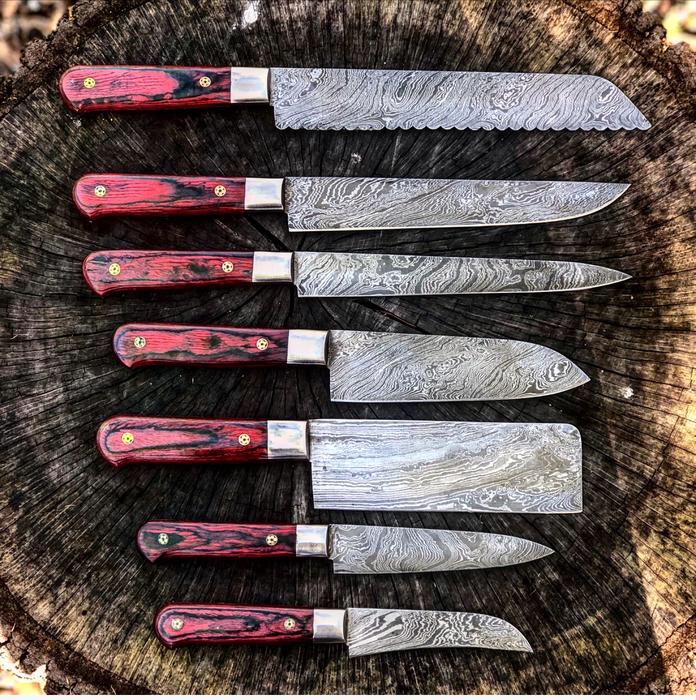
Chef’s Knife: The most versatile of all the knives in your kit. Used for chopping, dicing, slicing, and filleting. The blade can range from 6 to 14 inches in length.

Utility Knife: Used for coring vegetables, slicing tomatoes and other fruits and vegetables.

Boning Knife: Used to bone various meats and poultry. Has a 6 to 7 inch curved blade that may be either firm or flexible.

Fillet Knife: A very sharp knife with a flexible blade that is essential to filleting.

Slicing Knife: Used for slicing large cuts of meat or fish such as roasts, hams, and smoked salmon. Blades range from 12 to 16 inches. May be round tipped or pointed.

Paring Knife: A small bladed knife used for peeling vegetables.

Serrated Knife: A bevel edged knife used for slicing breads, rolls, and other soft items.

Steel: A hardened fine, ridged rod used to keep a knife’s edge aligned.

Sharpening Stone: A natural stone, carborundum stone, or diamond studded block that is available in a variety of grits used to sharpen knives.

Cutting Vegetables

9D77C5D7-4B44-49F1-ABBC-CED57B6CC663

Cutting vegetables with proper technique ensures uniform size and shape resulting in even cooking. In a professional kitchen this allows more than one person to do the preparation. Practice, practice, practice is the only way to learn the cuts and yield uniform vegetables. The traditional cuts are as follows:

Emincer: to thinly slice.

Ciseler: to finely diced onions and shallots. This method keeps the juices from being forced out as standard chopping does.

Tronconner: to cut into 4 to 7 (1 ½ to 2 ¾ inch) centimeter segments.

Parer: to trim round slices of tronconneed vegetables to obtain a flat surface on every side.

Jardiniere: thin sticks, 4 to 5 (1 ½ to 2 inches) centimeters long.

Julienne: very thin sticks, 1 to 2 millimeters (1/32 to 1/16 inch) square and 5 to 7 centimeters (2 to 2 ¾ inches) long.

Macedoine: small cubes, 5 millimeters (3/16 inch) square.

Brunoise: minute cubes, 1 to 2 millimeters (1/32 to 1/16 inch) square.

Chiffonade: this method produces thin strips of herbs

1. Wash and thoroughly dry

2. Lay the leaves in a flat stack of three or four

3. Roll the stacked leaves into a cigar shape

4. Cut the leaf roll crosswise to form thin strips

Concasser: to coarsely chop a vegetable, usually tomatoes.

Hacher: to finely mince small bunches of herbs

Mirepoix: unshaped large chunks. These pieces are used as the aromatics, almost always strained out at the end of the cooking. It is important all pieces are of uniform size to provide even cooking. This term is often applied to a mixture 50 percent onion, 25 percent carrot, 25 percent celery.

Lavage & Épluchage: Washing & Peeling Vegetables


89588EF3-DD94-4F82-AB12-18EC52FC42B6

Lavage

  • Fill sink with enough water to cover the vegetables, or use basin.
  • For greens and cauliflower a little vinegar may be added to kill insects.
  • Usung your hands, agitate the items being washed.
  • Use hands, skimmer or colander to lift vegetables out and leave impurities behind.
  • Rinse the basin and repeat until the water is clear and clean.
  • Some vegetables such as spinach must be washed several times.
  • Mushrooms can often be wiped with a damp cloth.  If washing is needed it should be done just before use.
  • Watercress should be soaked for 30 minutes.
  • Leeks should be Cut in half lengthwise and held upside down under cold running water.

F5520C8C-DEEF-435C-80FE-8D9CAE761A80

Épluchage

Proper peeling techniques 

  • All items to be peeled should be thoroughly clean.
  • Workstation should be set up posts de travail.
  • Peeling motions should be regular, consistent and precise removing as little of the flesh as possible.
  • Peeling should procede in an orderly and clean manner.
  • Éplucher —> Peel by removing the skin, ex. Onion.
  • Écosser —> To shell or hull, ex. Peas.
  • Éfiller —> To pull off stringy side filaments, ex.string beans.
  • Emonder —> Remove the skin of a tomato.
    • Remove the core.
    • Score the opposite end.
    • Dip in boiling water for a few seconds.
    • Shockin ice water.
    • Pull off lose skin.
  • Pearl onions should be placed in warm water for a few minutes to rehydrate the skin.


Commercial Fishing, Sustainability and Environmental Impact

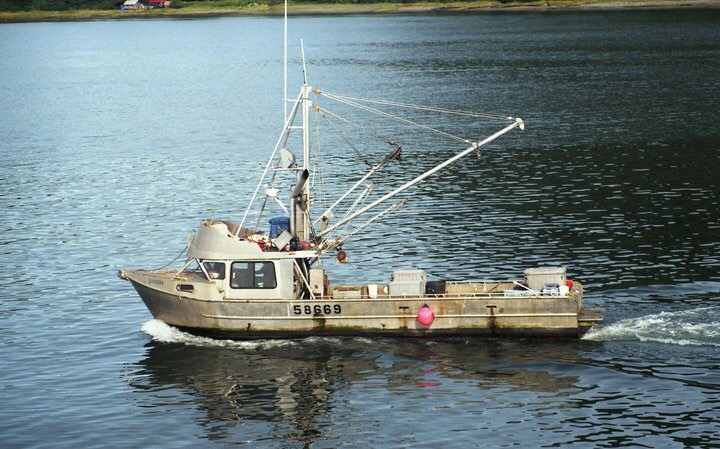
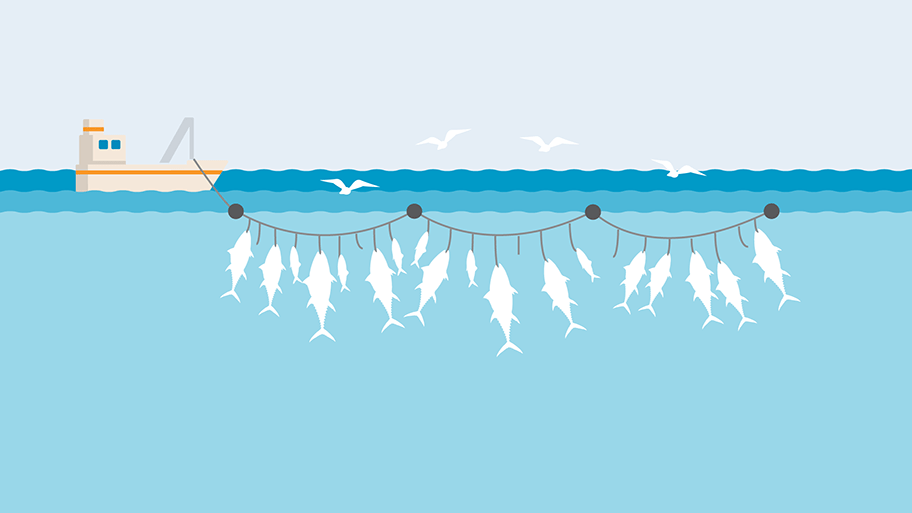
Longlining —> Longlining is one of the most productive methods of catching fish. Lines of varying lengths, some as long as 50 miles, are rigged with baited hooks at set intervals throughout the water. Bottom fish such as cod, halibut, and monk fish are caught with anchored lines set horizontally and are marked with surface buoys for Tuna and Mahi Mahi, whereas swordfish lines are set closer to the surface.

Horizontal lines are also employed and anchored to the bottom and buoyed on top. Longlining is a controversial fishing method because it indiscriminately catches unwanted fish species as well as marine mammals and birds, in particular the albatross. Methods deemed friendly to sea birds include fishing at night and setting streamers on the lines to scare the birds away. Eliminating, minimizing, or utilizing waste from fish fabrication is another step in the right direction. New methods are turning the fish by-products into usable fish meal on board the vessel. This encouraging development goes a long way toward true sustainability.

Gillnetting —> Gill nets are long walls of nets set close to or below the surface, on the bottom, or at various depths depending on species and location. They can be easily located along a known migration path to catch large quantities of fish. Varying in mesh size, these nets are invisible to the fish as they swim into them. Once their heads and gills go through the net, they become entangled and die, which drastically affects the quality of the fish, so speed in harvesting is essential.

Drift Nets —> Trapping fish in the same way as gill nets, drift nets are not affixed to anything and silently move with the tide, entangling the fish. Used at sea to catch squid, tuna, salmon, and other valuable species, these nets have prompted the United Nations to recommend a global moratorium on large-scale high-seas drift netting to protect the large pods of dolphins and turtles from becoming entangled in nets up to 3,000 yards long.

Easily lost, and invisible, they are referred to as ghost nets; they drift and fill up with fish until the weight causes them to sink to the bottom of the sea. Once the entangled fish are consumed by other marine life, the net floats back up to the surface repeating the process. Unfortunately, modern nylon nets do not disintegrate but stay intact, rising and falling in the sea. A disadvantage of both drift and gill nets is the indiscriminate catch of species.

Trawling —> Trawling is a method of fishing that pulls different sized nets through the water to capture various species of fish and shellfish. Boats can operate in tandem, pulling large nets through the water, or a single vessel can use a beam, which holds the net open as it is dragged along the ocean bottom or at various depths. Bottom trawlers have chains attached that stir up the seabed and force ground fish up into the waiting net. Trawling nets are controversial because of the damage they cause to the ocean floor.

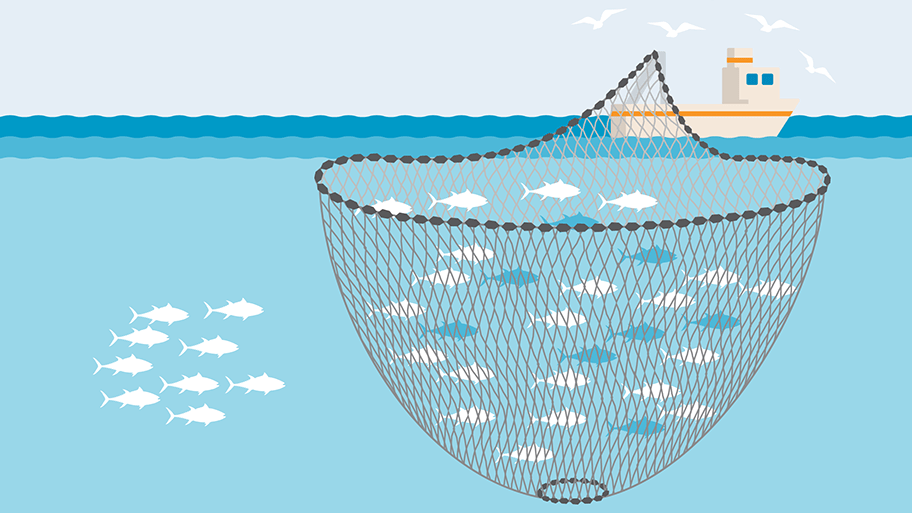
Midwater trawling deploys a large cone-shaped net from the stern of the boat and pulls it through the water scooping up anything in its path.  Once full, the net is hauled onboard and the fish are placed in the hold. Unwanted bycatch and damage to the fish as they are lifted onto the vessel are disadvantages of this method.

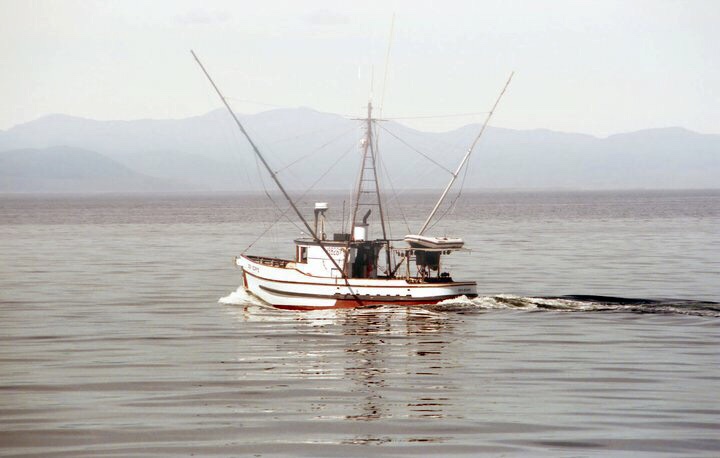
Trolling —> Trolling utilizes lures or baited lines from the stern of the boat to capture valuable game fish such as Tuna, Mahi Mahi, and Sailfish. Weights are connected to wire lines with 15 to 20 leaders, each of which is pulled behind the boat. Each line can also be rigged individually and winched in to quickly recover the fish alive. This method is especially beneficial for Tuna because their body temperature can increase drastically during the fight and proper bleeding and immediate cooling are important to the value of the fish. Fish can also be more easily targeted by utilizing specific jigs and live bait.

Purse Seining —> Purse seining encircles schools of fish with a wall of net that is then pursed (drawn together) on the bottom, trapping the fish. The entire net is brought to the side of the vessel and the fish are pumped or scooped onboard. Targeting large shoals of Tuna and Mackerel, this method became controversial in the 1970s when dolphins were deliberately encircled to facilitate catching the Tuna with which they congregated.

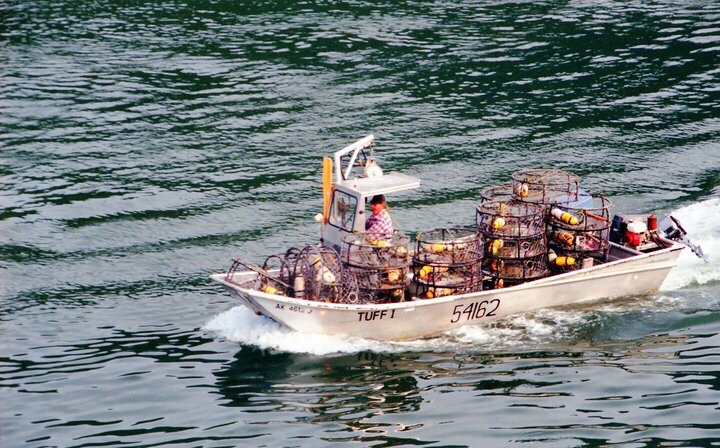
Fish Traps or Pots —> Lobster, crab, and fish are caught using various sized pots made of wire, metal, wood, and line. The pot is baited, thrown overboard, and sits on the bottom attached to a buoy. The entrance is designed to prevent escape from the trap. An advantage of this method is that it is highly selective; everything is caught alive with little or no bycatch or habitat destruction. Pot sizes vary; with Alaskan red crab, pots are able to hold hundreds of pounds of crab. Fish traps are especially popular throughout the warm calm waters of the world for their ability to catch specific varieties of fish.

Dredging —> Primarily used for shellfish such as clams, scallops, mussels, and oysters,a dredge is a metal basket with a type of rake or teeth assembly that aids in removing mollusks from the seabed. Clam dredges at sea are very large and must be towed from a sizable vessel. Modern dredges pump pressurized water in front of the rakes to loosen the silt and churn up the shellfish. Towed from bars off each side of the boat, the number of baskets or dredges deployed from a single vessel may reach several dozen depending on the catch. Dredging is controversial because it can tear up and disrupt the sea bottom, as well as have a negative effect on the natural sediment of the spawning habitat of shellfish.

Divers —> Divers utilizing scuba gear, or air pumped from the surface, collect a wide range of shellfish from the sea bottom.  Scallops collected this way are referred to as day boats because the divers harvest and return on the same day. Due to the high cost of harvesting, these items command a premium market price.

Sources —> “Kitchen Pro Series: Guide to Fish and Seafood Identification, Fabrication, and Utilization.” Culinary Institute of America (CIA), Mark Ainsworth. 2009.

Diagrams —> https://www.msc.org/home

Photographs —> © Mark Peterson

Preservation Techniques

Definition: Keeping Of perishable foods in a consumable form for a long period of time.

Dehydration: Draws moisture from the product and eliminates any medium for bacteria. Used for fruits, herbs, beans and other vegetables.

Alcohol: Alcohol kills active microorganisms. Used for fruit.

Sugar: Density of sugar retards the growth of enzymes due to a lower ratio of water. Usually 60% sugar in preserves. Used with fruit.

Liquid Cure / Brine: Submersion Of Food in a brine, an intense solution of water combined with salt and sometimes additional spices.

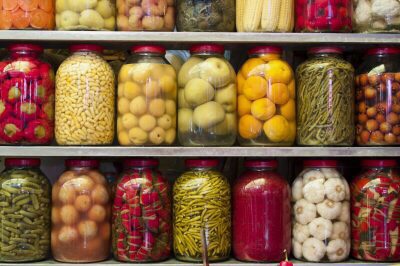
Pickling / Fermentation: Preserves Food by impregnating it with acid.  Vinegar is common and creates an environment that encourages fermentation. The item is generally precooked or soaked in a brine to draw out excess moisture.

Dry Cure / Salt: Surfaces are rubbed with salt and then left to cure. Usually a preliminary step to smoking, as are liquid cures.

Cold Smoking: Item is first cured, usually in a brine. Smoke is applied at a temperature bellow 100 degrees (38 degrees Celsius). Product remains uncooked. Example Scottish smoked salmon.

Hot Smoking: Cooks the product with the heat of the smoke. Item is usually cured first. Chicken, turkey, pork and trout are often hot smoked.

Pasteurization: Rapidly cooling liquid that has been heated to 180 degrees. Primarily used for milk and cream.

Sterilization: The container is sterilized before it is filled. Filled container is then brought to a high temperature. Safe for long term storage. Primarily used for canning fruits and vegetables.

Refrigeration: Enzyme activity is slowed at 32-38 degrees. Humidity level must be controlled.

Freezing: Holding temperature must be below 0 degrees. Changes the texture of the thawed product due to water evaporation.

Quick Freezing: Products are immediately cooled to -40 degrees and held at -4 degrees.

Freeze Drying: Total elimination of all moisture, repeated freezing and dehydrating. Product does not require refrigeration. Used for coffee, potatoes.

Sealing & Coating: Confit is a classic example. Today it is used more for taste than preservation.

Vacuum Pack: aka cryovac.  Eliminates all air from a plastic bag or container.

What is a Traditional Bouquet Garni?


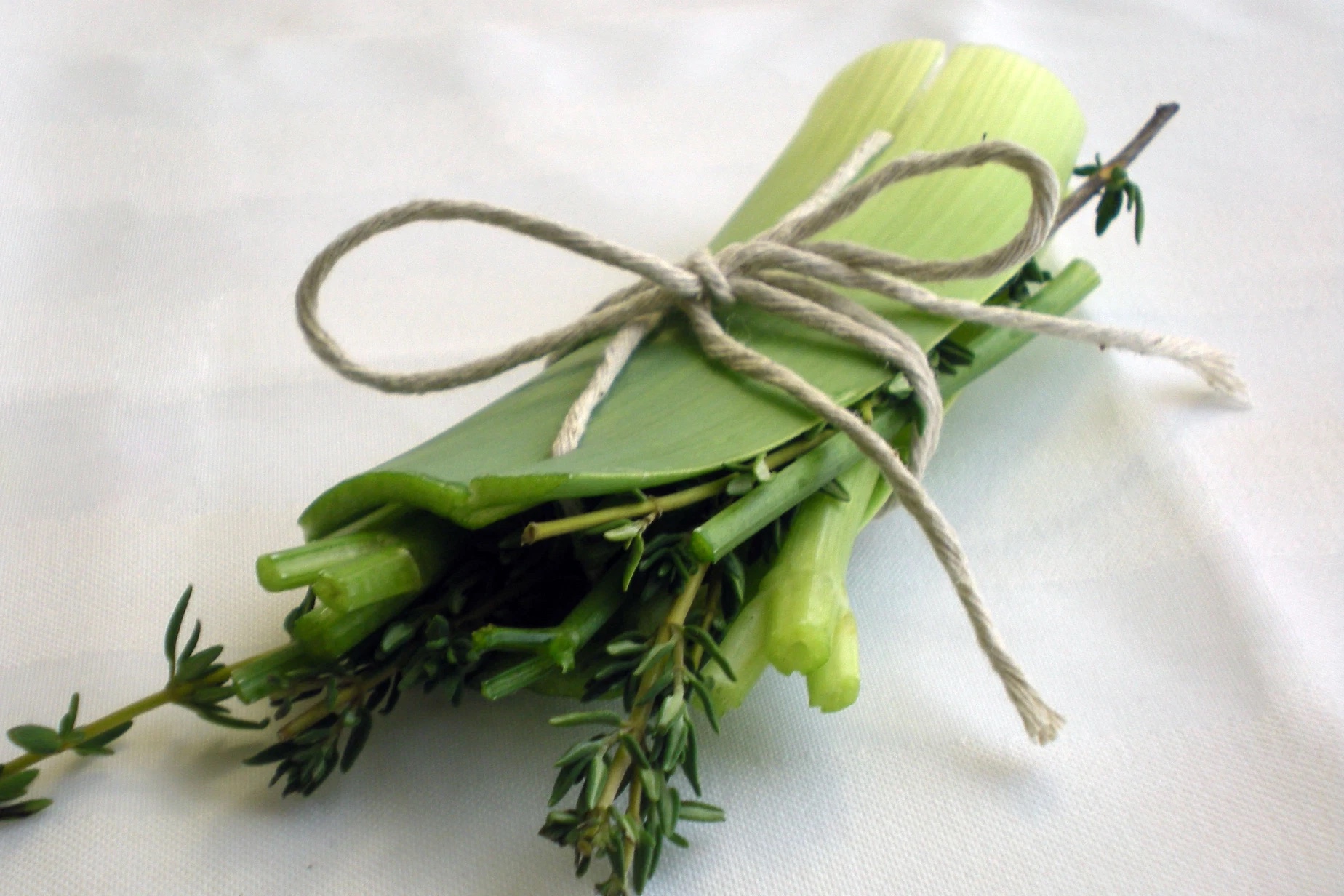
A bouquet garni is a classical combination of aromatic herbs and vegetables used to flavor liquids.  They can be removed easily from the liquid once they’ve given their flavor to it.

  • 3 outer green leek leaves, washed
  • 5 sprigs Italian parsley
  • 5 sprigs thyme
  • 2 bay leaves

Laying out 1 leek green, set the herbs on top and wrap in the remaining leaves to form a circular little bundle. Tie the bouquet garni securely with string.

If you decide to wrap the herbs in cheesecloth then you have a sachet.

Salt: When, Why, How much – A Primer

There are so many kinds of salt available now that it’s become difficult to know which to use for what. Some generalizations can be made:

  • A box of inexpensive kosher salt is ideal for salting large amounts of water for boiling vegetables or pasta.
  • Fine salt, either bought fine or ground, is best for seasoning foods in which the crunch of coarse salt would be too much.
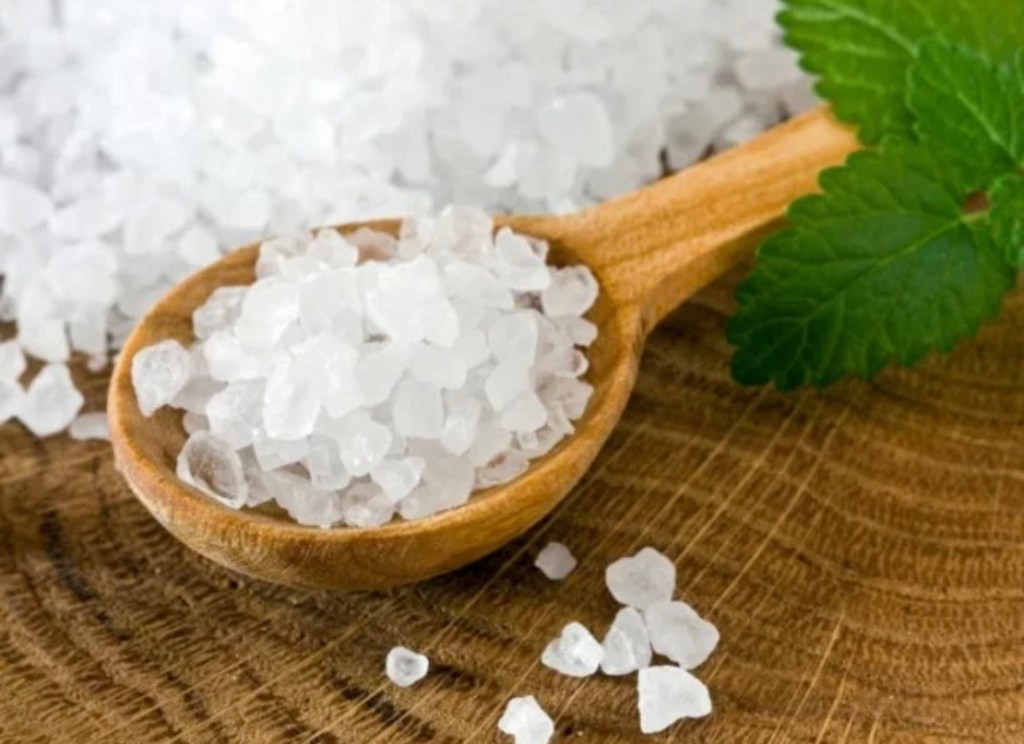
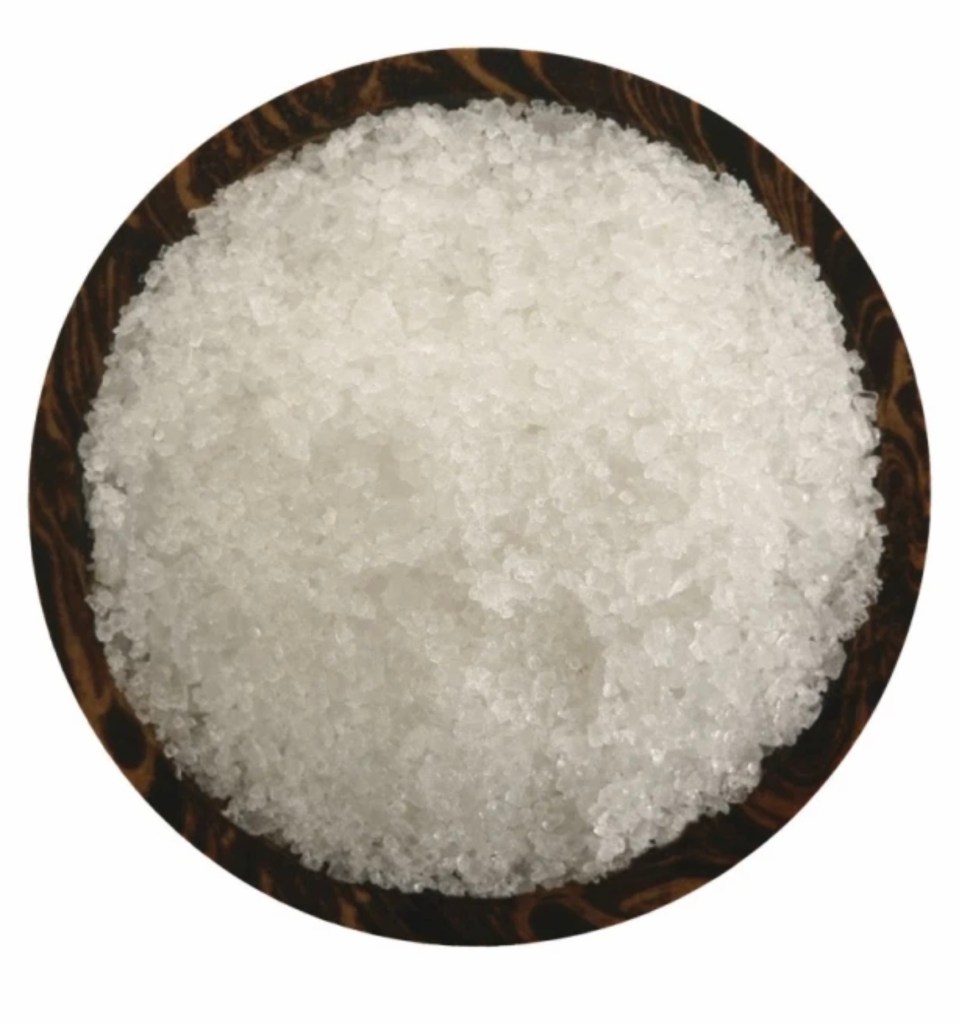
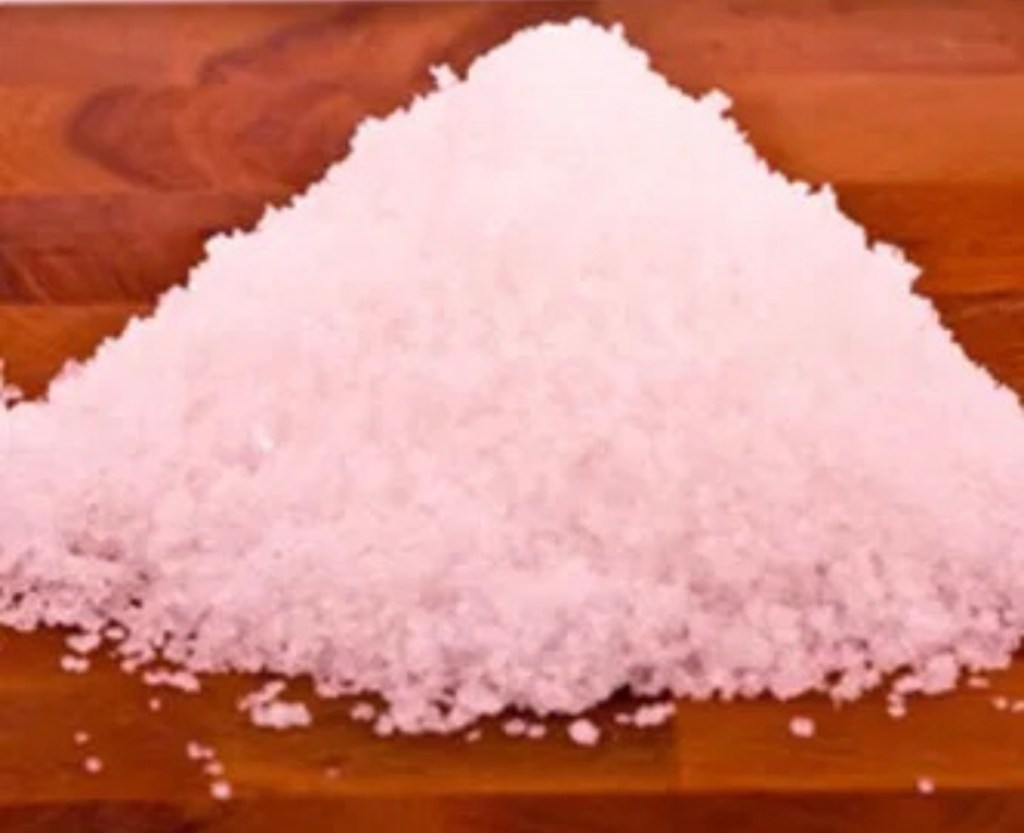
  • Sea salt, ideally the rather gray looking sel de Guérande, contains essential minerals and a delicate marine flavor.
  • Fleur de sel is ideal in tiny pinches placed on delicate foods.

What is fleur de sel?

Fleur de sel is a kind of sea salt that is harvested in some parts of France by trapping sea water in lagoons and letting the water dry. As the water evaporates, salt begins to form on the surface of the pond in a characteristic flower pattern. The salt is raked off, allowed to dry slightly more, and marketed as fleur (“flower”) de sel. If you look closely at a pinch of fleur de sel, you’ll see that it’s made of flat crystals.

Fleur de sel has a delicate flavor and looks great on top of small servings. It’s expensive, so use it at the end.

When do I add salt?

It varies, if you have plan ahead, season fish and meat a couple of hours before cooking and then pat them dry before browning. This gives the salt time to penetrate the food. Because salt draws water out of foods, which can interfere with browning, the foods need to be patted dry.

If you don’t have time to salt meat ahead of time, salt just before browning or just before serving.  Broths and sauces should be salted just before serving in case you want to reduce them to concentrate them. Boiling down liquids increases the concentration of any salts they contain.

Why is some sea  salt wet?

Sea salt is what’s called hygroscopic (a substance tending to absorb moisture from the air).  To prevent this, some companies add a magnesium compound to the salt to keep it dry. This also makes it easier to pour.

Your Knife Roll

Chef’s (or French) Knife: Used for chopping, slicing, dicindand filleting. Blade 6-14 inches.

Utility Knife: Used for coring vegetables and slicing tomatoes and other fruits and vegetables.

Boning Knife: Used to bone various meats and poultry.  Blade is 6-7 inches and curved.

Fillet Knife: Used to fillet fish.  Flexible blade.

Slicing Knife: Used for slicing large cuts of meat or fish. Blade 12-16 inches.

Paring Knife: Small blade Used for peeling and turning vegetables.

Serrated Knife: Bevel edge blade for slicing breads.

Honing Steel: Hardened, ridged rod to keep blade aligned.

Sharpening Stone: Stone in a variety of grits used to sharpen knives.

Knife DNA 101

The Cutting Edge the sharpened, honed edge of the blade. It should be razor sharp. Chef’s knife blades come in varying degrees of curvature, designed for various tasks, such as cutting, slicing, filleting, butchery.

The Back, or Spine, is the long side opposite the sharp blade. This is where you hold your non–knife hand when rocking the knife back and forth for rapid mincing. It can also be used as a makeshift bench scraper for moving pieces of food around on your cutting board. Never use the knife cutting edge for this.

The Tip is the sharp point at the end of the blade. It’s used for precision work.

The Heel is at the bottom of the blade. In Western-style knives, the metal thickens significantly at the heel. This is to make it easier to grip.

The Bolster is the part of the blade that meets the handle. It is thick and heavy, providing a good balancing point for the blade and the handle. The center of mass should be somewhere near the bolster, so that you can rock the knife back and forth with minimal effort.

The Tang is the extension of the blade that runs through the handle. It provides balance as well as sturdiness.

The Handle is where your hand rests if using the handle grip, or where your three smaller fingers rest if using the blade grip. Handles can be made of wood, polycarbonate, metal, or various exotic materials.

The Butt is the fattened section at the very bottom of the handle.

Restaurant French Cooking Vessels

Materials:

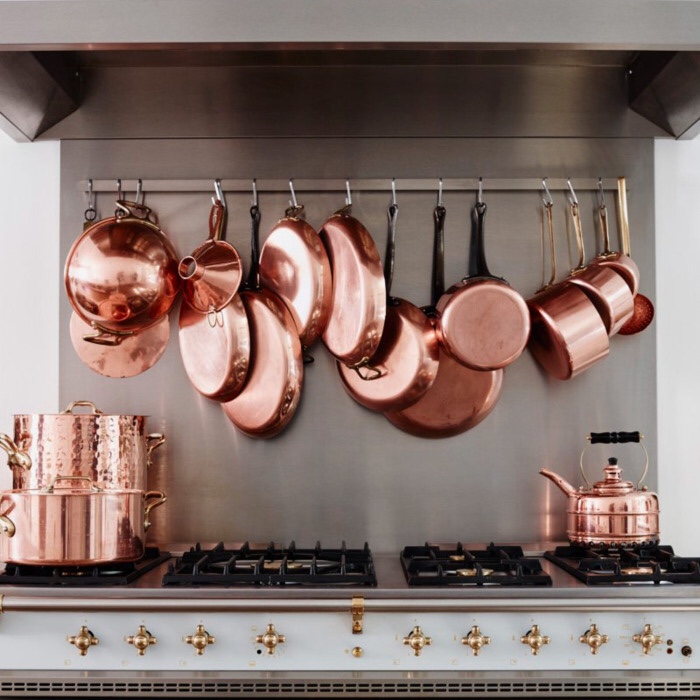
  • Copper: Most even heat conductor.
  • Aluminum: Excellent heat conductor.
  • Cast Iron: Extremely strong and heavy metal used for Dutch ovens, griddles, frying pans, and skillets.  Relatively inexpensive and long lasting.
  • Black Steel: Inexpensive and heat conducts quickly. Often used for frying pans, crepe pans, and woks.
  • Stainless Steel: Excellent non-reactivate metal, but extremely poor heat conductor.
  • Enamelware: Inexpensive, but a poor heat conductor and food tends to stick.
  • Nonstick: Useful, however the coating tends to wear off quickly.

Batterie de Cuisine (Pots and Pans):

  • Marmite: A stockpot 2.5 – 40 gallons
    • Marmite Haute: Tall
    • Marmite Basse: Shorter
  • Poêle: Shallow Pan used for cooking omelettes, crepes, and potatoes. American version is a cast iron skillet.
  • Rondeau: Large round pan with handles, used for braising and stewing.  5 – 6 inches deep.  12 – 20 Quarts.
  • Rôtissoire: Large rectangular pan with low to medium high sides and two handles used for roasting meats.
  • Russe: Saucepan with a single long handle.
  • Sauteuse: Round, shallow pan with a single long handle and sloping sides used for sauté.
  • Sautoir or Plat a Sauter: Large, round, shallow pan with a single long handle and straight sides that is used to sauté or make sauces.
  • Sheet Pan: Rectangular pan with shallow sides.
    • Full Sheet Pan: 18 x 26.
    • Half Sheet Pan: 18 x 13.
  • Hotel Pan: Rectangular stainless steel pan with a lip designed to rest in a steam table or rack. Used to cook, ice, store or serve foods.
    • Full Hotel Pan: 12 3/4 x 20 3/4, 2, 4, or 6 inches deep.
    • Half Hotel Pan: 1/2 the size of a Full.
    • Third Hotel Pan: 1/3 the size of a Full.
    • Fourth Hotel Pan: 1/4 the size of a Full.
  • Square Boys: Also known as steam table pans. 6 7/8 x 6 1/4.  2 1/2, 4 or 6 inches deep.
  • Sizzle Pans: Oval platters with raised edges used to cook or finish items in the oven or salamander. 9 – 13 1/2 inches.