Lard

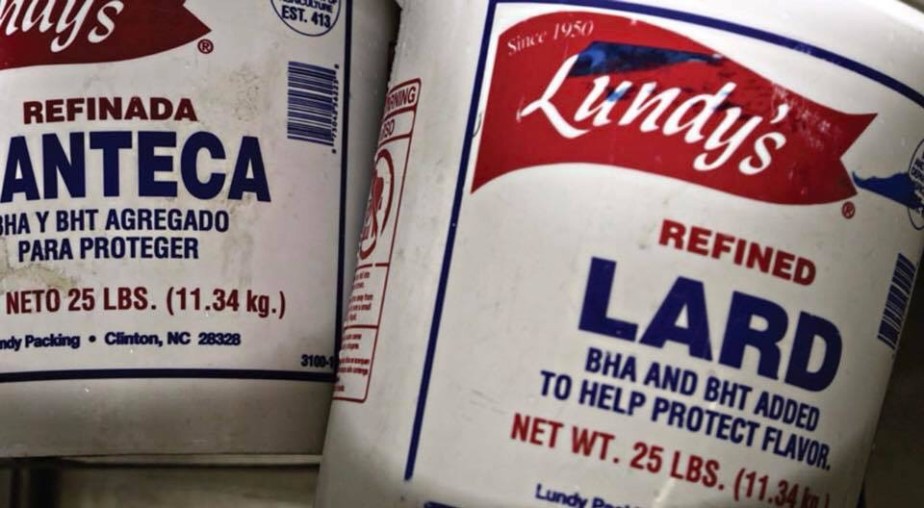
“Lard gets a bad rap, but in the right proportions adds a delicious layer of flavor and texture. Bill Neal once told me, “I am not saying ‘you shouldn’t’—I’m saying ‘don’t ever’ make biscuits or piecrust without lard. It’s just a waste of time.” The irony here is that lard really began its trip into ingredient obscurity about 40 years ago with the misconceptions passed around that pork was bad or unhealthy. It became a victim of the marketing of the hydrogenated vegetable shortenings, like Crisco, that allegedly lowered the risk of heart disease. Science has proven in recent years how incorrect and, actually, opposite that is. So while the pig is exalted, lard still languishes in disdain on the culinary blacklist.

Natural lard is a completely naturally occurring fat and has fewer calories and a cleaner fat content than butter, containing less nonfat solids. Do not confuse with shelf-stable lard, which is not terrible, but not as good for you as natural lard, which must be refrigerated. There are no trans fats in lard since it is a natural fat, and it is very high in omega 3 fatty acids. Studies indicate that it is no more responsible for raising LDL cholesterol than any other fat and will actually help raise HDL (“good” cholesterol) levels.

So get with the program, get over the stigma, and buy a little bucket of lard next time you are at the store. You’ll be happy you did, and your stuff will start tasting a lot more “like your grandmother used to make it.”
~ Chef John Currence, from “Pickles, Pigs & Whiskey”

#JohnCurrence #Lard #SouthernCooking
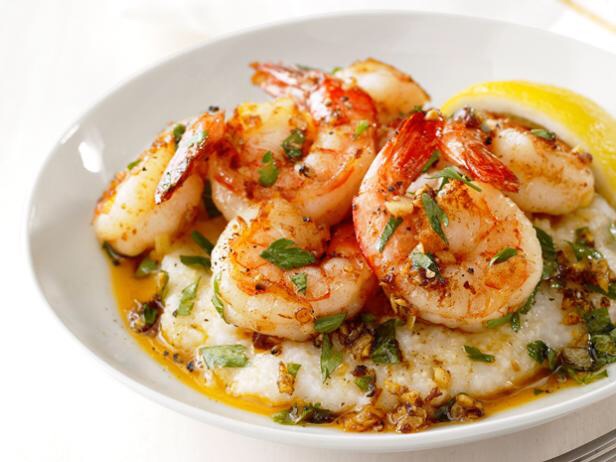
Grits

“Grits is the first truly American food. On a day in the spring of 1607 when sea-weary members of the London Company came ashore at Jamestown, Va., they were greeted by a band of friendly Indians offering bowls of a steaming hot substance consisting of softened maize seasoned with salt and some kind of animal fat, probably bear grease. The welcomers called it “rockahominie.”

The settlers liked it so much they adopted it as part of their own diet. They anglicized the name to “hominy” and set about devising a milling process by which the large corn grains could be ground into smaller particles without losing any nutriments. The experiment was a success, and grits became a gastronomic mainstay of the South and symbol of Southern culinary pride.”

~ Turner Catledge, New York Times on 31 January 1982

What exactly are Grits?

“Grits are—or is, as the case may be— a by-product of corn kernels. Dried, hulled corn kernels are commonly called hominy; grits are made of finely ground hominy. Whole-grain grits may also be produced from hard corn kernels that are coarsely ground and bolted (sifted) to remove the hulls.

Thus, throughout its history, and in pre-Columbian times as well, the South has relished grits and made them a symbol of its diet, its customs, its humor, and its good-spirited hospitality. From Captain John Smith to General Andrew Jackson to President Jimmy Carter, southerners rich and poor, young and old, black and white have eaten grits regularly. So common has the food been that it has been called a universal staple, a household companion, even an institution.

Grits cooked into a thick porridge are so common in some parts of the South that they are routinely served for breakfast, whether asked for or not. They are often flavored with butter or gravy, served with sausage or ham, accompanied by bacon and eggs, baked with cheese, or sliced cold and fried in bacon grease. Mississippi-born Craig Claiborne, the late New York Times food writer, loved grits and published elegant recipes for their preparation.

The last 30 years have seen renewed interest in grits. It has become a part of southern creative expression, as when bluesman Little Milton says, “If grits ain’t groceries / Eggs ain’t poultry / And Mona Lisa was a man.” Jimmy Carter’s presidency in the 1970s led to media interest in grits as a southern icon and the film My Cousin Vinny included a humorous scene of a couple from the Bronx eating the mysterious (to them) grit. By the mid-1980s a new generation of renowned southern chefs, including Bill Neal from North Carolina and Frank Stitt from Alabama, began serving sophisticated dishes with grits, such as Stitt’s grits soufflé with fresh thyme and country ham. South Carolina cookbook author John Martin Taylor helped popularize stone-ground grits, and smaller producers of artisanal grits grew into successful businesses, including Old Mill of Guilford (North Carolina), Falls Mill (Tennessee), Logan Turnpike Mill (Georgia), Adam’s Mill (Alabama), Anson Mills (South Carolina), and War Eagle Mill (Arkansas).”

~ John Egerton, Excerpt From “The New Encyclopedia of Southern Culture”

Corn Grist

CORN GRIST

Grist is grain that has been separated from its chaff in preparation for grinding. It can also mean grain that has been ground at a gristmill. Its etymology derives from the verb grind.

Grist can be ground into meal or flour, depending on how coarsely it is ground. Maize made into grist is called grits when it is coarse, and corn meal when it is finely ground. Wheat, oats, barley, and buckwheat are also ground and sifted into flour and farina. Grist is also used in brewing and distillation to make a mash.

CORNMEAL

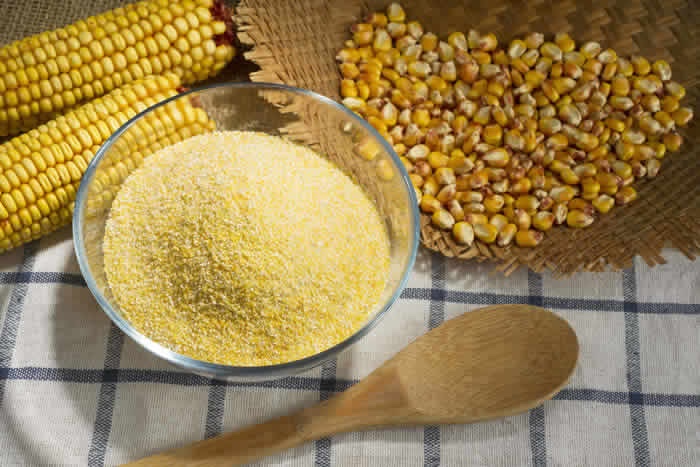
Cornmeal is ground dried corn. You can find it at any chain grocery store, but the best cornmeal is stone ground and you may need to source that at a mill or through mail order. Unlike more modern methods of milling, the stones don’t substantially heat up the grains, resulting in a superior flavor and texture. Find a miller who grinds corn to order or purchase a small home grinder that will allow you to vary the size of the grind. Many millers ship grains via mail order, and a home mill can be easily purchased on the Internet.

HOMINY

If you take dried flint corn and cook it in lye until the outer hull of the kernel separates, you’ll leave the germ of the kernel behind—and get hominy. This process, called nixtamalization, originated with Mesoamerican Indians and has a very specific effect: it unlocks the nutritional power of corn, making it much more digestible, especially when combined with rice or beans. Unlike Native Americans, Southerners and Europeans didn’t fully adopt this practice and thus they often lacked the complete nutritional protein that it creates, leaving their populations who subsisted on cornmeal and preserved meat susceptible to a vitamin deficiency disease called pellagra.

HOMINY GRITS

Old-timers call it “little hominy,” but modern commercial grits bear little resemblance to the staple grist of yesteryear. Industrial milling and commercial corn production mean that most of the grits you find are simply coarsely ground cornmeal, but hominy grits are nixtamalized dried kernels ground to a coarse consistency.

MASA

Latin Americans take fresh hominy and grind it while still wet, producing a soft corn flour that constitutes the basis for everything from tortillas to tamales. The commercial kind is called masa harina and comes dried in bags, like cornmeal or flour.

POLENTA

Corn traveled quickly to Italy after its “discovery” in the Americas, and it soon replaced buckwheat and farro as the grain of choice for polenta. Very similar to the South’s grits and African ugali, polenta is a cornmeal mush originally eaten by peasants, a staple of the cuisine Italians call la cucina povera, but it is often made from flint corn, a very hard variety that has a lower starch content.

SAMP

Early colonists used the terms “grits” and “samp” interchangeably, but when we talk about samp today, we are referring to cracked hard flint corn. It’s hard to make, since the best samp is cracked by hand, but the kernels of good samp can be shattered, producing very little corn flour in the process. This type of rough corn cooks up like rice, tender and fluffy.”

~ Sean Brock from “Heritage”

Collard Greens

“Collard greens grow throughout the South and, probably as much as any other food, serve as a culinary Mason-Dixon line. Some claim greens kept Sherman’s scorched-earth policy from totally starving the South into submission; many today can testify to surviving Depression winters with greens, fatback, and cornbread. Southern childhood memories often focus on collard greens: either the pleasant, loving connection of grandma’s iron pot and steaming potlikker, or the traumatizing effects engendered by the first whiff of the unmistakable odor for which greens are famous. Writing in the Charlotte Observer in 1907, Joseph P. Caldwell explained, “The North Carolinian who is not familiar with pot likker has suffered in his early education and needs to go back and begin it over again.” Particularly among rural and poor southerners, collard greens have endured as a dietary staple.

Sometimes defined as headless cabbages, collards are best when prepared just after the first frost, though they are eaten year-round. They should always be harvested before the dew dries. When being prepared, they are “cropped,” then “looked,” then cooked; that is, cut at the base of a stalk, searched for worms, and then cooked “till tender” on a low boil, usually with fatback, or neck or backbone, added. The resultant “mess o’ greens,” topped with a generous helping of vinegar, can easily make a meal in itself. If they are summer greens (and much tougher), the tenderizing could take two hours or more of cooking; after first frost, it may take less than an hour. A whole pecan in the pot should eliminate the pungent and earthy smell. Potlikker, the juice left in the pot after the greens are gone, is a southern version of nectar from the gods and is valued both as a delicacy—particularly when sopped with cornbread—and for its alleged aphrodisiacal powers. Greens combine well with black-eyed peas and hog jowl in the South’s traditional New Year’s Day meal. To ensure good fortune, one should either eat lots of greens or tack them to the ceiling. In fact, a collard leaf left hanging over one’s door can ward off evil spirits all year long.

Though collard greens are grown year-round throughout the South and Southwest (Indians call them quelites), they are most prevalent in the Deep South and the eastern plains of North and South Carolina. The exporting of collards to displaced southerners in the Northeast has become a big business in the three leading collards-producing states. From the last week of October through May, eight firms from Georgia and the Carolinas ship a thousand tons of whole, fresh collards a week to the major northeastern metropolitan areas. The greens are cut and banded, then packed in bundles on ice, about 25 pounds per box or 20 tons a truckload.”

~ Alex Albright, East Carolina University. Excerpt From “The New Encyclopedia of Southern Culture”, John T. Edge (Editor)

Okra

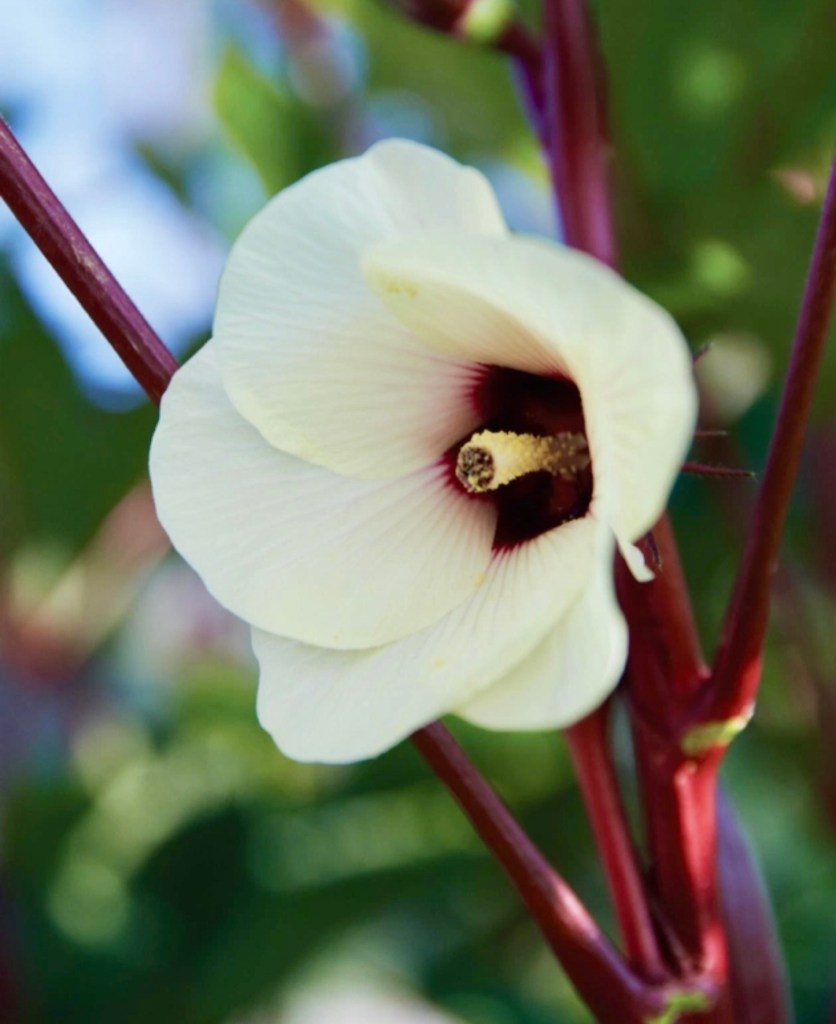
“I remember rediscovering okra as a young chef. One of the farmers who delivered our summer produce invited us to his farm for a visit. I had never seen okra growing in the field before, and was mesmerized by the sight: verdant rows of lanky stalks with broad leaves and gorgeous, hibiscus-like flowers blooming alongside ridged, finger-like pods pointing toward the sun. He clipped off a young tender pod and bit right into it, next offering me one. It was sweet and crunchy, and warm from the afternoon heat. I had only ever tried okra cooked and was stunned at how good it was raw, straight from the plant.

Until then, I had never thought much about okra beyond the traditional fried and stewed versions, which can both be either amazing or horrible depending on how they are prepared. Now it’s one of my favorite summer vegetables to work with. It is incredibly versatile: crisp and sweet when raw, sumptuous and meaty when roasted or sautéed, addictive when dipped in cornmeal and deep-fried. It builds layers of flavor and texture when stewed in soups and gumbos.”

~Steven Satterfield

Okra is a flowering plant like its cousins cotton, cocoa, and hibiscus, loves poor soil, unpredictable rains, and heat. It does not like frost, which is why many living above the Mason-Dixon Line are unfamiliar with its goodness or view it with suspicion.  So much of the world relishes it. In India it is called “lady fingers.” Africans frequently call it “gumbo,” a term that has taken root in Louisiana and other Cajun areas as well as in the Gullah region of South Carolina and Georgia.

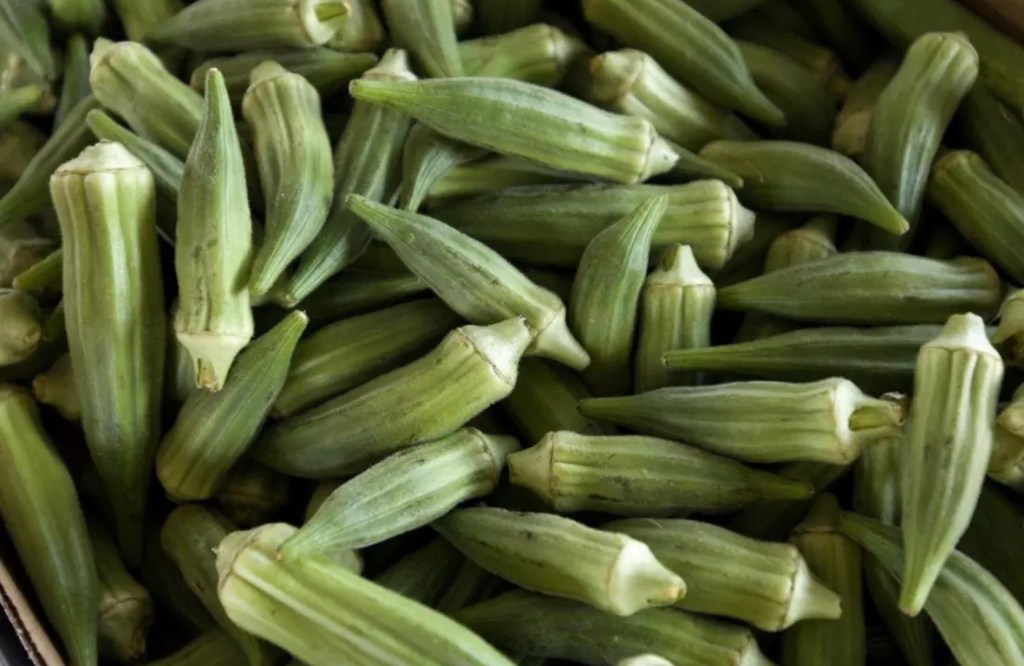
Purchasing: When buying okra, look for the smallest pods. By the time larger pods are cooked, they are much less palatable. If the smaller ones are not available, slice the larger ones on the diagonal before preparing.

Cornmeal Fried Okra

Fried okra is served everywhere in the South, but that doesn’t mean it’s always good.  Same goes for stewed Okra and Tomatoes.

2 pounds fresh okra, smallest size preferred, washed
½ teaspoon kosher salt
3 quarts good frying oil
2 cups extra-fine cornmeal
5 tablespoons cornstarch
1 teaspoon fine sea salt, plus more to taste

Trim the tops off the okra and slice the okra in half. Place the trimmed okra in a dish and pour 1 cup water over it, then sprinkle with ½ teaspoon kosher salt. Agitate the okra in the water and let it sit 10 to 15 minutes. While the okra is soaking, using a frying thermometer, slowly heat the oil to 350°F.

In a bowl, whisk together the cornmeal, cornstarch, and sea salt. Pull a handful of okra from the dish and allow it to drain in your fingers a few seconds, then drop the okra slices into the cornmeal mixture. A metal skimmer works well.  Toss to coat well, remove the okra from the dredge and sift the excess dredge away, being careful not to knock off too much coating. Repeat the dredging process until all the okra is coated and ready to fry. Working in batches, drop the coated okra into the hot oil and fry until crisp and golden, around 5 minutes. Do not overcrowd the pot. Transfer the hot okra to paper towels to drain, and sprinkle with more fine sea salt.

Serve immediately.