“Chowning’s Tavern” Inspired Brunswick Stew

There is quite an argument still raging about the origin of this stew in the South, and it doesn’t appear to be resolved anytime soon.  Either way we know one thing, it’s delicious. Brunswick County, Virginia, and the city of Brunswick, Georgia, both claim to be the origin of the stew. A plaque on an old iron pot in Brunswick, Georgia, says the first Brunswick stew was made in it on July 2, 1898, on nearby St. Simons Island.

  • One stewing hen (6 pounds)
  • Two large onions, sliced
  • Two cups okra, cut
  • Four cups fresh tomatoes or two 16-ounce cans of tomatoeS.
  • Two cups lima beans
  • Three medium potatoes, diced
  • Four cups corn, cut from the cob
  • 3 teaspoons salt
  • 1 teaspoon pepper
  • 1 Tablespoon sugar

Cut the chicken in pieces and simmer it in 3 quarts of water for a thin stew, or 2 quarts for a thick stew, until meat can easily be removed from the bones, about 2 1/4 hours.

Add the raw vegetables to the broth and simmer, uncovered, until the beans and potatoes are tender. Stir occasionally to prevent scorching.

Add the chicken, boned and diced if desired, and the seasonings.

Note: Brunswick Stew is one of those things that benefit from long, slow cooking. It is a rule in some tidewater (Virginia) homes never to eat Brunswick Stew the same day it is made, because its flavor improves if it is left to stand overnight and is reheated the next day.
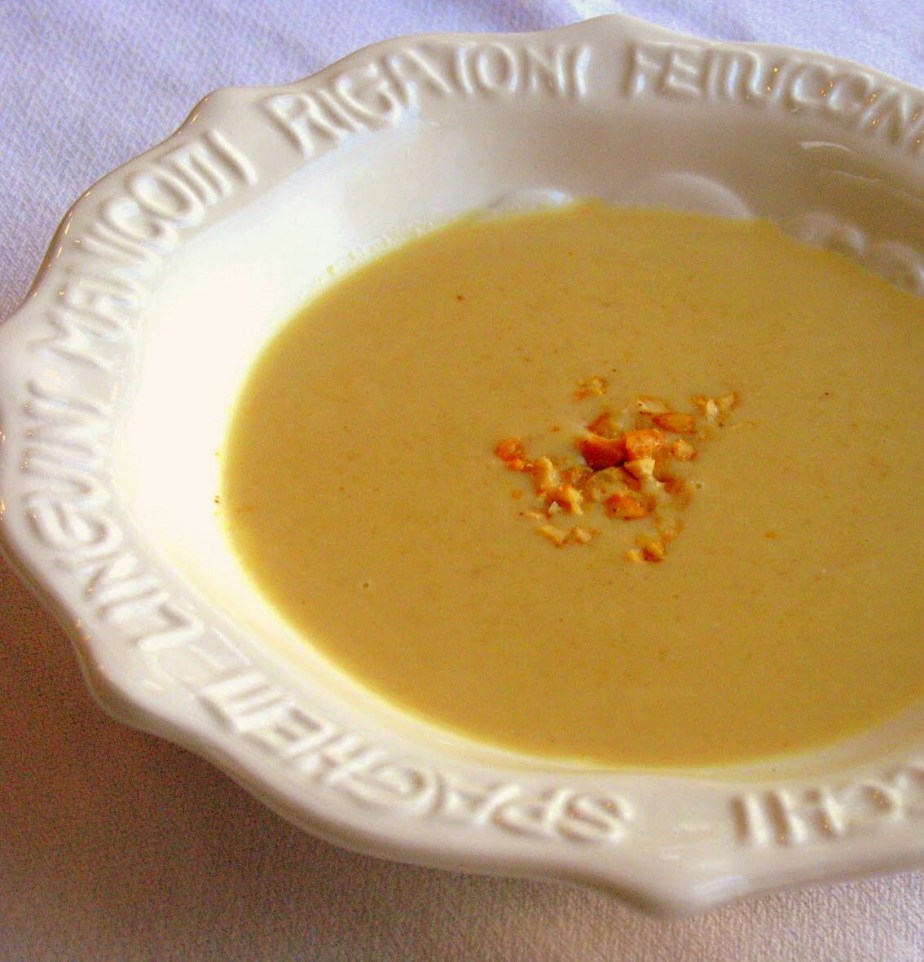
“Colonial Williamsburg” Inspired Cream Of Peanut Soup

¼ cup unsalted butter
1 medium onion, finely chopped
2 celery ribs, finely chopped
3 tablespoons flour
8 cups Chicken Stock
2 cups smooth peanut butter
1 ¾ cups half-and-half
Finely chopped salted peanuts, for garnish

In a large saucepan over medium heat, melt the butter. Add the onion and celery and cook, until softened, about five minutes.

Stir in flour and cook two or three minutes longer.

Pour in the chicken stock, increase the heat to high, and bring to a boil. Reduce the heat to medium and cook, stirring often, until slightly reduced and thickened, about 15 to 20 minutes. Pour into a sieve and strain.  Return the liquid to the sauce pan.

Whisk the peanut butter and the half-and-half into the liquid. Cream can be used for a richer soup.  Warm over low heat, stirring often, for about five minutes. Do not boil.

Serve warm, garnished with the chopped peanuts.

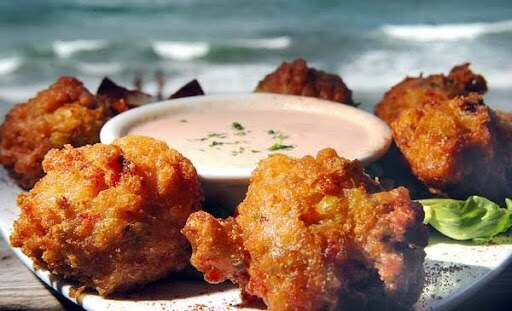
Conch Fritters

1 quart vegetable oil, for frying
¾ cup all-purpose flour
1 sprig fresh thyme leaves
Kosher salt and freshly ground black pepper
1 cup chopped conch meat
½ onion, chopped
½ green bell pepper, chopped
2 stalks celery, chopped
1 teaspoon tomato paste
1 cup water

Heat the oil in a large heavy-bottomed saucepan, Dutch oven, or deep fryer to 365 degrees.

In a large mixing bowl, combine the flour, thyme, salt, and pepper. Mix in the conch meat, onion, bell pepper, celery, tomato paste, and water.

In batches, drop the batter by rounded tablespoons into the hot oil and fry until golden brown. Use a slotted spoon to transfer the fritters to a baking sheet lined with paper towels to absorb any excess oil.

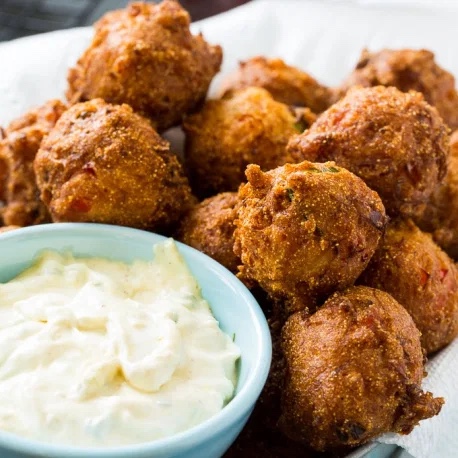
Crab Hushpuppies

3 cups White Lily buttermilk cornmeal mix
1 cup White Lily self-rising flour
1 teaspoon baking soda
2 teaspoons kosher salt
4 teaspoons freshly ground black pepper
1 cup chopped scallions
2½ cups buttermilk
1 pound lump crab-meat
1 large egg, lightly beaten

Tartar sauce for dipping

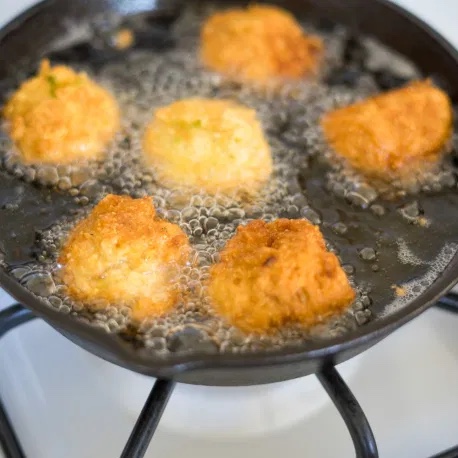
Fill a deep-sided cast-iron skillet or Dutch oven with 1 inch of oil. Place over medium-high heat, and bring the oil to 375 degrees. Monitor and keep the temperature between 350 and 375 degrees while you are frying.

In a large bowl, whisk all the ingredients together. Working in batches, drop a tablespoons into the oil and fry until golden and crisp, usually 3 to 4 minutes, turning occasionally.  Remove with a slotted spoon and drain on paper towels.

Serve with a bowl of tartar sauce for dipping

Panko Fried Green Tomatoes

You can ask many long time Southerner’s about fried green tomatoes and they won’t remember eating them growing up, but needless to say they have become a Southern staple. Why? I believe it has more to do with Fannie Flagg’s book and the subsequent movie than any true regional origin. You know what, that’s okay because they’re delightful when done correctly.

4 medium green tomatoes, cut in ¼-inch slices
1 tablespoon kosher salt
1 teaspoon black pepper
2 large eggs, beaten
¼ cup cream
1 cup all-purpose flour
2 to 3 cups panko bread crumbs
¾ cup vegetable oil, plus more as needed

Lay the tomato slices on a platter and season both sides with the salt and pepper.  Beat the eggs and cream together in a small bowl and transfer to a shallow dish.

Place the flour and panko in their own separate, shallow dishes. Arrange your three-stage breading assembly line in this order: sliced tomatoes, flour, egg wash, then panko. Have a dry plate ready to hold the breaded tomatoes until you are ready to fry them.

Place the seasoned tomatoes in the flour and coat well. Dip the floured tomato slices into the egg wash and thoroughly coat on both sides, then transfer to the panko, pressing the slices into the breading to ensure a nice, even coating. Remove the slices from the panko and place on the dry plate. Bread all the tomatoes before you start frying.

Heat the oil in a 12-inch sauté pan over medium-high heat. When the oil is shimmering, fry the tomatoes a few pieces at a time. Fry for about 2 minutes on each side or until golden brown. Carefully remove the tomatoes from the pan with tongs and drain on paper towels. As you remove the hot tomatoes from the pan, season with a little sprinkle of salt. Add more oil to the pan and repeat.

Serve with your favorite dressing or sauce: buttermilk dressing, ranch dressing, garlic aioli, etc.

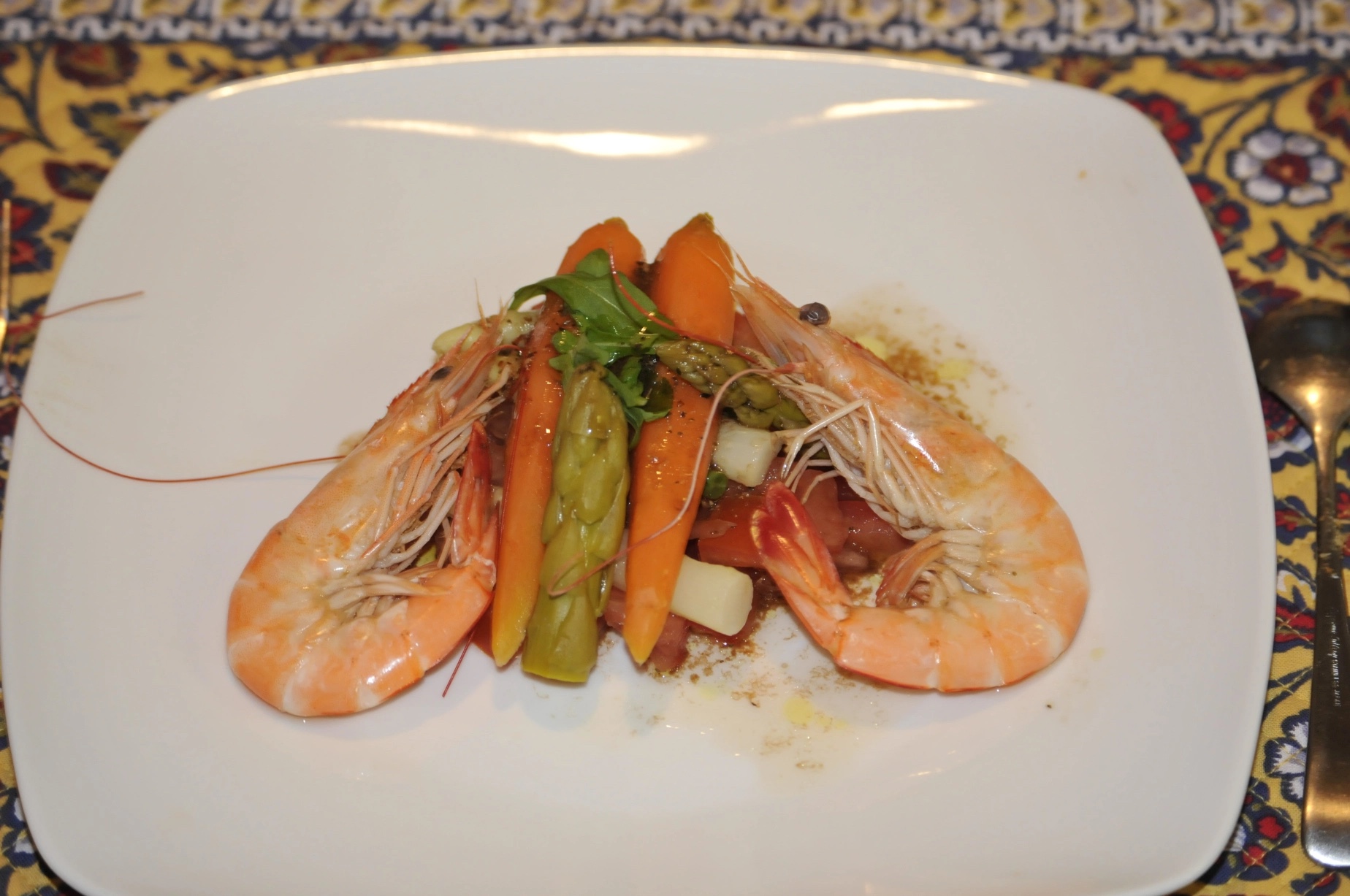
Tomato Tartare with Pickled Vegetables and Jumbo Head-on Shrimp

Serves 4

 3 Tomatoes, peeled, seeded and finely chopped

Kosher Salt & Black Pepper, to taste

2 Teaspoons Finely Minced Shallot

1 Teaspoon Minced Chives

Fresh Thyme Sprigs


1 Bunch White Asparagus

1 Jar Pickled Asparagus

¼ Pound Haricot Verts

8 Baby Carrots

½ Pound Cherry Tomatoes, cut in half

Baby Arugula

Fresh Herbs


8 Head On Jumbo Shrimp

2 Tablespoons Old Bay Seasoning

½ Cup Vinegar

½ Cup Water


½ Cup Olive Oil

1 Tablespoon Balsamic Vinegar

½ Teaspoon Dijon Mustard

Herbs de Provence, to taste

Take tomatoes in a bowl and toss with shallot, chives, finely chopped thyme and salt and pepper to taste.  In a bowl mix olive oil, balsamic vinegar, Dijon mustard and herbs de Provence.  Whisk to create emulsion.

Bring small pot of salted water to boil.  Blanch white asparagus, haricot verts and baby carrots.  Individually place the vegetables in boiling water for a few minutes or until tender.  Immediately move to an ice bath to stop cooking and preserve color.

In a pot add vinegar, water and Old Bay seasoning.  Bring to a boil.  Add shrimp and cover.  Boil for 2 minutes and check shrimp so as to not overcook.  Shrimp should be opaque.  Immediately remove to ice bath.

Place a 3 inch ring mold on a plate.  Place about 4-5 teaspoons of tomato tartare in the center and use the back of a spoon to spread mixture so it fills bottom of mold.  Lift the ring mold and repeat on other three plates.  Toss white asparagus, haricot verts, carrots with a tablespoon of balsamic vinegar mixture.  Place vegetables, baby arugula and fresh herbs carefully on top of tomato tartare.  Drizzle with balsamic mixture.  Add two shrimp to each plate and serve immediately.

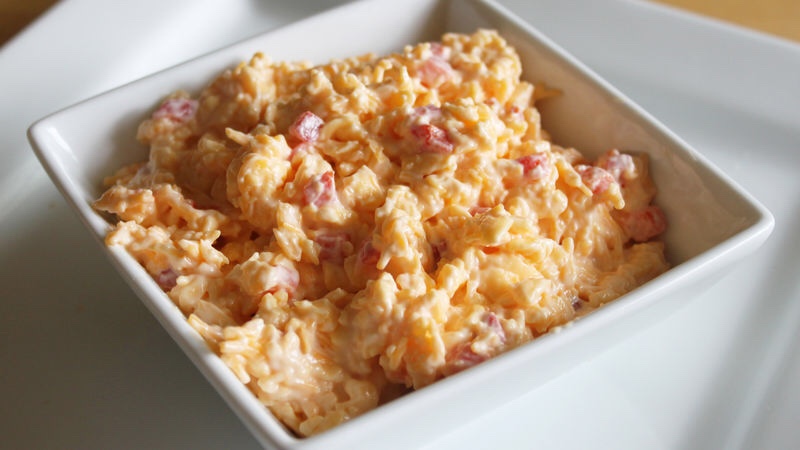
Basic Pimento Cheese

The so called pâté of the South isn’t really very Southern at all. No, pimento cheese got its start up North—in New York, in fact—as a product of industrial food manufacturing and mass marketing.  Like other food items though it was perfected in the South.  There’s a multitude of pimento cheese recipes out there, but we’ll start with this basic one and introduce fancied up one’s later.

½ cup mayonnaise
1 (4-ounce) jar diced pimentos, drained
1 tablespoon grated onion with juice
1 teaspoon Worcestershire sauce
½ teaspoon salt
½ teaspoon ground black pepper
⅛ teaspoon cayenne pepper
1½ cups lightly packed shredded sharp yellow cheddar cheese
1½ cups lightly packed coarsely shredded sharp white cheddar cheese

In a medium bowl add the mayo, pimentos, onion, Worcestershire sauce, salt, pepper, and cayenne together. Fold in the cheeses to thoroughly combine. Cover and refrigerate for a few hours before serving to allow the flavors to meld.

“New South” Sweet Sriracha Pecans

4 tablespoons honey
2 tablespoons Sriracha chili sauce
2 cups pecan halves
3 tablespoons sugar
2 teaspoons kosher salt

Preheat the oven to 325 degrees.

Combine the honey and Sriracha in a small saucepan and warm over medium-low heat until thinned and well mixed.

Remove from the heat and add the pecans. Stir well until the pecans are lightly coated.

Spread the pecans on a rimmed baking sheet in a single layer. Bake for 15 minutes.

Add the sugar and salt in a bowl. When the pecans are done, add them to the bowl with the sugar/salt mixture. Stir until the pecans are completely coated.

Spread out pecans and allow to cool. Store in an airtight container for up to 5 days, not that they will last that long.

Warning these pecans are highly addictive.

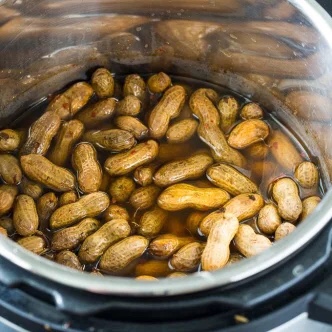
Boiled Peanuts

South Louisianans boil peanuts with Tabasco mash, others throw in crab boil. Some fans prefer them warm, others demand that they be chilled.  People eating boiled peanuts are usually engaged in other tasks—driving, chatting, fishing, watching a ball game.

Peanuts came to North America from Africa and the Caribbean with the slave trade, sometime before the American Revolution. African Americans grew and popularized the peanut both boiled and roasted.

For many the quintessential experience is purchasing them by the side of the road or in a gas station, in soggy brown kraft-paper bags.

Here is the simplest recipe from which a thousand variations can be made:

  • 3 quarts water
  • 3 pounds (8 cups) freshly dug green peanuts in shell
  • 3 tablespoons salt

Bring the water and salt to a low boil in a large pot over medium heat. Add the peanuts and cook to taste, usually 1 to 2 hours. Some like the shell to become soft enough almost to be edible. Let the peanuts sit in the water off the heat until the desired degree of saltiness is reached.