
In England April 23rd is St. George’s Day, honoring the day he is supposed to have died in 303 AD. He is, of course, supposed to have slain a dragon that demanded human sacrifices: here’s a famous painting of the killing by Raphael (ca. 1505)

In England April 23rd is St. George’s Day, honoring the day he is supposed to have died in 303 AD. He is, of course, supposed to have slain a dragon that demanded human sacrifices: here’s a famous painting of the killing by Raphael (ca. 1505)
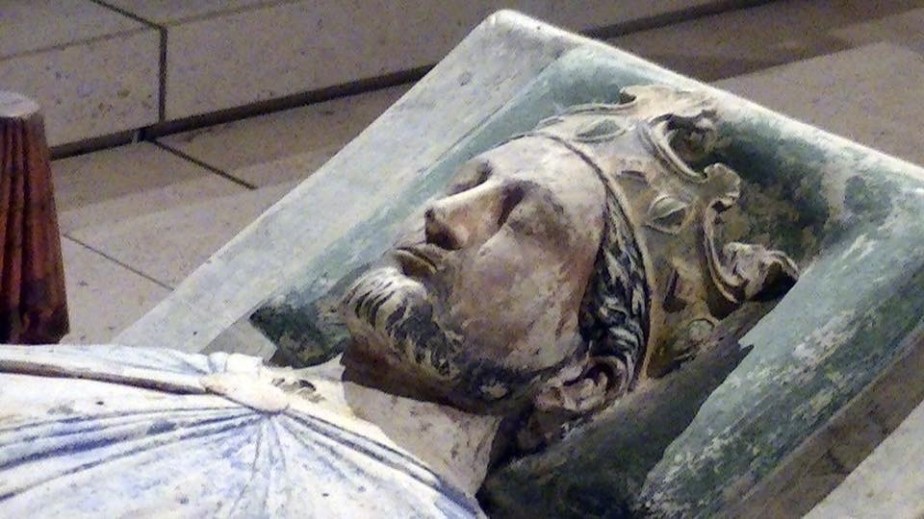
Richard the Lionheart (Richard I, 1157-1199):
During the High Middle Ages, the practice of dissecting corpses and embalming their remains was popular for royalty and other high ranking members of society. When King Richard I was killed during a siege in 1199, his body was opened up and had its internal organs removed and buried in a coffin near the site he died. Meanwhile, his heart was taken separately and sent to a church in Normandy, and the rest of his body was transported to Fontevraud Abbey to be buried close to his father Henry II.
#RichardTheLionheart #HighMiddleAges #Embalming


Useless Information “Plague Doctors” division —> “Plague doctors“, the physicians of the time, wore bizarre masks during medieval epidemics of bubonic plague. The “beaks” were filled with aromatic spices and herbs to ward off the plague, which was thought to be caused by befouled air. Here are some real ones.

On October 14th, 1066 the Norman conquest of England begins with the Battle of Hastings.
Here’s the Battle of Hastings as depicted on the Bayeux Tapestry, supposedly embroidered only a few years after the battle. This bit is supposed to depict the death of Harold II, the last Anglo-Saxon King of England. He was supposedly done in by an arrow in the eye, and the Latin above him says, “Harold the King has been killed”.
#NormanConquest #BattleOfHastings #BayeuxTapestry

On January 13, 1128, Pope Honorius II declared the Knights Templar to be an army of God.
Led by the Frenchman Hughes de Payens, the Knights Templar organization was founded in 1118. Its self-imposed mission was to protect Christian pilgrims on their way to the Holy Land during the Crusades. The Templars took their name from the location of their headquarters, at Jerusalem’s Temple Mount.
KnightsTemplar #ArmyOfGod #PopeHonoriusII

On October 3rd, 1283 Dafydd ap Gruffydd, prince of Gwynedd in Wales, is the first nobleman to be executed by hanging, drawing and quartering
On 30 September 1283, Dafydd ap Gruffudd, Prince of Wales, was condemned to death, the first person known to have been tried and executed for what from that time onwards would be described as high treason against the King.
Edward ensured that Dafydd’s death was to be slow and agonising, and also historic; he became the first prominent person in recorded history to have been hanged, drawn and quartered, preceded by a number of minor knights earlier in the thirteenth century.
Dafydd was dragged through the streets of Shrewsbury attached to a horse’s tail then hanged alive, revived, then disembowelled and his entrails burned before him for “his sacrilege in committing his crimes in the week of Christ’s passion”, and then his body cut into four-quarters for plotting the king’s death. Geoffrey of Shrewsbury was paid 20 shillings for carrying out the gruesome act on 3 October 1283.
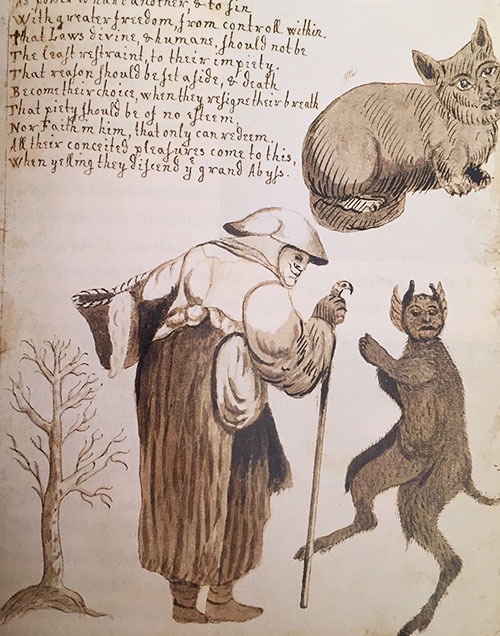
The Catholic Church vs. Cats
~ Pope Gregory IX, who held the papacy from 1227 to 1241 believed that cats embodied Lucifer himself. Gregory based his theory on “evidence” from Conrad of Marburg, a papal inquisitor. Apparently torture produced some pretty convincing confessions from people who worshipped the devil and his black cat. On June 13, 1233, Gregory issued the Vox in Rama, an official papal decree declaring that Satan was half-cat and sometimes took the form of a cat during Satanic masses. Catholics around the the continent began slaughtering any feline that entered their property. History shows that the Black Death, which ravaged Europe in the mid 1300s, was caused by rats and the fleas on them. Which means that killing off the rats’ main predators was probably not the best idea.
~ Pope Innocent VIII came to power in the late 1400s, during the throes of witch crusades in Western Europe. Because the powers that be dictated that the cat composed one of the main identifiers of a witch, the Church officially excommunicated the entire species.
The cat rituals have survived the centuries:
~ In Belgium, an entire festival, Kattenstoet (Festival of the Cats) is a parade in Ypres, Belgium, devoted to the cat. It has been held regularly on the second Sunday of May since 1955. The parade commemorates an Ypres tradition from the Middle Ages in which cats were thrown from the belfry tower of the Cloth Hall to the town square below and burned in the streets.
~ Queen Elizabeth I celebrated her coronation with the burning of a cat-stuffed effigy.
~ “After food, clothing and medicine, the fourth item is cosmetics and the fifth is pets,” Pope Francis said referring to all pets not just cats, referring to a study on where most people’s income goes. “That’s serious. One can love animals, but one should not direct them the affection due only to persons.” So we should probably take a step away from the dog ice cream and cat outfits in the pet aisle.
#Cats #CatholicChurch #Lucifer #Witches

Blarney Castle’s “Poison Garden” Cork Ireland — built in 1446 the castle still boasts its original “poison garden” which contains poisonous plants, including Wolfsbane, Mandrake, Ricin and Opium — all are labelled with information about toxicity, their medieval medical uses as well as modern uses.
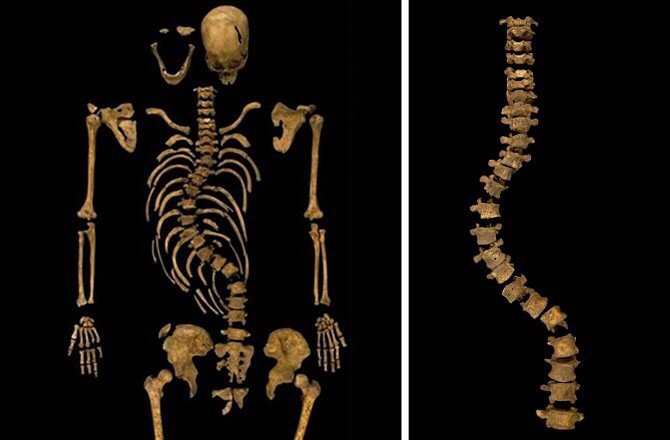
On August 22nd in 1485 The Battle of Bosworth Field, the death of Richard III and the end of the House of Plantagenet. [He was the last English king to die in battle.]
Richard III’s skeleton, in case you forgot, was discovered under a parking lot in Leicester.
Here it is, showing his spinal scoliosis. His skull, which was bashed in; these are the wounds that killed him.
#RichardIII #BattleBosworthField #Plantagenet
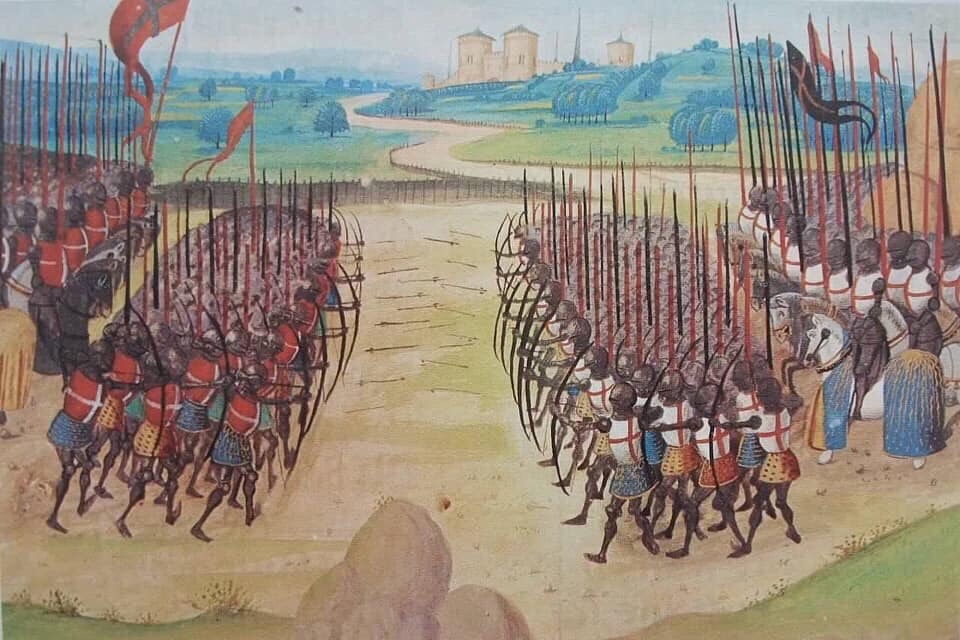
The Battle of Agincourt
It was on the 25th of October in 1415 when one of the most significant battles of the Hundred Years War took place, the Battle of the Agincourt. The English had renewed their war effort in 1415 following several decades of relative peace and had marched 260 miles in two and a half weeks only to face a considerably larger French army.
The English were unable to withdraw to Calais as the French blocked their path, so instead they fought and even their King, Henry V, participated in hand-to-hand fighting. The English numbered around 8,000 knights, but around 80% were archers armed with English longbows. The French outnumbered the English considerably, but they were weighed down by heavy armour and their cavalry were slowed down by the heavy clay soil on the battlefield that day.
The English army won the battle, largely due to the military superiority of the longbow. It is estimated that around 6,000- 8,000 French soldiers were killed, and only around six-hundred English soldiers died. The Battle of Agincourt is one England’s greatest military victories.
 Mark Bere Peterson’s Counterculture, Urban Legends, Paganism & Witchcraft