Baku (獏 / ばく)

Translation: Dream Eater; based on the Chinese name for the same creature
Habitat: deep in thick forests
Diet: bad dreams

Appearance : The baku is a strange, holy beast that has the body of a bear, the head of an elephant, the eyes of a rhinoceros, the tail of an ox, and the legs of a tiger. Despite their monstrous appearance, baku are revered as powerful forces of good and as one of the holy protectors of mankind.

Behavior: Baku watch over humans and act as guardian spirits. They feed on the dreams of humans—specifically bad dreams. Evil spirits and yōkai fear baku and flee from baku-inhabited areas. Because of this, health and good luck follow baku wherever they go.

Interactions: The baku’s written name and image have been used as symbols of good luck in talismans and charms throughout Japanese history. In the old days, it was common to embroider the kanji for baku onto pillows in order to keep away bad dreams, sickness, and evil spirits. Fearsome baku images are commonly carved into the pillars above temple doors and on the columns supporting temple roofs. Baku are one of only a handful of holy creatures honored in this manner.

Origin: Legend has it that when the world was new and the gods were making the animals, the baku was put together from the leftover bits and pieces at the end of creation. That explains its bizarre appearance, and why it is considered a favorite of the gods.

Today, the Japanese word baku also refers to the tapir. The animal was named for its uncanny resemblance to this holy chimerical beast.

What is the Japanese tea ceremony?

What is the tea ceremony?

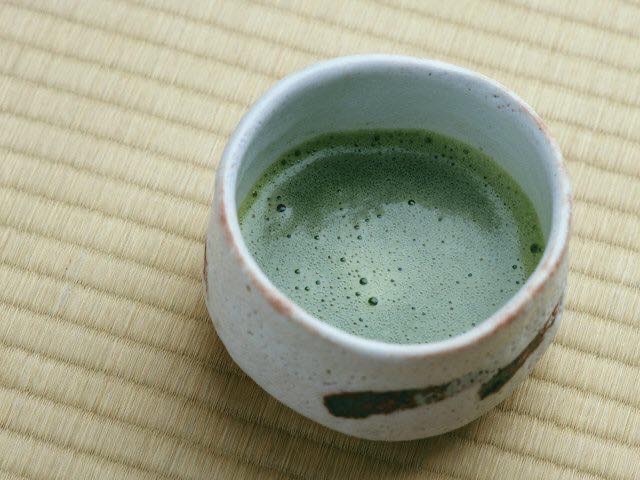
The tea ceremony involves preparing powdered tea for guests according to custom and enjoying its austere taste quietly and serenely. Influenced by Zen Buddhism, the tea ceremony seeks to purify the mind and attain oneness with nature.

The ceremonial serving of tea used to be exclusively practiced by nobles and priests who gave it its original form around the middle of the fourteenth century. Its popularity gradually spread to wealthy merchants, warlords during the era of civil warfare (in the 15th and 16th centuries), and their retainers.

The tea ceremony has been modified in many ways over the years. Until the end of the Edo period (1603-1867) it was practiced almost entirely by men; women joined in only after the beginning of the Meiji era (1868-1912).

There are many schools of tea ceremony, including the three Senke schools of Ura, Omote, and Mushanokoji. They all uphold the spirit of the ceremony while observing their own distinctive styles of preparing and serving tea.

#JapaneseCulture #TeaCeremony #ZenBuddhism

Chadō (茶道): The Way Of Tea

4101D657-637F-414A-A2BA-B175269D1A4D.jpeg

The Japanese tea ceremony, also called the Way of Tea, is a Japanese cultural activity involving the ceremonial preparation and presentation of matcha (抹茶), powdered green tea.

In Japanese, it is called chanoyu (茶の湯) or sadō, chadō (茶道), while the manner in which it is performed, or the art of its performance, is called (o)temae ([]手前; []点前).  Zen Buddhism was a primary influence in the development of the Japanese tea ceremony. Much less commonly, Japanese tea practice uses leaf tea, primarily sencha, in which case it is known in Japanese as senchadō (煎茶道, the way of sencha) as opposed to chanoyu or chadō.

Yōkai: An Introduction

Yōkai, (妖怪) is a broad and vague term, and nothing exists in the English language that quite describes it. They can best be understood as supernatural creatures and phenomena from Japanese folklore. The word is a combination of the characters 妖(yō–attractive, bewitching, calamity) and 怪 (kai–mystery, wonder). Many English words have been used in translations. Yōkai can be translated as monster, demon, spirit, or goblin, but it encompasses all of that and more. The world of yōkai also includes ghosts, gods, transformed humans and animals, spirit possession, urban legends, and other strange phenomena. Even in Japanese, the term is difficult to define. The broadest possible definition of yōkai includes all supernatural creatures and phenomena from all parts of the world. On my site I narrow Yōkai to all supernatural creatures and phenomena which are found in Japanese folklore.

Japanese folklore is an amalgamation of different traditions, with its foundation in the folk religions of isolated tribes living on the Japanese isles. These traditions were modified by Shintō and later Buddhism, incorporating elements from Chinese and Indian folklore and mythology as well.

In ancient Japan, spirits were thought to be formless and invisible to the human eye. However, as artistic traditions developed, it became necessary to visually depict the spirits and monsters from stories. These begun as painted scrolls, and later expanded into multi-volume illustrated encyclopedias of strange tales and supernatural stories.

During the Edo period (1603-1868), there was an unprecedented flourishing of culture and art in Japan. Ghost stories and stories about monsters and strange phenomena from the all over Japan experienced a huge surge in popularity. The very first mythical bestiaries were put together by folklorists and artists like Toriyama Sekien, who collected the oral traditions of rural Japan for consumption by the growing urban population.  Sekien’s yōkai encyclopedias set the stage for other artists. It quickly expanded into every aspect of Japanese culture, from fine art to high theater, from aristocratic ghost story-telling parties to low class bawdlery, and so on.

Yōkai fell out of popularity during the Meiji restoration, when Japan modernized its society and culture. They were all but abandoned as a relic of a superstitious and past. After World War II, manga artist Shigeru Mizuki reintroduced them to a modern Japan. His series “GeGeGe no Kitaro” caused a second explosion of interest in the supernatural. Today, the influence of yōkai can again be seen in all aspects of Japanese culture, from manga and anime, to video games, brand labels, and even on Japanese currency.

Hoshizora Kiseki (星空キセキ)

A good, but not great anime short film released in Japan over the Internet.

Kozue loves to stargaze and does so regularly. On a trip to view a meteorite, she happens to meet a boy named Ginga. He has a mysterious ability to discover more information about the stars, which he uses to help scientists with astronomical research. Unfortunately, his life is mostly dictated for him, and when carrying out missions, he must always wear a protective suit. Kozue helps Ginga to gradually take control of his life by encouraging him to make his own decisions.

Japanese Title: 星空キセキ(Literally Starry-Sky Miracle)

Rating: NR

Genre: Animation, Sci-Fi, Romance, Short

Directed By: Akio Watanabe, Toshikazu Matsubara

WrittenBy: Akio Watanabe, Kouichirou Itou, Toshikazu Matsubara

Country: Japan

Language: Japanese (Subtitled in English)

Release Date: June 21st, 2006 (Japan), May 10th, 2011 (USA)

Runtime: 27 minutes

Main Characters:

Ginga. (銀河)

A boy who has the ability to discover more information about stars. His life is controlled by scientist who wish to take advantage of his ability.

Kozue (こずえ)

A school girl who enjoys looking at the stars.

Your Name. (君の名は) Kimi no Na wa.

From director Makoto Shinkai, the innovative mind behind Voices of a Distant Star and 5 Centimeters Per Second, comes a beautiful masterpiece about time, the thread of fate, and the hearts of two young souls. The day the stars fell, two lives changed forever. High schoolers Mitsuha and Taki are complete strangers living separate lives. But one night, they suddenly switch places. Mitsuha wakes up in Taki’s body, and he in hers. This bizarre occurrence continues to happen randomly, and the two must adjust their lives around each other. Yet, somehow, it works. They build a connection and communicate by leaving notes, messages, and more importantly, an imprint. When a dazzling comet lights up the night’s sky, something shifts, and they seek each other out wanting something more-a chance to finally meet. But try as they might, something more daunting than distance prevents them. Is the string of fate between Mitsuha and Taki strong enough to bring them together, or will forces outside their control leave them forever separated?

Rating: PG (for thematic elements, suggestive content, brief language, and smoking)

Genre: Animation, Drama, Romance

Directed By: Makoto Shinkai

Written By: Makoto Shinkai

Country: Japan

Language: Japanese (Subtitled in English)

Release Date: April 7, 2017

Worldwide Gross: $358,922,706

Studio: FUNimation

Runtime: 106 minutes

Main Characters:

Taki Tachibana (立花 瀧, Tachibana Taki)

A high school student currently living in Tokyo. He was a 17 year old sophomore attending at Tokyo Metropolitan High School and in the class next to Class C of second year. Taki was actually three years younger than Mitsuha when they started switching bodies. He is also an architect. He is short-tempered but well meaning and kind. He spends time with Miki Okudera, working in a part-time job as a waiter at the Italian restaurant “Il Giardino delle Parole”

Mitsuha Miyamizu (宮水 三葉, Miyamizu Mitsuha)

A high school girl dissatisfied with her life in Itomori, a mountainous and rural town of Gifu Prefecture. She is a 17 year old student in her second year at Itomori High School. She was actually three years older than Taki when they started switching bodies. She ties her hair with dark red braid. She and her sister are maidens of the family shrine. Her mother died peacefully, and her father left home in order to become the town’s mayor. She lives with her grandmother, Hitoha, and her younger sister, Yotsuha, who is in elementary school. Mitsuha wishes to have a better life in Tokyo from respecting the shrine and having a strained relationship with her father.

Weathering With You (天気の子) Tenki No Ko

Set in Japan during a period of exceptionally rainy weather, the film tells the story of a high-school boy who runs away from his rural home to Tokyo and befriends an orphan girl who has the ability to manipulate the weather.

Original Title: Tenki No Ko (Literally “Child of Weather”)

Rating: NR (for suggestive material, some violence and language)

Genre: Animation, Fantasy, Romance

Directed By: Makoto Shinkai

Written By: Makoto Shinkai

Country: Japan

Language: Japanese (Subtitled in English)

Release Date: Jan 15, 2020

Worldwide Gross: $11,100,000

Runtime: 111 minutes

Main Characters:

Hodaka Morishima (森嶋 帆高, Morishima Hodaka)

He is a freshman at Kōzu-shima high school. He ran away from home by ferry to Tokyo. There is no detailed explanation of the reason for leaving home in the film. Because he was a runaway and could not present his identification, he cannot get a part-time job so he had to spend his days at an Internet cafe. He obtains a handgun from the waste bin discarded by Shibata, a criminal who is arrested for possessing a large number of firearms. Hodaka gets into trouble with Kimura, a club owner who tries to recruit Hina, who was looking for a high paying job. Hodaka accidentally fired the gun, trying to threaten him, but the bullet missed. Hodaka is hired by Keisuke, who offers him a job. His life in Tokyo was smooth sailing, but he was pursued by the police for two reasons: the fact that the shot was caught on security cameras and his family had reported him missing.

Hina Amano (天野 陽菜, Amano Hina)

She is a third year junior high school student, born on August 22. She started working part-time at McDonald’s in Kabukicho, but later she was fired because she falsely represented her age. She was 14 years old when she meets Hodaka, but she told him she would be 18 on her next birthday.

By passing through a small shrine gate on the roof of an abandoned building in Yoyogi, she gained the ability to temporarily clear a localized area by praying. But it also came at the cost of her body gradually becoming more transparent with each use of that ability, and turning into water at the end. Initially, she was unaware of this, and even considered the “100% sunshine girl” business to be her calling, but she later realized this when Natsumi showed her a video of a priest of a weather shrine recounting weather maiden lore.

Keisuke Suga (須賀 圭介, Suga Keisuke)

A middle-aged man working in a small occult magazine publishing company. He writes articles for weekly occult magazines, but he makes fun of superstitions and the like, and he thinks his readers do not believe in the content of his articles as much as he does. On his way to Tokyo, he saves Hodaka from falling, which the latter then bought a meal and beer for him in the ship’s dining room. Keisuke gave Hodaka his business card. Later, he hired Hodaka as his assistant when he came to visit him. He used the “100% sunshine girl” service to meet his daughter Moka who had been taken in by his mother-in-law Mamiya. Mamiya would not let his daughter visit him on rainy days because she has asthma.

Natsumi Suga (須賀 夏美, Suga Natsumi)

Keisuke’s niece and a college student working part-time at his office. Hodaka at first thought she was Keisuke’s mistress because of her bewitching appearance, her behavior, calling Keisuke “Kei-chan”, and the fact that she raised her little finger when explaining her relationship with Keisuke. In addition to working at the office, she unsuccessfully worked hard to get a job.

Nagisa (Nagi) Amano (天野 凪, Amano Nagi)

He is Hina’s younger brother studying in fifth grade. At first, he had a bad impression of Hodaka, but when Hina and Hodaka started the “100% sunshine girl” business, he became friends with him. He also became friends with Keisuke’s daughter on the very first day they met. Due to his childhood experience, he makes mature comments that are not typical of elementary students. Hodaka calls him “sempai”.

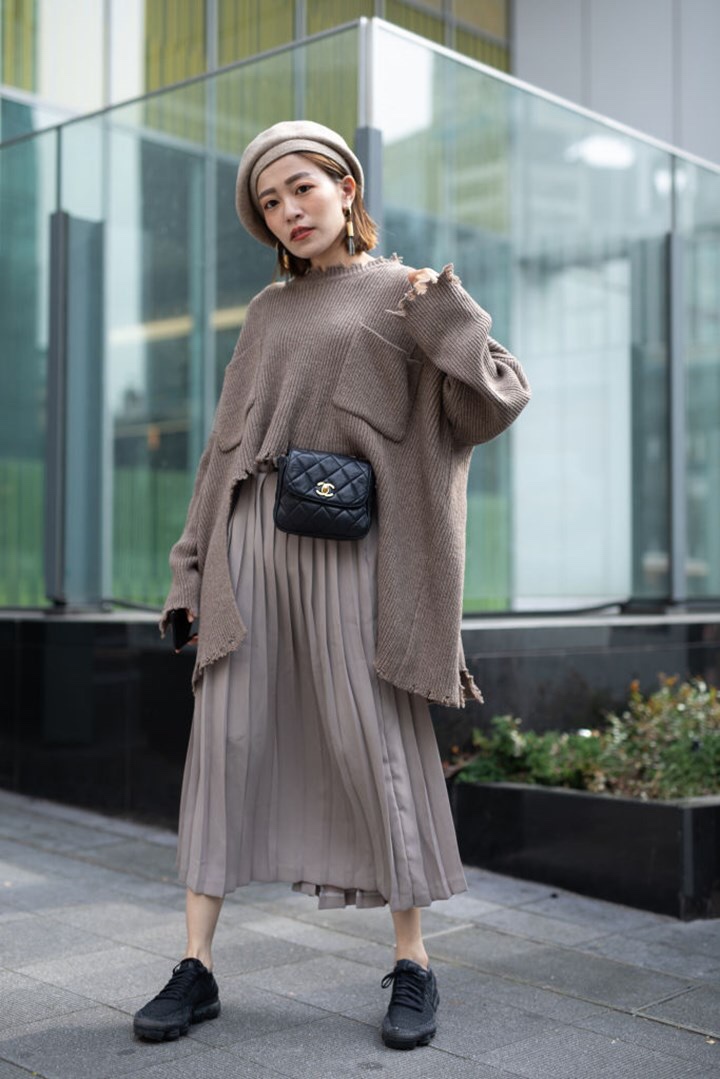
Japanese Experimental Fashion (ファッション)

Japanese Experimental Fashion (ファッション)

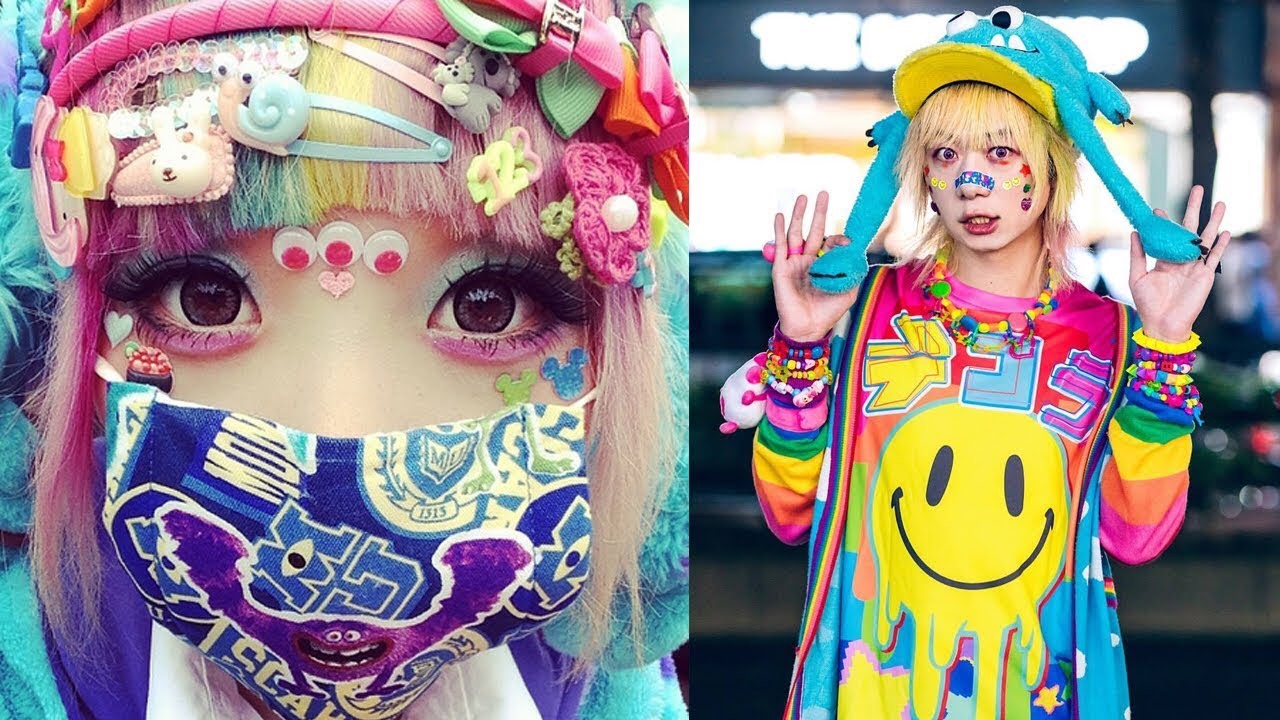
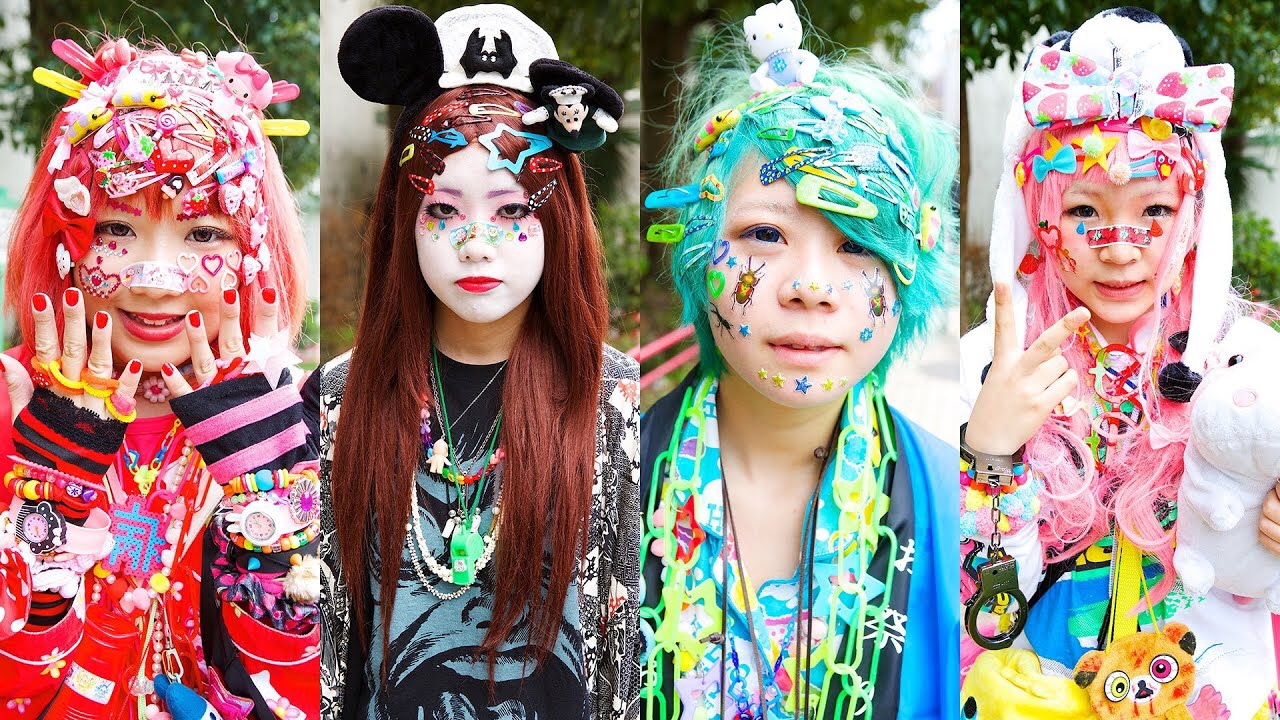
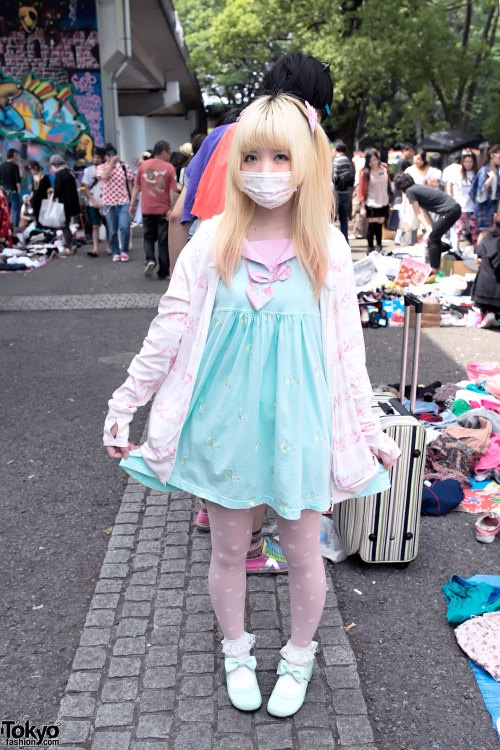
The traditional dress in Japan, the kimono (“garment to wear”) can be dated back to the 700s. It was used to denote status, with quality materials like silk reserved for the elite and cotton and hemp used for the masses. Japan was dominated for centuries by the kimono, but Japanese fashion underwent a radical shift with the introduction of Western style clothes (yofuku) in the 20th century. It’s a fashion I’ll term experimental fashion, especially popular with the young in Japan.

A few of the key styles of experimental fashion:

Rockabilly —> This exaggerated version of 1950s American fashion is particularly popular with 50- to 60-year-old men, who meet in Tokyo’s Yoyogi Park on Sundays.

Dolly Kei —>Taking inspiration from European fairy tales, girls (and guys) dress themselves up in a style that is reminiscent of antique European dolls.

Fairy Kei —>This over-the-top feminine style is a multilayered confection of vivid pastel colors with a touch of the 1980s.

Lolita —> Victorian and Edwardian children’s clothes are the basis for this fashion, which is so popular it has spawned numerous subgroups, including goth and steampunk.

Gyaru/Ganguro —> Translating as “girl” or “gal,” this subculture is a celebration of all things feminine, involving high boots, loud clothes, thick makeup, heavily tanned skin, dyed blonde hair, and outrageous nails.

Harajuku Girls —> Part punk, part kawaii, this look evolved post World War II and has been popular ever since. “Harajuku Girls” is also used as a broad term for Tokyo youth that congregate in the Harajuku area.

Kogal —> This rebellious take on school uniform features shortened skirts and loose socks. It is commonly adopted by high school girls, who hang around Shibuya’s 109 building.

Mori —> This whimsical and stylish subculture is personified by the fashion label Earth, Music, Ecology. The look is elfin floaty chic, featuring long dresses and long hair, accompanied by longing, wistful looks.

Okko’s Inn

A lovely anime that you can’t help but fall for the main character and her navigating her new reality.

Based on a series of Japanese children’s novels, written by Hiroko Reijo and illustrated by Asami. Kodansha released twenty volumes between 2003 and 2013 under their Aoi Tori Bunko imprint. A manga adaptation with art by Eiko Ōuchi was serialized in Kodansha’s shōjo manga Nakayoshi. It was collected in seven tankōbon volumes. It was nominated for an Annie Award for Best Animated Feature – Independent.

Plot:

After losing her parents in a car accident, Okko goes to live with her grandmother, who runs a traditional Japanese inn. Okko soon discovers there are spirits that only she can see — welcoming ghosts who keep her company and help her navigate her new environment. The inn’s motto is that it welcomes all and will reject none, and this is soon put to the test as guests challenge Okko’s ability to be a gracious host. Ultimately, Okko discovers that dedicating herself to others is the key to taking care of herself. The latest feature from famed anime studio Madhouse and director Kitaro Kosaka blends immersive, idyllic landscapes with storybook charm. Okko’s Inn delivers a rare ghost story that is firmly grounded in the trials and joys of humanity.

Japanese Title: 若おかみは小学生(Waka Okami wa Shōgakusei!)

Other Titles: The Young Innkeeper Is a Grade Schooler!

Rating: PG

Genre: Anime, Family, Fantasy

Directed By: Kitaro Kosaka

Written By: Reiko Yoshida

Country: Japan

Language: Japanese (Subtitled in English)

Release Date: September 21st, 2018 (Japan), April 22nd, 2019 (USA)

Worldwide Gross: $293,385

Runtime: 94 minutes

Main Characters:

Oriko Seki (関 織子, Seki Oriko) Voiced by: Seiran Kobayashi (Japanese)

Okko (おっこ) Voiced by: Seiran Kobayashi (Japanese)

Makoto Tachiuri (立売 誠, Tachiuri Makoto) Voiced by: Satsumi. Matsuda (Japanese)

Uri-bō (ウリ坊) Voiced by: Satsumi. Matsuda (Japanese)

Matsuki Akino (秋野 真月, Akino Matsuki) Voiced by: Nana Mizuki (Japanese)

Mineko Seki (関 峰子, Seki Mineko) Voiced by: Ichiryūsai Harumi (Japanese)

Obā-chan (おばあちゃん) Voiced by: Ichiryūsai Harumi (Japanese)

Etsuko Tajima (田島 エツ子, Tajima Etsuko) Voiced by: Ichiryūsai Teiyū (Japanese)

Kōnosuke Minoda (蓑田 康之介, Minoda Kōnosuke) Voiced by: Masaki Terasoma (Japanese)

Kō-san (康さん) Voiced by: Masaki Terasoma (Japanese)

Suzuki (鈴鬼) Voiced by: Etsuko Kozakura (Japanese)

Ramen Heads

A wonderful documentary of what goes into running a ramen shop in Japan. It profiles Osamu Tomita one of the top ramen makers in all of Japan.

Plot:

In “Ramen Heads,”Osamu Tomita, Japan’s reigning king of ramen, takes us deep into his world, revealing every single step of his obsessive approach to creating the perfect soup and noodles, and his relentless search for the highest-quality ingredients. In addition to Tomita’s story, the film also profiles five other notable ramen shops, each with its own philosophy and flavour, which exemplify various different aspects the ramen world. Mixing in a brief rundown of ramen’s historical roots, the film gives viewers an in-depth look at the culture surrounding this unique and beguiling dish.

Rating: NR

Genre: Documentary

Directed By: Koki Shigeno

Country: Japan

Language: Japanese (Subtitled in English)

Release Date: March 16th, 2018

Worldwide Gross: $57,345

Runtime: 93 minutes

Cast:

Shôta Iida

Kumiko Ishida

Katsuya Kobayashi

Yûki Ohnishi

Tom Takahashi

Osamu Tomita