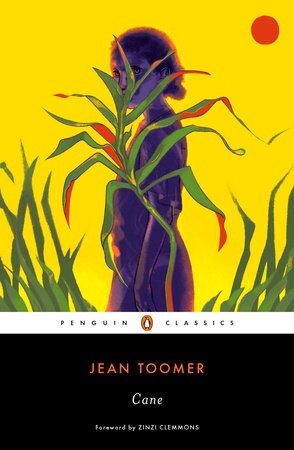
Notable Books of the Twenties: Cane – Jean Toomer (1923)

A cornerstone of the Harlem Renaissance, Toomer’s Cane is a novel stitched together by a series of interwoven vignettes that poignantly capture the experiences of black Americans of his time. Probably its best-known section is the poem ‘Harvest Song,’ which opens with the haunting line: ‘I am a reaper whose muscles set at sundown.’

Sales of the book were modest at the time, but his influence over the Harlem Renaissance was such that the sociologist Charles S. Johnson, called it ‘the most astonishingly brilliant beginning of any Negro writer of his generation.’ In echoes of Langston’s call to arms, he always pushed back when labelled a ‘Negro writer’ because he identified first as an ‘American’, forbidding his publisher from mentioning his race in the book (‘My racial composition and my position in the world are realities which I alone may determine’). It was crucial in bringing the African American experience into focus for American culture.

Top 10 Most Challenged Books of 2020

The ALA Office for Intellectual Freedom tracked 156 challenges to library, school, and university materials and services in 2020. Of the 273 books that were targeted, here are the most challenged, along with the reasons cited for censoring the books:

  1. George by Alex Gino. Reasons: Challenged, banned, and restricted for LGBTQIA+ content, conflicting with a religious viewpoint, and not reflecting “the values of our community”
  2. Stamped: Racism, Antiracism, and You by Ibram X. Kendi and Jason Reynolds. Reasons: Banned and challenged because of author’s public statements, and because of claims that the book contains “selective storytelling incidents” and does not encompass racism against all people
  3. All American Boys by Jason Reynolds and Brendan Kiely. Reasons: Banned and challenged for profanity, drug use, and alcoholism, and because it was thought to promote anti-police views, contain divisive topics, and be “too much of a sensitive matter right now”
  4. Speak by Laurie Halse Anderson. Reasons: Banned, challenged, and restricted because it was thought to contain a political viewpoint and it was claimed to be biased against male students, and for the novel’s inclusion of rape and profanity
  5. The Absolutely True Diary of a Part-Time Indian by Sherman Alexie. Reasons: Banned and challenged for profanity, sexual references, and allegations of sexual misconduct by the author
  6. Something Happened in Our Town: A Child’s Story About Racial Injustice by Marianne Celano, Marietta Collins, and Ann Hazzard, illustrated by Jennifer Zivoin. Reasons: Challenged for “divisive language” and because it was thought to promote anti-police views
  7. To Kill a Mockingbird by Harper Lee. Reasons: Banned and challenged for racial slurs and their negative effect on students, featuring a “white savior” character, and its perception of the Black experience
  8. Of Mice and Men by John Steinbeck. Reasons: Banned and challenged for racial slurs and racist stereotypes, and their negative effect on students
  9. The Bluest Eye by Toni Morrison. Reasons: Banned and challenged because it was considered sexually explicit and depicts child sexual abuse
  10. The Hate U Give by Angie Thomas. Reasons: Challenged for profanity, and it was thought to promote an anti-police message