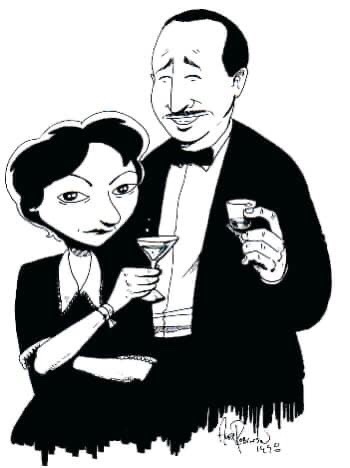
Robert Benchley on Bohemians

“Like the measles, which are so delightful in retrospect because we remember only the period of convalescence and its accompanying chicken and jellies, Bohemia seems to be a state which grows dearer the farther away you get from it.

The only trouble with this pitiless exposé of Bohemia is that I know practically nothing about the subject at all. I have only taken the most superficial glances into New York’s Bohemia and for all I know it may be one of the most delightful and beneficial existences imaginable. It merely seemed to me like a good thing to write about, because the editor might, while reading it, think of a dashing illustration that could be made for it.

And, if I have been entirely in error in my estimate of Bohemia, maybe some real, genuine Bohemian will conduct me, some night, where the lights and good-fellowship are mellow and rich and where we may sit about a table and sing songs of Youth and Freedom, and Love, and Girls, like so many Francois Villons.”

~ Robert Benchley, 1919 from “Vanity Fair Magazine: The Art of Being a Bohemian.”

Pictured Above: Cartoon of Robert Benchley and Dorothy Parker.
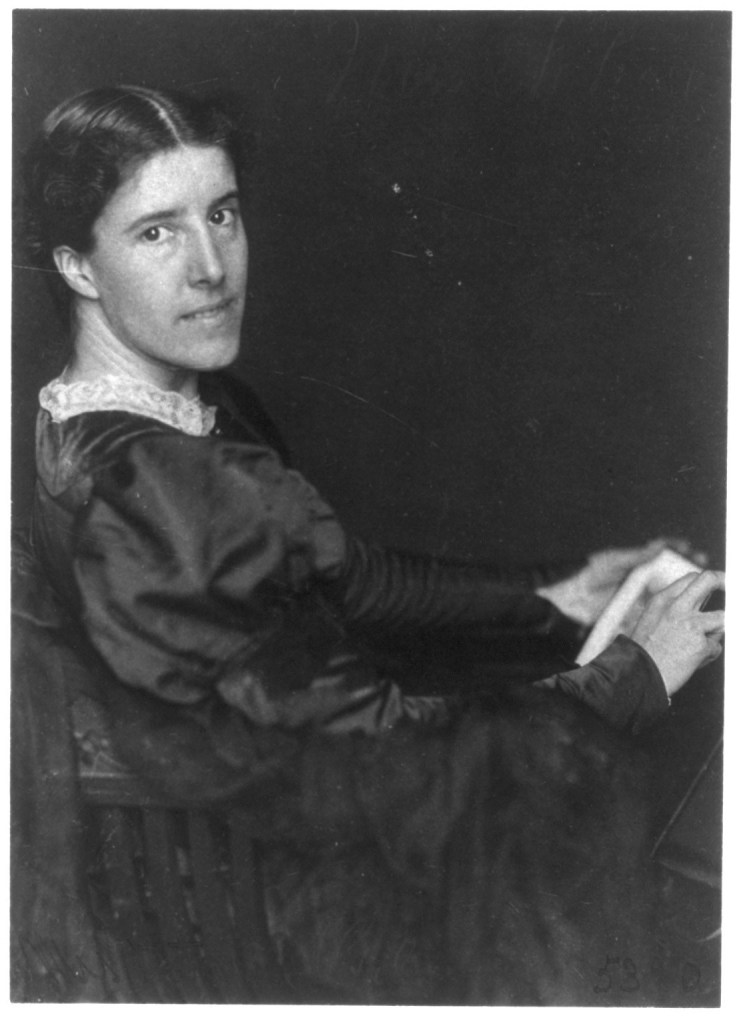
Charlotte Perkins Gilman “Suicide Note”

Charlotte Perkins Gilman—writer, philosopher, feminist, and social critic—contributed significantly to 20th-century political and feminist theory. Born in 1860 in Hartford, Connecticut, she lived much of her childhood in poverty after her father left the family when she was seven years old. She taught herself to read, studied music, and was largely self-educated in the fields of history, sociology, biology, and evolution. She attended public school sporadically until age 15 and later studied at the Rhode Island School of Design.

Charlotte Perkins Gilman was diagnosed with breast cancer in 1932. Before this diagnosis, Gilman had written about euthanasia and right-to-die issues. In one passage from her posthumously published autobiography The Living of Charlotte Perkins Gilman (1935), she remarks after visiting her ill father in a sanitarium that a future civilized society would not “maintain such a horror.” In 1935, after living three years with a cancer she had been told would kill her within a year and a half, Gilman ended her life by inhaling chloroform. She left a letter, conventionally called a suicide note, which stressed her view of the primacy of human relationships and social responsibility

SUICIDE NOTE, AUGUST 17, 1935

Human life consists in mutual service. No grief, pain, misfortunate, or “broken heart” is excuse for cutting off one’s life while any power of service remains. But when all usefulness is over, when one is assured of unavoidable and imminent death, it is the simplest of human rights to choose a quick and easy death in place of a slow and horrible one. Public opinion is changing on this subject. The time is approaching when we shall consider it abhorrent to our civilization to allow a human being to die in prolonged agony which we should mercifully end in any other creature. Believing this open choice to be of social service in promoting wiser views on this question, I have preferred chloroform to cancer.

~ Charlotte Perkins Gilman – August 17th, 1936

i carry your heart with me(i carry it in – e.e. cummings

Edward Estlin (E.E.) Cummings was born in Cambridge, Massachusetts. He attended the Cambridge Latin High School, where he studied Latin and Greek. Cummings earned both his BA and MA from Harvard, and his earliest poems were published in Eight Harvard Poets (1917). As one of the most innovative poets of his time, Cummings experimented with poetic form and language to create a distinct personal style. A typical Cummings poem is spare and precise, employing a few key words eccentrically placed on the page. Some of these words were invented by Cummings, often by combining two common words into a new synthesis. He also revised grammatical and linguistic rules to suit his own purposes, using such words as “if,” “am,” and “because” as nouns, for example, or assigning his own private meanings to words. Despite their nontraditional form, Cummings’ poems came to be popular with many readers.

This is a later poem published in 1952 from Complete Poems: 1904-1962, it has always been one of my personal favorites.

Notable Books of the Twenties: Ulysses – James Joyce (1922)

If there was a single work that could give TS Eliot cause to question his own talents, it was Ulysses. Published a mere week after he put out The Waste Land, Eliot – like everyone else who read it – was sledgehammered by its genius. ‘Ulysses,’ Eliot would tell Virginia Woolf, ‘destroyed the whole of the 19th century. It left Joyce himself with nothing to write another book on. It showed up the futility of all the English styles.’

Banned, burned and bowdlerised, the sprawling novel shattered convention in its style, substance and sexual explicitness. Considered by some a full-frontal assault on literary tradition, it follows ad salesman Leopold Bloom as he wanders about Dublin across a single day. Warm and witty, wacky and wise, it is a uniquely intimate exploration of what it means to be a human – and is as influential today as in 1922, when Eliot said it had ‘the importance of a scientific discovery.’

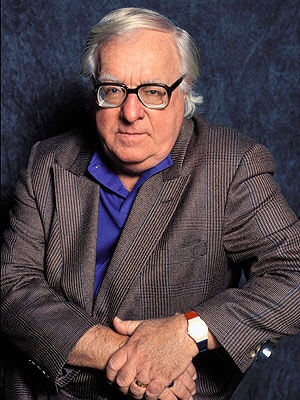
FBI Files: “Roy” Bradbury – Suspected Communist, Communist Cuba supporter

Not only does the F.B.I. accidentally refer to Ray Bradbury as “Roy” for the first five pages of his file, but they spend 40 pages investigating his potential trip to Cuba. The F.B.I. suspected Bradbury had attended the Cultural Congress of Havana five years after President Kennedy’s ban on travel to the embargoed nation. The file notes that Bradbury told the F.B.I. he did “not possess informant potential, in view of his occupation as a freelance science fiction writer.” However, the F.B.I. continued to view him as a threat, noting his significant influence as a writer and as a guest of a Women’s Legislative Action event in 1968. In true F.B.I. fashion, there’s also a thorough biography of Bradbury that goes as far as to trace his ancestors back to their arrival in Salisbury, Massachusetts in 1630.

The investigation was eventually closed after the bureau examined Bradbury’s passport file and found that he had never applied to travel to Cuba — let alone actually travelling to Cuba. The F.B.I. also recognized that Bradbury had been “extremely successful in the writing field.”

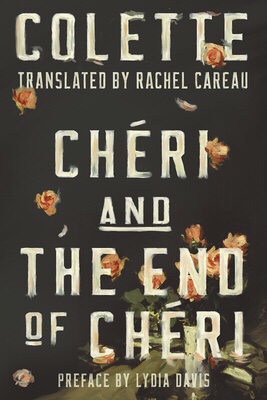
Notable Books of the Twenties: Cheri by Colette (1920)

Cheri by Colette (1920)

Colette (full name: Sidonie-Gabrielle Colette) was the ultimate literary renegade who both outraged and intoxicated turn-of-the-century Paris with her technicoloured personal life. She was an author, a poet, a memoirist, a feminist icon and a prolific journalist who trapezed between all manner of subjects from trench warfare to domestic abuse, fashion to faking orgasms.

But her novels are what have best withstood the tests of time, and Cheri was her masterpiece about a beautiful ageing courtesan’s affair with a gorgeous but selfish much-younger man. In a review in 1929, TIME magazine described her style as ‘distinguished for presenting the human side of animals, the animal side of humans.’ It is a sumptuous tale of repression, scandal, sex and desire that rattled Parisian society by the bed boards, not least because it was one of the first novels of its kind to celebrate female sexuality as it ages.

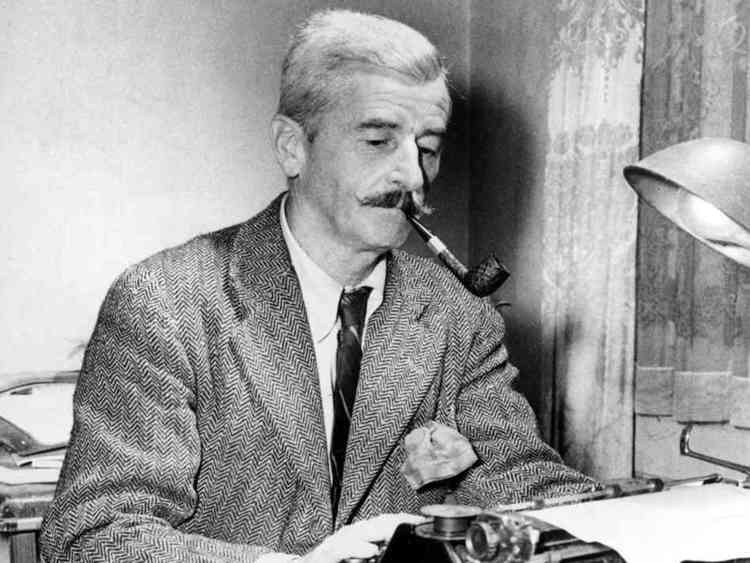
FBI Files: William Faulkner – Suspected Blackmail Victim and Adulterer

The F.B.I. has an entire file based on several strange phone call received by William Faulkner’s wife Estelle in 1956 and 1957 regarding her husband. One of the callers identified himself as A.B. Stein, claiming that he had information regarding Estelle’s husband and a Jean Stein that could be had for $500. (William was known for having extramarital affairs, and Jean Stein may have been no exception.)

William Faulkner told the F.B.I. that he had a hunch it may have been a young writer whom he had offended in the past and claimed that he and Jean Stein were just close friends with “mutual interest in radio, television and literary matters.”

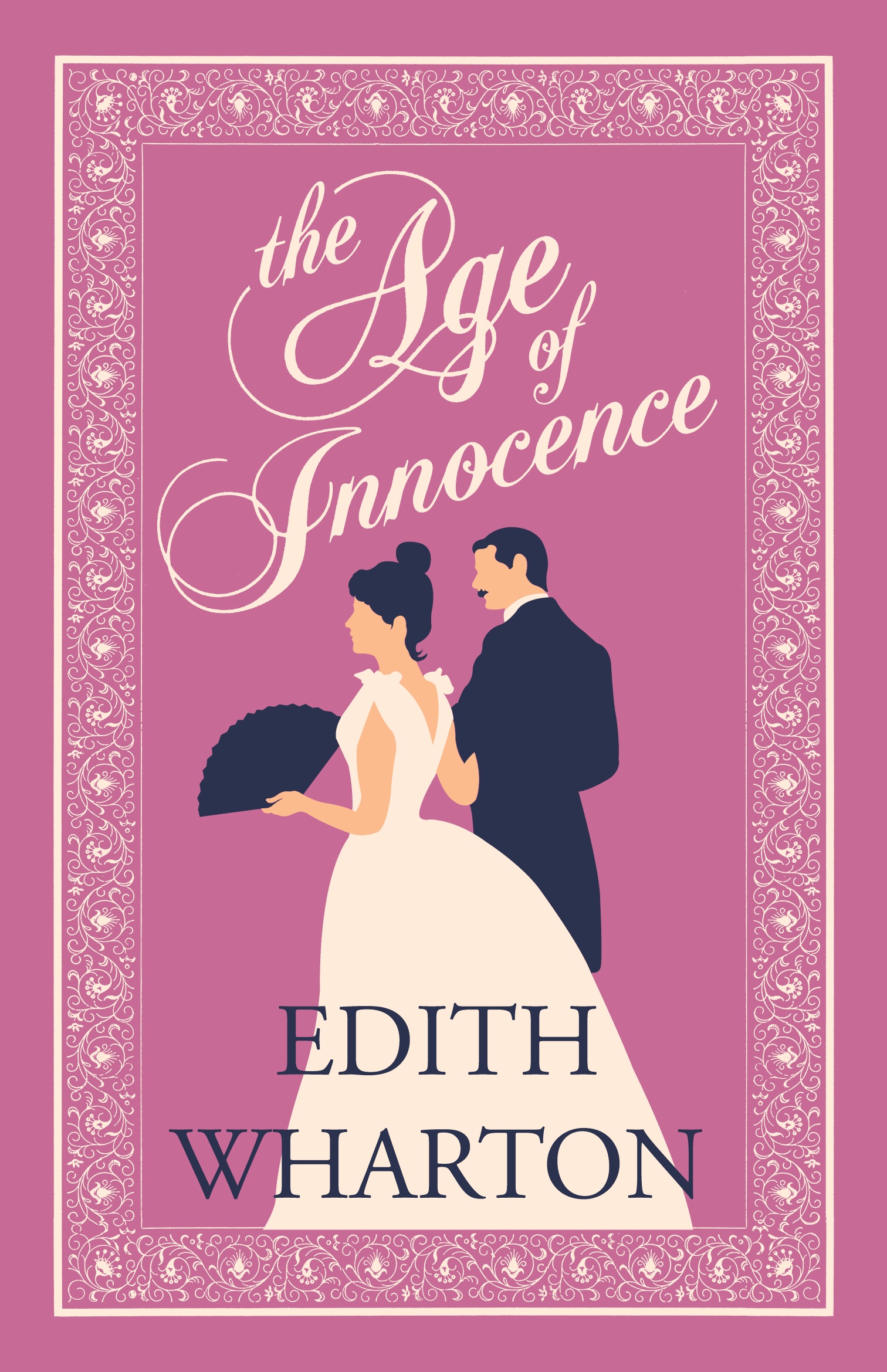
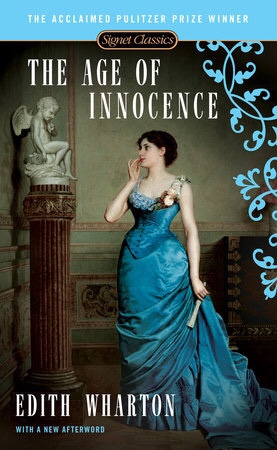
Notable Books of the Twenties: The Age of Innocence (1920) – Edith Wharton

The Age of Innocence by Edith Wharton (1920)

A ravishing tale about desire and betrayal in upper-class New York, Edith Wharton’s literary groundbreaker won her the Pulitzer Prize in 1921, making her the first woman ever to do so. It tells the story of Newland Archer, an aristocratic young lawyer, and his boring but beautiful bride-to-be May Welland, as they prepare for their wedding.

But when May’s exotic cousin Ellen materialises from Europe, having fled her failed marriage to a Polish count, Archer’s loins are activated by her worldly ways. He must make a choice: should he bow to societal strictures and marry a woman who bores him half to sleep, or to a femme fatale to whose flame he is intoxicatingly drawn?

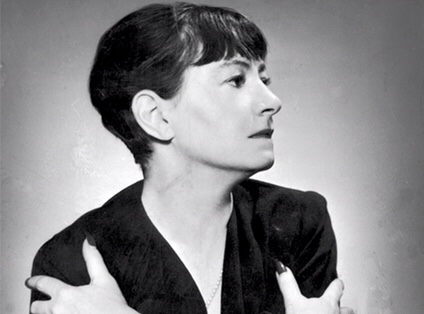
FBI Files: Dorothy Parker – Suspected Communist

Parker’s file began in the 1930s, according to The New York Times, when an anonymous source reported she was contributing to a communist movement. Parker’s work with the Joint Anti-Fascist Refugee Committee, which the House Un-American Activities Committee considered an anti-Catholic communist front “masterminded by Jews,”also caught the F.B.I.’s attention in the 1940s, following a number of events to raise funds for medical supplies, ambulances, hospitals and orphanages to assist refugees of European fascism. The F.B.I. went so far as to save the entire guest list of JAFRC’s “Free People’s Benefit Dinner” at the Beverly Hills Hotel on July 2, 1942.

Altogether, the bureau kept a watch on Parker for 25 years, during which it accumulated a 1,000-page dossier on the author.

FBI Files: Truman Capote – Suspected Communist

The F.B.I. ostensibly kept records on Capote for being “a supporter of the Cuban Revolution,” based on his association with The Fair Play for Cuba Committee. When asked why he supported the FPCC, Capote told the F.B.I., “my step father is Cuban.” The bureau also took an interest in the author because he accompanied a black cast performing Porgy and Bess” in the Soviet Union.

But Capote’s F.B.I. file may have actually been the result of the author’s lust for gossip. Capote himself admitted to spreading rumors about F.B.I. Chief John Edgar Hoover’s supposed homosexual relationship with friend Clyde Tolson. He went as far as telling a magazine editor about the affair and almost wrote an article about it titled, “Johnny and Clyde.” “It got Hoover upset, that much I know,” Capote said. “And it got me … about 200 pages in an F.B.I. file.”