Svanslös Crosswalk

Svanslös Crosswalk, showing an unusual “cat crossing” sign in the town of Uppsala, Sweden:

The road signs in front of Carolina Rediviva Library in Uppsala have something unusual: cats. On closer look, you might notice the adult cat leading kittens has no tail. He isn’t just an ordinary bobtail cat. He’s Pelle Svanslös (“Peter No-Tail” in English), a popular character from a children’s book series with the same name.

The Pelle Svanslös series—there are 12 books in total—was written by Gösta Knutsson between 1939 and 1972. As his name suggests, Pelle has no tail. A rat bit his tail off when he was a kitten. But despite this mean mishap, Pelle grows into a kind-hearted young cat. He has been loved by many Swedish children for decades.

Pelle and his feline friends live in Uppsala, Sweden, where the author also lived for many years of his life. To mark the cat’s popularity, Uppsala added some features related to the children’s literature star around the city, such as a statue, a peep-hole (his residence), and these crossing signs.

Mary Wollstonecraft Quotes for Women’s History Month

A few quotes by Mary Wollstonecraft, author of “A Vindication of the Rights of Woman,” for women’s history month:

“I do not wish them [women] to have power over men; but over themselves.”

“My own sex, I hope, will excuse me, if I treat them like rational creatures, instead of flattering their fascinating graces, and viewing them as if they were in a state of perpetual childhood, unable to stand alone.”

“[I]f we revert to history, we shall find that the women who have distinguished themselves have neither been the most beautiful nor the most gentle of their sex.”

“Taught from their infancy that beauty is woman’s sceptre, the mind shapes itself to the body, and roaming round its gilt cage, only seeks to adorn its prison.”

“I love man as my fellow; but his scepter, real, or usurped, extends not to me, unless the reason of an individual demands my homage; and even then the submission is to reason, and not to man.”

“The beginning is always today.”
~ Mary Wollstonecraft (1759-1797)

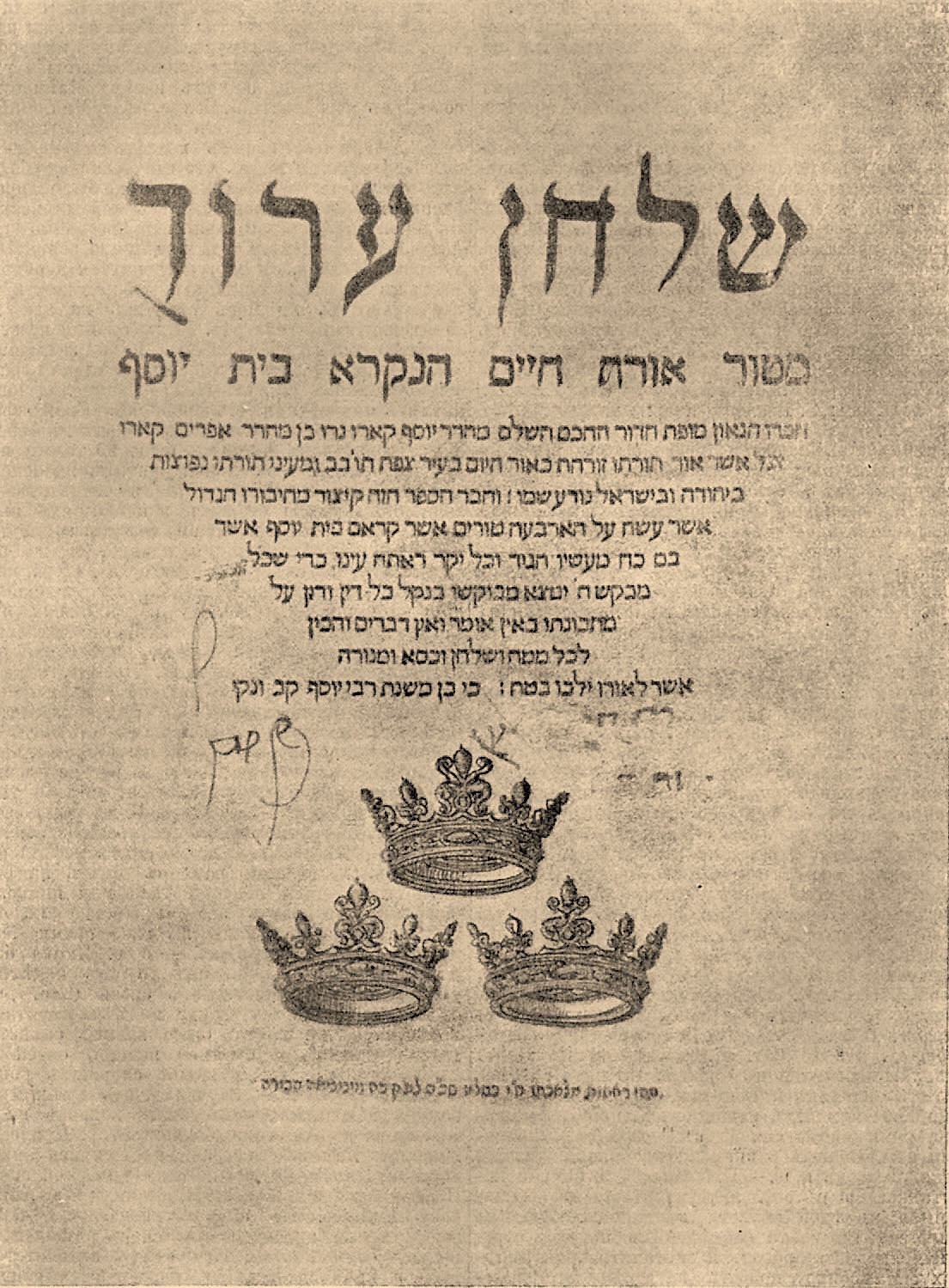
Shulkhan Arukh

The legal code known as the Shulkhan Arukh, compiled by the great Sephardic rabbi Joseph Caro in the mid­1500s, is still the standard legal code of Judaism. When rabbis, particularly if they are Orthodox, are asked to rule on a question of Jewish law, the first volume they consult generally is the Shulkhan Arukh. A major reason for its universal acceptance is that it was the first code to list the differing customs and laws of both Sephardic and Ashkenazic Jewry. (Maimonides’s earlier Mishneh Torah, for example, contained only the legal rulings of Sephardic Jewry, which differed in certain areas from European Jewry’s practices.)

This unique feature was not intended by Joseph Caro, but came about through a happy coincidence. At the very time that Caro was compiling his code, a similar undertaking was being planned by Rabbi Moses Isserles of Poland. Isserles, known in Jewish life as the Rama, was thrown into some despair when he first heard about Caro’s work, for he knew Caro to be a greater scholar than himself. Nonetheless, he soon realized that both Caro’s legal code and his own would not by themselves meet the needs of all Jews. Thus, the Shulkhan Arukh was published with Caro’s rulings listed first, and Isserles’s dissents and addenda included in italics.

The Shulkhan Arukh is divided into four volumes:

1. Orakh Hayyim-laws of prayer and of holidays. 

2. Yoreh Deah-diverse laws, including those governing charity (tzedaka), Torah study and the Jewish dietary laws. 

3. Even ha­Ezer-laws concerning Jewish marriage and divorce. 

4. Khoshen Mishpat-Jewish civil law.

To this day, rabbinic ordination (semikha) usually is given to a student only after he has been examined on the Shulkhan Arukh, particularly on those sections that deal with kashrut (dietary laws). More than rote knowledge of the Shulkhan Arukh’s rulings, however, is expected. A popular Jewish folktale tells of a young student who came to a prominent rabbi to be tested for ordination. The rabbi’s first question was “Name the five volumes of the Shulkhan Arukh.”

The student, thinking that the rabbi had made a slip of the tongue, named the four volumes, but the rabbi asked him to name the fifth. 

“There is no fifth volume,” the student said.

“There is indeed,” the rabbi said. “Common sense is the fifth volume, and if you don’t have it, all your rulings will be of no use, even if you know the other four volumes by heart.”

The Shulkhan Arukh’s exhaustive presentation of the details of Jewish law is suggested by the following, taken from the section listing the laws of Torah study, in which Caro gives directives to both teachers and pupils: 

“The rabbi should not be angry with his pupils if they do not understand but he should repeat the matter over and over again until they grasp the proper depth of the law. The pupil should not say that he understands when he does not but should ask over and over again. And if the rabbi is angry with him he should say, ‘Rabbi, it is the Torah and I want to know it, but my mind is inadequate”‘ (Yoreh Deah 246:10).

Source: Jewish Literacy

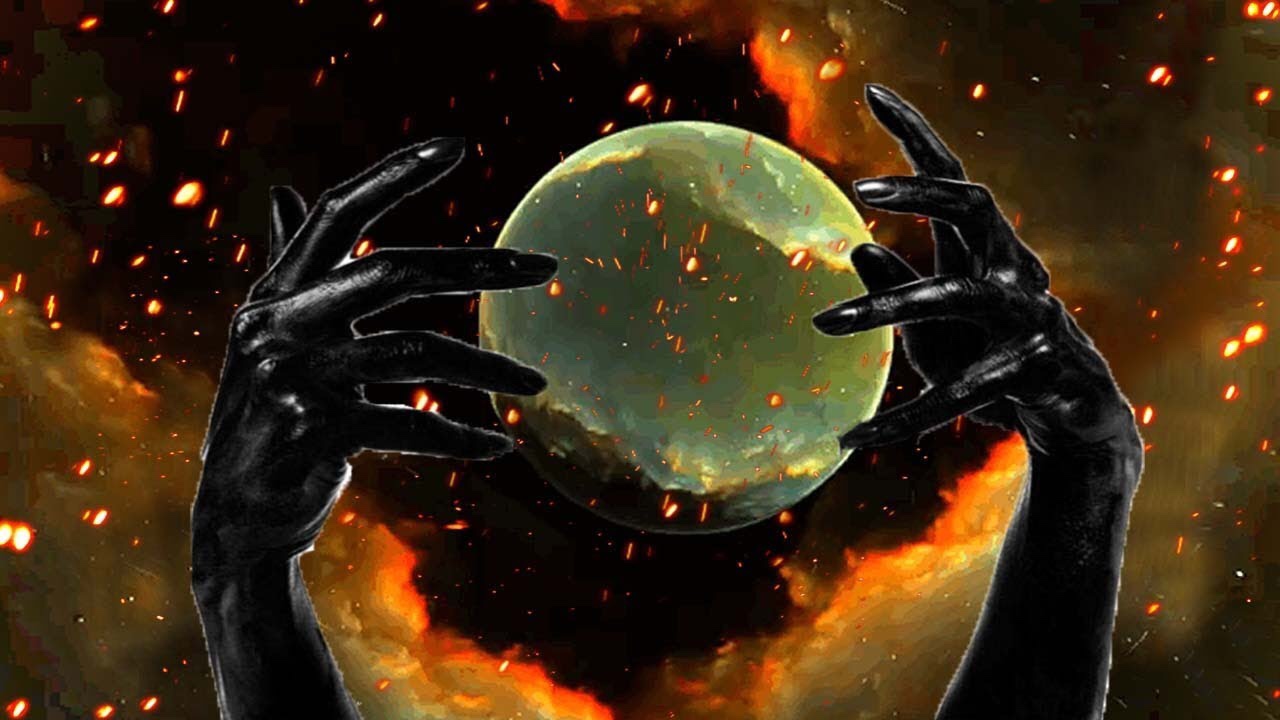
Nothingness in Existential Philosophy & Norse Mythology Concept of Ginnungagap

Nothingness in Existential Philosophy & Norse Mythology Concept of Ginnungagap

Several modern philosophers associated with existentialism, a movement that takes our experience of existence as the starting point of its philosophizing, have spoken of a similar schema using the more prosaic and impersonal language of philosophy and psychology. While the writings of luminaries such as Søren Kierkegaard, Martin Heidegger, and Jean-Paul Sartre differ considerably on these points, a fascination with negation and anxiety is a central focus of their work. In existentialist parlance, “nothingness” is that which negates oneself, one’s values, and/or one’s worldview – one’s “personal cosmos.” 

The ultimate nothingness is death, because it negates one absolutely (at least in the modern worldview – see Death and the Afterlife for Norse perspective on death), but any condition over which one cannot triumph is a hostile absence into which one’s yearnings, strivings, and beliefs vanish. This negation is the root of anxiety (or “angst” or “Being-toward-death”), the fear of what we might not be able to overcome, that which stands every chance of “getting us” in the end. This is one of the fundamental facts of life with which everyone who strives to live deliberately and authentically must grapple. In Heidegger’s words, “To be a particular being means to be immersed in nothingness.”[5] While these philosophers don’t necessarily identify nothingness with a physical void as the Norse did, the principle remains the same.

This primordial, annihilating chaos is ever-present; wherever there is darkness, wherever there is silence, wherever any wish or belief is negated, there is Ginnungagap.

Sources: Poetic Edda, Norsemythology.org

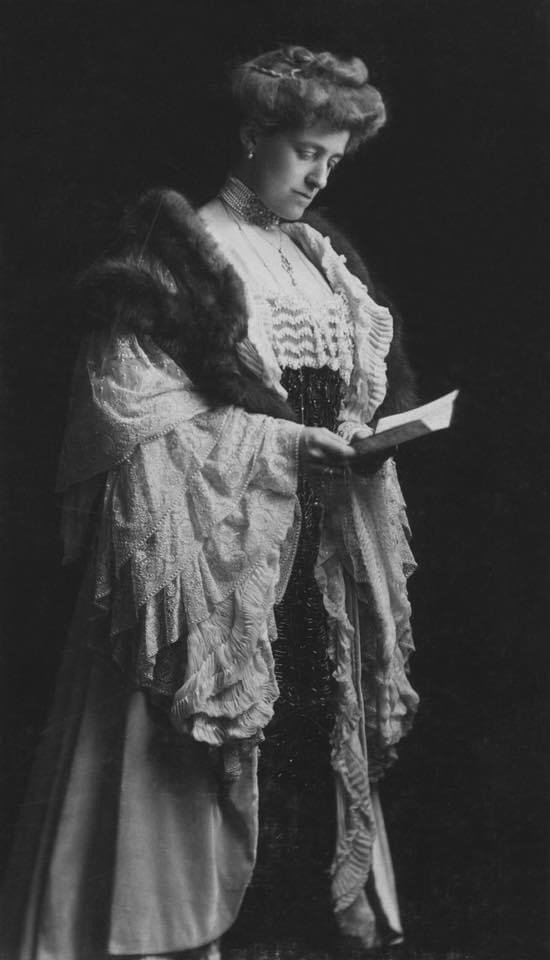
Edith Wharton Quotes for Women’s History Month

A few quotes by Edith Wharton (first woman to win the pulitzer prize) for women’s history month:

“Life is always either a tightrope or a feather bed. Give me the tightrope.”

“There is one friend in the life of each of us who seems not a separate person, however dear and beloved, but an expansion, an interpretation, of one’s self, the very meaning of one’s soul.”

“In spite of illness, in spite even of the archenemy sorrow, one can remain alive long past the usual date of disintegration if one is unafraid of change, insatiable in intellectual curiosity, interested in big things, and happy in small ways.”
~ Edith Wharton (1862-1937)

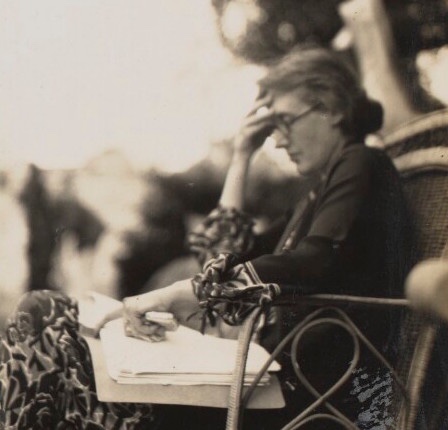
Virginia Woolf. from “To the Lighthouse”

“She looked up over her knitting and met the third stroke and it seemed to her like her own eyes meeting her own eyes, searching as she could alone search into her mind and her heart, purifying out of existence that lie, any lie. She praised herself in praising the light, without vanity, for she was stern, she was searching, she was beautiful like that light.”

~ Virginia Woolf. “To the Lighthouse”

#FavoriteQuotes #FavoriteAuthors #VirginiaWoolf #ToTheLighthouse

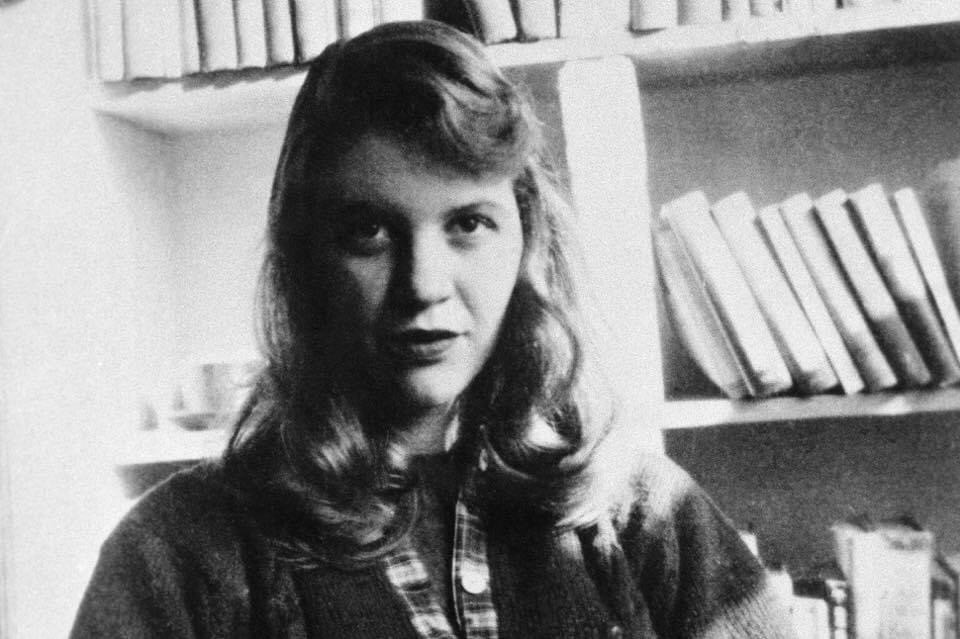
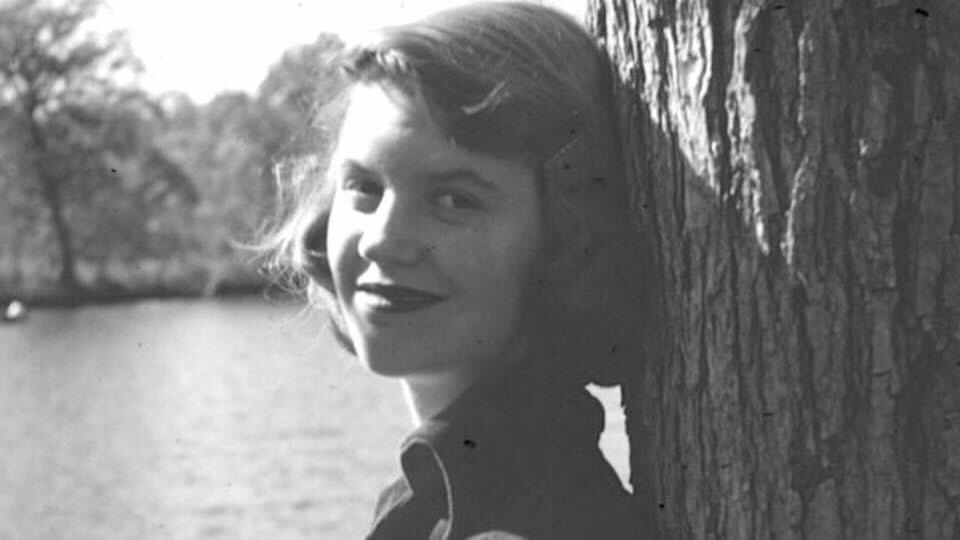
Mad Girl’s Love Song – Sylvia Plath

A short poem for women’s History month by Sylvia Plath:

Mad Girl’s Love Song

I shut my eyes and all the world drops dead;
I lift my lids and all is born again.
(I think I made you up inside my head.)

The stars go waltzing out in blue and red,
And arbitrary blackness gallops in:
I shut my eyes and all the world drops dead.

I dreamed that you bewitched me into bed
And sung me moon-struck, kissed me quite insane.
(I think I made you up inside my head.)

God topples from the sky, hell’s fires fade:
Exit seraphim and Satan’s men:
I shut my eyes and all the world drops dead.

I fancied you’d return the way you said,
But I grow old and I forget your name.
(I think I made you up inside my head.)

I should have loved a thunderbird instead;
At least when spring comes they roar back again.
I shut my eyes and all the world drops dead.
(I think I made you up inside my head.)
~ Sylvia Plath.

Wanting to Die – by Anne Sexton

Since you ask, most days I cannot remember.

I walk in my clothing, unmarked by that voyage.

Then the almost unnameable lust returns.


Even then I have nothing against life.

I know well the grass blades you mention,

the furniture you have placed under the sun.


But suicides have a special language.

Like carpenters they want to know which tools.

They never ask why build.


Twice I have so simply declared myself,

have possessed the enemy, eaten the enemy,

have taken on his craft, his magic.


In this way, heavy and thoughtful,

warmer than oil or water,

I have rested, drooling at the mouth-hole.


I did not think of my body at needle point.

Even the cornea and the leftover urine were gone.

Suicides have already betrayed the body.


Still-born, they don’t always die,

but dazzled, they can’t forget a drug so sweet

that even children would look on and smile.


To thrust all that life under your tongue!–

that, all by itself, becomes a passion.

Death’s a sad Bone; bruised, you’d say,


and yet she waits for me, year after year,

to so delicately undo an old wound,

to empty my breath from its bad prison.


Balanced there, suicides sometimes meet,

raging at the fruit, a pumped-up moon,

leaving the bread they mistook for a kiss,


leaving the page of the book carelessly open,

something unsaid, the phone off the hook

and the love, whatever it was, an infection.