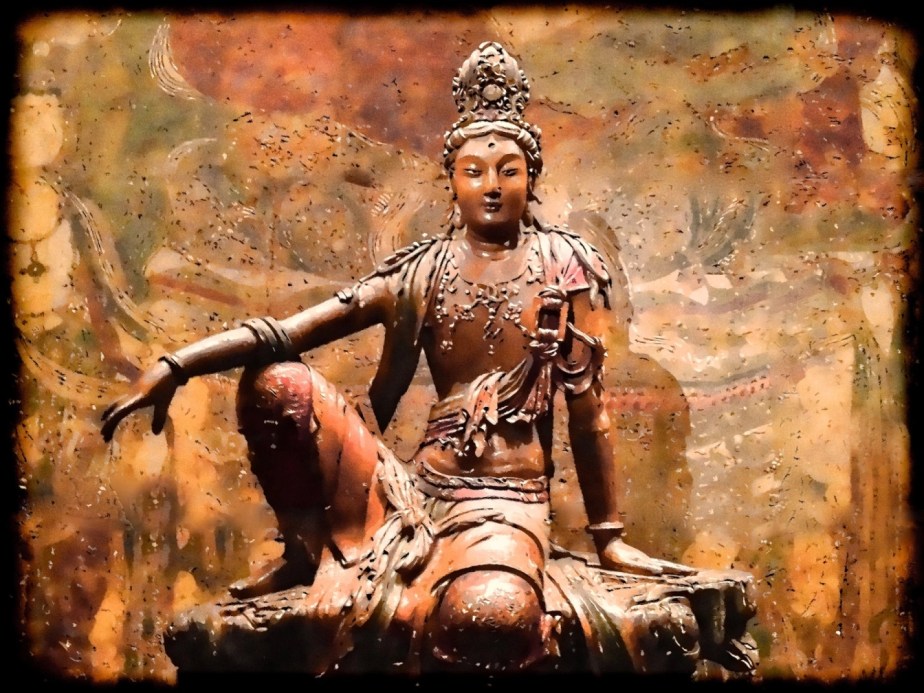
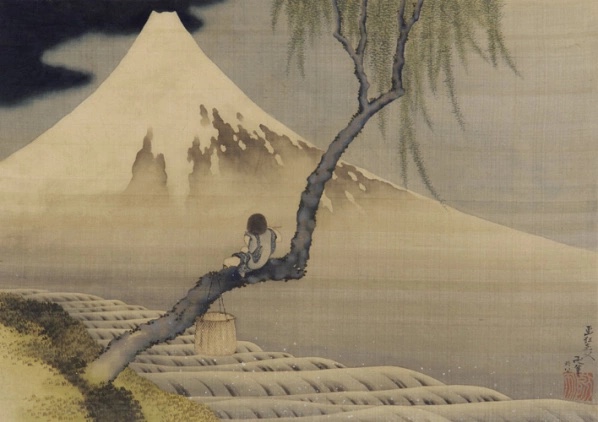
Thích Nhất Hạnh Faces Death With Dignity and A Lesson in Mindfulness

“Please do not build a stupa (shrine) for me. Please do not put my ashes in a vase, lock me inside and limit who I am. I know this will be difficult for some of you. If you must build a stupa though, please make sure that you put a sign on it that says, ‘I am not in here.’ In addition, you can also put another sign that says, ‘I am not out there either,’ and a third sign that says, ‘If I am anywhere, it is in your mindful breathing and in your peaceful steps.’”
~ Thich Nhat Hanh

Adult Attention Deficit Hyperactivity Disorder (ADHD): Symptoms

Adult attention-deficit/hyperactivity disorder (ADHD) is a mental health disorder that includes a combination of persistent problems, such as difficulty paying attention, hyperactivity and impulsive behavior. Adult ADHD can lead to unstable relationships, poor work or school performance, low self-esteem, and other problems.

Though it’s called adult ADHD, symptoms start in early childhood and continue into adulthood. In some cases, ADHD is not recognized or diagnosed until the person is an adult. Adult ADHD symptoms may not be as clear as ADHD symptoms in children. In adults, hyperactivity may decrease, but struggles with impulsiveness, restlessness and difficulty paying attention may continue.

Treatment for adult ADHD is similar to treatment for childhood ADHD. Adult ADHD treatment includes medications, psychological counseling (psychotherapy) and treatment for any mental health conditions that occur along with ADHD.

Symptoms

Some people with ADHD have fewer symptoms as they age, but some adults continue to have major symptoms that interfere with daily functioning. In adults, the main features of ADHD may include difficulty paying attention, impulsiveness and restlessness. Symptoms can range from mild to severe.

Many adults with ADHD aren’t aware they have it — they just know that everyday tasks can be a challenge. Adults with ADHD may find it difficult to focus and prioritize, leading to missed deadlines and forgotten meetings or social plans. The inability to control impulses can range from impatience waiting in line or driving in traffic to mood swings and outbursts of anger.

Adult ADHD symptoms may include:

• Impulsiveness

• Disorganization and problems prioritizing

• Poor time management skills

• Problems focusing on a task

• Trouble multitasking

• Excessive activity or restlessness

• Poor planning

• Low frustration tolerance

• Frequent mood swings

• Problems following through and completing tasks

• Hot temper

• Trouble coping with stress

What’s typical behavior and what’s ADHD?

Almost everyone has some symptoms similar to ADHD at some point in their lives. If your difficulties are recent or occurred only occasionally in the past, you probably don’t have ADHD. ADHD is diagnosed only when symptoms are severe enough to cause ongoing problems in more than one area of your life. These persistent and disruptive symptoms can be traced back to early childhood.

Diagnosis of ADHD in adults can be difficult because certain ADHDsymptoms are similar to those caused by other conditions, such as anxiety or mood disorders. And many adults with ADHD also have at least one other mental health condition, such as depression or anxiety.

Causes

While the exact cause of ADHD is not clear, research efforts continue. Factors that may be involved in the development of ADHD include:

• Genetics. ADHD can run in families, and studies indicate that genes may play a role.

• Environment. Certain environmental factors also may increase risk, such as lead exposure as a child.

• Problems during development. Problems with the central nervous system at key moments in development may play a role.

Risk factors

Risk of ADHD may increase if:

• You have blood relatives, such as a parent or sibling, with ADHDor another mental health disorder

• Your mother smoked, drank alcohol or used drugs during pregnancy

• As a child, you were exposed to environmental toxins — such as lead, found mainly in paint and pipes in older buildings

• You were born prematurely

Complications

ADHD can make life difficult for you. ADHD has been linked to:

• Poor school or work performance

• Unemployment

• Financial problems

• Trouble with the law

• Alcohol or other substance misuse

• Frequent car accidents or other accidents

• Unstable relationships

• Poor physical and mental health

• Poor self-image

• Suicide attempts

Coexisting conditions

Although ADHD doesn’t cause other psychological or developmental problems, other disorders often occur along with ADHD and make treatment more challenging. These include:

Mood disorders. Many adults with ADHD also have depression, bipolar disorder or another mood disorder. While mood problems aren’t necessarily due directly to ADHD, a repeated pattern of failures and frustrations due to ADHD can worsen depression.

• Anxiety disorders. Anxiety disorders occur fairly often in adults with ADHD. Anxiety disorders may cause overwhelming worry, nervousness and other symptoms. Anxiety can be made worse by the challenges and setbacks caused by ADHD.

• Other psychiatric disorders. Adults with ADHD are at increased risk of other psychiatric disorders, such as personality disorders, intermittent explosive disorder and substance use disorders.

Learning disabilities. Adults with ADHD may score lower on academic testing than would be expected for their age, intelligence and education. Learning disabilities can include problems with understanding and communicating.

Sources: The Mayo Clinic, NAMI, NIH, NIMH

The Two Great Seeds

The Two Great Seeds

*** This writing comes after a two hour meditation on the trinity of Prajna (Sanskrit) which means wisdom, Shila (Sanskrit) which means morality, and Samadhi (Sanskrit) which means mental discipline or concentration. This is the path that has opened up in my life through deep consideration, meditation and internal debate. This in no way is supposed to be a critique of your personal beliefs or faith, although I am sure some will take it that way. I hope you’ll understand if you read it fully with an open heart that I mean no disrespect only an expression of my journey. ***

I am not vain enough to claim there is one way to truth, but this is a record of my intimate experience. Each of us is born with two great seeds: the seed of spiritual contemplation and the seed of doubt. Which of these, if either, takes root determines the path, the trajectory of your spiritual path. I was born into a Christian family, mostly Presbyterian and for many years, as with most people, all my answers were written in the text I was raised with though as with most I never read it cover to cover. The turning point where the seed of doubt overwhelmed me was when I was sixteen, the year of my great trauma. The details of that trauma do not matter, what matters is the seed of spiritual contemplation took root at that moment.

I took the challenge of reading the Bible cover to cover for the first of four times in my life in search of an intimate truth, in search of the answers only my heart could question, questions I couldn’t fathom asking out loud. The solace I sought was not to be forthcoming, instead more questions were germinated in my heart. I did not have the words to put it in at the time, but I had already given up on the notion of moral relativism that is so prevalent to this day especially in academic circles and liberalism. For example ethnic cleansing, genocide, infanticide, filicide, etc. are always on the wrong side of morality. Always. What I found reading the Bible was a God that embraced all those things.

I was living in a spiritual void, if I could not believe in the faith of my fathers where did I have to turn? For several years I embraced the quote, “Philosophy is questions that may never be answered. Religion is answers that may never be questioned.” Logically I started in the Western tradition with Socrates and Plato. I devoured them reading them much too fast for their arguments fully to be realized. Through my high school years I systematically worked my way through to Nietzsche and Marx. While there were concepts I could incorporate into my own life, there was not a philosophical system that answered all the questions which plagued my heart.

Beginning my freshman year in college I decided to slowly expand my search to other religious traditions. I had taken a class on Indian Philosophy my first semester and the obvious became clear I had ignored the eastern traditions. I recognized the serenity my Christian friends found in their faith. I felt I owed the faith of my fathers one more investigation again reading the Bible cover to cover, medieval commentaries such as those of the Christian mystics such as Saint Catherine of Siena, Hildegard von Bingen, St. Teresa of Avila, etc. I was finally able to vocalize my question that could not be answered, what is the meaning of our existence? Is it to simply move from one pleasure to the next: birth, food, wealth, sex, marriage, family, etc.?

The answers I sought must be elsewhere, after all I was not the first to ask these questions. I burned through the Talmud, the Koran, the Vedic religions of India, the Bhagavad-Gita, Hinduism, and finally to Buddhism. Here I found a man 2500 years ago asking the exact same questions that plagued me. It brought me back to the central crux I have of all faiths, oral tradition. The Buddha was not written about for nearly the first 500 years after his death. The gospels of Jesus some 70, 80, or 90 years after the death of Jesus. Our human history is dotted with sages who after their passing go through the process of their lives becoming legend, then, myth, and finally faith inflating their words and deeds. We don’t need to go back to the time of Jesus or the Buddha to see this in action we can look at the case of Mother Teresa. To become a catholic saint you must perform two miracles, her first was to cure a Bengali woman of a stomach tumor when she gazed at a picture of Mother Teresa. This miracle has come under great scrutiny as doctors have come forward who treated her and claim that it was not a tumor at all, but a cyst that was cured through a drug treatment she underwent. For most this first miracle is already legendary and not questioned and the further we pass from the actual events the more legendary it will become. Had her canonization not been expedited, a process which on average takes 181 years, who knows what evidence would have come forward. My intent is not to denigrate Mother Teresa, but to illustrate the legend to myth to faith process occurs to this very day.

My introduction to Buddhism came through reading “Zen Mind, Beginners Mind.” It spoke to me in ways that no other tradition had in the past. The answers were not outward in some ancient text, but could only be realized by turning inward. There are innumerable Buddhist texts to help you along your path, point you in the right direction. Two new questions plagued me could I believe in the concepts of rebirth and karma that are so integrated into Buddhist tradition? Could I believe in an orthodoxy of one of the Buddhist traditions steeped in ritual, legend, myth, and faith. Did the Buddha really live? It was the same question I had about Christianity and Jesus. The answer I came to in meditation that unlike Christianity it did not matter. Christianity falls apart without the actual act of Jesus dying for your sins, but the Buddha whether simply legend or real man it does not matter. The Buddha showed the path to enlightenment, to the answer to the question that had plagued me since I was a teenager, was this all there is to life.

I needed guidance of some sort in my spiritual awakening and living in Montana at the time there were not a lot of options. I desired a teacher to posit my questions to, to guide me right when I was veering left. I found my teacher in modern texts of the Zen masters, YouTube, audio books, etc. I was embarking on what I term DIY Zen Buddhism. It was not the choice I wanted to make, it was the option that was forced upon me. I still very much rely on DIY Zen Buddhism, although I have had several teachers from such places as Seattle, Paris, and Jacksonville Florida as I’ve moved around. Over the years I have practiced both Soto and Rinzai Zen. Am I any closer to enlightenment than I was when I was sixteen and only knew of Buddhism by name I’m not sure. I do know I see the compassion and comfort in the answers to their spiritual contemplation in the dharma talks and writings of Thich Nhat Hanh, John Daido Loori, and other Zen practitioners. The questions still plague me and the seed of doubt is strong in the notions of rebirth and karma. I do not know if I will ever be completely satisfied with my spiritual contemplation. I know that in my life I have learned deeply from asking the same questions a simple man asked 2500 years ago. He found comfort in the answers he discovered and it is my hope to eventually do the same. I find more comfort in the life of a mere human than I have been able to find in the dictates of the innumerable gods humans have worshipped throughout our history.

Mindfulness Training

Other than meditation how should I practice mindfulness?

 Walking Practice

  • “Kinhin” is Sanskrit
  • Slowly walk, a step on a three count
  • “Walking not in order to arrive, but just to walk.”

~ Thich Nhat Hanh

Chanting

  • Mantras or whole Sutras are chanted
    • Attunes the mind and body

 Bowing

  • Expression of respect or veneration
  • Greeting, thank you, or to take leave
    • Palm-to-palm, slight bow from the waist
  • Gratitude
    • Bow at waist, drop to knees, forehead to floor
  • Prostrations
    • Full Body Bow
      • “The act of unself-conscious prostration before a Buddha is … possible under the impetus of reverence and gratitude. Such “horizontalizings of the mast of ego”cleanse the heart-mind, rendering it flexible and expansive, and open the way to an understanding and appreciation of the exalted mind and manifold virtues of the Buddha and patriarchs. So there arises within us a desire to express our gratitude and show our respect before their personalized forms through appropriate ritual” 

                        ~ Phillip Kapleau

Zen Practices of Mindfulness:

  • Akido A dynamic defensive activity involving body movement and sparrinh with a short staff or sword.
  • Brush Painting The fully engaged process of tapping and releasing energy to create an especially powerful composition.
  • Haiku A seventeen-syllable poem (3 lines of 5-7-5) capturing the essence of a subject.
  • Ikebana The arrangement of flowers in a spiritually and aesthetically satisfying manner.
  • Karate A weaponless form of self-defense aimed at disarming an opponent or rendering his hostile motions harmless.
  • Kyudo A form of archery combining spiritual and physical training.
  • No Drama A style of theatre aimed at the direct communication of experience and emotion.
  • Pottery Making An approach to making pottery that conveys special respect for the materials and process.
  • Shakuhaci The playing of a bamboo flute in harmony with the breath and the emotional force moving the breath.
  • Tea Ceremony An especially graceful and aware preparation of tea and management of the tea-partaking interchange between host and guest.
  • Zen Gardening A meditative approach to creating, tending, and enjoying a garden.

Mindfulness: I’m too busy and other excuses

The practice of mindfulness takes patience and dedication and the litany of excuses not to practice are endless, but I will attempt to debunk a few of the more common ones.

“It makes me more anxious”

Some people, especially people with anxiety issues, find practicing mindfulness increases their anxiety.  This is an understandable reaction, but not enough to give up on the practice.  It is often found that the exercises focusing on breathing cause the most anxiety.  Simply focus on the non-breathing focused exercises to begin and once you become comfortable with mindfulness practice come back to the breathing exercises.

 I just can’t do it

What exactly does the person mean by this?  Is it just too hard?  Are they having difficulties concentrating?  Do they believe to be successful thoughts and feeling never intrude?  Many people say they can’t do it when they just mean it is really hard.  Truth is practicing mindfulness is a hard skill and the only way to get better is to keep pursuing it.

I don’t have time

This is one of the simplest problems to fix.  You can practice mindfulness anytime, doing anything.  If what you mean is you don’t have time for formal practice, let me remind you some of the exercises only take a few to ten minutes.  It is better to spend 10 minutes fully dedicated than an hour half-heartedly.  Try setting aside 10 minutes in the morning to practice mindfulness.

I can’t stay focused

Mindfulness is simply about staying in the present moment with acceptance.  Please throw any other expectations out the window.  The object of practicing mindfulness for many is to feel better.  It is with this in mind that we reach a paradox.  To feel better you must practice mindfulness, but if you focus on feeling better you have trouble staying focused on mindfulness.  So throw away the goal while practicing mindfulness and you will achieve that goal.

I fall asleep

Some people find they drift off when they practice mindfulness.  If the person has trouble sleeping this can be a good thing, simply practice mindfulness of part of your preparing for bed routine.  There are several factors to consider if this is a common issue:

  • Do you need more sleep? If you are sleep deprived your body will want to take advantage of this quiet time.
  • Is there a better time of day to practice? If at the end of the day you are always exhausted, simply begin practicing in the morning.
  • Did you eat a big meal shortly before practicing? Watch out for a food coma!
  • Is there a different position you can try? If you practice mindfulness lying down, simply try it is a sitting position.
  • Are you closing your eyes? Keep your eyes open while practicing.

You have to plan for the future

Some people believe that practicing mindfulness means you never consider the past or the future.  This simply is not the case, but you may be able to do those things mindfully whereas you do not currently.  Often planning for the future isn’t planning at all, but instead it is worrying.  Mindfulness actually helps you in planning for the future by keeping you grounded in reality of the present moment.

What is Meditation?

FC1835C9-19D8-4FC7-B155-1AEB12A8619F.jpeg

What is meditation?

“Meditation is a conscious effort to change how the mind works. The Pali word for meditation is ‘bhavana’ which means ‘to make grow’ or ‘to develop’.”
~ Buddhanet.net

Well that was an easy and painless post… not quite. What really is it? How do you do it? What different types are there? I get so many questions about this subject when it comes up that I am a practicing Zen Buddhist. Let’s hope what follows will make it a little more clear as we briefly cover these questions while discussing five different types of meditation. I practice Zazen, so it is the one I know the most about but I have experimented with the other forms and am pretty familiar with all of them to a degree.

First, how do you meditate? All of them in general have the same basic form:
1. Sit comfortably in one of the following positions (The uppermost being the most ideal, but whatever is comfortable):
a. Full Lotus (legs crossed with each foot resting on the opposite thigh)
b. Half Lotus (legs crossed with one foot resting on the opposite thigh; the other foot on the floor)
c. Burmese (thighs spread so that the knees are resting on the floor and both feet are close to body)
d. Kneeling with a cushion or bench
e. Sitting in a chair (feet flat on floor and the back away from back of the chair)
2. Spine straight.
3. Head up.
4. Hands in proper mudra.
5. Eyes slightly open and unfocused.

Zazen
This is the form of meditation I personally practice and is practiced by Zen Buddhists and means “just-sitting”. The goal is to free the mind of ANY kind of thinking. Beginners are often suggested to follow their breath or count their breaths. This helps in allowing you to clear the mind.

The Soto school of Zen practices what is known as shikantaza, which means “nothing but sitting.” While the Rinzai school practices Zazen and Koan study. “Koans are a paradoxical teaching question or story designed to confound linear, rational thought, and therefore to help condition the mind for enlightenment” (Essential Buddhism by Jack Maguire) The koans serve as a meditation catalyst and not purely the focus of the meditation.
For a more detailed explanation watch the following video by the late great John Daido Loori of Zen Mountain Monastery describe Zazen:

I will briefly discuss the other forms of meditation:

Samatha Meditation

Translated as calm abiding meditation practiced by Theravada school. You focus the mind on something in particular: observe the breath at the tip of your nose, sound of the rain, sound of traffic, etc. Additionally some focus on a virtue such as compassion or loving-kindness.

Vipassana Meditation

This is what is known in this country as insight meditation and is practiced by the Theravada school. Your primary focus is on your own thoughts and feelings.

Mantra Meditation
Use of a power laden syllable or series of syllables, such as Om. You use a constant still repetition such as the more complex myoho-renge-kyo (glory to the lotus sutra).

Visualization Meditation

This form of meditation is practiced by the pure land school. You mentally envision an image, often a Buddha or a particular bodhisattva.

In an upcoming post I will cover ways to be mindful besides meditation in your everyday life and your spiritual practice.

The Sixteen Bodhisattva Precepts

The Three Treasures

  • Taking refuge in the Buddha
  • Taking refuge in the Dharma
  • Taking refuge in the Sangha

The Three Pure Precepts

  • Do not create Evil
  • Practice Good
  • Actualize Good For Others

 The Ten Grave Precepts

  • Respect life – Do not kill
  • Be giving – Do not steal
  • Honor the body – Do not misuse sexuality
  • Manifest truth – Do not lie
  • Proceed clearly – Do not cloud the mind
  • See the perfection – Do not speak of others errors and faults
  • Realize self and other as one – Do not elevate the self and blame others
  • Give generously – Do not be withholding
  • Actualize harmony – Do not be angry
  • Experience the intimacy of things – Do not defile the Three Treasures

The 10 Zen Oxherding Pictures

9A3493F0-1776-4A78-957E-4A6203A4A56B

The 10 Zen Oxherding Pictures

Verse by 廓庵師遠 Kuoan Shiyuan [Kakuan Shien], 12th century.

Translated by Philip Kapleau (1912-2004).

Paintings by 直原玉青 Jikihara Gyokusei (1904-2005).

Gifted to Zen Mountain Monastery.

Among the various formulations of the levels of realization in Zen, none is more widely known than the Oxherding Pictures, a sequence of ten illustrations annotated with comments in prose and verse. It is probably because of the sacred nature of the ox in ancient India that this animal came to be used to symbolize man’s primal nature or Buddha-mind. 

The original drawings and the commentary that accompanies them are both attributed to Kakuan Shien (Kuo-an Shih-yuan), a Chinese Zen master of the twelfth century, but he was not the first to illustrate the developing stages of Zen realization through pictures. Earlier versions of five and eight pictures exist in which the ox becomes progressively whiter, the last painting being a circle. This implied, that the realization of Oneness (i.e., the effacement of every conception of self and other) was the ultimate goal of Zen. But Kakuan, feeling this to be incomplete, added two more pictures beyond the circle to make it clear that the Zen man of the highest spiritual development lives in the mundane world of form and diversity and mingles with the utmost freedom among ordinary men, whom he inspires with his compassion and radiance to walk in the Way of the Buddha. It is this version that has gained the widest acceptance in Japan, has proved itself over the years to be a source of instruction and unfailing inspiration to Zen students:

CEE51D84-B7F8-40A2-AA79-200201BF000F

The man actively seeks the ox in the forest.

The Ox has never really gone astray, so why search for it? Having turned his back on his True-nature, the man cannot see it. Because of his defilements he has lost sight of the Ox. Suddenly he finds himself confronted by a maze of crisscrossing roads. Greed for worldly gain and dread of loss spring up like searing flames, ideas of right and wrong dart out like daggers.

Desolate through forests and fearful in jungles,
he is seeking an Ox which he does not find.
Up and down dark, nameless, wide-flowing rivers,
in deep mountain thickets he treads many bypaths.
Bone-tired, heart-weary, he carries on his search
for this something which he yet cannot find.
At evening he hears cicadas chirping in the trees.

DAFF874B-6293-4551-82B7-F051D13B7187

The man discovers its tracks.

Through the sutras and teachings he discerns the tracks of the Ox. [He has been informed that just as] different-shaped [golden] vessels are all basically of the same gold, so each and every thing is a manifestation of the Self. But he is unable to distinguish good from evil, truth and falsity. He has not actually entered the gate, but he sees in a tentative way the tracks of the Ox.

Innumerable footprints has he seen
in the forest and along the water’s edge.
Over yonder does he see the trampled grass?
Even the deepest gorges of the topmost mountains
can’t hide this Ox’s nose which reaches right to heaven.

614A7124-8811-4B04-BD3C-8902FD116FE8

The man spies the ox in the distance.

If he will but listen intently to everyday sounds, he will come to realization and at that instant see the very Source. These six senses are no different from this true Source. In every activity the Source is manifestly present. It is analogous to the salt in water or the binder in paint. When the inner vision is properly focused, once comes to realize that that which is seen is identical with the true Source.

A nightingale warbles on a twig,
the sun shines on undulating willows.
There stands the Ox, where could it hide?
That splendid head, those stately horns,
what artist could portray them?

B399BD71-6CC9-4213-94A0-2E8E7FEABCD8

The man catches the ox.

Today he encountered the Ox, which had long been cavorting in the wild fields, and actually grasped it. For so long a time has it reveled in these surroundings that breaking it of its old habits is not easy. It continues to yearn for sweet-scented grasses, it is still stubborn and unbridled. If he would tame it completely, the man must use his whip.

He must tightly grasp the rope and not let it go,
for the Ox still has unhealthy tendencies.
Now it charges up to the highlands,
now it loiters in a misty ravine.

3F7CD88E-0BFC-4DCD-9E4B-E1621FEA7F91.jpeg

The man tames the ox.

With the rising of one thought another and another are born. Enlightenment brings the realization that such thoughts are not unreal since even they arise from our True-nature. It is only because delusion still remains that they are imagined to be unreal. This state of delusion does not originate in the objective world but in our own minds.

He must hold the nose-rope tight and not allow the Ox to roam,
lest off to muddy haunts it should stray.
Properly tended, it becomes clean and gentle.
Untethered, it willingly follows its master.

9A3493F0-1776-4A78-957E-4A6203A4A56B.jpeg

The man rides the ox home.

The struggle is over, “gain” and “loss” no longer affect him. He hums the rustic tune of the woodsman and plays the simple songs of the village children. Astride the Ox’s back, he gazes serenely at the clouds above. His head does not turn [in the direction of temptations]. Try though one may to upset him, he remains undisturbed.

Riding free as air he buoyantly comes home
through evening mists in wide straw-hat and cape.
Wherever he may go he creates a fresh breeze,
while in his heart profound tranquility prevails.
This Ox requires not a blade of grass.

380C7E9F-3D91-41B9-B3D9-F38FA114E1AE.jpeg

Once home, the man forgets the ox and is left with himself alone.

In the Dharma there is no two-ness. The Ox is his Primal-nature: this he has now recognized. A trap is no longer needed when a rabbit has been caught; a net becomes useless when a fish has been snared. Like gold which has been separated from dross, like the moon which has broken through the clouds, one ray of luminous Light shines eternally.

Only on the Ox was he able to come Home,
But lo, the Ox is now vanished, and alone and serene
sits the man.
The red sun rides high in the sky
as he dreams on placidly.
Yonder beneath the thatched roof
his idle whip and idle rope are lying.

FB7B12E2-A4AC-455A-A549-D3305D15CB4E.jpeg

The man forgets the self as well.

All delusive feelings have perished and ideas of holiness too have vanished. He lingers not in [the state of “I am a] Buddha,” and he passes quickly on through [the stage of “And now I have purged myself of the proud feeling ‘I am] not Buddha.'” Even the thousand eyes [of five hundred Buddhas and Dharma masters] can discern in him no specific quality. If hundreds of birds were now to strew flowers about his room, he could not but feel ashamed of himself.

Whip, rope, Ox and man alike belong to Emptiness.
So vast and infinite the azure sky
that no concept of any sort can reach it,
Over a blazing fire a snowflake cannot survive.
When this state of mind is realized
comes at last comprehension
of the spirit of the ancient Patriarchs.

78D7D330-E4E2-40FD-8C8F-B57140DB117A.jpeg

The man is returned to the source of his being.

From the very beginning there has not been so much as a speck of dust [to mar the intrinsic Purity]. He observes the waxing and waning of life in the world while abiding unassertively in a state of unshakable serenity. This [waxing and waning] is no phantom or illusion [but a manifestation of the Source]. Why then is there need to strive for anything? The waters are blue, the mountains are green. Alone with himself, he observes things endlessly changing.

He has returned to the Origin, come back to the Source,
but his steps have been taken in vain.
It is as though he were now blind and deaf.
Seated in his hut, he hankers not for things outside.
Streams meander on of themselves,
red flowers naturally bloom red.

6A94C78B-FB01-4B06-BAC8-41EF4F527476.jpeg

The man enters the marketplace to serve with helping hands.

The gate of his cottage is closed and even the wisest cannot find him. His mental panorama has finally disappeared. He goes his own way, making no attempt to follow the steps of earlier sages. Carrying a gourd, he strolls into the market; leaning on his staff, he returns home. He leads innkeepers and fishmongers in the Way of the Buddha.

Barechested, barefooted, he comes into the marketplace.
Muddied and dust-covered, how broadly he grins!
Without recourse to mystic powers,
withered trees he swiftly brings to bloom.

The Noble Eightfold Path: In Bullet Points

Wisdom

  1. right understanding
  2. right thought

Morality

  1. right speech
  2. right action
  3. right livelihood

Mental Discipline

  1. right effort
  2. right mindfulness
  3. right meditation

Wisdom

  • Prajna (Sanskrit)
  • Acquired through cultivating truth from one’s experiences and not through intellectual prowess.
  • Matter of growing insight, not gaining knowledge.
  • Right understanding —> right view
  • Right thought —> right resolve

 Morality

  • Shila (Sanskrit)
  • Based on specific ethical precepts
    • Right speech —> not lying or slandering, etc.
    • Right action —> not stealing, killing, getting drunk, sexually irresponsible, etc.
    • Right livelihood —> doing work that assists oneself and others towards enlightenment.
      • Example: There are obvious occupations that would not be appropriate here such as crime or prostitution. The gray area… if you believe that right action involves  not getting drunk, then a job as a bartender or server may not be appropriate for you

 Mental Discipline

  • Samadhi (Sanskrit)
    • Also means concentration
  • Distinct from wisdom
  • Right effort —> determination to practice the dharma
  • Right mindfulness > completely present in each and every moment
    • Not brooding over the past or the future
  • Right meditation (or absorption) —> stilling the mind
    • One-pointedness of mind

Cyclothymia: Symptoms

Cyclothymia (sy-kloe-THIE-me-uh), also called cyclothymic disorder, is a rare mood disorder. Cyclothymia causes emotional ups and downs, but they’re not as extreme as those in bipolar I or II disorder.

With cyclothymia, you experience periods when your mood noticeably shifts up and down from your baseline. You may feel on top of the world for a time, followed by a low period when you feel somewhat down. Between these cyclothymic highs and lows, you may feel stable and fine.

Although the highs and lows of cyclothymia are less extreme than those of bipolar disorder, it’s critical to seek help managing these symptoms because they can interfere with your ability to function and increase your risk of bipolar I or II disorder.

Treatment options for cyclothymia include talk therapy (psychotherapy), medications and close, ongoing follow-up with your doctor.

Symptoms

Cyclothymia symptoms alternate between emotional highs and lows. The highs of cyclothymia include symptoms of an elevated mood (hypomanic symptoms). The lows consist of mild or moderate depressive symptoms.

Cyclothymia symptoms are similar to those of bipolar I or II disorder, but they’re less severe. When you have cyclothymia, you can typically function in your daily life, though not always well. The unpredictable nature of your mood shifts may significantly disrupt your life because you never know how you’re going to feel.

Hypomanic symptoms

Signs and symptoms of the highs of cyclothymia may include:

• An exaggerated feeling of happiness or well-being (euphoria)

• Extreme optimism

• Inflated self-esteem

• Talking more than usual

• Poor judgment that can result in risky behavior or unwise choices

• Racing thoughts

• Irritable or agitated behavior

• Excessive physical activity

• Increased drive to perform or achieve goals (sexual, work related or social)

• Decreased need for sleep

• Tendency to be easily distracted

• Inability to concentrate

Depressive symptoms

Signs and symptoms of the lows of cyclothymia may include:

• Feeling sad, hopeless or empty

• Tearfulness

• Irritability, especially in children and teenagers

• Loss of interest in activities once considered enjoyable

• Changes in weight

• Feelings of worthlessness or guilt

• Sleep problems

• Restlessness

• Fatigue or feeling slowed down

• Problems concentrating

• Thinking of death or suicide

Causes

It’s not known specifically what causes cyclothymia. As with many mental health disorders, research shows that it may result from a combination of:

• Heredity, as cyclothymia tends to run in families

• Differences in the way the brain works, such as changes in the brain’s neurobiology

• Environment, such as traumatic experiences or prolonged periods of stress

Risk factors

Cyclothymia is thought to be relatively rare. But true estimates are hard to pin down because people may be undiagnosed or misdiagnosed as having other mood disorders, such as depression.

Cyclothymia typically starts during the teenage years or young adulthood. It affects about the same number of males and females.

Complications

If you have cyclothymia:

• Not treating it can result in significant emotional problems that affect every area of your life

• There is a high risk of later developing bipolar I or II disorder

• Substance misuse is common

• You may also have an anxiety disorder

• You may be at increased risk of suicidal thoughts and suicide

Prevention

There’s no sure way to prevent cyclothymia. However, treatment at the earliest indication of a mental health disorder can help prevent cyclothymia from worsening. Long-term preventive treatment also can help prevent minor symptoms from becoming full-blown episodes of hypomania, mania or major depression.

Sources: The Mayo Clinic, NAMI, NIH, NIMH