McLean Psychiatric Hospital: Belmont, Massachusetts

Founded in 1811: McLean Hospital is a leader in psychiatric care, research, and education and is the largest psychiatric teaching hospital of Harvard Medical School.

Mission Statement

McLean Hospital is dedicated to improving the lives of people and families affected by psychiatric illness.

McLean pursues this mission by:

• Providing the highest quality compassionate, specialized and effective clinical care, in partnership with those whom we serve

• Conducting state-of-the-art scientific investigation to maximize discovery and accelerate translation of findings towards achieving prevention and cures

• Training the next generation of leaders in psychiatry, mental health and neuroscience

• Providing public education to facilitate enlightened policy and eliminate stigma

Core Values

We dedicate ourselves each and every day to McLean’s mission of clinical care, scientific discovery, professional training and public education in order to improve the lives of people with psychiatric illness and their families.

In all of our work, we strive to:

• Conduct ourselves with unwavering integrity

• Demonstrate compassion and respect for our patients, their families and our colleagues

• Foster an environment that embraces diversity and promotes teamwork

• Achieve excellence and ever-better effectiveness and efficiency through innovation

• McLean Hospital’s clinical and research activities are organized into seven Centers of Excellence and Innovation

These centers integrate the hospital’s three mission elements—clinical care, research, and education—with a focus on the rapid translation of science in order to establish, deliver, and disseminate ever-better, evidence-based approaches to care.

• Led by world-class clinicians and researchers, each of the seven centers have a primary diagnostic, research, or demographic focus and are laying the groundwork for further innovation as McLean continues to set a high bar in psychiatric care, research, and education.

Center of Excellence in Alcohol, Drugs, and Addiction

• McLean’s Center of Excellence in Alcohol, Drugs, and Addiction, led by Chief Roger D. Weiss, MD, is designed to foster integrated, evidence-based approaches to prevention, early detection, and treatment of substance use disorders.

• Addiction has become one of the most prevalent health issues of our time. From the current opioid crisis to the treatment of those dually diagnosed with addiction and other mental health illnesses, McLean offers a continuum of addiction care, including brief hospitalization for detoxification and stabilization, four residential programs, a partial hospital program, outpatient treatment, specialized programs, and a consultation service.

• The center also includes robust training and research initiatives through the Co-Occurring Disorders Institute, the Alcohol and Drug Addiction Clinical Research Program, and the Addiction Psychiatry Fellowship.

Nancy and Richard Simches Center of Excellence in Child and Adolescent Psychiatry

• Mental health issues are appearing ever-more widespread among young people. Joseph Gold, MD, is McLean’s chief medical officer and chief of the Simches Center of Excellence in Child and Adolescent Psychiatry. Children and teens are more prone than adults to depression, anxiety, obsessive compulsive disorder, attention-deficit/hyperactivity disorder, autism, bipolar disorder, addiction, and personality disorders.

• Led by Dr. Gold, McLean treats children ages 3 to 19 years who are struggling with these and other issues. Two fully accredited schools provide educational opportunities for children needing specialized academic programming. The center also reaches into the community to support children and adolescents in every possible setting, including public and private schools and pediatrician’s offices.

Center of Excellence in Depression and Anxiety Disorders

• Anxiety disorders are the most commonly diagnosed psychiatric disorders in the United States today, and individuals with anxiety also frequently suffer from clinical depression. Led by McLean’s Chief Scientific Officer Kerry J. Ressler, MD, PhD, along with its Director of Research Diego A. Pizzagalli, PhD, and Clinical Director Jane Eisen, MD, the Center of Excellence in Depression and Anxiety Disorders works to understand the biological underpinnings of these illnesses.

• The center conducts both clinical and basic science research into the relationship between stress, fear, trauma, and the prevalence of depression and anxiety disorders. Because these disorders occur in all demographics and often appear in conjunction with other psychiatric diagnoses, the center works collaboratively with McLean’s six other centers of excellence to speed the translation of science from bench to bedside to develop ever-better clinical and medication treatments.

• The center incorporates all levels of care, from outpatient to residential to multiple specialty inpatient programs and outpatient services like ECT, TMS, and ketamine.

Center of Excellence in Geriatric Psychiatry

• Providing psychiatric care for older adults can include managing the normal effects of mental and physical changes of aging while also concentrating on the psychological and neurological changes that can worsen as the body and brain get older.

• Led by Chief Brent P. Forester, MD, MSc, McLean’s Center of Excellence in Geriatric Psychiatry works to make the later stages of life healthy, fulfilling, and joyful. Clinical care and research at the center focus on older adults with depression, bipolar disorder, and behavioral complications of Alzheimer’s disease and related dementias.

Center of Excellence in Psychotic Disorders

• Led by Chief Dost Öngür, MD, PhD, the Center of Excellence in Psychotic Disorders includes inpatient programs, a residential facility, specialty outpatient clinics, and community-based services for individuals diagnosed with psychotic disorders, primarily schizophrenia or bipolar disorder.

• Dr. Öngür and his team have built clinical and research collaborations to advance our understanding of the neurobiology of psychosis and develop new insights into treatment and prevention. Researchers and clinicians in the center are changing the landscape of recovery and helping to restore lives and offer hope to those diagnosed with these debilitating disorders.

Center of Excellence in Women’s Mental Health

• The mission of McLean’s Center of Excellence in Women’s Mental Health is to innovate and improve mental health care for all women and girls throughout their life span. Led by center Chief Shelly F. Greenfield, MD, MPH, and Clinical Director Amy Gagliardi, MD, the center provides a uniting infrastructure to advance clinical care, training, and education.

• The center is a national leader in this emerging field and is conducting and sharing research across McLean and around the globe.

Center of Excellence in Basic Neuroscience

• One of McLean’s primary mission elements is to conduct state-of-the-art scientific investigation to maximize discovery and speed translation of findings toward prevention and cures for major psychiatric disorders.

• Chief Bill Carlezon, PhD, leads McLean’s Center of Excellence in Basic Neuroscience which is dedicated to studying the role of biological factors in mental illness. Under his direction, more than 130 principal investigators in more than 40 research labs conduct research into the “why” and “how” of mental illness.

• Scientists study the brain at the cellular and molecular levels to push the frontiers of knowledge and move their findings from “benchtop to bedside.”

McLean Values are at the core of everything we do. As clinicians, researchers, educators, administrators, and support staff, we conduct ourselves in ways that reflect our deep commitment to integrity, compassion and respect, diversity and teamwork, excellence, and innovation. These Values are the essence of McLean; they are at once emblematic of who we are and what we aspire to be.

~ McLean Hospital President and Psychiatrist in Chief Scott L. Rauch, MD
Overcoming Stigma

Stigma is when someone views you in a negative way because you have a distinguishing characteristic or personal trait that’s thought to be, or actually is, a disadvantage (a negative stereotype). Unfortunately, negative attitudes and beliefs toward people who have a mental health condition are common.

Stigma can lead to discrimination. Discrimination may be obvious and direct, such as someone making a negative remark about your mental illness or your treatment. Or it may be unintentional or subtle, such as someone avoiding you because the person assumes you could be unstable, violent or dangerous due to your mental illness. You may even judge yourself.

Some of the harmful effects of stigma can include:

• Reluctance to seek help or treatment

• Lack of understanding by family, friends, co-workers or others

• Fewer opportunities for work, school or social activities or trouble finding housing

• Bullying, physical violence or harassment

• Health insurance that doesn’t adequately cover your mental illness treatment

• The belief that you’ll never succeed at certain challenges or that you can’t improve your situation

Steps to cope with stigma

Here are some ways you can deal with stigma:

Get treatment. You may be reluctant to admit you need treatment. Don’t let the fear of being labeled with a mental illness prevent you from seeking help. Treatment can provide relief by identifying what’s wrong and reducing symptoms that interfere with your work and personal life.

Don’t let stigma create self-doubt and shame. Stigma doesn’t just come from others. You may mistakenly believe that your condition is a sign of personal weakness or that you should be able to control it without help. Seeking counseling, educating yourself about your condition and connecting with others who have mental illness can help you gain self-esteem and overcome destructive self-judgment.

Don’t isolate yourself. If you have a mental illness, you may be reluctant to tell anyone about it. Your family, friends, clergy or members of your community can offer you support if they know about your mental illness. Reach out to people you trust for the compassion, support and understanding you need.

Don’t equate yourself with your illness. You are not an illness. So instead of saying “I’m bipolar,” say “I have bipolar disorder.” Instead of calling yourself “a schizophrenic,” say “I have schizophrenia.”

Join a support group. Some local and national groups, such as the National Alliance on Mental Illness (NAMI), offer local programs and internet resources that help reduce stigma by educating people who have mental illness, their families and the general public. Some state and federal agencies and programs, such as those that focus on vocational rehabilitation and the Department of Veterans Affairs (VA), offer support for people with mental illness.

Get help at school. If you or your child has a mental illness that affects learning, find out what plans and programs might help. Discrimination against students because of a mental illness is against the law, and educators at primary, secondary and college levels are required to accommodate students as best they can. Talk to teachers, professors or administrators about the best approach and resources. If a teacher doesn’t know about a student’s disability, it can lead to discrimination, barriers to learning and poor grades.

Speak out against stigma. Consider expressing your opinions at events, in letters to the editor or on the internet. It can help instill courage in others facing similar challenges and educate the public about mental illness.

Others’ judgments almost always stem from a lack of understanding rather than information based on facts. Learning to accept your condition and recognize what you need to do to treat it, seeking support, and helping educate others can make a big difference.

Sources: The Mayo Clinic, NAMI, NIH, To Write Love on Her Arms

Mental Illness: Symptoms

Mental illness, also called mental health disorders, refers to a wide range of mental health conditions — disorders that affect your mood, thinking and behavior. Examples of mental illness include depression, anxiety disorders, schizophrenia, eating disorders and addictive behaviors.

Many people have mental health concerns from time to time. But a mental health concern becomes a mental illness when ongoing signs and symptoms cause frequent stress and affect your ability to function.

A mental illness can make you miserable and can cause problems in your daily life, such as at school or work or in relationships. In most cases, symptoms can be managed with a combination of medications and talk therapy (psychotherapy).

Symptoms

Signs and symptoms of mental illness can vary, depending on the disorder, circumstances and other factors. Mental illness symptoms can affect emotions, thoughts and behaviors.

Examples of signs and symptoms include:

• Feeling sad or down

• Confused thinking or reduced ability to concentrate

• Excessive fears or worries, or extreme feelings of guilt

• Extreme mood changes of highs and lows

• Withdrawal from friends and activities

• Significant tiredness, low energy or problems sleeping

• Detachment from reality (delusions), paranoia or hallucinations

• Inability to cope with daily problems or stress

• Trouble understanding and relating to situations and to people

• Problems with alcohol or drug use

• Major changes in eating habits

• Sex drive changes

• Excessive anger, hostility or violence

• Suicidal thinking

Sometimes symptoms of a mental health disorder appear as physical problems, such as stomach pain, back pain, headaches, or other unexplained aches and pains.

If you have suicidal thoughts

Suicidal thoughts and behavior are common with some mental illnesses. If you think you may hurt yourself or attempt suicide, get help right away:

• Call 911 or your local emergency number immediately.

• Call your mental health specialist.

• Call a suicide hotline number. In the U.S., call the National Suicide Prevention Lifeline at 1-800-273-TALK (1-800-273-8255) or use its webchat on suicidepreventionlifeline.org/chat.

• Seek help from your primary care provider.

• Reach out to a close friend or loved one.

• Contact a minister, spiritual leader or someone else in your faith community.

Suicidal thinking doesn’t get better on its own — so get help.

Helping a loved one

If your loved one shows signs of mental illness, have an open and honest discussion with him or her about your concerns. You may not be able to force someone to get professional care, but you can offer encouragement and support. You can also help your loved one find a qualified mental health professional and make an appointment. You may even be able to go along to the appointment.

If your loved one has done self-harm or is considering doing so, take the person to the hospital or call for emergency help.

Causes

Mental illnesses, in general, are thought to be caused by a variety of genetic and environmental factors:

Inherited traits. Mental illness is more common in people whose blood relatives also have a mental illness. Certain genes may increase your risk of developing a mental illness, and your life situation may trigger it.

Environmental exposures before birth. Exposure to environmental stressors, inflammatory conditions, toxins, alcohol or drugs while in the womb can sometimes be linked to mental illness.

• Brain chemistry. Neurotransmitters are naturally occurring brain chemicals that carry signals to other parts of your brain and body. When the neural networks involving these chemicals are impaired, the function of nerve receptors and nerve systems change, leading to depression and other emotional disorders.

Risk factors

Certain factors may increase your risk of developing a mental illness, including:

• A history of mental illness in a blood relative, such as a parent or sibling

• Stressful life situations, such as financial problems, a loved one’s death or a divorce

• An ongoing (chronic) medical condition, such as diabetes

• Brain damage as a result of a serious injury (traumatic brain injury), such as a violent blow to the head

• Traumatic experiences, such as military combat or assault

• Use of alcohol or recreational drugs

• A childhood history of abuse or neglect

• Few friends or few healthy relationships

• A previous mental illness

Mental illness is common. About 1 in 5 adults has a mental illness in any given year. Mental illness can begin at any age, from childhood through later adult years, but most cases begin earlier in life.

The effects of mental illness can be temporary or long lasting. You also can have more than one mental health disorder at the same time. For example, you may have depression and a substance use disorder.

Complications

Mental illness is a leading cause of disability. Untreated mental illness can cause severe emotional, behavioral and physical health problems. Complications sometimes linked to mental illness include:

• Unhappiness and decreased enjoyment of life

• Family conflicts

• Relationship difficulties

• Social isolation

• Problems with tobacco, alcohol and other drugs

• Missed work or school, or other problems related to work or school

• Legal and financial problems

• Poverty and homelessness

• Self-harm and harm to others, including suicide or homicide

• Weakened immune system, so your body has a hard time resisting infections

• Heart disease and other medical conditions

Prevention

There’s no sure way to prevent mental illness. However, if you have a mental illness, taking steps to control stress, to increase your resilience and to boost low self-esteem may help keep your symptoms under control. Follow these steps:

• Pay attention to warning signs. Work with your doctor or therapist to learn what might trigger your symptoms. Make a plan so that you know what to do if symptoms return. Contact your doctor or therapist if you notice any changes in symptoms or how you feel. Consider involving family members or friends to watch for warning signs.

• Get routine medical care. Don’t neglect checkups or skip visits to your primary care provider, especially if you aren’t feeling well. You may have a new health problem that needs to be treated, or you may be experiencing side effects of medication.

• Get help when you need it. Mental health conditions can be harder to treat if you wait until symptoms get bad. Long-term maintenance treatment also may help prevent a relapse of symptoms.

• Take good care of yourself. Sufficient sleep, healthy eating and regular physical activity are important. Try to maintain a regular schedule. Talk to your primary care provider if you have trouble sleeping or if you have questions about diet and physical activity.

Sources: The Mayo Clinic, NAMI, NIH

Red Comet by Heather Clark

I’ve been waiting more than two months for this book to come out. It was released on Sylvia Plath’s birthday (Oct. 27th). I picked it up yesterday and it is amazing so far, but it’s long at 937 pages. Instead of the focus being on her suicide it is on the amazing art of the written form she composed during her lifetime.

The author spent eight years researching, given access to previously unseen journals, letters, stories and poetry. Highly recommend for anyone who wants to see through the mythology of Sylvia Plath and see the real woman and artist.

Here’s the NYT review:

https://www.nytimes.com/2020/10/27/books/review/red-comet-heather-clark-sylvia-plath.html

Book Review: Buddha & The Borderline

This book is atypical of the type I will normally review or discuss, but it is a phenomenal book that tangentially discusses Buddhism.  The book is really about a woman who suffers from borderline personality disorder and her journey through the depths of the disease and into recovery.  Buddhism plays a fundamental role in her recovery, but if you are looking for a deep discussion of Buddhist thought look elsewhere.  What you will find here is an inspiring story that will make you laugh out loud for real, cringe and possibly cry in spots.  There are parts of the true story that are just plain ugly and scary.  This is one of my favorite quick reads which gives you a sense of the importance of Buddhism in the life of a pained individual as she struggle to redefine herself.

The Buddha and the Borderline is a cross between Girl, Interrupted and Bridget Jones’s Diary.While reading it, I found myself admiring Kiera’s talent for vividly describing borderline hopelessness and pain while keeping me laughing with her tales of life as a ‘lonely and increasingly horny receptionist.’ While this book has something for everyone, Kiera’s detailed account of how she recovered from this deadly disorder will be enormously inspiring to people with borderline personality disorder and their family members.” (Randi Kreger)

“Kiera’s book is destind to become a classic in the growing literature on borderline personality disorder. I expected to get a somber account of a transformation from suffering to enlightenment,but the book I read was not only entirely entertaining and revealing, but also had me up way past my bedtime in stitches. The Buddha and the Borderline is seriously funny, authentic, and sublime in its wisdom. The book embodies the Four Noble Truths of Buddhism and integrates the world of core unrelenting suffering with the world of freedom from suffering. Transcendent stuff.” (Blaise Aguirre,MD, medical director of the Adolescent Dialectical Behavior Therapy Residential Program at McLean Hospital in Belmont, MA)

Seasonal affective disorder (SAD): Symptoms

Seasonal affective disorder (SAD) is a type of depression that’s related to changes in seasons — SAD begins and ends at about the same times every year. If you’re like most people with SAD, your symptoms start in the fall and continue into the winter months, sapping your energy and making you feel moody. Less often, SAD causes depression in the spring or early summer.

Treatment for SAD may include light therapy (phototherapy), medications and psychotherapy.

Don’t brush off that yearly feeling as simply a case of the “winter blues” or a seasonal funk that you have to tough out on your own. Take steps to keep your mood and motivation steady throughout the year.

Symptoms

In most cases, seasonal affective disorder symptoms appear during late fall or early winter and go away during the sunnier days of spring and summer. Less commonly, people with the opposite pattern have symptoms that begin in spring or summer. In either case, symptoms may start out mild and become more severe as the season progresses.

Signs and symptoms of SAD may include:

• Feeling depressed most of the day, nearly every day

• Losing interest in activities you once enjoyed

• Having low energy

• Having problems with sleeping

• Experiencing changes in your appetite or weight

• Feeling sluggish or agitated

• Having difficulty concentrating

• Feeling hopeless, worthless or guilty

• Having frequent thoughts of death or suicide

Fall and winter SAD

Symptoms specific to winter-onset SAD, sometimes called winter depression, may include:

• Oversleeping

• Appetite changes, especially a craving for foods high in carbohydrates

• Weight gain

• Tiredness or low energy

Spring and summer SAD

Symptoms specific to summer-onset seasonal affective disorder, sometimes called summer depression, may include:

• Trouble sleeping (insomnia)

• Poor appetite

• Weight loss

• Agitation or anxiety

Seasonal changes in bipolar disorder

In some people with bipolar disorder, spring and summer can bring on symptoms of mania or a less intense form of mania (hypomania), and fall and winter can be a time of depression.

Causes

The specific cause of seasonal affective disorder remains unknown. Some factors that may come into play include:

• Your biological clock (circadian rhythm). The reduced level of sunlight in fall and winter may cause winter-onset SAD. This decrease in sunlight may disrupt your body’s internal clock and lead to feelings of depression.

• Serotonin levels. A drop in serotonin, a brain chemical (neurotransmitter) that affects mood, might play a role in SAD. Reduced sunlight can cause a drop in serotonin that may trigger depression.

• Melatonin levels. The change in season can disrupt the balance of the body’s level of melatonin, which plays a role in sleep patterns and mood.

Risk factors

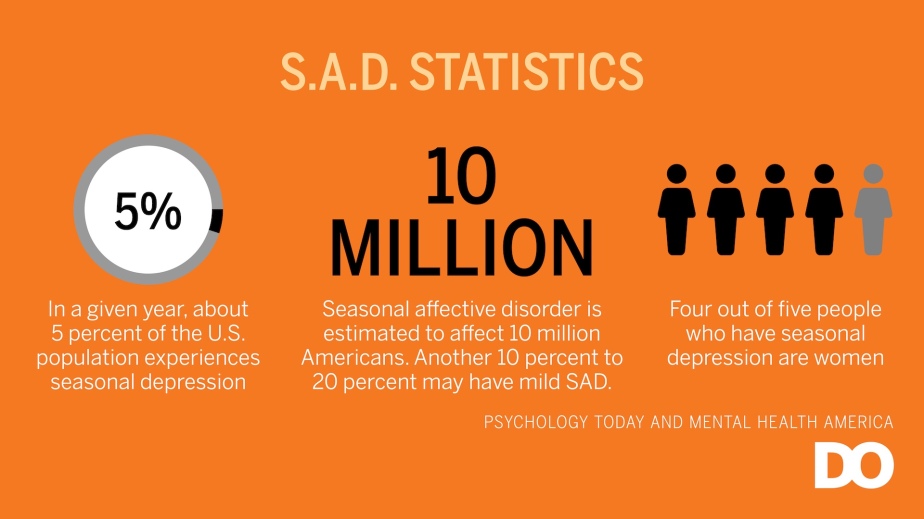
Seasonal affective disorder is diagnosed more often in women than in men. And SAD occurs more frequently in younger adults than in older adults.

Factors that may increase your risk of seasonal affective disorder include:

• Family history. People with SAD may be more likely to have blood relatives with SAD or another form of depression.

• Having major depression or bipolar disorder. Symptoms of depression may worsen seasonally if you have one of these conditions.

• Living far from the equator. SAD appears to be more common among people who live far north or south of the equator. This may be due to decreased sunlight during the winter and longer days during the summer months.

Complications

Take signs and symptoms of seasonal affective disorder seriously. As with other types of depression, SAD can get worse and lead to problems if it’s not treated. These can include:

• Social withdrawal

• School or work problems

• Substance abuse

• Other mental health disorders such as anxiety or eating disorders

• Suicidal thoughts or behavior

Treatment can help prevent complications, especially if SAD is diagnosed and treated before symptoms get bad.

Sources: The Mayo Clinic

Crisis Intervention Teams (CIT)

The lack of mental health crisis services across the U.S. has resulted in law enforcement officers serving as first responders to most crises. A Crisis Intervention Team (CIT) program is an innovative, community-based approach to improve the outcomes of these encounters.

In over 2,700 communities nationwide, CIT programs create connections between law enforcement, mental health providers, hospital emergency services and individuals with mental illness and their families. Through collaborative community partnerships and intensive training, CIT improves communication, identifies mental health resources for those in crisis and ensures officer and community safety.

Core Components of CIT Programs

Community Collaboration: Vitally important to successful CIT programs is building relationships. Community ownership should occur in all phases of CIT programs–initial planning, curriculum development, policies and procedures, and ongoing problem solving. This broad-based, grassroots community collaboration is what makes CIT programs sustainable over time, especially during challenging fiscal and political times.

A Vibrant and Accessible Crisis System: An outcome of productive community collaboration is the transformation of a crisis response system that is vibrant, responsive and easily accessible. Communities should work to provide a 24/7 crisis response, a “no wrong door” philosophy, and a 15 minute or under turnaround time to get first responders back on the streets. Depending on your community (urban, suburban, rural, frontier), these crisis system models may need to be creatively adapted to meet your needs.

Training for law enforcement and other first responders: The training curriculum is designed to be taught by local specialists from the law enforcement, behavioral health and consumer/advocate field. Upon completion of the course,

officers/first responders are better equipped to:

  • Understand common signs and symptoms of mental illnesses and co-occurring disorders;
  • Recognize when those signs and symptoms represent a crisis situation.
  • Safely de-escalate individuals experiencing behavioral health crises;
  • Utilize community resources and diversion strategies to provide assistance.

At the heart of effective CIT programs is officers who volunteer to be identified as a CIT officer and who are skilled and passionate about responding to these calls. Ongoing continuing education and advanced CIT training should be incorporated into the model.

Behavioral Health Staff Training: It is imperative that behavioral health staff develop an understanding of the role of law enforcement/first responders, and why they are trained to respond in ways that they do. This deeper understanding helps to provide insight and gain appreciation for what can otherwise be a culture divide. It is often beneficial for behavioral health staff to do ride- alongs with officers, and vice versa, for law enforcement to do home visits with case managers/therapists. It is also beneficial for law enforcement to provide training to front-line behavioral health workers on law enforcement culture. The goal is a deeper understanding and appreciation of one another’s roles, leading to improved collaboration.

Family/Consumer/Advocate Participation: People with lived experience provide invaluable insight in the training, and consumers and family members are key resources in advocating for CIT programs and improved crisis services. Consumer and family involvement in CIT programs also helps to inform understanding of how law enforcement is trained, building reasonable expectations of what to anticipate when law enforcement is called. Families and advocates also provide important feedback about the overall crisis response system, contributing to continuous quality improvement initiatives.

Police & First Responders Benefits

Not only can CIT programs bring community leaders together, they can also help keep people with mental illness out of jail and in treatment, on the road to recovery. That’s because diversion programs like CIT reduce arrests of people with mental illness while simultaneously increasing the likelihood that individuals will receive mental health services. CIT programs also:

• Give police officers more tools to do their job safely and effectively. Research shows that CIT is associated with improved officer attitude and knowledge about mental illness. In Memphis, for example, CIT resulted in an 80% reduction of officer injuries during mental health crisis calls.

• Keep law enforcement’s focus on crime. Some communities have found that CIT has reduced the time officers spend responding to a mental health call. This puts officers back into the community more quickly.

• Produce cost savings. It’s difficult to estimate exactly how much diversion programs can save communities. But incarceration is costly compared to community-based treatment. For example in Detroit an inmate with mental illness in jail costs $31,000 a year, while community-based mental health treatment costs only $10,000 a year.

Overall Benefits of CIT Programs

• Positive community relationships

• Improved crisis response system

• Trained response to behavioral health crisis calls

• Reduced unnecessary arrests or use of force

• Reduced officer/citizen injuries

• Increased officer confidence in skills

• Reduced liability

• More efficient use of criminal justice resources, including increased jail diversion

Sources: NAMI, CIT International

Tardive Dyskinesia

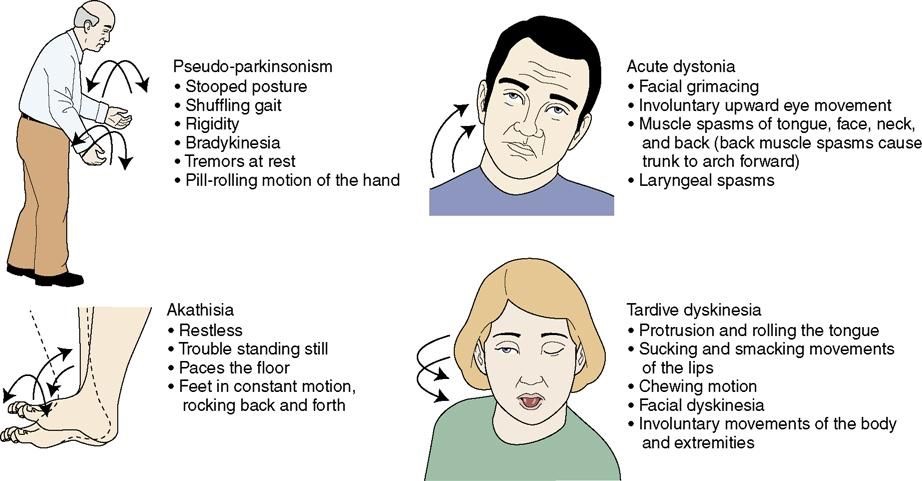
Tardive dyskinesia is a side effect of antipsychotic medications. These drugs are used to treat schizophrenia and other mental health disorders.

TD causes stiff, jerky movements of your face and body that you can’t control. You might blink your eyes, stick out your tongue, or wave your arms without meaning to do so.

Not everyone who takes an antipsychotic drug will get it. But if it happens, it’s sometimes permanent. So if you have movements you can’t control, let your doctor know right away. To ease your symptoms, your doctor may:

• Lower the dose

• Add another medication to what you’re taking to act as an antidote

• Switch you to a different drug

Symptoms:

Tardive dyskinesia causes stiff, jerky movements that you can’t control. They include:

Orofacial dyskinesia or oro-bucco-lingual dyskinesia: Uncontrolled movements in your face — namely your lips, jaw, or tongue. You might:

• Stick out your tongue without trying

• Blink your eyes fast

• Chew

• Smack or pucker your lips

• Puff out your cheeks

• Frown

• Grunt

Dyskinesia of the limbs: It can also affect your arms, legs, fingers, and toes. That can cause you to:

• Wiggle your fingers

• Tap your feet

• Flap your arms

• Thrust out your pelvis

• Sway from side to side

These movements can be fast or slow. You may find it hard to work and stay active.

Causes and Risk Factors

Antipsychotic meds treat schizophrenia, bipolar disorder, and other brain conditions. Doctors also call them neuroleptic drugs.

They block a brain chemical called dopamine. It helps cells talk to each other and makes the muscles move smoothly. When you have too little of it, your movements can become jerky and out of control.

You can get TD if you take an antipsychotic drug. Usually you have to be on it for 3 months or more. But there have been rare cases of it after a single dose of an antipsychotic medicine. Older versions of these drugs are more likely to cause this problem than newer ones. Some studies find a similar risk from both types, though.

Your chances of getting TD go up the longer you take an antipsychotic medicine.

Some drugs that treat nausea, reflux, and other stomach problems can also cause TD if you take them for more than 3 months. These include:

• Metoclopramide (Reglan)

• Prochlorperazine (Compazine)

You’re more likely to get it if you:

• Are a woman who has gone through menopause

• Are over age 55

• Abuse alcohol or drugs

• Are African American or Asian American

Diagnosis

TD can be hard to diagnose. Symptoms might not appear until months or years after you start taking antipsychotic medicine. Or you might first notice the movements after you’ve already stopped taking the drug. The timing can make it hard to know whether the medicine caused your symptoms.

Abnormal Involuntary Movement Scale (AIMS): If you take medicine for mental health conditions, your doctor should check you at least once a year to make sure you don’t have TD. He can give you a physical exam called the Abnormal Involuntary Movement Scale, which will help him rate any abnormal movements.

Treatment and Prevention

The goal is to prevent TD. When your doctor prescribes a new drug to treat a mental health disorder, ask about its side effects. The benefits of the drug should outweigh the risks.

If you have movement problems, tell your doctor but don’t stop taking the drug on your own. Your doctor can take you off the medicine that caused the movements, or lower the dose.

You might need to switch to a newer antipsychotic drug that may be less likely to cause TD.

There are two FDA-approved medicines to treat tardive dyskinesia:

• Deutetrabenazine (Austedo)

• Valbenazine (Ingrezza)

Both of these medicines work in similar ways to regulate the amount of dopamine flow in brain areas that control certain kinds of movements. Both can sometimes cause drowsiness. Austedo also has been shown to sometimes cause depression when used in patients with Huntington’s disease.

There’s no proof that natural remedies can treat it.

Source: WebMD

Sylvia Plath

One of my favorite writers was born on this day in 1932, Sylvia Plath:

Sylvia Plath was an American poet, novelist, and short story writer. Born in Boston, Massachusetts she studied at Smith College and Newnham College. She married poet Ted Hughes in 1956 and had two children Frieda and Nicholas. After a long struggle with depression she committed suicide in 1963. To this day controversy surrounds both her life and death, as well as her writing and legacy. She along with some of her contemporaries (Anne Sexton and Robert Lowell among others) advanced the genre of confessional poetry. She is best known for her two collections of poetry “The Colossus and Other Poems,” and “Ariel,” as well as her semi-autobiographical novel “The Bell Jar.” In 1982 she became the first poet to win the Pulitzer Prize posthumously for “The Collected Poems of Sylvia Plath.”

Growing up in Winthrop, Massachusetts an eight year old Plath published her first poem in the children’s section of the “Boston Herald.” In addition to her writing, she showed a lot of promise as an artist winning an award for her painting from The Scholastic Art & Writing Awards in 1947. Her father died when she was eight due to untreated diabetes and led to her having a loss in faith and remained ambivalent about religion for the rest of her life. In 1942 her mother moved the family to Wellesley, Massachusetts.

In 1950 while attending Smith College she wrote to her mother, “The world is splitting open at my feet like a ripe, juicy watermelon.” The summer after her third year of college she spent a month in New York City as a guest editor of “Mademoiselle” magazine. It did not go as well as planned. That summer she was refused admission to the Harvard writing seminar and began an emotional downward spiral. In August 1953 she made her first suicide attempt by crawling under her house and taking her mother’s sleeping pills. She was not found for three days. Later she would write of the experience, “blissfully succumbed to the whirling blackness that I honestly believed was eternal oblivion.” She would spend the next six months at McLean Psychiatric Hospital. While under the care of Dr. Ruth Beuscher she would receive insulin and electric shock treatments. She appeared to recover and returned to Smith College.

Plath and English poet Ted Hughes were married on June 16th, 1956. Plath described Hughes as, “a singer, story-teller, lion and world-wanderer with a voice like the thunder of God.” In 1957 they moved to the United States with Plath first teaching at Smith College, and then moving to Boston in 1958 where she worked as a receptionist in the psychiatric unit at Massachusetts General Hospital while in the evening attending a creative writing class by Robert Lowell (Anne Sexton was also in attendance). During this time both Lowell and Sexton encouraged her to write from her own experience. She openly discussed her depression with Lowell, and her suicide attempt with Sexton. At this time she began to see herself as a more serious and focused poet and storyteller. She also began a lifetime friendship with the poet W. S. Merwin. In December she resumed her treatment with Dr. Ruth Beuscher.

In December of 1959 Plath and Ted Hughes moved to London. She remained anxious about writing confessional poetry from her own experience. Around this time she would explain that she learned, “to be true to my own weirdnesses.” In 1960 she released her first book of poetry. In 1961 her second pregnancy ended in a miscarriage, severely of her poems address this including, “Parliament Hill Fields.” In January of 1962 her son Nicholas was born. In June she was in a car accident which she would explain as one of her many suicide attempts. That July she would discover Ted Hughes was having an affair and they would separate in September.

Beginning in October of 1962 she would enter into the greatest burst of creativity of her career. It is at this time she would write almost all of the poems for which she is remembered and released posthumously in the collection “Ariel.” Her novel “The Bell Jar” came out in January 1963 to critical indifference. On February 11th, 1963 Plath was found dead having committed suicide by carbon monoxide poisoning in the kitchen with her head in the oven and the gas turned on. Hughes was devastated and in a letter wrote, “That’s the end of my life. The rest is posthumous.”

In the years following her death there were many accusations that Hughes had been abusive to Plath. The feminist poet Robin Morgan published a poem which openly accused Hughes of assault and her murder. In 1989 Hughes wrote an article in “The Guardian,” with this quote, “In the years soon after [Plath’s] death, when scholars approached me, I tried to take their apparently serious concern for the truth about Sylvia Plath seriously. But I learned my lesson early. […] If I tried too hard to tell them exactly how something happened, in the hope of correcting some fantasy, I was quite likely to be accused of trying to suppress Free Speech. In general, my refusal to have anything to do with the Plath Fantasia has been regarded as an attempt to suppress Free Speech […] The Fantasia about Sylvia Plath is more needed than the facts. Where that leaves respect for the truth of her life (and of mine), or for her memory, or for the literary tradition, I do not know.”

Hughes inherited the Plath estate and has been condemned in some circles for burning Plath’s last journal. He lost another journal and an unfinished novel and instructed a collection of her papers and journals should not be released until 2013. In 1998 he would publish a collection of poems called, “Birthday Letters,” which consists of 88 poems about his relationship with Plath. It would go on to win the Forward Poetry Prize, T.S. Eliot Prize for poetry, and the Whitebread Poetry Prize. He would die later that year of cancer.

A couple of quotes :

“If you expect nothing from anybody, you’re never disappointed.”

“Perhaps when we find ourselves wanting everything, it is because we are dangerously close to wanting nothing.”

“Death must be so beautiful. To lie in the soft brown earth, with the grasses waving above one’s head, and listen to silence. To have no yesterday, and no to-morrow. To forget time, to forgive life, to be at peace.”

~ Sylvia Plath

Tulips – By Sylvia Plath

The tulips are too excitable, it is winter here.

Look how white everything is, how quiet, how snowed-in

I am learning peacefulness, lying by myself quietly

As the light lies on these white walls, this bed, these hands.

I am nobody; I have nothing to do with explosions.

I have given my name and my day-clothes up to the nurses

And my history to the anaesthetist and my body to surgeons.

They have propped my head between the pillow and the sheet-cuff

Like an eye between two white lids that will not shut.

Stupid pupil, it has to take everything in.

The nurses pass and pass, they are no trouble,

They pass the way gulls pass inland in their white caps,

Doing things with their hands, one just the same as another,

So it is impossible to tell how many there are.

My body is a pebble to them, they tend it as water

Tends to the pebbles it must run over, smoothing them gently.

They bring me numbness in their bright needles, they bring me sleep.

Now I have lost myself I am sick of baggage —-

My patent leather overnight case like a black pillbox,

My husband and child smiling out of the family photo;

Their smiles catch onto my skin, little smiling hooks.

I have let things slip, a thirty-year-old cargo boat

Stubbornly hanging on to my name and address.

They have swabbed me clear of my loving associations.

Scared and bare on the green plastic-pillowed trolley

I watched my teaset, my bureaus of linen, my books

Sink out of sight, and the water went over my head.

I am a nun now, I have never been so pure.

I didn’t want any flowers, I only wanted

To lie with my hands turned up and be utterly empty.

How free it is, you have no idea how free —-

The peacefulness is so big it dazes you,

And it asks nothing, a name tag, a few trinkets.

It is what the dead close on, finally; I imagine them

Shutting their mouths on it, like a Communion tablet.

The tulips are too red in the first place, they hurt me.

Even through the gift paper I could hear them breathe

Lightly, through their white swaddlings, like an awful baby.

Their redness talks to my wound, it corresponds.

They are subtle: they seem to float, though they weigh me down,

Upsetting me with their sudden tongues and their colour,

A dozen red lead sinkers round my neck.

Nobody watched me before, now I am watched.

The tulips turn to me, and the window behind me

Where once a day the light slowly widens and slowly thins,

And I see myself, flat, ridiculous, a cut-paper shadow

Between the eye of the sun and the eyes of the tulips,

And I hve no face, I have wanted to efface myself.

The vivid tulips eat my oxygen.

Before they came the air was calm enough,

Coming and going, breath by breath, without any fuss.

Then the tulips filled it up like a loud noise.

Now the air snags and eddies round them the way a river

Snags and eddies round a sunken rust-red engine.

They concentrate my attention, that was happy

Playing and resting without committing itself.

The walls, also, seem to be warming themselves.

The tulips should be behind bars like dangerous animals;

They are opening like the mouth of some great African cat,

And I am aware of my heart: it opens and closes

Its bowl of red blooms out of sheer love of me.

The water I taste is warm and salt, like the sea,

And comes from a country far away as health.

#SylviaPlath #Poet #Author #MentalHealth #ABellJar

Transcranial magnetic stimulation (TMS)

Transcranial magnetic stimulation (TMS) is a noninvasive procedure that uses magnetic fields to stimulate nerve cells in the brain to improve symptoms of depression. TMS is typically used when other depression treatments haven’t been effective.

This treatment for depression involves delivering repetitive magnetic pulses, so it’s called repetitive TMS or rTMS.

How it works

During an rTMS session, an electromagnetic coil is placed against your scalp near your forehead. The electromagnet painlessly delivers a magnetic pulse that stimulates nerve cells in the region of your brain involved in mood control and depression. It’s thought to activate regions of the brain that have decreased activity in depression.

Though the biology of why rTMS works isn’t completely understood, the stimulation appears to impact how the brain is working, which in turn seems to ease depression symptoms and improve mood.

There are different ways to perform the procedure, and techniques may change as experts learn more about the most effective ways to perform treatments.

Why it’s done

Depression is a treatable condition, but for some people, standard treatments aren’t effective. Repetitive TMS is typically used when standard treatments such as medications and talk therapy (psychotherapy) don’t work.

Risks

Repetitive TMS is a noninvasive form of brain stimulation used for depression. Unlike vagus nerve stimulation or deep brain stimulation, rTMS does not require surgery or implantation of electrodes. And, unlike electroconvulsive therapy (ECT), rTMS doesn’t cause seizures or require sedation with anesthesia.

Generally, rTMS is considered safe and well-tolerated. However, it can cause some side effects.

Common side effects

Side effects are generally mild to moderate and improve shortly after an individual session and decrease over time with additional sessions. They may include:

• Headache

• Scalp discomfort at the site of stimulation

• Tingling, spasms or twitching of facial muscles

• Lightheadedness

Your doctor can adjust the level of stimulation to reduce symptoms or may recommend that you take an over-the-counter pain medication before the procedure.

Uncommon side effects

Serious side effects are rare. They may include:

• Seizures

• Mania, particularly in people with bipolar disorder

• Hearing loss if there is inadequate ear protection during treatment

More study is needed to determine whether rTMS may have any long-term side effects.

What you can expect

Repetitive TMS is usually done in a doctor’s office or clinic. It requires a series of treatment sessions to be effective. Generally, sessions are carried out daily, five times a week for four to six weeks.

Your first treatment

Before treatment begins, your doctor will need to identify the best place to put the magnets on your head and the best dose of magnetic energy for you. Your first appointment typically lasts about 60 minutes.

Most likely, during your first appointment:

• You’ll be taken to a treatment room, asked to sit in a reclining chair and given earplugs to wear during the procedure.

• An electromagnetic coil will be placed against your head and switched off and on repeatedly to produce stimulating pulses. This results in a tapping or clicking sound that usually lasts for a few seconds, followed by a pause. You’ll also feel a tapping sensation on your forehead. This part of the process is called mapping.

• Your doctor will determine the amount of magnetic energy needed by increasing the magnetic dose until your fingers or hands twitch. Known as your motor threshold, this is used as a reference point in determining the right dose for you. During the course of treatment, the amount of stimulation can be changed, depending on your symptoms and side effects.

During each treatment

Once the coil placement and dose are identified, you’re ready to begin. Here’s what to expect during each treatment:

• You’ll sit in a comfortable chair, wearing ear plugs, with the magnetic coil placed against your head.

• When the machine is turned on, you’ll hear clicking sounds and feel tapping on your forehead.

• The procedure will last about 40 minutes, and you’ll remain awake and alert. You may feel some scalp discomfort during the treatment and for a short time afterward.

After each treatment

You can return to your normal daily activities after your treatment. Typically, between treatments, you can expect to work and drive.

Results

If rTMS works for you, your depression symptoms may improve or go away completely. Symptom relief may take a few weeks of treatment.

The effectiveness of rTMS may improve as researchers learn more about techniques, the number of stimulations required and the best sites on the brain to stimulate.

Ongoing treatment

After completion of an rTMS treatment series, standard care for depression ― such as medication and psychotherapy ― may be recommended as ongoing treatment.

It’s not yet known if maintenance rTMS sessions will benefit your depression. This involves continuing treatment when you are symptom-free with the hope that it will prevent the return of symptoms.

However, if your depression improves with rTMS, and then later you have another episode of symptoms, your rTMS treatment can be repeated. This is called re-induction. Some insurance companies will cover re-induction.

If your symptoms improve with rTMS, discuss ongoing or maintenance treatment options for your depression with your doctor.

Source: The Mayo Clinic