Plato: from “The Symposium”

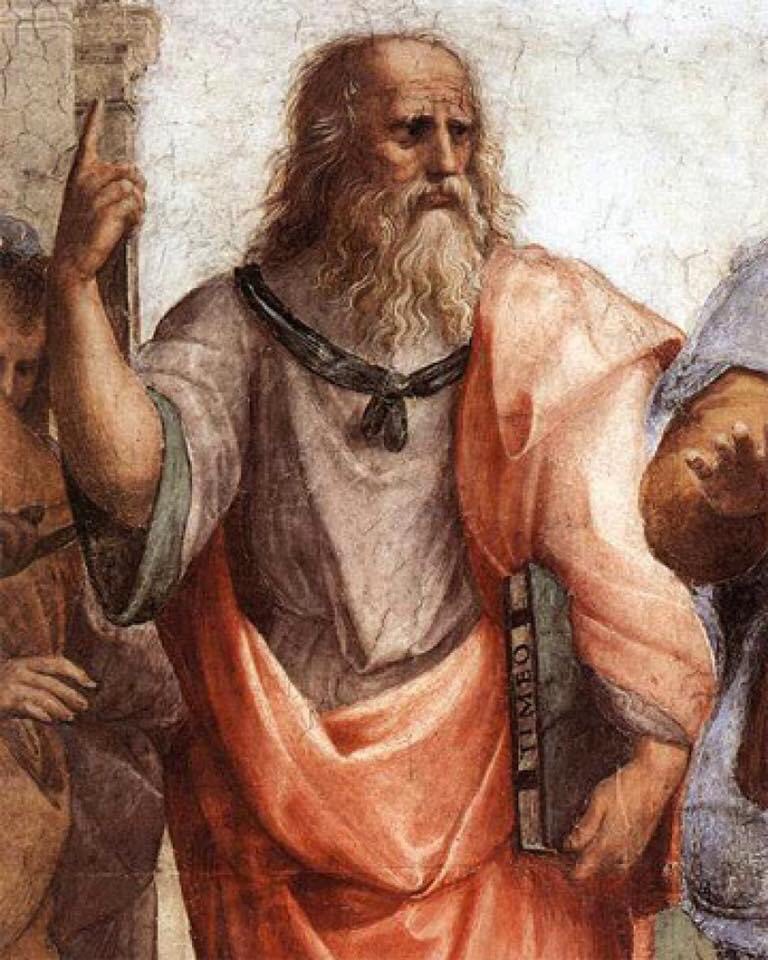
“According to Greek mythology, humans were originally created with four arms, four legs and a head with two faces. Fearing their power, Zeus split them into two separate parts, condemning them to spend their lives in search of their other halves… and when one of them meets the other half, the actual half of himself, whether he be a lover of youth or a lover of another sort, the pair are lost in an amazement of love and friendship and intimacy and one will not be out of the other’s sight, as I may say, even for a moment.”

~ Plato (The Symposium)

#GreekMythology #Plato #Symposium

The Hydra of Lerna

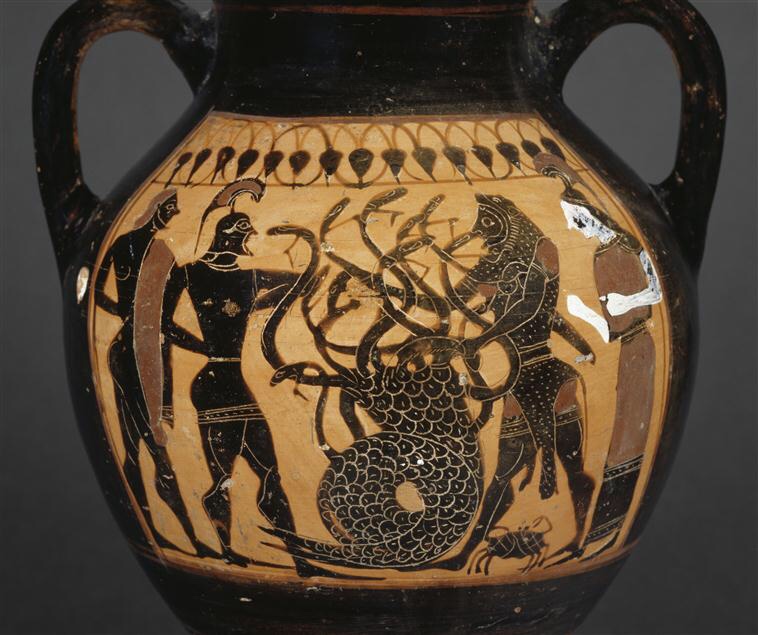
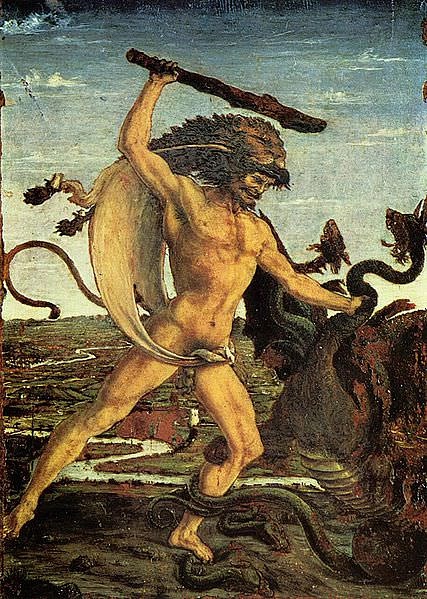
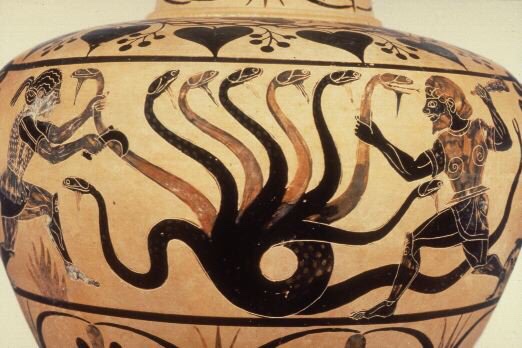
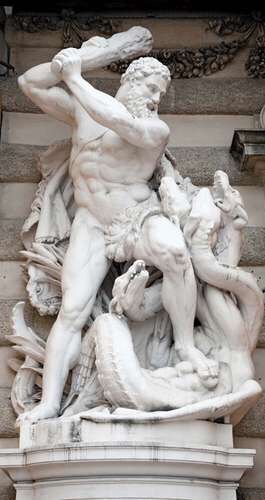
The Hydra was an enormous serpent with nine heads—or as many as fifty or one hundred—one of which was immortal. Its parents were the giant Typhon and Echidna, half maiden and half serpent, the so-called “mother of all monsters.” The Hydra’s haunts were the marshes of Lerna, near the city of Argos.

The second of Hercules’s Labors was the slaying of the Hydra. But each time that Hercules would cut off one of its heads, two would grow in its place. Not only this, but a giant crab that kept the Hydra company appeared and joined the fray. Hercules’s clever nephew and companion Iolaus proposed a remedy: the moment Hercules severed a head, Iolaus would cauterize the stump with a firebrand. This the two did until only the Hydra’s immortal head remained. Hercules then cut off this head, and after burying it beneath a boulder, dipped his arrows in the Hydra’s lethal venom. Both the Hydra and the crab, which Hercules had also slain, were placed in the heavens by the goddess Hera as constellations.

The Amazons (of Greek Mythology)

The Amazons (Amazones or Amazonides, “breastless ones”) of Greek mythology were a race of warrior women led by a queen. They fought against the Greeks, for instance, during the Trojan War. Procreation for them took place only by way of men from other races. Boy children were disposed of; girls had their right breasts removed so as not to impede the use of bows. The hero, Theseus, had significant relations with the Amazons.

There are many versions of these relations. The most popular involves his abduction of and marriage to the Amazon queen Hippolyta, who gave birth to his son Hippolytus. Some say that Theseus abducted Hippolyta’s sister Antiope and that he defeated the Amazon army led by Hippolyta, which invaded Attica in a rescue attempt. Some say that Hippolyta and Antiope are different names for the same Amazon. Still others say that Heracles killed Hippolyta during the course of his ninth labor, which involved the taking of her sacred belt or girdle.

The Hydra

The Hydra, also called the Lernean Hydra, in Greek mythology, the offspring of Typhon and Echidna (according to Hesiod’s Theogony), a gigantic water-snake-like monster with nine heads (the number varies), one of which was immortal. The monster’s haunt was the marshes of Lerna, near Árgos, from which he periodically emerged to harry the people and livestock of Lerna. Anyone who attempted to behead the Hydra found that as soon as one head was cut off, two more heads would emerge from the fresh wound.

The destruction of the Lernean Hydra became one of the 12 Labours of Heracles. For that and other labours, Heracles enlisted the aid of his nephew Iolaus. As Heracles severed each mortal head, Iolaus was set to the task of cauterizing the fresh wounds so that no new heads would emerge. When only the immortal head remained, Heracles cut it off too and buried it under a heavy rock. Further, he dipped his arrows in the beast’s poisonous blood (or venom) to be able to inflict fatal wounds. According to Sophocles(Trachinian Women), that measure eventually caused his own accidental death at the hands of his wife, Deianeira.

In modern English, hydra or hydra-headed can describe a difficult or multifarious situation. The name hydra has been assigned to a genus of invertebrate freshwater animals having a circlet of 4 to 25 tentacles on one end of its tubelike body.

The Gorgons

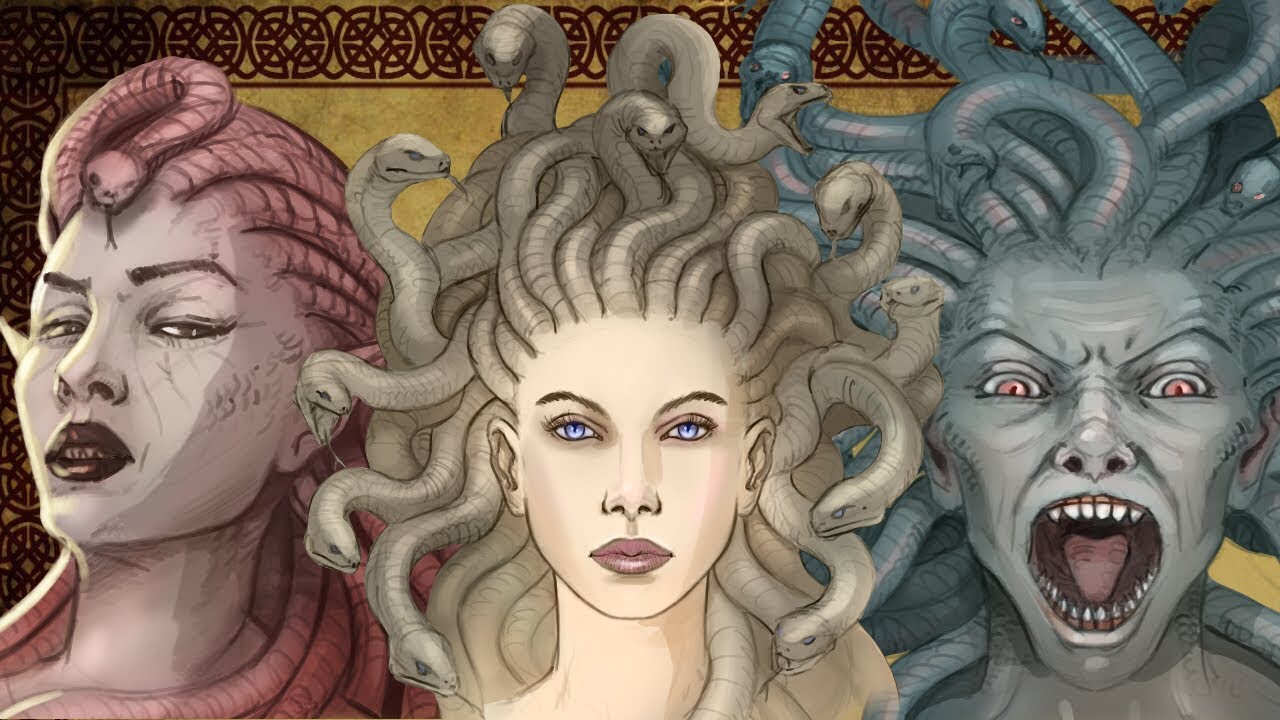
The Gorgons were three monstrous sisters whose lair was in the territory of Libya. Their names were Stheno, Euryale, and Medusa, and they were said to be the offspring of the sea deity Phorcys and his sister Ceto. According to an alternate tradition, they sprang from the earth goddess Gaia, who produced them to be her allies in the battle between the gods and Giants. Of the Gorgon sisters only Medusa was mortal, and for that reason Perseus was sent to fetch her head. According to mythographer Apollodorus, the Gorgons had serpents as hair, large tusks like a boar’s, hands of bronze, and golden wings. Indeed, they were so hideous in appearance that they turned to stone all who looked upon them directly.

Cerberus

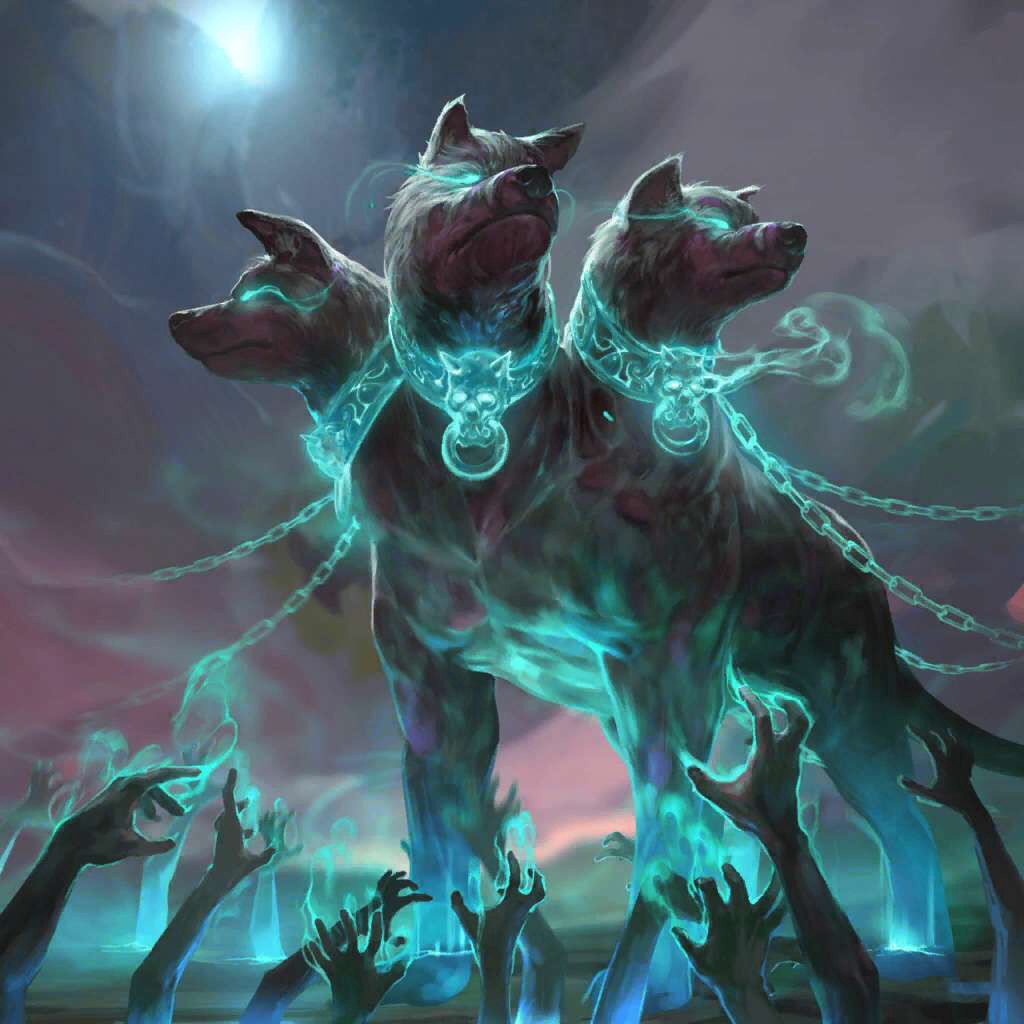
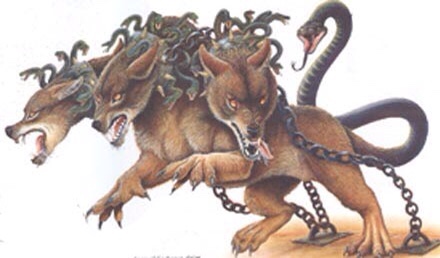
Cerberus, whom Homer calls “the hound of Hades,” was one of the brood of monsters, which include the Hydra of Lerna and the Chimaera, spawned by Typhon and the half maiden, half serpent Echidna. He was variously described as having as many as fifty or one hundred heads and as few as three. The mythographer Apollodorus writes that Cerberus, the three-headed dog, had the tail of a dragon and snakes’ heads growing from his back. For the poet Hesiod, Cerberus was an eater of raw flesh and had a bark like clashing bronze.

Cerberus’s duty was to allow the deceased to enter the House of Hades but to block the living from entering and the dead from leaving. On the instruction of the Sibyl of Cumae, the living hero Aeneas secured passage into Hades by throwing Cerberus a drugged honey cake. The best-known myth involving Cerberus is the tale of Hercules’s twelfth and final Labor (or by some accounts, the tenth): Hercules was ordered to bring Cerberus up from the Underworld, a task that he accomplished by overpowering the beast without the use of weapons. As the poet Ovid writes, upon reaching the realm of the living, the distressed hound raged, foam from its mouth falling upon the earth to produce the poisonous plant aconite, which the sorceress Medea used in attempting to kill the hero Theseus.

Arachne

There are several versions of the Greek myth of Arachne. I’m sharing the version conceived by Ovid the Roman poet.

Arachne, a young woman of common birth, but of uncommon skill as a weaver. She lived in the village of Hypaepa in Lydia. Her father was a humble wool dyer, and her mother was deceased. Despite her lowly rank, Arachne became famous throughout the towns of Lydia for her expert ability to spin and weave wool. Even the local nymphs came to marvel at her. Though spinning and weaving were specifically Athena’s arts, Arachne would not admit that the goddess had been her teacher. Instead, she made it known that she would gladly challenge the goddess to a weaving contest. Athena could not bear this insult and, appearing to her in the guise of an old woman, cautioned Arachne not to dishonor the gods with such arrogance. Arachne still would not relent, so Athena revealed herself to the girl in her full divinity.

The contest thus commenced. Athena wove into her design the contest in which she had prevailed over Poseidon to win the stewardship of the city of Athens by producing an olive tree. As a clear warning to Arachne, she also depicted a host of mortals who had challenged the gods and been punished terribly. Arachne, for her part, wove vignettes depicting misdeeds of the gods, a twofold affront to the goddess. There appeared Zeus taking on the shape of a bull to seduce Europa, of a swan to make advances on Leda, of her own husband to lie with Alcmena, of a shower of gold to penetrate the cell of Danae, and of a flame to approach Aegina. Poseidon, too, was shown. He assumed the shape of a dolphin in pursuit of Melantho, of a bird to approach Medusa, and of a ram, river, and stallion to make advances on other maidens still. Apollo, Dionysus, and Cronus, all behaving ignobly, also found a place in Arachne’s design.

Arachne’s work was perfection, flawless even in Athena’s eyes. So great was the goddess’s anger that she tore apart Arachne’s weaving and struck Arachne on the head until, unable to bear this assault, she hanged herself. Arachne did, however, live on, now as a spider, misshapen but spinning for all time.

Hecate (Hekate): Goddess of Witches, Magic and the Night

Greek Name: Ἑκατη Ἑκατα

Transliteration: Hekatê, Hekata

Latin Spelling: Hecate, Hecata

Translation: Worker from Afar

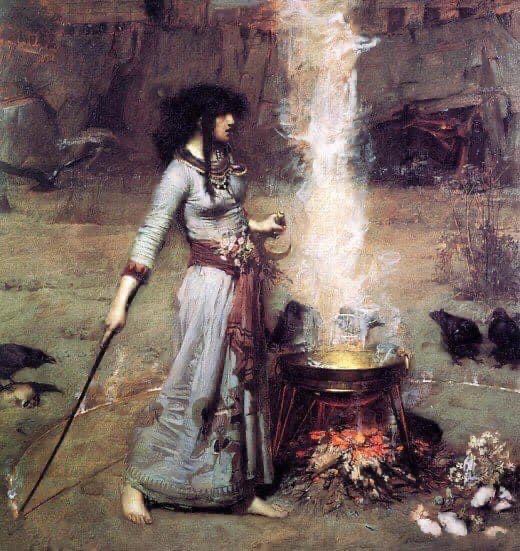
Hekate assisted Demeter in her search for Persephone, guiding her through the night with flaming torches. After the mother-daughter reunion became she Persephone’s minister and companion in Haides.

Three metamorphosis myths describe the origins of her animal familiars: the black she-dog and the polecat (a mustelid house pet kept by the ancients to hunt vermin). The dog was the Trojan Queen Hekabe (Hecuba) who leapt into the sea after the fall of Troy and was transformed by the goddess. The polecat was either the witch Gale, turned as punishment for her incontinence, or Galinthias, midwife of Alkmene (Alcmena), who was transformed by the enraged goddess Eileithyia but adopted by the sympathetic Hekate.

Her name means “worker from afar” from the Greek word hekatos. The masculine form of the name, Hekatos, was a common epithet of the god Apollon.

According to the most genuine traditions, she appears to have been an ancient Thracian divinity, and a Titan, who, from the time of the Titans, ruled in heaven, on the earth, and in the sea, who bestowed on mortals wealth, victory, wisdom, good luck to sailors and hunters, and prosperity to youth and to the flocks of cattle; but all these blessings might at the same time be withheld by her, if mortals did not deserve them. She was the only one among the Titans who retained this power under the rule of Zeus, and she was honoured by all the immortal gods.

“We are told that Helios (the Sun) had two sons, Aeetes and Perses, Aeetes being the king of Kolkhis (Colchis) and the other king of the Tauric Chersonese, and that both of them were exceedingly cruel. And Perses had a daughter Hekate (Hecate), who surpassed her father in boldness and lawlessness.”

~ Diodorus Siculus, Greek historian 1st Century B.C.

“If you think Latona [Leto] a goddess, how can you not think that Hecate is one, who is the daughter of Latona’s sister Asteria?”

~ Cicero, Roman rhetorician 1st Century B.C.

“Hekate whom Zeus the son of Kronos (Cronus) honoured above all. He gave her splendid gifts, to have a share of the earth and the unfruitful sea. She received honour also in starry heaven, and is honoured exceedingly by the deathless gods . . . For as many as were born of Gaia (Gaea, Earth) and Ouranos (Uranus, Heaven) [the Titanes] amongst all these she has her due portion. The son of Kronos [Zeus] did her no wrong nor took anything away of all that was her portion among the former Titan gods: but she holds, as the division was at the first from the beginning, privilege both in earth, and in heaven, and in sea. Also, because she is an only child, the goddess receives not less honour, but much more still, for Zeus honours her.”

~ Hesiod, 8th or 7th Century B.C.