Shtriga

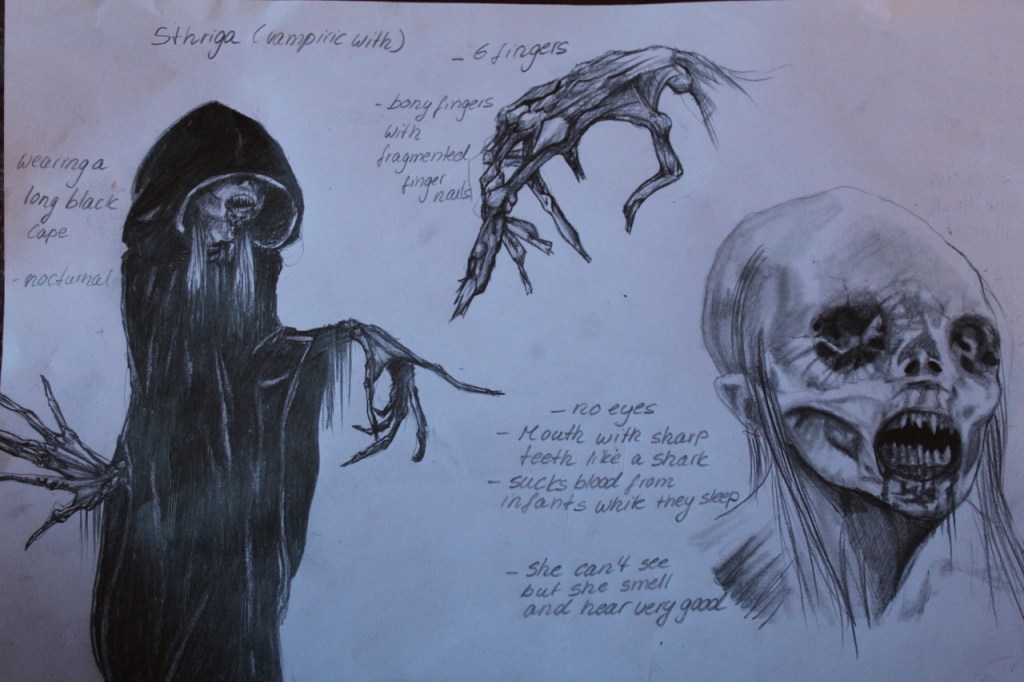
The Shtriga was a vampire-like witch that was found in Albania. The creature was similar to the Strigon, which was a witch found among the southern Slavs, the strigoi of Romania, and the vjeshtitza of Montenegro.

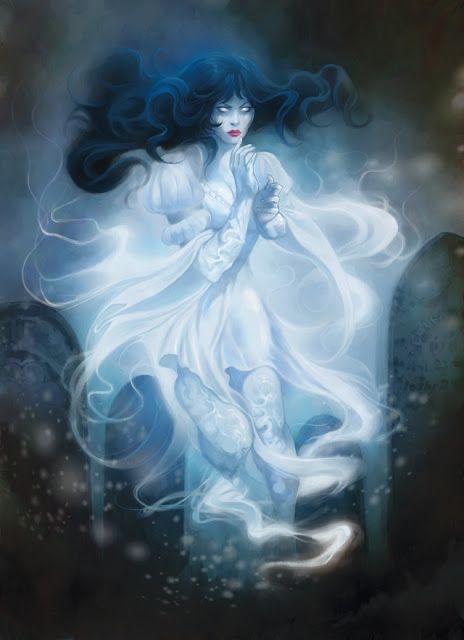
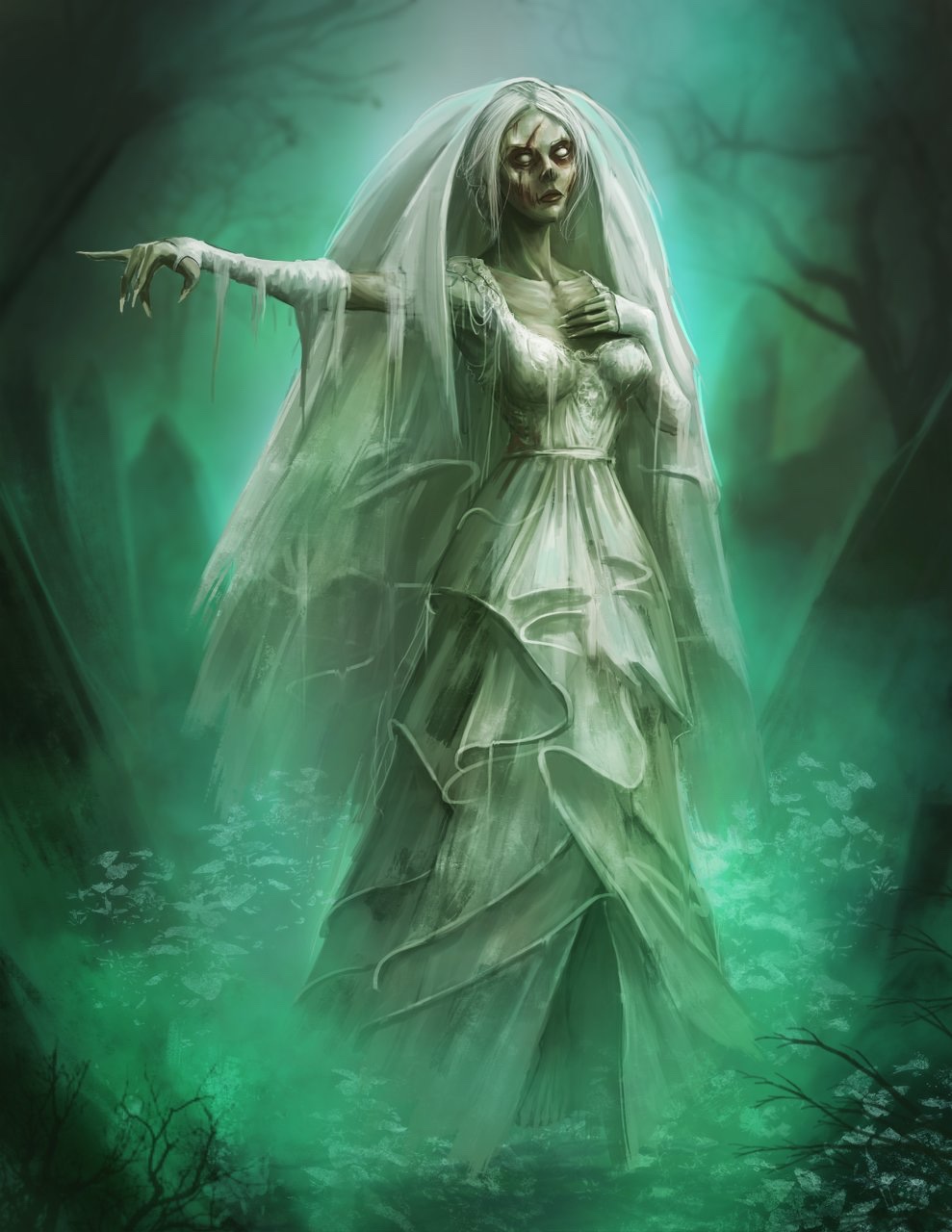
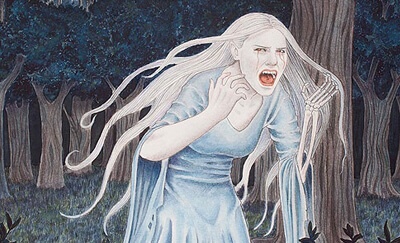
The Shtriga usually took the form of a woman who lived undetected in the community. She was difficult to identify, although a sure sign was a young girl’s hair turning white.

The vampire witch attacked her prey at night, usually in the form of an animal, such as a moth, fly, or bee.

In order to catch a Shtriga, two methods can be attempted:

~ On a day when the community gathered in the church, a cross made of pig bones could be fastened to the doors. Any Shtriga inside would be trapped and unable to pass the barrier.

~ If one followed a suspected Shtriga at night, one could see her vomit blood at some point after she sucked the blood of her victims. The vomited blood could be bottled and turned into an amulet to ward against witches.

Legend of the Shtriga:

According to legend, only the shtriga herself could cure those she had drained (often by spitting in their mouths), and those who were not cured inevitably sickened and died.

The name can be used to express that a person is evil. According to Northern Albanian folklore, a woman is not born a witch; she becomes one, often because she is childless or made evil by envy.   A strong belief in God could make people immune to a witch as He would protect them.

Usually, shtriga were described as old or middle-aged women with grey, pale green, or pale blue eyes (called white eyes or pale eyes) and a crooked nose. Their stare would make people uncomfortable, and people were supposed to avoid looking them directly in the eyes because they have the evil eye.  To ward off a witch, people could take a pinch of salt in their fingers and touch their (closed) eyes, mouth, heart and the opposite part of the heart and the pit of the stomach and then throw the salt in direct flames saying “syt i dalçin syt i plaçin” or just whisper 3–6 times “syt i dalçin syt i plaçin” or “plast syri keq.”

In some regions of Albania, people have used garlic to send away the evil eye or they have placed a puppet in a house being built to catch the evil. Newborns, children or beautiful girls have been said to catch the evil eye more easily, so in some Albanian regions when meeting such a person, especially a newborn, for the first time, people might say “masha’allah” and touch the child’s nose to show their benevolence and so that the evil eye would not catch the child.

Edith Durham recorded several methods traditionally considered effective for defending oneself from shtriga. A cross made of pig bone could be placed at the entrance of a church on Easter Sunday, rendering any shtriga inside unable to leave. They could then be captured and killed at the threshold as they vainly attempted to pass. She further recorded the story that after draining blood from a victim, the shtriga would generally go off into the woods and regurgitate it. If a silver coin were to be soaked in that blood and wrapped in cloth, it would become an amulet offering permanent protection from any shtriga.

In Catholic legend, it is said that shtriga can be destroyed using holy water with a cross in it, and in Islamic myth it is said that shtriga can be sent away or killed by reciting verses from the Qur’an, specifically Ayatul Kursi 225 sura Al-Baqara, and spitting water on the shtriga.

The Slavic Vampire

The Slavic vampire was not always the symbol of evil that it came to be in the nineteenth century European literature.

The Slavic vampire was originally the product of an irregularity within community life, such as problems with burial practices, death, or birth. People who had a violent death, people who committed suicide, or people who died of an accident became vampires.

Most Slavic cultures had a set of ritual activities that were to be followed after a death for for days following the death. Deviation of that ritual could result in the deceased becoming a vampire.

People who were excommunicated or deviated from the church would cause vampirism.

Problems at birth could also cause vampirism. In the Slavic culture, certain days of the year frowned upon intercourse, and children conceived on these days would become a vampire. Bulgarians believed that children who died before baptism would become an ustrel, which is a vampire who would attack and drink the blood of livestock. The Kashubs believed that children born with teeth or a caul would become a vampire after death.

The Slavic society offered many causes of vampires, and the belief the community members could become a vampire after being attacked or brought on by waves brought about vampire hysteria.

If a person is suspected to become a vampire, the community could take pre-burial actions to prevent the vampire from awakening. Religious objects were placed in the coffin. Plants such as the mountain ash would be left in the grave. Seeds were spilled in the grave, on top of the grave, and on the road from the graveyard. In extreme cases, the body was pierced with thorns or a stake. A wooden block may be placed under the chin to prevent the vampire from eating its burial clothes, or the clothes may be nailed on the outside of the coffin.

If a dead person was thought to be a vampire, the body would be dug up and examined for signs of a vampire. If the dead was a vampire, the body would appear lifelike, the joints would be pliable, blood would ooze from the mouth or other body openings, hair and fingernail growth would be seen, and the body may appear bloated (being filled with blood).

In order to destroy a vampire, the body would be staked with wood or metal. The object would be driven into the head, heart, or stomach of the body. In severe cases, the body would be decapitated. A priest, would also, repeat the ritual activities of the funeral service, sprinkling holy water on the body, or performing an exoricism.

The Dagda

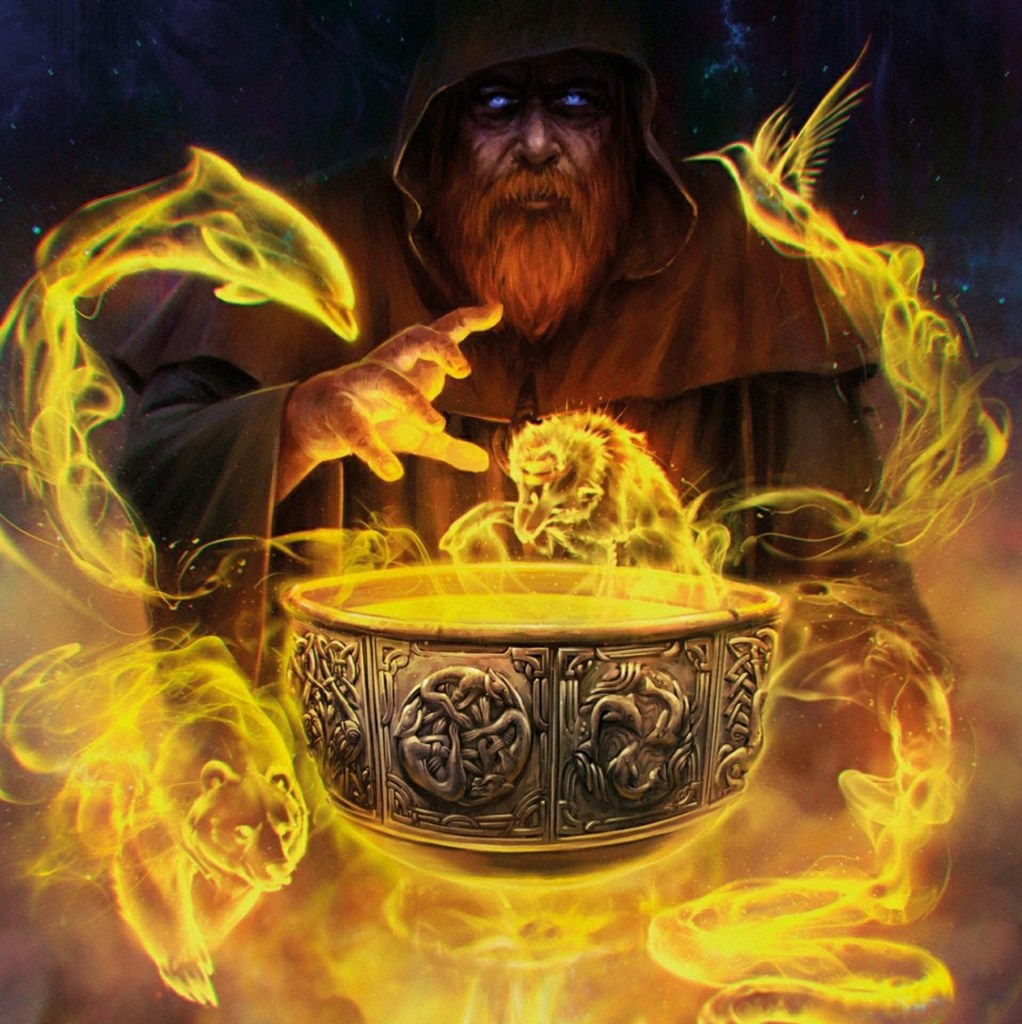
The Dagda was chief of the Tuatha dé Danann, the foremost of the Irish ancestral gods or faeries. Highly skilled and wise beyond measure, he was not only the god of life and death, but of seasons, agriculture, fertility, magic, and druidry as well. He wielded three sacred treasures: a cauldron of plenty, a club of life and death, and a harp that controlled men and seasons alike.

His children were plentiful, as were his lovers. His dwelling place was Brú na Bóinne.

The Dagda often carried three sacred relics with him that defined several of his many talents:

The coire ansic, a cauldron that could produce a bountiful feast; one could never be found wanting in the company of the Dagda. This particular relic was one of the Four Treasures of the Tuatha dé Danann, which were crafted in Murias.

The lorg mór, a mighty club (or staff) that possessed two distinct powers; its head had the power to slay nine men in a single swing while its handle could revive the slain with but a touch.

The uaithne, an ornate harp carved of oak. This harp could place the seasons in the proper order and command the wills and emotions of men. With these potent abilities, the Dagda was often seen as a god of order putting everything in its place, every time in its season, and every man to their rightful action.

In additions to these items, the Dagda owned two pigs—one always growing, the other always roasting—and an orchard that bore perennial sweet fruit.

The Dagda’s primary dwelling was at Brú na Bóinne, a series of Neolithic mounds on the banks of the River Boyne in County Meath. These ancient mounds were constructed around 3200 BCE, and as such are older than famous landmarks such as Stonehenge and the Great Pyramids. A mound called Newgrange aligned with the rising sun during winter solstice, representing the Dagda’s significance as lord of seasons and his mastery over day and night.

The Lebor Gabála Érenn laid out the coming of the Tuatha dé Danann, the fifth group of settlers to arrive in mythical Ireland. This group hailed from four cities north of the Emerald Isle, where they had learned the arts and sciences of their time, including magic. At this time, the Dagda was their chief. Though he did not hold the title of king, he was consulted and respected by many as if he was one.

The Dagda was also compared to the Germanic Odin and the Roman Dis Pater, as they bore certain similarities to him.


Vjesci

Vjesci was the name given to a Polish vampire known by the Kashubian people. The Vjesci vampire resembled the Nachzeher found to the west in northern Germany.

According to myths, a person was destined to become a vjesci if it was born with a caul. When a child was born with the membrane cap, it was removed, dried, ground up, and fed to the child on its 7th birthday in attempts to prevent the child from becoming a vampire.

Potential vjesci appeared to be completely normal and grew up in the community undetected, although in some cases, the potential vjesci had a restless and easily excitable nature and a ruddy complexion.

At the time of death, the person refused to take sacrament. His body cooled slowly, the limbs remained limber, and the lips and cheeks retained their color. Spots of blood often appeared under the fingernails and on the face of the body.

The vjesci didn’t really die, though. At midnight, after the burial, the vampire awakened and ate his clothing and some of his own flesh. He then left the grave and attacked his family, sucking their blood to the point of death. If the vampire is not satiated, he may go after the neighbors.

In order to protect oneself from a vjesci, steps could be taken.

  • The dying people should receive the Eucharist.
  • A little bit of earth was placed in the coffin under the body to prevent it from returning home.
  • A crucifix or coin was placed underneath the tongue for the vampire to suck.
  • A net may be placed in the coffin because the vampire had to untie the knots before it could leave the coffin.
  • A bag of seeds or sand man be placed in the coffin for the vampire to count each seed or grain. before leaving the coffin.
  • The body may be laid face down so that the vampire would dig further into the ground instead of out.
  • A nail may be driven through the forehead.
  • The head may be severed and placed between its feet.

If you were to open the coffin of a vjesci vampire, you would find a few tell-tale signs.

  • The eyes would open.
  • The head may move.
  • It may make noise.
  • The shirt may have been eaten.

If the precautions at the time of burial had not stopped the vampire to either drive a nail through the head or sever the head, there may be blood flowing from a new wound. It was said that if the blood was captured, it could be given to anyone who had been attacked by the vampire to prevent the victim from becoming a vampire.

The vjesci was closely related to the wupji (or opji), except the wupji had two teeth rather than a caul at birth. The Kashubian people immigrated to Ontario, Canada, bringing the vjesci with them. The vjesci and wupji were often used interchangeably.

Ubour

This Bulgarian vampiric revenant is created when a person dies a sudden and violent death and the spirit refuses or does not realize it needs to leave its body.

After 40 days the vampire will dig itself free from its grave and begins a reign of terror though this mainly consists of smearing manure on the sides of a person’s home and breaking the dishes in his house.

Active only between noon and midnight this vampire will exhaust all other food sources and options before seeking out a human to attack for his blood. If the person can make an offer to the vampire to spare their life the vampir must accept.

The only one with enough skill and knowledge to destroy this type of vampire is a Vampirdzhija (a type of vampire hunter).

Icelandic Elf School (Reykjavík, Iceland)

Icelandic Elf School (Reykjavík, Iceland)

When Icelandic member of parliament Árni Johnsen escaped unharmed from a car crash in 2010, he knew whom to credit for his survival: elves. After rolling five times, the politician’s SUV came to rest beside a 30-ton boulder. Johnsen, believing that multiple generations of elves called that boulder home, concluded that they used their magic to save him. When roadwork later required the removal of the boulder, he claimed it for himself, transporting it to his home to ensure the elves would continue to watch over him.

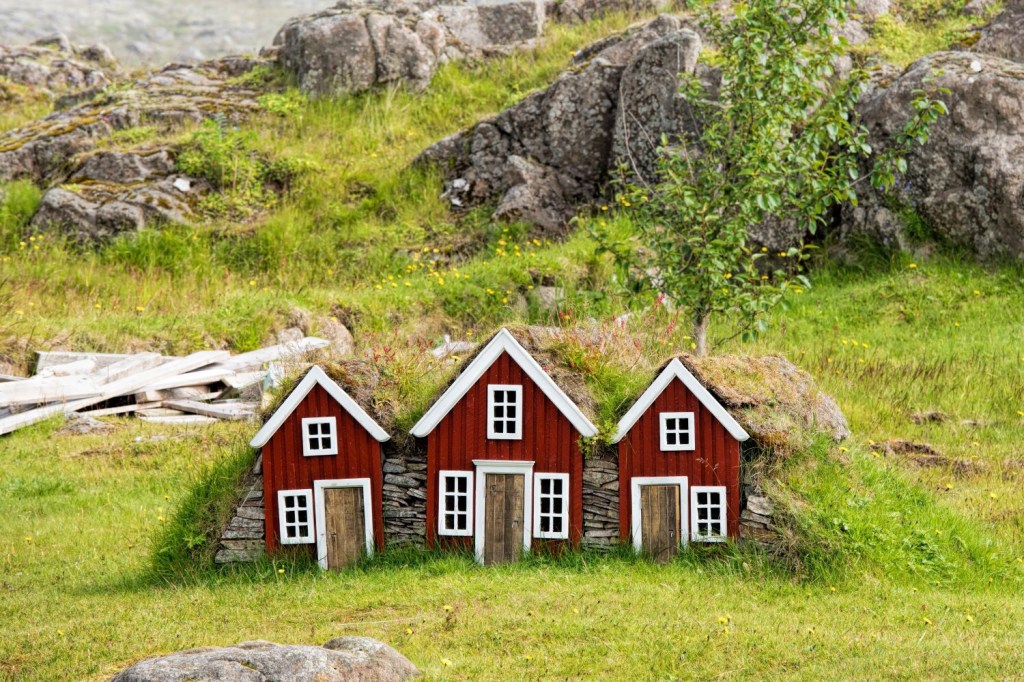
Johnsen’s beliefs are not unusual. According to Icelandic folklore, thousands of elves, fairies, dwarves, and gnomes—collectively known as “hidden people”—live in rocks and trees throughout the country. It is no wonder, then, that the world’s only elf school is located in Reykjavík.

Historian Magnús Skarphéðinsson, who has spent decades documenting people’s encounters with elves, established the school in 1991. Classes focus on the distinguishing characteristics of Iceland’s 13 varieties of hidden people. The school also offers five-hour classes for travelers, which include a tour of Reykjavík’s elf habitats. Students receive a diploma in “hidden people research.”

Skarphéðinsson has never seen an elf. His knowledge of their appearance and behavior comes from the hundreds of testimonies he has collected from people who claim to have made contact with hidden people.

Though Skarphéðinsson has devoted 30 years to the subject and considers himself the foremost authority on elves, he maintains a sense of humor about it all. At the end of class, he serves homemade coffee and pancakes and tells stories about the people who come up to him to say, “I swear I’m not on drugs, but I saw the strangest thing . . .”

Source: Atlas Obscura

Banshee

Banshee – actually should be spelled Bean Sidhe. She’s an Irish death spirit. Their keening fortells a death. They have very long, flowing hair and wear green dresses with grey cloaks. Their eyes are bright red because of their continuous weeping; or Benshee – an Irish faery attached to a house. Common name for the Irish Bean Sidhe. In Scotland the banshee is known as caoineag (wailing woman) also Bean-Nighe and, although seldom seen, she often heard in the hills and glens, by lakes or running water.

Bean Sidhe – In Irish folklore, the Bean Sidhe (woman of the hills) is a spirit or fairy who presage a death by wailing. She is popularly known as the Banshee. She visits a household and by wailing she warns them that a member of their family is about to die. When a Banshee is caught, she is obliged to tell the name of the doomed. The antiquity of this concept is vouched for by the fact that the Morrigan, in a poem from the 8th century, is described as washing spoils and entrails. It was believed in County Clare that Richard the Clare, the Norman leader of the 12th century, had met a horrible beldame, washing armor and rich robes “until the red gore churned in her hands”, who warned him of the destruction of his host. The Bean Sidhe has long streaming hair and is dressed in a gray cloak over a green dress. Her eyes are fiery red from the constant weeping. When multiple Banshees wail together, it will herald the death of someone very great or holy. The Scottish version of the Banshee is the Bean Nighe. Aiobhill is the banshee of the Dalcassians of North Munster, and Cliodna is the banshee of the MacCarthys and other families of South Munster.

Bean-Nighe – pronounced “ben-neeyah”; type of Banshee around streams in Scotland and Ireland. She washed bloodstained clothing of people who will soon die. They are rumored to be the ghosts of women who died in childbirth and will continue to wash until the day they should have died. The Washer at the Ford.

Upyr

Upyr (Oo-PEER)

Variations: Oupyr, Uppyr

This Russian vampire revenant is created when a heretic, sorcerer, or witch dies or as the child of a werewolf and a witch. Active between noon and midnight it looks like a normal person and preys on the children of a family and then moves on to the parents. After draining the victim of blood it will open a hole in the chest with its ironlike teeth and consume the heart.

Its grave can only be found by attaching a spool of thread to its clothing and following the thread. The grave must be soaked in Holy water and a stake driving though it in a single blow or the vampire will still rise. Another method of destruction is to decapitate the vampire and burn its corpse to ashes.

Varacolaci

The Varacolaci vampire is from Romania. This is one of the most powerful of the undead creatures. It’s said that the Varacolaci has the ability to cause lunar and solar eclipses.

The Varacolaci, a vampire revenant in Romania, is said to be created when an unbaptized baby died or if a person committed suicide. But there are also some instances that being a varacolaci becomes inherited or passed down from generation to generation.

If a varacolaci was created after his death, the person who turned into a varacolaci would look exactly the same, though would tend to look pale and with dried out skin. The varacolaci hunts its prey all year round but it is particularly active during St. Andrew’s Day and St. George’s Day. This creature is also said to be one of the most dangerous types of vampire since it was considered as the strongest type of vampire in the folklore of Romania.

A varacolaci like any vampire drains the blood of its victim, but it does not leave any bite marks. It can shape shift into any animals, but it usually takes the form of a flea, cat, spider, frog and dog. It is also said to be responsible for causing lunar eclipse and solar eclipse by putting itself into a trance.

The varacolaci also has the ability of “midnight spinning”, a sort of astral projection that allows them to travel safely at night anywhere they wish to go. While they were on astral projection, the creature seems to look like a dragon or a creature with several mouths. However if one manages to find a varacolaci in this state, the creature would be unable to return to its body causing it to sleep forever and leaving its soul to wander around eternally.

Traditionally, those corpses that are suspected of becoming a varacolaci, can be prevented on rising from its grave by planting a thorny plant on its grave. If in an instance that a person dies by committing suicide the only way to prevent him from being a varacolaci is to throw his body into a river immediately.

An intricate ritual needs to be performed in order to completely vanquish the vampire being, first the vampire must rise from its grave and must be captured. In the case of a male varacolaci, their heart must be ripped off and cut in half. A nail must be punctured into its forehead and whole cloves of garlic must be placed inside its mouth. The corpse is then filled with a pig fat that comes from a pig that was slaughtered on St. Ignatius Day. A burial shroud is then dipped into a holy water and wrapped on the corpse. The body was then reburied into an isolated area far from the community. In the case of a female varacolaci an iron fork must be driven into its eyes and heart and the body was buried into a very deep grave.

Vourdalak

In western sources the Vourdalak is a vampire from Russian mythology. It is said that this vampire is a beautiful and evil woman. The vampire was able to lure young men to do its bidding and drink from.

In actuality a Vourdalak is a vampire in the Slavic folklore mythology. Some Western sources define it as a type of “Russian vampire” that must consume the blood of its loved ones and convert its whole family. This notion is based apparently on Alexey K. Tolstoy’s novella The Family of the Vourdalak, telling the story of one such (actually, Serbian) family.

In Russia the common name for vampire (or wurdulac) is “upyr” (Russian: упырь). Nowadays the three terms are regarded as synonymous, but in 19th century they were seen as separate, although similar entities. The Russian upyr was said to be a former witch, werewolf or a particularly nasty sinner who’d been excommunicated from the church. In Ukraine the upyrs were also feared as the vampires who could bring about droughts and epidemics.

In Russian language the word “wurdulac” (Russian: вурдалак) first appeared in early 19th century, and became common due to Alexander Pushkin’s 1836 poem of the same name, part of the Songs of the Western Slavs cycle. It is the corrupt form of the West Slavic word “volkodlak” (Russian: волкодлак), meaning literally “wolf-fur” or “wolf-hide” (i.e., it denotes someone “wearing” a wolf’s skin; a werewolf).