Mandrake (mandragora officinarum)

A stemless perennial with a fleshy taproot and broadly ovate leaves; small white to blue-white, bell-shaped flowers are borne at ground level in spring, followed by aromatic yellow fruits. One of the most written about plants in history with whole books devoted to its properties and its ability to scream when pulled from the ground. It is a relative of deadly nightshade so contains the tropane alkaloids, notably hyoscine and atropine; the effects are hallucinogenic, narcotic, emetic and purgative similar to deadly nightshade and henbane. Mandrake root is supposed to look like the male form (having two legs, a body and often a hairy top) and, under the Doctrine of Signatures, its use ‘would give a man that power which men are always willing to spend a lot of money to get!’ Its high price was maintained, in part, by the difficulty of harvesting it.

Magical propensities for magical uses include protection; prosperity; fertility; exorcising evil. Carry to attract love. Wear to preserve health.

Sources: By Wolfsbane and Mandrake Root

Deadly Nightshade (atropa belladonna)

Deadly Nightshade (atropa belladonna)

For many, this is the star of the poison plants; named for Atropos, one of the Three Fates, who held the shears with which she could cut the thread of life. It grows in scrub, woods, woodland margins and thickets with the dark purple flowers appearing in June to August and the black, shiny berries from August to November. Most people have heard of deadly nightshade even if they have never seen it growing in the wild; its combination of providing deadly poison and its use to beautify give it a romantic attraction that is hard to beat. Add to that the hallucinations it may also cause and its fascination is complete. The plant’s very name, ‘belladonna’, comes from its use by Venetian women to make themselves ‘beautiful ladies’ by causing their pupils to dilate. Before the advent of modern anaesthetics, belladonna was applied to the skin as ‘sorcerer’s pomade’ to make the patient unconscious before surgery.

Belladonna contains tropane alkaloids, notably hyoscine (also called scopolamine), hyoscyamine and atropine, with at least five other toxic components having been isolated.

The enticing berries are slightly sweet and symptoms may be slow to appear, but last for several days. They include dryness in the mouth, thirst, difficulty in swallowing and speaking, blurred vision from the dilated pupils, vomiting, excessive stimulation of the heart, drowsiness, slurred speech, hallucinations, confusion, disorientation, delirium, and agitation. Coma and convulsions often precede death. There is disagreement over what constitutes a fatal amount with cases cited of a small child eating half a berry and dying alongside a nine-year-old Danish boy who ate between 20 and 25 berries yet survived. [Poisonous Plants, John Robertson] Though the root is believed to have the highest concentration of the toxins, the berries are usually the cause of accidental poisoning because they look so tempting.

Magical propensities for inducing visions and aiding astral projection.

Sources: By Wolfsbane and Mandrake Root

Chinese Lantern (Physalis alkekengi)

Chinese Lantern (Physalis alkekengi)

DESCRIPTION:

A unique plant, and gardeners definitely love unique! The round pods that form near the fruit of this plants are so cool looking! They are paper-like in texture, and definitely add interest to a container or flower display. However, anyone who has grown them knows how easily they can take over, making them a lot more annoying than cool. You might be tempted by these interesting plants, but there are definitely better options out there.

BE AWARE:

If the berries on this plant are ripe, they’re edible. But if not, they can cause headache, vomiting, breathing problems, and numbness.

Stay away! This plant is aggressive, weedy, and potentially deadly. This is enough to put it in the “don’t plant” category.

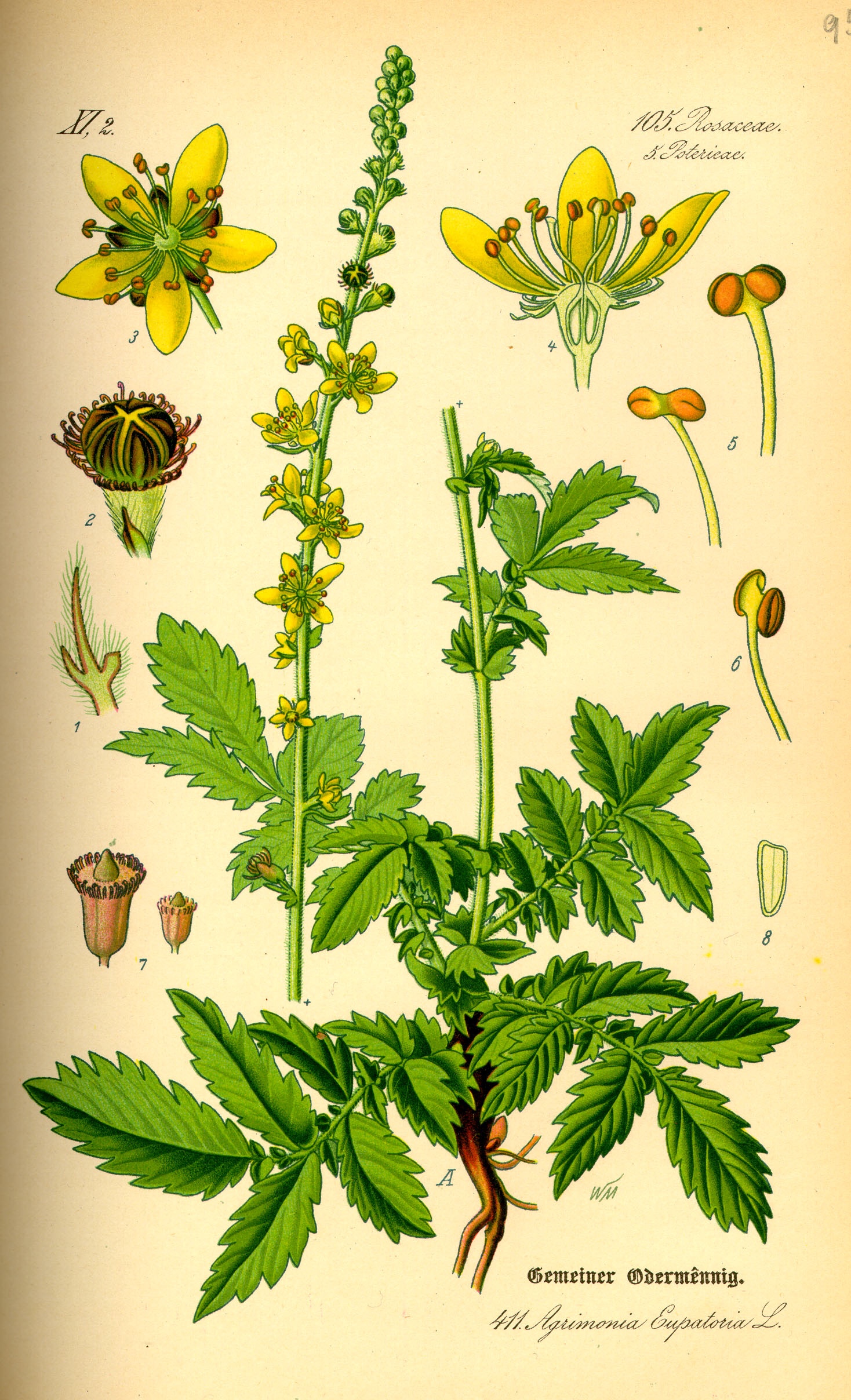
Agrimony

Diagnosis:

One of the most frequent health problems, especially when traveling is “diarrhea,” which affects up to 80 percent of people who go to high-risk countries (Africa, Asia, and Central and South America) where the sanitary conditions of water purification, and food preparation and preservation, are not very safe. In many cases, it is limited to mild cases of diarrhea lasting two or three days, but it can make traveling difficult. In other cases, diarrhea is accompanied by fever, nausea, vomiting, and even dehydration. Diarrhea is mostly due to drinking polluted water and consuming food with toxins.

Dosage:

For its tannin content, agrimony is considered an astringent that can be used to treat diarrhea. To stop serious persistent diarrhea, drink an infusion of agrimony that you prepare by mixing a teaspoon of the plant per cup of water. Boil it for two minutes, let it steep for fifteen minutes, and strain it. Drink three cups a day for three days to notice its effect.

Other Uses:

Precisely because of its richness in tannins it is also effective for gargling as a treatment for pharyngitis or tonsillitis. Externally, it is an excellent remedy against dermatitis because it relieves intense itching.

Source: Medicinal Plants at Home