“Myths had a great influence on the societal fabric of history’s greatest civilizations. The rich and complex mythology of ancient Egypt emphasized the creation of order out of chaos. Such stories validated the governance of society and legitimized a status quo in which the pharaoh himself was viewed as divine and therefore worthy of being served. The Egyptians also saw time as cyclical; events that happened in their society were merely repeating what had happened before and had been recorded in their myths.”
It was abandoned in favor of Christianity in the year 1000
While Ásatrú was the religion of the vast majority of the settlers of Iceland, some had been converted to Christianity while travelling in Europe. During the first centuries of Icelandic history Christianity made further inroads, and by the end of the 10th century it was clear Ásatrú was on the retreat.
It was re-recognized in 1973
Ásatrú was only re-recognized as a religion by the state in 1973. A group of people who were either practitioners of the ancient religion or its students had been meeting for some time. This group, led by Sveinbjörn Beinteinsson who later became the first high-priest of the association, decided to establish a formal congregation and request recognition from the state. This meeting was held on the First Day of Summer, a unique Icelandic holiday which marks the end of winter and beginning of summer. At the time the number of members was just 12.
It is Iceland’s fastest growing religion
According to figures from Statistics Iceland 3,583 people belonged to Ásatrúarfélagið on January 1 2017, up from 1,040 members 10 years ago. The membership has grown by 244% since 2007, making paganism the fastest growing religion in Iceland over the past decade.
No proselytizing or missionary work
This growth has come in spite of the fact that unlike other religious organizations Ásatrúarfélagið has never engaged in any form of missionary work or proselytizing.
One high priest, 10 Goðar in Iceland (Goðar = Congregation)
The organization of Ásatrúarfélagið is based on the historic organization of Ásatrú during the Viking age. Priests in Ásatrú are called Goði, with each Goði responsible for a congregation “goðorð”. While the goðorð were associated with certain geographic areas during the Viking age, people were free to choose their Goði.
All the ceremonies of Ásatrúarfélagið are open to the general public
The weekly meetings of Ásatrúarfélagið are open to the public, as are all its official ceremonies, the blót. Ásatrúarfélagið has four main blót each year: Jólablót (Yule-blót) at winter solstice in honor of the goddess Freyja, Sigurblót (Victory-blót) held on Sumardagurinn Fyrsti in the spring in honor of the god Freyr, Þingblót (Þing/assembly-blót) on Summer solstice held in honor of the laws, the Þing and human society, and Veturnáttablót (Winter-nights-blót) held on the first day of winter. Veturnáttablót is in honor of Óðinn, the god of the gods.
First pagan temple since 1000 was opened in 2018
Ásatrúarfélagið moveed into a new temple just outside downtown Reykjavík. The temple was the first heathen central temple built in the Nordic countries for more than a thousand years.
There is no prescribed dogma or scripture
Ásatrú has no prescribed dogma or scripture. However, You are however encouraged to read the Poetic and Prose Eddas written by the 13th-century chieftain and scholar, Snorri Sturluson. No one actually prays to the gods and how you might ask their intercession is entirely up to you. The gods are imperfect and not divine.
It is a religion of peace and tolerance
Ásatrú, as it has been practiced in Iceland, is a religion of nature and life, stressing the harmony of the natural world and the search for harmony in the life of individuals. It’s openness and philosophical character has led some to compare it to Unitarian Universalism.
It rejects militarism and the glorification of heroism, battles and blood
Many neo-pagan groups in Europe and the US who consider themselves observers of the religion of the Vikings, practice a religion which glorifies battles, militarism, masculine heroism and in some cases chauvinism, violence, intolerance and racism. Unfortunatelysome white-power groups and members of Aryan Nation gangs practice these forms of paganism. Ásatrúarfélagið rejects this as a misreading of Ásatrú.
Ásatrúarfélagið has received hate mail from reactionary heathens abroad
Ásatrúarfélagið has cut all ties with foreign associations of pagans after receiving harassment and hate mail from people who are angry with emphasis the association has placed upon equality and respect for human rights, especially LGBTQ rights.
Anyone can practice the religion, But only Icelandic residents can join Ásatrúarfélagið
Only Icelandic citizens or people who have a domicile in Iceland can become members of the Ásatrúarfélag, but anyone can practice Ásatrú, regardless of their nationality or residence. It costs nothing to join and is open to all, irrespective of race, cultural background, gender or sexual orientation.
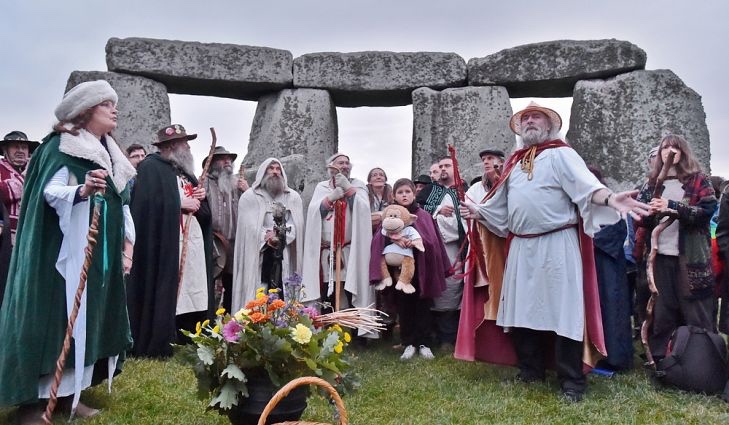
Almost 57,000 (surely many more now) people in England and Wales identify themselves as Pagan, according to the 2011 census, making Paganism the largest non-mainstream religion. In addition there were nearly 18,000 Druids, Heathens and Wiccans – all groups which are identified as Pagan.
Paganism is best described as a group of religions and spiritual traditions based on a reverence for nature.
Like Hinduism, there is no single founder, scripture or religious philosophy. Most Pagans, however, believe in the divine character of the natural world and Paganism is often described as an “Earth religion”.
“Uninvited witchcraft is generally frowned upon”
~ David Spofforth Pagan Federation
“Paganism is a spiritual path to some, a religion to others, that helps people to reconnect with the natural world, their ancestors, and the Otherworlds of myth and folklore.”
~ Damh the Bard, of the Order of Bards, Ovates and Druids (OBOD) – one of the UK’s largest organised Pagan groups.
Ley lines were first theorized in 1921, and since then, the debate has been over whether or not they exist, and if they do, what purpose they serve.
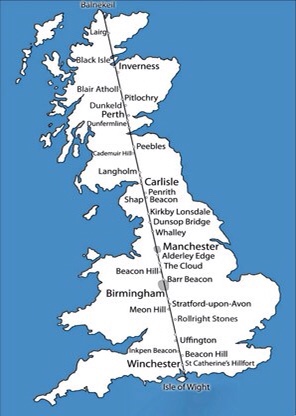
In 1921, amateur archaeologist Alfred Watkins made a discovery. He noticed that ancient sites, at different points around the world all fell into a sort of alignment. Be the sites man-made or natural, they all fell into a pattern, usually a straight line. He coined these lines “leys,” later “ley lines,” and in doing so opened a world of supernatural and spiritual beliefs.
To those who do believe in ley lines, the concept is quite simple. Ley lines are lines that crisscross around the globe, like latitudinal and longitudinal lines, that are dotted with monuments and natural landforms, and carry along with them rivers of supernatural energy. Along these lines, at the places they intersect, there are pockets of concentrated energy, that can be harnessed by certain individuals.
So you can see why there are some skeptics.
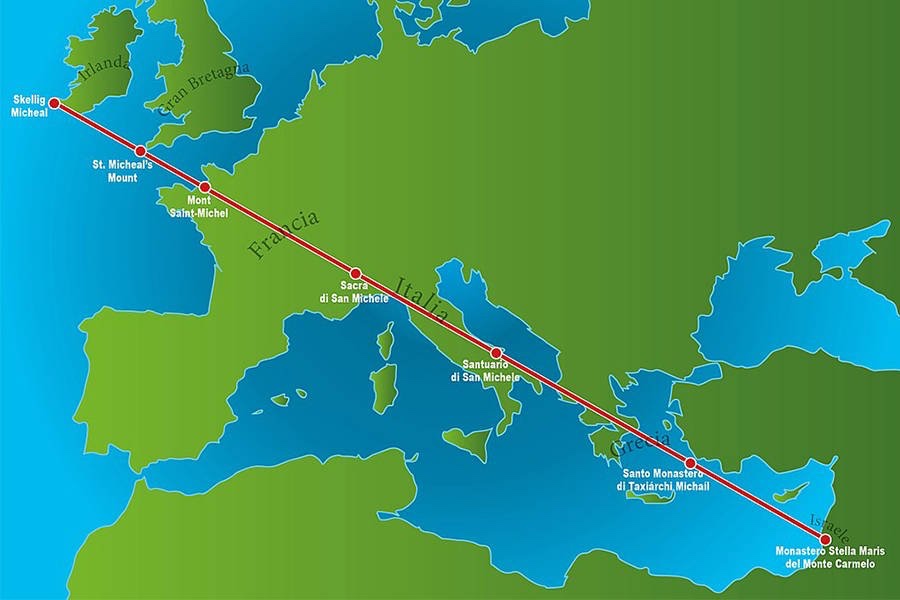
Watkins backed up the existence of his ley lines, by pointing out that many monuments around the globe can seemingly be connected by a straight line. For example, stretching from the southern tip of Ireland, all the way to Isreal, there is a straight line that connects seven different landforms that bear the name “Michael,” or some form of it.
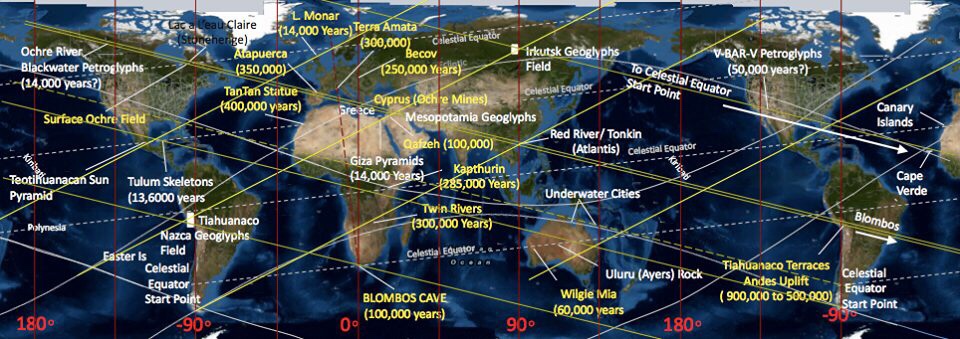
As for their supernatural component, the ley lines mystery deepens when it’s revealed what they connect. Along the ley lines lie the Great Pyramids of Giza, Chichen Itza, and Stonehenge, all wonders of the world that continue to surprise archaeologists today. Perhaps their presence on the ley lines, near to the so-called energy pockets could explain their inceptions, all of which defied the laws of architecture at the time.
Regardless of their validity, the concept of ley lines has captivated fans of the supernatural and science fiction for years. They often appear as the explanation for paranormal events, or as explanations for the fantastic monuments in science fiction movies or novels.
The device was believed to show the way back home and protect seamen and their ships from storms. The Vegvisir was like a guide helping its bearer to find his way home. Norse people believed that the Vegvisir had special powers and it was treated like talisman for luck, protection and blessings. This powerful symbol could help a person to find the right way in storms or bad weather whatever unfamiliar surroundings he or she may encounter. It has also long played an important role among people who believe in magic powers, such as Norse Shamans. As a spiritual compass, this magical device guides your heart and steps to make the right choices in life. If you have lost yourself and your faith, this sacred symbol helps you find confidence again.
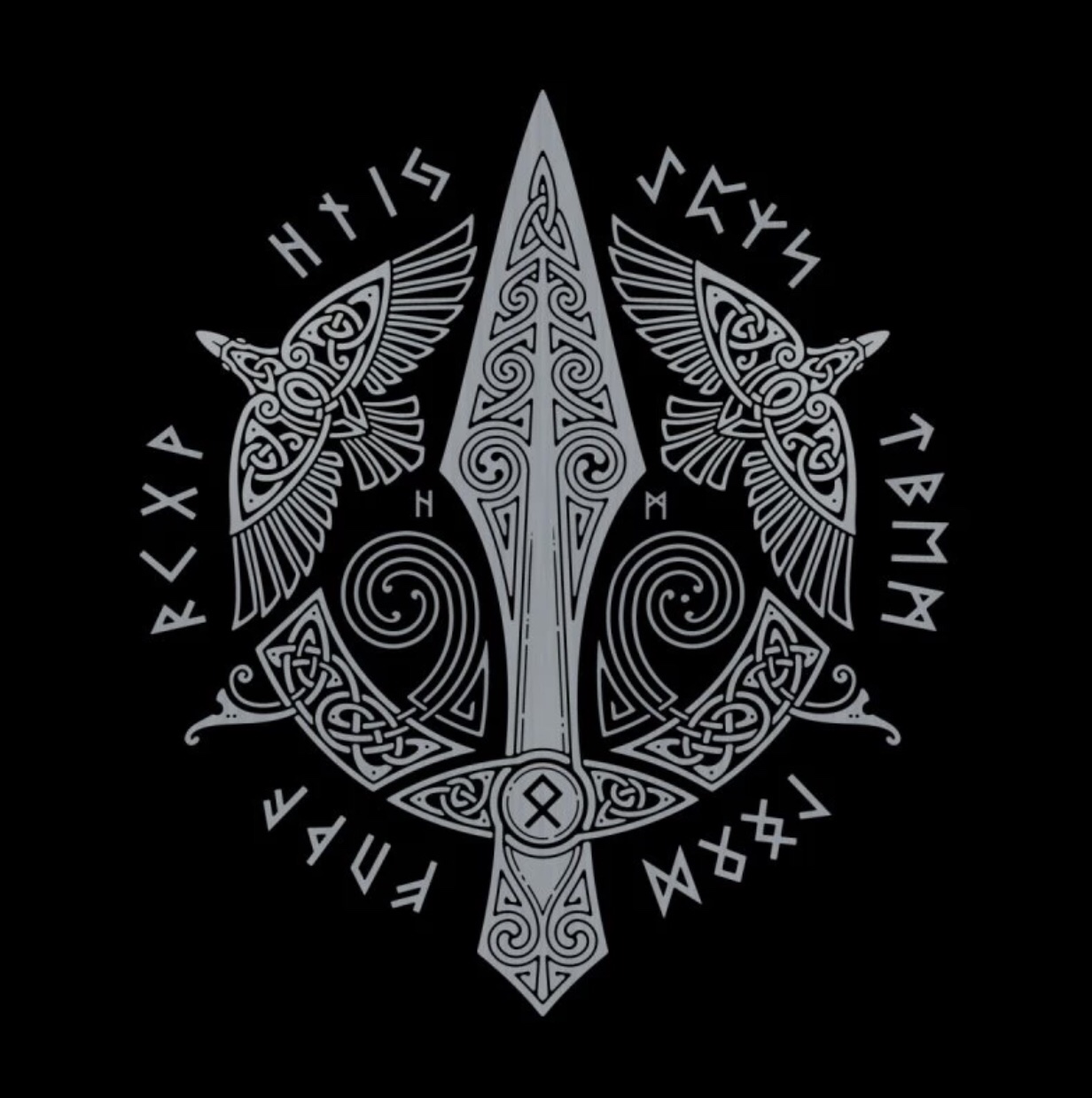
Gungnir was a magical weapon created by the dwarves and given to Odin by Loki. The Gungnir never missed its mark and like Mjölnir, the hammer of Thor, it always returned to Odin.
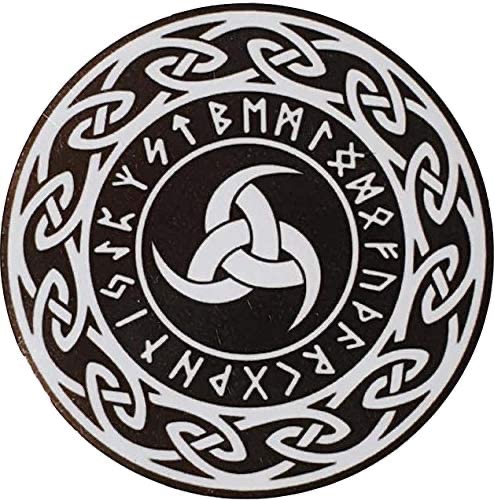
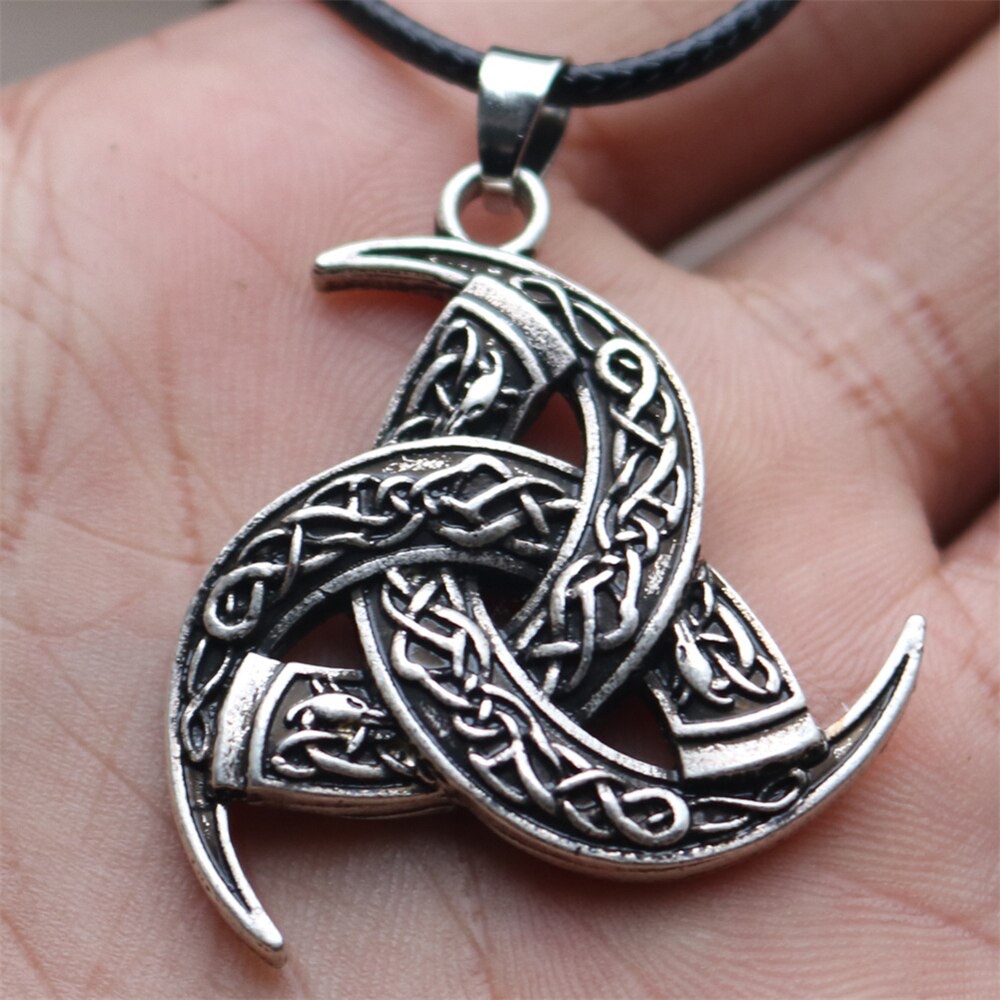
The Triple Horn of Odin is yet another symbol of the great Norse God Odin. The symbol consists of three interlocked drinking horns, and is commonly worn or displayed as a sign of commitment to the modern Asatru faith. The horns figure in the mythological stories of Odin and are recalled in traditional Norse toasting rituals. In Norse mythology there are some tales describing God’s quest for the Odhroerir, a magical mead brewed from the blood of the wise god Kvasir.
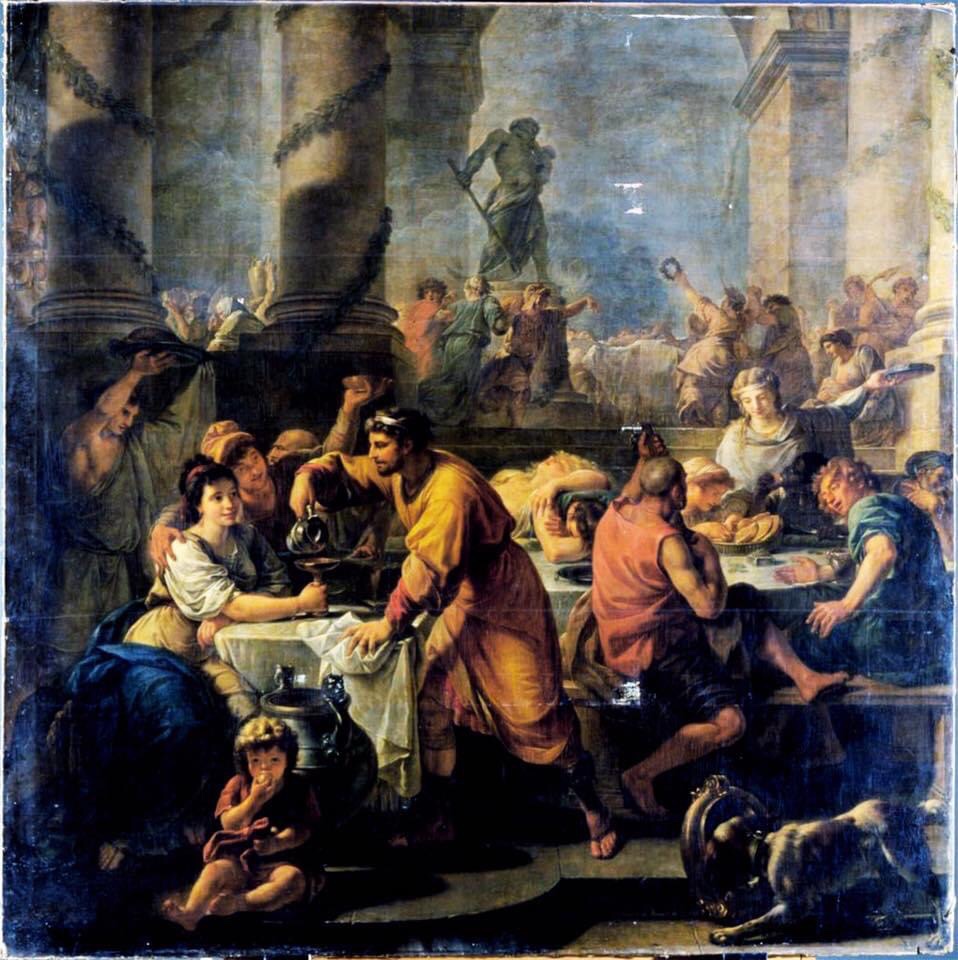
Saturnalia was a lawless, drunken time in Rome where literally anything was okay. This was the original Purge, in which laws were suspended for a brief stretch of time. Saturn, the Roman god of agriculture, liberation and time, was celebrated at what is perhaps the most famous of the Roman festivals, the Saturnalia, It was a time of feasting, role reversals, free speech, gift-giving and revelry. (i.e.: gender-bending sex, drinking, telling people off, trading gifts and doing whatever you want).
After solstice, the darkest night of the year, the renewal of light and the coming of the new year was celebrated in the later Roman Empire at the Dies Natalis of Sol Invictus, the “Birthday of the Unconquerable Sun,” on December 25th.
Image: Saturnalia (1783) by Antoine Callet, showing his interpretation of what the Saturnalia might have looked like.
In Norse mythology, the Yggdrasil is a giant mythological tree that holds together the Nine Worlds or realms of existence.
At the very top of Yggdrasil, an eagle lived and at the bottom of the tree lived a dragon named Nidhug. Both hated each other and were bitter enemies. The Nine Worlds are guarded by the serpent Jormungandr. Yggdrasil is one of many variations of the Cosmic Axis or Universal World Tree known to all human cultures and home to many fascinating creatures.
The image of Yggdrasil appears on the famous Överhogdal Tapestry, which dates to the year 1066 and depicts the events of Ragnarok, the doom of the Gods and apocalyptic record of the coming comet.
Holiday Traditions: Holly, Ivy and Evergreens —> Romans loved wreaths and decorated everything with Laurel. Holly, ivy and evergreen are the more popular modern options today, and each one holds significance. Egyptians didn’t have evergreens, so they used palm fronds to celebrate Winter Solstice. Christians love holly because the red berries symbolize the blood of Christ and the pointy leaves symbolize the crown of thorns. However, the advent of holly decor was around long before Christianity. Pre-Christian pagan groups believed that the Holly King did battle with the Oak King. They also thought holly could drive off evil spirits. Romans, of course, were into laurel wreaths, but laurel was not easily procured throughout the northern reaches of the empire. Instead of laurel, they used evergreens.









 Mark Bere Peterson’s Counterculture, Urban Legends, Paganism & Witchcraft