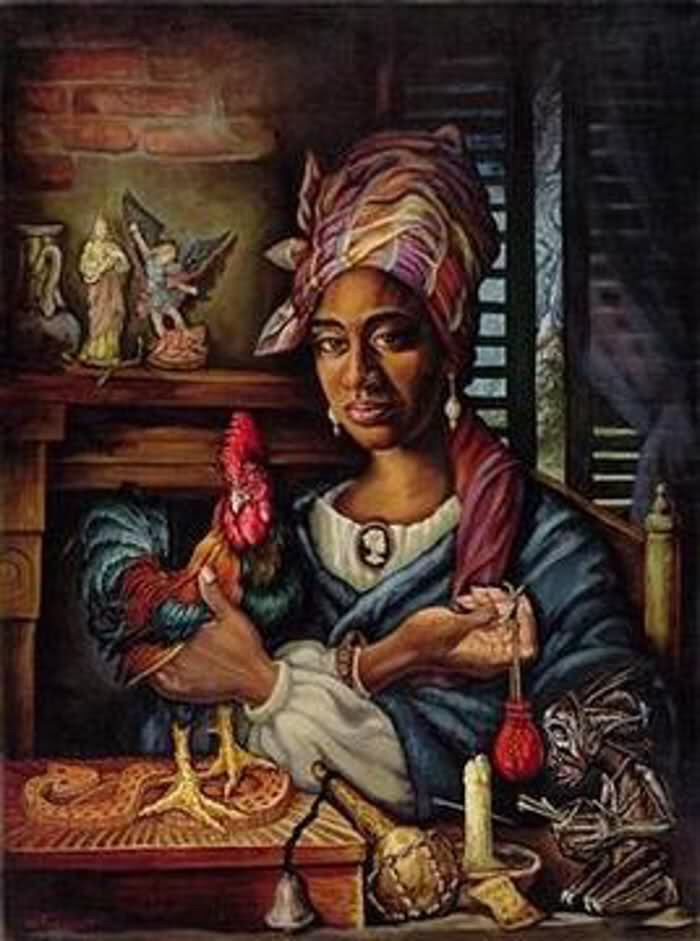
Holy Mother of New Orleans Voudou, hear my prayer. I humbly request your assistance. Through you I feel the gentle power of Divine Justice. Give me strength to stand against my enemies and protect me from those who wish me harm,
Sweet Heart of Marie, Show me your wisdom That I shall speak the truth and elevate the Ancestors Madame Marie, Bless me with the protection of Johnny Conker That he shall always have my back.
Holy Mother of New Orleans Voudou, Bless me with the powers of the Sacred Serpent Li Grand Zombi That I may walk in balance, equally male and female. Holy Mother of New Orleans Voudou, Bless me with the spirit of St. Maroon
That I shall never take for granted the freedoms that I have. And with the light that emanates from your Spirit, Madame Laveaux, all darkness is Obsolete.
Holy Mother of New Orleans Voudou, pray for me. Holy Mother of New Orleans Voudou, hear my plea. Holy Mother of New Orleans Voudou, Madame Marie, pray for me. Ashe!
The dynamic duos of rice and beans and peas and rice have their roots in the Akan, Aja, Yoruba and Igbo kitchens in Ghana, Senegal, Nigeria and Gabon. When Africans arrived in the Americas, they continued cultivating these crops, so rice and beans dishes can be found throughout the African diaspora: red beans and rice; Hoppin’ John (black-eyed peas and rice); black beans and rice; and pigeon peas and rice. The popularity of these dishes as staples and special occasion foods continued after the abolition of slavery.
In the seventeenth century, West Africans from Cape Verde to the Gold Coast cultivated large amounts of rice. They grew so much rice, in fact, that they became known as the people of the Rice Coast. White rice planters in the South sought out West Africans for purchase as slaves because of their knowledge of rice cultivation. These West Africans brought their methods of cooking long-grain rice with them to the colonial South. The African cook made her greatest culinary mark on areas like Savannah, where blacks outnumbered Europeans. Mulatto rice is evidence of diasporic links between Africa and several regions of the Americas. Zora Neale Hurston begins and concludes her classic novel Their Eyes Were Watching God with rice and bean dishes. While Janie tells her friend Phoebe about how her grandmother escaped from slavery in Savannah and migrated first to Atlanta and then to West Florida, Janie is enjoying a plate of mulatto rice. “Mah mulatto rice ain’t so good dis time. Not enough bacon grease, but Ah reckon it’ll kill hungry,” says Phoebe. “Ah’ll tell you in a minute,” Janie says, lifting the cover off the plate. “Gal, it’s too good. You switches a mean fanny round in a kitchen.”
Mulatto Rice Recipe
6 strips bacon ½ cup onions, minced 2 cups water 1 cup tomatoes, diced 1 cup rice
Fry bacon in a pan then remove the bacon and brown a minced onion in the bacon grease. Next, add diced tomatoes. After it is hot, add a pint of rice to the mixture, and cook slowly until the rice is done.
Source: Zora Neale Hurston on Florida Food: Recipes, Remedies and Simple Pleasures
As the Civil War drew to a close how to treat those states that had left the Union was a significant challenge. President Lincoln had a forgiving attitude and believed that the states never actually left the Union, and thus believed that all the states needed to do was accept the 13th amendment outlawing slavery. They then had to a elect new local governments and send their representatives to Washington. When Lincoln was assassinated Vice President Johnson took over. As the only Senator from the South to remain loyal during the Civil War he was not totally trusted by the Northerns. Johnson continued Lincoln’s policies towards the Southern states, but without Lincolns prestige, Johnson was opposed by the Republicans in the Congress. Johnson’s task was made harder by the actions of the Southern States in passing “Black Codes”- laws that put restrictions on the freed slaves.
The Republicans in the Congress who became known as the Radical Republicans never accepted Lincoln approach and believed that it was up to the legislative branch to allow states to fully return to the Union. In 1867 they passed the Reconstruction Act that assigned the military of the role of organizing local government, making sure that ex slaves received the full right to vote, and denied the right to vote to supporters of the confederacy. The South was divided into five military districts and the goal of the military was to ensure that African Americans were able to vote. The military oversaw the election process, and were responsible to make sure that all people holding office had taken an oath to the United States. Under the act for a state to be readmitted to the Union it had to approve the 14th amendment guaranteeing all men the right to vote.
President Johnson opposed the Reconstruction Act and vetoed it. His veto was easily overridden by Congress and became law. New governments were elected in the South and they included many African Americans.
“Marie Laveau was a negress of café au lait tint, handsome in face, commanding in figure, and of remarkable intellect and force of character. She masqueraded as a hairdresser, thus learning the secrets of many a proud old New Orleans family. In helping sweethearts to secret meetings and forwarding clandestine correspondences, she had no equal and cared not whether the men and women she aided were old in coquetry and vice or young and innocent.”
James Edward Oglethorpe was born on December 22, 1696 in London England. He was one of ten children born to Eleanor and Theophilus Oglethorpe. James had a comfortable childhood, since his father owned land in different parts of England. The political nature of James Oglethorpe’s family had great influence on him. In 1698, Theophilus, James’ father, was elected to the House of Commons. While not much is know about Oglethorpe’s childhood, it is known that beginning in 1714 he was admitted to Corpus Christi College at Oxford University. Oglethorpe soon dropped out of school and joined the English military. He had a very successful campaign against the Turks. He returned to school after, but never graduated. Even though in 1731 Corpus Christi College awarded him an M.A. In 1722, Oglethorpe followed his father’s footsteps and was elected House of Commons where he focused on the domestic and international policies of England. At that time, in England, people could be jailed for their debt. This was the case with Robert Castell, one of Oglethorpe’s close friends. Due to the death of his friend in prison, as a result of bad prison conditions, Oglethorpe launched a campaign to improve prison conditions which earned him national notoriety.
It was during this time that Oglethorpe formed a plan to deal with all the poverty in England. His idea was to take all the “worthy poor” and move them to a new colony in the Americas where they could become farmers and merchants. Oglethorpe was also set on the idea that the structure of the social classes in England, which caused so much poverty, should be avoided in the new colony. This meant no one person would be allowed to hold much land and slavery would be prohibited. After he revealed his idea to King George II, he was given clearance to begin the colony of Georgia. Oglethorpe was also named one of the twenty-one trustees who would govern the colony. Unfortunately, when the new colonists were being selected, the original idea of picking people with debts was lost and the selection focused more on skills and usefulness.
In November 1732, 114 people left for Georgia to make their home there. Oglethorpe was on this first boat load of settlers. As a trustee, Oglethorpe worked hard, and at times, even broke the law, in order to allow Jews and other persecuted religious groups to settle in Georgia. He was strongly opposed to slavery. He did his best to make fair treaties with Native Americans and protect them from white traders. Though he was not officially a “governor”, because as a trustee he was not allowed to hold office, many considered him Georgia’s first governor for his clear leadership over the colony.
Georgia was agreed upon partially because it was a place the English could protect their colonies in America against the Spanish. It was because of this situation that Oglethorpe convinced the king to make him a Colonel. Oglethorpe launched a preemptive attack on the Spanish, which failed. The Spanish counter-attacked but Oglethorpe’s regiment managed to push back the Spanish in the Battle of Gully Hole Creek. In the Battle of the Bloody Marsh, Oglethorpe managed to beat the Spanish badly enough that they decided the heavy losses sustained were not worth the fight. Oglethorpe had successfully defended Georgia.
In 1744, Oglethorpe returned to England and married Elizabeth Wright. He settled in the small Essex town of Cranham. Oglethorpe remained a Trustee, but the other trustees in Georgia relaxed their restrictions on alcohol, slavery and land ownership. Oglethorpe lived to see the colony that he had made become part of the United States of America. After a brief sickness, Oglethorpe died on June 30, 1785.
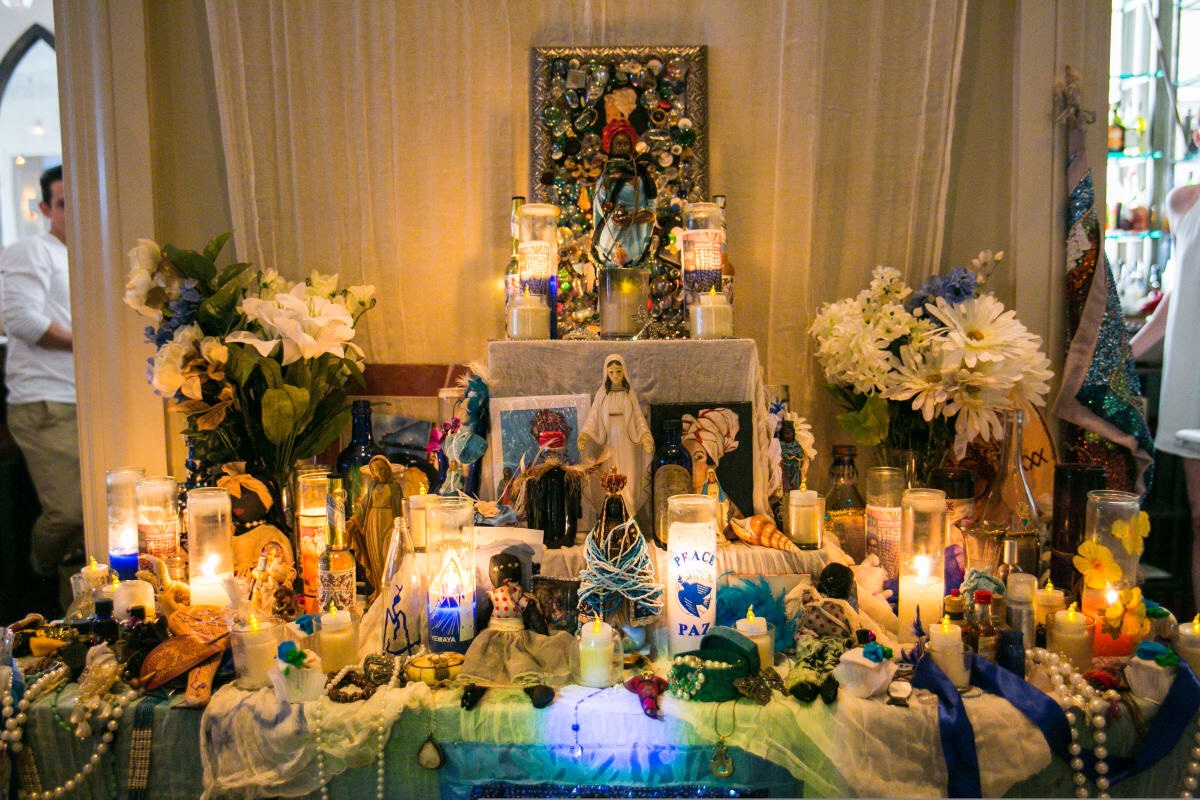
Before you begin any hoodoo work, you will need a place to do your rituals. This means you will need a quiet place where you won’t be disturbed, and a surface such as a table, box, chest, or even a large flat stone. Some people set aside a portion of the floor to use as an altar, or they use a dresser top, with ritual supplies stored underneath. You will need basic items and some extra items to personalize your altar.
Cover your altar with a white cloth, and place two white candles at the back on either end. Figures or pictures of saints or other religious images should be placed at the back, between the two white candles. Place your incense burner in front of the image and in the middle of the altar, and to the right of that keep some holy water or a bowl of water that you have blessed. These are the basics of the hoodoo altar.
You can add fresh-cut flowers, special stones, a dish of salt, and a small dish of graveyard dirt, if you wish. The important thing is to not place anything on your altar that doesn’t belong there. Altars can range from the very basic to the extremely elaborate.
Your altar and everything on it should be blessed or consecrated. Your candles should be blessed and dressed. All of the bowls and other containers should be washed with salt water, conjure water, Florida water, or Holy water.
As you become familiar with working with the various spirits, you will learn how to set up altars for each spirit or family of spirits. For individual magickal works, however, the altar will be as individual as the work is itself.
In August 1669 three ships left with the first settlers. Each family had paid 500 Pounds for their part of the settlement. They founded the settlement of Charlestown. Within two years there were 271 men and 69 women in the settlement
The proprietors of the settlement set up a system of government that was called “the Fundamental Constitution of the Carolinas”. One of the authors of the Constitution was John Locke. It provided for an independent parliament in the colony, which gave greater power to the owners of large lands.
The growth of the Carolina colony was slow. The coastal land was swampy and many of the early inhabitants came down with malaria. The proprietors of the colony wanted to offer large land holdings to a small number of settlers. This limited the number of settlers and slowed down the growth of the colony.
The settlement of northern and southern Carolina were very different. Settlers from Virginia seeking more land, while settlers in the Southern part of the colony were coming from the West Indies and Europe mostly settled Northern Carolinas. Settlers in the northern part grew tobacco, while the settler in the Southern part of the colony grew rice. The parts of the colony grew apart and finally, in 1712 they separated and became North and South Carolina.
The British Monarchy did not have enough money to organize settlement activity in North America. Instead, they assigned that role to independent companies that raised money from merchants to accomplish this goal. King James gave the charter to settle the area around Virginia Company of London
On December 20th 1606, 105 settlers set sail to the New World to establish a colony for the London Virginia company. The group included 35 gentlemen, a minister, a doctor, 40 soldiers and a mixture of artisans and laborers. They arrived off the coast of Virginia in late April 1607. Captain Newport, who commanded the expeditions, was given instructions to find a site that was safe from Spanish attack, but gave access to the sea. Newport sailed up the James River. He found a site 50 miles up the river that was joined to the mainland by a small natural passageway, and thus defensible. He decided on that site and claimed it for James I. He called the new settlement “Jamestown”.
The settlers began by clearing the land and building a fortified settlement. They built small one and two room timber cottages and cleared additional land for planting crops. Initially, they found the Native Americans friendly and willing to trade, but relations with the native Indians remained uneven. Soon some of the negatives of the location of became apparent, as settlers began to die of disease– some from diseases they had brought from England and others from diseases they encountered in the mosquito infested swamp that they found initially in Jamestown. By winter, it was clear that not enough crops had been grown to survive the winter, a winter that turned out to be devastating. Despite trading with the Natives, by the end of the winter only 30 of the original settlers survived.
In the spring of 1608, Captain John Smith, who was a natural leader, took control of the settlement. Smith overcame one of the major problems of the settlement, the unwillingness of many of the noblemen to work. He made a simple rule: no work … no food.
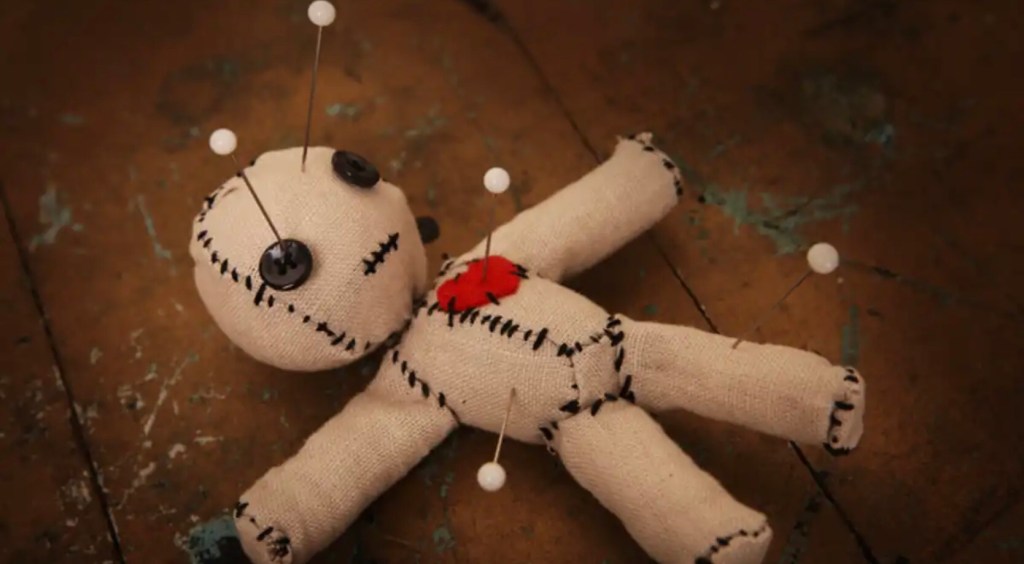
As portrayed in modern media, the idea of a Voodoo doll is simply a doll or a figurine representing a person in one’s life. It is then created by using personal objects with attachments to said person (for example, hair) and then using the doll to enact all kinds of spiritual acts. The most popular acts that people associate with Voodoo dolls are that of vengeance and mayhem.
In western media, it’s often shown that people with hate towards another person create the doll to hurt and curse people instead of what the dolls are initially intended for. Once a staple of West African traditionalism and Haitian beliefs, it is now reduced to nothing more than a tourist novelty. Voodoo Dolls have a terrible reputation. It is always depicted in popular media as a small, stitched-up doll that you imbue with your enemy’s essence. It then uses a needle prick, causing pain and inconvenience. And while it’s not unheard of that the dolls are used for curses, it’s doubtful that they are commonly used for this purpose.
The process of making the dolls has nothing to do with stitches and stuffing. Instead, the dolls are customarily made from sticks, straws, or any personal and organic material of the people that you’d like represented in the image of the figurine. As with West African spirituality, they are physical representations of the spiritual realm around people. Taking place on altars and surrounded by objects of interest. These physical conduits to family, friends, and loved ones are there to bring connection with that of the Lwa and to leave prayers and petitions of goodwill unto those that people are close to.
Source:Marie Laveau: Life of a Voodoo Queen. Monique Joiner Siedlak
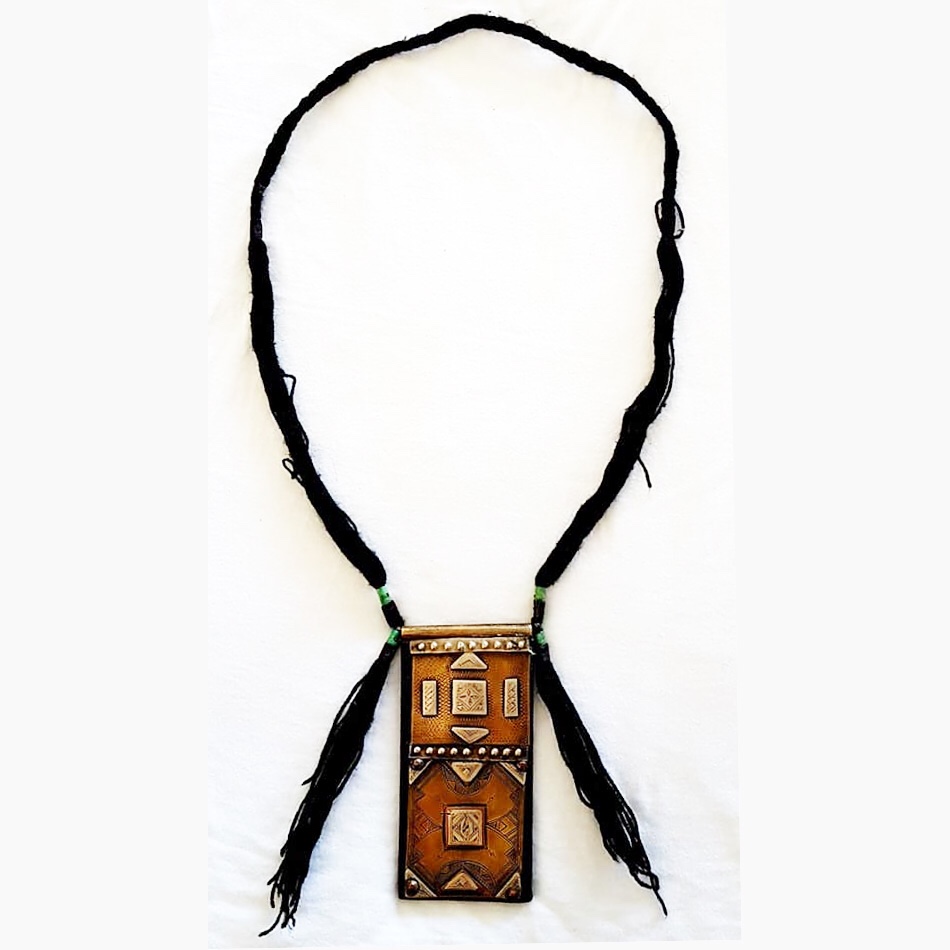
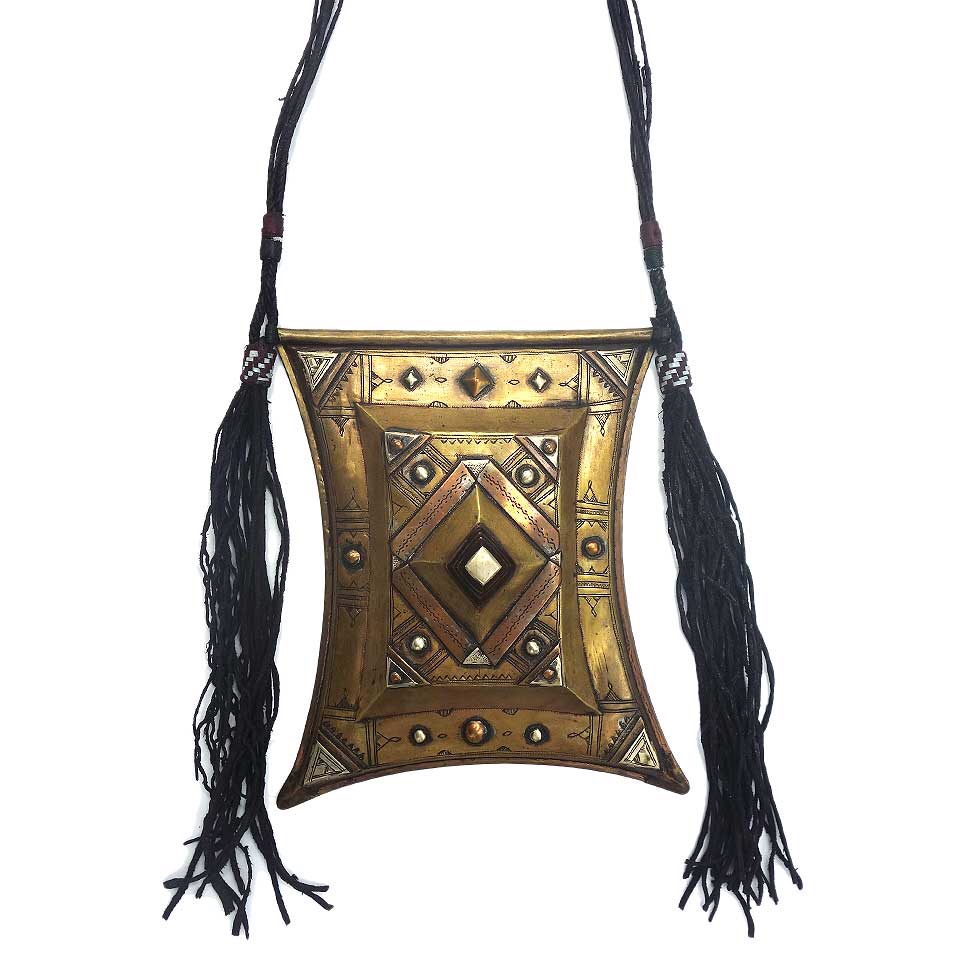
A gris-gris, sometimes known as a grigri, is an object that most Voodoo practitioners craft for their patrons. This talisman or amulet has its origins out of Africa and is designed and crafted for various uses. It is commonly created to ward off evil or as just essential protection against anything classified as a spiritual attack on a person. However, this isn’t its only use since, in the more western area of Africa, they can be used for birth control. The practice of wearing a gris-gris was surprisingly used by believers and non-believers alike. Its appearance, while varied, was usually a small cloth bag inscribed with African verses that contained small ritualistic objects. Allegedly, it was also used in the Islamic faith as protection against evil spirits called Djinn.
In Haiti, they are seen as objects of good fortune used to improve the external lives of the wearers and imbued with some sort of incantation. New Orleans has its version of a gris-gris. While they may be inaccurately represented as a form of black magic, they are, in fact, a much more positive item in the arsenal of Voodoo objects. Unlike the belief that it was designed to bring ill-will on patrons’ enemies, records indicate people tampering with other’s amulets as a form of vengeance. It is believed that, in actuality, the gris-gris was just sources of healing and protection. Why would its original meaning change so much in the course of Voodoo history? Many believed Marie Laveau used these talismans to curse people, but odds are, she simply used them to improve the way of life of those around her.
Source:Marie Laveau: Life of a Voodoo Queen. Monique Joiner Siedlak








 Mark Bere Peterson’s Counterculture, Urban Legends, Paganism & Witchcraft