French Fun Facts

French Fun Facts:

~ French Fun Fact: There is only one stop sign in the entire city of Paris

~ French Fun Fact II: French President Charles de Gaulle is included in the Guinness Book of World Records as surviving more assassination attempts—32—than anyone in the world.

~ French Fun Fact III: France was the first modern country to legalize same-sex sexual activity in 1791.

~ French Fun Fact IV: In France, you can legally marry a deceased person, although the process is complicated.

~ French Fun Fact V: The Durex Global Sex Study showed that the French are the people who have the most sex in a year.

Sushi Definitions for Foreigners

Definitions:

Neta –> The commonly used term for sushi toppings, such as seafood ingredients. The salmon that sits on top of your nigiri? Yep, that’s neta! 

Shari –> Sushi rice is called “shari”. It’s commonly flavored with vinegar, sugar, and salt. Shari plays a very crucial role in the flavors of sushi and shouldn’t be overlooked!

Murasaki –> Murasaki” is the Japanese word for the color purple, but in the sushi world, it’s the term used for soy sauce. It’s said that during the Edo period (1603-1868), soy sauce was referred to as murasaki because of its purple color. It was also believed that, as soy sauce was regarded as a luxury ingredient in olden days, it was dubbed “murasaki” due to the view of purple as a symbol of wealth in Japan.

Sabi, Namida –> Other ways to say wasabi. “Namida” means “tears”, and it was named this because it can cause one’s eyes to start watering after eating a bit too much of it at one time or getting a huge whiff of its sharp, distinct smell.

Nigiri –> is what most people think of when it comes to sushi – sushi rice seasoned with sugar, vinegar, and salt, then topped with items like seafood or egg. 

Gunkan –> is a type of sushi in which a strip of seaweed is wrapped around the rice to form a “boat” shape then topped with a neta. The name “gunkan” (or “battleship”) comes from its boat-like appearance.

Zuke –> “Zuke” is derived from the words “tsukemono” (Japanese pickles) or “shoyuzuke” (soy sauce marinade), a preparation method that was born in olden times with the aim of preserving food for long periods of time.

Gyoku –> Gyoku is another way to read the first character of the kanji characters for tamago (egg). Sushi topped with tamagoyaki (Japanese egg omelet) is one of the standard choices for sushi. It’s even said that you can determine the skills of a sushi restaurant’s chefs by the quality of their tamagoyaki.

Gari –> If you ever go to a sushi restaurant, you’ll almost certainly see these thin slices of pickled ginger, which are called “gari”. They have a slight sweetness with a little kick of spice, which has the effect of washing away any residual flavors from fatty fish so that you can taste your next bite of sushi with a clean slate.

Omakase –> You’ve probably experienced difficulties deciding what to order at a sushi restaurant. With the omakase, you’ll not only be rid of the burden of poring over the menu, but you’ll also be served all the sushi chef’s top neta recommendations! The sushi is served one at a time to ensure they are enjoyed at their peak state of deliciousness, and it often features seasonal ingredients and seafood stocked fresh daily.

Agari –> The hot green tea served at sushi restaurants at the end of the meal. The word “agari” includes the meaning of “the last item”. The type of tea served differs by sushi restaurant, but Japanese green tea and bancha (coarse green tea) are the most common. You’ll feel nice and relaxed after wrapping up your delicious meal of sushi with a cup of hot green tea.

Collard Greens

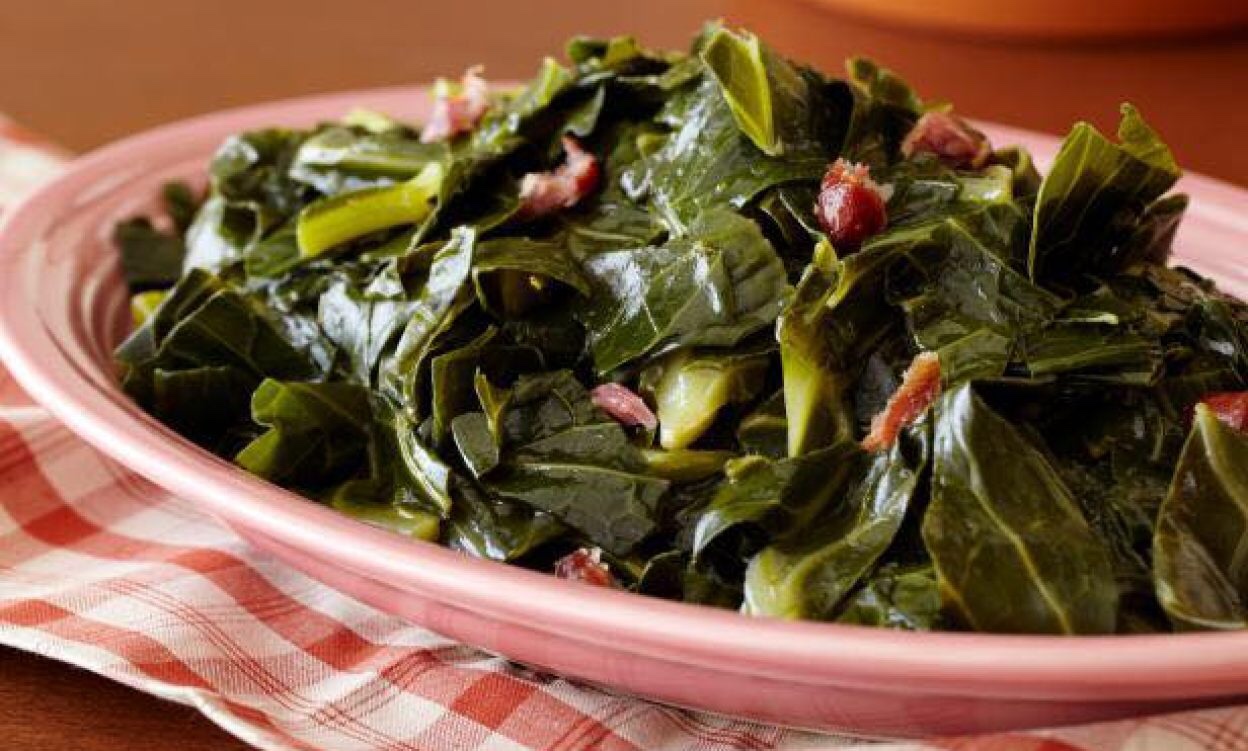
“Collard greens grow throughout the South and, probably as much as any other food, serve as a culinary Mason-Dixon line. Some claim greens kept Sherman’s scorched-earth policy from totally starving the South into submission; many today can testify to surviving Depression winters with greens, fatback, and cornbread. Southern childhood memories often focus on collard greens: either the pleasant, loving connection of grandma’s iron pot and steaming potlikker, or the traumatizing effects engendered by the first whiff of the unmistakable odor for which greens are famous. Writing in the Charlotte Observer in 1907, Joseph P. Caldwell explained, “The North Carolinian who is not familiar with pot likker has suffered in his early education and needs to go back and begin it over again.” Particularly among rural and poor southerners, collard greens have endured as a dietary staple.

Sometimes defined as headless cabbages, collards are best when prepared just after the first frost, though they are eaten year-round. They should always be harvested before the dew dries. When being prepared, they are “cropped,” then “looked,” then cooked; that is, cut at the base of a stalk, searched for worms, and then cooked “till tender” on a low boil, usually with fatback, or neck or backbone, added. The resultant “mess o’ greens,” topped with a generous helping of vinegar, can easily make a meal in itself. If they are summer greens (and much tougher), the tenderizing could take two hours or more of cooking; after first frost, it may take less than an hour. A whole pecan in the pot should eliminate the pungent and earthy smell. Potlikker, the juice left in the pot after the greens are gone, is a southern version of nectar from the gods and is valued both as a delicacy—particularly when sopped with cornbread—and for its alleged aphrodisiacal powers. Greens combine well with black-eyed peas and hog jowl in the South’s traditional New Year’s Day meal. To ensure good fortune, one should either eat lots of greens or tack them to the ceiling. In fact, a collard leaf left hanging over one’s door can ward off evil spirits all year long.

Though collard greens are grown year-round throughout the South and Southwest (Indians call them quelites), they are most prevalent in the Deep South and the eastern plains of North and South Carolina. The exporting of collards to displaced southerners in the Northeast has become a big business in the three leading collards-producing states. From the last week of October through May, eight firms from Georgia and the Carolinas ship a thousand tons of whole, fresh collards a week to the major northeastern metropolitan areas. The greens are cut and banded, then packed in bundles on ice, about 25 pounds per box or 20 tons a truckload.”

~ Alex Albright, East Carolina University. Excerpt From “The New Encyclopedia of Southern Culture”, John T. Edge (Editor)

Kaiseki-Ryori (会席料理)

Kaiseki-Ryori (会席料理)

Prepared by specialized restaurants and also served at dinner in ryokan (traditional inns), kaiseki typically features between 10 to 12 dishes enjoyed over the course of a couple of hours. From the traditional teahouse-like interiors to the kimono-clad staff and the tranquil atmosphere, it’s a deeply Japanese experience before you even begin to eat. While the course progression and dishes will vary, the focus on seasonal ingredients is always paramount. Dishes appear like works of art and delicately garnished with seasonal motifs like a cherry blossom bud in spring.

At the heart of kaiseki dining is the Japanese principle of shun, or taking ingredients at the peak of their freshness. Dishes are presented simply, without artifice. This is done not only to ensure that the true flavor of each ingredient be expressed, but also to properly display each and every one and the height of their natural beauty, thus creating the perfect synergy between cuisine and artistic expression.

Kaiseki-Ryori is the most refined form of Japanese cuisine, and as such requires the highest etiquette. It is important to observe a few basic formalities:

Show Respect —> Before the meal, be sure to say “itadakimasu” to show respect to the chef, the restaurant staff, and the wonderful bounty itself.

Use Chopsticks Properly —> Chopsticks should not be used to poke or cut food into smaller bites. When not using them, place chopsticks back on the hashi-oki, or chopstick rest, provided rather than placing them across the top of a bowl or sticking them into a dish.

End of the meal —> At the end of the meal, remember to thank the chef and restaurant staff with the common phrase, “Gochiso-sama deshita,” which essentially means, “It was a feast.

Sakizuke

Kaiseki-ryori menus often begin with the sakizuke course – a small appetiser or amuse-bouche.

Suimono

This light, clear soup, presented with minimal garnishes, is served as a refreshing palate-cleanser.

Hassun

The most attractive and artistic of all kaiseki-ryori components, the hassun is a seasonal platter of four or five hors d’oeuvres.

Otsukuri

The otsukuri course is comprised of a selection of sashimi, which varies by season and by region.

Takiawase

A lightly simmered vegetable dish served with fish, meat, or tofu.

Yakimono

A grilled dish that showcases seasonal fish (either fresh-water or from the sea) or meat such as local wagyu (beef).

Agemono

A deep-fried dish, often featuring tempura and served with a dipping sauce or salt seasoning.

Mushimono

This steamed dish can contain fish, chicken or vegetables, and may also include a savoury custard.

Sunomono

The sunomono course is a small vinegar-based dish designed to cleanse the palate. It usually features vegetables or seafood.

Shokuji

A trio of dishes – rice, miso soup and pickles – that are served together towards the end of the meal.

Mizumono

The meal concludes with a dessert, such as seasonal fruit, ice cream or a traditional sweet.

Japanese Table Manners 101

Before you begin eating, say “itadakimasu.”

As a rule, Japanese always say “itadakimasu” before they eat. It literally means “I partake.” There are many stories behind it, but it is considered to be a way of expressing gratitude to the chef, the people who grew/raised the ingredients that make up the meal, and the ingredients themselves since everything on one’s plate was once alive. 

If the chopsticks are disposable chopsticks break the chopsticks by pulling them apart vertically.

Proper etiquette states that the chopsticks should be held horizontally, and pulled apart vertically over your knees.  Do not pull your chopsticks apart horizontally.

If there isn’t a chopstick rest, make one with the paper your chopsticks came in.

Since it is rude to place your chopsticks over your bowls when you’re not using them, if there isn’t a chopstick rest, please make one using the paper sheath. 

When you’re eating rice, hold your rice bowl in front of you in the opposite hand you use for chopsticks.

When you eat rice, make sure to lift your bowl in front of you. Not lifting your bowl is considered poor etiquette.  The same rules apply to soup bowls.

Clean your plate.

Most places in Japan will not let you take food home for hygienic reasons, so please clean your plate.

When you finish eating, put your disposable chopsticks back in the paper and fold the end. After meals, please say “gochisousama deshita.”

“Gochisousama deshita” literally means “I feasted.” It derives from the word “chisou” which means “feast,” and is written with two characters that mean “to run,” it implies that the meal was created as the result of many people running around and working together. “Go” and “sama” are honorifics that take the phrase to politer level that implies thanks to the many people that came together to create this meal.

Many people say “itadakimasu” and “gochisousama deshita” with their hands put together as though in prayer, it’s not required and is often a regional behavior.

If at a restaurant saying “gochisousama deshita” to the staff when you exit is considered to be good manners as well.

Nodaiwa: Unagi Restaurant

CCE5BBA8-AAC2-4868-B2B7-88E2DCED2F57.jpeg

Nodaiwa is a traditional unagi restaurant (grilled freshwater eel) established during the late 18th century in Tokyo. This michelin-star restaurant has 4 locations in Tokyo and one in Paris. Its main location is in Azabu, near Tokyo Tower. The 5th generation chef, KANEMOTO Kanejiro, is running the restaurant.

The building in Kamiyacho is an old style kura (storehouse) brought to Tokyo from Takayama in Gifu Prefecture. the restaurant stands out juxtaposed to the tall office buildings around it. The shop in Azabu dates from the 1970s, but the history of the restaurant goes back 200 years with the first chef opening a restaurant called “Nodaya” in Azabu during the Kansei years (1789-1801). Many articles throw around the year 1850 around as the year of establishment.  The Japanese articles just state late Edo period (1603-1868) or the Kansei years (1789-1801).

The Rakan statues (Kyoto, Japan)

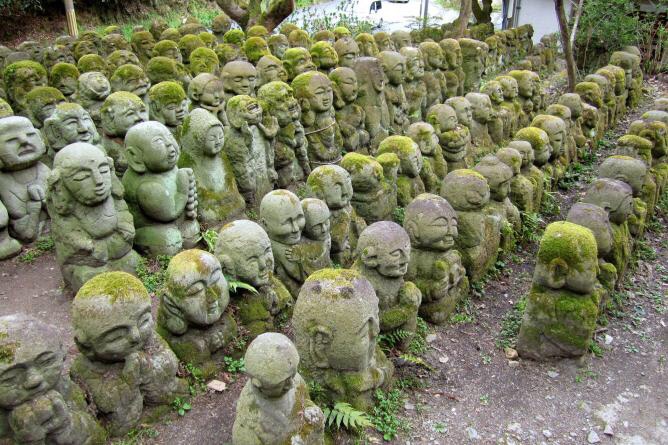
If you visit Arashiyama, the hills lying to the west of Kyoto city, you’ll find the Otagi Nenbutsu-ji temple. Standing all over the temple grounds, are 1,200 statues of rakan, the original disciples and followers of the Buddha, carved from stone and covered with moss. They were carved decades ago by believers who worshipped at the temple, and were donated as a blessing. Due to the many different sculptors involved in the project, many of whom were amateur, all the statues have different expressions, poses, and artistic styles. They may be praying, laughing, holding birds or even goblets. These differences add a touch of whimsy to this lovely temple, making it a true hidden treasure.

Open hours: Mon-Sun 8am-5pm

Address: 2-5 Sagatoriimoto Fukatanicho, Ukyo Ward, Kyoto 616-8439.

UNESCO World Heritage Site: The Gassho-Style Houses of Shirakawa-go

In 1995, the villages of Shirakawa-go were designated a UNESCO World Heritage site for the beautiful scenery they create and their historically significant structures.

The Gassho-style houses are a marvel to look at, and the wooden buildings built with steep-angled thatched roofs are the everyday residences of the people in the village, even today after 300 years have passed. Some of the buildings are open to the public, and you can also make arrangements to stay overnight, so these spots are highly recommended.

Wada-ke House is the largest of the many homes, so you should definitely take the opportunity to check it out. In the southern area of Shirakawa-go, you can find the Hirase Onsen (hot spring) area, where you can enjoy a steamy bath amidst an untouched expanse of vivid green nature.

“Located in a mountainous region that was cut off from the rest of the world for a long period of time, these villages with their gassho style houses subsisted on the cultivation of mulberry trees and the rearing of silkworms. The large houses with their steeply pitched thatched roofs are the only examples of their kind in Japan. Despite economic upheavals, the villages of Ogimachi, Ainokura and Suganuma are outstanding examples of a traditional way of life perfectly adapted to the environment and people’s social and economic circumstances.” 

~ UNESCO