Fall of Fort Sumter and Reaction

The federal government had a number of forts and military installation in the South. As Southern states seceded, many of them were quickly turned over by state forces. One of the major exceptions was the federal facilities in and around Charleston. 

Federal troops there were concentrated in Fort Moultrie. In the middle of Charleston harbor sat Fort Sumter, unoccupied and still under construction. On November 15th Major Robert Anderson was named commander of Federal troops in Charleston. He quickly came to the conclusion that Fort Moultrie was not defensible. The unoccupied Fort Sumter was defensible as it was situated in the middle of the harbor surrounding by deep water.

On the night of December 26th Major Anderson, mustered his command and moved in the stealth of night to Fort Sumter. The Southerner felt betrayed. They believed that they had an understanding with Anderson to maintain the status quo.

When Lincoln took office the issue of Ft Sumter arose and he was forced to come to grips with the problem. On one hand reinforcing the fort seemed increasingly difficult. Lincoln was afraid of using force, since this might sway those Southern states such as Virginia that had not yet seceded to secede. On the other hand Major Anderson was becoming a hero in the North.

Finally after receiving varied advise from his advisors Lincoln decided to resupply the fort.

The Confederate government under Davis felt that they could not allow the fort to be resupplied, and Davis despite opposition from the Confederate Secretary of State Robert Toombs – he stated “Mr. president at this time it is suicide, murder, and will lose every friend at the North. You will wantonly strike a hornets nest which extends from mountains to ocean, and legions now quiet will swarm our and sting us to death. It is unnecessary; it put us in the wrong it is fatal.”

On the afternoon of April 11th, General Beaulegrad issued a formal demand of surrender to Major Anderson. When major Anderson received it he refused it, however he stated to the Confederate representatives, that if they had only waited another few day the fort would be forced to surrender, as it would be without food. Colonel Chesnut one of the Confederate representatives asked if he could include that in his report. Anderson assented. 

Beauregard then asked for direction from President Davis. Davis agreed to call off the bombardment if he could get a firm commitment as to the time of the surrender from Anderson. At midnight on the 12th Confederate representatives again demanded the surrender of the garrison. Anderson answered that they would surrender by the 15th, but with an important proviso, that only if the fort was not resupplied. This was not considered a sufficient answer for the Confederates. As the confederates began to leave, Anderson stated” If we never meet in this world again, God grant that we may meet in the next.”

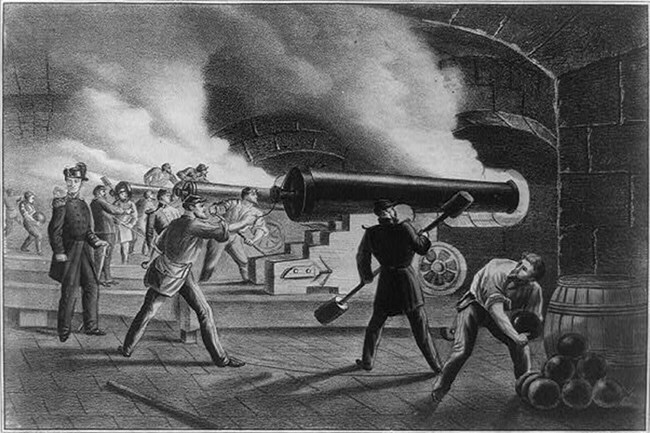
Thus at 4:30 AM confederate batteries began their bombardment of Fort Sumter. The confederate bombing was effective, and included a floating battery, in a makeshift boat. Anderson’s counter fire was limited by the his lack of munitions and by his limited number of soldiers. Finally 34 hours after the bombardment began, Anderson surrendered.

Reaction:

Sumter had fallen- now it was Lincoln’s turn to respond. He did so by a call for troops: Lincoln stated, “Now I, Abraham Lincoln, President of the United States, in virtue of the power in me vested by the constitution, and the laws, have thought fit to call forth, and hereby do call forth, the militia of several States of the Union, to aggregate number of seventy thousand.

The nation responded by a series of meetings in every part of the North. Thousands came forth with enthusiasm. A New York mother of five sons who enlisted stated:” I was startled by the news referring to our boys, and, for the moment felt as if a ball had pierced my own heart. For the first time I was obliged to look things full in the face. But although I have always loved my children with a love that none but a mother can know, yet when I look upon the state of my country, I cannot withhold them; and in the name of their god and their mothers god, and their country’s god I bid them to go. If I had ten sons instead of five I would give them all sooner than have our country rent in fragments.”

While the call for militia succeeded in raising an army, it was the final blow in the attempts to keep the Virginia and other wavering states in the Union. The Border states and the states of the Upper South all responded with words similar to those of Kentucky: “Kentucky will furnish no troops for the wicked purpose of subduing her sister southern states.”

Virginia was the first Southern state to secede, and with her the man who was to become the South leading General – Robert E. Lee. Lee was a reluctant sessionist, he had stated two months earlier “I fear the liberties of our country will in the tomb of the great nation. If Virginia stands by the old Union so will I. But if she secedes ( though I do not believe in secession as a constitutional right, nor that there is sufficient cause for revolution) then I will sill follow my native State with my sword, and if need be, with my life.”

Next Arkansas joined the confederacy, they were followed in May by North Carolina and Tennessee.

Immediately following the riots secessionists in Baltimore destroyed the railroads bridges and the telegraph lines thus cutting off Washington. For days Washington was cut off, with no additional replacement troops coming. Panic reined in Washington- Lincoln looked out the White House windows wondering when reinforcements would show. Finally in April 25th the 8th Mass Infantry and the 7th New York Regiment, landed at Annapolis Maryland. The New York Regiment managed to repair a branch line of the B&O that had been sabotaged and soon they arrived in the capital, whose citizens breathed a collective sigh of relief.

Vice President of the Confederacy Cornerstone Speech

Alexander Stephens vice president of the Confederacy, a Georgian, stood about five feet six inches and tipping the scales at under a hundred pounds, Stephens impressed few with his skeletal presence, but he made up for his ghoulish appearance with keen intellect and oratorical flair. In March 1861, he made the infamous Cornerstone Speech that clearly marked the Confederate goals:

[The Confederacy’s] foundations are laid, its cornerstone rests upon the great truth, that the negro is not equal to the white man; that slavery—subordination to the superior race—is his natural and normal condition. This, our new government, is the first, in the history of the world, based upon this great physical, philosophical, and moral truth.

~ Alexander Stephens, Vice President of the Confederacy

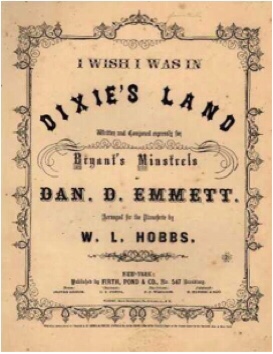
“Dixie” by Daniel Decatur Emmett (1859)

Dixie“, also known as “Dixie’s Land“, “I Wish I Was in Dixie“, and other titles, is a song about the Southern United States first made in 1859. It is one of the most distinctively Southern musical products of the 19th century. It was not a folk song at its creation, but it has since entered the American folk vernacular. The song likely cemented the word “Dixie” in the American vocabulary as a nickname for the Southern U.S.

Most sources credit Ohio-born Daniel Decatur Emmett with the song’s composition, although other people have claimed credit, even during Emmett’s lifetime. Compounding the problem are Emmett’s own confused accounts of its writing and his tardiness in registering its copyright.

“Dixie” originated in the minstrel shows of the 1850s and quickly became popular throughout the United States. During the American Civil War, it was adopted as a de facto national anthem of the Confederacy, along with “God Save the South”. New versions appeared at this time that more explicitly tied the song to the events of the Civil War.

The song was a favorite of President Abraham Lincoln (himself born in Kentucky); he had it played at some of his political rallies and at the announcement of General Robert E. Lee’s surrender. Early recordings of the song include band versions by Issler’s Orchestra (c. 1895), Gilmore’s Band (1896) and the Edison Grand Concert Band (1896) and a vocal version by George J. Gaskin (1896).

First verses:

I wish I was in the land of cotton,
Old times they are not forgotten;
Look away! Look away! Look away! Dixie Land.
In Dixie Land where I was born,
Early on one frosty mornin,
Look away! Look away! Look away! Dixie Land.

Then I wish I was in Dixie, hooray! hooray!
In Dixie Land I’ll take my stand to live and die in Dixie,
Away, away, away down South in Dixie,
Away, away, away down South in Dixie.

Mount Vernon: Dining Room

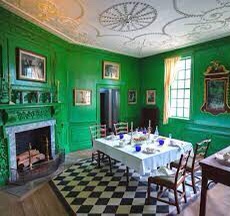
The Dining Room is part of the original house, built in 1734. Over the years, the room underwent a series of renovations. While George Washington was away commanding the Continental Army in 1775, the room was updated under the supervision of his cousin Lund Washington. In 1785, the striking verdigris-green paint was added. Washington believed the color to be “grateful to the eye” and less likely than other colors to fade; an overcoat of glaze further intensified the color.

In 1775 Washington decided to install an elaborately decorated plaster ceiling and add plaster ornaments above the fireplace. He hired an expert plasterer, identified simply as the “Stucco Man,” who spent five months completing the hand-tooled ceiling. A renovation in 2001 uncovered some of his original pencil drawings on the ceiling laying out the design.

Mount Vernon: Mansion Circle

George Washington created a formal courtyard on the west side of the Mansion. At its center is a large ellipse, its precise layout reflective of his surveying skill. By circling the ellipse, carriages could bring visitors directly to the door, and then easily continue around towards the stable. At one point this broad circle was paved in cobblestones.

Sitting to the north of the circle is the Servants’ Hall and to the south the Kitchen. The buildings form an open forecourt that frames the house. In the middle of the Mansion Circle sits a sundial. This was the most accurate timepiece available to 18th-century Americans. Mounted atop a white painted wood post, the sundial was a visual reminder of the hour to all who passed it.

Mount Vernon: The Mansion

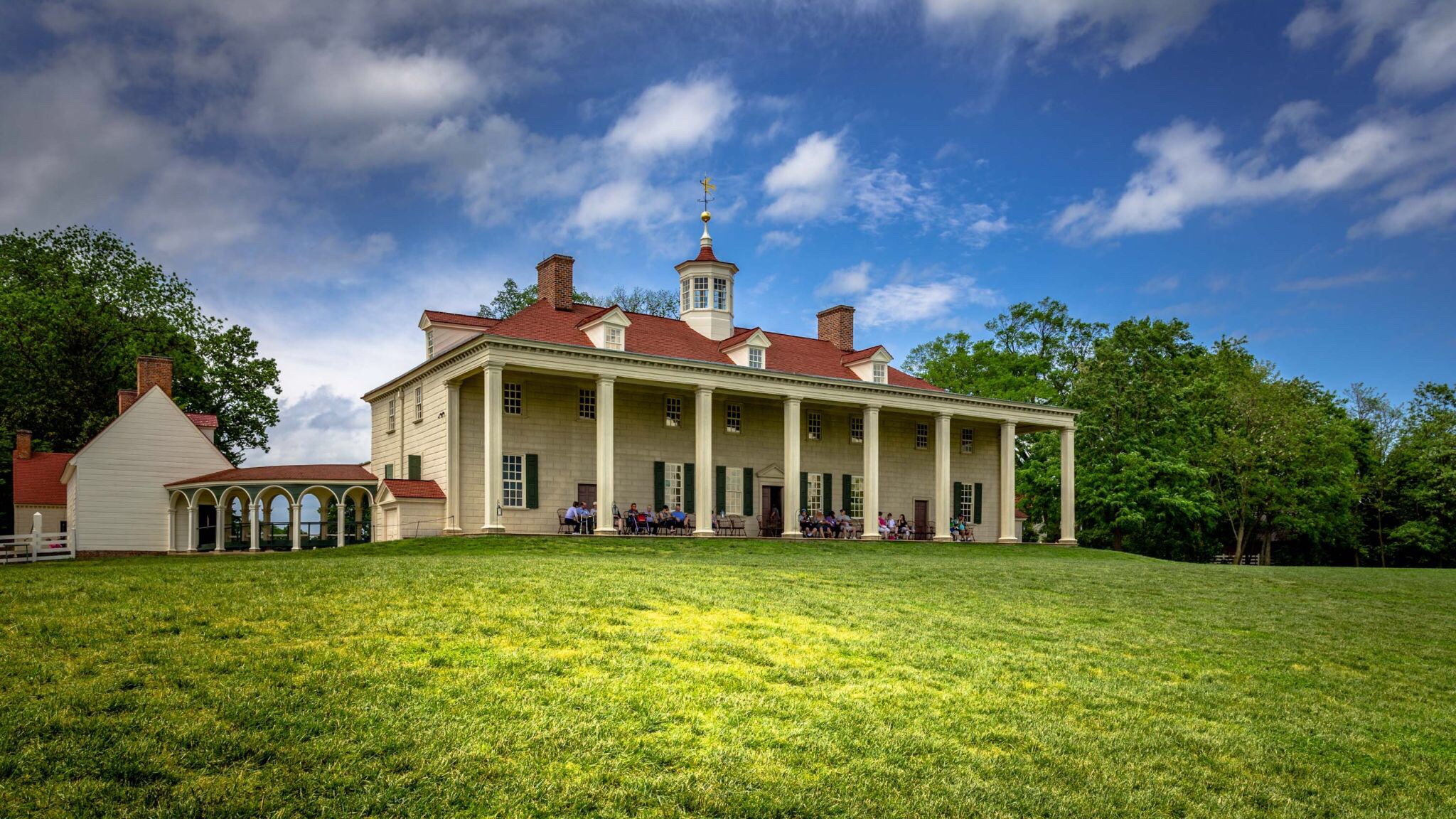
The building began as a one and one-half story house built in 1734 by George Washington’s father, Augustine Washington, and received its well-known name from his half-brother Lawrence Washington.

George Washington began running Mount Vernon in 1754, and over the next 45 years slowly enlarged the dwelling to create the 21-room residence we see today. Washington oversaw each renovation, advising on design, construction, and decoration, despite being away much of the time. Conscious that the world was watching, Washington selected architectural features that expressed his growing status as a Virginia gentleman and ultimately as the leader of a new nation.

Uncle Tom’s Cabin Published – 1852

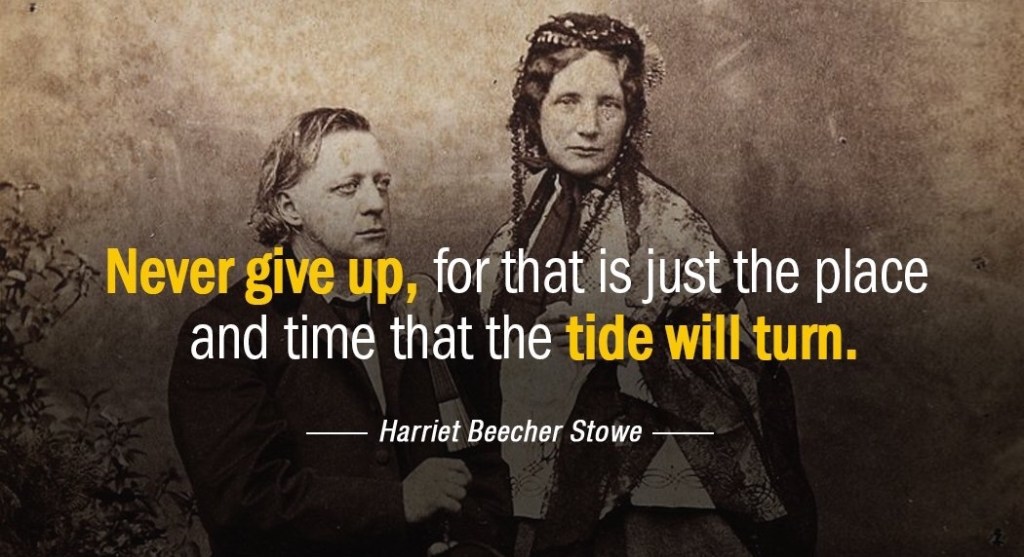
In 1852, the novel “Uncle Tom’s Cabin” was published. It is most likely the novel that had the greatest historic impact on American society. The novel depicted the plight of a slave family. It was written by Harriet Beecher Stowe, who was a mother of six. In the first year hundreds of thousands of copies were printed and ultimately millions of copies were sold. This helped solidify the opposition to slavery in the North. Its success in France and England served as a break in the inclination of the aristocracy in those countries to support the South during the war.

When Mrs. Stowe was introduced to President Lincoln, in 1862, he was heard to have said: “So you’re the little woman who wrote the book that made this great war.”

Hominy

Hominy is corn, but not straight off the cob. Hominy is whole kernels of dried field corn (aka maize) that have been nixtamalized, a process that cooks have been doing since ancient times, starting with those living in what we now call Mesoamerica. The corn kernels are soaked in lye or lime solutions and then rinsed several times, which removes the hulls and turns the inner kernels tender and plump. This process improves the corn’s nutritional content, and also keeps the corn from sprouting during long storage, which were big deals when cooks needed as many ways as possible to make the corn harvest last through the winter. Puffy, slightly chewy kernels of hominy have complex flavor and aroma, more like stoneground grits or freshly made tortillas than fresh corn.

Making hominy from scratch is a rather tedious multistep process, which is why most of us simply go to the grocery store and buy it. Ready-to-eat canned hominy includes a little liquid, like other canned vegetables. Dried hominy comes in bags like dried beans or whole grains, and needs to be soaked before it’s used. Wet or dry, hominy makes a reliable pantry staple

Benne Seeds

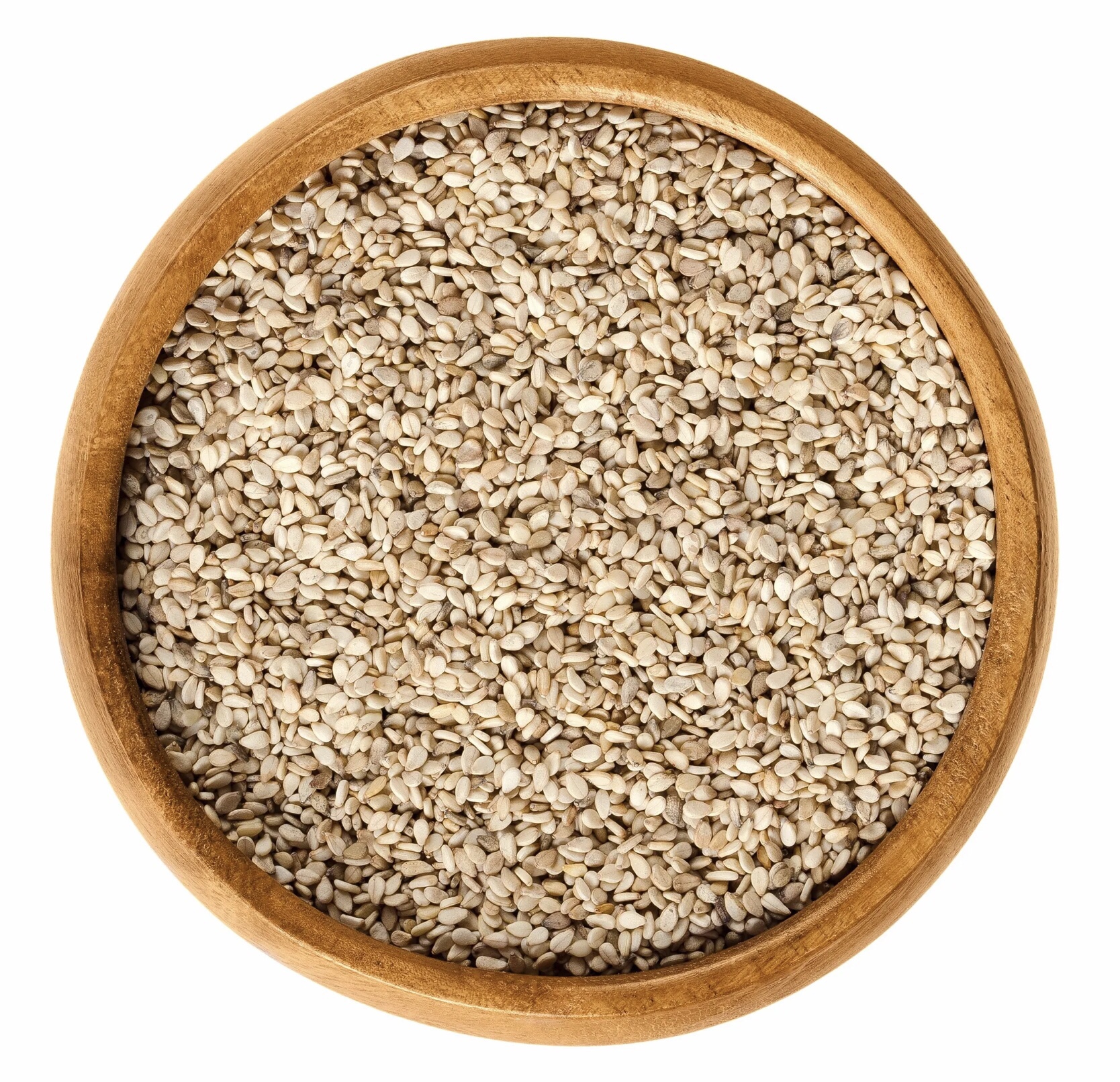
A benne seed is to a run of the mill sesame seed as a juicy heirloom tomato is to the anemic supermarket variety. They may look the same, but there’s a world of difference in taste. Benne came to the South from West Africa by way of the slave trade, the plant often grown in secret by the enslaved, who used the leaves, stems, and seeds as both a nutritional supplement and a flavor enhancer. 

Over the years, as benne became commoditized and was grown mostly for oil, those flavorful seeds became the more muted sesame seeds we know today. With a renewed interest among history-minded chefs and farmers, heirloom varieties of the seed have made something of a comeback in the South, though short of a trip to a Charleston-area farmers’ market, your best bet is ordering a bag from culinary revivalist Anson Mills. So, no, the benne seed is not the sesame seed, exactly; the benne seed is living history.

Source: S Is for Southern by Editors of Garden and Gun

Mount Vernon: Gristmill

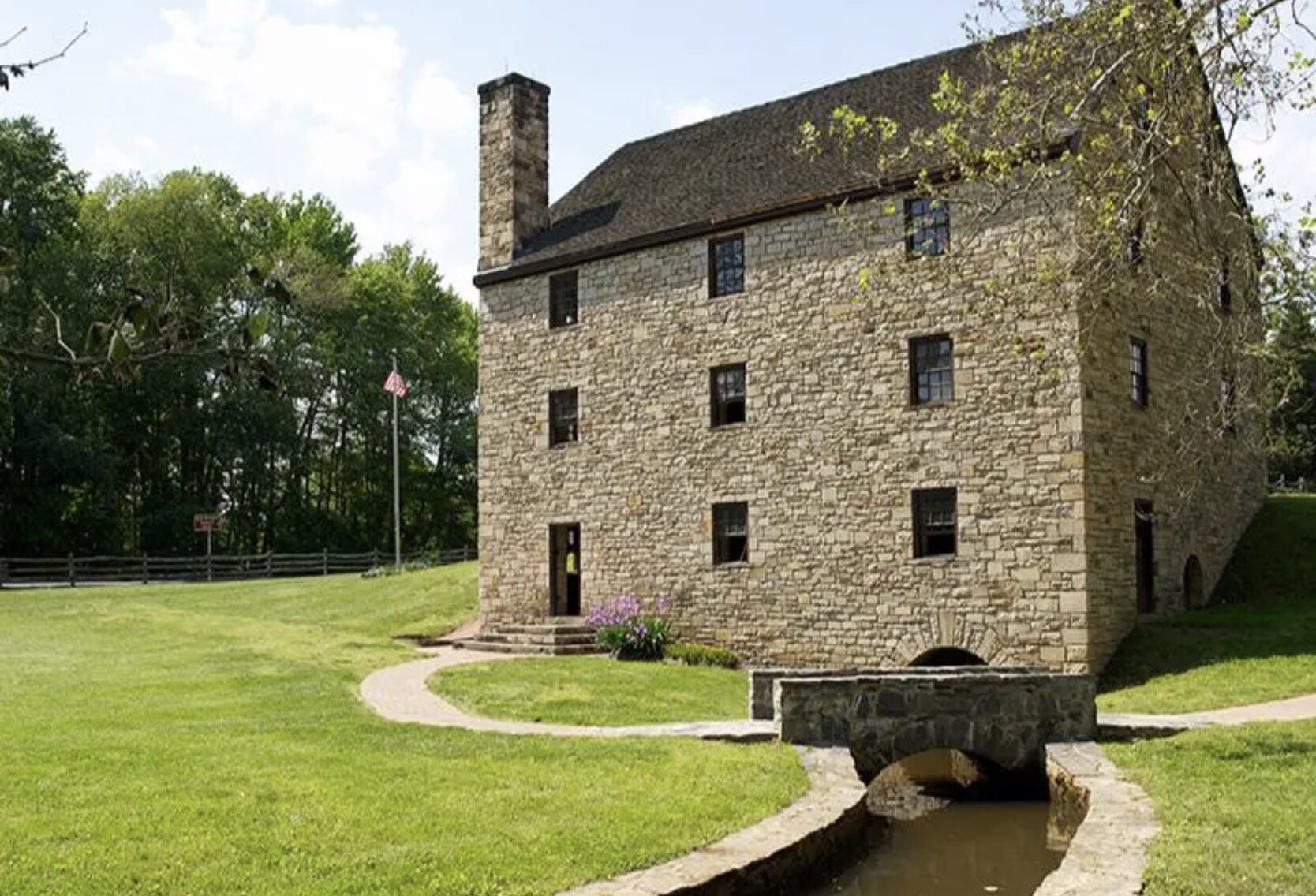
Augustine Washington, George Washington’s father, likely had an operating mill on his plantation (the future Mount Vernon) as early as the 1730s, but by the 1760s this dilapidated mill was in great need of a replacement. By 1769, George Washington had decided to create a new mill that would be located along Dogue Run, about a half-mile away from the old mill.

Washington’s resolve to improve and expand his Gristmill enterprise marked a significant turning point in the management of his plantation. During the 1760s Washington moved away from tobacco cultivation and began to plant more grains, primarily wheat and corn. This transition gave Washington a dependable cash crop that was not dependent upon markets in England. With an expanded and more efficient Gristmill, Washington could turn his crops into flour and cornmeal. The Gristmill could also bring in revenue by charging neighboring farmers a fee to grind their grain.

In 1783, Washington described the mill in one of his letters, “two pair of Stones, one pair of which are French-burr, employed in the merchant business. The Mill house is of Stone, large and commodious, the dwelling house, which is convenient, is within 30 yards of it; and has a garden enclosed adjoining. A Cooper’s Shop is also near, and the whole convenient to tide water.”