Dragons

Dragons have walked and flown all over the earth in every age. They are present from ancient Greece and Rome to ancient India and China, in Norse myths, Anglo-Saxon poetry, Chinese art, and modern literature.

The dragons of the Far East are water serpents who live in the ocean, breathe clouds, and bring rain. They usually have four legs, long snakelike bodies, and horns or a crest. The dragons of the ancient Western world were legless serpents, sometimes killing elephants by coiling around their necks and strangling them.

By the time of the medieval bestiaries, dragons were still serpents but usually with legs (sometimes two, sometimes four) and wings. They had impenetrable scales, breathed fire, and liked to steal and hoard precious objects. The earliest example in literature of this kind of dragon is in Beowulf, an Anglo-Saxon epic poem that described events that took place in the sixth century but was written down between 975 and 1025. The dragon the hero Beowulf must slay is nocturnal, treasure hoarding, airborne, vengeful, and fire breathing.

In medieval Europe, people feared attacks by dragons. Urine from dragons flying overhead would putrefy human skin, and dragons’ breath could poison wells and streams. Satan was able to take the shape of a dragon, motivating heroes and saints to slay him. Saint George famously did so in Palestine in the third century, but slaying dragons could also be women’s work: Saint Margaret of Antioch (289–304) and Saint Elizabeth of Constantinople, who is thought to have lived between the sixth and ninth centuries, slew their fair share.

Because the dragon is associated with Satan, his enemy is the panther, who is a symbol of Christ. Dragons cannot stand the sweet smell of the panther’s breath and hide when the big cat roars. Dragons are also repelled by the peridexion tree, which grows in India, and are harmed if they even fall under its shadow. This is likely why doves, symbol of the Holy Spirit and faithful Christians, roost in the peridexion tree.

Another enemy of the dragon is the ichneumon, a mongoose that doesn’t care much for social propriety. When it sees a dragon, the ichneumon covers itself with mud, closes its nostrils with its tail, and then attacks and kills the dragon immediately.
Cold Emulsified Sauces

Mayonnaise: Egg yolks, mustard, oil, acid.

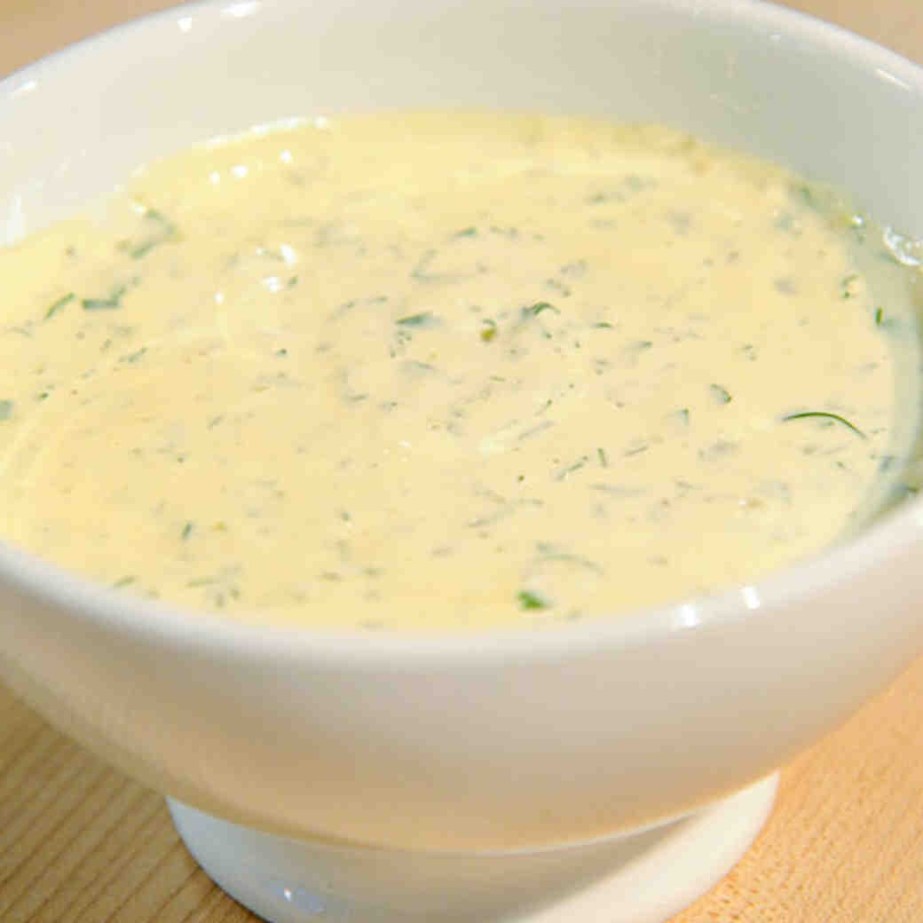
Verte: Mayonnaise and green herbs.

Rémoulade: Mayonnaise, capers, cornichons, chervil, tarragon, parsley, chives; chopped onions and egg are optional.

Gribiche: Mayonnaise, hard cooked eggs,  mustard, cornichons, parsley, chervil and tarragon.

Chantilly: Two parts mayonnaise and one part whipped cream.

Aioli: Mayonnaise, Garlic, sometimes saffron.

Rouille: Mayonnaise, White Bread, Garlic, paprika, saffron.

Andalouse: Mayonnaise, tomato coulis, diced peppers.

Warm Emulsified Sauces

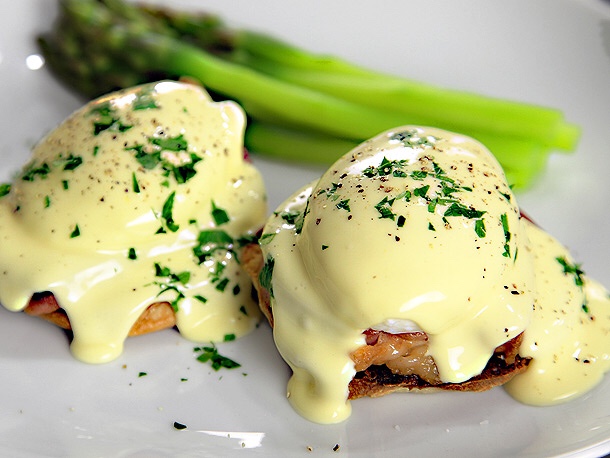
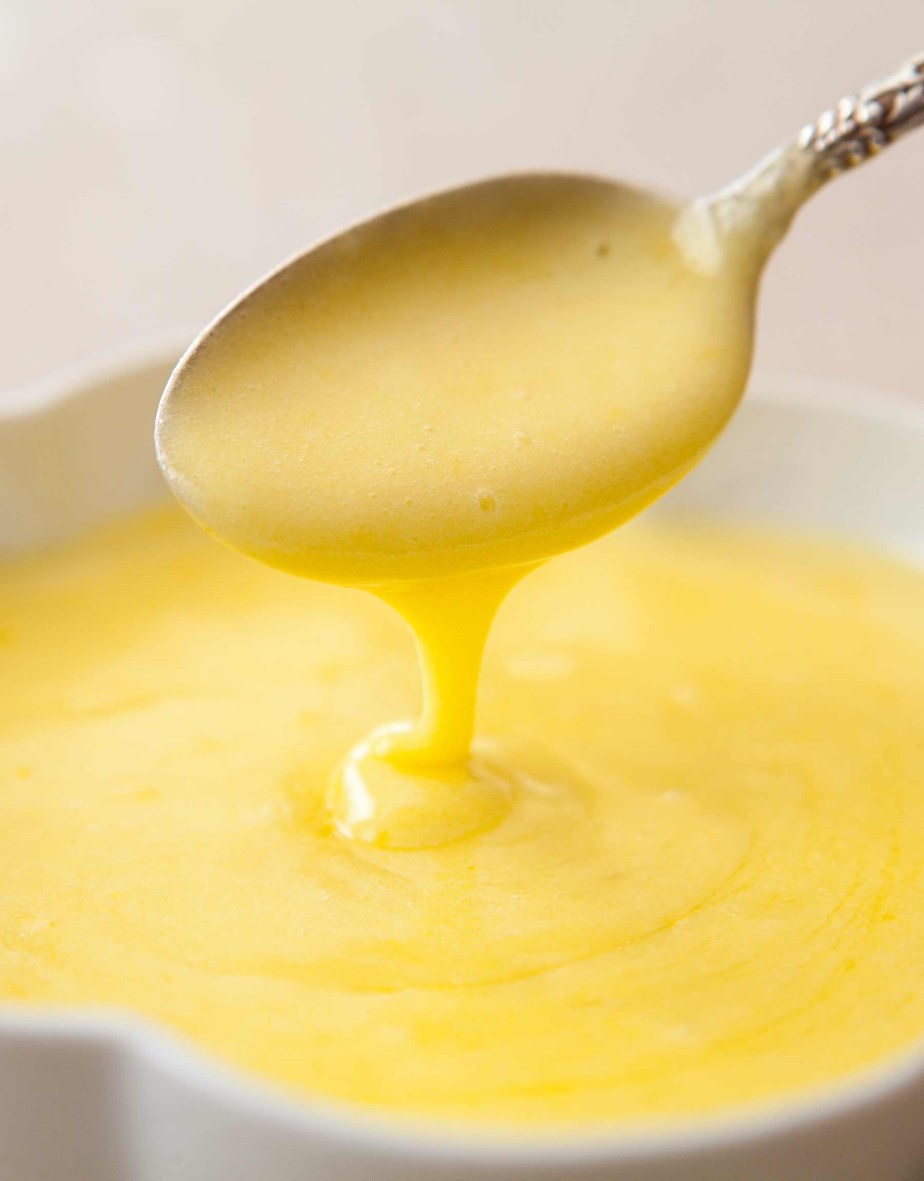
Hollandaise: Egg yolks, clarified butter, lemon juice, salt and cayenne pepper.

Mousseline: Three parts Hollandaise and one part whipped cream.

Mortarde: Hollandaise, blood orange juice, blanched mandarin orange zest.

Mikado: Hollandaise, mandarin orange juice, blanched mandarin orange zest.

Béarnaise: Egg yolks, clarified butter, salt, tarragon, chervil, Reduction Of white wine vinegar, shallots, tarragon, peppercorns.

Foyot or Valois: Béarnaise and meat glaze.

Charon: Béarnaise and tomato concassé.

Paloise: Béarnaise with mint instead of tarragon.

Tyrolienne: Béarnaise with a neutral oil instead of clarified butter.

About Emulsified Sauces

  • Made by combining two normally incompatible liquids through the incorporation of a binding or emulsifying agent.
  • Egg Yolks: Classically most common emulsifying agent.
  • Sabayon: Egg yolks and flavoring components whisked into a foamy mixture over a hot water bath until they are thick and airy.  Clarified butter is then added in a steady stream and whisked until smooth.
  • Clarified Butter: Butter that has been slowly melted, allowing most of the water to evaporate and the milk solids to separate and settle in the bottom of the pan.
  • Warm emulsified sauces will break or curdle if not prepared or held properly. Ideal temperature 120 degrees (49 degrees Celsius)
  • Possible reasons for failure:
    • The sabayon was I sufficiently cooked.
    • The sabayon was overcooked.
    • Clarified butter was incorporated too quickly.
    • Excessive heat made the butter separate from the yolks.
  • If sauce broke, ways to restabalize:
    • Beat a few drops of water into the sauce, working it in from the bottom inner edge of the bowl and using a small wire whisk gradually bring the whole sauce into the process.
    • If the sauce broke because it was too hot, add a few drops of cold water.
    • If the sauce broke because it was too cold, add a few drops of warm water.
    • If the sauce appears about to break, dip the bottom of the bowl into ice water bath and whisk constantly until the sauce smooths.
  • Warm Emulsified Sauces
    1. Clarify Butter.
    2. Cook sabayon over hot water bath, whisking constantly.
    3. Slowly add warm clarified butter, whisking constantly.
    4. If too thick, add drops of warm water, whisking constantly.
    5. Season with salt, cayenne and lemon juice.
    6. Hold at 120 degrees (49 degrees Celsius).

French White Sauces

Supréme: Chicken velouté combined with cream and seasoned.

Ivoire: Sauce Supreme combined with meat glaze.

Albufera: Sauce Ivoire mounted with pimento butter.

Chaud-Froid: Chicken Velouté combined with cream and gelatin.

Bercy: Shallots combined with white wine and reduced with fumet; added to a fish Velouté, finished with chopped parsley.

Aurore: Fish Velouté combined with tomato coulis.

Bretonne: Julienned leeks, celery, onions and mushrooms cooked à l’etuvé, deglazed with white wine and reduced; added to fish Velouté.  Finished with heavy cream or creme fraiche.

Chaud-Froid: Bound Fish Velouté combined with heavy cream and gelatin.

French Brown Sauces

Espagnole: Basic brown sauce, Beef Stock and roux brun.

Demi-Glacé: Basic brown sauce reduced by one-half.

Bordelaise: Reduction Of shallots, peppercorns, thyme, bay leaf and red wine combined with a basic brown stock.

Moëlle: Sauce bordelaise Made with white wine and finished with parsley.

Robert: Reduction Of ciselé onions and white wine combined with thickened Veal stock and tomato paste, mounted with Dijon mustard.

Charcuterie: Sauce Robert with cornichon julienne.

Chasseur: Sautéed mushrooms and shallots flambéed with cognac, deglazed with white wine and combined with thickened Veal stock or Demi-glacé, finished with a bit of tomato, tarragon and chervil.

Diable: Reduction Of cisele shallots, peppercorns, white wine and white wine vinegar added to a brown stock basic sauce, finished with chervil and tarragon.

Bercy: Reduction Of shallots, peppercorns, bay leaf, thyme and white wine with thickened Veal stock or Demi-glacé.  Finished with parsley or tarragon.

Madere: Reduced Madeira wine combined with Demi-glacé, mounted with butter and seasoned.

Financier: Sauce Madere with truffle juice.

Perigueux: Sauce Madere with truffle juice and chopped truffles.

Piquante: Reduction Of shallots, white wine, and white wine vinegar combined with Demi-glacé or thickened Veal stock; finished with sliced cornichons, parsley, chervil and tarragon.

Milanese: Sautéed mushrooms julienne, hamand tongue, deglazed with Madeira; reduced and combined with thickened Veal stock.

Poivrade: Mirepoix Of carrots, onions, thyme, parsley and bay leaves sautéed and deglazed with vinegar. Reduced to a glaze.  Singer combined with brown game stock; cooked one hour with peppercorns and then strained.

Chevreuil: Sauce Poivrade combined with red wine and reduced; finished with cayenne pepper.

Diane: Strongly flavored Poivrade combined with whipped cream.

Grand Veneur: Five parts Poivrade to one part currant jelly and one part heavy cream.

Antisocial Personality Disorder: Symptoms

Antisocial personality disorder, sometimes called sociopathy, is a mental disorder in which a person consistently shows no regard for right and wrong and ignores the rights and feelings of others. People with antisocial personality disorder tend to antagonize, manipulate or treat others harshly or with callous indifference. They show no guilt or remorse for their behavior.

Individuals with antisocial personality disorder often violate the law, becoming criminals. They may lie, behave violently or impulsively, and have problems with drug and alcohol use. Because of these characteristics, people with this disorder typically can’t fulfill responsibilities related to family, work or school.

Symptoms

Antisocial personality disorder signs and symptoms may include:

• Disregard for right and wrong

• Persistent lying or deceit to exploit others

• Being callous, cynical and disrespectful of others

• Using charm or wit to manipulate others for personal gain or personal pleasure

• Arrogance, a sense of superiority and being extremely opinionated

• Recurring problems with the law, including criminal behavior

• Repeatedly violating the rights of others through intimidation and dishonesty

• Impulsiveness or failure to plan ahead

• Hostility, significant irritability, agitation, aggression or violence

• Lack of empathy for others and lack of remorse about harming others

• Unnecessary risk-taking or dangerous behavior with no regard for the safety of self or others

• Poor or abusive relationships

• Failure to consider the negative consequences of behavior or learn from them

• Being consistently irresponsible and repeatedly failing to fulfill work or financial obligations

Adults with antisocial personality disorder typically show symptoms of conduct disorder before the age of 15. Signs and symptoms of conduct disorder include serious, persistent behavior problems, such as:

• Aggression toward people and animals

• Destruction of property

• Deceitfulness

• Theft

• Serious violation of rules

Although antisocial personality disorder is considered lifelong, in some people, certain symptoms — particularly destructive and criminal behavior — may decrease over time. But it’s not clear whether this decrease is a result of aging or an increased awareness of the consequences of antisocial behavior.

Causes

Personality is the combination of thoughts, emotions and behaviors that makes everyone unique. It’s the way people view, understand and relate to the outside world, as well as how they see themselves. Personality forms during childhood, shaped through an interaction of inherited tendencies and environmental factors.

The exact cause of antisocial personality disorder isn’t known, but:

• Genes may make you vulnerable to developing antisocial personality disorder — and life situations may trigger its development

• Changes in the way the brain functions may have resulted during brain development

Risk factors

Certain factors seem to increase the risk of developing antisocial personality disorder, such as:

• Diagnosis of childhood conduct disorder

• Family history of antisocial personality disorder or other personality disorders or mental health disorders

• Being subjected to abuse or neglect during childhood

• Unstable, violent or chaotic family life during childhood

Men are at greater risk of having antisocial personality disorder than women are.

Complications

Complications, consequences and problems of antisocial personality disorder may include, for example:

• Spouse abuse or child abuse or neglect

• Problems with alcohol or substance use

• Being in jail or prison

• Homicidal or suicidal behaviors

• Having other mental health disorders such as depression or anxiety

• Low social and economic status and homelessness

• Premature death, usually as a result of violence

Prevention

There’s no sure way to prevent antisocial personality disorder from developing in those at risk. Because antisocial behavior is thought to have its roots in childhood, parents, teachers and pediatricians may be able to spot early warning signs. It may help to try to identify those most at risk, such as children who show signs of conduct disorder, and then offer early intervention.

The Hydra

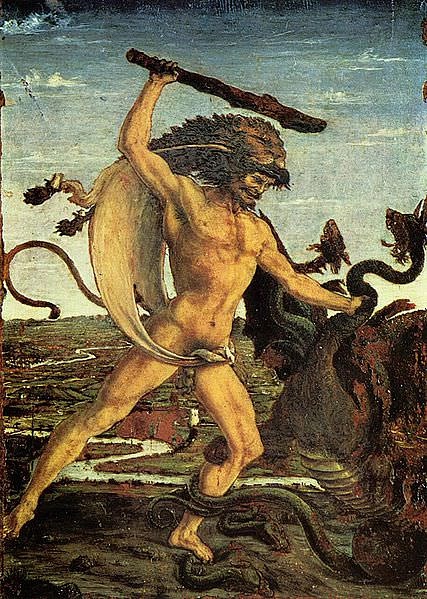
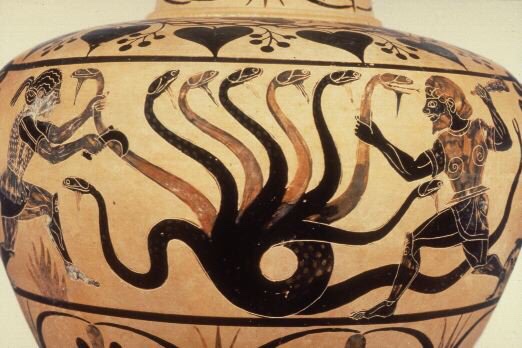
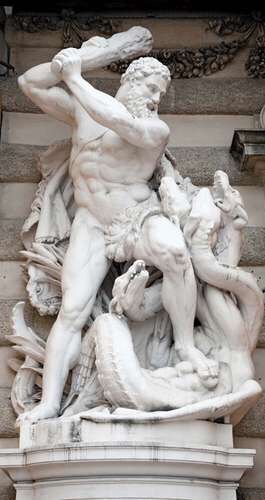
The Hydra, also called the Lernean Hydra, in Greek mythology, the offspring of Typhon and Echidna (according to Hesiod’s Theogony), a gigantic water-snake-like monster with nine heads (the number varies), one of which was immortal. The monster’s haunt was the marshes of Lerna, near Árgos, from which he periodically emerged to harry the people and livestock of Lerna. Anyone who attempted to behead the Hydra found that as soon as one head was cut off, two more heads would emerge from the fresh wound.

The destruction of the Lernean Hydra became one of the 12 Labours of Heracles. For that and other labours, Heracles enlisted the aid of his nephew Iolaus. As Heracles severed each mortal head, Iolaus was set to the task of cauterizing the fresh wounds so that no new heads would emerge. When only the immortal head remained, Heracles cut it off too and buried it under a heavy rock. Further, he dipped his arrows in the beast’s poisonous blood (or venom) to be able to inflict fatal wounds. According to Sophocles(Trachinian Women), that measure eventually caused his own accidental death at the hands of his wife, Deianeira.

In modern English, hydra or hydra-headed can describe a difficult or multifarious situation. The name hydra has been assigned to a genus of invertebrate freshwater animals having a circlet of 4 to 25 tentacles on one end of its tubelike body.

Valkyrie

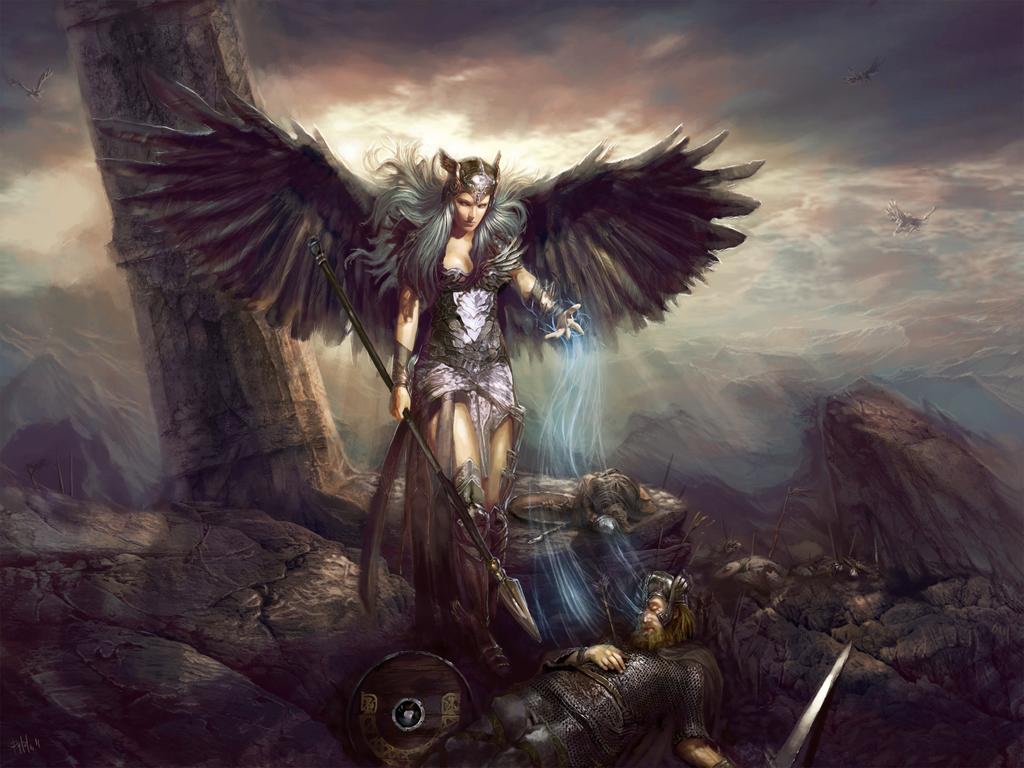
Valkyrie (“Choosers of the Battle-slain”; Old Norse valkyrja, pl. valkyrjar): The valkyries are representative of warfare, but are also magicians, guardians, female lovers of heroes, bird-women, and keepers of knowledge. They are concerned with fertility and fecundity and have many points in common with the Dises (deities), the Norns (the Germanic Fates), and the fylgjur (personal tutelary spirits).

They are in Odin’s service, and their names are most often of a warlike nature, formed from words like battle, combat, sword, spear, fury, bravery, and so forth. Régis Boyer has analyzed the thirty-eight valkyrie names that have been preserved in the texts; from his study it becomes apparent that they escape any strict classification as one-third of them are engaged in two different functions.

The valkyries select the slain warriors who will populate Valhalla. They attach themselves to the kings and princes who are worshippers of Odin, helping them, counseling them, bringing them luck, and even marrying them after their death. If they disobey Odin they are punished—as in the case of Brynhildr, who, pricked by the sleep-thorn, lies on Hindarfjall Mountain waiting for the one who will awaken her. In Valhalla the valkyries serve beer to the warriors.