Lard

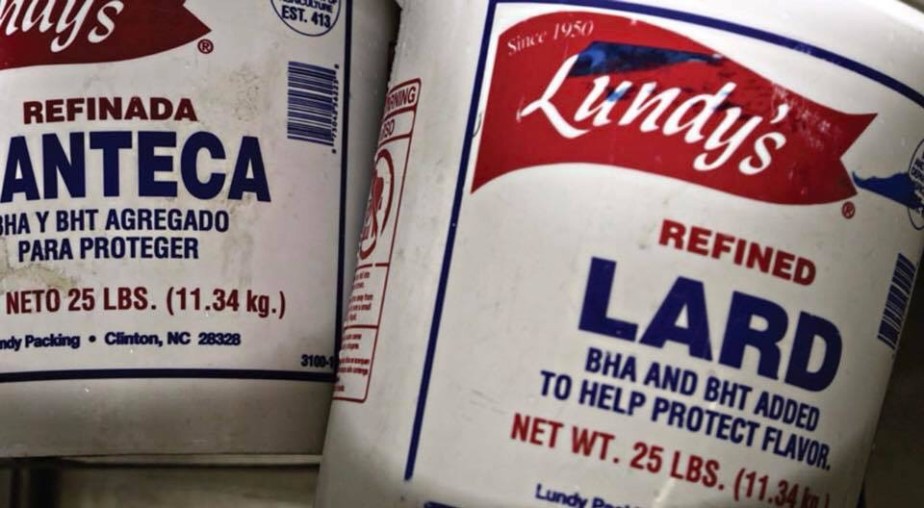
“Lard gets a bad rap, but in the right proportions adds a delicious layer of flavor and texture. Bill Neal once told me, “I am not saying ‘you shouldn’t’—I’m saying ‘don’t ever’ make biscuits or piecrust without lard. It’s just a waste of time.” The irony here is that lard really began its trip into ingredient obscurity about 40 years ago with the misconceptions passed around that pork was bad or unhealthy. It became a victim of the marketing of the hydrogenated vegetable shortenings, like Crisco, that allegedly lowered the risk of heart disease. Science has proven in recent years how incorrect and, actually, opposite that is. So while the pig is exalted, lard still languishes in disdain on the culinary blacklist.

Natural lard is a completely naturally occurring fat and has fewer calories and a cleaner fat content than butter, containing less nonfat solids. Do not confuse with shelf-stable lard, which is not terrible, but not as good for you as natural lard, which must be refrigerated. There are no trans fats in lard since it is a natural fat, and it is very high in omega 3 fatty acids. Studies indicate that it is no more responsible for raising LDL cholesterol than any other fat and will actually help raise HDL (“good” cholesterol) levels.

So get with the program, get over the stigma, and buy a little bucket of lard next time you are at the store. You’ll be happy you did, and your stuff will start tasting a lot more “like your grandmother used to make it.”
~ Chef John Currence, from “Pickles, Pigs & Whiskey”

#JohnCurrence #Lard #SouthernCooking

Grits

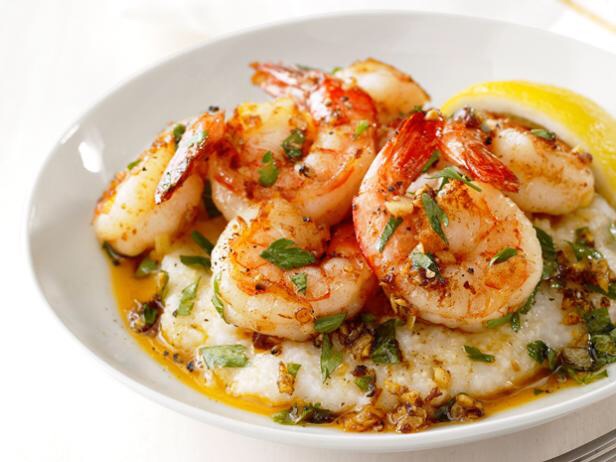
“Grits is the first truly American food. On a day in the spring of 1607 when sea-weary members of the London Company came ashore at Jamestown, Va., they were greeted by a band of friendly Indians offering bowls of a steaming hot substance consisting of softened maize seasoned with salt and some kind of animal fat, probably bear grease. The welcomers called it “rockahominie.”

The settlers liked it so much they adopted it as part of their own diet. They anglicized the name to “hominy” and set about devising a milling process by which the large corn grains could be ground into smaller particles without losing any nutriments. The experiment was a success, and grits became a gastronomic mainstay of the South and symbol of Southern culinary pride.”

~ Turner Catledge, New York Times on 31 January 1982

What exactly are Grits?

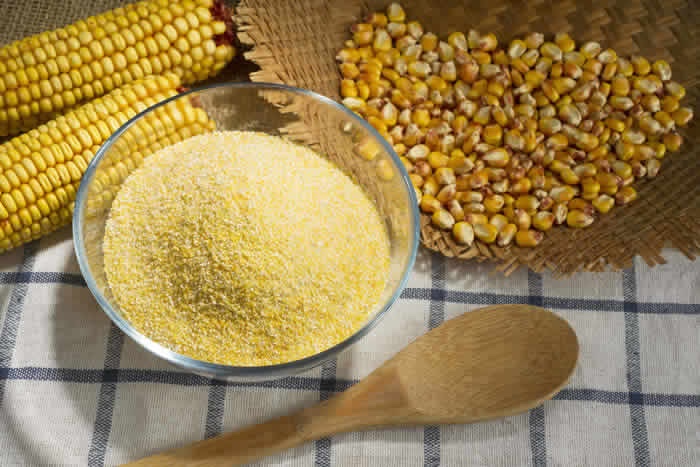
“Grits are—or is, as the case may be— a by-product of corn kernels. Dried, hulled corn kernels are commonly called hominy; grits are made of finely ground hominy. Whole-grain grits may also be produced from hard corn kernels that are coarsely ground and bolted (sifted) to remove the hulls.

Thus, throughout its history, and in pre-Columbian times as well, the South has relished grits and made them a symbol of its diet, its customs, its humor, and its good-spirited hospitality. From Captain John Smith to General Andrew Jackson to President Jimmy Carter, southerners rich and poor, young and old, black and white have eaten grits regularly. So common has the food been that it has been called a universal staple, a household companion, even an institution.

Grits cooked into a thick porridge are so common in some parts of the South that they are routinely served for breakfast, whether asked for or not. They are often flavored with butter or gravy, served with sausage or ham, accompanied by bacon and eggs, baked with cheese, or sliced cold and fried in bacon grease. Mississippi-born Craig Claiborne, the late New York Times food writer, loved grits and published elegant recipes for their preparation.

The last 30 years have seen renewed interest in grits. It has become a part of southern creative expression, as when bluesman Little Milton says, “If grits ain’t groceries / Eggs ain’t poultry / And Mona Lisa was a man.” Jimmy Carter’s presidency in the 1970s led to media interest in grits as a southern icon and the film My Cousin Vinny included a humorous scene of a couple from the Bronx eating the mysterious (to them) grit. By the mid-1980s a new generation of renowned southern chefs, including Bill Neal from North Carolina and Frank Stitt from Alabama, began serving sophisticated dishes with grits, such as Stitt’s grits soufflé with fresh thyme and country ham. South Carolina cookbook author John Martin Taylor helped popularize stone-ground grits, and smaller producers of artisanal grits grew into successful businesses, including Old Mill of Guilford (North Carolina), Falls Mill (Tennessee), Logan Turnpike Mill (Georgia), Adam’s Mill (Alabama), Anson Mills (South Carolina), and War Eagle Mill (Arkansas).”

~ John Egerton, Excerpt From “The New Encyclopedia of Southern Culture”

Veil Nebula

The Veil Nebula is a cloud of heated and ionized gas and dust in the constellation Cygnus. It constitutes the visible portions of the Cygnus Loop (radio source W78, or Sharpless 103), a large but relatively faint supernova remnant. The source supernova exploded circa 3,000 BC to 6,000 BC, and the remnants have since expanded to cover an area roughly 3 degrees in diameter (about 6 times the diameter, or 36 times the area, of the full moon). The distance to the nebula is not precisely known, but Far Ultraviolet Spectroscopic Explorer (FUSE) data supports a distance of about 1,470 light-years.

The Hubble Space Telescope captured several images of the nebula. The analysis of the emissions from the nebula indicate the presence of oxygen, sulfur, and hydrogen. This is also one of the largest, brightest features in the x-ray sky.

#VeilNebula #Astrophysics

Spaghetti Nebula

The Spaghetti Nebula is a Supernova Remnant (SNR) in the Milky Way. 3,000 light-years away from us straddling the border between the constellations Auriga and Taurus. Discovered in 1952 at the Crimean Astrophysical Observatory using a 25-inch Schmidt-Cassegrain telescope, it is difficult to observe due to its extremely low brightness.

The nebulous area is fairly large with an almost spherical shell and filamentary structure.  The remnant has an apparent diameter of approximately 3 degrees, an estimated distance of approximately 3000 (±350) light-years, and an age of approximately 40,000 years.

It is believed that after its stellar explosion a rapidly spinning neutron star known as pulsar PSR J0538+2817 was left behind in the nebula core, emitting a strong radio signal

Sculptor Galaxy

Breathtakingly Beautiful Galaxy With an Enormous Halo of Extreme Star Creation

The Sculptor Galaxy has an enormous halo of gas, dust and stars, which had not been observed before at frequencies below 300 MHz. The halo originates from galactic “fountains” caused by star formation in the disk and a super-wind coming from the galaxy’s core.

Astronomers have used a radio telescope in outback Western Australia to see the halo of a nearby starburst galaxy in unprecedented detail. A starburst galaxy is a galaxy experiencing a period of intense star formation and this one, known as NGC 253 or the Sculptor Galaxy, is approximately 11.5 million light-years from Earth…

The Rosette Nebula

The Rosette Nebula

The Rosette Nebula (also known as Caldwell 49) is a large, spherical (circular in appearance), H II region located near one end of a giant molecular cloud in the Monoceros region of the Milky Way Galaxy. The open cluster NGC 2244 (Caldwell 50) is closely associated with the nebulosity, the stars of the cluster having been formed from the nebula’s matter.

Photo Credits: Miguel Claro

Corn Grist

CORN GRIST

Grist is grain that has been separated from its chaff in preparation for grinding. It can also mean grain that has been ground at a gristmill. Its etymology derives from the verb grind.

Grist can be ground into meal or flour, depending on how coarsely it is ground. Maize made into grist is called grits when it is coarse, and corn meal when it is finely ground. Wheat, oats, barley, and buckwheat are also ground and sifted into flour and farina. Grist is also used in brewing and distillation to make a mash.

CORNMEAL

Cornmeal is ground dried corn. You can find it at any chain grocery store, but the best cornmeal is stone ground and you may need to source that at a mill or through mail order. Unlike more modern methods of milling, the stones don’t substantially heat up the grains, resulting in a superior flavor and texture. Find a miller who grinds corn to order or purchase a small home grinder that will allow you to vary the size of the grind. Many millers ship grains via mail order, and a home mill can be easily purchased on the Internet.

HOMINY

If you take dried flint corn and cook it in lye until the outer hull of the kernel separates, you’ll leave the germ of the kernel behind—and get hominy. This process, called nixtamalization, originated with Mesoamerican Indians and has a very specific effect: it unlocks the nutritional power of corn, making it much more digestible, especially when combined with rice or beans. Unlike Native Americans, Southerners and Europeans didn’t fully adopt this practice and thus they often lacked the complete nutritional protein that it creates, leaving their populations who subsisted on cornmeal and preserved meat susceptible to a vitamin deficiency disease called pellagra.

HOMINY GRITS

Old-timers call it “little hominy,” but modern commercial grits bear little resemblance to the staple grist of yesteryear. Industrial milling and commercial corn production mean that most of the grits you find are simply coarsely ground cornmeal, but hominy grits are nixtamalized dried kernels ground to a coarse consistency.

MASA

Latin Americans take fresh hominy and grind it while still wet, producing a soft corn flour that constitutes the basis for everything from tortillas to tamales. The commercial kind is called masa harina and comes dried in bags, like cornmeal or flour.

POLENTA

Corn traveled quickly to Italy after its “discovery” in the Americas, and it soon replaced buckwheat and farro as the grain of choice for polenta. Very similar to the South’s grits and African ugali, polenta is a cornmeal mush originally eaten by peasants, a staple of the cuisine Italians call la cucina povera, but it is often made from flint corn, a very hard variety that has a lower starch content.

SAMP

Early colonists used the terms “grits” and “samp” interchangeably, but when we talk about samp today, we are referring to cracked hard flint corn. It’s hard to make, since the best samp is cracked by hand, but the kernels of good samp can be shattered, producing very little corn flour in the process. This type of rough corn cooks up like rice, tender and fluffy.”

~ Sean Brock from “Heritage”

Kepler’s Supernova

In 1604 Kepler’s Supernova is observed in the constellation of Ophiuchus.

This was the last supernova in our galaxy observed with the naked eye. Here’s a false-color* composite photo:

* False color refers to a group of color rendering methods used to display images in color which were recorded in the visible or non-visible parts of the electromagnetic spectrum.

Eta Carinae – Double Star System

Imagine slow-motion fireworks that started exploding nearly two centuries ago and haven’t stopped since then. This is how you might describe this Hubble photo of the double star system Eta Carinae’s expanding gases glowing in red, white, and blue. This is the highest resolution image of Eta Carinae taken by the NASA/ESA Hubble Space Telescope…

#Science #EtaCarinae

Agoraphobia: Symptoms

Agoraphobia (ag-uh-ruh-FOE-be-uh) is a type of anxiety disorder in which you fear and avoid places or situations that might cause you to panic and make you feel trapped, helpless or embarrassed. You fear an actual or anticipated situation, such as using public transportation, being in open or enclosed spaces, standing in line, or being in a crowd.

The anxiety is caused by fear that there’s no easy way to escape or get help if the anxiety intensifies. Most people who have agoraphobia develop it after having one or more panic attacks, causing them to worry about having another attack and avoid the places where it may happen again.

People with agoraphobia often have a hard time feeling safe in any public place, especially where crowds gather. You may feel that you need a companion, such as a relative or friend, to go with you to public places. The fear can be so overwhelming that you may feel unable to leave your home.

Agoraphobia treatment can be challenging because it usually means confronting your fears. But with psychotherapy and medications, you can escape the trap of agoraphobia and live a more enjoyable life.

Symptoms

Typical agoraphobia symptoms include fear of:

• Leaving home alone

• Crowds or waiting in line

• Enclosed spaces, such as movie theaters, elevators or small stores

• Open spaces, such as parking lots, bridges or malls

• Using public transportation, such as a bus, plane or train

These situations cause anxiety because you fear you won’t be able to escape or find help if you start to feel panicked or have other disabling or embarrassing symptoms.

In addition:

• Fear or anxiety almost always results from exposure to the situation

• Your fear or anxiety is out of proportion to the actual danger of the situation

• You avoid the situation, you need a companion to go with you, or you endure the situation but are extremely distressed

• You experience significant distress or problems with social situations, work or other areas in your life because of the fear, anxiety or avoidance

• Your phobia and avoidance usually lasts six months or longer

Panic disorder and agoraphobia

Some people have a panic disorder in addition to agoraphobia. Panic disorder is a type of anxiety disorder in which you experience sudden attacks of extreme fear that reach a peak within a few minutes and trigger intense physical symptoms (panic attacks). You might think that you’re totally losing control, having a heart attack or even dying.

Fear of another panic attack can lead to avoiding similar circumstances or the place where it occurred in an attempt to prevent future panic attacks.

Signs and symptoms of a panic attack can include:

• Rapid heart rate

• Trouble breathing or a feeling of choking

• Chest pain or pressure

• Lightheadedness or dizziness

• Feeling shaky, numb or tingling

• Excessive sweating

• Sudden flushing or chills

• Upset stomach or diarrhea

• Feeling a loss of control

• Fear of dying

Causes

Biology — including health conditions and genetics — temperament, environmental stress and learning experiences may all play a role in the development of agoraphobia.

Risk factors

Agoraphobia can begin in childhood, but usually starts in the late teen or early adult years — usually before age 35 — but older adults can also develop it. Women are diagnosed with agoraphobia more often than men are.

Risk factors for agoraphobia include:

• Having panic disorder or other phobias

• Responding to panic attacks with excessive fear and avoidance

• Experiencing stressful life events, such as abuse, the death of a parent or being attacked

• Having an anxious or nervous temperament

• Having a blood relative with agoraphobia

Complications

Agoraphobia can greatly limit your life’s activities. If your agoraphobia is severe, you may not even be able to leave your home. Without treatment, some people become housebound for years. You may not be able to visit with family and friends, go to school or work, run errands, or take part in other normal daily activities. You may become dependent on others for help.

Agoraphobia can also lead to or be associated with:

• Depression

• Alcohol or drug abuse

• Other mental health disorders, including other anxiety disorders or personality disorders

Prevention

There’s no sure way to prevent agoraphobia. However, anxiety tends to increase the more you avoid situations that you fear. If you start to have mild fears about going places that are safe, try to practice going to those places over and over again before your fear becomes overwhelming. If this is too hard to do on your own, ask a family member or friend to go with you, or seek professional help.

If you experience anxiety going places or have panic attacks, get treatment as soon as possible. Get help early to keep symptoms from getting worse. Anxiety, like many other mental health conditions, can be harder to treat if you wait.