Okko’s Inn

A lovely anime that you can’t help but fall for the main character and her navigating her new reality.

Based on a series of Japanese children’s novels, written by Hiroko Reijo and illustrated by Asami. Kodansha released twenty volumes between 2003 and 2013 under their Aoi Tori Bunko imprint. A manga adaptation with art by Eiko Ōuchi was serialized in Kodansha’s shōjo manga Nakayoshi. It was collected in seven tankōbon volumes. It was nominated for an Annie Award for Best Animated Feature – Independent.

Plot:

After losing her parents in a car accident, Okko goes to live with her grandmother, who runs a traditional Japanese inn. Okko soon discovers there are spirits that only she can see — welcoming ghosts who keep her company and help her navigate her new environment. The inn’s motto is that it welcomes all and will reject none, and this is soon put to the test as guests challenge Okko’s ability to be a gracious host. Ultimately, Okko discovers that dedicating herself to others is the key to taking care of herself. The latest feature from famed anime studio Madhouse and director Kitaro Kosaka blends immersive, idyllic landscapes with storybook charm. Okko’s Inn delivers a rare ghost story that is firmly grounded in the trials and joys of humanity.

Japanese Title: 若おかみは小学生(Waka Okami wa Shōgakusei!)

Other Titles: The Young Innkeeper Is a Grade Schooler!

Rating: PG

Genre: Anime, Family, Fantasy

Directed By: Kitaro Kosaka

Written By: Reiko Yoshida

Country: Japan

Language: Japanese (Subtitled in English)

Release Date: September 21st, 2018 (Japan), April 22nd, 2019 (USA)

Worldwide Gross: $293,385

Runtime: 94 minutes

Main Characters:

Oriko Seki (関 織子, Seki Oriko) Voiced by: Seiran Kobayashi (Japanese)

Okko (おっこ) Voiced by: Seiran Kobayashi (Japanese)

Makoto Tachiuri (立売 誠, Tachiuri Makoto) Voiced by: Satsumi. Matsuda (Japanese)

Uri-bō (ウリ坊) Voiced by: Satsumi. Matsuda (Japanese)

Matsuki Akino (秋野 真月, Akino Matsuki) Voiced by: Nana Mizuki (Japanese)

Mineko Seki (関 峰子, Seki Mineko) Voiced by: Ichiryūsai Harumi (Japanese)

Obā-chan (おばあちゃん) Voiced by: Ichiryūsai Harumi (Japanese)

Etsuko Tajima (田島 エツ子, Tajima Etsuko) Voiced by: Ichiryūsai Teiyū (Japanese)

Kōnosuke Minoda (蓑田 康之介, Minoda Kōnosuke) Voiced by: Masaki Terasoma (Japanese)

Kō-san (康さん) Voiced by: Masaki Terasoma (Japanese)

Suzuki (鈴鬼) Voiced by: Etsuko Kozakura (Japanese)

Ramen Heads

A wonderful documentary of what goes into running a ramen shop in Japan. It profiles Osamu Tomita one of the top ramen makers in all of Japan.

Plot:

In “Ramen Heads,”Osamu Tomita, Japan’s reigning king of ramen, takes us deep into his world, revealing every single step of his obsessive approach to creating the perfect soup and noodles, and his relentless search for the highest-quality ingredients. In addition to Tomita’s story, the film also profiles five other notable ramen shops, each with its own philosophy and flavour, which exemplify various different aspects the ramen world. Mixing in a brief rundown of ramen’s historical roots, the film gives viewers an in-depth look at the culture surrounding this unique and beguiling dish.

Rating: NR

Genre: Documentary

Directed By: Koki Shigeno

Country: Japan

Language: Japanese (Subtitled in English)

Release Date: March 16th, 2018

Worldwide Gross: $57,345

Runtime: 93 minutes

Cast:

Shôta Iida

Kumiko Ishida

Katsuya Kobayashi

Yûki Ohnishi

Tom Takahashi

Osamu Tomita

Our Little Sister (海街 diary)

Based on the manga “Umimachi Diary” by Akimi Yoshida.
Three sisters Sachi, Yoshino and Chika live together in a large house in the city of Kamakura. When their father absent from the family home for the last 15 years dies, they travel to the countryside for his funeral and meet their shy teenage half-sister. Bonding quickly with the orphaned Suzu, they invite her to live with them. Suzu eagerly agrees, and a new life of joyful discovery begins for the four siblings.
  • Rating: PG
  • Genre: Drama
  • Original Title: Umimachi Diary (Literally “Seaside Town Diary”)
  • Directed By: Hirokazu Koreeda.
  • Written By: Hirokazu Koreeda.
  • Country: Japan
  • Language: Japanese (Subtitled in English)
  • Release Date: June 13, 2015 (Japan)
  • Filming Locations: Kamakura, Kanagawa (Japan)
  • Worldwide Gross: $15,918,101
  • Studio: Sony Pictures Classics
  • Runtime: 127 min

Main Characters:

  • Sachi Kōda (香田 幸, Kōda Sachi)

The eldest sister of the Kōda family. She is 29-years-old. She works as a nurse in a hospital. Very serious and reliable.

  • Yoshino Kōda (香田 佳乃, Kōda Yoshino)

Second sister of the Kōda family. She is 22-years-old. She works as an office lady in a bank. She loves drinking alcohol and is pretty embarrassing when she gets drunk. She often dates young, handsome boys. Once, she dated Tomoaki Fujii, one of the protagonists of “Lover’s Kiss” an older manga series by Akimi Yoshida, also set in Kamakura).

  • Chika Kōda (香田 千佳, Kōda Chika)

The younger sister of Kōda family. She is 19-years-old. She works in a sports equipment shop.

  • Suzu Asano (浅野 すず, Asano Suzu)

She shares the same father as the Kōda sisters. She is 13-years-old and still in junior high school. She is very reliable and serious, which caught Sachi’s attention. She lived in Sendai with her father and mother, but after her mother’s death, her father married a woman named Yōko in Yamagata. She met her sisters at her father’s funeral, and moved to Kamakura to live with them. She is very good at soccer.

Seven Samurai (七人の侍)

Perhaps the greatest movie ever made (certainly the best action movie) showing director Akira Kurosawa at his highest level. A classic.

“Akira Kurosawa’s epic tale concerns honor and duty during a time when the old traditional order is breaking down. The film opens with master samurai Kambei (Takashi Shimura) posing as a monk to save a kidnapped farmer’s child. Impressed by his selflessness and bravery, a group of farmers begs him to defend their terrorized village from bandits. Kambei agrees, although there is no material gain or honor to be had in the endeavor. Soon he attracts a pair of followers: a young samurai named Katsushiro (Isao Kimura), who quickly becomes Kambei’s disciple, and boisterous Kikuchiyo (Toshiro Mifune), who poses as a samurai but is later revealed to be the son of a farmer. Kambei assembles four other samurais, including Kyuzo (Seiji Miyaguchi), a master swordsman, to round out the group. Together they consolidate the village’s defenses and shape the villagers into a militia, while the bandits loom menacingly nearby. Soon raids and counter-raids build to a final bloody heart-wrenching battle.”

~ Jonathan Crow

Alternate Versions:

The film’s original Japanese release version runs 207 minutes, plus intermission, which includes 4 minutes of entr’acte music against a blank screen. This is the version that has been generally shown worldwide since the 1980s, though sometimes it is shown without the intermission and entr’acte, resulting in a listed running time of 203 minutes. The initial U.S.A. release was re-titled ‘The Magnificent Seven’ and released November, 1956, with English subtitles, and ran 158 minutes. Some European releases were even further shortened to 141 minutes. Landmark Films re-released the film in the U.S. in December 1982, the first time outside Japan the film saw a major release with its running time intact (although the intermission and entr’acte were removed). Later U.S.A. releases by Avco-Embassy Pictures, Janus Films, and Films Incorporated, and by BFI in the UK, are also the full original version of the film.

Filming:

Through the creative freedom provided by the studio, Kurosawa made use of telephoto lenses, which were rare in 1954, as well as multiple cameras which allowed the action to fill the screen and place the audience right in the middle of it. “If I had filmed it in the traditional shot-by-shot method, there was no guarantee that any action could be repeated in exactly the same way twice.” He found it to be very effective and he later used it in movies that were less action-oriented. His method was to put one camera in the most orthodox shooting position, another camera for quick shots and a third camera “as a kind of guerrilla unit”. This method made for very complicated shoots, for which Kurosawa choreographed the movement of all three cameras by using diagrams.

Japanese Title: 七人の侍, Shichinin no Samurai

Other Titles: The Magnificent Seven

Genre: Action, Adventure, Drama, Foreign Language

Directed By: Akira Kurosawa

Written By: Akira Kurosawa, Shinobu Hashimoto, Hideo Oguni

Country: Japan

Language: Japanese (Subtitled in English)

Release Date: April 26th, 1954 (Japan), November 19th, 1956 (USA)

Runtime: 207 minutes

Main Characters:

The seven samurai:

Toshiro Mifune as Kikuchiyo (菊千代), a humorous, mercurial and temperamental rogue who lies about being a samurai, but eventually proves his worth and resourcefulness.

Takashi Shimura as Kambei Shimada (島田勘兵衛, Shimada Kanbei), a war-weary but honourable and strategic rōnin, and the leader of the seven.

Daisuke Katō as Shichirōji (七郎次), Kambei’s old friend and former lieutenant.

Isao Kimura as Katsushirō Okamoto (岡本勝四郎, Okamoto Katsushirō), the untested son of a wealthy landowner samurai, whom Kambei reluctantly takes in as a disciple.

Minoru Chiaki as Heihachi Hayashida (林田平八, Hayashida Heihachi), an amiable though less-skilled fighter, whose charm and wit maintain his comrades’ morale in the face of adversity.

• Seiji Miyaguchi as Kyūzō (久蔵), a serious, stone-faced and supremely skilled swordsman.

Yoshio Inaba as Gorōbei Katayama (片山五郎兵衛, Katayama Gorōbei), a skilled archer, who acts as Kambei’s second-in-command and helps create the master plan for the village’s defense.

Villagers:

Yoshi Tsuchiya as Rikichi (利吉), a hotheaded villager

Bokuzen Hidari as Yohei (与平), a timid old man

Yukiko Shimazaki as Rikichi’s wife

Kamatari Fujiwara as Manzō (万造), a farmer who disguises his daughter as a man to try to protect her from the samurai

Keiko Tsushima as Shino (志乃), Manzō’s daughter

Kokuten Kōdō as Gisaku (儀作), the village patriarch, referred to as “Grandad”

Yoshio Kosugi as Mosuke, one of the farmers sent to town to hire the samurai

Others:

Shinpei Takagi as the bandit chief

Shin Otomo as the bandit second-in-command

Haruo Nakajima as a bandit scout killed by Kyuzo

Eijirō Tōno as a thief

Atsushi Watanabe as a bun seller

Jun Tatara as a coolie (a labourer)

Sachio Sakai as a coolie

Takeshi Seki as a coolie

Antidepressants and Pregnancy

Why is treatment for depression during pregnancy important?

If you have untreated depression, you might not seek optimal prenatal care or eat the healthy foods you and your baby need. Experiencing major depression during pregnancy is associated with an increased risk of premature birth, low birth weight, decreased fetal growth or other problems for the baby. Unstable depression during pregnancy also increases the risk of postpartum depression and difficulty bonding with your baby.

Are antidepressants an option during pregnancy?

Yes. A decision to use antidepressants during pregnancy, in addition to counseling, is based on the balance between risks and benefits. The biggest concern is typically the risk of birth defects from exposure to antidepressants. Overall, the risk of birth defects and other problems for babies of mothers who take antidepressants during pregnancy is very low. However, some antidepressants are associated with a higher risk of complications for your baby. Talking to your health care provider about your symptoms and medication options can help you make an informed decision.

If you use antidepressants during pregnancy, your health care provider will try to minimize your baby’s exposure to the medication. This can be done by prescribing a single medication (monotherapy) at the lowest effective dose, particularly during the first trimester.

Keep in mind that psychotherapy is also an effective treatment for mild to moderate depression.

Which’s antidepressants are considered OK during pregnancy?

Generally, these antidepressants are an option during pregnancy:

• Certain selective serotonin reuptake inhibitors (SSRIs). SSRI’s are generally considered an option during pregnancy, including citalopram (Celexa) and sertraline (Zoloft). Potential complications include maternal weight changes and premature birth. Most studies show that SSRI’s aren’t associated with birth defects. However, paroxetine (Paxil) might be associated with a small increased risk of a fetal heart defect and is generally discouraged during pregnancy.

• Serotonin and norepinephrine reuptake inhibitors (SNRIs). SNRI’s also are considered an option during pregnancy, including duloxetine (Cymbalta) and venlafaxine (Effexor XR).

• Bupropion (Wellbutrin). Although bupropion isn’t generally considered a first line treatment for depression during pregnancy, it might be an option for women who haven’t responded to other medications. Research suggests that taking bupropion during pregnancy might be associated with miscarriage or heart defects.

• Tricyclic antidepressants. This class of medications includes nortriptyline (Pamelor) and desipramine (Norpramin). Although tricyclic antidepressants aren’t generally considered a first line or second line treatment, they might be an option for women who haven’t responded to other medications. The tricyclic antidepressant clomipramine (Anafranil) might be associated with fetal birth defects, including heart defects.

Are there any other risks for the baby?

If you take antidepressants during the last trimester of pregnancy, your baby might experience temporary signs and symptoms of discontinuation — such as jitters, irritability, poor feeding and respiratory distress — for up to a month after birth. However, there’s no evidence that discontinuing or tapering dosages near the end of pregnancy reduces the risk of these symptoms for your newborn. In addition, it might increase your risk of a relapse postpartum.

The connection between antidepressant use during pregnancy and the risk of autism in offspring remains unclear. But most studies have shown that the risk is very small and other studies have shown no risk at all. Further research is needed.

A new study also suggests a link between use of antidepressants during pregnancy, specifically venlafaxine and amitriptyline, and an increased risk of gestational diabetes. More research is needed.

Should I switch medications?

The decision to continue or change your antidepressant medication will be based on the stability of your mood disorder. Talk to your health care provider. Concerns about potential risks must be weighed against the possibility that a drug substitution could fail and cause a depression relapse.

What’s the bottom line?

If you have depression and are pregnant or thinking about getting pregnant, consult your health care provider. Deciding how to treat depression during pregnancy isn’t easy. The risks and benefits of taking medication during pregnancy must be weighed carefully. Work with your health care provider to make an informed choice that gives you — and your baby — the best chance for long-term health.

Sources: The Mayo Clinic, NAMI, NIH, NIMH

Mono-No-Aware (物の哀れ)

Mono-no-aware says that beauty is subjective, and it’s our sensitivity to the world around us that makes it beautiful. In particular, the transience of the physical world and our awareness that beauty is impermanent makes us appreciate it more. The epitome of mono-no-aware is the sight of cherry blossom petals falling in the springtime

Literally “the pathos of things”, and also translated as “an empathy toward things”, or “a sensitivity to ephemera”, is a Japanese term for the awareness of impermanence (無常, mujō), or transience of things, and both a transient gentle sadness (or wistfulness) at their passing as well as a longer, deeper gentle sadness about this state being the reality of life. “Mono-no aware: the ephemeral nature of beauty – the quietly elated, bittersweet feeling of having been witness to the dazzling circus of life – knowing it can last. It’s basically about being both saddened by and appreciative of transience and also about the relationship of the four very distinct seasons, and you really become aware of life and mortality and transience. You become aware of how significant those moments are.

The term comes from Heian period literature, but was picked up and used by 18th century Edo period Japanese cultural scholar Motoori Norinaga in his literary criticism of The Tale of Genji, and later to other seminal Japanese works including the Man’yōshū. It became central to his philosophy of literature and eventually to Japanese cultural tradition.

The phrase is derived from the Japanese word mono (物), which means “thing”, and aware (哀れ), which was a Heian period expression of measured surprise, translating roughly as “pathos”, “poignancy”, “deep feeling”, “sensitivity”, or “awareness”. Awareness of the transience of all things heightens appreciation of their beauty, and evokes a gentle sadness at their passing. In his criticism of The Tale of Genji Motoori noted that mono no aware is the crucial emotion that moves readers. Its scope was not limited to Japanese literature, and became associated with Japanese cultural tradition. 

Tobi-ishi (飛石)

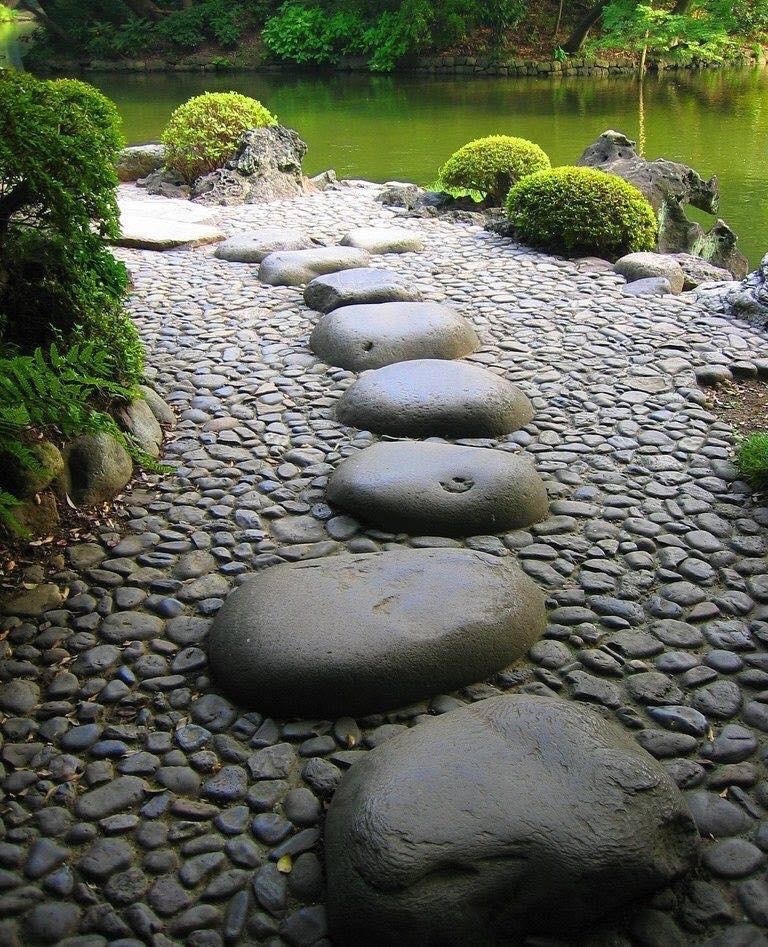
Stepping stones in a traditional Japanese garden ~ Tokyo.

They are called Tobi-ishi (飛石) in Japanese. The literal translation is “Flying stones” or “Skipping stones”. They are irregularly arranged according to the principle of asymmetry. Tea master Sen no Rikyu (千利休, 1522-1591) is said to have introduced the tobi-ishi path. He didn’t like that sandals became dirty when walking on the bare soil. He also recommended that the stepping stones are 6cm higher than the ground. Sen no Rikyu perfected the art of tea ceremony and fostered the development of tea gardens (露地, roji / “dewy path”).

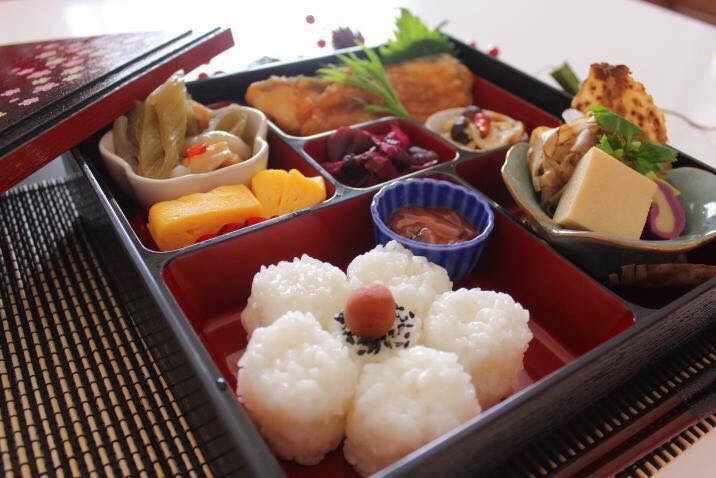
Shōkadō bentō (松花堂弁当)

Shōkadō bentō (松花堂弁当) —>The traditional lunch box covered with a lid, that originates from the Early Edo Period. It is named after Shōkadō Shōjō (松花堂昭乗, 1584-1639), a monk, calligrapher, tea ceremony master and poet. He used divided boxes to carry and organize materials needed for calligraphy, and eventually also used them to carry his lunch. This style of a black or red lacquered wooden or plastic box is now commonly used to present bento meals in restaurants. These lunchboxes were originally made for storing tobacco and paints.

Ikigai (生き甲斐)

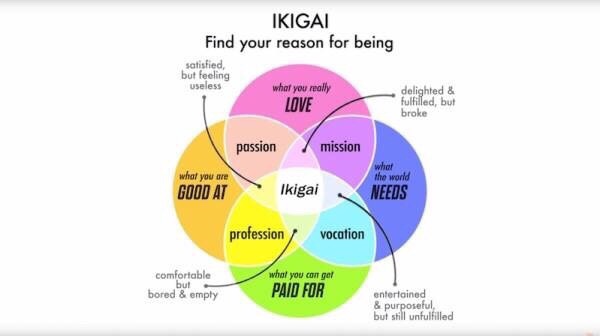
Japanese Concept of the day –> Ikigai (生き甲斐)

Ikigai (生き甲斐) is a Japanese concept meaning “a reason for being.” Everyone, according to the Japanese, has an ikigai. Finding it requires a deep and often lengthy search of self-discovery and reflection.

The word “ikigai” is usually used to indicate the source of value in one’s life or the things that make one’s life worthwhile. The word is also used to refer to mental and spiritual circumstances under which individuals feel that their lives are valuable.