Quips, Wit and One liners of Yesteryear

Insults from an era of quips and wit, “before” the English language got boiled down to 4-letter words:

  1. “He had delusions of adequacy ” Walter Kerr
  2. “He has all the virtues I dislike and none of the vices I admire.”- Winston Churchill
  3. “I have never killed a man, but I have read many obituaries with great pleasure. – Clarence Darrow
  4. “He has never been known to use a word that might send a reader to the dictionary.”-William Faulkner (about Ernest Hemingway)
  5. “Poor Faulkner. Does he really think big emotions come from big words?”- Ernest Hemingway (about William Faulkner)
  6. “Thank you for sending me a copy of your book; I’ll waste no time reading it.” – Moses Hadas
  7. “I didn’t attend the funeral, but I sent a nice letter saying I approved of it.” – Mark Twain
  8. “He has no enemies, but is intensely disliked by his friends.” – Oscar Wilde
  9. “I am enclosing two tickets to the first night of my new play; bring a friend, if you have one.” -George Bernard Shaw to Winston Churchill
  10. “Cannot possibly attend first night, will attend second… if there is one.” – Winston Churchill, in response
  11. “I feel so miserable without you; it’s almost like having you here” – Stephen Bishop
  12. “He is a self-made man and worships his creator.” – John Bright
  13. “I’ve just learned about his illness. Let’s hope it’s nothing trivial.” – Irvin S. Cobb
  14. “He is not only dull himself; he is the cause of dullness in others.” – Samuel Johnson
  15. “He is simply a shiver looking for a spine to run up. – Paul Keating
  16. “He loves nature in spite of what it did to him.” – Forrest Tucker
  17. “Why do you sit there looking like an envelope without any address on it?” – Mark Twain
  18. “His mother should have thrown him away and kept the stork.” – Mae West
  19. “Some cause happiness wherever they go; others, whenever they go.” – Oscar Wilde
  20. “He uses statistics as a drunken man uses lamp-posts… for support rather than illumination.” – Andrew Lang (1844-1912)
  21. “He has Van Gogh’s ear for music.” – Billy Wilder
  22. “I’ve had a perfectly wonderful evening. But I’m afraid this wasn’t it.” – Groucho Marx
  23. The exchange between Winston Churchill & Lady Astor: She said, “If you were my husband I’d give you poison.” He said, “If you were my wife, I’d drink it.”
  24. “He can compress the most words into the smallest idea of any man I know.” – Abraham Lincoln
  25. “There’s nothing wrong with you that reincarnation won’t cure.” — Jack E. Leonard
  26. “They never open their mouths without subtracting from the sum of human knowledge.” — Thomas Brackett Reed
  27. “He inherited some good instincts from his Quaker forebears, but by diligent hard work, he overcame them.” — James Reston (about Richard Nixon)

New York, Early Twenties (1920-24) – Thomas Hart Benton

Missouri-born artist Thomas Hart Benton pays homage to his adoptive city of New York in this oil composition, presenting a bird’s-eye view of Madison Square Park. Internationally renowned as a pioneer of the regionalist art movement, Benton studied urban space within New York, Early Twenties (1920-24), depicting moving people who are painted as dark matchstick figures. Filing neatly past stationary vehicles, these figures weather the dark storm forming above the imposing skyscrapers and American flag. The tempestuous climate is set during a period of personal and professional unrest for Benton as a leftist sympathiser.

FBI Files: Truman Capote – Suspected Communist

The F.B.I. ostensibly kept records on Capote for being “a supporter of the Cuban Revolution,” based on his association with The Fair Play for Cuba Committee. When asked why he supported the FPCC, Capote told the F.B.I., “my step father is Cuban.” The bureau also took an interest in the author because he accompanied a black cast performing Porgy and Bess” in the Soviet Union.

But Capote’s F.B.I. file may have actually been the result of the author’s lust for gossip. Capote himself admitted to spreading rumors about F.B.I. Chief John Edgar Hoover’s supposed homosexual relationship with friend Clyde Tolson. He went as far as telling a magazine editor about the affair and almost wrote an article about it titled, “Johnny and Clyde.” “It got Hoover upset, that much I know,” Capote said. “And it got me … about 200 pages in an F.B.I. file.”

The Danger of Writing Defiant Verse – Dorothy Parker

And now I have another lad!
No longer need you tell
How all my nights are slow and sad
For loving you too well.

His ways are not your wicked ways,
    He’s not the like of you.
He treads his path of reckoned days,
    A sober man, and true.

They’ll never see him in the town,
    Another on his knee.
He’d cut his laden orchards down,
   If that would pleasure me.

He’d give his blood to paint my lips
    If I should wish them red.
He prays to touch my finger-tips
   Or stroke my prideful head.

He never weaves a glinting lie,
    Or brags the hearts he’ll keep.
I have forgotten how to sigh—
    Remembered how to sleep.

He’s none to kiss away my mind—
A slower way is his.
Oh, Lord! On reading this, I find
A silly lot he is.

Urban Legends: The Bell Witch (Adams, Tennessee)

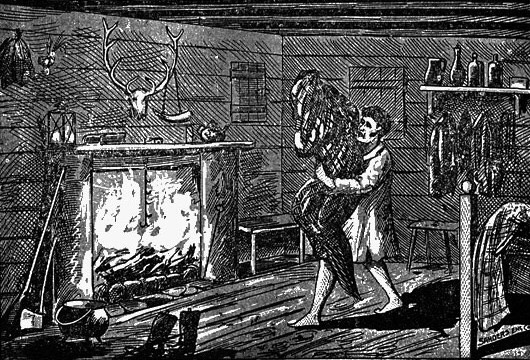
The legend of the Bell Witch of Tennessee is arguably the most famous haunting in the country, or at least the best documented. It has been the subject of books and movies across 200 years. The Bell Witch remains popular with tourists today – people can visit the Bell Witch Cave, located on the land where John Bell and his daughter, Betsy, reportedly experienced horrific manifestations between 1817 and 1821 in Adams, Tenn.

It began when John Bell spotted a mysterious creature in the cornfield with “the body of a dog and the head of a rabbit.” Soon after the sighting, the Bell children began hearing scratching noises and experiencing various disturbances, thought to be the result of a curse by a local woman with whom John had a property dispute, Kate Batts.

Pat Fitzhugh wrote: “The encounters escalated, and the Bells’ youngest daughter, Betsy, began experiencing brutal encounters with the invisible entity. It would pull her hair and slap her relentlessly, often leaving welts and hand prints on her face and body.” In 1820, John Bell died, becoming, Fitzhugh said, “the only person in history whose death was attributed to the doings of a Spirit.”

He continued: “In 1817, Bell contracted a mysterious affliction that worsened over the next three years, ultimately leading to his death. Kate took pleasure in tormenting him during his affliction, finally poisoning him one December morning as he lay unconscious after suffering a number of violent seizures.”

Predynastic Egypt: Maadi Culture

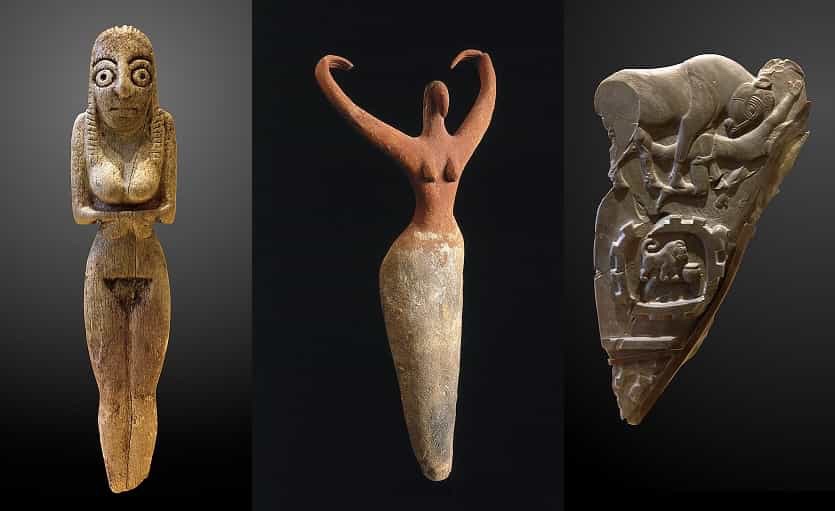
Contemporary throughout its development to these three cultural phases, in Lower Egypt we first find the Maadian cultural complex, which is later joined by the Buto cultural complex in 3600 BC. 

The Maadian specifically is made up of a dozen archaeological sites, among those that emphasize the cemetery and the establishment of the own Maadi. Contrary to what we see at the sites of the Naqada civilization, the Maadi cemeteries are much less important to the archaeological record than the settlements.

In this sense, the excavated structures show three types of remains, one of which is completely exceptional. It consists of houses excavated in the rock with oval plans measuring 3 x 5 meters in surface and up to three meters deep, which were accessed through an excavated passage.

The presence of hearths, semi-buried jugs and household remains suggests that they were permanent places of residence, which is not without attention for being underground. On the other side of the scale, around 600 tombs have been discovered in Maadi, which is nothing compared to the 15,000 predynastic tombs in the south of the country. It is not only a question of quantity, but also of quality: the tombs of Lower Egypt are extremely simple, based on oval holes with the deceased in a fetal position, wrapped in a mat or cloth and accompanied only by one or two ceramic containers or even for nothing at all.

Starting in 3600 BC, the Maadi-Buto culture not only had contact with the civilization of Naqada II to the south, but was also related to Asia by land with the Palestinian strip and by sea with the northern coast of Syria and, through it, with Mesopotamia.

Predynastic Egypt: Naqada I & II

The civilization or culture of Naqada was born shortly after in the time of the end of the Badarian culture and something more to the south. Specifically, it covers all the territories previously occupied by the Badarian plus the Thebes region, already in the middle of Upper Egypt.

This second great phase of the Predynastic period takes its name from the archaeological site of Naqada, where the famous Egyptologist Flinders Petrie discovered a huge cemetery of more than 3,000 graves in 1892. These burials consist of little more than the body in a fetal position on the left side, wrapped in animal skin, sometimes covered by a mat and deposited in simple oval holes dug in the sand. Compared with the important finds from the world of the dead, the preserved remains of the human settlements of Naqada I are poor and scarce.

The buildings, built using a mixture of mud and organic materials, have not been well preserved, so they have not been able to be well studied by archaeologists. This ignorance directly affects our understanding of the life forms of Naqada I, so that we can only theorize about them from other evidence, such as the presence of domestic animals in the grave goods: Goats, sheep and cattle.

Predynastic Egypt: Naqada II

Naqada II is an evolution of everything already seen in the Nagada I culture, rather than an abrupt change or an independent culture. The Naqada civilization spread south to Nubia at the second cataract, and north to cover the entirety of Middle Egypt and come into contact with the Maadi culture in Lower Egypt.

In fact, around 3400 BC it continued its penetration towards the north, occupying the south and east of the Delta, even overlapping the Maadi culture itself. Finally, around 3300 BC, the culture of Naqada II is archaeologically documented throughout the Delta, thus achieving for the first time the cultural unification of all Egypt, centuries before political unification took place.

From this moment, the sedentary Egyptians experienced a rapid development of their civilization, all coinciding with the beginning of the exploitation of the quarries, the manufacture of pottery on the wheel, the decoration of the vessels with red paint, the appearance of the jewelry and copper metallurgy at full capacity and the manufacture of stone vessels. Likewise, the agricultural surpluses of the new locations stimulated the division of labor, social stratification and the evolution of the political system towards state forms.

Medieval Vampire Defense

If your local villagers neglected to unearth and stake a suspected vampire and he or she has returned from the grave, there are steps you can take to protect yourself. The exact method varies around the world, but in some traditions the best way to stop a vampire is to carry a small bag of salt with you. If you are being chased, you need only to spill the salt on the ground behind you, at which point the vampire is obligated to stop and count each and every grain before continuing the pursuit. If you don’t have salt handy, some say that any small granules will do, including birdseed or sand. Salt was often placed above and around doorways for the same reason. 

Some traditions hold that vampires cannot enter a home unless formally invited in. This may have been an early form of the modern “stranger danger” warnings to children, a scary reminder against inviting unknown people into the house.

Urban Legends: The Lizard Man (Bishopville, South Carolina)

The Lizard Man is a legendary creature who roams the swamps near Bishopville, S.C. The Lizard Man is a “connoisseur of delicious chrome trim on automobiles … South Carolina’s very own homegrown monster,” the website says. The creature, with red eyes, green skin and long black claws, was said to attack cars, ripping off mirrors, shredding roofs and ripping off fenders.

It began on June 29, 1988, when a teenager got a flat tire and stopped to change it at the edge of Scape Ore Swamp. “He got out of the car to change the tire when he heard a sound, like someone running, getting louder and louder. Suddenly, from the darkness, it emerged!” Since then, police have responded to numerous reports of damaged cars near the swamp and sightings of the creature continue to be reported to this day.

Sources: Discover South Carolina dot com