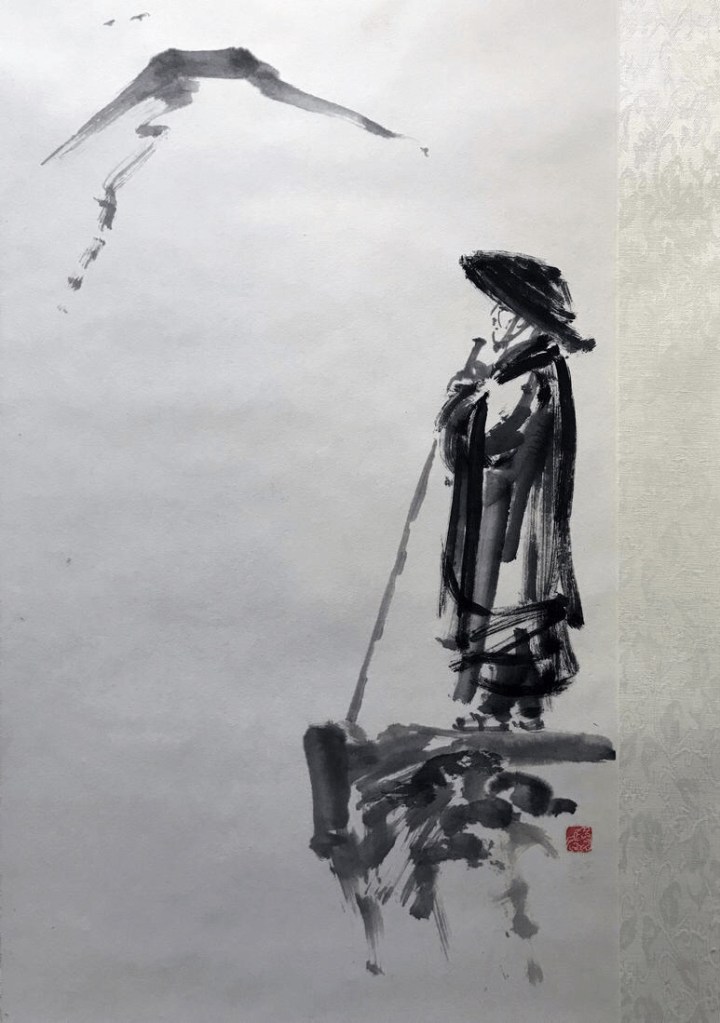
Gizan Zenrai (儀山善来) – Japanese Death Poem

Died on the twenty-eighth day of March, 1878 at the age of seventy-seven

I was born into this world
I leave it at my death.
Into a thousand towns
My legs have carried me,
And countless homes—
What are all these?
A moon reflected in the water
A flower floating in the sky
Ho!

“Ho!” is a translation of the word totsu, a kind of challenging cry uttered at the moment of enlightenment.”

Sources: Japanese Death Poems

MDMA (Ecstasy)

What is MDMA?
  • MDMA is the drug originally called ecstasy. It belongs to a family of drugs called entactogens, which means “touching within.” Other drugs in this category include MDA, MDE and MBDB.
  • MDMA was first synthesized in 1912 by Merck Pharmaceuticals in Germany, although it was never tested on humans. Recreational use of MDMA did not begin until the 1970s.
  • Before it was made illegal in 1985, MDMA was a therapeutic medicine. Studies are currently underway using MDMA to treat Post-Traumatic Stress Disorder (PTSD), and the drug is on track to be approved as a prescription medication by the FDA in 2021.
What are the Effects?
  • MDMA is a mood elevator that produces a relaxed, euphoric state. It does not cause hallucinations.
  • MDMA is almost always swallowed as a pill, tablet, or capsule. Effects are typically felt within 20 to 40 minutes, and peak effects within 60 to 90 minutes.
  • The come-up on MDMA is usually short but intense, feeling like a wave of tingling and warmth coming over the body.
  • Sensations are enhanced and the user experiences heightened feelings of empathy, emotional warmth, and self-acceptance.
  • The effects of MDMA subside after about 3-5 hours.
  • Most users say the experience is very pleasant and highly controllable. Even at the peak of the effect, people can usually deal with important matters.
What is a Normal Dose?
  • For most people, a normal dose of MDMA is between 70 and 125mg. However, some people require more to feel the same effect, while others require less.
  • Taking a single redose of 1/3 to 1/2 the original dose around the 1.5 to 2.5 hour mark can extend the experience by another hour or two, but might worsen the comedown/crash. Redosing any more than this usually will only increase side effects.
Is MDMA Addictive?
  • MDMA is not physically dependence-forming, and it is not considered to be significantly rewarding and reinforcing (addictive). However, it can often take on great importance in people’s lives, and some people become compulsive, every-weekend users.
  • Compulsive users may be unconsciously trying to self-medicate for depression or social anxiety. However, MDMA is not a good long-term antidepressant. Effective treatments for depression are available from a qualified physician.
  • If taken too frequently, MDMA can stop working. Users report that the “magic” goes away. This can last for many years or be permanent. Remember, less is more.
  • It’s hard to say exactly how often is too often. Some people lose the magic after rolling every few months for a couple of years, while others lose it in less than a year after rolling on a weekly or biweekly basis.
Be Careful
  • Because of prohibition, MDMA is unregulated. As a result, “Ecstasy” tablets and “Molly” powder can vary widely in strength and contents. Sometimes they contain no MDMA at all, but rather different, more dangerous drugs.
  • MDMA increases the risk of heatstroke. About 20 people per year in the US die of heat stroke after taking MDMA. Remember to take breaks from dancing, cool down, and stay hydrated. Some people have died from drinking too much water after taking MDMA. This is called “hyponatremia” and happens when the body’s electrolytes (salts) become diluted. Stay hydrated, but don’t drink too much water. About two to four cups per hour is all you need.
  • Studies have shown that high doses of MDMA can cause damage to serotonin axons (neurons) in laboratory animals. It is possible that similar damage can occur in human recreational users who take high doses too often, and/or who dose in a hot environment.
  • Although many users feel fine the next day, often describing an “afterglow,” some people experience depression the day after taking MDMA. This post-roll depression (“crash”) can last for up to a week, or more in some cases. People with a history of depressive episodes may be more prone to long and/or difficult “crashes.”
  • Taking more MDMA at this point won’t make you feel better. This is because MDMA works by releasing a natural chemical in your brain called serotonin, and you only have so much of it in storage. It takes about three weeks for your brain to replenish the serotonin released by MDMA.
  • Mixing MDMA with alcohol, stimulants or other drugs can increase the risk of adverse reactions, including dehydration, hyperthermia (overheating), and cardiac arrhythmia.
  • MDMA is illegal and a conviction for possession or sale can carry long prison sentences.
  • If you choose to use MDMA, knowing why is the best way to maximize the benefits and reduce the risks. Whether it’s for therapy, self-exploration or purely for recreation, understanding your intentions will help you assess whether or not they are being met.

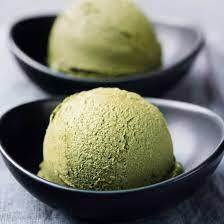
Green Tea (Matcha) Ice Cream

⅓ cup sugar
⅓ cup cold water
½ teaspoon mirin
2 teaspoons matcha
½ cup whole milk
½ cup half-and-half

In a small saucepan, combine the sugar and water. Stir the mixture over low heat to melt the sugar and then continue to simmer for about 5 minutes, or until a bit syrupy. Add the mirin, stir, and remove the pan from the heat.

In a small bowl, combine 1 tablespoon of the warm syrup and the matcha and stir until dissolved. Return this sweet tea concentrate to the saucepan and stir until completely blended. To retain optimal aroma and ensure an intense jade color, do not reheat the mixture. Stir in the milk and half-and-half and mix thoroughly.

If you are using an ice-cream maker:

Pour the tea-and-milk mixture into the machine and follow the manufacturer’s instructions for making a soft-set ice cream. For most models, about 10 minutes of chilling and churning should suffice. Pour the semifrozen mixture into a 3-cup freezer-safe container with a snug-fitting lid. Tap the container gently on a countertop to force out any air bubbles that might be trapped below the surface. Cover and freeze for at least 2 hours, or until firm throughout.

If you are using a blender, electric mixer, or whisk and freezer trays:

Pour the tea-and-milk mixture into a flat, shallow freezer-safe container, filling it no more than two-thirds full (the mixture will expand). Tap the container gently on a countertop to force out any air bubbles that might be trapped below the surface. Cover and freeze for 1½ hours, or until nearly firm. Transfer the semifrozen mixture to a blender and pulse in a few short spurts. Or, with a handheld electric mixer or a whisk, whip the mixture vigorously in a deep bowl. Return the mixture to the same container, re-cover, and freeze again for another 45 minutes, or until firm (but not rock-hard) throughout. Repeat the blend or whip step one more time to achieve a silkier texture.

The final ice cream should be smooth but not too hard. When ready to serve, transfer one or two scoops to pre-chilled bowls. The jade color of the ice cream makes for a dramatic presentation against black tableware.

Sources: Washoku

Japanese Teas After Matcha

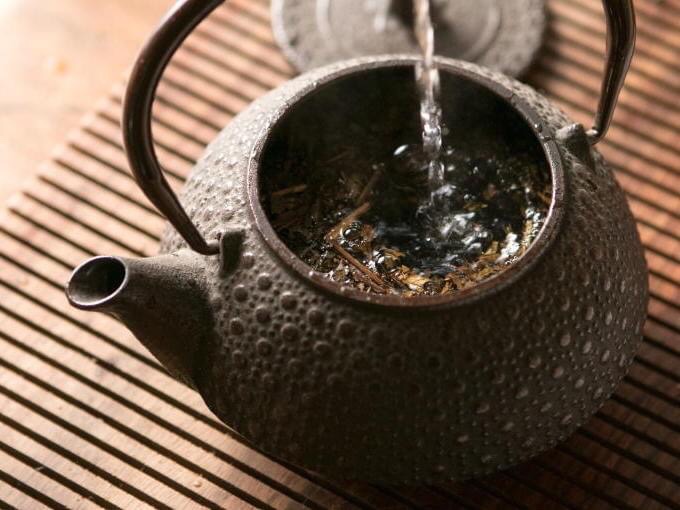
The vast majority of tea consumed in Japan is, and historically has been, green tea. But there are many different options that fall under the “green” category, varying based on qualities like the time of harvest, how much sun the leaves have seen, how the tea is processed, and what parts of the plant are used in the final product.

SENCHA: The most commonly consumed tea in Japan, sencha consists of green tea leaves that have been grown in full sunlight. Meaning simmered tea, sencha is delicate, mild, and slightly floral. It should be brewed for 2 minutes in simmering water (160 to 170° F).

GYOKURO: This high-end tea is made from first-flush green tea leaves grown partially in the shade. Sweet and mild, it should be brewed for about 3 minutes in relatively cool water (120 to 140° F).

BANCHA: This lower grade of sencha is harvested later in the year, and can include some stems in with the leaves. Its flavor is more robust and astringent than delicate sencha. It should be brewed for 1 to 3 minutes in simmering water (160 to 170° F).

HOJICHA: A reddish-brown tea made by roasting bancha in a clay pot over charcoal (most Japanese teas are steamed), hojicha is a roasty, nutty, mellow tea, low in caffeine, typically served during or after an evening meal. It should be brewed for about 1 minute in simmering water (160 to 170° F).

GENMAICHA: Genmaicha refers to any combination of dried green tea and toasted genmai rice grains, the latter of which provides the beverage with a nutty depth to offset the tea’s natural astringency. It can be made with sencha, bancha, or gyokuro tea and sold premixed or created on your own at home. Brew it for 1 minute in water at a steep simmer (185° F).

KUKICHA: Also known as twig tea, this blend of tea leaves, stems, and twigs is available as both a green tea and in roasted, oxidized form. Creamy and mild, it should be brewed for 3 minutes in simmering water (160 to 170° F).

MUGICHA: Not technically a tea at all, mugicha is made from roasted barley. This caffeine-free beverage is traditionally served cold as a summer drink in Japan; outside of Japan, it’s popular as a coffee substitute. Brewing conditions needn’t be as fussy for mugicha as for green teas, but plan to steep it for about 2 minutes in simmering water (160 to 170° F).

Sources: Kyotofu

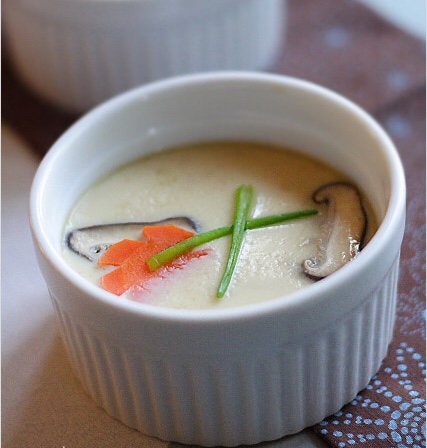
Masaharu Morimoto Inspired Shrimp, Chicken and Fish Chawanmushi (茶碗蒸し)

3 cups Dashi (dried fish and kelp stock)
1 tablespoon plus 1 teaspoon usukuchi (Japanese light-colored soy sauce), plus 1 tablespoon
2 teaspoons mirin (sweet rice wine)
½ teaspoon kosher salt
4 large eggs
8 thin, bite-size slices boneless skinless chicken thigh (from 1 small thigh)
One 3-ounce fillet delicate white-fleshed fish, such as fluke or flounder, cut into 8 thin bite-size slices
4 medium shrimp, peeled and deveined
8 drained canned gingko nuts or 4 jarred or vacuum-packed roasted chestnuts, halved
¼ cup loosely packed very roughly chopped mitsuba, thinly sliced scallions or thinly sliced shiitake mushrooms

Combine the dashi, 1 tablespoon plus 1 teaspoon of the usukuchi, the mirin, and salt in a small pot, bring to a boil, then let cool completely.
Gently mix the eggs in a medium bowl so they’re well mixed but don’t develop bubbles. Pour in the dashi mixture, stir well, then strain into a measuring cup, discarding any solids.

Briefly toss the chicken, fish, and shrimp in a bowl with the remaining 1 tablespoon soy sauce, shake to let any excess drip off, and divide them among the 4 small bowls or ramekins. Divide the gingko nuts among the bowls or ramekins, then divide the egg mixture evenly among them and cover with foil.

Line a wide, shallow-lidded pot or a Dutch oven with a paper towel. Add 1 inch of water and bring to a boil over high heat. Carefully add the bowls to the pot and cover with the lid. Cook until the custard turns pale, 3 to 4 minutes, then carefully remove the bowls from the pot. Add the mitsuba, scallion or shiitake mushroom to the surface of the custard and re-cover with the foil.

Reduce the heat to maintain a gentle simmer, return the bowls to the water, and cover the pot with the lid so it’s slightly ajar. Cook until the custard is just set but still jiggles when you shake the bowls (or a skewer inserted into the middle comes out clean), 12 to 15 minutes. Serve immediately.

LSD: A Primer

What is LSD?
  • Lysergic Acid Diethylamide (LSD) is a hallucinogenic drug discovered in 1938. It was first ingested by the Swiss chemist, Albert Hofmann, on April 19th, 1943.
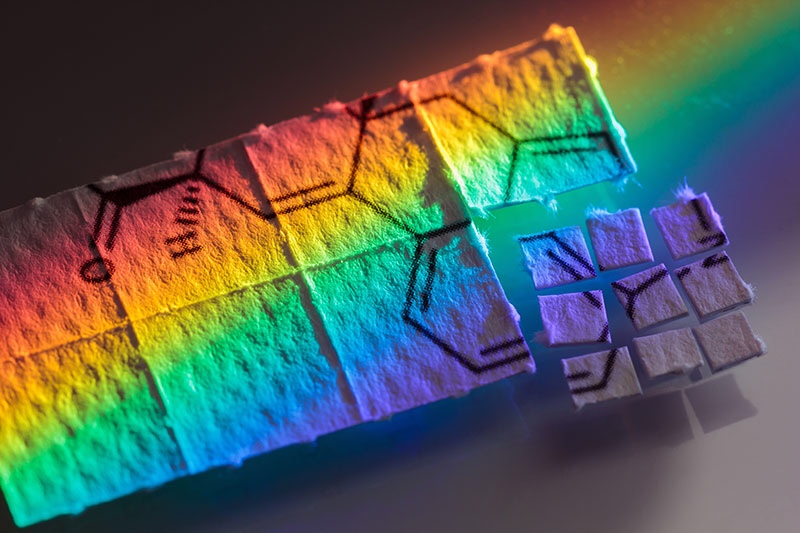
  • LSD is most often absorbed into small pieces of paper called “blotter,” but it can also be found in liquid form. It is almost always consumed orally.
  • LSD is extremely powerful. A typical dose is between 100 and 200 micrograms (mcg), which is such a small amount it makes it extremely difficult to measure. A single square of blotter or drop of liquid usually contains a typical dose, but may contain much more.
What are the Effects?

An LSD experience is often described as a “trip.” This experience may be broken up into four phases:

  1. The Onset – After about 30 minutes, colors appear sharper, moving objects leave “trails” behind them and flat surfaces may appear to “breathe.”
  2. The Plateau – Over the second hour, the effects become more intense. Open and closed eye visuals may begin to appear, from shapes in smoke to movement in the lines on the palms of the hand.
  3. The Peak – Time is often slowed significantly. Users may feel like they are in a different world, or a movie. Familiar things seem strange or unusual. For some this is profound and mystical, but it can be very frightening for others.
  4. The Comedown – 5 or 6 hours after taking the drug the effects begin to subside. After 8 to 12 hours, the trip is usually over, although residual effects may last much longer.
Caution
  • Because of prohibition, LSD is unregulated. Other, far more dangerous drugs, such as 25I-NBOMe (a synthetic hallucinogen that is used in biochemistry research for mapping the brain’s usage of the type 2A serotonin receptor) have been misrepresented as ‘LSD’ and sold in blotter or liquid form, leading to numerous deaths.
  • LSD trips can sometimes be frightening, inducing extreme anxiety and panic. Although rare, some people relive the experience days, weeks or even years later in episodes known as “flashbacks.” Flashbacks are not unique to hallucinogenic drugs; they can result from any intense psychological trauma.
  • LSD can induce very intense experiences that may exacerbate or bring out mental health conditions, especially mood or psychotic disorders. There is no hard and fast rule, but individuals with a personal or family history of mood or psychotic disorders have a higher baseline risk level when ingesting LSD and other psychedelics.
  • In a very small percentage of people, LSD and other hallucinogens have caused a long-lasting disorder known as Hallucinogen Persisting Perception Disorder (HPPD) that affects the person’s visual perception.
  • LSD can impair judgment. Never drive while under the influence of LSD.
  • LSD is illegal and possession can result in long prison terms. Supplying LSD to someone else (whether or not money was exchanged) carries even longer sentences.
  • If you choose to use LSD, knowing why is the best way to maximize the benefits and reduce the risks. Whether it’s for insight, self exploration or simply for fun, your intentions will greatly impact the kind of experience you have.
Bad trip and what to do
  • As with all psychedelics, “set” and “setting” are important factors in determining whether someone has a positive or challenging experience. “Set” is the mental state a person brings to the experience— their thoughts, mood and expectations. “Setting” is the physical and social environment in which the drug is consumed. Being in a good mental state with trusted friends in a supportive environment before taking LSD reduces the risk of having a bad trip.
  • If someone is having a difficult or challenging psychological experience on LSD, take them to quiet surroundings where they feel comfortable. Find a friend who can reassure them. Clarify to them that their panic is caused by the drug, and will wear off soon.
  • If you are at a festival, find out if they have a safe space or cooldown area, especially one that is equipped with people who can offer support during difficult experiences.

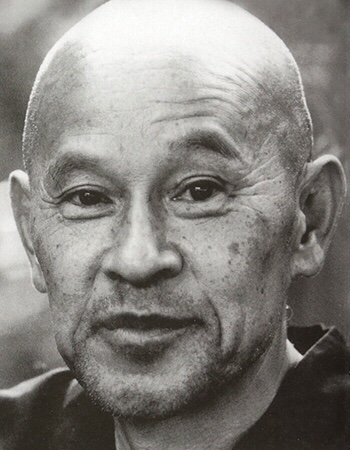
Shunryu Suzuki On Bowing in Zen

“By bowing we are giving up ourselves. To give up ourselves means to give up our dualistic ideas. So there is no difference between zazen [meditation] practice and bowing.

Usually to bow means to pay our respects to something which is more worthy of respect than ourselves. But when you bow to Buddha you should have no idea of Buddha, you just become one with Buddha, you are already Buddha himself.

When you become one with Buddha, one with everything that exists, you find the true meaning of being. When you forget all your dualistic ideas, everything becomes your teacher, and everything can be the object of worship.

When everything exists within your big mind, all dualistic relationships drop away. There is no distinction between heaven and earth, man and woman, teacher and disciple.

Sometimes a man bows to a woman; sometimes a woman bows to a man. Sometimes the disciple bows to the master; sometimes the master bows to the disciple. Sometimes the master and disciple bow together to Buddha. Sometimes we may bow to cats and dogs.

In your big mind, everything has the same value. Everything is Buddha himself. You see something or hear a sound, and there you have everything just as it is. In your practice you should accept everything as it is, giving to each thing the same respect given to a Buddha. Here there is Buddhahood. Then Buddha bows to Buddha, and you bow to yourself. This is the true bow.”

~ Shunryu Suzuki, Zen Mind, Beginner’s Mind

What Are Japanese Death Poems?

“In Japan, as elsewhere in the world, it has become customary to write a will in preparation for one’s death. But Japanese culture is probably the only one in the world in which, in addition to leaving a will, a tradition of writing a “farewell poem to life” (jisei) took root and became widespread. If we examine the wills left by the Japanese throughout their history, we occasionally find instructions and appeals to survivors concerning their moral or social conduct; usually, however, wills deal only with the division of property. It has been suggested, then, that the death poem is perhaps a kind of salutation. The Japanese learn hundreds of polite forms of address so as to be prepared for every possible social situation, and status and prestige are measured, to a great extent, by one’s ability to find the greeting most appropriate to the circumstances. Should we then regard death poems as a final salute to those who remain alive, the last act of politeness? In fact, death poems reveal that before death, the Japanese tend rather to break the restraints of politeness that hold them back during their lifetime; we must comb through hundreds of death poems in order to find one or two written in the style customary for polite greetings. Neither material nor social concerns come to the fore. Death poems seem to reflect, more than anything else, the spiritual legacy of the Japanese.