Galloway Hoard

“National Museums Scotland acquired the Galloway Hoard, as it came to be known, in 2017. Since then, conservators have been working to clean and restore the items, all of which spent more than 1,000 years buried in the Scottish field. This week, the National Museum of Scotland (NMS) released new images of the latest object to undergo conservation: an intricately decorated Anglo-Saxon cross.

After a millennium underground, the cross was encrusted with dirt. Wrapped in a coiled silver cord made out of wire bundled around an animal-gut core, it proved difficult to clean. Improvising, conservators turned to a carved porcupine quill—a tool “sharp enough to remove the dirt yet soft enough not to damage the metalwork,” according to a statement.”

Source: Smithsonian Magazine Online

Viking Runes Introduction

By the beginning of the Viking Age, the Scandinavian rune-masters had developed an alphabet, or “futhark” (from the value of the first six characters), of sixteen characters that was quite distinct from the rest of the Germanic peoples. This alphabet was known as the “younger futhark”.

However, even within Scandinavia, there was no standard form for the characters and there are variations from inscription to inscription, but basically there were two main forms of futhark: the Common or Danish futhark (although it occurs outside of Denmark), and the Swedo-Norwegian futhark (although this also occurs outside of Sweden and Norway.

One can see that there are shortcomings with these alphabets. For example, there are characters for b, k and t, but there are none for p, g and d (this is because the futhark does not distinguish between these voiced and voiceless pairs. Therefore the rune-master had to use b for p, k for g and t for d.

There were other peculiarities: although there were two characters for the two different types of a, there were no symbols for e and o. This meant that the name “Svein” appears as in runes “suin” and the name “Gormr” appears as “kurmR”.

It becomes even more complicated, as the spelling practice allowed n to be omitted when it occurred before a consonant. Therefore the name Thormundr appears as thurmutR.

This of course means that many runic inscriptions can be very difficult to read and there can be a great deal of dispute about their true meaning.

Despite the difficulties in reading runic inscriptions, they can provide a good deal of useful information.

Source: Swedish National Museum Heritage Board’s website, but that page no longer exists.

The Euphronios Krater

Today in Museum History —> On this day in 2008 – The Euphronios Krater is unveiled in Rome after being returned to Italy by the Metropolitan Museum of Art.

Here’s a picture of that beautiful Greek vase, created by Euphronios about 515 B.C.

The Euphronios Krater (or Sarpedon Krater) is an ancient Greek terra cotta calyx-krater, a bowl used for mixing wine with water. Created around the year 515 BC, it is the only complete example of the surviving 27 vases painted by the renowned Euphronios and is considered one of the finest Greek vase artifacts in existence. Part of the collection of the Metropolitan Museum of Art from 1972 to 2008, the vase was repatriated to Italy under an agreement negotiated in February 2006, and it is now in the collection of the Archaeological Museum of Cerveteri as part of a strategy of returning stolen works of art to their place of origin

Who Were The Norse?

“The term ‘Norse’ is used to describe the various peoples of Scandinavia who spoke the Old Norse language between the eighth and thirteenth centuries AD. While it had eastern and western dialects it would have been generally mutually understood across the range of areas within which it was spoken. A third recognisable form was spoken on the island of Gotland.

The Old Norse language later developed into modern Danish, Faroese, Icelandic, Norwegian and Swedish. In addition, there once existed the so-called Norn languages of Orkney and Shetland that are now extinct. It was, essentially, the language of the Vikings.”

~ Martyn Whittock, from Tales of Valhalla

The Wolf Song – Nordic Lullaby

This version of the lullaby from “Ronja Rövardotter / Ronia the robbers daugther” written by beloved Swedish writer, Astrid Lindgren, whose books have been read for children all over the world:

Lyrics in Swedish and English:

Vargen ylar i nattens skog
(The wolf is howling in the forest of the night)
Han vill men kan inte sova
(He wants to, but cannot sleep)
Hungern river i hans varga buk
(The hunger tears his wolven stomach)
Och det är kallt i hans stova
(And it’s cold in his burrow)

Du varg du varg, kom inte hit
(Wolf, wolf, don’t you come here)
Ungen min får du aldrig
( I will never let you take my child)

Vargen ylar i nattens skog
(The wolf is howling in the forest of the night)
Ylar av hunger o klagar
(Howling out of hunger and moaning)
Men jag ska ge’n en grisa svans
(But I will give him a pig tail)
Sånt passar i varga magar
(Which suits a wolven stomach)

Du varg du varg, kom inte hit
(Wolf, wolf, don’t you come here)
Ungen min får du aldrig
( I will never let you take my child)

…(First verse again)

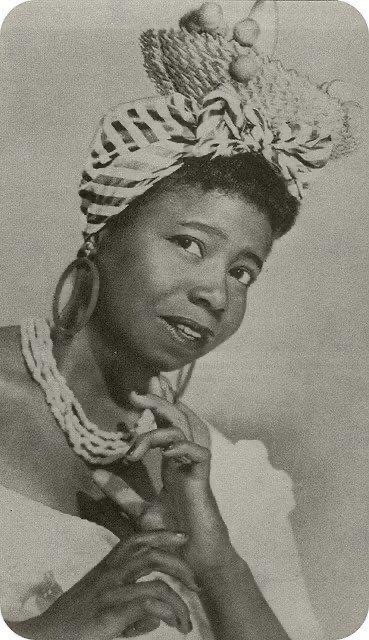
Today in History —> Butterfly McQueen

Notable born on this day in History —> Born today in 1911 Butterfly McQueen, American actress and dancer.

You may remember McQueen as the slave “Prissy” in the movie Gone with the Wind, famous for saying “I don’t know nothing about birthing babies.” She couldn’t even attend the film’s premiere in Atlanta in 1939 because the theater was segregated.

McQueen never married or had children.

In July 1983, a jury awarded McQueen $60,000 in a judgment stemming from a lawsuit she filed against two bus terminal security guards. McQueen sued for harassment after she claimed the security guards accused her of being a pickpocket and a vagrant while she was at a bus terminal in April 1979.

McQueen died at age 84 on December 22, 1995, at Doctors Hospital in Augusta, from burns sustained when a kerosene heater she attempted to light malfunctioned and burst into flames.McQueen donated her body to medical science and remembered the Freedom From Religion Foundation in her will.

“As my ancestors are free from slavery, I am free from the slavery of religion.”

“They say the streets are going to be beautiful in Heaven. Well, I’m trying to make the streets beautiful here … When it’s clean and beautiful, I think America is heaven. And some people are hell.”
~ Butterfly McQueen

Iron Age Burial Uncovered In West Sussex

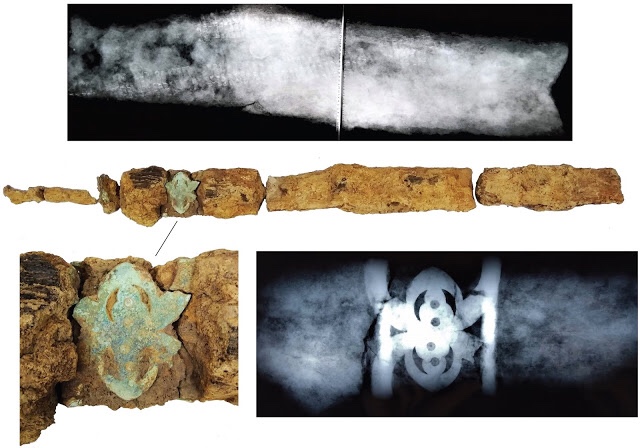
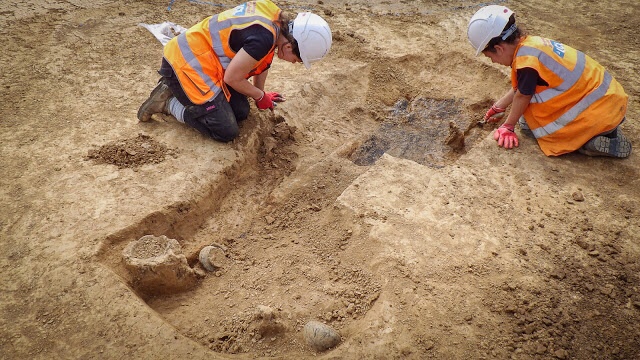
A richly-furnished grave belonging to an Iron Age ‘warrior’ buried 2,000 years ago has been uncovered in West Sussex. Iron weapons had been placed inside the grave, including a sword in a highly-decorated scabbard and a spear. The burial was discovered during an excavation commissioned by Linden Homes, who are developing a site on the outskirts of Walberton, near Chichester, to create 175 new homes.

ASE archaeologist Jim Stevenson, who is managing the post-excavation investigations into the burial, said: “There has been much discussion generally as to who the people buried in the ‘warrior’ tradition may have been in life. Were they really warriors, or just buried with the trappings of one? The grave is dated to the late Iron Age/ early Roman period (1st century BC – AD 50). It is incredibly rare, as only a handful are known to exist in the South of England.

X-rays and initial conservation of the sword and scabbard reveal beautiful copper-alloy decoration at the scabbard mouth, which would have been highly visible when the sword was worn in life. Dotted lines on the X-ray may be the remains of a studded garment worn by the occupant when buried. This is particularly exciting for the archaeologists as evidence of clothing rarely survives.

The grave also held the remains of a wooden container, preserved as a dark stain, likely used to lower the individual into the grave. Four ceramic vessels were placed outside of this container, but still within the grave. The vessels are jars made from local clays and would usually have been used for food preparation, cooking and storage. It is likely that they were placed in the grave as containers for funerary offerings, perhaps intended to provide sustenance for the deceased in the afterlife.

Source: Archaeology News Network