What is Ásatrú?

Ásatrú is a modern religion that revives, reconstructs, and reimagines the ancient polytheism of Northern Europe. The new religious movement began in 1972, when Sveinbjörn Beinteinsson and eleven other Icelanders decided to bring back public worship of the Norse gods, goddesses, and land spirits. New iterations of the Old Way quickly spread around the world, and by 2013 there were nearly 40,000 followers of related practices in ninety-eight countries.

The word Ásatrú is modern Icelandic for “Æsir Faith” and refers to belief in the major tribe of Norse deities. Practitioners often self-identify as Heathens, and the term Heathenry is generally used to refer to the wider range of contemporary religions related to various Northern European polytheistic traditions dating back to approximately 2000 BCE. Although there are clergy known as goðar (singular goði), there is no central Ásatrú authority and no set dogma. Throughout the Heathen world, there is a great variety of beliefs and practices.

The history of Northern European polytheism stretches from the Bronze Age through the Viking Age, a long period in which local variants developed among the Germanic peoples of continental Europe, the Nordic countries, and the British Isles. Although large-scale practice ended with the coming of Christianity, private worship is documented for several subsequent centuries. Some beliefs and rituals survived into the twentieth century as elements of folk religion throughout the Northern European diaspora.

Since the founding of Iceland’s Ásatrúarfélagið (“Æsir Faith Fellowship”) in 1972, modern practice has spread worldwide through a mixture of national organizations, regional gatherings, local worship groups, and lone practitioners. The Ásatrúarfélagið has been recognized by the Icelandic government since 1973, and Ásatrú is now Iceland’s largest non-Christian religion. In the United States, the Department of Defense officially recognized Ásatrú and Heathenry in 2017, thereby granting full religious rights to practitioners in all service branches.

Today’s beliefs and practices span a range from humanism to reconstructionism, from viewing the gods as metaphorical constructs to approaching them as distinct beings. Deities venerated in Ásatrú include Odin, Thor, and Freya, but respect is paid to a large number of figures. Ásatrú is a world-accepting religion; emphasis is placed on right action in this life rather than on expectation of an otherworldly afterlife. Practitioners assert that “we are our deeds,” meaning that the sum of one’s actions is of primary importance.

Blót is the central ritual of Ásatrú. The Old Norse word for “sacrifice” is used for a rite in which offerings are made to gods, goddesses, land spirits, and departed people of importance. Blót is often performed outside, and the most common offering is some form of alcohol (usually ale, beer, or mead). The ritual can be performed as often as desired by the community, and it forms the core of major holiday celebrations such as Midsummer and Yule.

For grounding and inspiration, followers of Ásatrú turn to a diverse set of texts that includes Greek, Roman, and Arabic descriptions of Germanic peoples; myths preserved by the medieval Icelander Snorri Sturluson and his Danish contemporary Saxo Grammaticus; Old Norse, Anglo-Saxon, and Middle High German mythic and heroic poetry; legendary and historical sagas of Iceland; and later folklore collections. Many practitioners also study and write modern scholarly work in disciplines such as archaeology, history, medieval studies, and religious studies.

Ancient Egyptian Medicine

Ancient Egyptian medicine was arguably the most advanced of its time. Natural and supernatural remedies were used together by practitioners/priests in order to cure injury, illness, and disease. Evidence of different diagnoses and treatments have been found on numerous papyri, giving details of both natural and supernatural cures for different ailments. These texts were organized from sections of the body, or focused on one form of treatment. Some of the most known of these are the Edwin Smith Papyrus describing cases of surgical procedures, the Ebers Papyrus which contains multiple natural remedies along with incantations, and the Domotic Magical Papyrus of London and Leiden describing incantations and magical processes (which show similarities to Greek papyri).

From symptoms, a diagnoses was found in order to treat ailments with natural treatments. Depending on the diagnoses numerous remedies would have been used. Medications were herbal/plant, mineral, or animal based. Castor oil was a very popular remedy for many ailments of all types. Honey was also used often, especially for wounds as a natural antiseptic. Some remedies were used domestically as pesticides to ward off insects and animals. Cosmetic remedies were also used to rid wrinkles, etc. Surgical procedures were not used often, only for broken bones, large wounds, circumcision, abscesses, and of course at death during the removal of organs for mummification. All surgical procedures also included medicines an most likely incantations as well.

The Chester Beatty Medical Papyrus, dated c. 1200 BCE, prescribes treatment for anorectal disease (problems associated with the anus and rectum) and prescribes cannabis for cancer patients (pre-dating the mention of cannabis in Herodotus, long thought to be the earliest mention of the drug). The Berlin Medical Papyrus (also known as the Brugsch Papyrus, dated to the New Kingdom, c. 1570 – c. 1069 BCE) deals with contraception, fertility, and includes the earliest known pregnancy tests. The Ebers Papyrus (c. 1550 BCE) treats cancer (for which, it says, there is no treatment), heart disease, diabetes, birth control, and depression. The Edwin Smith Papyrus (c. 1600 BCE) is the oldest work on surgical techniques.

The Demotic Magical Papyrus of London and Leiden (c. 3rd century CE) is devoted entirely to magical spells and divination. The Hearst Medical Papyrus (dated to the New Kingdom) treats urinary tract infections and digestive problems. The Kahun Gynaecological Papyrus (c. 1800 BCE) deals with conception and pregnancy issues as well as contraception. The London Medical Papyrus (c. 1782-1570 BCE) offers prescriptions for issues related to the eyes, skin, burns, and pregnancy. These are only the papyrii recognized as focusing entirely on medicine. There are many more which touch on the subject but are not generally accepted as medical texts.

Along with natural remedies, the supernatural was equally important. ‘Magic’ (tied more closely to religion) and medicine were effective together in order to heal, which is why practitioners/doctors were also priests. Incantations are extremely prominent and go hand in hand with treatments of all types, which is prominent especially in the Ebers Papyrus. Amulets were also used and worn for protection against illness. Invocations gods such as Isis and other rituals are also noted to heal or ward off sickness, similar to ancient Greek practices.

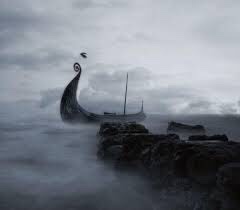
Naglfar (“Nail-ship”)

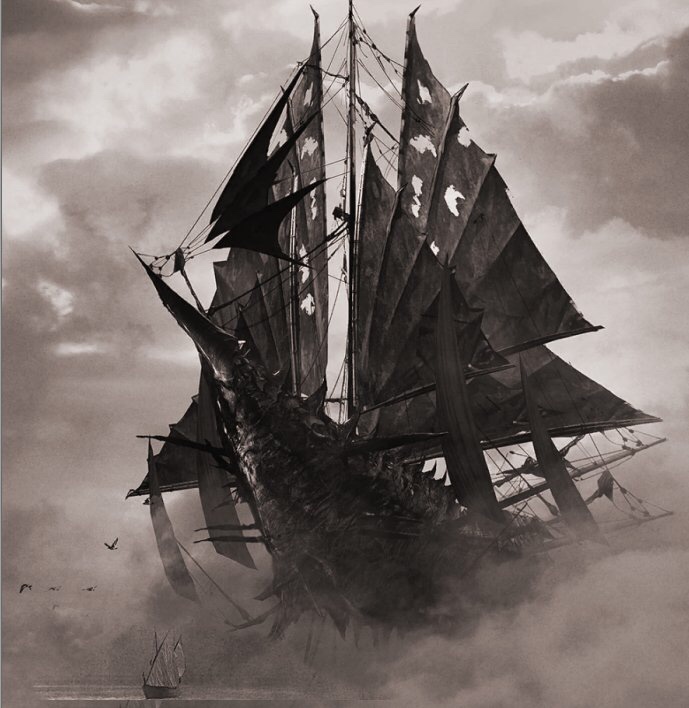
Naglfar (“Nail-ship”): This is the ship of the dead. It is made from the fingernails and toenails of the dead. This is why it is always necessary to trim the nails of the deceased before burying them, for if this is not done the nails will provide building material for the construction of Naglfar. The completion of the ship-building will be the sign that the end of the world has begun. The sons of Muspell will then travel on Naglfar to join the assault on Ásgarðr.

The ship sails from the east and is packed with forces of evil and chaos, according to the Poetic Edda.

Naglfar is on its way into the battle against the Aesir gods and will arrive on the shores of Midgard, just in time when the Midgard serpent emerges from the sea.

The captain of the ship is the giant Hrym, who brings with him all the legions of the giants, while Loki takes the helm of the fatal ship full of giants. He steers Naglfar over the stormy and cold northern waters, to Vigrid (Norse: Vígríðr), the plain where the decisive battle will take place.

Superstitions have often accompanied ancient people in their daily life. According to ancient Norse beliefs, it was important that no one in the Viking world should die with untrimmed nails. There is one way to delay the ship’s arrival. The ship’s size would depend on how many deceased had been buried with unpaired fingernails.

If someone dies with long fingernails, the surviving relatives of the dead must immediately cut them short before the deceased is laid to rest. Otherwise, their nails will be used to build the Naglfar larger and stronger.

The ancient Vikings believed that this action could significantly delay the construction of the ghost ship and the day of the end of the world.

The Sphinx and Its Meaning

The Sphinx is said to be associated with Khafre during 2558-2532 BC, and it lines up with the Pyramid of Khafre at the foot of its causeway.

The Sphinx has the body of lion and the head of a king or god. In 1905 the sand was cleared away from the sculpture base to reveal how massive the Sphinx really is. The paws alone are 50 feet long and the entire body equals out to 150 feet long. The head is proportionally a lot smaller at only 30 feet long and 14 feet wide. The Sphinx is believed to have been quite colorfully painted at one time. Unfortunately, the bedrock it is carved into is sandstone so it does not hold up well to the elements and a lot of erosion has occurred.

The Sphinx lost its nose because Muhammad Sa’Im Al-Dahr was angered by peasants making offerings to it, so he destroyed the nose then was promptly hanged for vandalism. Other stories such as the claim that Turks shot off its nose during target practice or even Napoleon. More mystery surrounding the Sphinx is who it resembles. Some believe that the face resembles that of Khafre’s older brother, Pharaoh Djedefre. A German Egyptologist has also suggested that the Sphinx was built by King Khufu, Khafre’s father. So many rumors circulate around the Sphinx, but I do not think we will ever truly know what it’s true purpose was.

The Dream Stele is between the paws of the Sphinx. The stele tells the story of when Thutmosis IV fell asleep under the Sphinx, which at the time was covered in sand up to its neck. He had a dream that the Sphinx talked to him and told him that if he freed the Sphinx from the sand then he would become king. Some people do believe that the Sphinx has magical powers or that it has hidden passageways under it. But none of these have been confirmed.

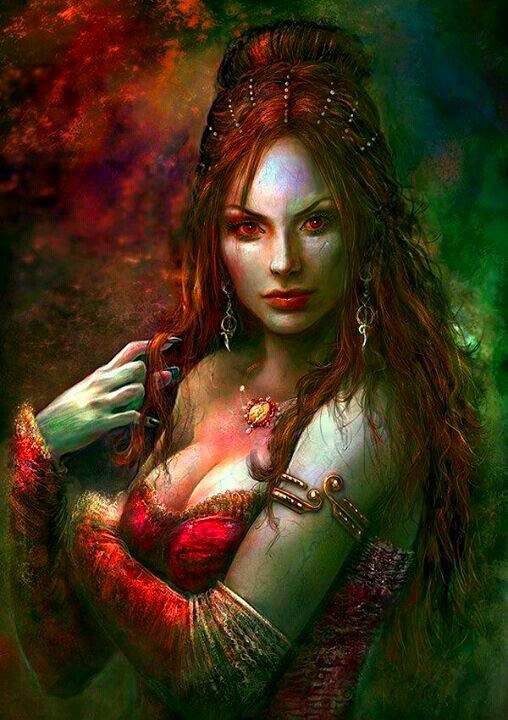
Hel

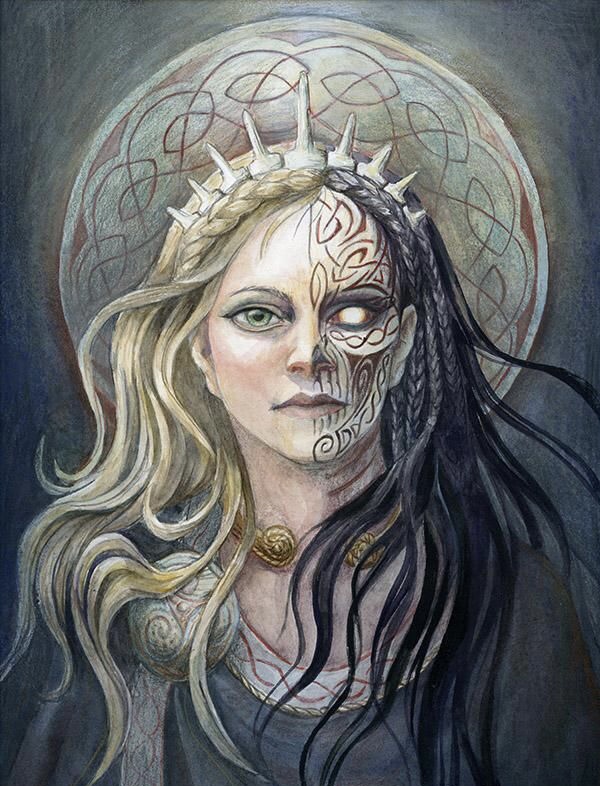
Hel (“Hidden” or “Concealer”) is a goddess who rules over the identically-named Hel, the underworld where many of the dead dwell. Her name’s meaning of “Hidden” surely has to do with the underworld and the dead being “hidden” or buried beneath the ground.

Hel is the daughter of Loki and the giantess Angrboda (“Anguish-boding”), and therefore the sister of the wolf Fenrir and the world serpent, Jormungand.  This makes her part of a highly dangerous and disreputable family.

Hel is generally presented as being rather greedy, harsh, and cruel, or at least indifferent to the concerns of both the living and the dead. However, her personality is little-developed in what survives of Old Norse literature. She’s mostly mentioned only in passing. She’s described as having the appearance as being half-black (or sometimes blue), half-white, and with a perpetually grim and fierce expression on her face.

The only surviving myth in which she features prominently is that of The Death of Baldur. The beloved god Baldur was slain by none other than Hel’s father, Loki, and the gods sent an emissary named Hermod to Hel in hopes of retrieving Baldur. Hermod pleaded with Hel, telling her how every living thing was in sorrow over the loss of Baldur. But Hel wouldn’t give up her prize so easily. She told Hermod that she would only consent to release Baldur if every last thing in the universe wept for him. Hermod and the other gods went around and got almost everything in the cosmos to weep for Baldur. Only one giantess, who was probably Loki in disguise, refused. But because of that one refusal, the terms of Hel’s offer weren’t met, and Hel kept Baldur in her cold clutches.

The realm of the dead has several names: Niðavellir (“Obscure Plains” or “Fields of Darkness”), Náströnd (“Corpse-shore”), or Násheimr (“Corpse-world”). It seems to consist of nine dwellings, the most terrible of which is Náströnd, in the southern reaches of Hel, where those who broke the moral laws, especially oath breakers, are cast. The dragon Níðhöggr gnaws on their corpses.

Because of how sparsely-defined her character is, many scholars view Hel as more of a late literary personification of the grave than a goddess who was actually worshiped or appeased in her own right. Due to the lack of conclusive evidence either way, this must remain an open question.

The Norns

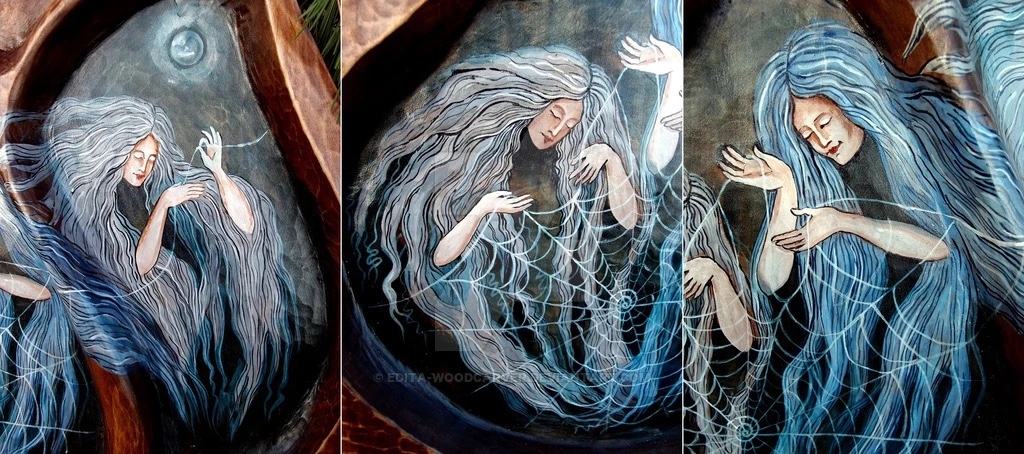
The goddesses of fate who almost always appear as a group of three figures. Snorri Sturluson writes: “A beautiful hall stands under the ash by the well [i.e., beneath Yggdrasill], and out of this hall come three maidens whose names are Urðr [“Past”], Verðandi [“Present”], and Skuld [“Future”]. They shape the lives of men. We call them Norns.”

These maidens are giantesses who sprinkle clear water and white clay on the tree every day. They are depicted as wicked and ugly; their verdict is irrevocable. It is said they come from the sea. Sturluson goes on to remark: “There are also other Norns who visit everyone when they are born to shape their lives, and these are of divine origin, though others are of the race of elves, and a third group are of the race of dwarves.”

The Norns correspond to the Fates—the Greek Moirai and the Roman Parcae—as well as to the fairies of Celtic and Roman legends. In fact, several texts in Old French depict three fairies around a cradle who endow a child with beneficial or harmful aspects, a theme also found in the fairy tale Sleeping Beauty. Only the Norn Urðr appears to be ancient and authentic; Skuld and Verðandi appear to be later additions to form a triad modeled on the Parcae. Furthermore, the spring at the foot of Yggdrasill is named the “Well of Urðr.”

Sidhe

Sidhe are the more modern versions of the Tuatha Dé Danann, the fairy race of Old Ireland who were great masters of magic and appeared in early Celtic mythic tales such as Tochmarc Étaíne. After being conquered by the Sons of Mil (ancestors of the Irish people), the Tuatha Dé Danann retreated underground and dwindled into the still unearthly beautiful (but diminished) sidhe. The word “sidhe” originally referred to the fairy mounds where these beings lived. Tad Williams’s Sithi race from his epic fantasy trilogy Memory, Sorrow, and Thorn, is akin to the sidhe.

In folk belief and practice, the sidhe are often appeased with offerings, and care is taken to avoid angering or insulting them. Often they are not named directly, but rather spoken of as “The Good Neighbors”, “The Fair Folk”, or simply “The Folk”. The most common names for them, aos sí, aes sídhe, daoine sídhe (singular duine sídhe) and daoine sìth mean, literally, “people of the mounds” (referring to the sídhe). The sidhe are generally described as stunningly beautiful, though they can also be terrible and hideous.

Sidhe are seen as fierce guardians of their abodes—whether a fairy hill, a fairy ring, a special tree (often a hawthorn) or a particular loch or wood. It is believed that infringing on these spaces will cause the sidhe to retaliate in an effort to remove the people or objects that invaded their homes. Many of these tales contribute to the changeling myth in west European folklore, with the sidhe kidnapping trespassers or replacing their children with changelings as a punishment for transgressing.

The sidhe are often connected to certain times of year and hours; as the Gaelic Otherworld is believed to come closer to the mortal world at the times of dusk and dawn, the sidhe correspondingly become easier to encounter. Some festivals such as Samhain, Beltane and Midsummer are also associated with the sidhe.

The Amazons (of Greek Mythology)

The Amazons (Amazones or Amazonides, “breastless ones”) of Greek mythology were a race of warrior women led by a queen. They fought against the Greeks, for instance, during the Trojan War. Procreation for them took place only by way of men from other races. Boy children were disposed of; girls had their right breasts removed so as not to impede the use of bows. The hero, Theseus, had significant relations with the Amazons.

There are many versions of these relations. The most popular involves his abduction of and marriage to the Amazon queen Hippolyta, who gave birth to his son Hippolytus. Some say that Theseus abducted Hippolyta’s sister Antiope and that he defeated the Amazon army led by Hippolyta, which invaded Attica in a rescue attempt. Some say that Hippolyta and Antiope are different names for the same Amazon. Still others say that Heracles killed Hippolyta during the course of his ninth labor, which involved the taking of her sacred belt or girdle.

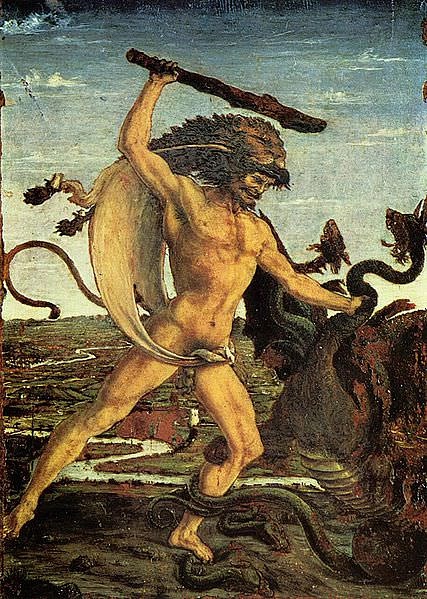
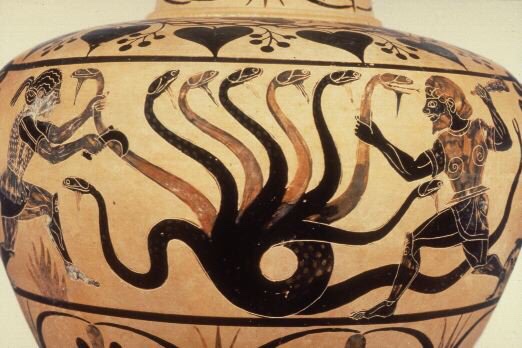
The Hydra

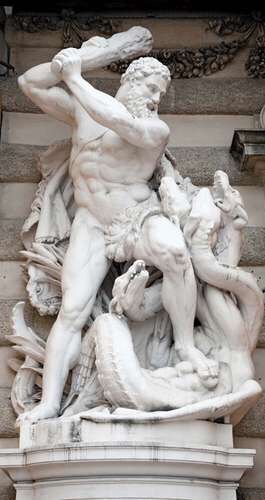
The Hydra, also called the Lernean Hydra, in Greek mythology, the offspring of Typhon and Echidna (according to Hesiod’s Theogony), a gigantic water-snake-like monster with nine heads (the number varies), one of which was immortal. The monster’s haunt was the marshes of Lerna, near Árgos, from which he periodically emerged to harry the people and livestock of Lerna. Anyone who attempted to behead the Hydra found that as soon as one head was cut off, two more heads would emerge from the fresh wound.

The destruction of the Lernean Hydra became one of the 12 Labours of Heracles. For that and other labours, Heracles enlisted the aid of his nephew Iolaus. As Heracles severed each mortal head, Iolaus was set to the task of cauterizing the fresh wounds so that no new heads would emerge. When only the immortal head remained, Heracles cut it off too and buried it under a heavy rock. Further, he dipped his arrows in the beast’s poisonous blood (or venom) to be able to inflict fatal wounds. According to Sophocles(Trachinian Women), that measure eventually caused his own accidental death at the hands of his wife, Deianeira.

In modern English, hydra or hydra-headed can describe a difficult or multifarious situation. The name hydra has been assigned to a genus of invertebrate freshwater animals having a circlet of 4 to 25 tentacles on one end of its tubelike body.

Valkyrie

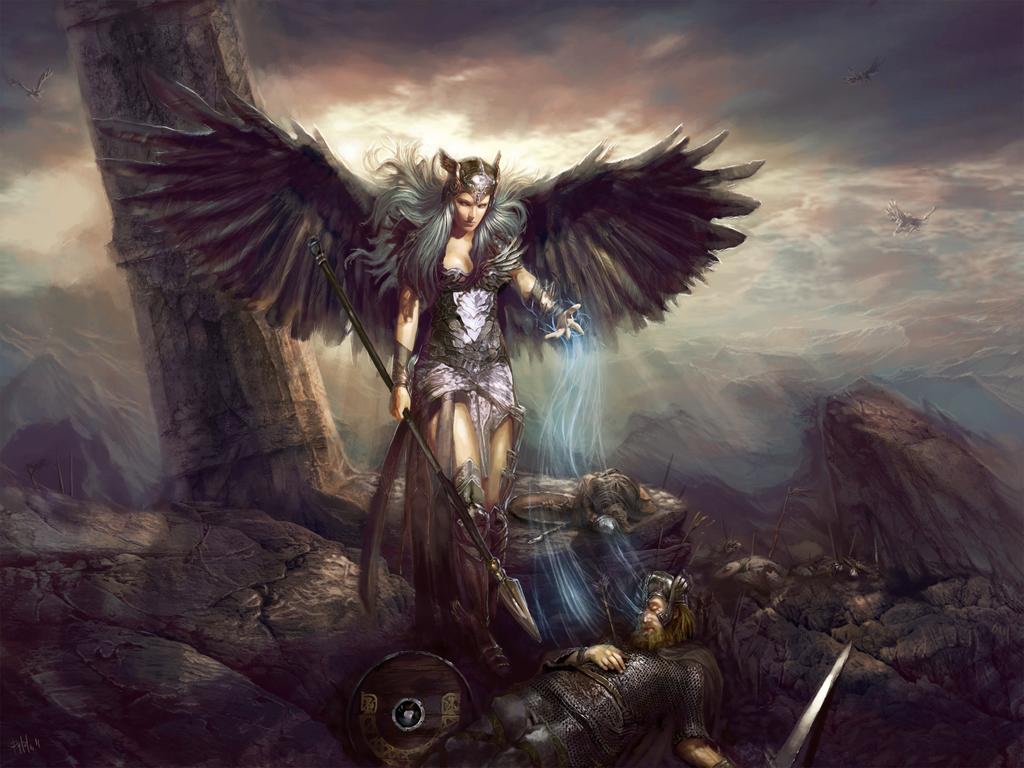
Valkyrie (“Choosers of the Battle-slain”; Old Norse valkyrja, pl. valkyrjar): The valkyries are representative of warfare, but are also magicians, guardians, female lovers of heroes, bird-women, and keepers of knowledge. They are concerned with fertility and fecundity and have many points in common with the Dises (deities), the Norns (the Germanic Fates), and the fylgjur (personal tutelary spirits).

They are in Odin’s service, and their names are most often of a warlike nature, formed from words like battle, combat, sword, spear, fury, bravery, and so forth. Régis Boyer has analyzed the thirty-eight valkyrie names that have been preserved in the texts; from his study it becomes apparent that they escape any strict classification as one-third of them are engaged in two different functions.

The valkyries select the slain warriors who will populate Valhalla. They attach themselves to the kings and princes who are worshippers of Odin, helping them, counseling them, bringing them luck, and even marrying them after their death. If they disobey Odin they are punished—as in the case of Brynhildr, who, pricked by the sleep-thorn, lies on Hindarfjall Mountain waiting for the one who will awaken her. In Valhalla the valkyries serve beer to the warriors.