Chinese Thought: Confucius 孔子 (551–479 BCE)

Confucius (551–479 BCE) is the most celebrated figure in China’s history. He was a teacher, advisor, editor, philosopher, reformer, and prophet. His thought and philosophy form the basis of Confucian or Ru thought in China and the entire moral codes of China and other East Asian countries like Japan and Korea. Whereas in the West follows Judeo-Christian ethics, in China people live by a Confucian code of ethics.

Confucian philosophy is rooted in the concept of ren or compassion and love for others. This involves deprecating yourself as you show concern for others. Confucius’s golden rule was ‘What you do not wish for yourself, do not do to others.’ He also believed in the importance of reciprocal relationships: ruler to subject, father to son, husband to wife, brother to brother and friend to friend. In each relationship there is responsibility on the side of both parties. For example, a husband treats his wife with kindness and she, in return, is obedient and loyal. One’s place and status in society are also important. Confucius’s sayings were collected by his disciples and compiled into a book called The Analects.

In Imperial China, Confucius was identified with interpretations of the classics and moral guidelines for administrators, and therefore also with training the scholar-officials that populated the bureaucracy. At the same time, he was closely associated with the transmission of the ancient sacrificial system, and he himself received ritual offerings in temples found in all major cities. By the Han Period (202 BCE–220 CE), Confucius was already an authoritative figure in a number of different cultural domains, and the early commentaries show that reading texts associated with him about history, ritual, and proper behavior was important to rulers. The first commentaries to the Analects were written by tutors to the crown prince and select experts in the “Five Classics” (Wujing 五經) were given scholastic positions in the government. The authority of Confucius was such that during the late Han and the following period of disunity, his imprimatur was used to validate commentaries to the classics, encoded political prophecies, and esoteric doctrines.

By the Song period (960–1279), the post-Buddhist revival known as “Neo-Confucianism” anchored readings of the dialogues of Confucius to a dualism between cosmic pattern, distinctive moral cosmology that marked the tradition off from those of Buddhism and Taoism. The Neo-Confucian interpretation of the Analects by Zhu Xi 朱熹 (1130–1200) integrated the study of the Analects into a curriculum based on the “Four Books” that became widely influential in China, Korea, and Japan. The pre-modern Confucius was closely associated with good government, moral education, proper ritual performance, and the reciprocal obligations that people in different roles owed each other in such contexts.

Arachne

There are several versions of the Greek myth of Arachne. I’m sharing the version conceived by Ovid the Roman poet.

Arachne, a young woman of common birth, but of uncommon skill as a weaver. She lived in the village of Hypaepa in Lydia. Her father was a humble wool dyer, and her mother was deceased. Despite her lowly rank, Arachne became famous throughout the towns of Lydia for her expert ability to spin and weave wool. Even the local nymphs came to marvel at her. Though spinning and weaving were specifically Athena’s arts, Arachne would not admit that the goddess had been her teacher. Instead, she made it known that she would gladly challenge the goddess to a weaving contest. Athena could not bear this insult and, appearing to her in the guise of an old woman, cautioned Arachne not to dishonor the gods with such arrogance. Arachne still would not relent, so Athena revealed herself to the girl in her full divinity.

The contest thus commenced. Athena wove into her design the contest in which she had prevailed over Poseidon to win the stewardship of the city of Athens by producing an olive tree. As a clear warning to Arachne, she also depicted a host of mortals who had challenged the gods and been punished terribly. Arachne, for her part, wove vignettes depicting misdeeds of the gods, a twofold affront to the goddess. There appeared Zeus taking on the shape of a bull to seduce Europa, of a swan to make advances on Leda, of her own husband to lie with Alcmena, of a shower of gold to penetrate the cell of Danae, and of a flame to approach Aegina. Poseidon, too, was shown. He assumed the shape of a dolphin in pursuit of Melantho, of a bird to approach Medusa, and of a ram, river, and stallion to make advances on other maidens still. Apollo, Dionysus, and Cronus, all behaving ignobly, also found a place in Arachne’s design.

Arachne’s work was perfection, flawless even in Athena’s eyes. So great was the goddess’s anger that she tore apart Arachne’s weaving and struck Arachne on the head until, unable to bear this assault, she hanged herself. Arachne did, however, live on, now as a spider, misshapen but spinning for all time.

Gender Roles: Viking Warrior Women

B575D749-CB96-4114-87C8-489AB3E34676

Viking Age Scandinavian women enjoyed a tremendous degree of freedom when compared to the Viking women settlers of Iceland and Greenland. Unlike the Viking settlers who depended on gender roles (dividing keeping the land vs keeping family), Scandinavian women were able to own property, request a divorce and reclaim their dowries if their marriages started to take a turn for the worse.

80CBFE67-91E8-448A-9A88-5575DA554717

And if their husbands died, women were expected to permanently take over their husband’s roles as the providers of their households. As such, they were able to obtain economic opportunities that was rarely offered to contemporary women in other parts of Europe. Some women were even traders, warriors, and farmers.

2FBF17AD-E7F9-4B61-8F38-2E23696C9B25

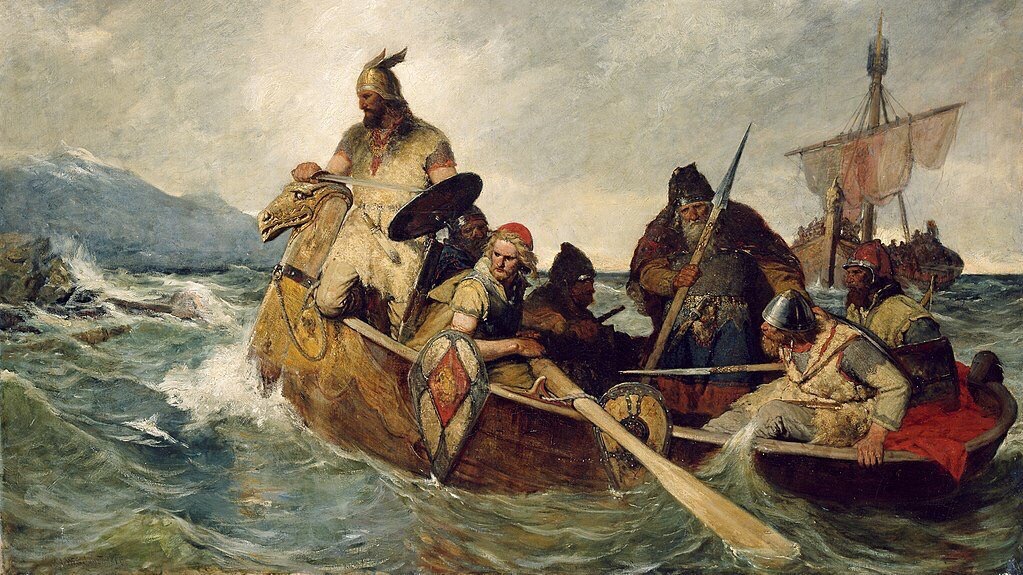
There is evidence of women taking on the role of the warrior. Though rare, Byzantine-era historian Johannes Skylitzes recorded on History.com that women fought alongside a group of Vikings in a battle against the Bulgarians in 971 AD. A 12th-century Danish historian described female Vikings as “communities of warrior women as shieldmaidens who dressed like men and devoted themselves to learning swordplay and other warlike skills.”

96F1640B-7D08-49EF-9FDF-BEFB666E7118

Most of the information we know about the Viking warriors comes from the literature or various and nearby communities. There are several accounts of female warriors rolling around on the Viking raids, who are known as Valkyries. In myth, Valkyries are fierce warriors who raise the souls of fallen warriors to Valhalla.

09E9487B-F212-4444-A4CA-CD948D40FA65

The most common natural hair colors a Viking man or woman were brunette, red, or black. Blondes were actually pretty rare. Those born with blonde hair were considered attractive and more desirable. Both men and women used a soap with high quantities of lye to strip pigments from their hair to appear more blonde. It has even been documented that lightening their hair helped manage head lice, a nice bonus of this cosmetic trend.

Antonine Wall

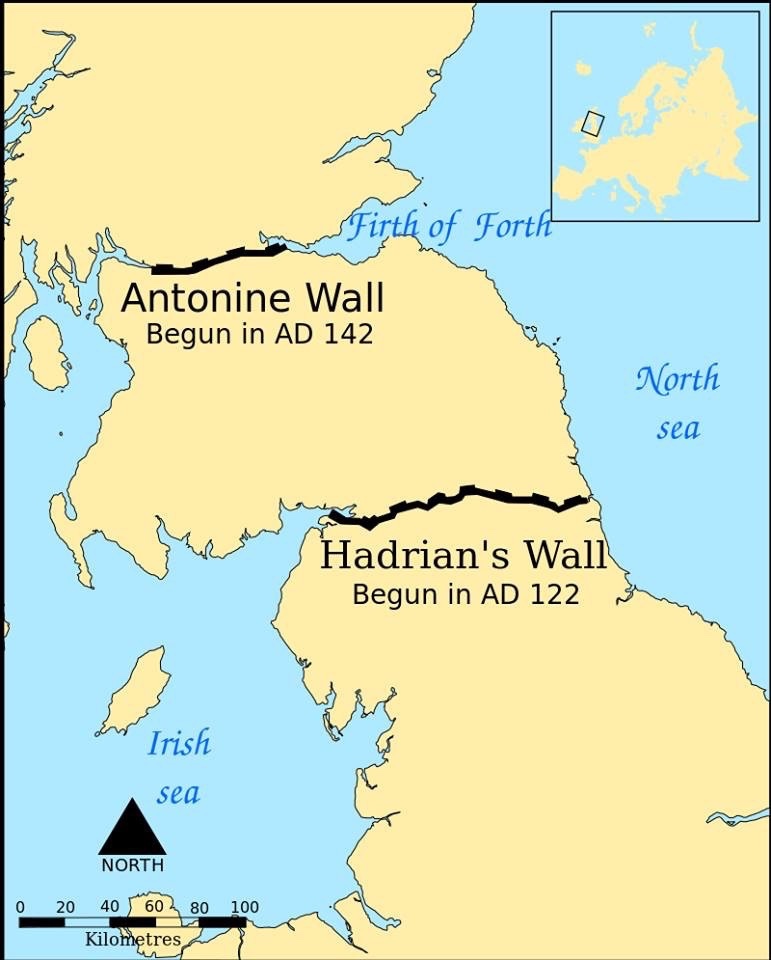
Hadrian’s wall gets all the press, but…

The Antonine Wall, known to the Romans as Vallum Antonini, was a turf fortification on stone foundations, built by the Romans across what is now the Central Belt of Scotland, between the Firth of Forth and the Firth of Clyde. Representing the northernmost frontier barrier of the Roman Empire, it spanned approximately 63 kilometres (39 miles) and was about 3 metres (10 feet) high and 5 metres (16 feet) wide.

Roman Theatre of Palmyra

FFC414C8-445B-4071-B4A3-76C86EF3043F
Roman theater of Palmyra, part of the building was destroyed by ISIS.

A UNESCO World Heritage site. As described by UNESCO,

“An oasis in the Syrian desert, north-east of Damascus, Palmyra contains the monumental ruins of a great city that was one of the most important cultural centres of the ancient world. From the 1st to the 2nd century, the art and architecture of Palmyra, standing at the crossroads of several civilizations, married Graeco-Roman techniques with local traditions and Persian influences.

First mentioned in the archives of Mari in the 2nd millennium BC, Palmyra was an established caravan oasis when it came under Roman control in the mid-first century AD as part of the Roman province of Syria.  It grew steadily in importance as a city on the trade route linking Persia, India and China with the Roman Empire, marking the crossroads of several civilisations in the ancient world. A grand, colonnaded street of 1100 metres’ length forms the monumental axis of the city, which together with secondary colonnaded cross streets links the major public monuments including the Temple of Ba’al, Diocletian’s Camp, the Agora, Theatre, other temples and urban quarters. Architectural ornament including unique examples of funerary sculpture unites the forms of Greco-roman art with indigenous elements and Persian influences in a strongly original style. Outside the city’s walls are remains of a Roman aqueduct and immense necropolises.

Discovery of the ruined city by travellers in the 17th and 18th centuries resulted in its subsequent influence on architectural styles.

Criterion (i): The splendour of the ruins of Palmyra, rising out of the Syrian desert north-east of Damascus is testament to the unique aesthetic achievement of a wealthy caravan oasis intermittently under the rule of Rome from the Ier to the 3rd century AD. The grand colonnade constitutes a characteristic example of a type of structure which represents a major artistic development.

Criterion (ii): Recognition of the splendour of the ruins of Palmyra by travellers in the 17th and 18th centuries contributed greatly to the subsequent revival of classical architectural styles and urban design in the West.

Criterion (iv): The grand monumental colonnaded street, open in the centre with covered side passages, and subsidiary cross streets of similar design together with the major public buildings, form an outstanding illustration of architecture and urban layout at the peak of Rome’s expansion in and engagement with the East. The great temple of Ba’al is considered one of the most important religious buildings of the 1st century AD in the East and of unique design. The carved sculptural treatment of the monumental archway through which the city is approached from the great temple is an outstanding example of Palmyrene art. The large scale funerary monuments outside the city walls in the area known as the Valley of the Tombs display distinctive decoration and construction methods.

Integrity (2009)

All the key attributes, including the main colonnaded street, major public buildings and funerary monuments, lie within the boundary. The tower tombs and the citadel are vulnerable to minor earthquakes and lack of conservation. Since the time of inscription, the population of the adjacent town has increased and is encroaching on the archaeological zone. Although traffic has increased, the main road that passed through the site has been diverted. Increased tourism has brought pressure for facilities within the property.

Authenticity (2009)

The key attributes display well their grandeur and splendour. However the setting is vulnerable to the encroachment of the adjacent town that could impact adversely on the way the ruins are perceived as an oasis closely related to their desert surroundings.

Protection and management requirements (2009)

The site was designated a national monument and is now protected by the National Antiquities law 222 as amended in 1999. A buffer zone was established in 2007 but has not yet been submitted to the World Heritage Committee.

The regional strategic action plan currently under preparation is expected to provide guidelines to expand and redefine the site as a cultural landscape, with respect to the transitional zones around the archaeological site, the oasis and the city.

There is an on-going need for a conservation and restoration plan to be developed that addresses fully the complex issues associated with this extensive multiple site and  will allow for coordinated management, clear priorities and a cultural tourism strategy and address the issues of expansion of the nearby town.”

~ UNESCO

The destruction by ISIS:

A2D2F7C9-DF78-48D3-B4DA-0BE0E2A26740
The Arch of Triumph in 2006.

F8213A61-4277-4ED8-8F9E-23394ACB0D6A
The Arch of Triumph on March 27, 2016.

9D288331-0F57-4BCC-BC38-319653A581D4.jpeg
The Temple of Bel in 2008.

7F756576-BEC6-4F62-9F41-383FAE995FB5.jpeg
The Temple of Bel on March 27, 2016

Marcus Licinius Crassus

Marcus Licinius Crassus (115-53 BCE) was perhaps the richest man in Roman history and in his eventful life he experienced both great successes and severe disappointments. His vast wealth and sharp political skills brought him two consulships and the kind of influence enjoyed only by a true heavyweight of Roman politics. A mentor to Julius Caesar in his early career, Crassus would rise to the very top of state affairs but his long search for a military triumph to match his great rival Pompey would, ultimately, bring about his downfall.

Marcus Tullius Cicero

Marcus Tullius Cicero (3 January 106 BC – 7 December 43 BC) was a Roman statesman, orator, lawyer and philosopher, who served as consul in the year 63 BC. He came from a wealthy municipal family of the Roman equestrian order, and is considered one of Rome’s greatest orators and prose stylists.

His influence on the Latin language was so immense that the subsequent history of prose, not only in Latin but in European languages up to the 19th century, was said to be either a reaction against or a return to his style. According to Michael Grant, “the influence of Cicero upon the history of European literature and ideas greatly exceeds that of any other prose writer in any language”. Cicero introduced the Romans to the chief schools of Greek philosophy and created a Latin philosophical vocabulary (with neologisms such as evidentia, humanitas, qualitas, quantitas, and essentia)distinguishing himself as a translator and philosopher. Though he was an accomplished orator and successful lawyer, Cicero believed his political career was his most important achievement.