Cannabis in Ancient Egyptian Religion and Culture

When the mummy of Pharaoh Ramesses II was uncovered and examined back in 1881, traces of cannabis in the remains was the last thing anyone was expecting, but it was there. Since then, a lot of the uncovered mummies have shown similar traces of the herb in their systems, confirming the suspicion that cannabis was indeed a part of the regular culture in ancient Egypt.

In ancient Egypt, cannabis was used for medicinal, religious, and cultural purposes.

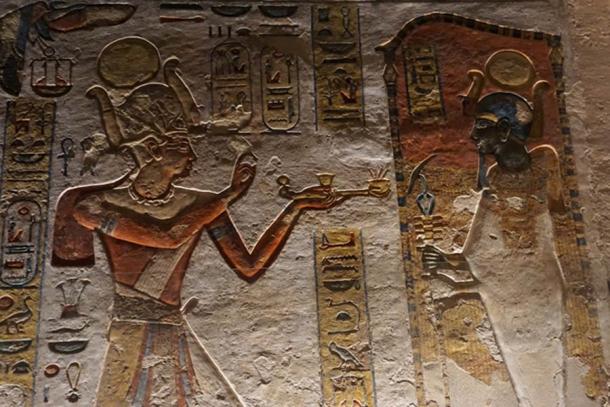
Seshat, the goddess of wisdom, was often depicted with a leaf of the cannabis plant above her head in paintings from thousands of years ago. Bastet, the feline goddess of war, was also related to the use of cannabis in the region, but more in terms of witchcraft. Evidence also suggests that worshippers may have consumed marijuana in one form or the other during certain religious festivities and rituals.

Sources: Ancient Origins (Robert Brusco)

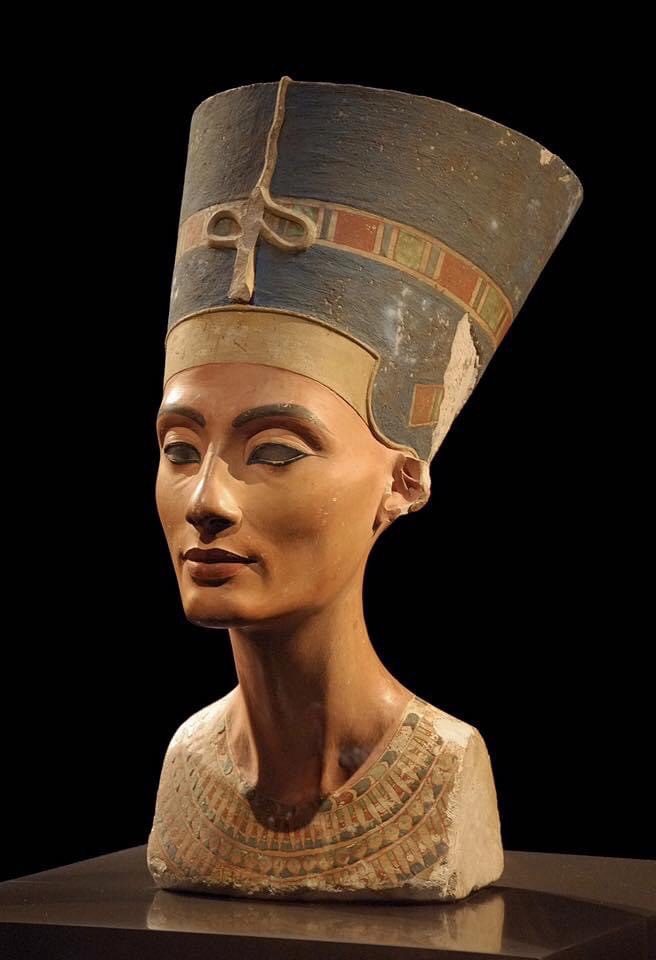
Neferneferuaten Nefertiti (1370 – 1330 BC)

Neferneferuaten Nefertiti (1370 – 1330 BC)

“Beautiful are the Beauties of Aten, the Beautiful one has come”

Egyptian queen and the Great Royal Wife (chief consort) of Akhenaten, an Egyptian Pharaoh. Nefertiti and her husband were known for a religious revolution, in which they worshiped one god only, Aten, or the sun disc. Akhenaten and Nefertiti were responsible for the creation of a whole new religion which changed the ways of religion within Egypt. With her husband, she reigned at what was arguably the wealthiest period of Ancient Egyptian history.

Some scholars believe that Nefertiti ruled briefly as Neferneferuaten after her husband’s death and before the accession of Tutankhamun, although this is still an ongoing debate.

The 18 Levels of Hell in Chinese Mythology

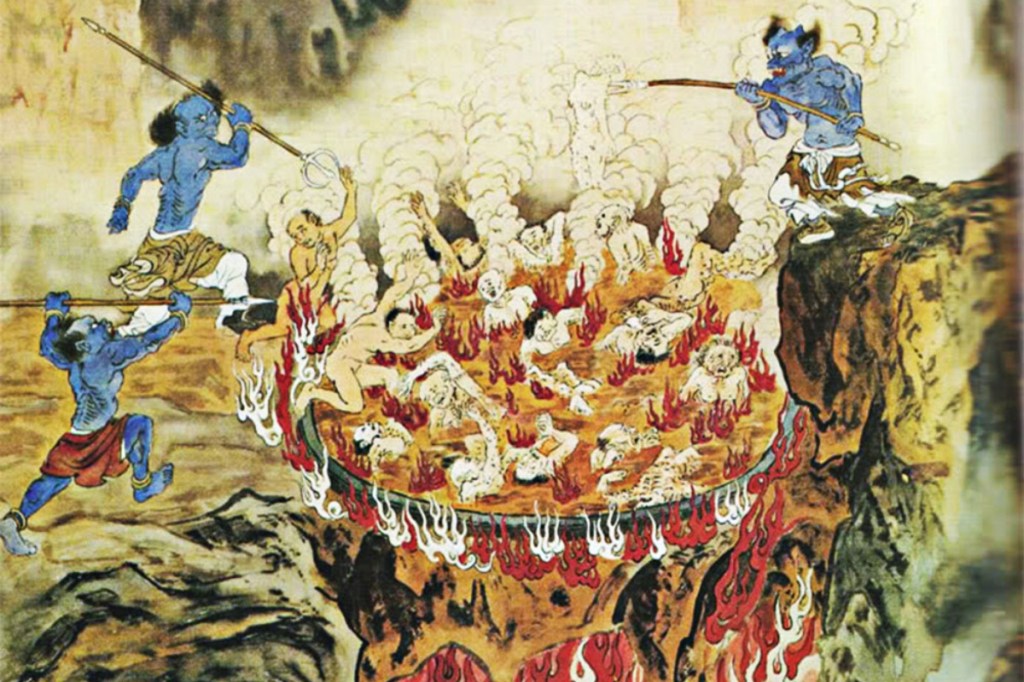
Buddhism and Taoism—the main religions of China—both have different interpretations of hell and how it is structured, but what they can both agree on is this: Sinners who accumulate bad karma during their lives have to atone for their sins after their death. Their souls are therefore taken into hell, a fiery place consisting of several layers, courts, or circles, each doling out a different punishment for specific sins.

A big difference between the Chinese hell and the concept of hell most known in Christianity is that in Chinese hell, souls are not necessarily condemned to eternal damnation. While broadly believed in Western culture that sinners have to suffer in hell until the second coming of Christ, the Chinese version of hell is more of a purgatory, where souls are able to eventually leave and be reincarnated back into the world once they have done their time.

  • Hell of Tongue-ripping, where those who gossip and spread trouble with their words will repeatedly have their tongues ripped out.
  • Hell of Scissors, where those who destroy someone else’s marriage will have their fingers repeatedly cut off.
  • Hell of Trees of Knives, where those who sow discord amongst family members will be repeatedly hung from trees made of sharp knives.
  • Hell of Mirrors of Retribution, where those who have managed to escape punishment for their crimes while alive will be repeatedly shown their true horrific selves.
  • Hell of Steamers, where hypocrites and troublemakers will repeatedly be steamed “alive.”
  • Hell of Copper Pillars, where arsonists will be repeatedly chained to red-hot pillars of copper.
  • Hell of the Mountain of Knives, where those who have killed for pleasure or without good reason will repeatedly be made to climb a mountain made of sharp blades sticking out of it.
  • Hell of the Mountain of Ice, where adulterers, deceivers of elders, and schemers will be repeatedly left out on a barren mountain of ice to freeze.
  • Hell of the Cauldrons of Oil, where rapists, thieves, abusers, and false accusers will be repeatedly fried in vats of boiling oil.
  • Hell of the Cattle Pit, where those who have abused animals will repeatedly be hurt by animals in turn.
  • Hell of the Crushing Boulder, where those who have abandoned or killed children will repeatedly be made to hold up heavy boulders, eventually being crushed by its weight.
  • Hell of Mortars and Pestles, where those who voluntarily waste food will repeatedly be force-fed hell fire by demons.
  • Hell of the Blood Pool, where those who disrespect others will be thrown in and submerged into a pool of blood.
  • Hell of the Wrongful Dead, where those who have commited suicide—considered deliberately going against the karmic course of the universe—will be force to repeatedly wander the realm without a way out, while being pelted constantly by the Winds of Sorrow and the Rains of Pain.
  • Hell of Dismemberment, where tomb raiders will have their bodies repeatedly be torn into pieces.
  • Hell of the Mountain of Fire, where thieves, robbers, and the corrupt will be repeatedly thrown into the fiery pits of an active volcano.
  • Hell of Mills, where those who have misused their power to oppress the weak will repeatedly be crushed in a stone mill.
  • Hell of Saws, where those who have engaged in unethical or unfair business practises, or exploited loopholes in the legal system, will be repeatedly sawn in half by demons with saws.

Ephesus: Roman Architectural Site

Ephesus:

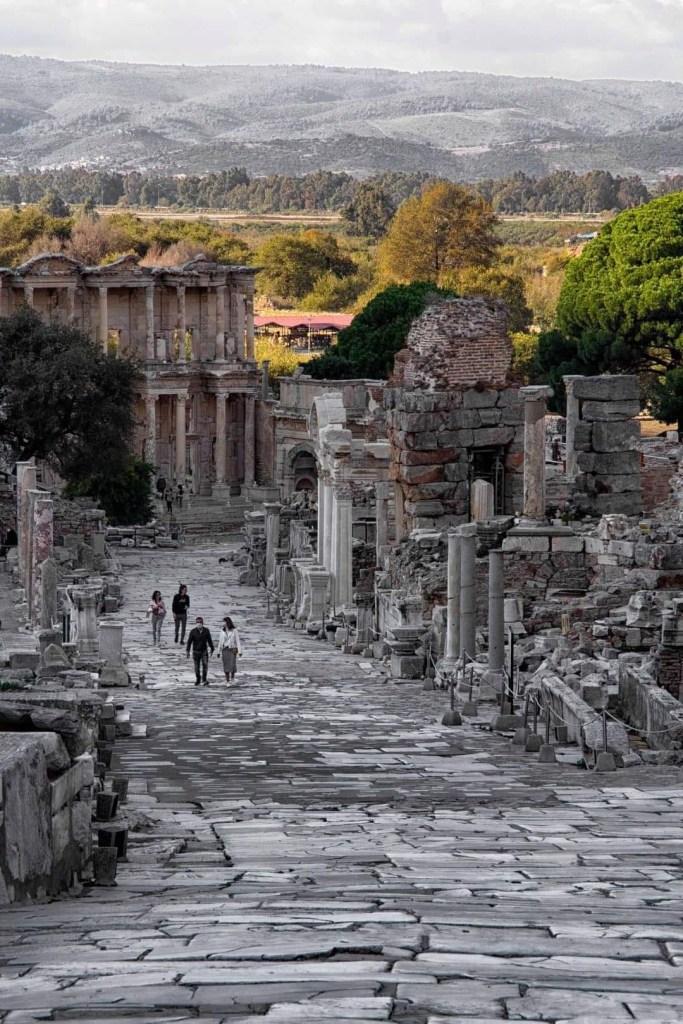
Ephesus is one of the largest Roman archaeological sites in the eastern Mediterranean. The visible ruins still give some idea of the city’s original splendour, and the names associated with the ruins are evocative of its former life.

The Temple of Artemis, one of the Seven Wonders of the Ancient World, once stood 418′ by 239′ with over 100 marble pillars each 56′ high. The temple earned the city the title “Servant of the Goddess”. Pliny tells us that the magnificent structure took 120 years to build but is now represented only by one inconspicuous column, revealed during an archaeological excavation by the British Museum in the 1870s.

Hammurabi

In around 2000 bce, the Amorites (Westerners), a semi-nomadic people from Syria, swept across Mesopotamia, replacing local rulers with Amorite sheikh dynasties in many of the city-states. By the early 18th century bce, the three most powerful Amorite kings were pre-eminent Shamshi-Adad in the north, Rim-Sin in Larsa in the south, and Hammurabi in Babylon in the center. Over the course of his long reign, Hammurabi consolidated all of southern Mesopotamia into his kingdom and eventually extended his power as far up the Tigris as Nineveh, and as far up the Euphrates as Tuttul, on the junction with the river Balikh. He personally supervised the construction of many temples and other buildings.

The prelude to his code, a tribute to Hammurabi, and a long historical record of his conquests, boasts that his leadership was divinely sanctioned by the gods who passed control of humanity to Marduk (deity of Babylon), and so to its king. It also reveals he saw his role as the guarantor of a just and orderly society.

Arles: A Van Gogh Getaway

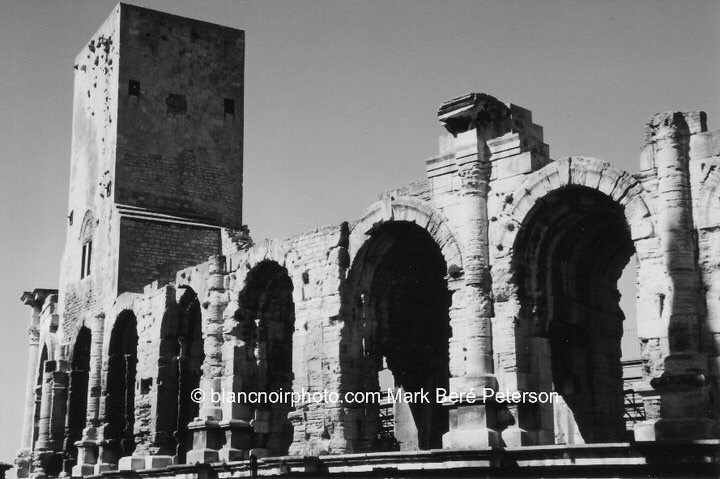
On the cusp of the Camargue National Park in the Provence-Alpes-Côte d’Azur region, Arles is a heady blast of Van Gogh nostalgia – the artist painted in excess of 200 works around this lovely Roman town. The stately amphitheatre, one of the largest in Roman times, is part of the reason for Arles’ Unesco World Heritage Site status. The twisting aluminium tower designed by Frank Gehry brings the city’s architecture bang up to date.

La Voisin

In a darkened room stands a 40-year-old woman named Catherine Monvoisin. Her figure is lit only by torches held by the faceless men standing in front of her, men who are sentencing her to death by fire. It is the 17th century, where such a death sentence is an unusual ending to someone’s life. But Catherine is an unusual woman.

Catherine was the wife of a silk merchant and jeweler and lived a life of comfort in Parisian Society. She was a philanthropist, entrepreneur, fortune teller, mother, and art lover. But she was also a professional poisoner, alleged provider of sorceries, and an alleged witch who plunged the French aristocracy into turmoil, and even tried to kill a king.

She was more famously known as “La Voisin” and was a central figure in “L’affaire des Poisons” or the “Affair of the Poisons”. Catherine controlled a wide network of fortune-tellers from her position in Paris society. She provided poison, abortion, aphrodisiacs, arranged black masses, and even claimed to offer magical services.

She was so famous that she even drew clients from the aristocracy, who could afford to pay her high prices which funded her lavish lifestyle. Her organization, in performing commissioned black magic and murder by poison, took thousands of lives.

The claimed alchemist Adam Lesage, one of the lovers of Catherine, told of her murdering her own husband, an accusation she denied. It is believed that throughout her life, she might have been responsible for the deaths of around 2,500 infants due to her poisoning. However, throughout this time she remained a high-profile socialite, and her sheer charm made no one suspect her.

Sources: Bipin Dimri

Rosetta Stone Discovered

Today in Egyptian history —> On this day in 1799, French Captain Pierre-François Bouchard found the Rosetta Stone in an Egyptian village. The stone was inscribed with hieroglyphics, demotic script and Greek script in 196 BC but was lost during the Medieval period. After its rediscovery, it prompted widespread excitement as scientists raced to be the first to decipher the ancient text. It was eventually translated by Jean-François Champollion, a French scholar, in 1822!

The inscription, by the way, is about the divine status of Ptolemy V.

The Egyptians want it returned for their new Grand Egyptian Museum (opening later this year), but the British Museum says no as it’s the most visited artifact in the museum.

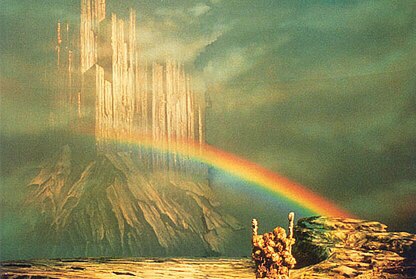
Asgard

The word Asgard comes from the Old Norse word Ásgarðr, meaning Enclosure of the Aesir. Asgard is one of the nine worlds in Norse Mythology, along with Niflheim, Muspelheim, Midgard, Jotunheim, Vanaheim, Alfheim, Svartalfheim, and Helheim. Asgard is the home of the Aesir, deities of one of two tribes of Norse gods. The other tribe, the Vanir, used to share Asgard but the two tribes fought a long, epic war over their differences and the Vanir were forced to leave Asgard. The two tribes did reach an eventual truce as they joined forces against their common enemy, the Giants.

Snorri Sturluson, author of the Prose Edda, wrote that Asgard was created by the gods after they created Jotunheim (Giantland), Midgard (Middle Earth or home of humanity), the seas, sky, clouds and the Earth. The home of the gods is said to be a giant fortress with walls reaching up into the clouds to protect them from their enemies, particularly the frost-giants.

Asgard is situated in the sky upon the plains of Idavoll, where the gods met to discuss important matters. It was connected to Midgard by a rainbow bridge called Bifrost. The mythical place was invisible and inaccessible to mortal men.

The ruler of the gods, Odin, had his throne in Asgard, in a hall called Valaskjalf. His throne was called Hlidskjalf and it is believed that when Odin sat on Hlidskjalf, he could see the whole of heaven and Earth and everything that happened anywhere! A hall made of pure gold was also situated in the home of the gods. It was called Gladsheim and housed the thrones of Odin and the 12 highest gods. The goddesses’ hall was called the Vingolf or hall of friendship. The gods and goddesses would meet every day and discuss the fate of world at the Well of Urd (destiny), from which the Yggdrasil (the tree connecting the nine worlds) grew.

Asgard also housed Valhalla (the hall of the fallen). Odin granted access to the worthy dead, the majority of whom were esteemed warriors. Here, he feasted and celebrated with the battle heroes. Valhalla was easily recognizable by its rafters formed of spears, and use of shields as roof tiles. According to certain sources, the doors of Valhalla were so wide that 800 warriors could walk through at the same time! A vast river, the Thund, and a barred gate, Valgrind, protected the entrances of Valhalla.

Bezoars

Bezoars are a mass of undigested fiber formed in the stomach of animals, and were once believed to be an antidote to poison. They have been found in the guts of cows and even elephants, but mostly they come from the “bezoar goat.” Bezoars were first introduced into medieval Europe by Arab physicians. Although doubts were sometimes cast over their properties, the demand continued well into the 18th century.

Wealthy collectors spent considerable sums to acquire the best “stones,” which were kept in elaborate cases. According to A Compleat History of Druggs, first published in French in 1694, the medicinal strength of the bezoar depended on the animal that produced it. “Bezoar Stones taken from Cows,” for instance, “have nothing near the good Qualities” of the true bezoar goat. On the other hand, a mere two grains of “the Bezoar that is found in Apes” will have a far greater effect than that of a mere goat.