The War between the Giants and the Norse Gods

At the dawn of time, Odin and his two brothers killed the giant Ymir and created the world from his body. As usual, a god’s motivations are difficult to determine. Did Odin simply need Ymir dead for the sake of creation? Or did the Alfather reason that if Ymir continued to spawn giants that any order in the universe would become impossible? In any case, as the three gods tore the massive giant to pieces, a vast deluge of blood burst forth. This blood became all the world’s oceans, and the torrent swept away every giant – except for one family who escaped in a wooden ark. This giant was named Bergelmir, and all the later giants were descended from him.

Odin and his brothers made the land from Ymir’s corpse, with his teeth and broken bones forming the stones and the mountains, the great dome of his skull forming the sky, and even his thoughts forming the clouds – thin and wispy or dark and brooding. They called this world Midgard, and they encircled it with a mighty barrier made from Ymir’s eyelashes. They also made their own realm, Asgard. Asgard and Midgard (along with several other of the Nine Worlds) became “innangard,” a place of protection where the gods ruled. Beyond, were places the giants ruled – Jotunheim, Hel, and the other realms that formed “utangard” or, as both Utgard and utangard would be translated, “beyond the enclosure.”

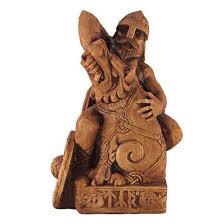
Cast out into the darkness of Utgard, the Jötnar remembered a time when they ruled. Either out of a need for revenge or because – as the Eddic Poem says – they really were “born of venom and thus fierce and cruel,” the giants dream of a time when they will overcome Asgard and Midgard.

The time for them to unite and march against the gods will come in Ragnarok. In the meantime, many giants try their luck raiding the territory of the gods. The bravest of them sometimes appear in Asgard, with a challenge or a trick for the Aesir gods, or they come to terrify us mortals in Midgard. When the Vikings and other Nordic/Germanic peoples took shelter from howling storms, they knew it was Odin leading the gods in “the Wild Hunt” against the giants. When they saw thunder’s flash and the pound of lightning, they knew Thor was smiting giants with his mighty hammer, Mjolnir.

Sometimes, the gods and giants live in an uneasy peace. Not only did gods and giants often form marriages, liaisons, and alliances, but there were times when giants were even able to show some sympathy with the gods. For example, when the most beloved god, Baldr, died because of Loki’s treachery, even the giants wept. Peace never lasted long, though. Whether because giants would make incursions into Asgard, or because Odin or Thor would venture into Jotunheim on their adventures, the hostility between giants and gods was always kept alive.

This enmity and ages-long struggle will come to fruition at Ragnarok. There the gods and giants will destroy each other. Like the opposing forces of creation and chaos they seem to be, they will cancel each other out, and oblivion will resume before the universe is – perhaps – born anew.

Source: Sons of Vikings

Frost Giants of Norse Mythology

Frost Giants of Norse Mythology

It is common to hear the Norse giants referred to as frost giants or ice giants.  The Prose Edda seems to refer to Jötnar as frost giants (hrimþursar) much of the time.  This is only part of the story, though. 

The association between giants and ice is understandable considering that the giants first arose from the meeting of fire and ice in the yawning void at the dawn of time and because the giants live beyond the realm of gods and mortals.  People living as close to nature as Vikings did usually associated intense cold with death and hardship.  The inhabited parts of the Viking world were hemmed by glaciers and frozen mountains.  Meanwhile, the Giants were said to live in Jotunheim or Utgard (which means a place outside or beyond the boundaries of the worlds of humans and gods).  One Eddic poem describes a hall in Utgard this way:

I saw a hall that stands far from the sun
On the beaches of corpses the doors face north
Drops of poison fall from the roof
The walls are encircled by serpents

(Voluspa, verse 37, Crawford’s 2015 translation)

Despite these associations with cold and ice, not all giants are “frost giants” as such.  One of the most feared giants of all is Surt, a massive being of fire that will bring great destruction to the world at Ragnarok.  The Poetic Edda mentions Thor killing “lava giants” as well as frost giants, and sometimes presents them in juxtaposition, as in the poem For Skirnis: “hear me, giants, hear me, frost-trolls, hear me, fire-trolls!”  In this same poem, some giants are presented as radiantly beautiful, while others are ghastly and horrifying.  Indeed, the Jötnar may be the most diverse of all the beings that haunt the Viking imagination.

Source: Sons of Vikings
Giants of Norse Mythology 101

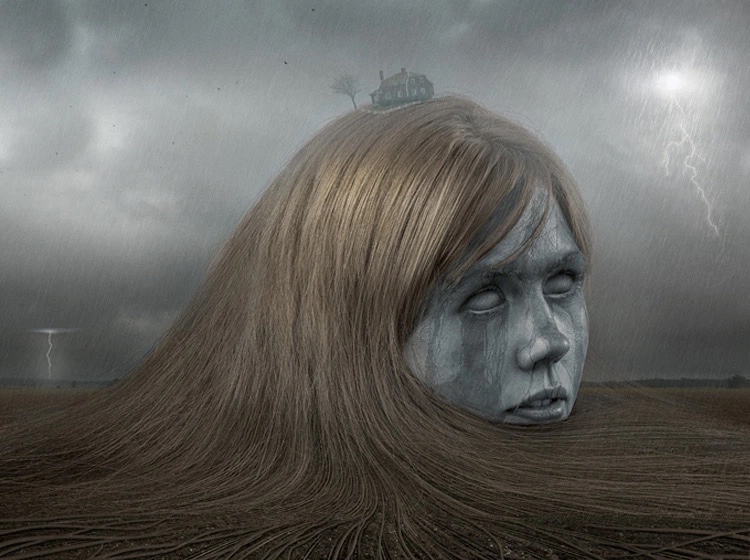
In Norse mythology, giants are the original “founding” beings at the top of the Norse family tree. The more commonly known gods (such as Odin, Thor) are all direct or indirect descendants of these giants. Giants were called Jötunn (singular) or Jötnar (plural). The word Jötunn originally came from the Proto-Germanic word that meant “devourer.”

Another name for them was þursar or þurs (pronounced thurss), which means something like “powerful and injurious one” or simply something like “piercer” or “thorn.”  In the rune poems, the Thurisaz rune is associated with the Jötnar (giants), as well as sickness, tragedy, and pain.

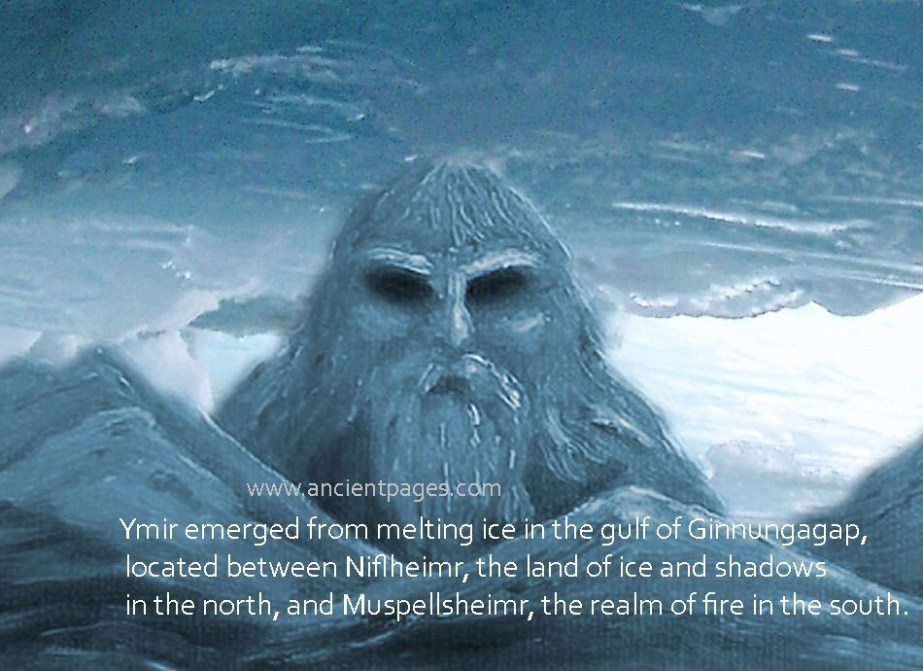
The very first giant, Ymir (pronounced EE-mir), arose from primordial chaos when the worlds of fire and of ice came together in a tremendous, hissing scream.  His offspring, the Jötnar, were spirits of this chaos, representing the destructive cycle of the natural universal order.

The Aesir and the Vanir tribes of gods also arose partially from this same race of giants (though they also had another ancestor, Buri – a being of unknown origin that had been bounded in ice until he was eventually set free from Ymir’s cow named Auðumbla who licked at the ice for three days). By the gods’ own nature and choice, the giants became the positive or creative aspect of universal order.  In Viking lore, it is not so much that the gods are good and the giants evil, but rather that the gods and giants are in opposition and balance.  This is not to say that Norse belief observed a strict dualism (as some ancient religions did), but they understood their world through their stories of struggle between the gods and the Jötnar, between creation and destruction,   

Sometimes, the difference between giants and gods is itself obscure.  For example, Loki is often thought of as the Viking god of trouble.  He was an adopted member of the Aesir tribe of gods and blood-brother to Odin, but Loki was the son of giants and is only ambiguously called a god in the primary sources.  None of his offspring are gods but are giants or supernatural beasts.  Similarly, Jörð (a “Mother Earth” figure) and Skadi (the ski-borne goddess of the wild) appear in the Eddas as Jötunn in origin. They are later called goddesses, but then often excluded from lists or gatherings of goddesses in Asgard. 

Some experts see in this interplay between gods and giants a parallel of how the Vikings themselves interacted with the cultures around them. Whether this is accurate or not, the lore is clear that the gods and giants are not distinct races of beings but rather opposing and competing forces. These competing forces’ cosmic nature can easily be inferred from the names, attributes, and actions of the individual members within these “warring tribes.”

Source: Sons of Vikings
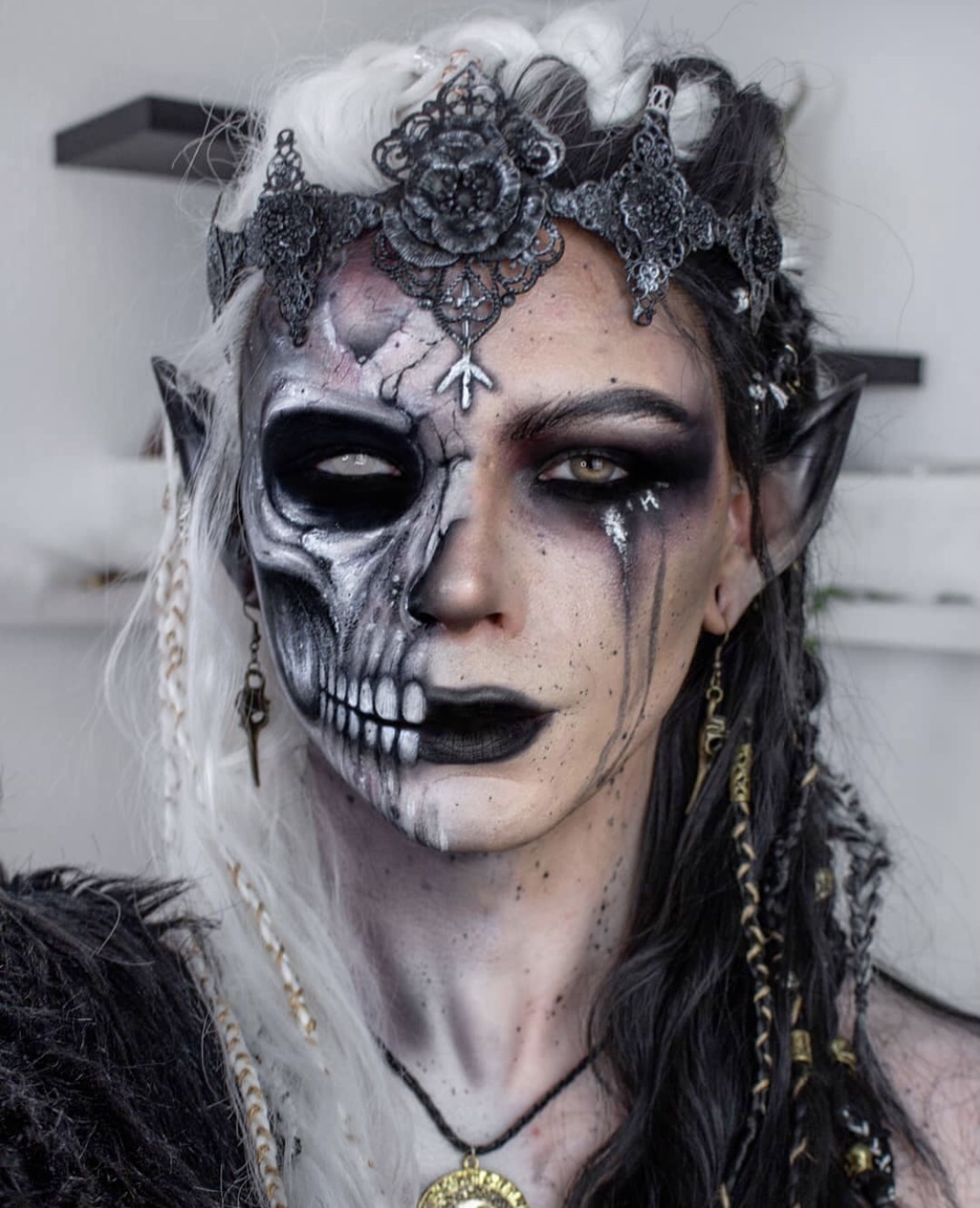
Viking Art: Antler, Bone & Ivory

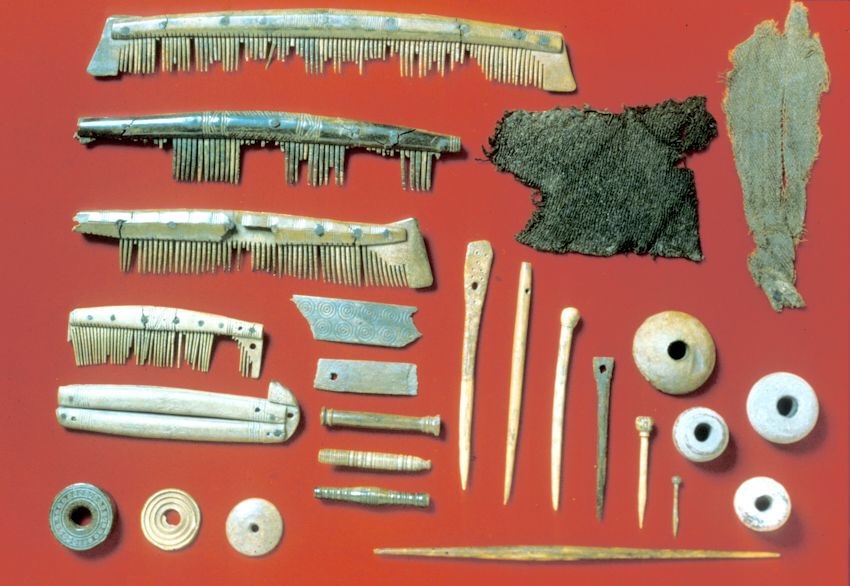
Bone and antler objects occur throughout the Viking world. Bones of pigs, cattle, horses, goats were used, and antler came from deer or elk. 

Needles and pins could be produced in a different shapes and sizes to serve a variety of purposes such as sewing clothes, nalbinding (a Scandinavian technique for making a strong, elastic fabric), net-making, securing a cloak, etc. 

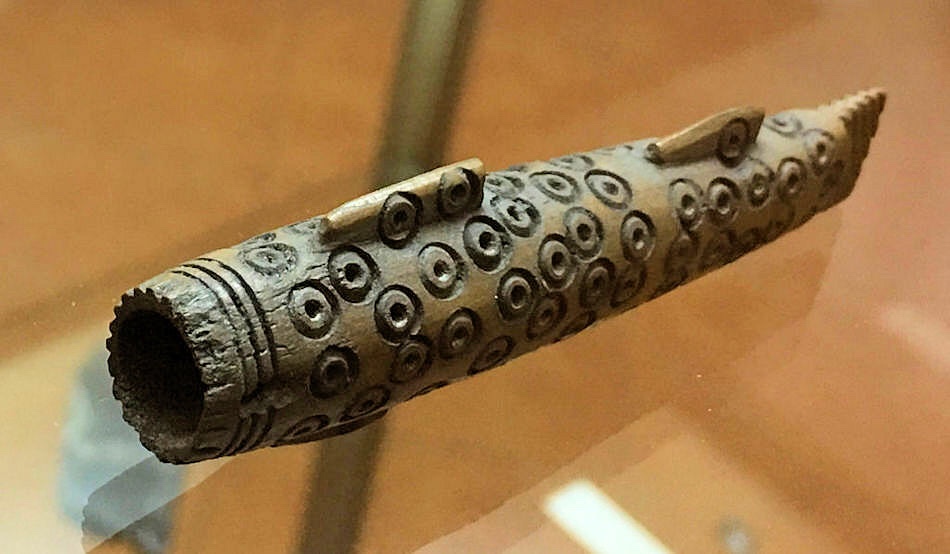
Other products included spindle whorls, weaving tablets, needle cases made from small long hollow bones, knife handles, strap ends, gaming pieces, bone flutes, and ice skates. 

Combs were also made and could be quite basic, or very ornate and decorated. Even the basic combs required considerable work, as the teeth can to be cut separately into bone plates which were fitted into the handle pieces. 

Whale bone could be used for special objects such as the decorated linen smoother from the Scar boat burial. While whale teeth and walrus ivory could be used for objects such as the Lewis Chessmen.

Source: the Viking Archaeology News Blog

Viking Era Jewelry

Most of our knowledge of Viking Age jewelry comes graves and hoards. Because accompanied burials ceased after the conversion to Christianity, we know more about earlier Viking Period jewelry than we do of the later Viking era.

Viking age jewelry tends to be dated according to the art style that is used for decoration.

Jewelry was worn by both men and women. It was a means of fastening cloaks, belts and dresses, And it was an adornment and a means of displaying visible wealth, even as a means of carrying wealth. It could be used as a means of exchange, and as a means of cementing an alliance.

Gold was used for the most prestigious jewelry, but gold was relatively scare in Scandinavia, so most jewelry was made of silver or gilded bronze. Gold and silver items would have been individually made, but bronze jewelry would have been mass produced, using clay moulds from a single master prototype.

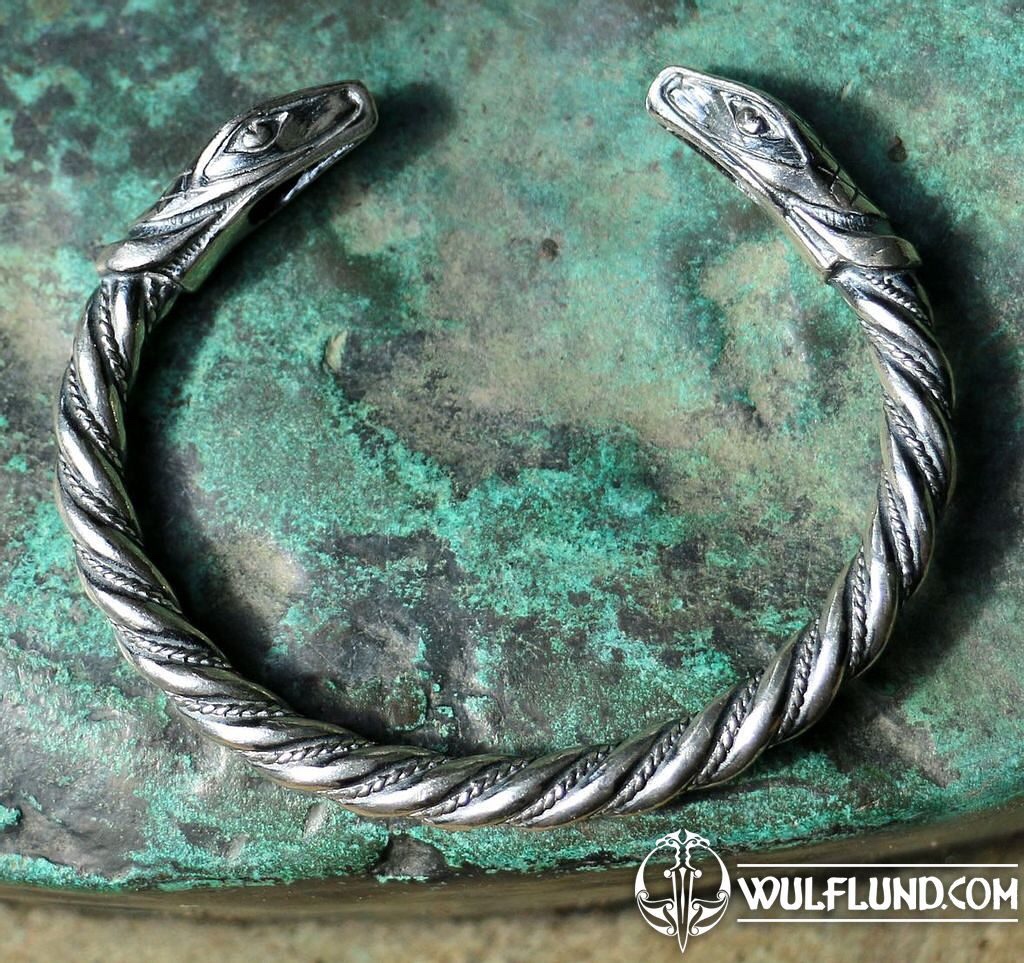
In addition to brooches and buckles, silver neck and arm rings were common items of jewelry. Many were made from melted down silver Arabic coins, and were made to standard weights so that their value was easily assessed.

”Silver arm-rings were by far the commonest products of the Hiberno-Viking tradition…Over one hundred are known from silver hoards in Ireland, where they were sometimes cut into fragments which could later melted down and recycled. Several different types have been identified, the most important in terms of sheer numbers being the broad-band type. Like the neck-rings, they seem to have been manufactured for the storage and circulation of silver, and their target weight of 26.15 grams (0.92 ounces) is very close to the most important weight unit of the lead scale-weights from tenth-century Dublin. Their purity was obviously a matter of concern, because they sometimes display small nicks and pecks.”

Source: Netherton, R. and Owen Crocker, G. R. (eds) (2006), “Medieval Clothing and Textiles vol 2″

Ghosts and the Undead of Norse Mythology

Ghosts and the Undead

Most people have heard that for the Vikings, brave warriors went to Valhalla while everyone else went to Hel (the underworld), but actual Norse beliefs were more complicated and less standardized than that. To the Viking mind, there were different layers of self and different time frames. These elements could move on – as well as various places they could go. This left plenty of room for ghosts and the undead in the Norse imagination.

Stories of ghosts occur in many of the sagas and Eddic poems. They sometimes visit the living in dreams or can be found haunting their burial mounds. One reference in Njal’s Saga speaks of a ghost who sits atop his burial mound singing by night, seemingly content. This offers a glimpse of how the Vikings felt their ancestors were always with them.

The Eddic poem, Helgaknitha Hundingsbana II (The Second Poem of Helgi Killer of Hunding), paints a darker picture of such a haunting. Helgi, the slain hero, returns to his burial mound from Valhalla on one magical night. Helgi’s ghost has physical substance and still bleeds from his battle wounds. His grieving widow, Sigrun, spends the night in his arms within the cold tomb. Sigrun returns to the burial mound night after night, though it is unknown if Helgi ever returns. She eventually dies from her sorrow. The poem ends with the lines, “all the dead are more powerful by night than they are by bright day.

Some ghosts are not lost loved ones visiting from beyond the grave, though. The Vikings believed in beings called Draugr (also called an Aptrganga or “after-walker”), a malicious ghost with physical form. This undead being usually had been a bad man who died in a bad way. They were recognizable as the dead man but had grotesque features, bluing skin, and eyes that could render humans immobile with fear. They had otherworldly strength. They could sometimes appear much larger than they had been when alive and were usually described as inexplicably heavy.

Sometimes the Draugr was content to guard his treasure in his burial mound, but others terrorized farms or haunted a specific area. An embodiment of the bad luck that could plague the farms of the Viking world, the Draugr would kill livestock, horses, or pets. They could cause roofs to collapse or other disasters. Sometimes, the Draugr would kill people directly, especially if he was challenged. Shepherds, servants, or cattle-drivers would be found dead, and when their bodies were inspected, it was found that every bone – big and small – was broken.

One of the most detailed accounts of these “Viking zombies” is in Grettir’s Saga. Grettir is an outlaw and an antihero, but he is a fearless Viking of great physical strength. Early in his life, he faces a Draugr in a burial mound and kills it, winning the short sword (seax) that was buried with it. Years later, though, Grettir faces Glam, a very dangerous, malevolent Draugr. Grettir decapitates Glam, but not before Glam places a heavy curse on him. This curse causes Grettir trouble and tragedy for the rest of his life, and ever-after the mighty Viking is afraid of the dark.

According to Grettir’s Saga and some other sources, the Viking method for killing the undead was not a stake through the heart or fire, but rather by cutting off the fiend’s head and place it next to its ass. Interestingly, archaeologists have found several Viking Age graves in which the skull was found between the skeleton’s legs, just below the pelvis. Other remains have been found weighed down by heavy stones to keep the dead where they were.

Source: Sons of Vikings
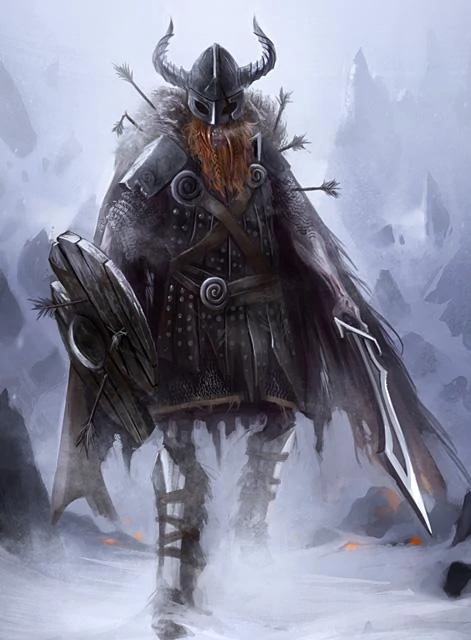
Werewolves of the Norse World

Werewolves

Vikings believed that some gods, giants, dwarves, elves, spirits, and even human beings could change shape. Examples of such shape-shifting includes Odin turning into an eagle to steal the mead of poetry; Loki turning into a mare and becoming mother to the 8-legged horse, Sleipnir; Fafnir, a dwarf whose greed turned him into a massive dragon; and other incidents of characters becoming salmon, snakes, otters, falcons, seals, swans, or bears. But one of the most common – and most terrifying – of these shapeshifters were werewolves.

Stories of werewolves and similar human-animal shapeshifters have been around for thousands of years and are found throughout the world, and so it could hardly be said that the Norse invented them. Yet, the werewolf holds a very special place in Viking lore. In their stories, we see these dark manifestations of humankind’s animal nature better explored than ever before.

The Vikings had different types of werewolves. Several appear in The Volsunga Saga.  In the fifth chapter of this long epic, Sigmund and 9 other sons of the heroic Volsung family have been captured by an evil king and bound in massive timber stocks out in the wild, black forest. Every night, an enormous she-wolf comes and devours one of the brothers while the others watch helplessly. This continues until Queen Signy – the wife of the evil king and the sister of the hapless Volsungs – smears her favorite brother’s face with honey. When the demonic wolf comes to kill Sigmund, she is distracted by the honey, and – as she licks her victim’s face and sticks her long, lolling tongue in his mouth, Sigmund bites hard and holds on. As the wolf thrashes to get free, she smashes Sigmund’s fetters – and rips her own tongue out. The hero breaks loose as the creature bleeds to death. It is later revealed this unworldly wolf is the mother of the evil king who had transformed her shape using dark arts.

Later in The Volsunga Saga, Sigmund and his son, Sinfjotli, are outlaws in the woods. Using enchanted wolf skins, Sigmund and Sinfjotli become werewolves for 9 nights at a time. While thus enchanted, young Sinfjotli is so terrifying and powerful that he can kill 11 armed men at once. This transformation affects more than just their physical strength though – in a fit of savage rage while in wolf form, Sigmund rips his own son’s throat out. Realizing what he has done, Sigmund uses all his willpower, magic, healing skill, and a little help from the gods to break out of his wolf trappings and heal his son before it is too late. The two burn their wolf mantles after that and do not go back to being werewolves.

The Volsunga Saga is one of the legendary sagas, and so is full of dragons, dwarves, and the like. Did the Vikings really believe these things, or for them, was it just a good story? Werewolves also appear in the more “realistic” Islandasagur sagas, suggesting that Vikings (or at least, many of them) did really believe in the existence of werewolves. For example, in Egil’s Saga, the hero’s father is called Kveldulf (“Evening Wolf”) for his lupine personality and the rumors that he runs with wolves by moonlight.

There were also real-world examples of Viking “werewolves.” Viking warbands featured berserkers – the frenzied bear-inspired warriors devoted to Odin. They also had another type of elite known as úlfheðnar (literally, “wolf-skins”). Not much is known about these Viking wolf warriors, aside from what clues appear in poetry or in art from the Viking Age and earlier Vendel period. In the depictions, these warriors appear as fearless and savage in the extreme. They take on all the qualities of the wolf and strike dread into the hearts of their enemies.

So, the Viking image of werewolves is diverse and ranges in its believability. Missing in Norse lore is the direct association between werewolves and a full moon. Indeed, one does not become a werewolf by being bitten by another werewolf. In the stories, though, one sees a clear relationship between the wolf nature and night. Especially in the case of Kveldulf, we see the “werewolf personality” of a mysterious, reclusive, abrasive, dangerous loner. As in the story of Sigmund and Sinfjotli, we see how the savage nature of the wolf takes over human nature and how the human spirit struggles to achieve some kind of control over it. All these themes are still present in the better werewolf tales of today.

Source: Sons of Vikings
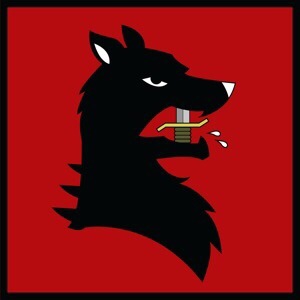
Witches of the Norse World

Witches

Belief in witches stretches across almost all cultures in history, and the Vikings definitely did not invent them. Vikings believed in magic and never took it lightly. There are about 40 different words for magic and magic users in their language of Old Norse, showing the range of understanding and the importance they placed on it. Freyja, the most venerated of the Norse goddesses, was a goddess of magic and taught her arcane arts to Odin. Freyja is sometimes called a witch in the Eddic poems and was much maligned for this by later Christians.  Freyja traveled in a chariot drawn by black or gray cats. These quiet, intelligent, ruthless creatures are her familiars or messenger spirits. A Viking who looked up to see a raven might see it as an omen from Odin, just as he might see a black cat as a sign that Freyja was watching.

Witches, sorcerers, and wizards were taken seriously and respected in the Viking world. This is further attested by the many Viking Age graves archaeologists have discovered that have grave goods (valuables deliberately interred with the body) associated with magic users. One tell-tale sign of a witch’s grave is an iron staff. It is thought that these iron staffs were used by Völva sorceresses in certain magic rituals, held between the thighs as the witch entered a shamanistic trance. At such times, it was thought that the witch’s layers of inner self left their outer body (what occultists now refer to as astral projection).

One passage referring to this is in the Havamal:

I know a tenth spell
If I see witches
at play in the air
I can cast this spell
So that they get lost
So they can’t find their skins
So they can’t find their minds

If the Viking Age, witches used their iron rod as a means of traveling across levels of consciousness, it is easy to see how later Medieval Christians would say that witches “flew through the air riding on brooms.”

So, the pagan Vikings respected (and feared) witches and often turned to them for help, but when the Vikings gradually became more Christian, witches were targeted as public enemies by the Church. Witchcraft never wholly died out, though. In Iceland, in particular, witchcraft survived in a well-documented line from early Viking times until the present – though it certainly changed and took on elements and influences from other cultures.

It is not just the Medieval Christian that shifted the perspective of the witch from medicine woman and soothsayer to evil, hexing hag, though. Viking lore is replete with frightening or “wicked” witches. There are at least three Eddic poems in which the speaker is a dead witch awoken by Odin or Freyja’s necromancy, and forced to lend her wisdom to the gods though she is full of spite for them. The worst of the evil witches were sometimes referred to as “Troll Wives” and were Jötnar rather than human. Like many fearsome beings in Norse lore, Troll Wives are seldom described in detail. However, the impression given fits the Halloween image of a lank-haired, green-skinned disfigured distortion of the elderly.

But it is clear that there is a broad range of witches. Only some of them could really be classified as good or evil – which is typical of the moral complexity and honesty that has made Norse lore so poignant and enduring.

Source: Sons of Vikings

Jörmungandr and the ouroboros through world mythology

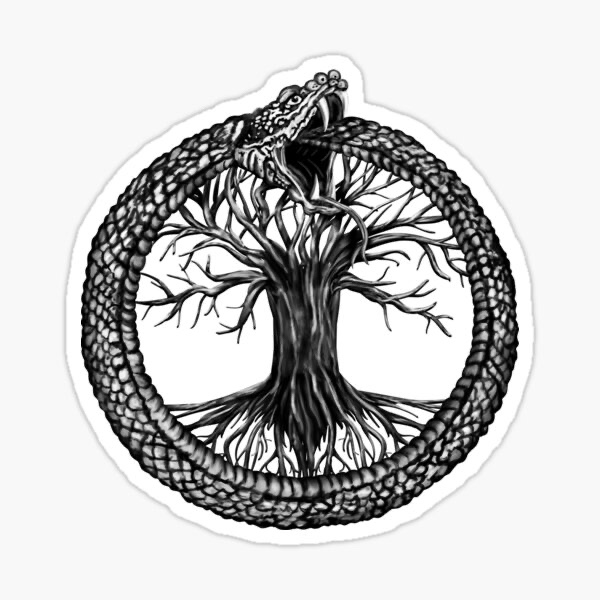
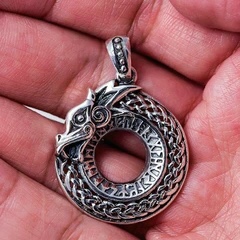
Of all the gods, giants, beasts, and spirits that stalked the Viking mental landscape, Jörmungandr – the world-coiling serpent – remains one of the most renowned. Jörmungandr is also known as the Midgard Serpent because he was a sea monster so large that he wrapped all the way around Midgard (the world of humans). When this gigantic beast stirs, storms, earthquakes, and tidal waves erupt. Jörmungandr lies in the depths of the sea, encircling the earth, holding his own tail in his mouth, waiting for the day of Ragnarok. It is said that when the serpent releases his tail and begins his attack, Ragnarok – the ‘final’ dark day for the gods – will begin.

Jörmungandr is not the only world-coiling serpent across the thousands of years and hundreds of cultures that color the human imagination. In fact, the image of a tail-swallowing dragon can be found worldwide and throughout history. This symbol of the circular snake is called the ouroboros. The earliest known ouroboros depiction is from the grave of Pharaoh Tutankhamen from the 13th century B.C. Since that time, similar images have shown up in ancient Chinese, Persian, Hindu, Greek, and Mesoamerican sites and artifacts. The ouroboros was also prominently featured in the language of mysticism amongst the Gnostics, Hermetic, and alchemists throughout Late Antiquity and the Middle Ages.

In most of these settings, the ouroboros signifies time – depicting the living, breathing cycle of ages that have no real beginning and no real end. In Roman sources, the ouroboros symbolized the god Saturn (the Greek Kronos from where we get words like chronology and chronometer). Saturn/Kronos was a god of time. He was considered by the Greco-Romans to be especially savage and terrifying. He was lord of the Titans – spirits of elemental chaos that were something like the giants (Jötnar) of Viking lore. In all this imagery, the ouroboros represents the endless cycles of creation and destruction. In fact, many scholars believe that our mathematical symbol for eternity – the sideways figure eight (∞) – is a shorthand adaptation of the ouroboros symbol.

Source: Sons of Vikings
Time to take back Viking history and Symbolism from racists and white supremacists

“All manner of Viking symbols and misconceptions about a golden age of Nordic racial purity have been appropriated by racist extremists looking to justify their xenophobia and acts of violence, according to the University of Alberta researcher.

Van Deusen said the age of racial purity never existed and she is determined to debunk the corrosive myth at every turn, especially in the classroom.

Viking symbols are everywhere among the ultra-right. When the Unite the Right rally took place in Charlottesville in 2017, some protesters carried banners featuring the Norse god Thor’s hammer, popular among the Nazis and neo-Nazi groups.

The perpetrator of New Zealand’s Christchurch massacre last year wrote, “See you in Valhalla”-referring to the great hall where heroes of Norse mythology go after they die-at the end of his manifesto.

Closer to home, the Soldiers of Odin-a Finnish white supremacist movement named after another Norse god in 2015-have recently emerged in Alberta and throughout Canada.

“The precedent was set with the Nazis,” said Van Deusen. “National Socialism and Hitler idealized the Norse people-those who lived in the Nordic areas. Even the swastika is based in part on a symbol based on Viking artifacts.”

Source: https://www.ualberta.ca/folio/2020/07/white-supremacists-are-misappropriating-norse-mythology-says-expert.html