
Valkyrie

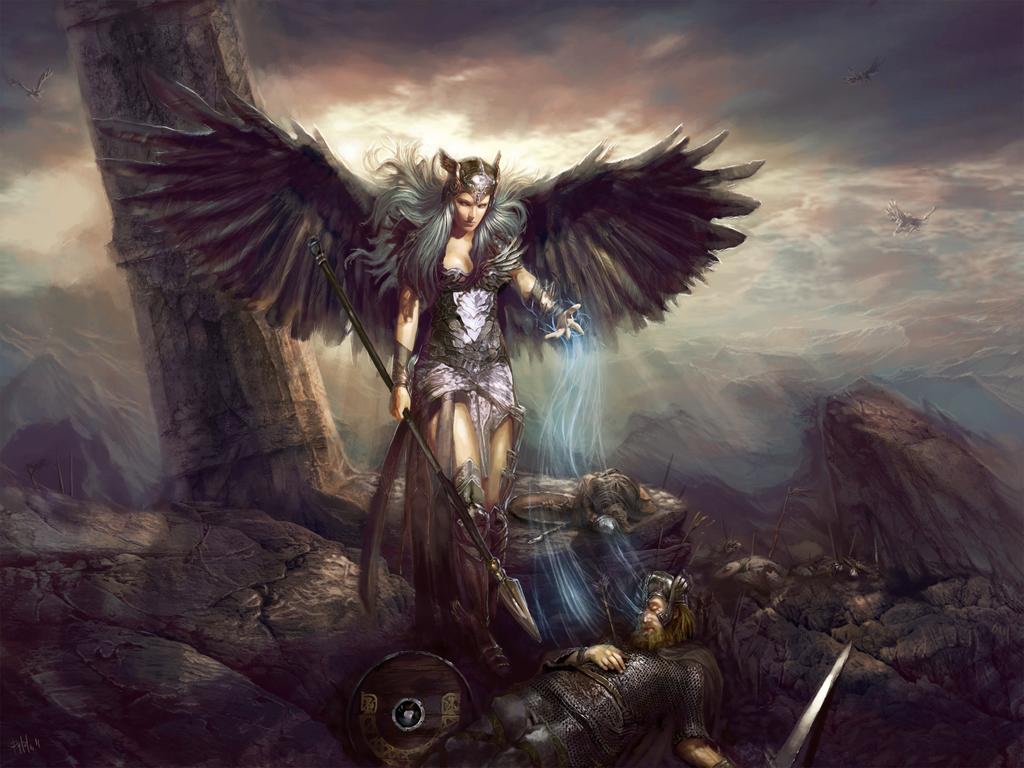
Valkyrie (“Choosers of the Battle-slain”; Old Norse valkyrja, pl. valkyrjar): The valkyries are representative of warfare, but are also magicians, guardians, female lovers of heroes, bird-women, and keepers of knowledge. They are concerned with fertility and fecundity and have many points in common with the Dises (deities), the Norns (the Germanic Fates), and the fylgjur (personal tutelary spirits).

They are in Odin’s service, and their names are most often of a warlike nature, formed from words like battle, combat, sword, spear, fury, bravery, and so forth. Régis Boyer has analyzed the thirty-eight valkyrie names that have been preserved in the texts; from his study it becomes apparent that they escape any strict classification as one-third of them are engaged in two different functions.

The valkyries select the slain warriors who will populate Valhalla. They attach themselves to the kings and princes who are worshippers of Odin, helping them, counseling them, bringing them luck, and even marrying them after their death. If they disobey Odin they are punished—as in the case of Brynhildr, who, pricked by the sleep-thorn, lies on Hindarfjall Mountain waiting for the one who will awaken her. In Valhalla the valkyries serve beer to the warriors.
Valhalla

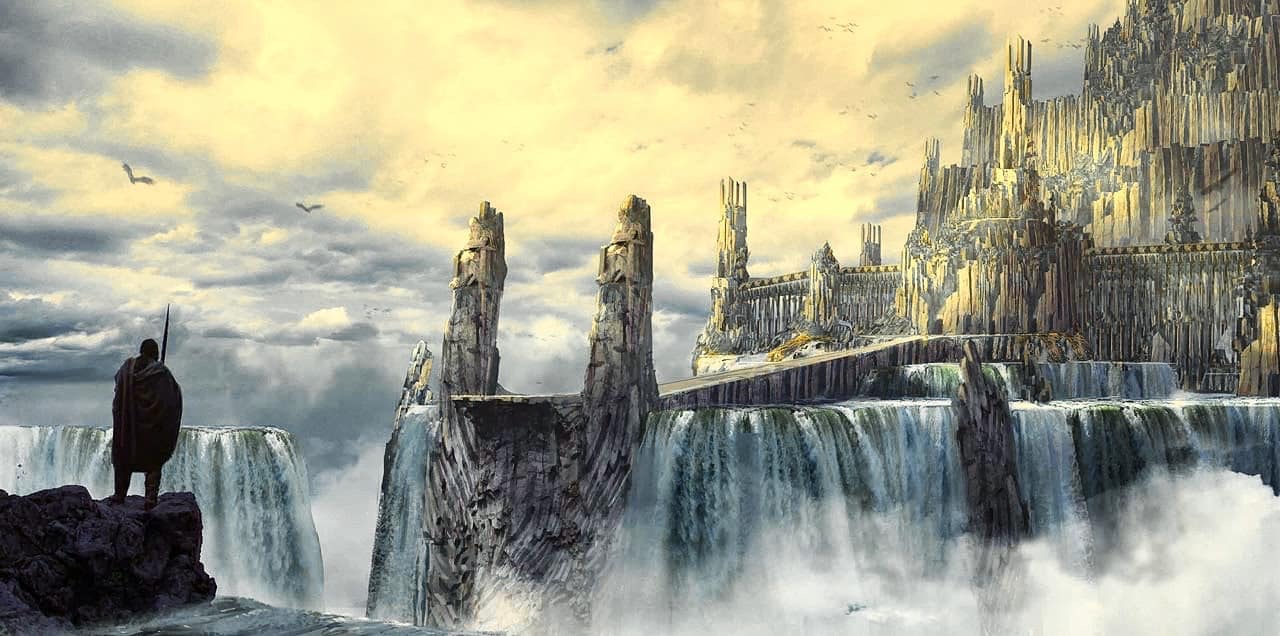
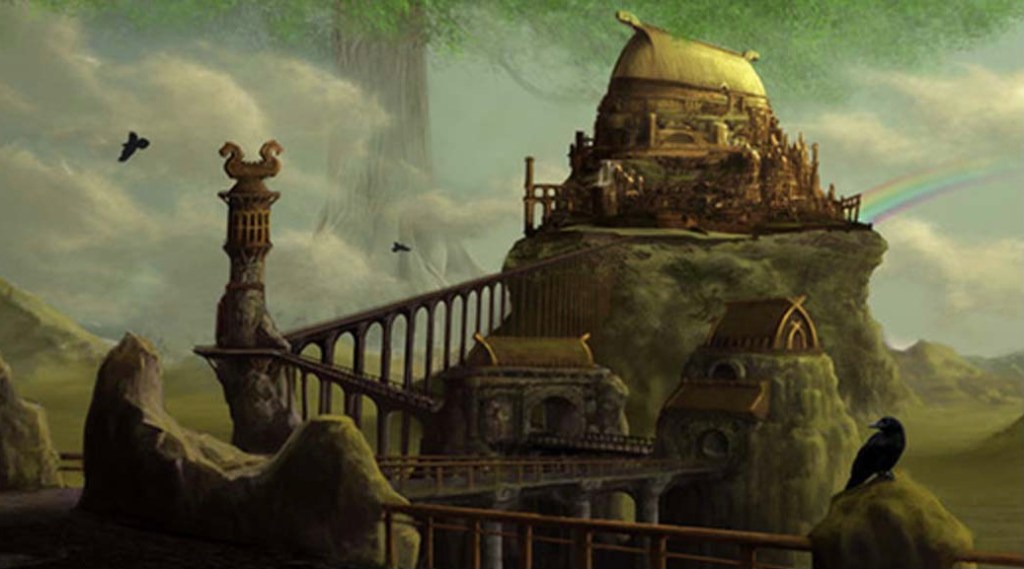
Valhalla (“Hall of the Slain”; Old Norse Valhöll): Odin’s dwelling in Ásgarðr and the paradise of warriors. One cannot enter it if death came as a result of illness or old age. Armor lies strewn about on the benches. The roof is made of spears and shields. Atop it is where the goat Heiðrún stands; she chews on the leaves of Læraðr (Yggdrasill), and from her udders comes the mead that the valkyries serve to the einherjar.

Near her is the stag Eikþyrnir (“Oak-thorny”) who munches on the branches of the tree; moisture flows from his antlers. Valhalla has 540 doors. Each day the warriors emerge from them to fight each other in the courtyard for amusement, and they return to the hall when the signal for dinner has sounded. The cook, Andhrímnir, then serves them the meat of the boar Sæhrímnir. On the day of Ragnarök the warriors will leave Valhalla to confront the forces of chaos.

Freyja

Freyja (“Lady,” “Mistress”): She is the primary goddess of the family of the Vanir, daughter of Njörðr and the sister of Freyr. She was married to Óðr, with whom she had a daughter, Hnoss, also called Gersimi. When her husband went away on his travels, she wept gold tears. She lives in Fólkvangr, one of the heavenly dwellings, and her hall is called Sessrumnir. She shares half of the dead with Odin. She is fond of love poetry and is famous for her promiscuity. The worship addressed to her was erotic, which likens her to several Eastern deities, Cybele in particular. Freyja travels in a chariot drawn by cats.

Her field of activity is vast: life (birth) and death, love and battle, fertility and black magic. It is Freyja who taught the Æsir the magic rites most honored by the Vanir.

She is beautiful and lascivious, which inspired the giants with an urge to wed her, and the historiographical texts tell us that she was good to invoke for matters concerning love.

In skaldic poetry she was called Vanadís (“Dise of the Vanir”), Sýr (“Sow”), Gefn (“The Giving One”), Hörn (“Spirit of Flax”?), and Mardöll (“Sea-brightener”). She was quite renowned because of her necklace, Brísingamen. She obtained this piece of jewelry by sleeping with the dwarves who had forged it. The strength of the worship dedicated to Freyja is well attested by Norwegian and Swedish place-names, but the texts remain silent on this point.

Gender Roles: Viking Warrior Women

B575D749-CB96-4114-87C8-489AB3E34676

Viking Age Scandinavian women enjoyed a tremendous degree of freedom when compared to the Viking women settlers of Iceland and Greenland. Unlike the Viking settlers who depended on gender roles (dividing keeping the land vs keeping family), Scandinavian women were able to own property, request a divorce and reclaim their dowries if their marriages started to take a turn for the worse.

80CBFE67-91E8-448A-9A88-5575DA554717

And if their husbands died, women were expected to permanently take over their husband’s roles as the providers of their households. As such, they were able to obtain economic opportunities that was rarely offered to contemporary women in other parts of Europe. Some women were even traders, warriors, and farmers.

2FBF17AD-E7F9-4B61-8F38-2E23696C9B25

There is evidence of women taking on the role of the warrior. Though rare, Byzantine-era historian Johannes Skylitzes recorded on History.com that women fought alongside a group of Vikings in a battle against the Bulgarians in 971 AD. A 12th-century Danish historian described female Vikings as “communities of warrior women as shieldmaidens who dressed like men and devoted themselves to learning swordplay and other warlike skills.”

96F1640B-7D08-49EF-9FDF-BEFB666E7118

Most of the information we know about the Viking warriors comes from the literature or various and nearby communities. There are several accounts of female warriors rolling around on the Viking raids, who are known as Valkyries. In myth, Valkyries are fierce warriors who raise the souls of fallen warriors to Valhalla.

09E9487B-F212-4444-A4CA-CD948D40FA65

The most common natural hair colors a Viking man or woman were brunette, red, or black. Blondes were actually pretty rare. Those born with blonde hair were considered attractive and more desirable. Both men and women used a soap with high quantities of lye to strip pigments from their hair to appear more blonde. It has even been documented that lightening their hair helped manage head lice, a nice bonus of this cosmetic trend.