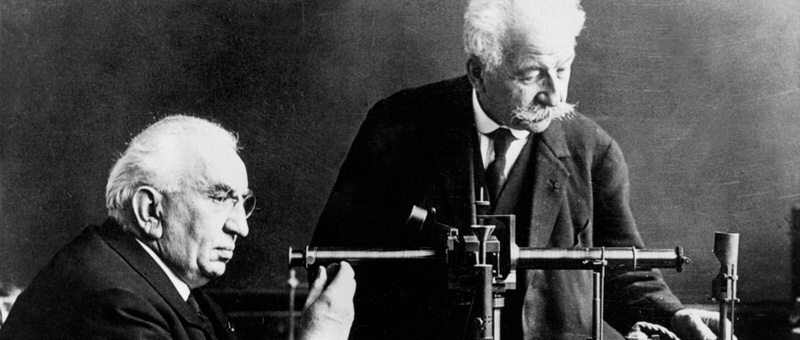
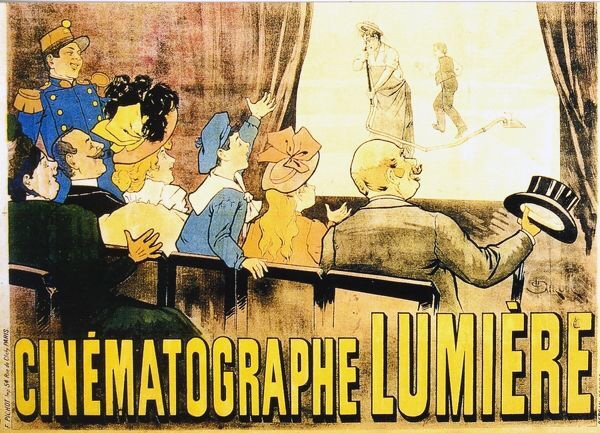
On this day in 1895, the world’s first commercial movie screening takes place at the Grand Cafe in Paris. The film was made by Louis and Auguste Lumiere, two French brothers who developed a camera-projector called the Cinematographe.
The Lumiere brothers unveiled their invention to the public in March 1895 with a brief film showing workers leaving the Lumiere factory. On December 28, the entrepreneurial siblings screened a series of short scenes from everyday French life and charged admission for the first time.
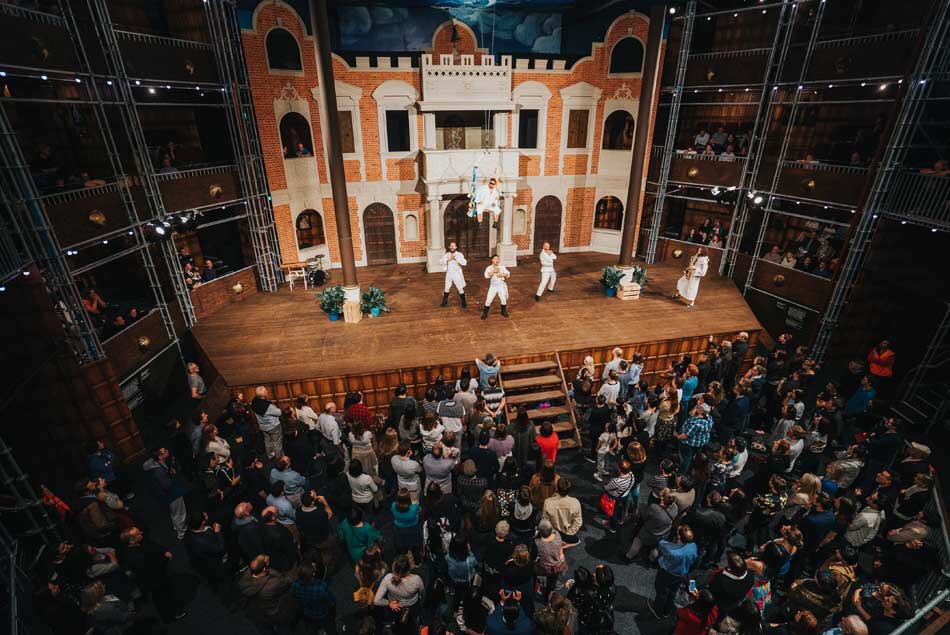
Globe Theater Fun Facts –> Opened in 1599, the Globe played host to Shakespeare for 14 years, during which time he wrote many of his greatest works. The theatre was destroyed by fire in 1613 after its thatch was accidentally set alight by a cannon during a performance of Henry VIII.
A new theatre was built in 1614, but was demolished in 1644 when all plays were banned by the Puritan parliament.
“The very first time I tried balancing stones was back in 2010. I saw some stone sculptures in a park, when an old, wise man told me that it was a symbol for the balance of nature. I liked that idea, and after that I started making easy stone sculptures. After a while, I started experimenting with balance and I tried to make stone sculptures that had such small balance points so that it almost would look impossible. I really loved that. Both because it felt like a challenge, but also because it forced me to get really still and quiet, and focus on one thing only; to find the tiny, tiny balance point. It more and more turned into some kind of meditation.”
~ Jonna Jinton, Swedish artist, musician and filmmaker and I live in the beautiful woods in the North of Sweden
Archaeologists from the UCL’s Institute of Archaeology have discovered the remains of what may be the Red Lion, an early Elizabethan playhouse built around AD 1567.
The Red Lion was a purpose-built playhouse in the yard of the Red Lion, a farmhouse east of Aldgate near Mile End. This was to be the first known attempt to provide a purpose-built playhouse in London for the many Tudor age touring theatrical companies, in particular staging a young Shakespeare’s plays in the 1590s.
The Red was financed by John Brayne who also financed, with his brother-in-law James Burbage, the building of the Theatre in Shoreditch.
The only contemporary information previously known about the playhouse was from two lawsuits issued in the Records of the Court of King’s Bench in 1567, between John Brayne and the carpenters commissioned with aspects of the playhouse construction that noted “the house called the red lyon” and “farme house called and knowen by the name of the Sygne of the Redd Lyon”. Location of the Red Lion Playhouse The lawsuit details ‘scaffolds’ or galleries around the stage, suggesting they were substantial.
The second lawsuit relates to the quality of work, and crucially includes a description of the stage and dimensions: 40ft (12.2m) north to south, by 30ft (9.1m) east to west, and standing at a height of 5ft (1.5m) above the ground. While it appears to have been a commercial success, the Red Lion offered little that the prior tradition of playing in inns had not offered.
Situated in open farmland, it was too far from its audiences to be attractive for visiting in the winter. Archaeologists excavating the site discovered a rectangular timber structure, comprising 144 surviving timbers and measuring 12.27m north-south by 9.27m east-west.
A painfully shy waitress working at a tiny Paris cafe, Amelie makes a surprising discovery and sees her life drastically changed for the better. From then on, Amelie dedicates herself to helping others find happiness in the most delightfully unexpected ways. But will she have the courage to do for herself what she has done for others?
Rating: R (for sexual content)
Genre: Comedy, Romance, Foreign
Directed By: Jean-Pierre Jeunet
Written By: Jean-Pierre Jeunet, Guillaume Laurant
Country: France
Language: French (Subtitled in English)
Release Date: 4 November 2001 in USA
Worldwide Gross: $173,924,742 (Worldwide)
Runtime: 122 minutes
Main Character:
Amélie Poulain —> Audrey Tautou
French actress Audrey Tautou hit the international spotlight in 2001 as the star of the whimsical Parisian romance “Amélie” (2001), which went on to become the top-grossing French-language film ever released in the United States. With her wide eyes and shy, winsome smile, the brunette gamine instantly earned comparisons to Audrey Hepburn, and like Hepburn, she successfully built a film career alternating between light romantic comedies and teary dramas. Many of Tautou’s popular French films did not make it to U.S. theaters, however following the art house success of “Amélie” and the World War I-set romantic drama “A Very Long Engagement” (2004), Tautou answered the call of Hollywood, co-starring opposite Tom Hanks in the blockbuster thriller “The Da Vinci Code” (2006). Tautou’s experience in an overblown, critically reviled hit failed to draw her to American filmmaking, so she promptly returned to the French fold where a starring role as design icon Coco Chanel in “Coco Before Chanel” (2009) proved that the actress had a whole career of increasingly mature roles ahead of her once her quirky, youthful charm had run its course.
The Sphinx is said to be associated with Khafre during 2558-2532 BC, and it lines up with the Pyramid of Khafre at the foot of its causeway.
The Sphinx has the body of lion and the head of a king or god. In 1905 the sand was cleared away from the sculpture base to reveal how massive the Sphinx really is. The paws alone are 50 feet long and the entire body equals out to 150 feet long. The head is proportionally a lot smaller at only 30 feet long and 14 feet wide. The Sphinx is believed to have been quite colorfully painted at one time. Unfortunately, the bedrock it is carved into is sandstone so it does not hold up well to the elements and a lot of erosion has occurred.
The Sphinx lost its nose because Muhammad Sa’Im Al-Dahr was angered by peasants making offerings to it, so he destroyed the nose then was promptly hanged for vandalism. Other stories such as the claim that Turks shot off its nose during target practice or even Napoleon. More mystery surrounding the Sphinx is who it resembles. Some believe that the face resembles that of Khafre’s older brother, Pharaoh Djedefre. A German Egyptologist has also suggested that the Sphinx was built by King Khufu, Khafre’s father. So many rumors circulate around the Sphinx, but I do not think we will ever truly know what it’s true purpose was.
The Dream Stele is between the paws of the Sphinx. The stele tells the story of when Thutmosis IV fell asleep under the Sphinx, which at the time was covered in sand up to its neck. He had a dream that the Sphinx talked to him and told him that if he freed the Sphinx from the sand then he would become king. Some people do believe that the Sphinx has magical powers or that it has hidden passageways under it. But none of these have been confirmed.
Confined to the underworld for attempting to deceive the gods, Tantalus reaches above his head to a branch that bares fruit though he cannot successfully pluck the food from the bough to sate his hunger. Water rises to his neck, but he is unable to drink to quench his thirst.
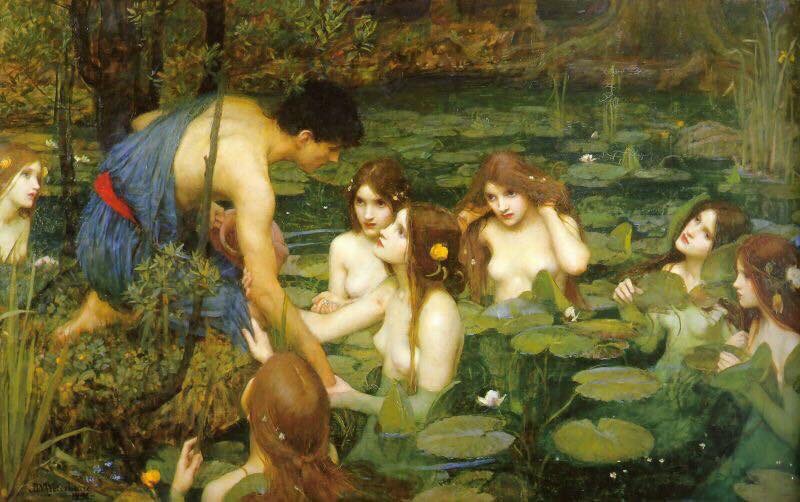
Hylas and the Nymphs is not one of John William Waterhouse’s most well known works, however it is a prime example of his skill as an artist and therefore has received very little negative comment since its completion in 1896.
Taken from the story of Jason and the Argonauts, Hylas was an Argonaut warrior and the assistant and lover of Herlkas. He was also known to be a very handsome youth.
When Jason’s boat landed on an island during his search for the Golden Fleece, Hylas was sent to fetch water for the camp. Finding a pool in a clearing, he reached down and put his pitcher into the water. Before he could lift his pitcher he looked up to discover water nymphs encircling him. Drawn by his beauty, one of the nymphs reached up to kiss Hylas.
The tale stops there and Hylas disappeared without trace from that moment, it was said that Herlkas searched the island for his beloved, in fact such a time passed that the boat left without him.






 Mark Bere Peterson’s Counterculture, Urban Legends, Paganism & Witchcraft