Dianne Lake: “Member of the Family: My Story of Charles Manson, Life Inside His Cult, and the Darkness That Ended the Sixties”

Dianne Lake was just 14 years old when she first met Charles Manson. Her parents were hippies who moved in the same circles as the charismatic cult leader, who would go on to orchestrate the murders of at least seven people, including actress Sharon Tate. In 1967, Lake was going to love-ins and communes, having been given a note from her parents granting her permission to live on her own. While she never participated in any of the cult’s gruesome crimes, she would spend two years living with the Manson Family, becoming its youngest member. Lake, opened up about the man whose spell she fell under in her book, “Member of the Family: My Story of Charles Manson, Life Inside His Cult, and the Darkness That Ended the Sixties

Excerpt:

[It all started with meeting him at a party in LA’s Topanga Canyon at a place called the Spiral Staircase House.]

When we arrived, we climbed the stairs that led into the living room, and a red-haired girl got up to greet us. She stared at me for a minute and ran back to her friends yelling, “Dianne is here! Dianne is here!”

I was incredibly confused. As far as I knew we weren’t planning to go to the party until the last minute, so I couldn’t imagine they were expecting me. The girl returned with three other girls, who all took turns hugging me. The red-haired girl, who called herself Lynette, said, “You are even prettier than your picture. Charlie is going to be so happy to meet you.”

She took my hand and led me to where a bunch of people were sitting in a circle, and in the middle of the floor sat a small man playing the guitar. There were girls surrounding him, singing along to his soulful music of songs I’d never heard before. The girls sat me down, and Lynette kept her arms around my shoulder. As soon as the music stopped, she jumped up and pulled me by the hand.

“Charlie, we found Dianne. She’s here!” They weren’t just excited, they were overjoyed. It had been ages since I felt truly wanted, and all the attention made me feel like royalty.

They were beaming with love and I felt it. Without hesitation, they sat me in their circle as if I belonged and, strange as it may seem, I felt like I belonged there, too.

Lynette must have sensed my confusion, because she began to explain how they recognized me. While I’d been off in the Haight, they’d met my mother at the [hippie commune] Hog Farm. Apparently, my mother had given them my photo and told them to keep an eye out for me if they made it to San Francisco.
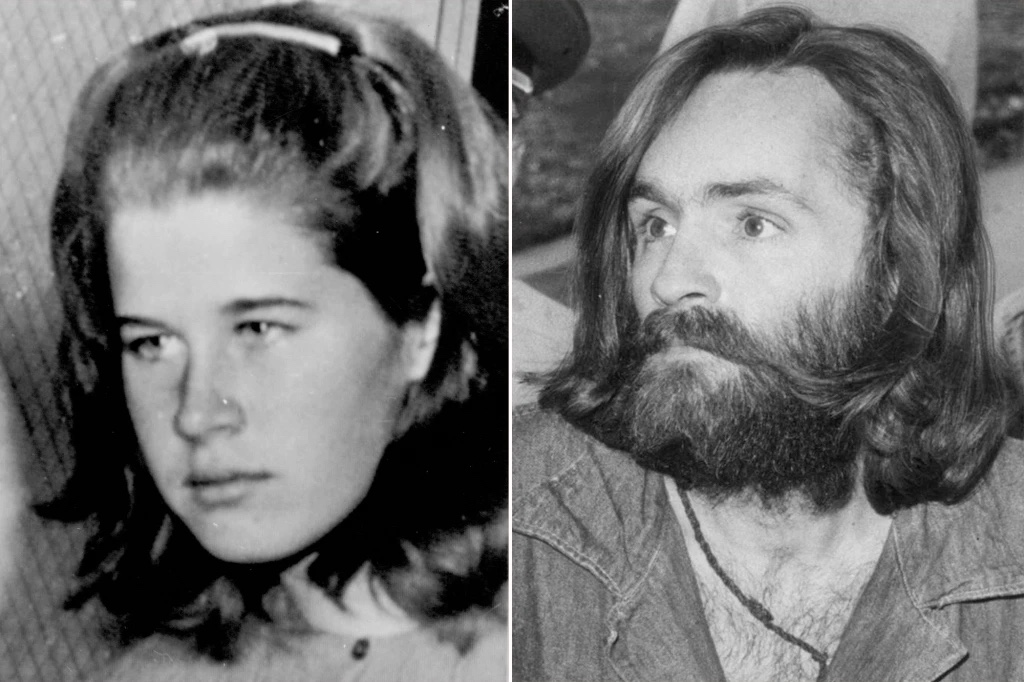
What I didn’t understand then and only learned much later was that my parents and siblings had done more than just run into the Family at the Hog Farm and given them my photo. They’d actually taken a trip into the desert with them, traveling in the black school bus that Charlie drove around in and outfitted for his followers.

Many people during this period were painting buses, bread trucks and VW vans with psychedelic Day-Glo colors. Charlie and the girls chose to make a different statement with their monochrome home on wheels, tricking out a surplus school bus by painting it all black, including the windows, which made him easy to spot. To the residents of Tujunga and the Hog Farm, Charlie was known as Black Bus Charlie.

Charlie stood up and looked into my eyes so deeply and intimately that I almost turned away on instinct. Instead I held his gaze and felt like he was looking into me.

“So, this is our Dianne,” he said and pulled me to his chest in a hug so close I could feel his heartbeat. He held on for several seconds and I felt my resistance fade. I was used to the hippie hugs at the Hog Farm, but this felt warm and real. Tears welled up into my eyes as I took in his embrace.

Charlie held me at arm’s length, looked at me and said, “Oh, you’re beautiful. I want to talk to you. I’ve been looking for you.” I sat next to him and listened as he sang and told funny stories. My first impression of him was that he was charming, witty and most of all intriguing.

“Have some root beer, little darling. I give you the last sip in honor of your arrival.”

Lynette and a girl named Patty stroked my hair and passed me a joint while Charlie strummed out more tunes on the guitar. At first I thought Patty was homely. She had a prominent, bulbous nose and thin lips. But when she smiled, her face became beautiful to me. She exuded a motherly warmth and was obviously completely smitten with Charlie. His presence was disarming. He continued to sing and seemed to make up the words as he went along.

“Dianne is home,” he sang out, and the girls joined in with the chorus: “Home is where you are happy.”

Everything felt like a dream. I had been around groups of people grooving on music, but they were often into their own trip. These girls seemed to love one another. They were affectionate like best friends or sisters, but it didn’t seem fake. They weren’t trying to outdo each other in their outrageousness, as was true of those at the Hog Farm, where everything seemed like one big joke. There was something different about this group of girls and about Charlie and while I wasn’t sure what it was, I immediately knew I wanted to be a part of it. Like a raindrop joining a puddle, I blended in easily, my loneliness disappearing. For the first time in my life, I felt like I was in the right place at the right time.

There was a lot of unspoken communication between Charlie and the girls. His expression changed slightly, and as if the scene had been rehearsed, Patty took his guitar from him. He stood, took my hand and led me outside. We walked hand in hand to the black bus. He went in first and motioned for me to follow. It reminded me of a raja’s palace, with mattresses on the floor and Indian-print bedspreads and carpets hanging from the walls. Pillows were strewn about and colorful swirls were painted on any surface not already covered with fabric. This explosion of color was the last thing I’d expected from the blackness of the exterior.

We sat facing each other and the anticipation swelled up inside me. I expected a kiss, but instead Charlie had me put my hands up against his. He moved his hands in different directions until I caught on that I was to follow his every move. It was a game, and I was more than eager to play. It was like he was syncing up our energy. He sped up until I could no longer follow and he started to laugh. Then he guided me onto the mattress and again looked into my eyes so that I felt there was no one else but the two of us in the entire world. “You are so beautiful, my little one.” His voice was barely above a whisper, but I heard it reverberate through my consciousness.
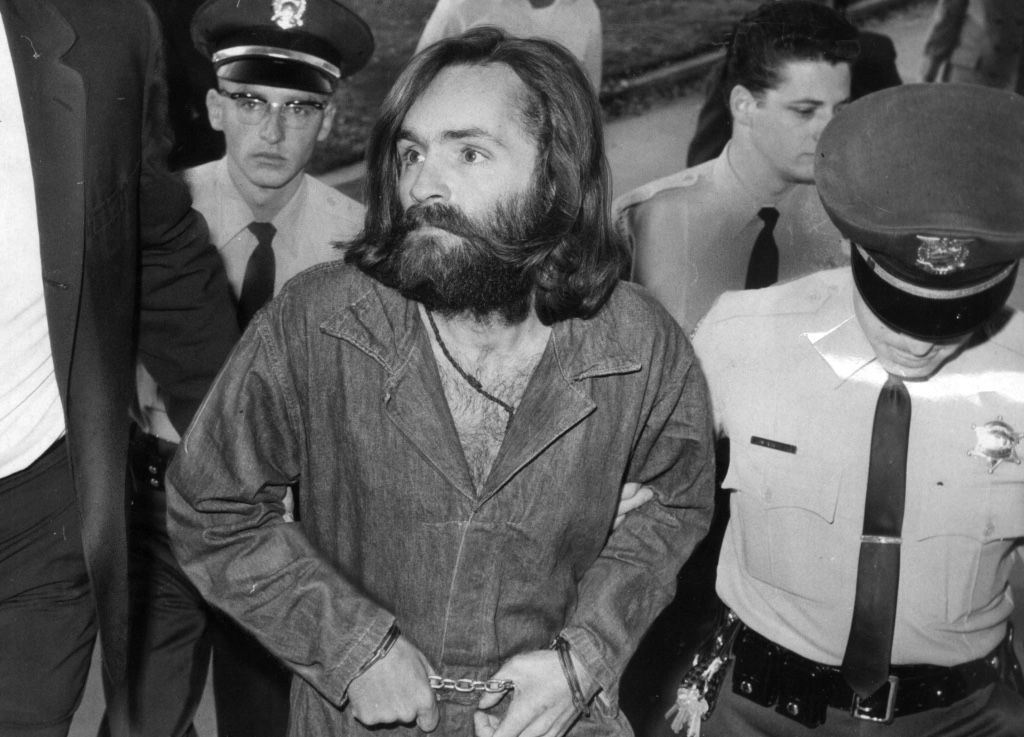
We had only smoked pot, but I felt as if I were on a trip, his trip, and he was guiding my every move. Charlie was older than the other men I had slept with, but his body seemed younger. He had tattoos on his arms and a small tuft of hair on his chest. There was something magnetic about him, even though I wasn’t sure I even found him attractive. He was small and nice-looking but not as classically handsome as some of the men I had pursued. The attraction was more chemical and inevitable without any thought about whether I would or wouldn’t.

He took his time to explore my body. He avoided the places that made me purr until I could barely stand it. After a few minutes, he put himself inside me while staring into my eyes. He was tender as he held me up to meet his deep thrusts. When he finished, he sighed; I exhaled and realized I was hooked.

I watched as Charlie put on his jeans. He was clearly a man but also seemed like a boy. He was playful, and that made me feel even more comfortable with him. Sometimes after I would sleep with a man, I would be left feeling empty. My experience with Charlie was the beginning of something. I felt appreciated by him, not just like some pretty young thing. Charlie was offering me more than sex. He told me I should forget my parents and give up my inhibitions. He made it clear he wanted me to be a part of the group; his group. It felt as if there was no turning back. When I’d been with other older men, I’d been playing the role of a woman — Charlie made me feel like I’d actually become one. He said everything I needed to hear.

That night I went home with [friends] Richard and Allegra, but I knew I would return. The decision seemed so natural; a date with destiny. Charlie and the girls were now living at the Spiral Staircase House. It was only a matter of time before I joined them.

Things with Richard and Allegra continued much as they had been, with them taking me back and forth to the Hog Farm. Whatever threads bound me to that place were finally severed as it became clear there was nothing left for me there. I was an outsider, and my parents and brother and sister were having a life without me. Each time I took a trip there, my presence seemed to make less and less sense.

When I eventually made it back to visit Charlie and the girls at the Spiral Staircase House, Lynette and Patty told me I should stay with them. Creating a sense of urgency, they told me they were planning to take a trip soon, and I had to make up my mind.

I wasn’t sure yet about leaving my parents for good; in living with Richard and Allegra, I still had a connection to the Hog Farm as well as the possibility that my parents would tell me they wanted me to stay. It was a childish fantasy, but it helped ground me. As long as I was near them, I wasn’t truly alone. Still, I was concerned that I would lose my new friends if I hesitated for too long.

When I got back from the Spiral Staircase House, I told Richard and Allegra about the possibility of going with Charlie and the girls. “I don’t know about that, Chicken Little,” Richard said. For some reason, he had changed his mind about Charlie. “It may not be such a cool scene. Maybe you should stick around here for a little while.”

That was the one warning I got about Charles Manson. It was not from my parents or from people at the Hog Farm. It was from my speed-addict friend who somehow understood something that the rest of us did not. Richard never gave me any specifics about why he felt the way he did, so I don’t know where his hesitation came from, and thus there was nothing to dampen my growing crush on Charlie and his girls. But honestly, I’m not sure anyone could have kept me away. The pull of belonging had become too great.

I thought about the note my parents had given me. Even though it was for a specific purpose, it had given me my freedom to be on my own. I didn’t see any reason not to use it as my passport to Charlie’s world.

I visited the Hog Farm one last time, stuffing what few belongings I had in the bread truck into my knapsack and saying goodbyes to my father, mother, brother and sister. As we parted, I was surprised how little I felt toward them. The rift that had been growing for months was finally complete.

When Richard and Allegra took me to the Spiral Staircase House, all the girls ran out to greet me. It turned out they were packing the bus for a drive and told me I was just in time. Charlie reached out his hand to me. And I took it.

Remembering his face in the December light, I find it hard to reconcile the man I followed onto that bus with the monster the world now knows him to be. Over the years, I’ve wished that I could go back and show my younger self what he was to become, changing the story from the start. Clearly that’s not something anyone can do, so I’m left trying to defend the indefensible: Why did I get on that bus?

In the decades since I first met him, I’ve turned the question over in my mind countless times. The obvious answer was that I felt an attraction to him, and as a 14-year-old girl, I reacted to that hormonally. But that’s not really the answer, or at least the full answer. More than just attraction, I felt a deep connection. It seemed as if he understood me completely and wouldn’t let me down or betray me as all the other important people in my life had. Ever since we’d “dropped out,” I’d been an afterthought, at various points a mouth to feed, jailbait and a reminder of a previous life in the straight world.

With Charlie and the Family, from the beginning, there was none of that baggage. I had a place with them from that first night. I belonged in a way that I hadn’t anywhere in months. Charlie and the girls also made it OK for me to want and have sex. It seems so simple, yet this freed me from some of the deepest confusion and shame I’d been experiencing since I was 9.

There is no doubt that Charlie took advantage of me. This small man oozed self-confidence and sex appeal, and as he would demonstrate time and time again in the months and years ahead, he knew exactly what he was doing. He was a master manipulator, while I was 14 and essentially on my own. I was a naive, lonely, love-starved little girl looking for a parental figure to tell me, “No, don’t do that.”
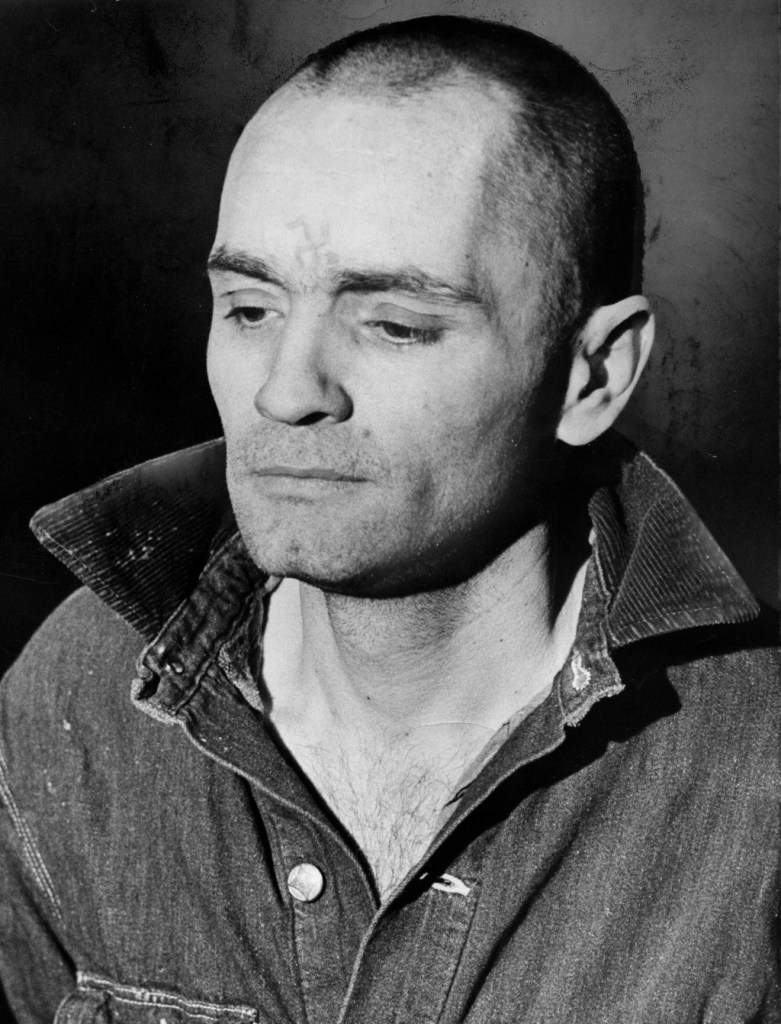
As I discovered that first day in his magic bus, when he focused his attention on you, he made you believe there was no one else in the world. He also had the uncanny sensibility bestowed upon mystics, yet misused by sociopaths and con men, to know exactly what you needed.

Charlie knew what you were afraid of and could paint a scenario that would use all those insights to his advantage — traits that I would see in equal parts over time. Of course, in this moment, as I walked up the bus steps, I saw none of these things. Instead, all I saw was acceptance.

But perhaps the most impressive trick of all was how he made this seem as if it was my idea. Ever since my father first left home, I’d cultivated a sense of independence. I’d taken care of my siblings, I’d cooked, I’d become a free thinker, I’d taken drugs. I might have been 14, but I thought I understood who I was and what was missing from my life.

What I needed was a family. And now it seemed I’d found one.
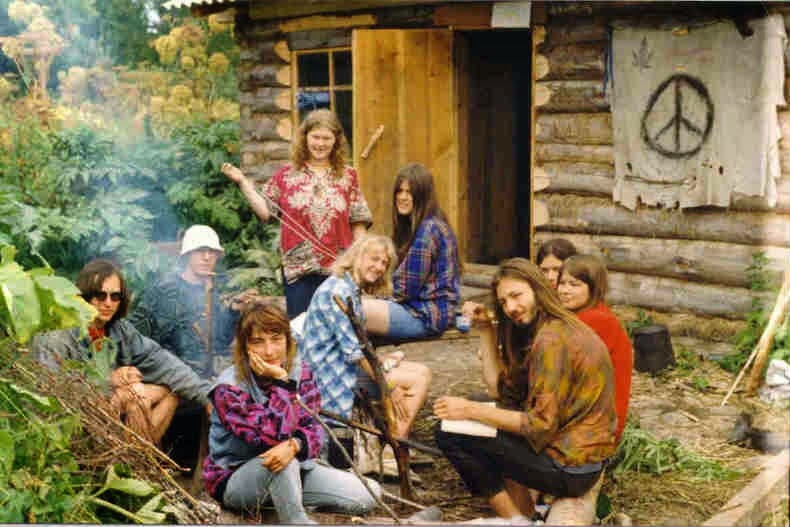
Starting a Commune

What You Need:

  • A house, preferably with several outbuildings
  • A group of open-minded, perfectly matched people with complementary skills, goals, and life philosophies
  • A goat
  • A chore sign-up sheet
  • A casual relationship with the notion of privacy
  • “On Liberty” by John Stuart Mill
  • The collected works of Karl Marx and Friedrich Engels
  • A natural inclination toward egalitarianism
  • A belief in the inherent benefits of “intentional communities”
  1. Move into house.
  2. Get along.
  3. Garden.

Rules:

Rules are naturally a touchy subject.  If you are starting a commune, you’ll need some guidelines in order to prevent complete chaos, but it is best to keep them to a few, if only to avoid the several day-long house meetings required to decide which rules to make and how to follow them. The first you might consider “Everyone gives something, and everyone gets something back.” If you didn’t do your part (e.g., you refuse to help paint the porch) you’re asked to leave.

Television is generally discouraged in communes, mostly because the number of people makes it hard to decide what to watch. 

Once you accept that everyone has an equal responsibility to share in the commune chores, you can immediately begin trying to get out of them.

Gardening:

There is nothing better for a commune than a good-sized vegetable patch. A few tomato plants, some basil, and some rhubarb will keep you busy for the better part of a summer. Everyone can participate in the garden’s care and harvest. Because all residents are participating, the garden is truly a product of the community and a central element of commune life. Also, a bountiful garden can feed a bevy for several months—longer if produce is jarred or frozen.

The Girls – Emma Cline

“Emma Cline’s first novel, “The Girls” (Random House), is a song of innocence and experience—in ways that she has intended, and perhaps in ways that she has not. It’s a story of corruption and abuse, set in 1969, in which a bored and groundless California teen-ager joins a Manson-like cult, with bloody, Manson-like results. Evie Boyd, an only child whose upper-middle-class parents have recently divorced, wants to be older than her fourteen years, and is drawn to the free-spirited, rebellious young women she sees one day in a Petaluma park. They are looking for food to take back to the ranch where they live. The novel charts Evie’s accelerated sentimental education, as she is inducted into the imprisoning liberties of free love, drugs, and eventual violence, all of it under the sway of the cult’s magus, Russell Hadrick. In another way, though, Cline’s novel is itself a complicated mixture of freshness and worldly sophistication. Finely intelligent, often superbly written, with flashingly brilliant sentences, “The Girls” is also a symptomatic product not of the sixties but of our own age: a nicely paced literary-commercial début whose brilliant style, in the end, seems to restrict its reach and depth.”

~ The New Yorker

Zen Mind, Beginner’s Mind

“In Japan we have the phrase shoshin, which means “beginner’s mind.” The goal of practice is always to keep our beginner’s mind.. For a while you will keep your beginner’s mind, but if you continue to practice one, two, three years or more, although you may improve some, you are liable to lose the limitless meaning of original mind.

For Zen students the most important thing is not to be dualistic. Our “original mind” includes everything within itself. It is always rich and sufficient within itself. You should not lose your self‑sufficient state of mind. This does not mean a closed mind, but actually an empty mind and a ready mind. If your mind is empty, it is always ready for anything; it is open to everything. In the beginner’s mind there are many possibilities; in the expert’s mind there are few.

If you discriminate too much, you limit yourself. If you are too demanding or too greedy, your mind is not rich and self‑sufficient. If we lose our original self‑sufficient mind, we will lose all precepts. When your mind becomes demanding, when you long for something, you will end up violating your own precepts: not to tell lies, not to steal, not to kill, not to be immoral, and so forth. If you keep your original mind, the precepts will keep themselves.

In the beginner’s mind there is no thought, “I have attained something.” All self‑centered thoughts limit our vast mind. When we have no thought of achievement, no thought of self, we are true beginners. Then we can really learn something. The beginner’s mind is the mind of compassion. When our mind is compassionate, it is boundless. Dogen‑zenji, the founder of our school, always emphasized how important it is to resume our boundless original mind. Then we are always true to ourselves, in sympathy with all beings, and can actually practice.

So the most difficult thing is always to keep your beginner’s mind. There is no need to have a deep understanding of Zen. Even though you read much Zen literature, you must read each sentence with a fresh mind. You should not say, “I know what Zen is,” or “I have attained enlightenment.” This is also the real secret of the arts: always be a beginner. Be very very careful about this point. If you start to practice zazen (meditation), you will begin to appreciate your beginner’s mind. It is the secret of Zen practice.”

~ Shunryu Suzuki
Zen Mind, Beginner’s Mind

Blowin’ In The Wind – Bob Dylan

Blowin’ In The Wind

Bob Dylan / 2:46

Musician: Bob Dylan: vocals, guitar, harmonica

Recording Studio: Columbia Recording Studios / Studio A, New York: July 9, 1962

As surprising as it may seem, Dylan wrote “Blowin’ in the Wind” in just ten minutes on April 16, 1962. He was in a coffee shop, the Commons, opposite the Gaslight, the mythical center of the folk scene in the heart of Greenwich Village, where not only Dylan but also Richie Havens, Jose Feliciano, and Bruce Springsteen, among others, got their start. In 2004, when CBS newsman Ed Bradley asked Dylan about the speed with which he wrote, Dylan replied honestly: “It came from… that wellspring of creativity.”  To Scorsese, he also said that regardless of where he was—in the subway, a coffee shop, “sometimes talking to someone”—he could be hit by inspiration. It was an exceptional period, and many years later he tried in vain to re-create it.

During the months following its release, “Blowin’ in the Wind” was at the heart of a controversy that had nothing to do with music. A high school student from Millburn, New Jersey, named Lorre Wyatt claimed to be the real composer of the song, which he said he sold for a thousand dollars. Several students even stated they heard Wyatt singing “Blowin’ in the Wind” before the singles by Peter, Paul and Mary and Dylan came out. This claim was taken very seriously, and Newsweek magazine repeated it in November 1963. It was only in 1974 that Lorre Wyatt admitted having lied to impress the other members of his group, the Millburnaires.

Starting with the New World Singers and Peter, Paul and Mary, hundreds of artists inserted “Blowin’ in the Wind” into their repertoire. These include Marlene Dietrich (1963), Joan Baez (1963), Marianne Faithfull (1964), Sam Cooke (1964), and Stevie Wonder (who reached tenth place on the charts), as well as Judy Collins, Elvis Presley, Neil Young, and Ziggy Marley.

How many roads must a man walk down
Before you call him a man?
How many seas must a white dove sail
Before she sleeps in the sand?
Yes, and how many times must the cannonballs fly
Before they’re forever banned?

The answer, my friend, is blowin’ in the wind
The answer is blowin’ in the wind

Yes, and how many years must a mountain exist
Before it is washed to the sea?
And how many years can some people exist
Before they’re allowed to be free?
Yes, and how many times can a man turn his head
And pretend that he just doesn’t see?

The answer, my friend, is blowin’ in the wind
The answer is blowin’ in the wind

Yes, and how many times must a man look up
Before he can see the sky?
And how many ears must one man have
Before he can hear people cry?
Yes, and how many deaths will it take ’til he knows
That too many people have died?

The answer, my friend, is blowin’ in the wind
The answer is blowin’ in the wind

SourceBob Dylan: All The Songs

Daniel Dennett from Freedom Evolves

“Daniel Dennett, in Freedom Evolves, writes that it makes no difference whether our moral impulses are evolved or learned. “[T]he theory that explains morality … should be neutral with regard to whether our moral attitudes, habits, preferences, and proclivities are a product of genes or cultures.” I think this is true because culture itself is ultimately a product of evolution. Whether you think “instinct” is purely biological or a learned habit, or a combination of the two, it comes down to the same goal: the minimization of harm to biological organisms.”
~ Dan Barker, Life Driven Purpose, pg 66

The Necessity of Secularism

“The rise and fall of religious beliefs is difficult to predict with assurance. It’s doubtful whether many Romans in the early second century would have predicted the rise of Christianity, whether many Europeans in the early sixteenth century would have predicted the Reformation and the subsequent rejection of Catholicism by much of the continent, whether many Americans in the early twentieth century would have foreseen the simultaneous decline of mainstream Protestant denominations and the rise of Protestant fundamentalism, or whether many in the West anticipated the recent spike in atheists, agnostics, and other nonbelievers. Perhaps over the next one hundred years, some faith will sweep aside other beliefs; perhaps religious beliefs, in general, will decline precipitously and all but disappear. Either outcome is possible.

However, a much more likely outcome is a significant increase in the number of nonbelievers, accompanied by a decrease, but not a collapse, in the number of believers. This increase could come fairly quickly if nonbelievers reach a critical mass, which would allow for greater acceptance and the sense among many nominal believers that it’s no longer socially injurious to acknowledge that one is an atheist or agnostic. The big break in the United States will come if and when a number of politicians who are open atheists and nominal believers to come out of the closet. But even if there is an exponential increase in the number of nonbelievers, it’s improbable that religion will be completely abandoned. Religious belief is resilient. Some debate whether religious belief has a genetic basis, but regardless of whether it has a biological foundation, it’s undeniable it has deep cultural and psychological roots. Beliefs that have had a firm grip on the human psyche for millennia are unlikely to vanish in a century.”
~ Ron Lindsay, (The Necessity of Secularism, pgs 15-16)

Witch Trials Of Europe

Valais: France/Switzerland, 1428–1447

Often considered to be the first in Europe, the Valais trials began in the French-speaking southern region of Valais and spread to German-speaking Wallis. The trials claimed at least 367 victims (the actual toll may be higher), with just as many men as women killed. It all began in August 1428, when delegates from seven different districts demanded investigations into any accused witches or sorcerers. They established a rule that if any single person was accused of witchcraft three times, they were to be arrested. Once arrested, there was no way to escape; those that confessed were burned at the stake and those who didn’t were tortured until they did confess. While the trials were poorly documented, there are a few records that remain from the local clerk of the court, Johannes Fründ.

Trier: Germany, 1581–1593

One of the largest witch trials in European history started in the rural diocese of Trier in 1581, eventually reaching the city itself six years later. The motives behind this massive witch-purging were likely political. Wanting to prove his loyalty to the Jesuits, the newly-appointed Archbishop Johann von Schöneburg ordered a purge of three groups of nonconformists: Protestants, Jews and witches. Very few of those accused of witchcraft were ever released. Between 1587 and 1593, 368 of the accused from 22 villages were burned alive, almost all confessing under torture. Almost a third of the victims were nobility or held positions in the government or local administration, including judges, burgermeisters, councilors, canons and parish priests.

North Berwick: Scotland, 1590–1592

When King James VI of Scotland sailed to Copenhagen to marry Princess Anne of Denmark, a severe coastal storm forced him to land in Norway and take refuge for several weeks. The storm was blamed on witchcraft, which brewed the king’s obsession with eliminating the practice. He became so obsessed he even penned a book, Daemonologie, endorsing witch hunting. The first to fall victim was Gilly Duncan. Accused of using healing cures and subject to prolonged torture, Duncan confessed to having a contract with the devil. She was burned at the stake for her crime. In total, 70 people were accused of witchcraft, including several members of Scottish nobility, although the actual number of those killed remains unknown. These events had such a profound effect that it’s believed Shakespeare adapted parts of the trial—including the torture rituals—into “Macbeth.” The North Berwick witch trials were the first major trials in Scotland, but many followed, claiming an estimated total of 3,000-4,000 lives between 1560 and 1707.

Fulda: Germany, 1603–1606

After returning from a 20-year exile from his post, Balthasar von Dernbach, the prince-abbot of the Fulda monastery, joined the ongoing efforts of the Catholic Counter-Reformation to thwart perceived religious liberalism. Dernbach launched an aggressive investigation into witchcraft and sorcery to purge the city of Fulda of “improper” things. The most well-known victim was a pregnant woman named Merga Bien. Accused of murdering her second husband, their children and a family member of her husband’s employer, she was tortured and forced to confess. Found guilty, Bien was burned at the stake. The witch hunts were stopped upon the death of Dernbach in 1605.

Pendle: England, 1612–1634

Taking place in Pendle Hill—a poor, lawless region in Lancashire, England, where begging and magical healing were common—these trials were among the most famous and well-documented of the 17th century. The previous decades had been rife with a fear of witchcraft, which was only magnified by the obsession of James VI (now also King James I of England) in purging his lands of witches and sorcerers. Required to report anyone who refused to attend the English Church or take communion, the local Justice of the Peace, Roger Nowell, was also tasked with investigating claims of witchcraft. One such claim was made by a local Halifax peddler who accused a local woman, Alizon Device, of giving him a stroke through witchcraft. Device freely confessed to the crime and implicated many of her family members. Other locals implicated their families, only later to be accused themselves. Altogether, 12 were accused of using witchcraft to murder 10 people. Eleven of the accused went to trial—nine women and two men—and 10 were found guilty and hanged.

Torsåker: Sweden, 1674–1675

The largest witch trial in Swedish history—and one of the largest mass killings of witches in recorded history—saw 71 accused witches, including 65 females, or roughly one-fifth of all women in the region, beheaded and burned in a single day. The bloodshed began when minister Laurentius Christophori Hornæus of Ytterlännäs was instructed to investigate witchcraft within his parish. He ordered two young boys to stand at the doors and identify witches by the invisible devil’s mark on their forehead as they walked into church. Much to the dismay of Hornæus, one of the boys identified the minister’s wife, a situation that was quickly hushed up. The accused were suspected of abducting children and taking them to Satan’s Sabbath (eight festivals celebrated by Wiccans and Neopagans) at Blockula (a meadow popular in Swedish folklore where the devil held court). Relying mostly on children, testimonies were extracted through whippings, forced bathing in frozen lakes or by threats to bake the children in an oven. There were very few records of these trials, and the primary source was recorded 60 years after their conclusion by the grandson of minister Hornæus, who recorded his grandmother’s eyewitness account to the proceedings. The trials were thought to have shaky legitimacy since the commission and local courts failed to report the death sentences to a higher court before carrying them out.

Sources: history.com, Cultures of Witchcraft, The Witch Hunts


John Muir

John Muir was born April 21, 1838 also known as “John of the Mountains”, was an American naturalist, author, environmental philosopher, glaciologist and early advocate for the preservation of wilderness in the United States. His letters, essays, and books describing his adventures in nature, especially in the Sierra Nevada, have been read by millions. His activism has helped to preserve the Yosemite Valley, Sequoia National Park and many other wilderness areas. The Sierra Club, which he founded, is a prominent American conservation organization. The 211-mile (340 km) John Muir Trail, a hiking trail in the Sierra Nevada, was named in his honor. Other such places include Muir Woods National Monument, Muir Beach, John Muir College, Mount Muir, Camp Muir and Muir Glacier. In Scotland, the John Muir Way, a 130-mile-long route, was named in honor of him.

In his later life, Muir devoted most of his time to the preservation of the Western forests. He petitioned the U.S. Congress for the National Park bill that was passed in 1890, establishing Yosemite National Park. The spiritual quality and enthusiasm toward nature expressed in his writings has inspired readers, including presidents and congressmen, to take action to help preserve large nature areas. Today Muir is referred to as the “Father of the National Parks” and the National Park Service has produced a short documentary about his life.

John Muir has been considered “an inspiration to both Scots and Americans”. Muir’s biographer, Steven J. Holmes, believes that Muir has become “one of the patron saints of twentieth-century American environmental activity,” both political and recreational. As a result, his writings are commonly discussed in books and journals, and he is often quoted by nature photographers such as Ansel Adams. “Muir has profoundly shaped the very categories through which Americans understand and envision their relationships with the natural world,” writes Holmes. Muir was noted for being an ecological thinker, political spokesman, and religious prophet, whose writings became a personal guide into nature for countless individuals, making his name “almost ubiquitous” in the modern environmental consciousness. According to author William Anderson, Muir exemplified “the archetype of our oneness with the earth”, while biographer Donald Worster says he believed his mission was “…saving the American soul from total surrender to materialism.” On April 21, 2013, the first ever John Muir Day was celebrated in Scotland, which marked the 175th anniversary of his birth, paying homage to the conservationist.

“Keep close to Nature’s heart… and break clear away, once in awhile, and climb a mountain or spend a week in the woods. Wash your spirit clean.”
~ John Muir

4/20 Day

The stoners among you will recognize that, being 4/20 in American date notation, it’s also a day to celebrate smoking weed, since “420” is American argot for marijuana. Why? Here’s why:

In 1971, five high school students in San Rafael, California, used the term “4:20” in connection with a plan to search for an abandoned cannabis crop, based on a treasure map made by the grower. Calling themselves the Waldos, because their typical hang-out spot “was a wall outside the school”, the five students — Steve Capper, Dave Reddix, Jeffrey Noel, Larry Schwartz, and Mark Gravich —designated the Louis Pasteur statue on the grounds of San Rafael High School as their meeting place, and 4:20 pm as their meeting time. The Waldos referred to this plan with the phrase “4:20 Louis”. After several failed attempts to find the crop, the group eventually shortened their phrase to “4:20”, which ultimately evolved into a code-word the teens used to refer to consuming cannabis.